
A Greek mythology personality test maps your natural tendencies, decision-making style, and core drives onto archetypes drawn from ancient stories, matching you with gods and heroes whose traits mirror how you actually think and behave. Unlike surface-level quizzes, the best versions of these tests draw on the same psychological dimensions that formal personality frameworks measure, which is why so many people find the results unexpectedly precise.
What makes mythology such a surprisingly effective lens for self-understanding is that these stories were never just entertainment. They were attempts to explain human nature, to give names and faces to the forces that drive people toward greatness, conflict, and everything in between. When you see yourself in Athena’s strategic patience or Hermes’ restless curiosity, something real is being reflected back at you.

Personality theory has been exploring these same archetypes in different language for over a century. If you want to build a fuller picture of where a mythology test fits within broader frameworks, our MBTI General and Personality Theory hub covers the landscape from cognitive functions to temperament models, and it’s a useful companion to what we’re exploring here.
Why Do Mythology Archetypes Feel So Personally Accurate?
There’s a moment most people have when a personality result stops them cold. Not because it’s flattering, but because it’s specific in a way that feels almost uncomfortable. I’ve had that moment more than once, and I’ve watched it happen to colleagues who considered themselves far too pragmatic to care about personality frameworks.
Part of what makes mythology archetypes land so hard is that they’re built from observed human patterns rather than invented categories. The Greeks weren’t creating personality types from scratch. They were codifying behaviors and motivations they had watched play out across generations, then giving those patterns divine names to signal their depth and universality. Athena wasn’t just a character. She was the distillation of every person who ever approached a problem with cold clarity and long-horizon thinking.
A 2005 American Psychological Association report on self-reflection found that people process identity-related information differently than they process neutral facts, with the brain’s self-referential networks activating more strongly when information feels personally relevant. Mythology archetypes trigger that same network. They’re not abstract. They’re stories about people making choices under pressure, which is exactly the kind of material your brain maps onto your own experience.
Running agencies for two decades, I watched this phenomenon play out in conference rooms constantly. I’d bring in a new framework, a values assessment, a team dynamics exercise, and the room would stay politely detached until someone saw themselves in a description that felt true. Then everything shifted. People stopped performing objectivity and started actually engaging. Mythology works the same way, faster, because the stories are already embedded in our cultural memory.
Which Greek Gods Map to Which Personality Types?
The most thoughtful versions of a Greek mythology personality test don’t just assign you a god based on a few surface preferences. They probe the same underlying dimensions that formal personality science examines: how you process information, how you make decisions, where you draw energy, and how you engage with the world around you. The correspondences below aren’t arbitrary. Each one reflects genuine alignment between mythological characterization and measurable psychological traits.
Athena: The Strategic Architect
Athena is the goddess of wisdom and strategic warfare, and she maps most closely onto the INTJ and ENTJ temperaments. What defines her isn’t raw power but precision. She wins through planning, foresight, and the willingness to make uncomfortable decisions in service of long-term outcomes. She rarely acts on impulse. She waits, observes, and then moves with complete conviction.
People who identify strongly with Athena tend to score high on what personality researchers call Extroverted Thinking (Te), the cognitive function that organizes external systems and drives toward measurable results. They’re the people in any room who are already three steps ahead, quietly building the framework everyone else will eventually work within. I recognize this pattern in myself more than I’d like to admit. There were client pitches where I’d already mentally mapped out the counterarguments before we’d finished presenting the strategy.
Hermes: The Adaptive Connector
Hermes is the messenger god, patron of travelers, traders, and tricksters. He moves between worlds with ease, carrying information from one place to another and finding opportunity in every transition. His energy is restless, curious, and fundamentally social in a way that’s less about depth and more about breadth.
In personality terms, Hermes aligns closely with ENTP and ESTP types. The Extraverted Sensing (Se) function captures a significant piece of his character: the ability to read the immediate environment with precision, respond in real time, and find the opening that others miss. Hermes types are often the most electrically alive in fast-moving, unpredictable situations. They can feel constrained by structure and thrive in the spaces between established systems.

Apollo: The Principled Idealist
Apollo governs light, truth, music, and prophecy. He represents the pursuit of perfection through discipline and the belief that beauty and order are essentially the same thing. Where Hermes is fluid and opportunistic, Apollo is structured and principled. He holds himself and others to high standards, sometimes to a fault.
This archetype resonates strongly with INFJ and INTJ types, particularly those who lead with Introverted Intuition. Apollo’s gift for prophecy is a mythological way of describing the intuitive pattern-recognition that some personalities perform almost automatically, seeing where things are heading before the evidence is fully assembled. A 2019 study published in PubMed Central on intuitive decision-making found that experienced individuals in complex domains often demonstrate predictive accuracy that outpaces their ability to consciously explain their reasoning, which is about as close to prophecy as modern science gets.
Artemis: The Independent Protector
Artemis is the goddess of the hunt, the wilderness, and the moon. She is fiercely autonomous, deeply loyal to her chosen circle, and fundamentally uncomfortable with the constraints that come with conventional social roles. She operates best at the edges, where her sharp perception and self-sufficiency give her an advantage that more socially oriented personalities don’t possess.
ISTP and ISFP types often find Artemis deeply resonant. The combination of precise sensory awareness, fierce independence, and quiet emotional depth matches both types’ characteristic profiles. If you’re someone who prefers working alone or in small trusted groups, who notices things others walk past, and who finds large social performances exhausting rather than energizing, Artemis may be your closest mythological counterpart. The distinction between introversion and extraversion is worth examining carefully here. Our piece on E vs I in Myers-Briggs breaks down what that dimension actually measures, because it’s not simply about shyness or social preference.
Hephaestus: The Quiet Builder
Hephaestus is the craftsman god, the one who builds the weapons and tools that everyone else uses to claim glory. He’s rarely at the center of the action, but nothing of lasting value gets made without him. His is a quiet, methodical intelligence that finds its expression in making things work rather than in being seen.
INTP and ISTP types tend to identify strongly with Hephaestus. The Introverted Thinking (Ti) function is central to his archetype: a deep internal logical framework that prioritizes precision and internal consistency over external validation. Hephaestus types are the people who will spend hours getting a system exactly right, not because anyone asked them to, but because they genuinely can’t leave an elegant problem half-solved. I’ve hired several of these people over the years, and they were always the ones I trusted most when something actually needed to work, not just look impressive in a presentation.
Demeter: The Nurturing Anchor
Demeter is the goddess of harvest and fertility, and her defining characteristic is the depth of her devotion to those she loves. Her grief when Persephone is taken is so profound that it stops the world. She is the archetype of the person whose emotional connections form the bedrock of everything they do.
ISFJ and INFJ types often find Demeter’s archetype most resonant. These are personalities who experience emotional attunement as a core operating mode rather than a special skill. Some researchers describe this capacity as empathic sensitivity, a trait that WebMD’s overview of empathic traits notes is associated with heightened responsiveness to others’ emotional states. For Demeter types, this isn’t a choice. It’s simply how they process the world.
How Does a Greek Mythology Test Actually Work?
The quality of any personality assessment depends entirely on what it’s actually measuring beneath the surface framing. A mythology test that simply asks “would you rather attend a feast or go hunting alone?” is measuring something, but not very precisely. The better versions of these tests use scenario-based questions that probe your default responses to conflict, ambiguity, social pressure, and decision-making under uncertainty.
What you’re really being sorted by is a combination of the same dimensions that formal personality science has been refining for decades: introversion versus extraversion, thinking versus feeling in decision-making, sensing versus intuition in information gathering, and judging versus perceiving in how you approach structure and closure. The mythology framing is a delivery mechanism for questions that get at these dimensions without triggering the self-presentation bias that more clinical-sounding tests sometimes produce.
One important caveat: many people discover through more rigorous assessment that their initial self-typing was off. The reasons for this are well-documented. Social conditioning, professional role-playing, and the natural tendency to answer questions based on who we think we should be rather than who we actually are all introduce noise. Our piece on mistyped MBTI and cognitive functions covers this in detail, and it’s worth reading if a mythology result doesn’t quite fit.
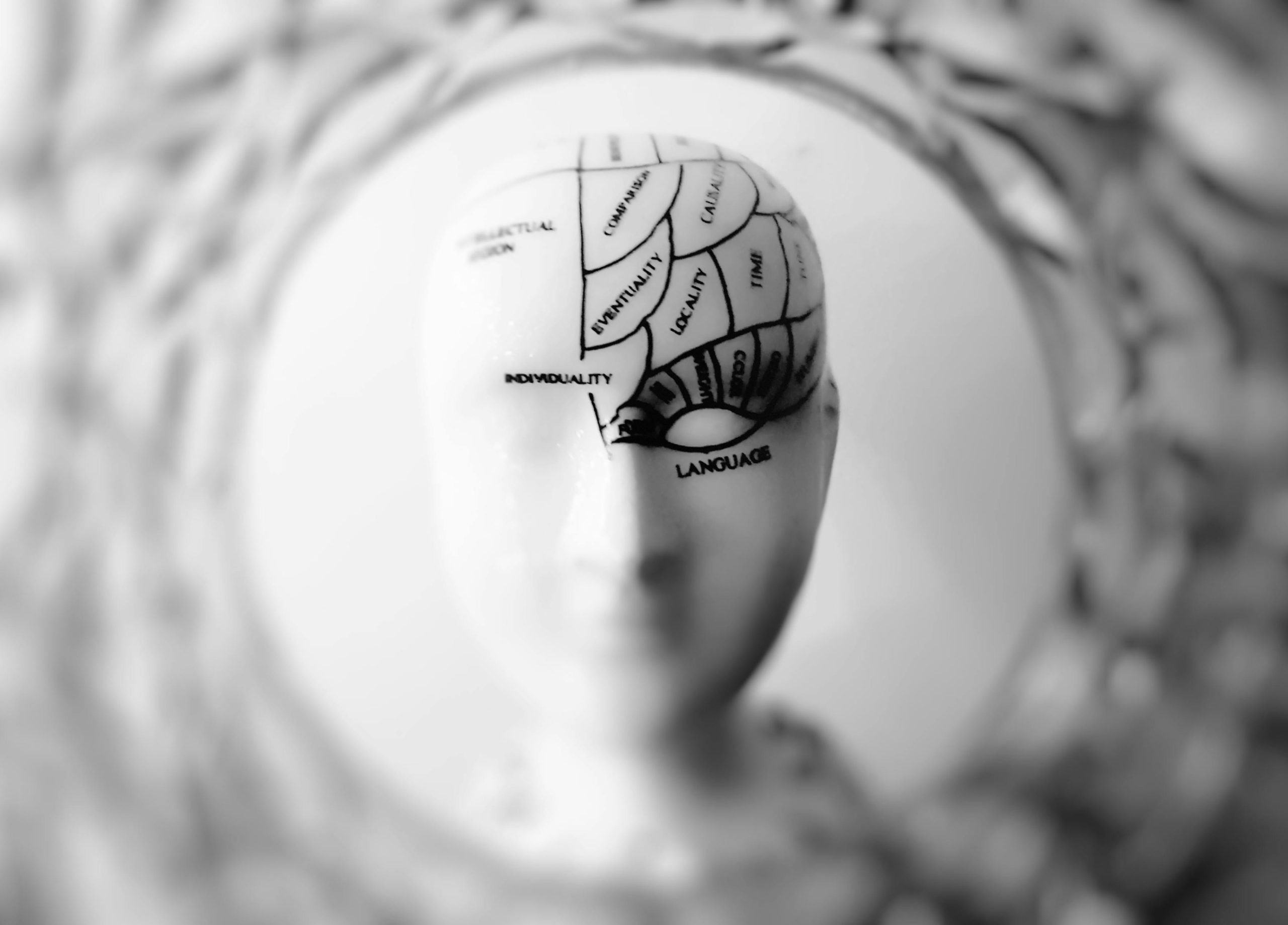
I spent the better part of a decade presenting myself as an Athena type in professional settings, strategic, decisive, comfortable in command, because that’s what the role seemed to require. The mythology framing would have confirmed that story. It took a more rigorous look at my actual cognitive preferences to recognize that my natural operating mode was quieter and more internal than the archetype I’d been performing. If you haven’t yet taken a formal assessment to ground your self-understanding, our free MBTI personality test is a good place to start before or after working through a mythology framework.
What Do Greek Heroes Reveal That Gods Don’t?
Some mythology personality frameworks include heroic figures alongside the Olympians, and this is where things get genuinely interesting from a psychological standpoint. Heroes occupy a different space than gods. They’re mortal, which means they have to work with limitations. Their stories are fundamentally about how character interacts with circumstance, which maps more directly onto real human experience than divine archetypes do.
Odysseus, for instance, is one of the richest personality studies in all of mythology. He’s not the strongest, fastest, or most divinely favored hero. What he has is an almost preternatural ability to read situations, adapt his approach, and sustain long-horizon thinking across years of setback and disorientation. He’s also, frankly, a deeply introverted thinker in the way that matters most: he processes internally, trusts his own judgment over consensus, and is willing to sit with uncertainty rather than forcing premature resolution.
Achilles is the counterpoint. Extraordinary gifts, almost no capacity for emotional regulation, and a pattern of catastrophic decisions driven by wounded pride. His story is a case study in what happens when natural talent isn’t paired with self-awareness. Every agency I ran had at least one Achilles on the creative team. Brilliant, volatile, capable of work that stopped a room, and periodically capable of torching a client relationship over a perceived slight.
Hercules represents a third type entirely: the person whose strength lies in persistence and physical engagement with problems rather than strategic thinking. He doesn’t outwit his challenges. He works through them, one labor at a time, with a stubbornness that borders on the sublime. ESTP and ESTJ types often find his archetype most resonant, and there’s something clarifying about a heroic model that doesn’t require cleverness as its primary currency.
Can Mythology Tests Reveal Introvert Strengths That Standard Tests Miss?
Standard personality assessments have a well-documented bias problem. Many of the most widely used frameworks were developed in professional contexts where extroverted behaviors were treated as the baseline, which means introverted traits are often described in terms of what they lack rather than what they offer. You score lower on sociability, lower on assertiveness, lower on positive affect as measured by outward expressiveness.
Mythology sidesteps some of this because the tradition genuinely honors a wide range of power expressions. Athena’s strength is strategic. Hephaestus’s strength is creative and technical. Artemis’s strength is perceptive and autonomous. None of these archetypes require extroverted performance to be recognized as powerful. The stories themselves make the case.
A 2008 study published in PubMed Central examining personality and cognitive processing found that individuals higher in introversion demonstrated stronger performance on tasks requiring sustained attention and deep processing, the kind of cognitive work that mythology archetypes like Athena and Hephaestus are explicitly built around. The stories weren’t wrong about what these traits make possible.
What I find most valuable about mythology as a personality lens is that it gives introverts a vocabulary for their strengths that doesn’t apologize for them. Saying “I’m more Hephaestus than Zeus” carries different weight than saying “I prefer working alone and find large groups draining.” Both statements describe the same person. Only one of them positions that person as someone with something powerful to offer.

According to 16Personalities’ global data, introverted personality types account for roughly half the population, yet many workplaces and social systems are still structured around extroverted defaults. Mythology gives introverted types a way to reclaim their archetype from a tradition that predates those biases.
How Should You Use Your Mythology Result in Practice?
The most common mistake people make with any personality result, mythology-based or otherwise, is treating it as a fixed identity rather than a useful lens. Your archetype isn’t a cage. It’s a starting point for a more honest conversation with yourself about where your natural strengths lie and where you’ve been working against your own grain.
A few years into running my first agency, I realized I’d been structuring my leadership approach around what I thought a CEO was supposed to look like, lots of visibility, lots of energy in group settings, a kind of performed confidence that didn’t come naturally and cost me more than I was getting back. The mythology framing wouldn’t have fixed that on its own, but it would have given me a faster route to the honest question: which archetype am I actually operating from, and which one am I performing?
The more practically useful question isn’t “which god am I?” but rather “which god’s strengths do I most consistently express, and which god’s shadow tendencies do I need to watch for?” Athena’s shadow is rigidity and contempt for those she perceives as less capable. Artemis’s shadow is isolation and difficulty accepting help. Hermes’ shadow is superficiality and a tendency to move on before anything is fully built. Every archetype has a gift and a liability, and the honest work is in seeing both clearly.
Team dynamics are another area where mythology archetypes offer real practical value. Research from 16Personalities on team collaboration consistently shows that personality diversity improves outcomes in complex problem-solving contexts, but only when team members understand and respect each other’s different operating modes. Knowing that your colleague is a Hephaestus type who needs deep focus time and doesn’t perform well in rapid-fire brainstorming sessions is actionable information. It changes how you structure meetings, assign work, and interpret behavior that might otherwise read as disengagement.
How Do Cognitive Functions Connect to Mythological Archetypes?
For those who want to go deeper than the surface-level archetype match, the connection between mythological character and cognitive function stack is where the real precision lives. Each god or hero in the Greek tradition has a characteristic way of processing information and making decisions that maps onto specific cognitive functions with surprising accuracy.
Athena’s strategic foresight and systematic approach to problems reflects a dominant Te or Ni orientation depending on how you read her. Her ability to see the full battlefield before others have registered the conflict suggests strong Introverted Intuition, while her capacity to organize resources and execute with precision suggests a well-developed Extroverted Thinking function. The combination is characteristically INTJ or ENTJ.
Hermes’ rapid environmental reading and opportunistic intelligence reflect a strong Se orientation, the function that processes immediate sensory reality with exceptional speed and precision. His comfort with ambiguity and improvisation, his ability to find the angle that others miss in real time, all of this is characteristic of a dominant or auxiliary Extroverted Sensing orientation. Truity’s research on deep thinking patterns notes that different personality types show markedly different processing speeds and styles, which is part of what mythology archetypes are capturing when they distinguish between, say, the deliberate wisdom of Athena and the quick-read intelligence of Hermes.
If you want to identify your own cognitive function stack rather than working backward from an archetype, our cognitive functions test is a more direct route. It measures your actual function preferences rather than asking you to self-identify with a mythological character, which reduces the self-presentation bias that can skew mythology results.

The richest use of a mythology personality test is as a bridge between intuitive self-recognition and systematic self-understanding. Most people find it easier to see themselves in a story than in a function label. Athena feels immediate in a way that “dominant Ni with auxiliary Te” doesn’t, at least at first. But once the story has created the opening, the cognitive function framework gives you the precision to actually work with what you’ve found. That layered approach, starting with the narrative and drilling down to the mechanics, is genuinely more effective than either alone.
There’s more to explore across the full range of personality frameworks and their practical applications in our MBTI General and Personality Theory hub, where we cover everything from cognitive function deep-dives to the science behind why these frameworks work at all.
About the Author
Keith Lacy is an introvert who’s learned to embrace his true self later in life. After 20 years in advertising and marketing leadership, including running agencies and managing Fortune 500 accounts, Keith now channels his experience into helping fellow introverts understand their strengths and build fulfilling careers. As an INTJ, he brings analytical depth and authentic perspective to every article, drawing from both professional expertise and personal growth.
Frequently Asked Questions
What is a Greek mythology personality test?
A Greek mythology personality test is an assessment that matches your psychological traits, decision-making patterns, and core motivations to archetypes drawn from ancient Greek stories. Rather than assigning you a letter code or a clinical label, it identifies which god, goddess, or hero most closely reflects how you naturally think, feel, and engage with the world. The best versions of these tests measure the same underlying dimensions as formal personality frameworks, including introversion versus extraversion, thinking versus feeling, and intuition versus sensing, using mythological framing to make the results more immediately resonant.
Which Greek god represents introverted personality types?
Several Greek archetypes map strongly onto introverted personality types. Hephaestus, the craftsman god, represents the deep-focus, internally-driven intelligence of INTP and ISTP types. Athena represents the strategic, long-horizon thinking of INTJ personalities. Artemis captures the independent, perceptive autonomy of ISTP and ISFP types. Apollo reflects the principled idealism and pattern-recognition of INFJ personalities. Each of these archetypes is characterized by depth over breadth, internal processing over external performance, and a preference for meaningful engagement over constant social stimulation.
How accurate is a Greek mythology personality test compared to MBTI?
A Greek mythology personality test and the MBTI are measuring similar things through different lenses, so their accuracy depends on the quality of the specific instrument rather than the framing. Well-designed mythology tests can be surprisingly precise because the narrative format reduces self-presentation bias, making it easier for people to answer honestly rather than aspirationally. That said, mythology results work best as a starting point rather than a definitive assessment. Pairing a mythology result with a cognitive functions assessment or a formal MBTI evaluation gives you a more complete and reliable picture of your actual personality profile.
Can your Greek mythology archetype change over time?
Your core personality type remains relatively stable across your lifespan, but how you express it can shift significantly with experience, personal growth, and changing circumstances. Someone who tests as an Artemis type in their twenties, fiercely independent and somewhat resistant to collaboration, may develop more of Athena’s strategic social awareness over time without losing their fundamental introverted, perceptive nature. What changes is typically the degree to which you’ve developed your non-dominant functions and learned to work with your natural tendencies rather than against them. The archetype stays consistent. The expression of it matures.
How do I use my Greek mythology personality result in everyday life?
The most practical application of a mythology archetype result is using it to identify both your natural strengths and your characteristic blind spots. Each archetype has a gift and a shadow tendency. Athena types need to watch for rigidity and impatience with less strategic thinkers. Hephaestus types need to watch for isolation and difficulty communicating the value of their work to others. Hermes types need to watch for spreading themselves too thin. Once you’ve identified your archetype, the useful work is in asking: where am I operating from my genuine strengths, and where am I being pulled by my shadow? That question, asked honestly and regularly, is where mythology results generate real value.