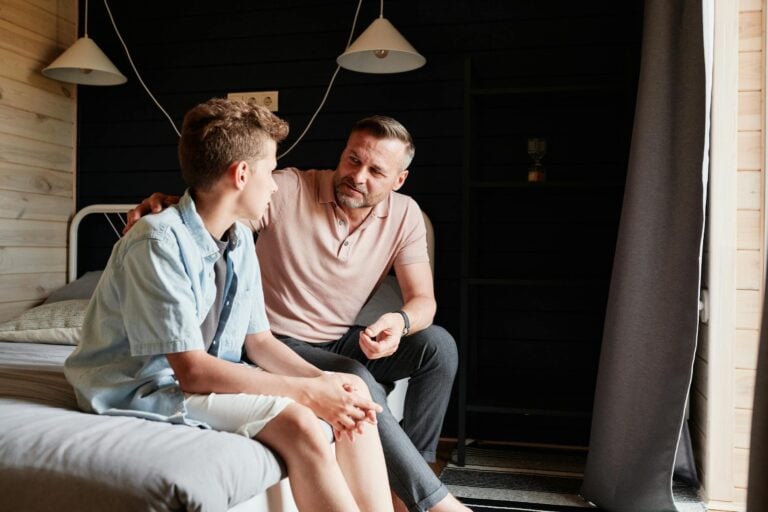

A happy homebodies husband is an introvert who finds genuine fulfillment in shared domestic life, someone who recharges at home not because the world frightens him, but because home is where he does his best living. Far from a limitation, this orientation shapes a relationship built on presence, intentionality, and a kind of quiet contentment that many couples spend years chasing without ever finding it.
My wife figured this out about me long before I figured it out about myself. She’d watch me decompress after a long day of client presentations, visibly exhale the moment I walked through our front door, and she understood something I was still too busy performing extroversion to admit: I wasn’t avoiding life by staying home. I was finally living it.

Over at our Introvert Dating and Attraction hub, we look at the full spectrum of how introverts connect, attract, and build lasting partnerships. This particular piece goes a layer deeper into what it actually means to share a life with someone who loves home as much as you do, and why that combination can produce something genuinely rare.
What Does It Actually Mean to Be a Homebody Husband?
Let me be direct about something. Being a homebody husband has nothing to do with laziness, social anxiety, or some kind of arrested development. Those are myths that get recycled in think pieces written by people who confuse introversion with dysfunction. A homebody husband is someone whose energy, creativity, and emotional bandwidth are best accessed in a calm, familiar environment. Home is the operating system, not a hiding place.
What’s your personality type?
Take our free 40-question assessment and get a detailed personality profile with dimension breakdowns, context analysis, and personalised insights.
Discover Your Type8-12 minutes · 40 questions · Free
During my agency years, I ran a team of roughly forty people. We had open offices, loud brainstorming sessions, back-to-back client calls, and the constant ambient noise of creative production. I was good at it. I managed the chaos, held the client relationships, kept the work moving. But every single evening, I needed to come home and sit in silence for at least twenty minutes before I could be fully present with my family. My wife called it “decompression time.” I called it survival. Either way, home was where I came back to myself.
That’s the core of what a homebody husband actually is. He’s not checked out. He’s recharging. And when he’s recharged, he’s fully, genuinely there. Healthline notes that many common assumptions about introverts conflate preference for solitude with social incompetence or emotional unavailability, which misses the point entirely. The homebody husband isn’t absent from the relationship. In many ways, because he’s not constantly depleted by social performance, he has more to give when it counts.
Why Do Two Homebodies Together Work So Well?
There’s a particular kind of relief that comes from being with someone who doesn’t need you to be “on.” My wife and I can spend an entire Saturday at home, each doing our own thing in adjacent rooms, and feel genuinely connected by the end of it. No performance. No social debt. Just two people who understand each other’s rhythms.
When I look at what happens when two introverts fall in love, the patterns are striking. Shared comfort with silence. Mutual respect for personal space. A relationship calendar that doesn’t make either person dread the weekend. These aren’t small things. For introverts who’ve spent years in partnerships where their need for quiet was treated as a problem to fix, finding a fellow homebody feels like finally being allowed to breathe.
That said, two homebodies together aren’t without their own dynamics to work through. 16Personalities points out that introvert-introvert couples can sometimes drift into comfortable isolation, where the shared preference for staying in gradually replaces intentional connection. The warmth of shared solitude can quietly become a substitute for actual intimacy if neither person pushes to maintain it. Worth keeping an eye on.

The best homebody couples I know have found a way to make home feel expansive rather than limiting. They host small dinners instead of big parties. They build rituals around cooking together, watching something they both love, or working on separate projects in the same room. The home becomes a world, not a retreat from one.
How Does a Homebody Husband Actually Show Love?
One of the things that surprised me most when I started paying attention to my own patterns was how differently I expressed affection compared to what popular culture suggests love should look like. Grand gestures, surprise trips, spontaneous adventures, those things were never my language. My language was quieter. More specific. More woven into the ordinary fabric of a day.
I remember one particularly brutal quarter at the agency. We’d lost a major account, the team was demoralized, and I was running on fumes. My wife didn’t suggest we go out to cheer up. She made a specific meal I’d mentioned once, months earlier, that my grandmother used to make. She’d remembered. She’d filed it away. That’s the introvert love language in action: careful attention, long memory, and the quiet act of showing someone you were listening even when they didn’t realize they were speaking.
Understanding how introverts show affection reframes what might otherwise look like emotional distance. A homebody husband who doesn’t shower you with words might be the person who notices you’re tired before you say it, who clears your schedule without being asked, who makes the house feel different when you walk in. Those acts aren’t smaller than verbal declarations. For many introverts, they’re larger.
One useful lens here comes from attachment theory. Research published in PubMed Central on adult attachment and relationship quality suggests that the way people express and receive care in relationships is deeply tied to their internal working models of connection. Introverted homebodies often express love through consistency and attentiveness rather than frequency and volume. Learning to read those signals matters.
What Happens When a Homebody Husband Falls in Love?
Falling in love as an introvert is a slow-burn process that happens mostly underground. I didn’t announce my feelings early. I observed. I processed. I tested the emotional temperature of a thousand small interactions before I let myself fully commit to what I was feeling. By the time I said anything, I’d already been in love for months.
That pattern, the quiet accumulation of certainty before any outward expression, is something many introverts recognize in themselves. The relationship patterns that emerge when introverts fall in love are often characterized by this same deliberate depth. It’s not hesitation born of fear. It’s the introvert’s natural process of building something real before revealing it.
For a homebody husband, falling in love often intensifies the pull toward home. The person he loves becomes part of the environment that restores him. Home stops being just a place and becomes a feeling that’s partly defined by her presence. That’s a profound kind of love, even if it doesn’t announce itself loudly.

Understanding how introverts process and communicate love feelings can save a lot of unnecessary confusion in these relationships. A partner who doesn’t understand the introvert’s internal timeline might misread the quiet as disinterest. It rarely is. More often, the quiet is the sound of someone taking love seriously enough to think it through before speaking it.
Is Being a Homebody Husband a Problem in Modern Dating?
Modern dating culture has a complicated relationship with the homebody. Dating apps reward availability and social proof. First dates tend to happen in loud bars or busy restaurants. The whole architecture of contemporary romance seems designed to filter out people who’d rather stay in.
When I was running the agency, I watched younger introverts on my team struggle with this exact tension. They’d go on dates that felt like performance reviews, come back exhausted, and wonder if something was wrong with them. Nothing was wrong with them. The format was just wrong for them.
Online dating, interestingly, has shifted some of this dynamic in the introvert’s favor. Truity’s analysis of introverts and online dating captures the paradox well: a format that seems to demand constant social performance actually gives introverts more control over pacing, communication, and self-presentation. A homebody husband who’s terrible at small talk in a crowded bar might be exceptional at building genuine connection through thoughtful written conversation.
The challenge is getting past the early stages without burning out. Psychology Today offers practical framing for dating an introvert that’s worth understanding from both sides. Knowing that a homebody husband needs time to warm up, prefers one-on-one settings over group outings, and may need explicit reassurance that staying in is a genuine choice rather than a compromise, all of that context changes how early dating can feel for both people involved.
How Do Homebody Husbands Handle Conflict?
Conflict is where a lot of introvert relationships run into trouble, not because introverts are incapable of working through disagreements, but because their processing style is so different from the immediate, verbal, emotionally expressive approach that many people expect from conflict resolution.
My default when something goes wrong is to go quiet. Not stonewalling, not sulking, just thinking. I need to process what happened, understand my own reaction, and form a clear picture before I can talk about it usefully. Early in my marriage, my wife interpreted that silence as withdrawal. It took some honest conversation to establish that quiet wasn’t the same as disengagement.
Many homebody husbands are also highly sensitive people, which adds another layer. Working through conflict as a highly sensitive person requires a different kind of care, one that accounts for the fact that emotional intensity can be genuinely overwhelming rather than just uncomfortable. Giving space isn’t avoidance. It’s often the most constructive thing a sensitive person can do in the middle of a heated moment.
A related dimension worth understanding is how sensitivity shapes the entire relationship experience. The complete guide to HSP relationships outlines how highly sensitive people experience love, conflict, and intimacy differently, and why those differences require a specific kind of mutual understanding to work well long-term. Many homebody husbands fall somewhere on the HSP spectrum, which means their partners benefit from understanding that framework.

What helps most in conflict, from my experience, is agreeing in advance on what “I need a minute” actually means. It means I’ll come back. It means I’m processing, not abandoning the conversation. It means the disagreement matters enough to me to think about it carefully rather than react impulsively. That agreement changed everything for us.
What Does a Fulfilling Life Look Like for a Homebody Husband?
There’s a version of the homebody husband narrative that treats him as someone who settled. Who gave up on adventure. Who traded a full life for a comfortable one. That narrative is wrong, and it’s worth pushing back on directly.
Some of the most intellectually alive people I’ve ever known were homebodies. One of my best creative directors, an INFJ I managed for several years, built an entire inner world that made most people’s social calendars look thin by comparison. He read voraciously, had deep opinions about architecture and music and political philosophy, cooked elaborate meals, and had more genuine insight into human nature than anyone I’d worked with. He just did all of it at home, or in small rooms with people he trusted.
A fulfilling life for a homebody husband looks like depth over breadth. Strong relationships with a small number of people. Hobbies pursued with genuine seriousness. A home environment that’s been curated to support the kind of thinking and feeling that restores him. Work that engages his mind without depleting his soul. These aren’t small ambitions. They’re just differently oriented ones.
Psychological wellbeing research published in PubMed Central has consistently found that relationship quality and sense of meaning matter more to long-term life satisfaction than social activity levels or external achievement. A homebody husband who has built a genuinely connected, meaningful home life isn’t missing out. He may be closer to what actually produces lasting contentment than the people filling every weekend with social obligations.
How Can Partners Best Support a Homebody Husband?
Support, in this context, starts with belief. Believing that staying home is a genuine preference, not a symptom. Believing that quiet is communication. Believing that a partner who wants to spend Saturday reading next to you rather than going out is expressing intimacy, not indifference.
From there, it gets practical. Creating rituals that honor both people’s needs. Building in social engagements that have clear endpoints so the homebody husband can prepare and recover. Not framing every invitation he declines as a referendum on the relationship. Recognizing that his preference for home isn’t a rejection of you. It’s an embrace of the life you’ve built together.
Psychology Today’s piece on the romantic introvert captures something important here: introverted partners often bring a quality of focused attention to relationships that more socially diffuse people struggle to match. When a homebody husband is with you, he’s really with you. His attention isn’t split between the next social event and the conversation you’re having right now. That singular presence is a gift, even when it comes wrapped in quiet.
What doesn’t help is treating the homebody husband’s preferences as a phase to outgrow or a problem to solve. I spent years in the agency world performing a version of extroversion that wasn’t mine, and the cost was real. The energy I spent pretending to love cocktail parties and networking dinners was energy I couldn’t give to the work, the people, or the relationships that actually mattered. When my wife stopped trying to change my relationship with home and started building a home worth being in, everything shifted.

There’s also something worth naming about the difference between a homebody husband who is fulfilled and one who is simply avoidant. A fulfilled homebody has a rich inner life, genuine connection with the people close to him, and a home that reflects intention. An avoidant one uses home as a shield against discomfort he hasn’t worked through. The distinction matters, and it’s worth being honest about which one you’re dealing with, or which one you might be.
If you want to keep exploring how introverts build and sustain meaningful relationships, the full Introvert Dating and Attraction hub covers everything from first attraction to long-term partnership dynamics in depth.
About the Author
Keith Lacy is an introvert who’s learned to embrace his true self later in life. After 20 years in advertising and marketing leadership, including running agencies and managing Fortune 500 accounts, Keith now channels his experience into helping fellow introverts understand their strengths and build fulfilling careers. As an INTJ, he brings analytical depth and authentic perspective to every article, drawing from both professional expertise and personal growth.
Frequently Asked Questions
Is being a homebody husband a sign of introversion or something else?
Preferring home life is strongly associated with introversion, though it can also reflect sensitivity, a preference for depth over novelty, or simply a personality that finds meaning in domestic life rather than social performance. Many homebody husbands are introverts, but not every introvert is a homebody, and the preference for staying in is most accurately understood as one expression of a broader orientation toward internal rather than external stimulation.
Can a homebody husband and an extroverted partner make a relationship work?
Yes, and many do. The most important factor isn’t matching personality types but matching values and communication styles. An extroverted partner who genuinely respects the homebody husband’s need for quiet time, and a homebody husband who makes real effort to engage with his partner’s social world occasionally, can build something that works well for both people. The challenge is avoiding the dynamic where one person’s needs are consistently treated as more legitimate than the other’s.
How does a homebody husband typically show love and affection?
Through careful attention, long memory, and consistent presence. A homebody husband is more likely to remember something you mentioned in passing three months ago than to arrive with flowers. He shows love by creating a home environment that feels good to come back to, by being genuinely present when you’re together, and by the quiet acts of care that don’t announce themselves. His affection tends to be expressed in action and attentiveness rather than words and grand gestures.
What are the biggest challenges in a relationship with a homebody husband?
The most common challenges involve misreading his quiet as emotional distance, feeling like his preference for staying home reflects a lack of interest in shared experiences, and conflict resolution styles that differ significantly from more verbally expressive partners. Two homebody partners can also drift into comfortable isolation if they’re not intentional about maintaining active connection rather than just peaceful coexistence. Naming these dynamics early and building agreements around them tends to prevent most of the friction.
Is a homebody husband likely to change over time?
Core personality orientation tends to be stable across a lifetime, though how it’s expressed can shift with life circumstances, maturity, and self-awareness. A homebody husband who has done real work to understand his introversion is likely to become more comfortable with the occasional social engagement over time, not because his preference changes, but because he’s less anxious about it and better at managing his energy around it. Expecting fundamental personality change is usually a recipe for disappointment. Expecting growth in self-awareness and flexibility is reasonable.