

Setting boundaries for healthy friendships means deciding, clearly and intentionally, what you will and will not accept from the people in your life, and then holding that line even when it feels uncomfortable. For introverts especially, this isn’t just an emotional skill. It’s an energy management practice that determines whether your relationships restore you or quietly hollow you out.
Some friendships don’t announce themselves as problems. They arrive wrapped in history, in shared laughter, in genuine affection. And then one day you realize you’ve been dreading every text notification from a specific person, that a coffee catch-up leaves you more depleted than a full workday ever did. That realization, quiet and unsettling as it is, matters.

My own reckoning with friendship boundaries came later than I’d like to admit. Running advertising agencies meant I was surrounded by people whose energy I had to manage carefully, including clients, creatives, account managers, and vendors pulling at my attention from every direction. I got reasonably good at professional boundaries. Personal ones? That took longer. And the friends who drained me most weren’t the obviously difficult ones. They were the ones I genuinely cared about, which made the whole thing so much harder to name.
If you’ve ever found yourself in that particular bind, you’re in the right place. Our Energy Management and Social Battery hub explores the full landscape of how introverts experience and protect their energy in social contexts, and friendship boundaries sit right at the center of that conversation.
Why Do Certain Friendships Feel So Exhausting?
Not all social drain feels the same. There’s the pleasant tiredness after a genuinely good evening with someone you love, the kind that asks something of you but gives something back. And then there’s a different kind of depletion, the one that leaves you staring at the ceiling afterward, feeling vaguely used or unseen or somehow smaller than when you arrived.
What’s your personality type?
Take our free 40-question assessment and get a detailed personality profile with dimension breakdowns, context analysis, and personalised insights.
Discover Your Type8-12 minutes · 40 questions · Free
Introverts process social experience differently than extroverts do. Psychology Today notes that introverts tend to find socializing more cognitively demanding, partly because of how deeply we process interpersonal information. We’re not just having a conversation. We’re tracking tone, subtext, emotional undercurrent, and what’s being left unsaid. That depth of processing is one of our genuine strengths. It also means that certain friendships, the ones where we’re doing most of the emotional labor or absorbing someone else’s chronic chaos, cost us significantly more than they might cost someone wired differently.
I once managed a creative director at my agency who was an extraordinarily gifted writer and a deeply empathetic person. She described friendships outside of work the way I quietly experienced them too: as relationships where she was always the one listening, always the one available, always the one who somehow ended up carrying the emotional weight of the whole connection. She didn’t have a name for what was happening. She just knew she was exhausted all the time and couldn’t figure out why her social life felt like a second job.
What she was describing, and what many introverts experience without being able to articulate it, is an imbalance in relational energy exchange. Some friendships are genuinely reciprocal. Others, even affectionate ones, quietly ask more than they give. The reality is that introverts get drained very easily, and when a friendship consistently pulls in one direction, the cumulative effect can be significant.

What Does a Draining Friendship Actually Look Like?
Part of what makes this so difficult is that draining friendships rarely look like obvious toxicity. The friend who calls you every time their life implodes isn’t necessarily a bad person. The one who fills every silence with their own anxiety isn’t trying to harm you. The person who never asks how you’re doing might simply never have developed that habit. None of that makes the pattern less costly to you.
Some patterns worth noticing:
- You find yourself rehearsing conversations before they happen, bracing for what the interaction will demand of you.
- After spending time with this person, you need significantly more recovery time than you do after other social interactions.
- You feel a low-grade sense of obligation rather than genuine desire when you think about reaching out.
- The friendship operates almost entirely on their terms, their timing, their chosen topics, their emotional needs at the center.
- You’ve started to notice a quiet resentment building, which surprises you because you actually care about this person.
That last one is worth sitting with. Resentment in a relationship you value is almost always a signal that something is out of balance. It’s not a character flaw. It’s information. And for introverts who tend toward internal processing and quiet observation, that resentment often builds slowly and privately for a long time before it becomes impossible to ignore.
For those who are also highly sensitive, the experience can be even more layered. Managing stimulation carefully across all areas of life, including the relational ones, becomes essential. If you’re someone whose nervous system responds intensely to sensory and emotional input, you might find useful context in understanding how highly sensitive people find the right balance with stimulation, because a friendship that constantly overstimulates your emotional system deserves the same thoughtful management as any other form of overload.
What Makes Boundaries Feel So Threatening in Friendship?
Boundaries in professional contexts, while never easy, at least have some cultural scaffolding. You can say you’re unavailable after 6pm. You can decline a meeting. There are norms that make those limits legible. Friendship doesn’t come with the same structure. The very informality that makes friendship valuable also makes it harder to establish limits without feeling like you’re violating something sacred.
As an INTJ, I’ve always been reasonably clear about my own needs in theory. In practice, especially with people I genuinely care about, I found myself repeatedly overriding those needs because the alternative felt like a kind of cruelty. Telling a client I couldn’t take a call at 9pm was straightforward. Telling a friend that their 11pm emotional crisis calls were no longer something I could sustain felt like abandonment, even when I knew intellectually that it wasn’t.
There’s a fear embedded in friendship boundaries that doesn’t exist in the same way professionally: the fear that the friendship itself won’t survive the limit. And for introverts who tend to have fewer, deeper friendships rather than wide social networks, losing even one relationship feels proportionally more significant. Introverts genuinely need their downtime to function well, but that need exists in tension with a deep desire for meaningful connection. Boundaries can feel like they threaten both at once.
What I’ve come to understand, slowly and through some uncomfortable experience, is that a friendship that can’t survive a reasonable limit probably wasn’t as solid as it appeared. The limits aren’t what breaks the connection. They reveal what was already fragile underneath.

How Does Your Body Know Before Your Mind Does?
One thing I’ve noticed in myself and in conversations with other introverts over the years is that the body often registers a problematic friendship pattern well before the conscious mind is willing to name it. You might not be able to articulate why a certain friendship feels off, but your nervous system has already formed an opinion.
Physical tension before a planned meeting. A specific kind of fatigue that follows certain interactions. The way your shoulders drop when you see a particular name on your phone. These aren’t dramatic signals. They’re quiet ones, easy to dismiss as unrelated to the friendship itself. But they accumulate.
For those who are highly sensitive, this somatic experience of relational stress can be especially pronounced. Sensitivity isn’t limited to emotional input. It extends to the whole sensory environment of a social interaction, including noise levels, physical space, and even touch. Understanding how noise sensitivity affects highly sensitive people offers one lens on why certain social environments, including the ones a particular friend always gravitates toward, can feel disproportionately taxing. Similarly, light sensitivity and touch sensitivity can make certain social settings feel genuinely overwhelming in ways that compound the relational stress you’re already carrying.
The point isn’t to pathologize your social experience. It’s to take your own signals seriously. Your body’s response to a friendship is data. It deserves the same respect you’d give any other information.
What Does a Healthy Friendship Actually Require From You?
Before you can set a limit, it helps to get clear on what you actually want from a friendship. Not in the abstract, but specifically. What does a good friendship ask of you, and what does it give back? What’s the difference between the reciprocal effort that any real relationship requires and the one-sided drain that’s become your current pattern?
Healthy friendships ask things of you. They require showing up, being present, extending yourself sometimes when it’s inconvenient. That’s not the problem. The problem is when the asking is chronic, one-directional, and never reciprocated in kind. When you’re always the stable one, the available one, the one who absorbs and processes and supports, while the other person rarely asks how you’re doing or makes space for your experience, that asymmetry has a cost.
I spent years running agencies where I was expected to be the steady center, the one who held things together when a campaign went sideways or a client relationship frayed. I got good at that role. Too good, maybe. I brought that same pattern into some of my personal friendships, positioning myself as the reliable, always-available one, because that’s what I knew how to do. It took a long time to recognize that I’d built friendships where I was functioning more as a support system than as an equal participant. The relationships were real. The imbalance was also real.
Knowing what you need from a friendship, specifically, makes it much easier to identify where the gaps are. And identifying the gaps is the first step toward addressing them honestly.
How Do You Actually Communicate a Limit to Someone You Care About?
There’s no version of this that’s entirely comfortable. That’s worth accepting upfront. The goal isn’t a painless conversation. It’s an honest one that respects both people in the friendship.
A few things that have actually helped me:
Lead with the relationship, not the complaint. Starting from a place of genuine care changes the entire tone of the conversation. “I value this friendship and I want it to work long-term” is a different opening than “you always do this.” One invites collaboration. The other invites defensiveness.
Be specific about the behavior, not the person. “I can’t be available for late-night calls anymore” is a limit around a pattern. “You’re too needy” is a character judgment. Limits around patterns are navigable. Character judgments close doors.
Name what you can offer, not just what you can’t. “I can’t be your primary support for every crisis, but I do want to be there for the big things” gives the friendship somewhere to go. Pure restriction without any positive alternative can feel like rejection, even when that’s not your intent.
Expect some discomfort in the response. A friend who’s relied on you in particular ways may feel hurt or confused when you shift the pattern. That’s a normal part of the process, not evidence that you’ve done something wrong. How they respond over time, once the initial reaction settles, tells you a great deal about the friendship’s actual foundation.
One thing I’ve learned from years of managing difficult conversations in professional settings is that clarity is kinder than vagueness in the long run. Hinting at a limit, being slightly less available and hoping someone will notice, rarely works. It creates confusion and resentment on both sides. A direct, warm, specific conversation, even when it’s uncomfortable in the moment, almost always produces better outcomes than the slow fade.
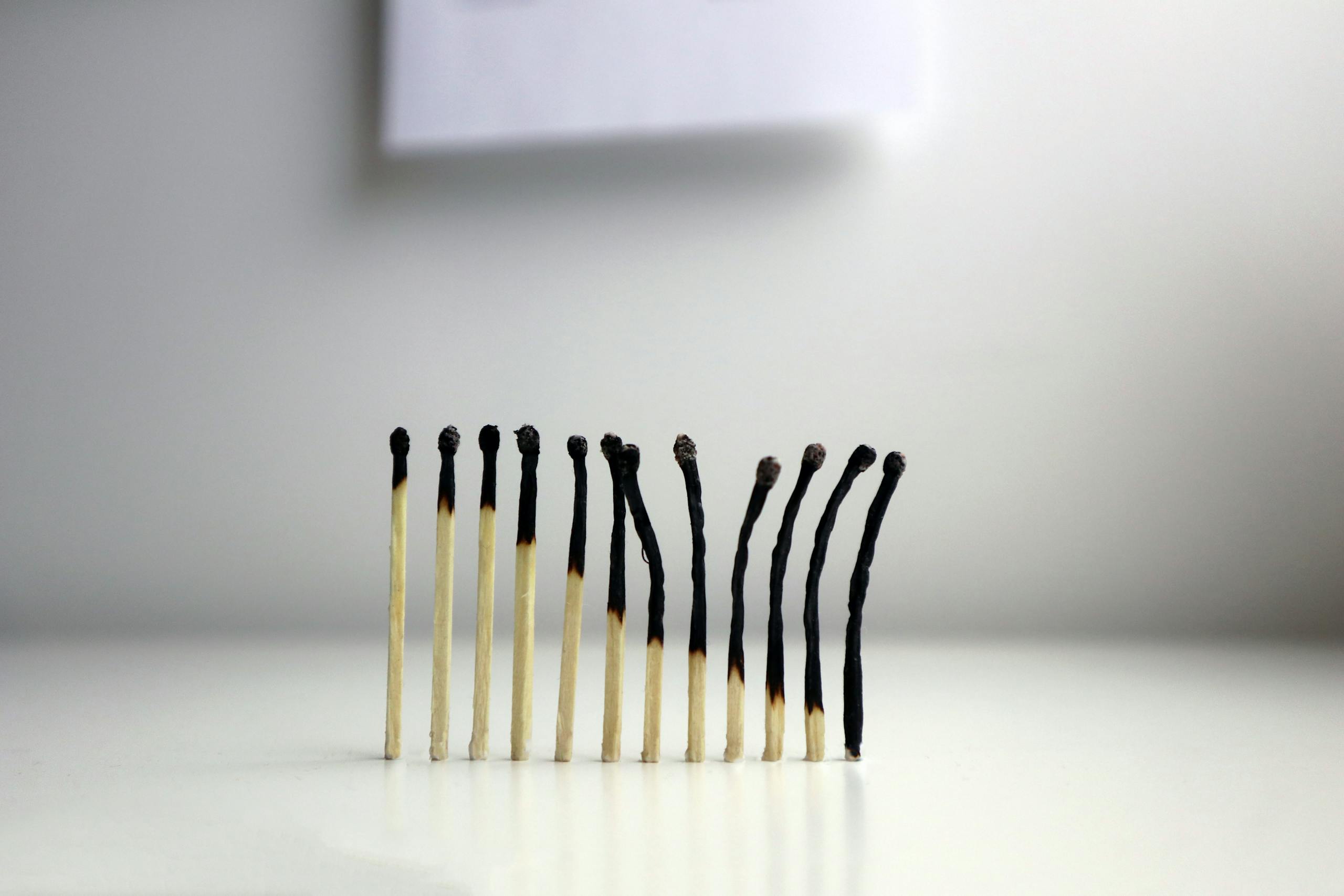
What Happens to Your Energy When You Stop Protecting It?
There’s a cumulative quality to unprotected energy that’s easy to underestimate until you’re already running on empty. Each individual interaction with a draining friend might feel manageable in isolation. Over weeks and months, the pattern compounds.
I noticed this most clearly during a particularly intense period at my agency, when we were managing three major account pitches simultaneously and I was also in a friendship that had quietly become a one-way emotional support arrangement. The professional demands were enormous but finite. The friendship had no natural endpoint. Every time I thought I’d given enough, there was another crisis, another call, another hour I didn’t have. By the end of that period I was more depleted than I’d ever been, and I initially blamed the pitches. It took some honest reflection to see that the friendship had been drawing from the same reservoir.
Managing your energy reserves isn’t selfish. It’s what makes you capable of showing up well for anyone, including the friends who genuinely matter to you. Protecting your energy reserves is a practice, not a one-time decision, and it requires ongoing attention to where your energy is going and whether the exchange is sustainable.
There’s also something worth noting about what happens to your other relationships when one friendship is consuming a disproportionate share of your social battery. The people who are genuinely good for you, the reciprocal friendships, the ones that restore as much as they ask, often get the leftover version of you. You show up tired, half-present, unable to access the depth and warmth that makes you a good friend. Protecting your energy isn’t just about protecting yourself. It’s about having something real to offer the people who deserve it.
Neuroscience offers some context here too. Cornell research on brain chemistry and personality has explored how introverts and extroverts differ in their neurological responses to stimulation, which helps explain why social energy isn’t an infinite or equally distributed resource. And research published in PubMed Central on social behavior and well-being underscores how the quality of our close relationships, not just their quantity, has meaningful effects on overall health.
Can a Draining Friendship Actually Change?
Sometimes, yes. Not always, but sometimes. And the honest answer is that you often can’t know which kind you’re dealing with until you’ve actually communicated the limit and given the friendship time to respond.
Some friends, when they understand that a pattern has been costly to you, genuinely want to shift it. They weren’t aware of the imbalance. They’d gotten comfortable in a dynamic that worked for them without realizing what it was costing you. A clear, honest conversation opens the possibility of something more mutual. Not every friendship that drains you is a friendship worth ending. Some are worth renegotiating.
Others reveal, through their response to a limit, that the friendship was primarily structured around what you provided to them. When you stop providing it unconditionally, the interest fades. That’s painful information, but it’s useful. A relationship that only functions when you’re giving more than you receive isn’t a friendship in the fullest sense. It’s a service arrangement with affection attached.
The friendships worth fighting for are the ones where both people, even imperfectly, are trying to see each other clearly and meet each other honestly. Those friendships can survive a difficult conversation. They can absorb a limit and find a new equilibrium. That capacity for renegotiation is actually a sign of health, not fragility.
Broader research on social connection and health, including work published in Springer’s public health journals, consistently points to the quality of social bonds as a significant factor in well-being. Fewer, deeper, genuinely reciprocal friendships tend to serve introverts far better than a wide network of connections that never quite satisfy. Protecting those deeper friendships, including from patterns that are slowly corroding them, is worth the discomfort of a hard conversation.
What If You Feel Guilty for Wanting Less From Someone?
Guilt is almost always part of this process for introverts who genuinely care about people. You can know intellectually that a limit is reasonable and still feel, in your gut, that you’re failing someone by drawing it. That tension is real and it’s worth naming rather than dismissing.
What I’ve found helpful is distinguishing between guilt that signals a genuine error and guilt that signals discomfort with change. The first kind is worth listening to. The second kind is information about your own patterns, not about whether you’ve done something wrong.
If you’ve been honest, specific, and warm in communicating a limit, and the guilt persists anyway, it’s worth asking where that guilt comes from. For many introverts, particularly those who grew up in environments where their needs were framed as inconvenient or excessive, the guilt around having needs at all runs very deep. It predates the friendship. Setting a limit with a friend can activate that older, more fundamental discomfort.
That’s worth exploring, possibly with a therapist or in your own reflective practice. But it shouldn’t stop you from the limit itself. Your needs in a friendship are legitimate. The energy you bring to your relationships is finite and valuable. Protecting it isn’t a failure of love. It’s what makes sustained love possible.
Research on emotional regulation and interpersonal functioning suggests that people who can identify and communicate their needs in relationships tend to maintain healthier, more stable connections over time. The discomfort of setting a limit is almost always shorter-lived than the slow erosion of a friendship that never had one.

What Does It Look Like to Actually Enforce the Limit Over Time?
Setting a limit once is the beginning, not the end. The more important work is what happens in the weeks and months after, when old patterns reassert themselves and the path of least resistance is to quietly let the limit slide.
A few things that help with consistency:
Notice when you’re drifting back. It usually happens gradually. One exception becomes a pattern. You answer the late call once because it felt urgent, and suddenly the expectation is back. Catching the drift early is much easier than addressing it after it’s fully re-established.
Give yourself permission to be imperfect. You’ll slip sometimes. You’ll answer when you said you wouldn’t, agree to something you’d decided against. That’s human. What matters is returning to the limit without catastrophizing the slip.
Track your energy honestly. After spending time with this friend, following a conversation, after a period of more contact than usual, check in with yourself. Are you more depleted than before? Is the pattern improving or reverting? Your own energy levels are the most honest measure of whether a limit is actually working.
Remember that limits can evolve. A friendship that needed a firm limit during a particular season might, over time, develop into something more balanced. Or the opposite might happen, and you might find that a limit you thought was sufficient needs to be firmer. Treat your limits as living agreements rather than fixed rules, and be willing to reassess as things change.
The Harvard Health perspective on introverts and socializing emphasizes that sustainable social engagement, rather than forced extroversion, is what actually serves introverts well. That principle applies directly here. A friendship structure that’s sustainable for you is one where both people can show up genuinely, without one person consistently depleting themselves for the sake of the connection.
Protecting your energy in friendships is one piece of a larger picture. Our Energy Management and Social Battery hub covers the broader terrain of how introverts can manage their social energy across all areas of life, from professional settings to personal relationships, with strategies that actually hold up over time.
About the Author
Keith Lacy is an introvert who’s learned to embrace his true self later in life. After 20 years in advertising and marketing leadership, including running agencies and managing Fortune 500 accounts, Keith now channels his experience into helping fellow introverts understand their strengths and build fulfilling careers. As an INTJ, he brings analytical depth and authentic perspective to every article, drawing from both professional expertise and personal growth.
Frequently Asked Questions
How do I know if a friendship is draining me or if I’m just going through a difficult period?
Pay attention to patterns across time rather than isolated moments. Everyone goes through periods where they have less to give or more to ask. The signal worth noting is whether the dynamic is consistently one-directional, whether you reliably feel more depleted after time with this person than before, and whether the imbalance has persisted across different seasons of both your lives. A temporary period of need in a friendship is normal. A structural pattern where one person always carries the weight is something different.
Is it possible to set limits with a close friend without damaging the friendship?
Yes, and in many cases a well-communicated limit actually strengthens a friendship by making it more honest and sustainable. The friendships most likely to survive a limit are the ones where both people genuinely care about each other’s experience. Leading with warmth, being specific about behavior rather than character, and naming what you can offer, not just what you can’t, gives the friendship room to adapt. A friendship that can’t accommodate any limits at all was probably more fragile than it appeared.
Why do I feel guilty even when I know my limit is reasonable?
Guilt around having needs in relationships is extremely common among introverts, particularly those who grew up learning to minimize their own requirements. That guilt often predates the specific friendship and reflects a deeper pattern of treating your own needs as less legitimate than other people’s. It’s worth distinguishing between guilt that signals a genuine error, where you’ve been unkind or unfair, and guilt that simply signals discomfort with change. The first deserves attention. The second is information about your history, not about whether your limit is appropriate.
What if my friend becomes upset or withdraws when I communicate a limit?
An initial reaction of hurt or confusion is normal when a familiar dynamic shifts. Give the friendship time to settle before drawing conclusions. What matters more is how your friend responds once the initial reaction passes. Do they engage with what you said, try to understand your perspective, and show some willingness to adjust? Or does the withdrawal become permanent, or the behavior continue unchanged? The longer-term response tells you far more about the friendship’s actual foundation than the first reaction does.
How do limits in friendship connect to overall energy management for introverts?
Friendship limits are a direct form of energy management. Introverts operate with a finite social battery, and every interaction draws from that reserve. A friendship that consistently costs more than it returns doesn’t just affect your relationship with that person. It depletes the energy you have available for every other relationship, creative endeavor, professional engagement, and personal recovery practice in your life. Protecting your energy in friendships isn’t a peripheral concern. It sits at the center of sustainable well-being for introverts.