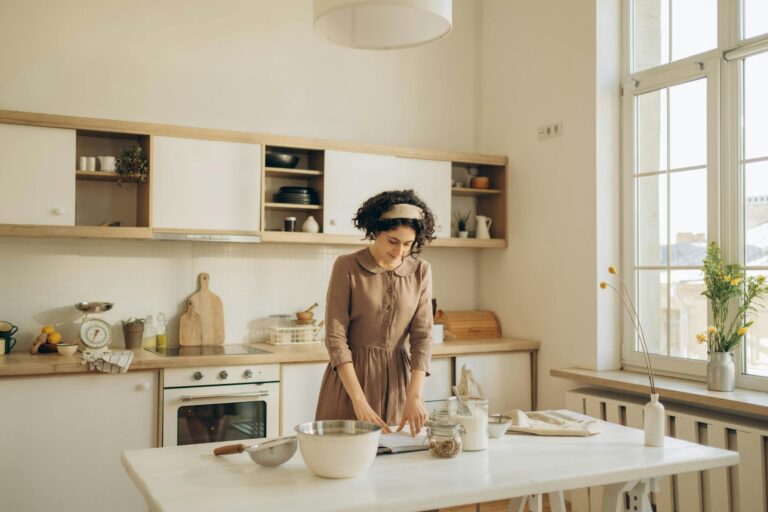

A homebody house party sounds like a contradiction until you realize it might be the most honest form of entertaining there is. It’s a gathering designed around your actual preferences, held in the one space where you genuinely feel like yourself, on your own terms.
Homebodies don’t avoid people. They avoid exhausting people. And a house party built around that distinction changes everything about how the evening feels, both for you and for the guests who matter most to you.

If you’ve been exploring what it means to build a life that fits your wiring rather than fighting it, the Introvert Home Environment hub covers the full picture of how your home can become a genuine extension of who you are, from how you arrange your space to how you share it with others.
Why Does Hosting Feel So Wrong When You’re a Homebody?
There’s a particular kind of dread that sets in around the third week of January when someone in your friend group floats the idea of “getting everyone together.” As an INTJ who ran advertising agencies for over two decades, I spent years hosting client dinners, team celebrations, and industry events that looked effortless from the outside. Inside, I was running calculations the entire time: how many people, how loud, how long, what’s my exit window.
What’s your personality type?
Take our free 40-question assessment and get a detailed personality profile with dimension breakdowns, context analysis, and personalised insights.
Discover Your Type8-12 minutes · 40 questions · Free
The problem was never the people. Some of my most meaningful professional relationships were built at those gatherings. The problem was the format. Loud, sprawling, unstructured events drain introverts not because we dislike connection, but because that kind of environment makes real connection nearly impossible. You end up having fifteen surface conversations instead of two meaningful ones, and you leave feeling emptier than when you arrived.
Homebodies feel this acutely because we’ve already done the work of understanding what genuinely restores us. We’ve built spaces that reflect that understanding. Then we invite people into those spaces and immediately abandon everything that makes them work, cranking up the music, cramming in more guests than the room comfortably holds, and performing a version of “fun” that looks borrowed from someone else’s playbook.
What nobody tells you is that you’re allowed to host differently. You’re allowed to design a gathering around the kind of connection you actually find meaningful. Psychology Today has written thoughtfully about why deeper, more focused conversations tend to produce greater satisfaction for introverts than high-volume social contact. A homebody house party is just the practical application of that insight.
What Does a Homebody House Party Actually Look Like?
Strip away the assumption that a party needs to be loud, crowded, or structured around performance, and you’re left with something much simpler: a few people you genuinely like, in a space that feels good, doing something that doesn’t require you to be someone else.
That could be a dinner for four with good food and no agenda. It could be a film night where the movie does most of the conversational heavy lifting afterward. It could be a board game evening, a cookbook club, a vinyl listening session, or a quiet afternoon where people drift in and out of the kitchen while something slow-cooks on the stove.
What these formats share is structure without performance. There’s something happening, which takes the pressure off constant conversation, but the something is low-stakes enough that real moments can emerge naturally. I’ve had more genuine exchanges with colleagues over a slow dinner at my place than in any conference room or networking event I ever attended. The difference was always the container.
The homebody couch is actually a useful metaphor here. It represents the kind of comfort that doesn’t apologize for itself. A great homebody house party has that same quality: it’s comfortable on purpose, not by accident.

How Do You Set Up Your Home to Host Without Losing Yourself?
One of the more counterintuitive things I discovered after leaving the agency world was how much my home environment had been shaped by what I thought I was supposed to want rather than what actually worked for me. I had a formal dining room I never used, a living room arranged for maximum seating capacity, and almost no quiet corners where a single person could sit comfortably without feeling isolated.
When I finally started designing my space around my actual habits, something shifted. Hosting became less fraught because the space itself was doing some of the work. Guests naturally gravitated toward smaller clusters. Conversations stayed at a volume where you could actually hear the person across from you. Nobody felt pressure to entertain the whole room because the room wasn’t set up for that.
A few things that made a real difference:
Lighting matters more than almost anything else. Overhead lighting at full brightness creates a clinical, performative atmosphere. Warm lamps, candles, and dimmers create intimacy. Your guests will naturally lower their voices and slow down. That’s exactly what you want.
Seating arrangements that create natural small groups work better than one large circle. Two chairs angled toward each other near a bookshelf, a bench at the kitchen island, a couple of floor cushions near the record player. People self-select into the conversations they want to have rather than being conscripted into one big group dynamic.
For those who are also highly sensitive, the sensory dimension of hosting is especially significant. The approach to HSP minimalism applies directly here: a simpler, less cluttered environment reduces the sensory load for both you and your guests, making the whole evening feel more spacious even when the room is full.
Sound is the other major variable. Background music at a level that fills silence without competing with conversation is genuinely harder to calibrate than it sounds. Too quiet and every lull feels awkward. Too loud and people start shouting, which exhausts everyone. A playlist that runs at conversational volume, with no jarring tempo shifts, is worth the fifteen minutes it takes to build.
Who Should You Actually Invite?
This is where the homebody house party becomes genuinely different from conventional entertaining advice. Most hosting guidance assumes you’re trying to impress people or expand your social circle. A homebody party starts from a different premise entirely: you’re creating space for connection with people who already get you, or who you genuinely want to know better.
That’s a much shorter list than most people think.
In my agency years, I hosted plenty of events out of obligation: clients who needed to feel valued, colleagues who needed to feel included, partners who needed to feel like they mattered to us. Some of those relationships became real over time. Most didn’t. And I spent enormous energy maintaining a social performance that served the business but left me depleted in ways I didn’t fully understand until much later.
A homebody house party isn’t a networking event with better lighting. It’s a deliberate choice to spend your limited social energy on people who genuinely matter to you. That might be three people. It might be eight. What it probably isn’t is twenty, because twenty people in a home environment almost always defaults to the kind of surface-level chaos that makes homebodies want to retreat to their bedroom.
There’s also something worth saying about mixing social worlds carefully. Introverts often have distinct friend groups that don’t overlap, and there’s wisdom in that. Throwing everyone together can create a social management burden that falls entirely on you as the host. Smaller, more focused gatherings let you actually be present rather than spending the whole evening making sure everyone is okay.

How Do You Recover After Hosting Without Losing Days to It?
Even a well-designed gathering costs something. That’s not a failure of the format; it’s just the reality of being wired the way we are. The question isn’t how to avoid the post-party crash entirely, but how to make it shorter and less severe.
Recovery planning is something I wish someone had told me about twenty years ago. After major client presentations or agency-wide events, I would push through the exhaustion and immediately start the next thing, which meant I was running on empty for days afterward. The depletion compounded instead of clearing.
What actually works is building a specific recovery window into the plan before the party even happens. Not vaguely “I’ll take it easy tomorrow,” but a concrete block of time that belongs to you. A morning with no commitments. An afternoon that’s entirely unscheduled. Something you genuinely look forward to that requires nothing social of you.
Some introverts find that low-stakes online connection during recovery actually helps rather than hurts, because it provides a small dose of human contact without any of the performance demands of in-person interaction. Others need complete solitude. Worth knowing which one you are before you need it.
There’s also a case for ending the party at a reasonable hour rather than letting it drift. Homebodies often feel guilty about this, as if a good host should always let things run as long as guests want to stay. That guilt is worth examining. You can be a warm, generous host and still have a natural ending time. In fact, guests often appreciate it. A gathering with a clear arc feels intentional rather than exhausting.
Burnout from repeated social obligations is a real pattern, and it tends to build gradually rather than arriving all at once. The relationship between social exhaustion and overall wellbeing is well-documented, and homebodies who ignore their recovery needs tend to start dreading social contact altogether, which isn’t the goal. The goal is sustainable connection, not heroic endurance.
What’s the Role of Food and Atmosphere in a Homebody Gathering?
Food at a homebody house party should do one thing above all else: create warmth without creating stress. That rules out anything that requires you to spend the entire party in the kitchen, anything that demands precise timing, and anything that puts you in the position of performing culinary competence for an audience.
The best homebody hosting food is the kind that can be mostly finished before people arrive, that improves with sitting, and that invites people to serve themselves. A slow-braised something. A big grain salad. A cheese board that took twenty minutes to assemble but looks like you thought about it for a week. Soup. Bread. Things that say “I’m glad you’re here” without requiring you to prove it through technical execution.
This approach also changes the social dynamic in a useful way. When food is communal and self-serve, people move around naturally, conversations shift, and the gathering develops its own organic rhythm. You’re not managing a service experience; you’re sharing a meal. Those are very different things.
Atmosphere deserves the same intentional thought. The books on your shelves, the objects on your table, the music playing quietly in the background: these aren’t decorations. They’re conversation starters, and they’re also expressions of who you actually are. A homebody house party that reflects your genuine taste and interests is far more interesting than one that tries to approximate what a party is “supposed” to look like.
If you’re looking for ideas on how to think about your home environment as a genuine expression of your personality rather than a performance of it, the homebody book is worth your time. It approaches the whole concept of home with the kind of depth that homebodies actually want to engage with.

How Do You Handle Guests Who Don’t Match Your Energy?
Every gathering has at least one. The person who arrives louder than the room, who fills every silence, who seems to be running a different social algorithm than everyone else. In my agency years, I managed entire teams built around personality diversity, and I learned that the most useful skill wasn’t suppressing the high-energy people. It was creating structures that let everyone find their level.
At a homebody house party, that structure is built into the format itself. When there’s an activity, a shared focus, or a natural rhythm to the evening, high-energy guests have somewhere to direct that energy that isn’t just volume. A competitive board game gives them a legitimate arena. A film gives everyone a shared experience to process together. A cooking activity channels energy into something productive.
What doesn’t work is hoping the energy mismatch will resolve itself. It rarely does. And as the host, you’re not obligated to absorb it. You can redirect, you can suggest a shift in activity, you can simply move the conversation toward something that requires more listening than performing.
There’s also something worth acknowledging about the specific challenge of hosting people who don’t understand introversion. Some guests interpret a quiet, intentional gathering as evidence that the party isn’t “working” and try to fix it by escalating. Approaches to introvert-extrovert conflict resolution can help here, not because your gathering is a conflict, but because the underlying dynamic is similar: two different social needs trying to occupy the same space.
Being honest with close friends about what kind of gathering you’re hosting actually helps. “This is going to be pretty low-key, just dinner and conversation” sets expectations before anyone arrives. People who want something louder can make other plans. People who were secretly hoping for exactly that can arrive already relaxed.
What Makes a Homebody House Party Worth Repeating?
The measure of a successful gathering isn’t how many people came or how long it lasted. It’s whether you’d genuinely want to do it again. That’s a higher bar than it sounds, because most introverts have hosted events that went “fine” by external standards but left them with a quiet resolution to wait at least six months before doing it again.
A gathering worth repeating has a few qualities in common. You were actually present for most of it rather than managing it from a distance. At least one conversation happened that you’ll still be thinking about a week later. You didn’t spend the entire time calculating when it would be over. And the people who came left feeling genuinely welcomed rather than efficiently entertained.
Getting there takes some iteration. The first time you host on your own terms rather than borrowed terms, something might feel slightly off. Maybe the guest list was slightly too large, or the activity didn’t quite land, or the food took more attention than you’d planned. That’s fine. The information is useful. You adjust.
What you’re building over time is a hosting style that’s genuinely yours. And that’s worth more than any single perfect evening. When your friends know that an invitation from you means a certain kind of experience, a thoughtful, warm, unhurried gathering where they’ll actually connect with the people there, they start to look forward to it in a specific way that generic parties don’t inspire.
Thinking about what to give or receive as a homebody who loves to host? The gifts for homebodies collection and the broader homebody gift guide both offer ideas that speak to exactly this kind of intentional, comfort-forward lifestyle. A beautiful serving piece, a great set of candles, a game designed for small groups: these aren’t just objects. They’re investments in the kind of evenings you actually want to have.

Is There a Deeper Reason Homebodies Make the Best Hosts?
There’s something I’ve come to believe after years of observing how different people move through social environments: the best hosts aren’t the most extroverted ones. They’re the most attentive ones.
Homebodies notice things. We notice when someone’s glass is empty, when someone on the edge of the group is looking for a way into the conversation, when the energy in the room has shifted and something needs to change. We notice because noticing is what we do. It’s how we process the world, quietly, continuously, with a level of detail that most people don’t register.
That attentiveness, when channeled into hosting, creates something that louder, more performative parties rarely achieve: the feeling that you were actually seen. That the person who invited you thought about what you’d enjoy, what you’d need, what would make the evening feel worth the effort of leaving your own home.
There’s also something meaningful about the fact that homebodies share their home specifically. Not a restaurant, not a rented venue, not a bar. The place where we actually live, with all its particular objects and arrangements and quiet corners. That’s an act of genuine trust. Guests feel it, even if they can’t articulate why.
Fascinating work on social connection and wellbeing, including this research on social environments and psychological health, consistently points toward quality of connection over quantity of contact as the more significant factor in long-term wellbeing. Homebodies have been living this principle intuitively for years. A house party built around that principle isn’t a lesser version of entertaining. It’s a more honest one.
The relationship between environment and psychological experience is also worth understanding here. The spaces we create and inhabit shape how we feel and how we connect. A homebody who has invested in their home environment isn’t being self-indulgent. They’re building the conditions for the kind of connection they find most meaningful.
At the end of my agency career, I started hosting smaller, more deliberate gatherings with the colleagues and clients I actually wanted to know better. No caterers, no formal agenda, no name badges. Just good food, a comfortable room, and enough time to have a real conversation. Those evenings produced more genuine trust and stronger working relationships than any formal event I ever organized. That’s not a coincidence.
A homebody house party, done on your own terms, is one of the most quietly powerful social acts available to an introvert. It says: I know what I value. I know what connection looks like for me. And I’m willing to share it with you.
There’s much more to explore about creating a home that genuinely supports your introverted nature, from how you arrange your space to how you use it for rest and restoration. The full Introvert Home Environment hub brings all of those threads together in one place.
About the Author
Keith Lacy is an introvert who’s learned to embrace his true self later in life. After 20 years in advertising and marketing leadership, including running agencies and managing Fortune 500 accounts, Keith now channels his experience into helping fellow introverts understand their strengths and build fulfilling careers. As an INTJ, he brings analytical depth and authentic perspective to every article, drawing from both professional expertise and personal growth.
Frequently Asked Questions
What is a homebody house party?
A homebody house party is a small, intentional gathering designed around the host’s genuine preferences rather than conventional party expectations. It typically involves a limited guest list, a comfortable and low-stimulation environment, and a format that prioritizes real conversation and connection over performance or spectacle. For introverts and homebodies, this approach makes hosting sustainable and genuinely enjoyable rather than draining.
How many people should you invite to a homebody house party?
Most homebodies find that gatherings of four to eight people hit the sweet spot. Small enough that real conversation is possible across the whole group, large enough that the evening has some natural energy and variety. Groups larger than ten tend to fragment in ways that require active management from the host, which defeats the purpose of hosting on your own terms. That said, the right number depends on your specific home layout and your own social capacity on any given day.
How do introverts recover after hosting a party at home?
Recovery after hosting works best when it’s planned in advance rather than improvised. Building a specific block of unscheduled time into the day after a gathering, rather than vaguely planning to “take it easy,” makes the recovery more effective. Some introverts find complete solitude restorative. Others benefit from low-demand activities like reading, walking, or light online connection that provides minimal social contact without performance pressure. Ending the party at a reasonable hour also reduces the depth of the post-event crash significantly.
What kinds of activities work well at a homebody house party?
Activities that provide structure without requiring performance tend to work best. Board games designed for small groups, film nights with discussion afterward, shared cooking projects, vinyl listening sessions, and communal dinners with no formal agenda all create natural conversation without forcing it. The common thread is that something is happening, which takes the pressure off constant social interaction, but the something is low-stakes enough that genuine moments can emerge organically.
Can a homebody be a good host?
Homebodies often make exceptionally good hosts precisely because of their introverted qualities. The attentiveness, care for environment, preference for depth over breadth, and genuine investment in the comfort of people they’ve chosen to invite all translate directly into hosting that feels thoughtful and personal. The difference lies in hosting on your own terms rather than borrowing a format that doesn’t fit. A gathering designed around genuine connection in a space you’ve invested in tends to leave guests feeling more welcomed than a larger, louder event that prioritizes spectacle over substance.