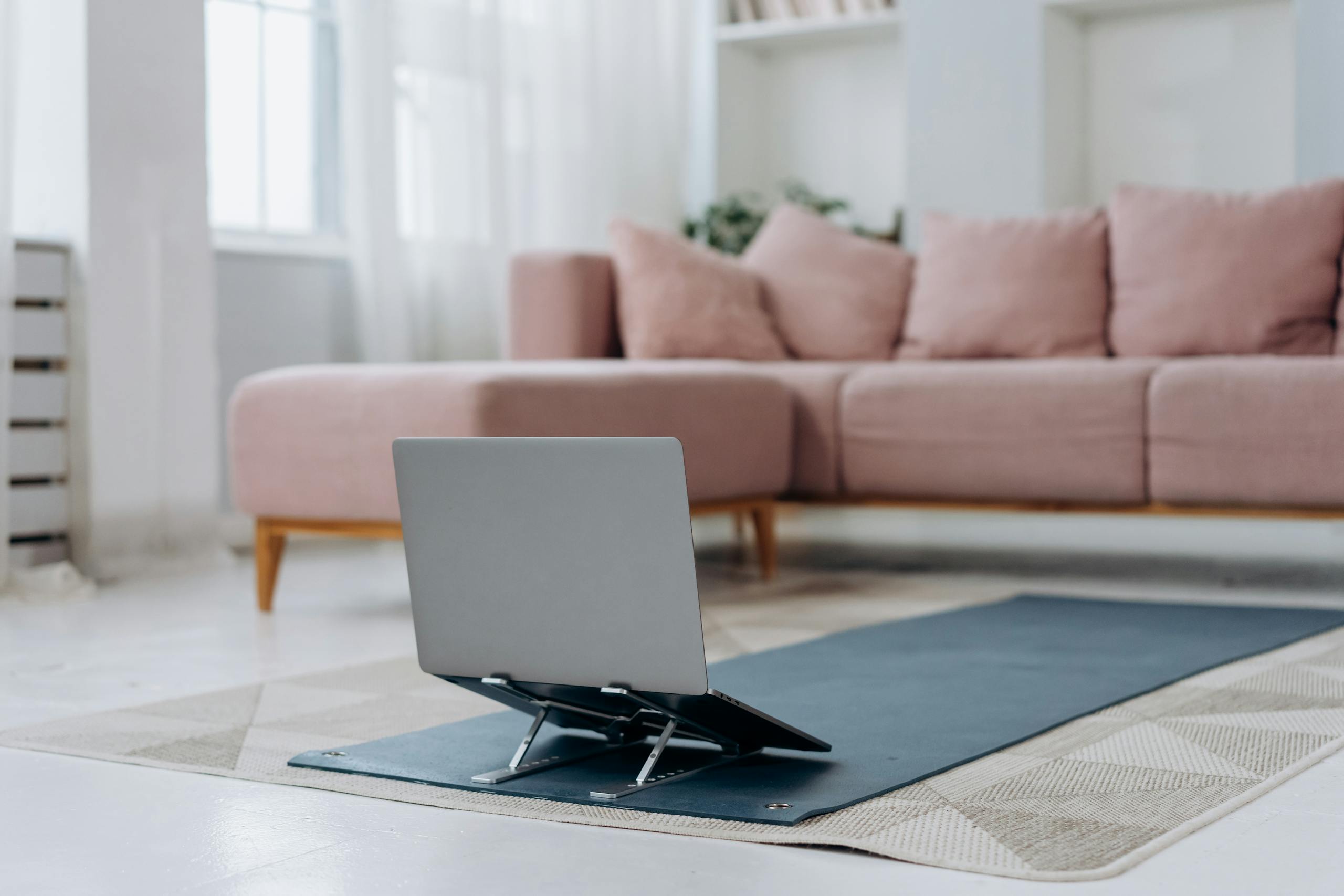

A homebody lifestyle is a deliberate way of living that centers rest, home-based connection, and personal restoration over constant social activity or external stimulation. It’s not about avoiding life. It’s about choosing where your life actually happens.
For many introverts, this isn’t a lifestyle trend to adopt. It’s a description of something they’ve always felt but rarely had permission to name without apology.
My own relationship with home changed the moment I stopped treating it as the place I retreated to after the real world wore me down, and started treating it as the place where my real life actually lived. That shift took longer than I’d like to admit.

If you’re exploring what a homebody lifestyle actually looks like in practice, and what it can offer beyond the obvious comfort of staying in, you’ll find a fuller picture of this world in our Introvert Home Environment hub, which covers everything from sensory design to social connection on your own terms.
What Does Living as a Homebody Actually Feel Like From the Inside?
There’s a version of the homebody lifestyle that gets described from the outside, and it usually sounds like laziness dressed up in a blanket. Staying in, avoiding people, saying no to things. That description misses almost everything that matters.
What’s your personality type?
Take our free 40-question assessment and get a detailed personality profile with dimension breakdowns, context analysis, and personalised insights.
Discover Your Type8-12 minutes · 40 questions · Free
From the inside, a homebody lifestyle feels like having a place in the world where your nervous system can finally exhale. It feels like choosing depth over volume. It feels like building something quiet and specific and yours, rather than performing participation in someone else’s idea of a full life.
I ran advertising agencies for over two decades. My weeks were built around client dinners, pitch presentations, open-plan offices, and the constant ambient noise of a people-heavy industry. I was good at all of it. But I noticed something consistent across those years: the moments where I actually did my best thinking, where the real creative breakthroughs happened, were almost always at home. Early mornings before anyone else was awake. Sunday afternoons with a legal pad and no agenda. The office was where I performed. Home was where I actually worked.
That distinction matters. A homebody lifestyle isn’t the absence of productivity or ambition. It’s a different relationship with where and how those things happen.
Many people who identify this way describe a kind of internal richness that doesn’t require external stimulation to sustain itself. They notice things. They sit with ideas longer. They find satisfaction in small rituals, a particular chair, a morning routine, the way afternoon light moves across a familiar room. These aren’t compensations for a lack of social life. They’re the texture of a life that’s been built with intention.
How Do You Build a Homebody Lifestyle That Actually Restores You?
Not every version of staying home is restorative. Anyone who’s spent a Sunday doom-scrolling on a couch they didn’t choose to sit on knows the difference between rest and stagnation. A homebody lifestyle that genuinely works for you has to be built, not just defaulted into.
The physical environment is the foundation. This is something I came to understand gradually, and honestly, I came to it through exhaustion. After years of designing office spaces around client impressions and team collaboration, I finally started thinking about my home the way I thought about workspace ergonomics: what does this space need to do for the person who lives here?
For introverts and especially for highly sensitive people, the answer often involves reducing visual noise, creating distinct zones for different kinds of activity, and building in sensory softness. There’s a whole philosophy around this that I find genuinely useful, explored well in the approach of HSP minimalism, which treats simplification not as aesthetic preference but as a form of nervous system care. The principle applies even if you don’t identify as highly sensitive: a home that doesn’t overwhelm you is a home that can actually restore you.

Beyond the physical space, a restorative homebody lifestyle is built around rhythm. Not a rigid schedule, but a loose architecture of the day that your body and mind can settle into. Morning routines that ease you in rather than launch you out. Afternoon anchors that give structure without pressure. Evening rituals that signal the shift from doing to being.
One of the things I’ve found genuinely useful is thinking about what I want from each part of the day before the day starts pulling me in directions. As an INTJ, I’m naturally inclined toward systems, so this comes somewhat easily to me. But the principle holds regardless of type: a homebody lifestyle without intention can drift into a kind of pleasant fog that doesn’t actually leave you feeling recharged.
The homebody couch is a real thing, and I mean that affectionately. There’s an art to how you inhabit your home’s central resting space. Whether it’s where you read, where you think, where you watch something that genuinely interests you rather than something that just fills silence, the couch can be a place of genuine restoration or a place of passive drift. The difference is usually intention.
Can a Homebody Lifestyle Include Real Connection?
One of the persistent myths about homebodies is that choosing home over social activity means choosing isolation. It’s a conflation that drives me a little crazy, because it misunderstands what connection actually requires.
Connection requires presence, honesty, and genuine interest in another person. It does not require a bar, a party, or a standing social calendar. Some of the most meaningful exchanges I’ve had in my adult life happened over email, over a long phone call, over a quiet dinner with one or two people I actually wanted to talk to. The format isn’t the point. The depth is.
There’s solid grounding for this in how introverts tend to experience conversation. Psychology Today’s work on deeper conversations points to something many introverts already feel intuitively: surface-level socializing is often more draining than energizing, while conversations that go somewhere real can actually restore rather than deplete.
For homebodies who want connection without the overhead of constant in-person social performance, digital spaces have genuinely expanded the options. Chat rooms built for introverts offer something that traditional social settings rarely do: the ability to engage thoughtfully, at your own pace, without the pressure of real-time performance. That’s not a lesser form of connection. For many people, it’s actually a more honest one.
During a particularly demanding period running one of my agencies, when I was managing a team of thirty-plus people and the social load was genuinely unsustainable, I started being more deliberate about which connections I was actually investing in. Not withdrawing, just editing. I stopped attending every industry event and started having longer, more substantive conversations with the handful of people whose thinking I actually valued. My social life got smaller and significantly better.
A homebody lifestyle can hold real connection. It just tends to hold it differently, with more care for quality and less tolerance for volume.

What Role Does Rest Play in a Homebody Life, and Why Does It Matter So Much?
Rest is probably the most misunderstood element of a homebody lifestyle. From the outside, it looks like doing nothing. From the inside, it’s often the most productive thing a person can do.
I spent years treating rest as something I earned after I’d done enough work. That’s a fairly common framework in high-performance professional environments, and it’s also fairly dysfunctional. What I eventually figured out, partly through burning out more than once, is that rest isn’t the reward for output. Rest is the condition that makes sustained output possible.
There’s meaningful research supporting the connection between genuine rest and cognitive restoration. Work published in PubMed Central on psychological restoration examines how environments and activities that allow the mind to disengage from directed attention can restore the capacity for focused thinking. For introverts whose cognitive load is often higher in social environments, home becomes the primary site where that restoration can actually happen.
Additional research on stress recovery and environment reinforces something homebodies tend to know experientially: the physical space you’re in matters to how well you recover. A home that feels safe, quiet, and personally meaningful supports restoration in ways that unfamiliar or overstimulating environments simply can’t.
What rest looks like in a homebody lifestyle varies enormously. For some people it’s reading, and not just any reading but the kind that pulls you entirely out of your own head and into something else. A good homebody book does something specific: it gives your mind somewhere to go that isn’t the accumulated weight of your own to-do list. For others, rest is cooking, or gardening, or a long bath, or a nap without guilt. The form matters less than the function: genuine disengagement from the demands that normally occupy your attention.
What I’ve noticed in myself is that the quality of my rest has a direct and measurable effect on the quality of my thinking. The weeks where I’ve protected time for genuine downtime, where I’ve let myself be home without agenda, I’m sharper, more patient, and more creatively alive. The weeks where rest has been crowded out by obligations, I’m slower, more reactive, and considerably less useful to anyone, including myself.
How Do You Sustain a Homebody Lifestyle Without Sliding Into Isolation?
There’s a real distinction between a homebody lifestyle chosen with awareness and one that quietly becomes avoidance. It’s worth being honest about that distinction, because conflating them doesn’t serve anyone.
A homebody lifestyle sustained with intention involves knowing why you’re choosing home. It involves periodically checking whether your choices are coming from a place of genuine preference or from anxiety, low energy, or something that might benefit from attention. Those are different things, and they call for different responses.
I’ve had periods in my life where staying home wasn’t a preference. It was avoidance wearing the mask of preference. Usually during high-stress seasons at the agency, when the social demands of leadership had depleted me past the point where I could show up authentically anywhere, I’d retreat so completely that I started declining things I actually wanted to do. That’s not a homebody lifestyle. That’s burnout expressing itself as withdrawal.
The difference, as I’ve come to understand it, is energy versus depletion. A genuine homebody lifestyle leaves you feeling more like yourself, not less. You’re choosing home because it gives you something, not because everything else has taken too much.
Sustaining this kind of lifestyle also means staying connected to the world in ways that feel right for you, rather than cutting contact entirely. That might mean maintaining a few close friendships with real investment. It might mean engaging with communities online where the pace and format suit how you think. It might mean finding work that doesn’t require you to be “on” in ways that drain your reserves before you’ve even made it home.
It also means, occasionally, doing something that takes you out of your comfort zone, not because someone told you that you should, but because you’ve recognized that a small amount of productive discomfort keeps you from calcifying. The homebody lifestyle at its best is a home base, not a hiding place.
What Does a Homebody Lifestyle Look Like When You’re Building It Intentionally?
Building a homebody lifestyle on purpose, rather than just ending up in one by default, involves a few things that aren’t always obvious at first.
The first is investing in your home as a genuine environment rather than just a place you sleep. This doesn’t require money as much as it requires attention. What does your home currently communicate to you when you walk in the door? Does it feel like a place that’s on your side? If not, what would need to change? Sometimes it’s a physical thing: clearing clutter, adding warmth, creating a dedicated space for the activities that restore you. Sometimes it’s a habit thing: building rituals that signal to your nervous system that it’s safe to settle.
Thinking through what to invest in for your home life is something worth doing deliberately. A thoughtful homebody gift guide can actually be a useful prompt for this, not because you need someone to buy you things, but because it surfaces the categories of comfort and function worth thinking about. What serves your reading life? Your sensory environment? Your capacity to rest well? These are worth answering.
The second element is protecting your home time with the same seriousness you’d protect a work commitment. This was genuinely hard for me early in my career. I treated my calendar as a public resource and my home time as whatever was left over. That math never worked. The calendar always won. At some point I started scheduling the things that mattered to me at home with the same firmness I scheduled client meetings, and my relationship with my own life improved considerably.
Third, and perhaps less obviously, is being intentional about the gifts you give yourself as a homebody. Not material gifts necessarily, though the right objects can genuinely support a home-centered life. I mean the gift of time without agenda. The gift of not explaining your preferences to people who’ve decided they should be different. The gift of taking your own comfort seriously as a legitimate priority rather than a luxury you haven’t quite earned yet.
Curating gifts for homebodies in your own life, whether that’s a specific book, a better lamp, a subscription to something that feeds your mind, or simply a Sunday morning with no obligations, is an act of self-knowledge as much as self-care. It requires knowing what actually restores you, which requires paying attention to yourself with some consistency.
There’s also something worth saying about the relationship between a homebody lifestyle and professional life, because I spent twenty years managing that tension directly. The assumption in most professional environments is that ambition and visibility go together, that the people who are present everywhere, at every event, every happy hour, every industry gathering, are the ones who are serious about their careers. That assumption is wrong, and I say that as someone who built a successful agency career while being fundamentally home-oriented in my personal life.
What I found, and what I’ve watched play out with introverted colleagues and team members over the years, is that the people who protect their restoration time tend to bring more to their work, not less. They’re not depleted by the time they get to the things that matter. They’ve maintained enough of themselves to actually think clearly and contribute something real. The emerging understanding of introversion and cognitive processing from Frontiers in Psychology supports what many introverts already sense: the way introverted minds engage with information is different, not deficient, and it often benefits from the kind of quiet space that a home-centered life provides.
A homebody lifestyle, built with intention, isn’t a retreat from a full life. It’s the architecture of one.

There’s much more to explore about creating a home environment that genuinely works for how you’re wired. Our Introvert Home Environment hub brings together the full range of what that can look like, from sensory design to finding connection on your own terms.
About the Author
Keith Lacy is an introvert who’s learned to embrace his true self later in life. After 20 years in advertising and marketing leadership, including running agencies and managing Fortune 500 accounts, Keith now channels his experience into helping fellow introverts understand their strengths and build fulfilling careers. As an INTJ, he brings analytical depth and authentic perspective to every article, drawing from both professional expertise and personal growth.
Frequently Asked Questions
Is a homebody lifestyle the same as being antisocial?
No, and the conflation does a lot of damage. Antisocial behavior involves hostility toward or disregard for others. A homebody lifestyle is a preference for home-based activity and smaller-scale, more intentional social connection. Most homebodies care deeply about the people in their lives. They simply prefer quality over quantity in how they engage, and they recharge in private rather than in groups.
Can introverts thrive professionally while living a homebody lifestyle?
Absolutely. In fact, many introverts find that protecting their home time makes them more effective professionally, not less. When your personal life is genuinely restorative, you bring more focus and capacity to your work. The assumption that professional success requires constant social visibility is one worth questioning. Depth of contribution matters more than frequency of appearance, and a homebody lifestyle often supports the former.
How do you know if your homebody tendencies are healthy or becoming avoidance?
The honest signal is how you feel. A healthy homebody lifestyle leaves you feeling restored, grounded, and genuinely yourself. Avoidance dressed as preference tends to leave you feeling smaller over time, more anxious about the outside world, and less capable of engaging even when you want to. If staying home is making your world feel safer in a way that’s also making it feel smaller, that’s worth paying attention to, possibly with professional support.
What’s the difference between a homebody lifestyle and burnout recovery?
Burnout recovery often looks like a homebody lifestyle from the outside, but the internal experience is different. Burnout recovery is a response to depletion, a pulling back because you’ve given too much for too long. A homebody lifestyle is a baseline preference for how you live, not a reaction to exhaustion. That said, many people discover their homebody nature during burnout recovery, because it’s often the first time they’ve given themselves permission to see what actually restores them.
How can you maintain meaningful relationships while living a primarily home-centered life?
By being more intentional rather than less. Homebody lifestyles work best relationally when you invest deeply in a smaller number of connections rather than spreading yourself thin across many. Regular one-on-one time, honest communication about your preferences, and finding formats for connection that work for you, whether that’s a long phone call, a quiet dinner at home, or even thoughtful written correspondence, can sustain genuinely close relationships without requiring constant social performance.