
The word “homebody” carries a specific kind of weight, one that lands differently depending on who’s saying it and why. At its core, the homebody meaning idiom describes a person who finds genuine comfort, contentment, and preference in spending time at home rather than seeking entertainment or connection outside of it. It’s not a clinical term, not a diagnosis, and not a personality flaw dressed up in softer language.
What makes the idiom interesting is how it functions culturally. It gets used as a gentle descriptor, a mild insult, a self-deprecating joke, and occasionally as a badge of honor, often in the same week by the same person. Understanding where it comes from and what it actually means can shift how you carry it.
There’s a whole ecosystem of ideas connected to how introverts and homebodies create meaning within their living spaces. Our Introvert Home Environment hub pulls together everything from sensory design to gift ideas to the specific ways homebodies build lives that actually fit them. This article focuses on something a little more specific: the language itself, where “homebody” came from, how it evolved, and what it reveals about the way our culture thinks about people who prefer staying in.
Where Did the Word “Homebody” Actually Come From?
Etymology doesn’t always offer clean answers, but “homebody” is a fairly straightforward compound. The word appears in American English usage as far back as the mid-1800s, combining “home” with “body,” where “body” was used colloquially to mean “person” (as in “somebody,” “nobody,” “anybody”). A homebody was simply a person whose body, meaning their presence and energy, was oriented toward home.
What’s your personality type?
Take our free 40-question assessment and get a detailed personality profile with dimension breakdowns, context analysis, and personalised insights.
Discover Your Type8-12 minutes · 40 questions · Free
What’s worth noting is that the word wasn’t originally pejorative. It was descriptive. Someone who stayed home a lot was called a homebody the same way someone who worked outdoors might be called a field hand. It named a pattern of behavior without loading it with moral judgment.
The shift toward mild condescension came later, as industrialization and then postwar American culture began equating activity, mobility, and sociability with virtue. Staying home started to imply a lack of ambition, a failure to participate, a kind of smallness. The word didn’t change. The cultural frame around it did.
I think about this when I look back at my advertising career. I ran agencies for over two decades, managing teams, pitching Fortune 500 clients, flying to New York and Chicago and Los Angeles for meetings that could have been emails. The implicit message in that world was that presence equaled commitment. Being seen, being out, being on, that was the currency. The people who disappeared after hours, who skipped the client dinners, who went straight home on Fridays, they got quietly labeled as not fully invested. The homebody idiom was never spoken aloud in those rooms, but it hovered over anyone who preferred their own space to the performance of availability.
How Does the Idiom Function in Everyday Language?
An idiom, strictly speaking, is a phrase whose meaning can’t be derived purely from the literal definitions of its words. “Break a leg” doesn’t mean break a leg. “Bite the bullet” doesn’t involve actual bullets. “Homebody” sits in an interesting middle space: it’s close enough to literal that most people understand it immediately, yet it carries layers of connotation that go well beyond its surface definition.
When someone says “I’m such a homebody,” they’re usually communicating more than a preference for indoor activities. They’re often signaling something about their temperament, their social energy, their relationship to solitude, and sometimes their awareness that this preference exists outside the cultural norm. The phrase functions as a kind of shorthand identity statement.
There’s also a defensive quality to how many people use it. “I’m a homebody” often comes with an apologetic tone, a preemptive explanation for why they didn’t come to the party, why they left early, why they’d rather have dinner at home than at a restaurant. The word gets used to soften what someone fears might be judged as antisocial behavior.
That apologetic register is something I recognize viscerally. Early in my career, I’d over-explain my need for downtime. I’d show up to every optional social event and spend the whole time calculating when I could leave without it affecting my standing. I didn’t have the language or the self-awareness to simply say “I recharge alone.” Calling myself a homebody felt like an admission of something lacking. It took years of reading, reflection, and honestly some therapy before I understood that my preference for home wasn’t a defect in my social wiring. It was just how I was built.
The Psychology Today piece on why introverts need deeper conversations captures something relevant here: the issue for many introverts isn’t that they dislike connection. It’s that they find shallow, high-frequency social interaction draining in a way that deeper, quieter connection is not. The homebody preference often reflects this distinction. Home is where depth is possible on your own terms.
Is Being a Homebody the Same as Being Introverted?
Not exactly, though there’s significant overlap. Introversion describes how a person’s nervous system responds to stimulation and social interaction. Introverts tend to find extended social engagement depleting and need solitude to restore their energy. Being a homebody describes a behavioral preference, specifically a preference for spending time at home.
Many introverts are homebodies. But not all homebodies are introverts in the clinical or personality-type sense. Some people prefer home for practical reasons, financial constraints, chronic illness, caregiving responsibilities, or simply because they’ve built a home environment so comfortable that going out rarely improves on it. And some extroverts, surprisingly, identify as homebodies during certain life stages, particularly new parents or people recovering from burnout.
The overlap becomes most pronounced when you look at highly sensitive people, a trait that frequently coexists with introversion. Many HSPs find that reducing external stimulation isn’t a luxury but a genuine necessity. The appeal of a calm, controlled home environment isn’t laziness or social avoidance. It’s sensory self-regulation. If you’re curious about how sensitive people approach their spaces, the piece on HSP minimalism and simplifying for sensitive souls explores how reducing visual and sensory clutter can make home feel genuinely restorative rather than just familiar.
What both introverts and homebodies share is a relationship to home that goes beyond shelter. Home becomes a psychological anchor. It’s the place where the performance of public life can be set down. Where you don’t have to modulate your energy for someone else’s comfort. Where quiet is available on demand.
What Does the Homebody Idiom Reveal About Cultural Assumptions?
Language encodes values. The fact that “homebody” exists as a word, and that it carries even a mild apologetic undertone in many contexts, tells us something about what the culture has historically rewarded. Movement. Visibility. Social participation. The person who goes out, networks, travels, attends, that person has traditionally been coded as engaged with life. The person who stays home has been coded as opting out of it.
This framing does real damage. It positions an entire mode of being as passive or incomplete. And it tends to fall hardest on people who are already handling identity pressures: introverts in extrovert-coded professions, highly sensitive people in high-stimulation environments, people whose domestic life is rich and intentional but invisible to outside observers.

A piece published in PMC exploring personality and wellbeing touches on something relevant: the relationship between environmental preference, personality traits, and subjective wellbeing is more complex than simple extraversion-introversion binaries suggest. People’s sense of flourishing is tied to alignment between their environment and their actual temperament, not to conformity with a socially preferred style.
I saw this play out repeatedly in agency life. The people who thrived long-term weren’t always the ones who showed up to every happy hour and worked the room at every industry event. Some of the most effective, creatively sharp, strategically brilliant people I worked with were deeply private individuals who built their reputations through the quality of their work rather than the volume of their visibility. The homebody idiom never applied to them in the workplace because they showed up professionally. But after hours, they went home, and they stayed there, and they were fine.
The cultural assumption that going out equals living fully is one worth examining. Not because going out is wrong, but because it’s been treated as a default rather than a preference. Homebodies aren’t avoiding life. They’re living it in a different register.
How Has the Meaning of “Homebody” Shifted in Recent Years?
Something interesting happened over the past decade or so. The homebody identity started being reclaimed. Social media, somewhat paradoxically, gave homebodies a platform to celebrate staying in. The “cozy” aesthetic, hygge culture imported from Scandinavia, the rise of home-centered content, all of this contributed to a reframing of the homebody as someone with taste and intention rather than someone with social deficits.
The pandemic accelerated this shift dramatically. When the entire world was forced into domestic life, the people who had already built rich, functional, enjoyable home environments found themselves ahead of the curve. The homebody wasn’t the odd one out anymore. The homebody was, briefly, the model.
This cultural moment produced a wave of content and products oriented toward home life. If you’re looking for ideas on what makes a homebody’s space genuinely better, the homebody gift guide covers a thoughtful range of options, and the broader collection of gifts for homebodies goes deeper into specific categories. These aren’t just consumer lists. They reflect something real about what makes home feel like a chosen sanctuary rather than a default location.
What’s changed in the language is that “homebody” is increasingly used with pride rather than apology. Younger generations in particular seem more comfortable claiming the identity outright, without the defensive preface. That’s a meaningful linguistic shift. Words track culture, and this one is tracking in a healthier direction.
That said, the old connotations haven’t vanished. In certain professional contexts, in certain social circles, in certain families, the homebody label still carries the faint suggestion of someone who needs to get out more. The reclamation is real but uneven.
What’s the Difference Between a Homebody and Someone Who’s Isolated?
This distinction matters, and conflating the two does a disservice to both groups. A homebody chooses home. The preference is genuine, the solitude is restorative, and the person’s overall wellbeing is intact or better for it. Isolation, by contrast, involves withdrawal that feels involuntary, distressing, or driven by fear, depression, anxiety, or circumstances outside the person’s control.
The difference isn’t always visible from the outside, which is part of why the homebody idiom gets tangled up with mental health conversations in ways that aren’t always helpful. Telling a healthy, contented homebody that they should “get out more” treats a preference as a symptom. Meanwhile, someone who is genuinely struggling with isolation might not get the attention they need because their behavior looks similar on the surface.
A useful marker is the quality of connection available to the person. Many homebodies maintain rich relationships through selective, intentional means. They might prefer text to phone calls, small gatherings to parties, or online communities to in-person crowds. The chat rooms for introverts article explores how digital spaces can offer genuine connection for people who find in-person social settings exhausting. Connection doesn’t require proximity. It requires authenticity and mutual investment.
Isolation, by contrast, tends to involve a shrinking of connection across all channels. The person isn’t just preferring home. They’re losing access to the relationships and meaning that sustain them.
As someone who spent years in high-stimulation professional environments, I’ve experienced both ends of this. There were stretches in my career where I was genuinely isolated, not because I preferred home, but because I was so depleted by the demands of agency leadership that I had nothing left for connection of any kind. That’s different from the quiet Friday nights I actually craved. Learning to tell the difference in myself took time and honesty.
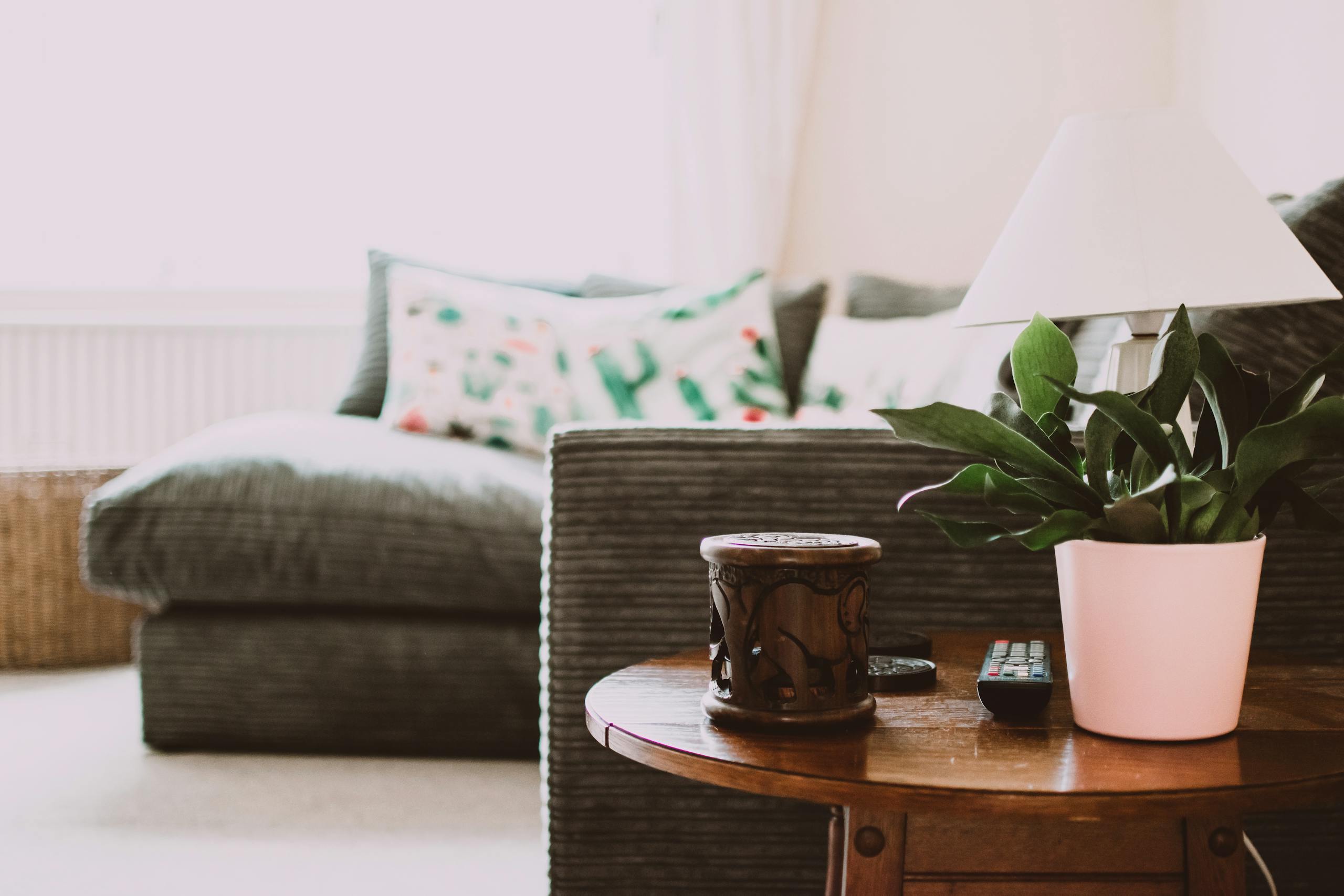
How Do Homebodies Build Meaning Within Their Domestic Lives?
One of the most persistent myths about homebodies is that staying home is passive. That it’s what you do when you’re not doing anything. In reality, many homebodies are extraordinarily active within their domestic sphere. They read voraciously, create, cook, garden, write, build, think. The home isn’t a waiting room. It’s a workshop.
The homebody couch piece captures something about this: even the act of settling into a comfortable space with intention carries its own kind of richness. The couch isn’t a symbol of laziness when it’s the place where you process the week, read three chapters, have a long conversation with someone you love, or simply let your nervous system decompress. Context and intention change the meaning of any activity.
Books are a particularly central element of many homebodies’ lives. The homebody book resource offers a starting point for people who want to deepen their home reading life, which for many introverts is one of the most genuinely satisfying ways to spend time. Reading isn’t escapism in the pejorative sense. It’s a form of engagement with ideas, emotions, and experiences that many introverts find more nourishing than a crowded social event.
There’s also something worth saying about the craft of building a home environment that actually supports your temperament. This isn’t about interior design in a superficial sense. It’s about understanding how your nervous system responds to light, sound, texture, and spatial arrangement, and then making deliberate choices that support your ability to think and feel and rest well.
A piece in PMC examining environmental factors and psychological wellbeing speaks to how physical environment shapes cognitive and emotional states in measurable ways. Homebodies often intuitively understand this. They’ve learned, sometimes through trial and error, what their space needs to feel like to support them. That’s not avoidance. That’s self-knowledge applied practically.
Can You Be a Homebody and Still Have a Rich Social Life?
Absolutely, and this is one of the more important corrections to make when examining what the homebody idiom actually implies. The word suggests a preference, not a prohibition. Being a homebody doesn’t mean you never see people. It means you’re selective about when, how, and in what context you engage socially.
Many homebodies are deeply loyal friends, attentive partners, and engaged family members. They simply prefer their social interactions to happen in controlled, comfortable settings rather than loud, unpredictable, high-stimulation ones. Dinner at home with close friends. A long phone call on a Sunday afternoon. A small gathering where the guest list is short and the conversation goes somewhere real. These are social experiences. They just don’t look like the ones that get photographed and posted.
The visibility gap is part of what makes homebodies seem more isolated than they are. Social media tends to document the big, public, photogenic social events. The quiet, domestic, deeply connected moments rarely make it onto anyone’s feed. So homebodies’ social lives are systematically underrepresented in the cultural record, which reinforces the false impression that staying home means being alone.
I managed a team for years that included some deeply introverted, clearly homebody-oriented people. One of my senior strategists almost never came to agency social events. She left at 5:30 every day. She declined most client dinners. And she had, from what I could observe, a genuinely full and connected personal life. She also produced some of the most incisive strategic thinking I encountered in two decades of agency work. Her preference for home didn’t diminish her capacity for connection or contribution. It just meant she was selective about where she invested her energy.

Why Does Reclaiming the Homebody Label Matter?
Language shapes self-perception. When you carry a word about yourself that has apologetic undertones, it affects how you explain your preferences, how you respond to social pressure, and whether you feel entitled to protect your time and energy.
Reclaiming “homebody” as a neutral or positive descriptor isn’t about rejecting social life or romanticizing isolation. It’s about being honest that a preference for home is a legitimate way of being in the world, not a problem to be fixed, a phase to be grown out of, or a symptom to be addressed.
The Frontiers in Psychology research on personality and environmental preference points toward something that many homebodies already know from lived experience: the fit between a person’s temperament and their environment is a significant factor in how they experience wellbeing. Forcing a mismatch in the name of social conformity doesn’t produce better outcomes. It produces strain.
What I’ve come to believe, after years of trying to perform extroversion in an industry that rewarded it, is that the energy you spend pretending to be something you’re not is energy you’re not spending on the things you’re actually good at. Embracing the homebody label, or at least making peace with it, frees up something. You stop explaining yourself. You stop apologizing for your Friday nights. You start building a life that actually fits.
That’s not a small thing. It’s one of the quieter forms of self-respect available to people whose preferences don’t match the dominant cultural script.
There’s much more to explore about how introverts and homebodies create environments that support who they actually are. The full range of ideas, from sensory design to cozy rituals to building connection on your own terms, lives in our Introvert Home Environment hub.
About the Author
Keith Lacy is an introvert who’s learned to embrace his true self later in life. After 20 years in advertising and marketing leadership, including running agencies and managing Fortune 500 accounts, Keith now channels his experience into helping fellow introverts understand their strengths and build fulfilling careers. As an INTJ, he brings analytical depth and authentic perspective to every article, drawing from both professional expertise and personal growth.
Frequently Asked Questions
What does the homebody meaning idiom actually refer to?
The homebody meaning idiom refers to a person who genuinely prefers spending time at home rather than going out. The word combines “home” with “body,” where “body” was a colloquial term for “person” in older American English. Historically it was a neutral descriptor, though over time it picked up mild connotations of social withdrawal. Today it’s increasingly used as a positive identity label by people who value domestic life, solitude, and intentional home environments.
Is being a homebody the same as being introverted?
Not exactly. Introversion is a personality trait describing how someone’s nervous system responds to social stimulation. Being a homebody is a behavioral preference for spending time at home. There’s significant overlap, as many introverts are homebodies, but not all homebodies are introverts and not all introverts identify as homebodies. Some people prefer home for reasons unrelated to introversion, including health, caregiving, financial preference, or simply having built a home environment they love.
How is being a homebody different from social isolation?
A homebody chooses home because it’s genuinely restorative and preferred. The solitude feels good, the connections they maintain are meaningful, and their overall wellbeing is intact. Social isolation, by contrast, involves withdrawal that feels involuntary, distressing, or driven by anxiety, depression, or circumstances outside the person’s control. The key distinction is agency and wellbeing: homebodies tend to have both. Someone experiencing isolation may feel neither.
Can a homebody still have strong relationships and a social life?
Yes, absolutely. Being a homebody describes where you prefer to spend your time, not whether you’re capable of connection. Many homebodies maintain deep, loyal friendships and strong family bonds. They tend to prefer smaller, more intimate settings over large social events, and they often connect through selective, intentional means rather than high-frequency, low-depth socializing. Their social lives may be less visible, but they’re not less real.
Why has the word “homebody” shifted toward a more positive meaning recently?
Several cultural forces have contributed to this shift. The rise of cozy aesthetics and hygge culture, the growth of home-centered content online, and particularly the experience of the pandemic all helped reframe domestic life as intentional rather than avoidant. Younger generations have also been more willing to claim the homebody identity without apology. The word’s connotations are tracking toward something more neutral and even celebratory, though the older undertones of mild social failure haven’t entirely disappeared in all contexts.