
Homebody meaning slang has shifted considerably over the past decade, moving from a mildly dismissive label into something people wear with genuine pride. At its core, the slang usage describes someone who finds deep comfort and contentment at home, preferring quiet evenings in over crowded social calendars, not because they lack options, but because staying in genuinely feels like the better choice.
What interests me about this shift isn’t just the linguistics. It’s what the change reveals about a broader cultural renegotiation happening in real time, one where millions of people are finally finding language that matches how they’ve always felt inside.
There’s something worth examining in how slang evolves around personality and lifestyle. Words carry social weight. When a term migrates from casual insult to identity badge, that migration tells you something real about what people actually value versus what they’ve been told to value. And for a lot of introverts, the homebody label landing softly in common usage has felt less like a trend and more like a long overdue recognition.
Our Introvert Home Environment hub covers a wide range of topics around how introverts create, protect, and inhabit their personal spaces, but the question of what we even call ourselves, and how that language has changed, adds a layer worth sitting with on its own.
Where Did the Slang Version of Homebody Actually Come From?
The word “homebody” itself has been in the English language for well over a century. In older usage it simply meant someone who preferred staying home, and it carried a faint undertone of social inadequacy, as if preferring your own space was a personality flaw worth noting. The slang evolution is more recent and considerably more interesting.
What’s your personality type?
Take our free 40-question assessment and get a detailed personality profile with dimension breakdowns, context analysis, and personalised insights.
Discover Your Type8-12 minutes · 40 questions · Free
Somewhere in the mid-2010s, the term started appearing in social media captions with an entirely different energy. Instead of apologetic, it was declarative. People weren’t confessing to being homebodies. They were announcing it. “Proud homebody.” “Homebody season.” “Homebody vibes.” The word got absorbed into a broader aesthetic vocabulary that included cozy spaces, intentional solitude, and a certain soft defiance toward hustle culture.
What the slang version added that the traditional definition lacked was a sense of agency. The older use implied you stayed home because you had no other options, or because you were timid, or because something was slightly off about you. The slang reframe suggested you stayed home because you chose to, because it was genuinely good, because the outside world simply couldn’t compete with what you’d built inside your own four walls.
That’s a meaningful distinction. Language shapes how we understand ourselves. When I was running my agencies in the late 1990s and early 2000s, there was no flattering vocabulary for preferring a quiet Friday night at home over client dinners and networking events. I went to those dinners. I worked those rooms. And I was good at it, because I’d trained myself to be. But there was no culturally acceptable way to say “I’d genuinely rather be home right now.” The closest available option was some self-deprecating joke about being boring, which I wasn’t, and neither were most of the other quiet people in those rooms.
How Is “Homebody” Used in Modern Slang Specifically?
Modern slang usage of homebody tends to appear in a few distinct contexts, each carrying slightly different connotations worth separating out.
The most common use is self-identification, often with a tone of warmth and mild humor. Someone cancels plans and captions their night-in photo with “certified homebody” or “homebody hours.” This version is affectionate and a little playful. It’s not self-pitying. It’s almost a flex, a signal that you’re someone who knows what you like and doesn’t need external validation to feel good about it.
A second usage appears in relationship and dating contexts, where someone describes themselves as a homebody to signal compatibility preferences. “I’m a total homebody, so if you’re looking for someone who wants to go out every weekend, we’re probably not a match.” This is the slang doing practical social work, helping people filter for genuine alignment rather than performing an extroverted version of themselves to seem more appealing.

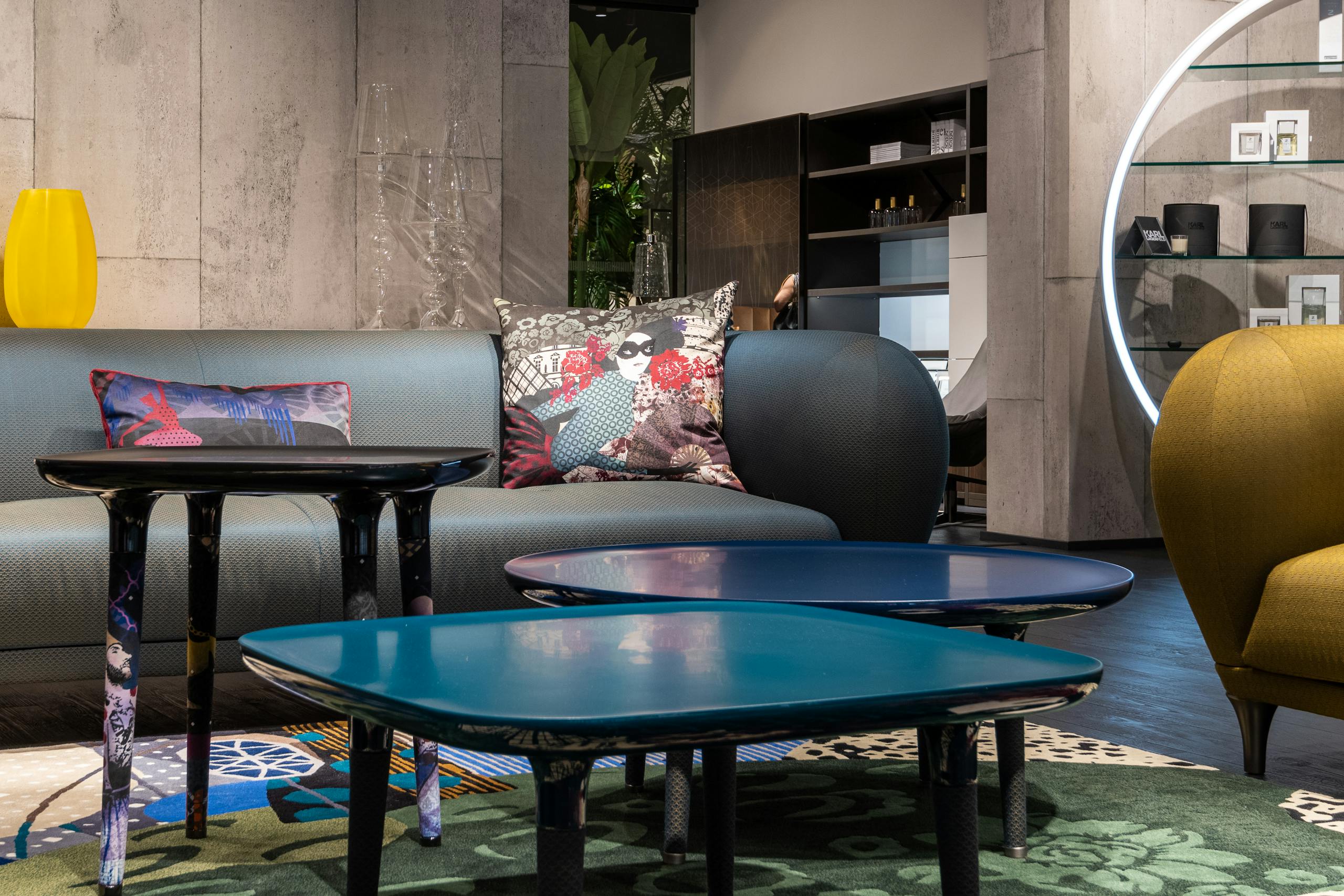
A third use is more aspirational and aesthetic, tied to the broader “cozy” movement online. Here, homebody functions almost as a lifestyle category, associated with specific visual cues: warm lighting, well-stocked bookshelves, comfort food, soft textures. The homebody couch has become something of a cultural symbol in this space, representing the specific kind of intentional comfort that defines the aesthetic. This use of the word has commercial dimensions, but at its core it’s still expressing something genuine about people who find their richest experiences inside rather than outside.
What’s notable across all three uses is that the slang has almost entirely shed its apologetic quality. Very few people using the word today are using it to excuse or explain themselves. They’re using it to describe themselves accurately and, more often than not, with something that looks a lot like satisfaction.
Is Being a Homebody the Same as Being Introverted?
This question comes up constantly, and the honest answer is: related, but not identical.
Introversion, as a personality dimension, is fundamentally about how you process energy. Introverts tend to find social interaction draining and solitude restorative. That’s the core of it. Being a homebody is more about behavioral preference, specifically preferring home-based activities over going out. The two overlap significantly, but they’re not the same thing.
You can be an introvert who loves hiking alone, traveling solo, or spending long hours in a library. You’re still introvert-wired in terms of energy, but your preferred space isn’t necessarily your home. Conversely, some people identify as homebodies for reasons that have nothing to do with introversion. Someone recovering from an illness might prefer staying in. A new parent might be home-centered by circumstance and find they love it. A highly sensitive person might stay home to manage sensory overwhelm rather than because of introversion specifically. The connection between HSP minimalism and simplifying one’s environment illustrates this well: sensitive people often gravitate toward home not because they’re antisocial, but because the outside world is genuinely too loud, too bright, and too much.
That said, the overlap between introversion and the homebody identity is substantial enough that the two are frequently conflated in popular conversation, and not entirely without reason. Many introverts find that the homebody label captures something their personality type alone doesn’t quite express. Being an INTJ, as I am, explains a lot about how I process information and make decisions. It doesn’t fully capture the specific texture of what it feels like to walk through my front door after a long day of client meetings and feel my entire nervous system exhale.
The slang version of homebody gets at something the clinical vocabulary around introversion sometimes misses: the positive pull toward home, not just the push away from social situations. It’s not only about what drains you. It’s about what genuinely restores you and where that restoration lives.
Why Did This Particular Slang Term Catch On When It Did?
Timing matters with language. The homebody slang surge didn’t happen in a vacuum.
Several cultural threads converged around the same period. Burnout was becoming a mainstream conversation rather than a niche one. The glorification of busyness was starting to crack under the weight of its own absurdity. Wellness culture was shifting from performative activity toward rest, recovery, and what some called “doing nothing” as a legitimate practice. And social media, despite being a driver of FOMO, was also creating space for counter-narratives where people could find community around staying in rather than going out.

There’s also something worth noting about how digital connection changed the social calculus. When you can maintain meaningful relationships through text, voice, video, and even online chat spaces built for introverts, the old equation that said “staying home equals social isolation” no longer holds. Homebodies in the current era aren’t necessarily disconnected from people. They’ve just moved their social lives to channels that don’t require leaving the house, which suits a lot of introverts just fine.
The pandemic years accelerated all of this dramatically. Millions of people who’d never really examined their preferences were suddenly forced to spend extended time at home, and a significant portion of them discovered they actually liked it. Not just tolerated it: genuinely preferred it. That collective experience gave the homebody identity a legitimacy it hadn’t previously had in mainstream culture. It stopped being a quirky personality trait and started looking like a reasonable, even wise, way to live.
I watched this shift play out in real time among people I’d worked with for years. Account executives who’d built their professional identity around being “always on” and constantly available started quietly admitting they’d enjoyed working from home more than they expected. Creative directors who’d insisted they needed the energy of an open office started producing their best work at kitchen tables. The homebody label gave a lot of those people permission to acknowledge something they’d been suppressing.
What Does Calling Yourself a Homebody Actually Signal to Others?
Language is social. When you use a word to describe yourself, you’re doing something more than self-classification. You’re sending signals, inviting certain kinds of connection, and filtering for alignment.
Using the homebody label in its current slang form signals several things simultaneously. It communicates that you have a clear sense of your own preferences and you’re not embarrassed by them. It suggests you value depth over breadth in how you spend your time. It implies a certain comfort with your own company, which is actually a fairly sophisticated trait when you think about it. Many people are deeply uncomfortable alone. Homebodies, by definition, have worked that out.
It also functions as a social filter, which I think is one of the most practically useful things about it. When someone self-identifies as a homebody early in a friendship or relationship, they’re essentially saying: “I want you to know this about me before we go further, because it matters for how we’ll fit together.” That’s honest and efficient communication, two things I genuinely respect.
There’s a related phenomenon worth mentioning here. Gift-giving culture has evolved around the homebody identity in ways that reflect how seriously people take it as a real lifestyle. The existence of thoughtful gifts designed specifically for homebodies signals that this isn’t a passing trend or a joke identity. People are investing real thought and money into honoring this preference in the people they care about. When a personality type or lifestyle generates its own gift economy, it’s arrived somewhere culturally.
For introverts specifically, the homebody label also does something psychologically useful. It externalizes what might otherwise feel like a private struggle or a personal limitation. Instead of “I have trouble with social situations,” you have “I’m a homebody,” which is descriptive rather than pathological. One framing invites concern. The other invites understanding, or at least curiosity.
Does the Slang Meaning Ever Get Used Negatively?
Honestly, yes, though less often than it used to.
The negative uses tend to come from a specific direction: people who see staying home as a symptom of fear, depression, or social failure rather than a genuine preference. In those contexts, calling someone a homebody can still carry a faint condescension, a suggestion that they’re missing out or hiding from something. This usage is becoming less common in popular slang, but it hasn’t disappeared entirely.
There’s also a version that appears in certain social dynamics where “homebody” gets used as a gentle pressure tactic. “Come on, don’t be such a homebody” is still a phrase people hear, usually from friends who are more extroverted and genuinely don’t understand why someone would choose to stay in. The intent isn’t always malicious, but the effect is to position the homebody’s preference as something to be overcome rather than respected.

What’s changed is the availability of a counter-response. Fifteen years ago, being teased as a homebody was harder to deflect because there wasn’t a strong cultural narrative supporting the preference. Now there is. The person who says “don’t be such a homebody” is increasingly likely to get a response that sounds less like apology and more like “yeah, and?” That shift in conversational dynamics reflects real cultural change, not just semantic drift.
It’s worth distinguishing the homebody identity from clinical isolation or avoidance, because conflating the two does real harm. Someone who genuinely can’t leave home due to anxiety or depression needs support, not a lifestyle label. The homebody slang, at its best, describes people who are choosing their home-centered life from a position of genuine preference and wellbeing. That’s meaningfully different from someone who wants to engage with the world but feels unable to. The distinction matters both for how we talk about it and for how we respond to it in the people around us.
How Has the Homebody Identity Developed Its Own Culture?
One of the more fascinating aspects of the homebody slang evolution is how quickly it generated its own culture, aesthetics, and even literature.
The aesthetic dimension is probably most visible. Certain visual languages have become associated with the homebody identity: warm neutrals, layered textures, soft lighting, plants, books, candles. There’s a whole corner of interior design that speaks directly to people who spend most of their time at home and want that home to reflect their values rather than just serve as a backdrop for life lived elsewhere. The homebody gift guide phenomenon is part of this, representing a cultural acknowledgment that creating a beautiful, restorative home environment is a worthy investment rather than a frivolous one.
The literary dimension is worth noting too. There’s a growing body of work written explicitly for and about people who find their richest experiences at home. Exploring a thoughtful homebody book recommendation can reveal just how much intellectual and emotional territory this identity covers: philosophy of solitude, the psychology of place, the history of domestic life, memoirs of people who found meaning in small, home-centered worlds. This isn’t escapist literature. It’s literature that takes seriously the idea that a well-lived life might be one that happens mostly inside.
There’s a psychological dimension here that connects to some of what research on solitude and wellbeing has explored. The capacity to be alone with oneself, to find it pleasant rather than aversive, is associated with greater emotional stability and a clearer sense of personal identity. People who genuinely enjoy their own company tend to make choices from a more grounded place than those who need constant external stimulation to feel okay. The homebody identity, at its healthiest, is an expression of exactly this kind of self-sufficiency.
I think about this in terms of what I observed across two decades of agency work. The people who were most centered, most genuinely confident, and most capable of doing their best creative work were rarely the loudest ones in the room. They were often the ones who’d done their thinking before they arrived, who’d spent time alone with the problem, who had a home life rich enough that they weren’t looking to the office to fill an emptiness. That’s not a coincidence.
What Does Reclaiming This Word Mean for Introverts Specifically?
Language reclamation is a powerful psychological act. When a group of people takes a word that was used dismissively and reframes it as a point of pride, something real shifts in how they understand themselves and how others understand them.
For introverts, the homebody slang evolution represents something more than a semantic trend. It represents a small but meaningful expansion of the cultural permission structure around how people are allowed to live. The old implicit social contract said that a full life was an outward-facing one: packed with events, rich with social obligations, visibly busy. Any deviation from that contract required justification. The homebody reclamation says, quietly but firmly, that the contract itself was always optional.
There’s something psychologists who study introversion have noted about the value introverts place on depth over breadth, in conversation, in relationship, in experience. The homebody identity maps onto this naturally. Staying home isn’t about having less. For many introverts, it’s about having more of what actually matters to them: depth of experience, quality of attention, richness of inner life.
My own relationship with this word has been gradual. I didn’t grow up calling myself a homebody. I grew up calling myself someone who needed to push harder, show up more, be more present in social spaces. That framing served certain professional goals. It didn’t serve my actual wellbeing particularly well. Coming to the homebody label later, in my forties, felt less like discovering a new identity and more like finally having accurate language for something that had always been true.
That’s what good slang does at its best. It doesn’t create new realities. It names ones that already existed but lacked vocabulary. And for a lot of introverts, the homebody meaning in its current slang form is doing exactly that: giving accurate, non-apologetic language to a way of being that was always legitimate, even when the available words made it hard to say so.

The broader science of personality and environment supports this framing too. Work published in Frontiers in Psychology examining how personality traits interact with environmental preferences suggests that the alignment between who you are and where you spend your time has real effects on wellbeing. The homebody who has built a home that genuinely suits them isn’t indulging a preference. They’re doing something psychologically intelligent.
And for those still working through whether this label fits them, broader research on personality and lifestyle alignment consistently points toward the same conclusion: people who live in ways that match their genuine temperament tend to report higher satisfaction and lower stress. The homebody identity, when it’s a true fit rather than a performance, is one of the cleaner paths toward that alignment.
If you want to go deeper on how introverts create and inhabit spaces that genuinely support who they are, the full collection of ideas lives in our Introvert Home Environment hub.
About the Author
Keith Lacy is an introvert who’s learned to embrace his true self later in life. After 20 years in advertising and marketing leadership, including running agencies and managing Fortune 500 accounts, Keith now channels his experience into helping fellow introverts understand their strengths and build fulfilling careers. As an INTJ, he brings analytical depth and authentic perspective to every article, drawing from both professional expertise and personal growth.
Frequently Asked Questions
What does homebody mean in current slang?
In current slang, homebody describes someone who genuinely prefers spending time at home over going out, and uses that preference as a positive self-identifier rather than an apology. The word has shifted from a mildly dismissive label into a badge of intentional, home-centered living. People use it to signal comfort with solitude, preference for depth over social breadth, and a deliberate choice to build a rich life inside their own space.
Is being a homebody the same as being an introvert?
They overlap significantly but aren’t identical. Introversion is a personality dimension describing how someone processes social energy, with introverts finding solitude restorative and social interaction draining. Being a homebody is a behavioral preference for home-based activities. Many introverts identify strongly as homebodies, but some introverts prefer solitude outside the home, and some homebodies prefer staying in for reasons unrelated to introversion, such as sensory sensitivity, parenting demands, or simply loving their home environment.
When did homebody become a positive slang term?
The positive slang usage gained momentum in the mid-2010s, particularly through social media where people began self-identifying as homebodies with pride rather than apology. Several cultural factors accelerated this: growing mainstream conversation about burnout, the rise of cozy and slow-living aesthetics online, and eventually the pandemic years when many people discovered or confirmed their preference for home-centered life. The word gradually shed its apologetic undertone and became a genuine identity marker.
Can someone be a homebody and still be socially connected?
Absolutely. Modern homebodies often maintain rich social connections through digital channels, text, video calls, and online communities, without needing to leave home to sustain those relationships. The old equation that linked staying home with social isolation no longer holds in an era where meaningful connection is available across many formats. Many homebodies are deeply connected to people they care about. They’ve simply moved the location of that connection to spaces that suit them better.
Is identifying as a homebody a sign of social anxiety or avoidance?
Not inherently. The homebody identity, at its healthiest, describes a genuine preference for home-centered life chosen from a position of wellbeing rather than fear. It’s meaningfully different from social anxiety or avoidance, which involve distress and a gap between what someone wants and what they feel capable of doing. Someone who wants to engage with the world but feels unable to may benefit from professional support. Someone who genuinely prefers staying in and feels good about that choice is expressing a valid lifestyle preference, not a psychological problem.