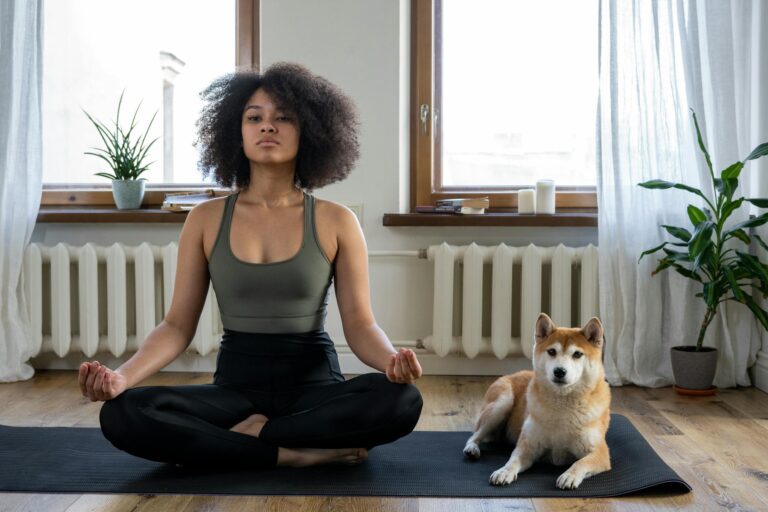

A homebody personality describes someone who genuinely prefers the comfort, calm, and familiarity of home over social outings, crowded events, or constant external stimulation. People with this trait are not antisocial or broken. They are wired to recharge in private spaces, find meaning in domestic rhythms, and build their richest connections in low-key, intimate settings.
What surprises most people is how deeply this personality orientation connects to broader traits like introversion, high sensitivity, and even certain cognitive styles that make some people exceptionally good at sustained focus and deep thinking. Being a homebody is not a phase you grow out of. For many people, it is simply who they are.
I know this because I am one of them. After two decades running advertising agencies and managing Fortune 500 accounts, I spent a long time convincing myself that my preference for staying in was something to overcome. It took years of honest self-reflection to understand that my homebody nature was not holding me back. In many ways, it was the quiet engine behind everything I built.

If you want to understand how personality shapes the way families function and how introverts and homebodies parent, connect, and create belonging at home, our Introvert Family Dynamics and Parenting hub covers that full landscape. This article focuses on something more personal: what it actually means to have a homebody personality, and why it deserves far more respect than it typically gets.
What Does a Homebody Personality Actually Look Like?
People often assume a homebody is simply someone who is shy, lazy, or afraid of the world. None of those descriptions fit. A homebody personality is defined by a genuine preference, not an inability. People with this trait can go out. They can socialize, attend events, and perform well in public settings. They just do not find those experiences energizing. Home is where they feel most like themselves.
What’s your personality type?
Take our free 40-question assessment and get a detailed personality profile with dimension breakdowns, context analysis, and personalised insights.
Discover Your Type8-12 minutes · 40 questions · Free
Some common patterns I have noticed in myself and in the people I have worked with over the years include a strong pull toward familiar routines, a preference for one-on-one conversations over group gatherings, a tendency to mentally rehearse social events before attending them, and a deep sense of relief when plans get canceled. That last one used to embarrass me. Now I recognize it as honest data about what my nervous system actually needs.
Temperament plays a real role here. MedlinePlus notes that temperament, the biological basis of personality, influences how individuals respond to stimulation and social environments from very early in life. Some people are simply wired to find high-stimulation environments draining rather than exciting. That is not a character flaw. It is physiology.
Early in my agency career, I managed a creative director who was a textbook homebody. She was brilliant in small meetings and produced her best work when she had uninterrupted stretches at her desk. Put her in a loud brainstorming session with twelve people and she went quiet, not because she lacked ideas, but because that environment was essentially static interference for her brain. Once I understood that, I stopped scheduling her into sessions where the format would drown out her thinking. Her output improved dramatically. So did her engagement.
Is the Homebody Personality the Same as Introversion?
Introversion and the homebody personality overlap significantly, but they are not identical. Introversion is a personality dimension describing how people gain and spend energy. Homebodies are defined more by their environmental preference: they prefer home and familiar spaces over unfamiliar or high-stimulation ones.
Most homebodies are introverts. Yet some extroverts also prefer staying in, particularly if they are highly sensitive or if their home life is especially rich and rewarding. The Frontiers in Psychology research on personality and social behavior highlights that introversion-extraversion exists on a spectrum, and individual differences within each category are substantial. Labeling someone a homebody tells you about their preferred environment. Labeling them an introvert tells you about their energy system. The two often travel together.
If you want to get a clearer picture of where you fall across the major dimensions of personality, including openness, conscientiousness, and agreeableness alongside introversion and extraversion, the Big Five Personality Traits Test is a solid starting point. It gives you a more layered picture than any single label can provide.
As an INTJ, I score high on introversion and very high on the drive for internal processing. My homebody tendencies are deeply connected to that. My best thinking has always happened in quiet, controlled environments. Some of the clearest strategic decisions I made during my agency years came not in boardrooms but on weekend mornings at home, before the noise of the week could reach me.

How Does a Homebody Personality Shape Relationships?
Relationships are where the homebody personality gets complicated. If you prefer staying in and your partner prefers going out, that friction can feel like a fundamental incompatibility. In reality, it is often just a difference in preference that requires honest communication and mutual respect rather than one person constantly overriding their own needs.
What homebodies bring to relationships is often underappreciated. They tend to be deeply present in one-on-one interactions. They create environments where others feel genuinely comfortable. They invest in the quality of shared time at home rather than the quantity of external experiences. Psychology Today’s coverage of family dynamics consistently points to the quality of daily connection as more predictive of relationship satisfaction than shared social activity. Homebodies, almost by default, prioritize that daily connection.
That said, relationships do require some degree of flexibility. A homebody who never compromises, who refuses every invitation and expects their partner to always stay in, is not honoring the relationship. The goal is understanding, not control. My own experience taught me that being honest about my preferences early, rather than going along with social plans and then quietly resenting them, made my relationships significantly more stable.
There is also something worth noting about how homebodies handle conflict. Because they process internally and prefer calm environments, many homebodies avoid confrontation not out of passivity but out of a genuine preference for resolving things quietly and thoughtfully. That can be a strength. It can also become avoidance if left unchecked. Knowing the difference matters.
One tool that helped me understand how I come across in relationships was the Likeable Person Test. It sounds simple, but it surfaces some honest data about how your natural tendencies land with others, particularly if you tend toward reserve and quiet observation the way most homebodies do.
What Happens When Homebodies Become Parents?
Parenting as a homebody introduces a particular kind of tension. Children, especially young ones, generate enormous amounts of stimulation. Noise, unpredictability, constant social demands, playdates, school events, birthday parties. For a parent with a homebody personality, the cumulative weight of all that external activity can become genuinely exhausting in ways that feel hard to explain without sounding like a bad parent.
You are not a bad parent. You are a parent who needs recovery time, and that is a legitimate need.
What homebody parents often do exceptionally well is create a home environment that feels genuinely safe and nurturing. They invest in the texture of daily home life. They read with their kids, build routines that feel grounding, and model the idea that being at home is not a consolation prize but a real and worthy way to spend time. Those are powerful gifts to pass on.
Highly sensitive parents face a version of this same challenge. If you are parenting with heightened sensitivity alongside your homebody tendencies, the HSP Parenting guide on raising children as a highly sensitive parent offers some genuinely useful perspective on managing your own needs while showing up fully for your kids.
One thing I have observed in parents I know with this personality type is that they sometimes struggle with guilt around their need for solitude. They feel they should want to be at every event, should feel energized by every school function, should match the enthusiasm of more extroverted parents. That comparison is not fair to anyone. Psychology Today’s work on blended family dynamics touches on this, noting that parents who honor their own emotional limits tend to be more consistently present than those who push past them and burn out.

Can a Homebody Personality Cause Mental Health Challenges?
Preferring home is not a mental health issue. That distinction matters enormously, because homebodies are sometimes told, often by well-meaning people, that their preference for staying in is a symptom of depression, anxiety, or social phobia. Sometimes it is. Often it is not.
The difference lies in whether the preference is driven by genuine comfort or by avoidance rooted in fear. A homebody who stays in because they genuinely love being there, who feels content and engaged in their home life, is not struggling. A person who stays in because leaving feels terrifying, because social contact fills them with dread, or because their world is shrinking against their will, that person may benefit from professional support.
Certain personality patterns can blur these lines. If you have ever wondered whether your withdrawal from the world reflects something deeper, tools like the Borderline Personality Disorder Test can offer a starting point for self-reflection, though they are never a substitute for professional evaluation.
PubMed Central’s research on social isolation and well-being draws a useful distinction between chosen solitude and imposed isolation. Chosen solitude, the kind homebodies practice, is associated with restoration and well-being. Imposed isolation, the kind that happens against a person’s wishes, is associated with significantly worse outcomes. Knowing which category you are in helps you assess whether your homebody tendencies are serving you or limiting you.
My own experience with burnout recovery after a particularly brutal stretch running a large agency account taught me that my preference for home was not depression. It was my system telling me what it needed. When I finally stopped fighting that signal and started honoring it, I came back stronger. The quiet was not the problem. Ignoring the need for it had been.
What Careers Work Well for People With a Homebody Personality?
Career compatibility is a real consideration for homebodies. Roles that require constant travel, back-to-back client entertainment, or sustained performance in loud, high-stimulation environments will drain a homebody over time, regardless of how talented they are.
That does not mean homebodies cannot lead or cannot succeed in demanding careers. It means they need to be thoughtful about how they structure their work life. Remote work, flexible scheduling, roles with significant independent work, and leadership styles that favor depth over constant visibility tend to suit this personality type well.
Some homebodies are drawn to caregiving roles, which can feel like a natural extension of their preference for intimate, home-based connection. If you are considering a role as a personal care assistant, the Personal Care Assistant Test Online can help you assess whether your temperament and skills align with that kind of work.
Others with a homebody personality are drawn to health and wellness fields, where they can build deep one-on-one relationships with clients in structured, predictable settings. If fitness coaching interests you, the Certified Personal Trainer Test is worth exploring as a way to gauge your readiness for that path.
During my agency years, I watched several colleagues with strong homebody tendencies struggle not because they lacked ability but because the culture demanded constant visibility. The best performers I ever managed were not always the loudest voices in the room. They were often the ones who did their deepest thinking away from it. Creating conditions where those people could thrive was one of the more meaningful things I did as a leader.

How Do You Embrace a Homebody Personality Without Becoming Isolated?
Embracing who you are does not mean abandoning growth. A homebody who never leaves their comfort zone at all, who refuses every social invitation and builds a life with zero external connection, will eventually find that the comfort they sought has become a cage. Balance is still the goal. It just looks different for homebodies than it does for extroverts.
Some of the most useful reframes I have found over the years involve shifting from obligation to intention. Going out because you feel you should is exhausting. Going out because you have chosen to, for a specific reason, with a clear endpoint, feels entirely different. Homebodies who approach social commitments with that kind of intentionality tend to show up more fully and enjoy themselves more genuinely.
Connection itself does not require leaving home. Some of the deepest relationships I have built over the years were nurtured through long phone calls, shared meals at my kitchen table, and the kind of unhurried conversation that only happens when nobody is watching the clock. Home can be a gathering place, not just a retreat.
Understanding your personality type more fully can also help. 16Personalities outlines how different personality frameworks capture the interplay between energy, values, and behavior. Knowing where you fall helps you make choices that align with your actual wiring rather than fighting it constantly. And if you want to know how rare your particular combination of traits is, Truity’s breakdown of the rarest personality types puts the full spectrum in useful context.
What I have come to believe, after years of both resisting and finally accepting my own homebody nature, is that the goal is not to become someone who loves parties. The goal is to build a life that genuinely fits you, and then to show up fully inside that life rather than perpetually wishing you were different.
The Quiet Strength Hidden Inside This Personality Type
There is a particular kind of strength that develops in people who spend significant time in their own company. It is the strength of self-knowledge. Homebodies, by virtue of their orientation toward internal life and familiar environments, tend to know themselves well. They know what they need, what drains them, what brings them alive. That self-knowledge is not a small thing. In a world that constantly pushes people toward external validation, knowing yourself from the inside out is a genuine advantage.
It shows up in leadership. My most centered, decisive moments as an agency CEO did not come from networking events or industry conferences. They came from quiet mornings at home when I had enough space to think clearly, to weigh what actually mattered against what was just noise. That clarity was a competitive advantage, even if nobody in the room could see where it came from.
It shows up in parenting. Homebody parents model something valuable: that presence and depth matter more than activity and spectacle. Kids who grow up with a parent who genuinely enjoys being home often develop a healthy relationship with solitude themselves. They learn that quiet is not something to fear.
It shows up in creativity. Many of the most productive people I have ever worked with were homebodies who had built environments that supported their best thinking. They were not hiding from the world. They were doing the work that required them to be fully inside their own minds.
The homebody personality is not a limitation waiting to be overcome. It is a way of being in the world that, when understood and honored, produces a kind of depth and steadiness that more outwardly active people sometimes spend their whole lives chasing.

There is much more to explore about how personality shapes the way introverts and homebodies build family life, parent their children, and find belonging on their own terms. Our Introvert Family Dynamics and Parenting hub pulls together everything we have written on those themes in one place.
About the Author
Keith Lacy is an introvert who’s learned to embrace his true self later in life. After 20 years in advertising and marketing leadership, including running agencies and managing Fortune 500 accounts, Keith now channels his experience into helping fellow introverts understand their strengths and build fulfilling careers. As an INTJ, he brings analytical depth and authentic perspective to every article, drawing from both professional expertise and personal growth.
Frequently Asked Questions
Is being a homebody a personality type?
Being a homebody is better described as a personality orientation than a formal personality type. It reflects a genuine preference for home environments and familiar spaces over high-stimulation social settings. While it overlaps significantly with introversion, it is not a category within systems like MBTI or the Big Five. It is a consistent behavioral and emotional tendency that shapes how a person recharges, connects, and finds comfort.
Can a homebody be in a healthy relationship?
Absolutely. Homebodies often bring deep presence, emotional attentiveness, and a genuine investment in the quality of shared home life to their relationships. The most important factor is honest communication about needs and preferences. A homebody who can articulate what they need without expecting their partner to simply guess, and who remains willing to compromise on occasion, can build deeply satisfying long-term relationships.
Is a homebody personality the same as social anxiety?
No, though the two can coexist. A homebody prefers staying in because it feels genuinely good, not because leaving feels terrifying. Social anxiety involves significant fear or distress around social situations that goes beyond simple preference. Someone with social anxiety may want to go out but feel unable to. A homebody may be perfectly capable of going out but simply prefer not to. If your preference for staying in is driven primarily by fear rather than comfort, speaking with a mental health professional is worth considering.
Do homebodies make good parents?
Homebody parents bring real strengths to parenting. They tend to create warm, stable home environments, invest deeply in daily routines, and model healthy solitude for their children. The challenge is managing the stimulation overload that comes with parenting young children, and being honest about needing recovery time without guilt. Homebody parents who honor their own limits tend to show up more consistently than those who push past them and burn out.
How can a homebody maintain friendships?
Homebodies maintain friendships most effectively by being intentional rather than spontaneous. Scheduling one-on-one time, hosting small gatherings at home, staying connected through calls and messages, and being honest with friends about their preferences all help. what matters is not matching the social output of more extroverted friends but rather showing up with genuine quality and consistency in the ways that feel natural. Depth over frequency tends to be the homebody’s relationship strength.