
A homebody with a gypsy soul carries two truths at once: a deep, genuine love of home and an equally genuine hunger for the world beyond it. These two impulses don’t cancel each other out. For many introverts, they coexist in a kind of productive tension, shaping a life that looks quieter from the outside than it actually feels from the inside.
There’s a version of this that I’ve lived for most of my adult life. Running advertising agencies meant I was constantly on planes, in client boardrooms, presenting to Fortune 500 executives in cities I’d never visited before. And yet, every single time I landed back home, something in me exhaled. Not because the travel was bad. Because home was where I could finally think again.
If you recognize that feeling, this article is for you. Not the version of you that needs to choose between wanderlust and domesticity, but the version that has already figured out, or is starting to figure out, that you can hold both.
Our Introvert Home Environment hub covers the full range of how introverts relate to the spaces they inhabit, but the homebody with a gypsy soul adds a particular layer to that conversation. It’s not just about designing a sanctuary. It’s about understanding why you need one, even when part of you is always somewhere else in your mind.

What Does It Actually Mean to Be a Homebody with a Gypsy Soul?
Most conversations about homebodies treat the identity as static. You either love staying home or you don’t. You’re either adventurous or you’re not. That binary has never matched my experience, and I don’t think it matches yours either.
What’s your personality type?
Take our free 40-question assessment and get a detailed personality profile with dimension breakdowns, context analysis, and personalised insights.
Discover Your Type8-12 minutes · 40 questions · Free
Being a homebody with a gypsy soul is about a particular kind of inner life. Your imagination travels constantly. Your curiosity has no borders. You read voraciously, follow threads of thought across continents, and feel genuinely moved by places you’ve never physically set foot in. You want to experience the world, and you also want to do it on your own terms, at your own pace, with the option to retreat when the stimulation exceeds what you can absorb.
For introverts, that last part matters enormously. The gypsy soul impulse is real, but so is the cost of overstimulation. What looks like a contradiction from the outside is actually a very coherent set of needs from the inside. You want depth of experience. You want novelty and meaning. You just don’t want to be depleted by the process of getting them.
I watched this play out in my own agency years. Some of my most creatively restless employees were also the ones who most fiercely protected their downtime. One of my senior strategists, a deeply curious person who could hold ten cultural reference points in a single conversation, would disappear completely on weekends. No calls, no emails, no social plans. Monday morning she’d arrive with ideas that felt like they came from somewhere far away. They did. She’d traveled there in her mind, from her couch, with a book and a cup of tea.
Why Do Introverts Feel This Pull Toward Both Home and the Horizon?
There’s something worth examining in the specific way introverts experience this tension. It’s not random. It connects to how we process the world.
Introverts tend to process experience more slowly and more thoroughly than their extroverted counterparts. We don’t just observe something and move on. We sit with it, turn it over, connect it to other things we know, feel it settle into some larger internal framework. That kind of processing takes energy, and it takes space. Physical space, yes, but more importantly, psychological space.
What this creates is a kind of paradox: the more richly we experience the world, the more we need to come home to metabolize it. Travel isn’t just tiring for us because of the logistics. It’s tiring because every new environment is a firehose of input, and we’re wired to actually absorb all of it rather than skim the surface. A weekend trip that might leave an extrovert energized can leave an introvert needing three days of quiet to fully process what they saw and felt.
That’s not a flaw. That’s a feature of how we’re built. Research published through PubMed Central has explored how individual differences in sensitivity and arousal thresholds shape the way people respond to environmental stimulation, which helps explain why the same experience can feel overwhelming to one person and underwhelming to another. For the homebody with a gypsy soul, this means the desire to explore is genuine, and so is the need to recover from it.
Home becomes the processing center. The place where experience transforms into meaning. Without it, the gypsy soul has nowhere to land.
How Do You Honor Both Sides Without Losing Either One?
This is the practical question, and it’s one I’ve spent years working through in my own life.
The mistake most people make is trying to resolve the tension rather than work with it. They either lean so hard into the homebody identity that they stop feeding their curiosity, or they push themselves to travel and socialize past their actual capacity and end up burned out and resentful. Neither extreme serves the person who genuinely needs both.
What actually works is building a life that accommodates the rhythm. Periods of active engagement with the world, followed by deliberate periods of withdrawal and integration. Not as a compromise, but as a design.
During my agency years, I had a practice I didn’t have a name for at the time. After a major pitch, a big client trip, or a particularly intense week of meetings, I would block off an entire weekend with nothing on the calendar. Not because I was antisocial. Because I knew, from hard experience, that I needed that time to come back to myself. My team thought I was resting. I was actually doing some of my best thinking, just not in a conference room.
The physical environment matters enormously in this rhythm. A home that genuinely supports restoration, one that feels like yours, that has the textures and light and quiet that your nervous system actually needs, becomes the anchor that makes the gypsy soul possible. Without that anchor, the wandering feels anxious rather than expansive.
If you’re someone who identifies as highly sensitive alongside being introverted, the environment piece becomes even more critical. The principles behind HSP minimalism and simplifying for sensitive souls speak directly to this. A stripped-down, intentional space isn’t about austerity. It’s about reducing the ambient noise so your inner world has room to breathe.
Can You Satisfy the Gypsy Soul Without Leaving Home?
Yes. And I say that not as a consolation prize but as a genuine observation about how the introverted mind works.
The gypsy soul, at its core, is a hunger for experience, perspective, and connection to something larger than your immediate surroundings. Physical travel is one way to feed that hunger. It’s not the only way, and for many introverts, it’s not even the most satisfying way.
Books are the most obvious answer, and I don’t mean that dismissively. A well-chosen homebody book can genuinely transport you in the way that matters most: not just geographically but emotionally and intellectually. The best travel writing, literary fiction, and narrative nonfiction do something that a plane ticket often can’t. They give you access to an interior experience of a place or a life, not just the surface.
Documentary film, long-form journalism, and even certain corners of the internet serve a similar function. There’s a reason so many introverts are drawn to online communities and chat spaces that connect them with people from different cultures and backgrounds. The conversation itself becomes the travel. You’re encountering a perspective you wouldn’t have found in your own neighborhood, and you’re doing it from the safety and comfort of your own space.
None of this means you should never leave home. It means that the gypsy soul’s need for expansion can be met in more ways than our culture typically acknowledges. And for introverts who are also caregivers, or who face financial constraints, or who are managing health issues that make travel difficult, this matters. The hunger doesn’t have to go unfed just because the conventional path isn’t available.
What Does the Homebody Space Actually Need to Support This Kind of Life?
Not every home functions equally well as a base for the homebody with a gypsy soul. Some environments actively work against the restoration and imagination that this personality type requires.
What I’ve found, both in my own experience and in conversations with other introverts, is that the space needs to do a few specific things well. It needs to feel safe, which is partly about physical comfort but mostly about psychological permission. Permission to be quiet. Permission to think. Permission to be exactly who you are without performing for anyone.
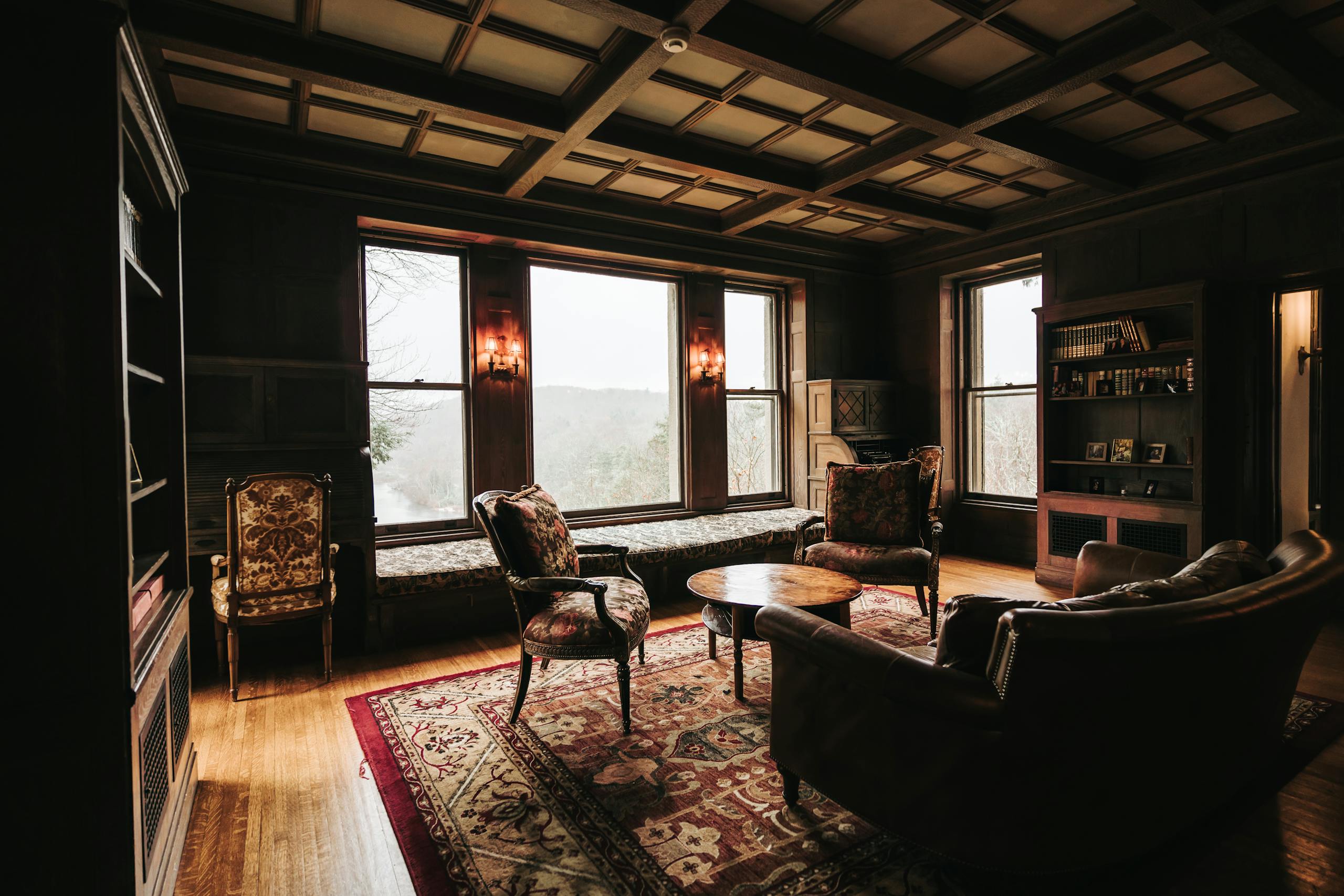
It also needs to feed the curious mind. That might mean a well-stocked bookshelf, or a desk that invites writing and thinking, or a window with a view that gives your eyes somewhere to rest while your mind wanders. The right couch sounds almost too simple to mention, but the physical anchor of a genuinely comfortable, deeply personal piece of furniture can become the center of an entire inner life. I’m not being hyperbolic. Some of my best strategic thinking in my agency years happened on my couch at home, not in any boardroom.
There’s also something to be said for surrounding yourself with objects that carry meaning. Things that connect you to places you’ve been, or places you want to go, or experiences that mattered to you. The gypsy soul doesn’t disappear just because you’re home. It lives in the artifacts and the associations, the photograph from a trip that changed you, the map on the wall, the small stone you picked up on a beach somewhere and kept without fully knowing why.
When you’re thinking about what to add to that space, whether for yourself or for someone you care about, the options in a thoughtful homebody gift guide often reflect exactly this sensibility: items that support comfort, curiosity, and the particular kind of interior richness that homebodies with wandering minds actually need. Similarly, gifts for homebodies that acknowledge this dual nature, rather than treating the stay-at-home preference as something to be fixed or overcome, are the ones that actually land.
How Does the INTJ Experience This Tension Differently?
As an INTJ, my relationship with the homebody-gypsy-soul dynamic has a particular flavor that I think is worth naming, because I suspect it resonates with other thinking-dominant introverts.
The gypsy soul impulse, in my case, is almost entirely intellectual and strategic rather than sensory or social. I’m not drawn to travel because I want the stimulation of new sights and sounds. I’m drawn to it because I want to understand how different systems work, how different cultures have solved the same human problems in different ways, what assumptions I’m carrying that I don’t even know I have until I’m somewhere that doesn’t share them.
That kind of curiosity doesn’t require a passport. It requires input and reflection time. Which is, conveniently, exactly what a good home environment provides.
What I’ve noticed in other INTJs I’ve worked with over the years is a similar pattern: an intense inner life that ranges widely across ideas and systems, paired with a strong preference for environments that are controlled and predictable. The world is interesting. Other people’s chaos is not. Home is where you get to set the parameters.
There’s a passage in a Psychology Today piece on why introverts crave deeper conversations that articulates something I’ve felt for years: small talk feels like noise, but a genuinely substantive exchange feels like travel. You go somewhere. You come back changed. That’s the gypsy soul operating through conversation rather than geography, and for thinking-dominant introverts, it may be the most natural expression of that wandering impulse.
What Happens When the Two Sides Fall Out of Balance?
There are two failure modes here, and I’ve experienced both of them personally.
The first is when the homebody side wins completely. You stop feeding the gypsy soul. You stop reading widely, stop seeking new perspectives, stop putting yourself in situations that challenge your existing mental models. The home stops being a place of restoration and becomes a place of stagnation. The comfort turns into a kind of low-grade numbness. You’re safe, but you’re not alive in the way that matters to you.
I hit this during a particularly brutal stretch of agency work in my late thirties. I was so depleted from the external demands of running a growing business that I stopped doing the things that fed my inner life. No books, no long thinking walks, no real intellectual engagement outside of client work. I was home plenty, but I wasn’t actually present in any meaningful way. The gypsy soul had gone quiet, and I didn’t notice until I felt the absence of it.
The second failure mode is when the gypsy soul side is pushed too hard, usually by external pressure or by the internalized belief that staying home is somehow not enough. You overextend. You say yes to every trip, every social event, every opportunity that presents itself, because you’ve convinced yourself that the homebody preference is a limitation to overcome rather than a need to respect. The result is exhaustion, resentment, and a creeping disconnection from yourself.
A piece from PubMed Central examining how environmental and psychological factors interact with wellbeing points to something relevant here: when people consistently act against their own temperamental needs, the effects show up not just emotionally but physically. The body keeps score of the misalignment, even when the mind is busy rationalizing it.
Balance, in this context, doesn’t mean equal parts adventure and stillness. It means understanding your actual ratio and building your life around it honestly, rather than around what you think you should want.
How Do You Explain This to People Who Don’t Get It?
This is the social dimension of the homebody-gypsy-soul identity, and it can be genuinely complicated, especially when the people who don’t get it are people you care about.
The most common misread is that staying home means you’re not interested in the world. That your preference for your own space reflects a lack of curiosity or ambition or engagement. People who know you’re a homebody are sometimes surprised to discover how widely you read, how much you know about places you’ve never been, how deeply you think about things that have nothing to do with your immediate surroundings.
The explanation I’ve found most useful, both for myself and in conversations with others, is this: the home is where the thinking happens. The world provides the material. The home is where it gets processed into something meaningful. Without both, neither works properly.
That framing tends to land better than trying to justify the introvert preference on its own terms, because it reframes home not as a retreat from the world but as an essential part of how you engage with it. You’re not opting out. You’re completing the circuit.
In my agency years, I had this conversation more times than I can count. Clients who wanted me at every dinner, every after-hours event, every industry conference. I learned, eventually, to be direct about it: I do my best work when I have time to think, and I think best at home. That’s not a limitation. That’s how I’ve built everything you’re currently paying me for. Most people, when you put it that way, get it.

What Does a Well-Lived Homebody Life with a Gypsy Soul Actually Look Like?
I want to end the main body of this article with something concrete, because I think the abstract framing, as useful as it is, can leave you without a clear picture of what this actually looks like in practice.
A well-lived version of this life looks like intentionality. You travel when travel genuinely calls to you, not because you feel you should. You stay home without guilt when staying home is what you need, because you understand that your inner life is not a consolation prize for people who can’t handle the world. It’s the actual thing.
You build a home environment that reflects both sides of who you are. The comfort and the curiosity. The stillness and the restlessness. The cozy corners and the maps on the wall. You read widely and think deeply and have the kinds of conversations that go somewhere real. You protect your solitude without apology, and you bring the full weight of your inner life to the moments when you do venture out.
You stop waiting for the two sides to resolve into one coherent identity, because they already are one coherent identity. The homebody and the gypsy soul are not in conflict. They’re in conversation. And that conversation, when you stop trying to silence either voice, is one of the most interesting ones you’ll ever have.
There’s a broader exploration of how introverts relate to their home environments, and why those environments matter so much to how we function and thrive, in the complete Introvert Home Environment hub. If this article resonated, that’s a good place to keep going.
About the Author
Keith Lacy is an introvert who’s learned to embrace his true self later in life. After 20 years in advertising and marketing leadership, including running agencies and managing Fortune 500 accounts, Keith now channels his experience into helping fellow introverts understand their strengths and build fulfilling careers. As an INTJ, he brings analytical depth and authentic perspective to every article, drawing from both professional expertise and personal growth.
Frequently Asked Questions
Can you be a homebody and still have a strong desire to travel and explore?
Absolutely. Being a homebody with a gypsy soul means holding both a genuine love of home and a genuine hunger for the world beyond it. These aren’t contradictory traits. For many introverts, the home is the processing center where experiences, ideas, and new perspectives get absorbed and transformed into meaning. The desire to explore is real, and so is the need to come home and make sense of what you’ve encountered.
Why do introverts often feel more drained by travel than extroverts do?
Introverts tend to process environmental input more thoroughly, which means new places, sounds, social demands, and sensory experiences all require more internal resources to absorb. What energizes an extrovert, the novelty and stimulation of travel, can be genuinely depleting for an introvert, not because they don’t enjoy it, but because they’re actually processing all of it rather than skimming the surface. This is why recovery time at home isn’t laziness. It’s a necessary part of how introverts engage with the world.
How can a homebody with a gypsy soul satisfy their wanderlust without traveling?
Books, documentary film, long-form journalism, and substantive online communities can all feed the gypsy soul’s hunger for new perspectives and experiences. The core need isn’t necessarily physical movement. It’s exposure to ideas, cultures, and ways of seeing the world that differ from your own. For introverts who process deeply, a well-chosen book or a genuinely meaningful conversation can provide the kind of interior travel that a rushed weekend trip sometimes can’t.
What are the signs that a homebody’s two sides have fallen out of balance?
There are two main imbalances to watch for. The first is when the homebody side becomes stagnation: you stop feeding your curiosity, stop seeking new input, and the comfort of home slides into a kind of low-grade numbness. The second is when external pressure pushes you to overextend: you say yes to too many social and travel commitments, exhaust yourself, and lose connection with your inner life. Healthy balance means understanding your actual ratio of engagement and rest, then building your life around that honestly.
How do you explain the homebody-gypsy-soul identity to people who don’t understand it?
One framing that tends to land well: the home is where the thinking happens, and the world provides the material. Without both, neither works properly. Staying home isn’t opting out of the world. It’s completing the circuit of how you engage with it. You take in experiences, ideas, and perspectives, and then you need quiet space to process them into something meaningful. Framing it this way reframes the homebody preference as an essential part of engagement rather than a withdrawal from it.