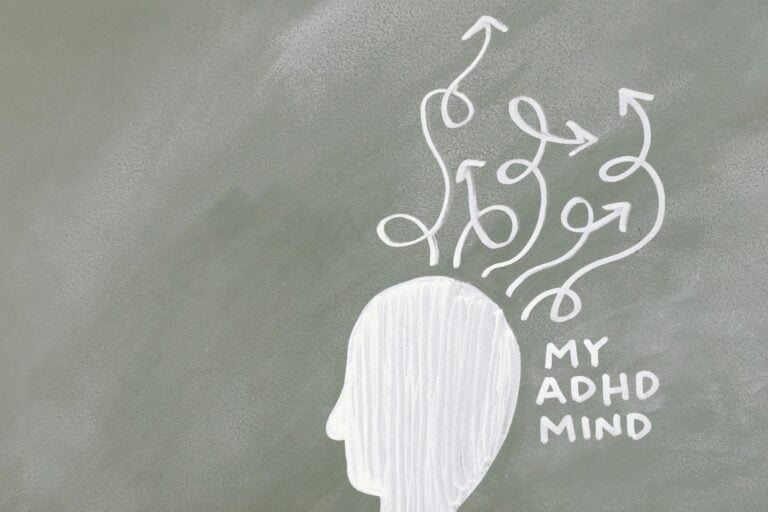

Being a homebody with FOMO means you genuinely prefer staying home, and you also genuinely feel a pang when you see what everyone else is doing. Both things are true at the same time, and that tension is real.
This isn’t a personality flaw or a contradiction you need to resolve. It’s one of the more quietly complicated experiences introverts carry, and it deserves an honest look.

My own relationship with home has always been complicated in exactly this way. During the years I ran advertising agencies, my calendar was relentlessly full. Client dinners, industry events, new business pitches, award shows. I showed up to all of it because that’s what the job demanded, and honestly, some of it was genuinely exciting. But I’d come home afterward and feel this specific kind of relief, like setting down something heavy I’d been carrying for hours. Home was where my mind could finally stop performing. And yet, on a Saturday night when I chose to stay in, I’d sometimes scroll through what colleagues were posting and feel that familiar, uncomfortable pull. Not regret exactly. Something more like wistfulness mixed with self-doubt.
If that resonates with you, you’re in the right place. Our Introvert Home Environment hub covers the full landscape of how introverts relate to home as a space, a sanctuary, and sometimes a source of its own complicated feelings. This article focuses on one specific tension within that landscape: what happens when your love of home and your fear of missing out exist in the same mind at the same time.
Why Do Homebodies Get FOMO at All?
The assumption most people make is that if you’re genuinely happy at home, you shouldn’t feel FOMO. And if you feel FOMO, you must not actually be happy at home. That’s a false choice, and it misunderstands how both introversion and FOMO actually work.
What’s your personality type?
Take our free 40-question assessment and get a detailed personality profile with dimension breakdowns, context analysis, and personalised insights.
Discover Your Type8-12 minutes · 40 questions · Free
FOMO, at its core, isn’t about wanting to be somewhere else. It’s about uncertainty. It’s the nagging question of whether you’re making the right choice with your time, whether you’re somehow falling behind socially, whether the people you care about are having experiences that are pulling them in directions that don’t include you. That kind of anxiety doesn’t care whether you’re introverted or extroverted. It feeds on comparison and on the gap between what you chose and what you can see others choosing.
Social media has made this dramatically worse for everyone, but it hits homebodies in a particular way. When you’ve consciously chosen to stay in, every photo from a gathering you skipped becomes a small referendum on that choice. Your brain, which already processes social information carefully and thoroughly (one of the genuine strengths of introversion), starts running the comparison in the background whether you want it to or not.
What I’ve noticed in my own experience is that the FOMO rarely shows up during the evening itself. When I’m home, settled in, reading or thinking or working on something that matters to me, I’m genuinely content. The FOMO tends to arrive the next morning, or when someone mentions the event casually in conversation, or when I see a photo that captures a moment I wasn’t part of. It’s retrospective and social, not immediate and physical. That distinction matters, because it tells you something important about what you’re actually responding to.
What Is the FOMO Actually About?
Worth separating out the different things that get lumped together under the FOMO label, because they have different causes and different solutions.
Some of what feels like FOMO is actually loneliness. You don’t want to go to the party, but you do want connection. Those are different things, and conflating them leads to bad decisions. If you drag yourself to an event when what you actually need is a meaningful one-on-one conversation, you’ll come home feeling worse, not better, and wonder why your attempt to address the loneliness didn’t work.
Some of it is social anxiety wearing the costume of FOMO. You feel bad about not going, but the feeling underneath isn’t wistfulness about missing out. It’s worry about what others think of you for not going. That’s a meaningfully different problem, and it often responds better to honest self-examination than to forcing yourself out the door.
Some of it is genuine interest in specific people or experiences, which is also different from general FOMO. Feeling sad that you missed a close friend’s birthday dinner is not the same as feeling vaguely anxious that you didn’t attend a work happy hour. One is about a relationship that matters to you. The other is about social comparison and belonging signals.
And some of it, honestly, is the residue of years of being told that staying home is a lesser choice. Many of us who identify as homebodies spent formative years absorbing the message that the extroverted social calendar was the correct one. That conditioning doesn’t disappear just because you’ve intellectually accepted your introversion. It shows up as FOMO.

I spent a long time thinking my contentment at home was something I needed to overcome rather than something to honor. In my agency days, I watched extroverted colleagues seem to genuinely recharge at the very events that drained me. I assumed they had access to something I was missing. It took me years to understand that we were just running on different fuel systems, and mine required quiet to refill. There was nothing wrong with the fuel system. There was something wrong with my interpretation of it.
How Does Social Media Make This Harder?
Platforms built around social sharing are, by design, built around the highlight reel of social participation. Events, gatherings, trips, celebrations. The algorithm surfaces content that generates engagement, and photos of people together at things generate more engagement than photos of someone having a genuinely restorative evening at home.
What this means practically is that your feed is a systematically distorted picture of how other people spend their time. The friend who seems to go out every weekend probably also has plenty of quiet evenings you never see. But the visible evidence skews heavily toward the social, and your brain, doing what brains do, treats the visible evidence as representative.
There’s also something worth naming about the specific way introverts use social media. Many of us find online spaces and chat rooms genuinely satisfying for connection because they offer the depth of real conversation without the sensory and social energy demands of in-person gatherings. That’s a legitimate form of connection, not a lesser substitute. But it also means we’re often online in the moments when we’re home and resting, which is precisely when the comparison content is most likely to land badly.
One thing that helped me was recognizing that my FOMO was almost always triggered by passive scrolling, not by active engagement. When I was actually talking to someone online, exchanging ideas, having a real back-and-forth, I wasn’t feeling like I was missing out. The FOMO was a byproduct of consumption, not connection. That reframe made it easier to see the scrolling itself as the problem worth addressing, rather than the staying home.
There’s also a dimension here that touches on what psychological research on social comparison has documented for years: we compare our insides to other people’s outsides. We know all the ambivalence and complexity of our own choices. We see only the curated surface of others’. That asymmetry is reliably painful, and social media amplifies it at scale.
Can You Be a True Homebody and Still Want More?
Yes. Completely. And I’d argue that the most honest version of the homebody identity includes this complexity rather than papering over it.
There’s a version of homebody culture that has become almost aggressively cozy, a kind of aesthetic of complete contentment with staying in. Candles, blankets, the perfect couch setup, a good book, total peace. And I genuinely love all of that. A well-designed personal space matters enormously to me, and I’ve written about why the physical environment of home is so central to how introverts restore and think. But that aesthetic can sometimes create a pressure to perform contentment that isn’t always honest.
Real homebodies, in my experience, have complicated feelings about their choices sometimes. They miss people. They wonder occasionally if they’re too isolated. They feel the pull of certain experiences even while knowing that the reality of those experiences would likely exhaust them. Holding all of that at once isn’t a failure of the homebody identity. It’s just being a full human being.
What I’ve found is that acknowledging the FOMO without acting on it compulsively is actually a form of self-knowledge. You can feel the pull and still trust your own read on what you actually need. That’s different from suppressing the feeling or pretending it isn’t there. Suppression tends to make things worse. Recognition, without necessarily responding to it, tends to make things more manageable.

Highly sensitive people often experience this tension with particular intensity. The same perceptual depth that makes a quiet evening at home genuinely rich and restorative also makes social comparison more emotionally resonant. If you identify as an HSP, you might find that simplifying your environment and your commitments helps reduce the ambient noise that FOMO feeds on. Less clutter, including social clutter, tends to make the signal of what you actually want clearer.
What Does It Actually Mean to Miss Out?
Worth pressing on the phrase itself. “Missing out” implies that what you’re not attending is something you would have wanted to experience if you’d been there. But that’s often not true for introverts, and examining that assumption is useful.
I’ve forced myself to attend events in the grip of FOMO and come home feeling exactly as drained as I knew I would, without having gained whatever I imagined I was missing. The FOMO was about an imagined version of the event, not the actual event. The imagined version was filtered through social media highlights and a vague sense that other people were having more fun than me. The actual event was loud and crowded and required me to make small talk for three hours.
What introverts tend to miss out on when they skip social events is often surface-level exposure and ambient social contact, which is genuinely less important to us than it is to people who draw energy from those interactions. What we don’t miss out on is depth, meaning, or genuine connection, because those things don’t primarily happen at large group gatherings anyway. As Psychology Today has noted, deeper one-on-one conversations tend to be far more satisfying and meaningful than the kind of broad social contact that large events provide.
That doesn’t mean every gathering is worthless or that you should never push yourself to attend things. Some events genuinely matter, for relationships, for professional reasons, for experiences you’d regret skipping. The point is to make that assessment honestly rather than letting FOMO make it for you. FOMO is a poor decision-making tool because it’s driven by comparison and anxiety, not by your actual values and what genuinely matters to you.
One framework I’ve found useful is asking: would I be glad I went, or would I be glad I stayed home? Not in the abstract, but specifically. What is this event, what would I actually experience there, and what would I lose by not going? Answering that honestly, rather than in the grip of the FOMO feeling, usually produces a clearer answer.
How Do You Build a Home Life That Satisfies Without Isolating?
The practical question underneath all of this is how to live as a homebody in a way that genuinely nourishes you, without tipping into isolation that becomes its own problem.
Part of the answer is intentionality about the home environment itself. A home that genuinely supports your interests, your restoration, and your sense of self is a different thing from a home you retreat to by default. When I started thinking about my home as a space I was actively designing for the kind of life I wanted, rather than just a place I went when I wasn’t somewhere else, something shifted. It became less of a refuge from the world and more of a center of gravity.
Books have been central to that for me. There’s something about a well-curated personal library that makes a home feel genuinely inhabited, like it reflects a mind rather than just a body that sleeps there. If you’re building out your reading life as part of your home life, there are some excellent resources specifically written for people who identify with the homebody experience. A good homebody book can be both practically useful and genuinely affirming of the lifestyle you’re building.
The other part of the answer is being deliberate about connection, rather than letting social comparison drive you to events that don’t serve you. This might mean scheduling regular one-on-one time with people who matter to you, in settings that work for both of you. It might mean being more intentional about which invitations you accept and why, rather than accepting everything out of FOMO and resenting it, or declining everything out of inertia and feeling isolated.
It might also mean investing in the kinds of home experiences that make the FOMO feel genuinely less compelling. When your home life is rich enough, the pull of what’s happening elsewhere loses some of its power. Not because you’re suppressing the comparison, but because the comparison simply matters less when you’re genuinely engaged in something that satisfies you.
Thinking about what to give yourself (or someone you care about) to support this kind of home-centered life is worth some attention. The right gifts for homebodies aren’t just comfort items, they’re investments in a way of living that deserves to be taken seriously. And if you’re looking for a more curated approach, a thoughtful homebody gift guide can help you think through what actually supports this lifestyle versus what just fits the aesthetic.
When Is FOMO Actually Telling You Something True?
Not all FOMO is noise. Some of it is signal, and learning to tell the difference is one of the more valuable skills you can develop as an introverted homebody.
Persistent FOMO about a specific relationship, rather than social events in general, is often worth paying attention to. If you find yourself regularly wishing you were spending more time with a particular person, that’s not FOMO in the anxiety-driven sense. That’s your values telling you something about a connection that matters to you. Acting on that, by reaching out, by making plans, by being present in that relationship, tends to quiet the feeling in a way that attending random social events never does.
FOMO about specific experiences, rather than social gatherings broadly, can also be meaningful. There’s a difference between wishing you’d gone to a party and wishing you’d taken a particular trip, or tried a specific thing, or been present for a moment that had genuine meaning. The first is usually comparison-driven. The second might be telling you something about what you actually want from your life.
What I’ve found is that the FOMO worth listening to tends to be specific and persistent, while the FOMO worth dismissing tends to be vague and triggered by social media. “I wish I had a closer friendship with that person” is specific and persistent. “I feel bad that I didn’t go to that happy hour” is vague and triggered. They feel similar in the moment but point in very different directions.
There’s also a version of FOMO that’s actually a sign of genuine overextension in the homebody direction. If you’ve been home for weeks without meaningful human contact and you’re feeling a persistent, low-level ache, that’s probably not FOMO in the social comparison sense. That’s loneliness, and it deserves a direct response. Connection, even for introverts, is a genuine need. The form it takes can be different from what extroverts require, but the need itself is real. Psychological evidence on social connection is consistent on this point: isolation over extended periods affects wellbeing in ways that are hard to compensate for through other means.
How Do You Make Peace With Your Own Choices?
At some point, the homebody-with-FOMO experience comes down to this: can you trust your own read on what you need, even when comparison makes you doubt it?
That trust is harder to build than it sounds. We live in a culture that is still, despite significant shifts in recent years, more oriented toward extroverted social participation as the default. The homebody who stays in on a Saturday is still, in many social contexts, implicitly positioned as the person who didn’t quite make it out. That positioning is exhausting and often internalized in ways we don’t fully recognize.
One thing that helped me was getting clearer on what I was actually choosing, rather than what I was avoiding. Framing an evening at home as “I’m staying in because I need to restore and I have things I want to do” feels different from “I’m not going out tonight.” The first is a choice made from your own values. The second is a negation, defined by what you’re not doing. FOMO tends to attach more easily to negations than to positive choices.
Another thing that helped was being more honest with people I trusted about what I actually preferred, rather than offering vague excuses for why I wasn’t attending things. When I started saying “I’m a homebody and large events genuinely exhaust me, so I pick carefully” rather than “I have something going on,” the response was almost always more understanding than I expected. And the honesty made me feel less like I was hiding something, which in turn made the FOMO less potent.
There’s a broader conversation worth having about what a psychologically healthy relationship with social media and comparison looks like, and how to build it deliberately. That conversation is particularly relevant for introverts and homebodies, because the distortion that social media creates is especially pronounced when your actual preferences diverge from what the platform surfaces as normal.
What I keep coming back to is this: the homebody-with-FOMO experience is not a problem to solve. It’s a tension to hold with some grace. You can love your home, prefer your own company, and still feel the occasional pull of what you’re not attending. Those feelings can coexist without one of them having to win. success doesn’t mean eliminate the FOMO. It’s to stop letting it make your decisions for you.

If you want to keep exploring what it means to build a home life that genuinely works for an introverted mind, our full Introvert Home Environment hub covers everything from designing your physical space to managing the emotional complexity of being someone who finds home genuinely restorative in a world that keeps asking you to leave it.
About the Author
Keith Lacy is an introvert who’s learned to embrace his true self later in life. After 20 years in advertising and marketing leadership, including running agencies and managing Fortune 500 accounts, Keith now channels his experience into helping fellow introverts understand their strengths and build fulfilling careers. As an INTJ, he brings analytical depth and authentic perspective to every article, drawing from both professional expertise and personal growth.
Frequently Asked Questions
Is it normal to be a homebody who still gets FOMO?
Yes, and it’s more common than most people admit. Being a homebody means you genuinely prefer and restore in your home environment. FOMO is driven by social comparison and uncertainty about your choices. These two things can coexist in the same person without either one canceling the other out. Many introverts experience exactly this combination, particularly in an era when social media makes other people’s social lives highly visible.
Does FOMO mean I’m not actually an introvert?
No. Introversion describes where you draw your energy from, not whether you have social needs or feel the pull of social comparison. Introverts can feel lonely, miss specific people, and experience FOMO while still genuinely preferring quieter, more controlled social environments. FOMO is a psychological experience related to comparison and belonging, not a measure of introversion or extroversion.
How do I tell the difference between FOMO and actual loneliness?
FOMO tends to be triggered by external cues, particularly seeing what others are doing on social media, and it’s often vague and comparison-driven. Loneliness tends to be persistent, present even when you’re not scrolling, and connected to a genuine lack of meaningful connection in your life. If the feeling goes away when you put your phone down, it’s probably FOMO. If it persists regardless of what you’re looking at, it’s worth addressing as a genuine need for connection.
Should I push myself to go out more to address FOMO?
Not automatically. Forcing yourself to attend events in response to FOMO often doesn’t resolve the underlying feeling, and it can leave you drained without having gained what you imagined. A more useful approach is to identify what the FOMO is actually about. If it’s about a specific relationship, reach out to that person directly. If it’s about social comparison anxiety, addressing your relationship with social media may be more effective than attending more events. If it’s about genuine loneliness, seek out the kinds of connection that actually work for you, often one-on-one rather than group settings.
How can I make my home life feel rich enough that FOMO loses its grip?
Invest deliberately in the things that genuinely engage and restore you at home. This might mean building out a reading life, creating a physical environment that supports your interests and comfort, developing home-based projects or creative work, and being intentional about the kinds of connection you do seek out. When your home life is actively satisfying rather than passively comfortable, the comparison with what’s happening elsewhere tends to matter less. The FOMO doesn’t disappear, but it stops having the same authority over your choices.