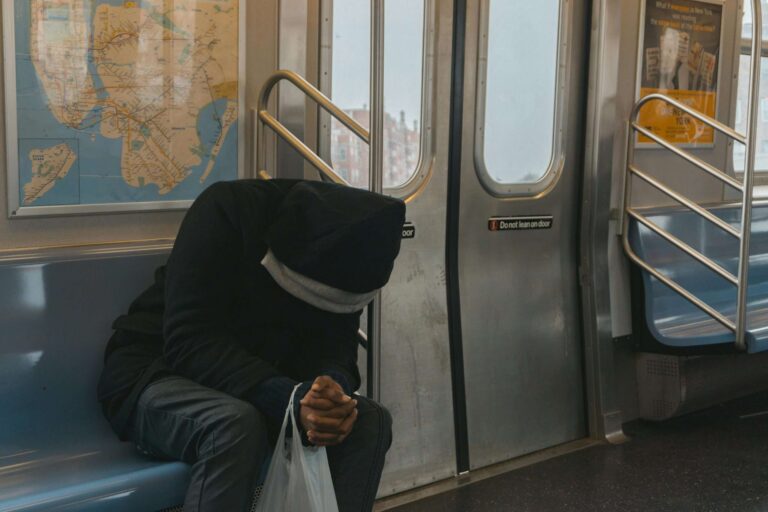

An introvert can become an acute sufferer of loneliness not despite their preference for solitude, but partly because of how that preference gets misread, including by themselves. When the need for quiet time gradually replaces genuine connection, or when social withdrawal becomes the default response to emotional pain, the gap between being alone and feeling profoundly isolated can close faster than anyone expects.
Most people assume introverts are fine on their own. And often, we are. But there’s a version of aloneness that stops being restorative and starts being corrosive, and it doesn’t announce itself. It creeps in quietly, which makes it particularly dangerous for people who are already wired to process things internally.

If you’ve ever wondered whether your love of solitude has quietly crossed into something more painful, many introverts share this in asking that question. Our Introvert Friendships Hub explores the full range of how introverts build and maintain meaningful connections, and the loneliness piece adds a layer that many people in this community find surprisingly hard to talk about.
Why Do Introverts Experience Loneliness Differently Than Extroverts?
Loneliness isn’t about how many people surround you. It’s about the quality of connection you feel, and whether your inner world has anyone in it who truly understands you. That distinction matters enormously when you’re wired the way most introverts are.
What’s your personality type?
Take our free 40-question assessment and get a detailed personality profile with dimension breakdowns, context analysis, and personalised insights.
Discover Your Type8-12 minutes · 40 questions · Free
Extroverts tend to feel loneliness as a deficit of social contact. They can fix it relatively quickly by being around people, any people. For many introverts, that solution doesn’t work. Being in a room full of people who don’t know the real you can feel lonelier than sitting alone in your apartment. I know this from years of attending industry events in advertising, surrounded by colleagues and clients, shaking hands and making small talk about campaigns and quarterly results, and feeling genuinely invisible the entire time.
That’s the core of introvert loneliness: it’s a hunger for depth that surface-level interaction can’t satisfy. A PubMed Central study on social connection and wellbeing found that the perceived quality of relationships, rather than their frequency, is more strongly linked to emotional health outcomes. That finding resonates deeply with how introverts experience their social world. One meaningful conversation can sustain us for days. A week of shallow interactions leaves us emotionally depleted and somehow more alone than before.
The question of whether introverts get lonely at all is one I get asked surprisingly often. People conflate introversion with self-sufficiency in a way that misses the point. If you want to explore that specific question directly, the piece on whether introverts get lonely addresses it honestly and without the usual oversimplifications.
What Are the Specific Triggers That Push Introverts Toward Acute Loneliness?
Several patterns show up repeatedly in how introverts slide from healthy solitude into something that genuinely hurts. Understanding these patterns is the first step toward catching them early.
The Gradual Withdrawal Loop
It starts innocently. You decline one invitation because you’re tired. Then another because the group feels too large. Then you stop getting invited as often, and the silence feels like relief at first. But over weeks or months, the silence becomes the problem. You’ve optimized yourself into isolation without realizing it.
I watched this happen to myself during the years I was running my first agency. The business was demanding, the client relationships were intense, and every evening I came home wanting nothing more than quiet. I told myself I was recharging. And I was, partly. But I was also slowly letting every friendship outside of work atrophy. By the time I noticed, I had a full calendar and almost no one I could call just to talk.
Mistaking Overstimulation for Dislike of People
Introverts who haven’t fully understood their own wiring sometimes interpret their exhaustion after social events as evidence that they don’t actually like people. That’s a damaging misread. The exhaustion is real, but it doesn’t mean connection isn’t wanted or needed. When introverts start avoiding people because they’ve confused overstimulation with genuine dislike, loneliness follows almost inevitably.
There’s an important distinction between introversion and social anxiety worth naming here. Introversion is an energy management style. Social anxiety is a fear-based response to social situations that can look similar from the outside but has very different roots and requires different approaches. Healthline’s breakdown of introversion versus social anxiety is one of the clearest explanations I’ve seen of where the two overlap and where they diverge.

The High Standards Problem
Many introverts, particularly those with an intuitive or highly sensitive bent, have a very clear internal picture of what meaningful friendship looks like. They want people who engage with ideas, who can sit with complexity, who don’t need constant noise to feel comfortable. Those standards aren’t wrong. But when they become so exacting that no real human can meet them, loneliness becomes structural rather than circumstantial.
I’ve seen this play out in my own friendships and in the people I’ve managed. One of my most talented creative directors was an INFJ who had such a precise idea of what a real friend should be that she’d spent years cycling through acquaintances without letting anyone get close. She wasn’t cold. She was waiting for someone who matched a template that may not have existed in its pure form. The loneliness that came from that waiting was acute and genuinely painful for her.
Life Transitions That Sever Existing Connections
Moving cities, changing careers, ending long-term relationships, or retiring from a role that structured your social life are all moments when introverts are particularly vulnerable to loneliness. Extroverts tend to rebuild social networks faster because they’re more comfortable initiating with strangers. Introverts often wait for organic connection, and in environments where organic connection is harder to come by, that wait can stretch into years.
Living in a dense urban environment doesn’t automatically solve this. If anything, the paradox of urban anonymity can make it worse. The piece on making friends in NYC as an introvert gets at something real: being surrounded by millions of people doesn’t mean connection is easy to find, especially when your wiring requires depth over volume.
How Does Chronic Loneliness Actually Affect Introverts’ Mental and Physical Health?
Loneliness isn’t just an emotional state. When it becomes chronic, the effects on health are measurable and significant. Research published in PubMed Central on loneliness and health has linked persistent loneliness to disrupted sleep, weakened immune response, and elevated stress hormones. These aren’t abstract risks. They’re things that compound quietly over time.
For introverts specifically, the danger is that chronic loneliness can masquerade as contentment for a long time. Because we’re comfortable with solitude, we can be slower to recognize when solitude has become something else. We don’t have the external signal of desperately wanting to go out and socialize. We have something quieter and harder to name: a background hum of disconnection that doesn’t go away even when we’re rested, even when work is going well, even when life looks fine from the outside.
That internal signal, the quiet ache rather than the loud cry, is part of what makes acute loneliness in introverts so easy to miss. Including by the introvert themselves.

Can Social Anxiety Accelerate Loneliness in Introverts?
Yes, and the combination is particularly difficult to work through because the two conditions reinforce each other in a tight cycle. Social anxiety makes initiating connection feel threatening. Introversion makes the energy cost of connection feel high. Together, they create a situation where the path of least resistance is always away from people, and every step away makes the next attempt feel harder.
A recent study indexed on PubMed examining social avoidance patterns found that avoidance behaviors tend to reinforce themselves over time, making the feared situation feel increasingly threatening the longer it’s avoided. For introverts with social anxiety, this means that the natural comfort of solitude can become a hiding place that gradually shrinks their world.
Cognitive behavioral approaches have shown meaningful results in addressing the anxiety component. Healthline’s overview of CBT for social anxiety outlines how these approaches work, and they’re worth understanding even if you wouldn’t describe yourself as having a clinical disorder. The underlying principles about challenging avoidance patterns apply broadly.
Making friends as an adult with social anxiety layered on top of introversion is one of the more underserved conversations in this space. The piece on how to make friends as an adult with social anxiety addresses this intersection directly, with practical approaches rather than generic advice about “putting yourself out there.”
What Role Does High Sensitivity Play in Deepening Introvert Loneliness?
Not all introverts are highly sensitive people, but there’s significant overlap between the two groups. For those who are both introverted and highly sensitive, the loneliness experience has an additional dimension: the pain of feeling unseen is sharper, and the disappointment when connections don’t reach the depth they were hoping for lands harder.
Highly sensitive people process emotional information more deeply than average. They notice subtleties in tone, in body language, in what’s left unsaid. That depth of perception can be a profound gift in close relationships. In the absence of close relationships, it becomes a liability. There’s more to feel, and more of it hurts.
The piece on HSP friendships and building meaningful connections explores this territory thoughtfully, particularly the challenge of finding friends who can match the emotional depth that highly sensitive people naturally bring to relationships.
A paper published in Springer’s cognitive therapy journals examining emotional processing and interpersonal functioning found that people who process emotions more deeply often have higher expectations for relational intimacy, which can create a vulnerability to loneliness when those expectations aren’t met. That finding aligns closely with what I’ve observed both personally and in the people I’ve worked with over the years.

How Does Technology Change the Loneliness Equation for Introverts?
Digital communication has been both a genuine lifeline and a subtle trap for introverts. On one hand, text-based communication removes a lot of the overstimulation that makes in-person socializing exhausting. Writing a thoughtful message, having time to formulate a response, engaging with ideas in a comment thread, these can feel like connection on introvert-friendly terms.
On the other hand, digital interaction can create a convincing illusion of connection that substitutes for the real thing without actually delivering what loneliness needs. You can spend hours engaged online and still feel profoundly alone, because the depth and reciprocity of genuine relationship isn’t quite there.
There’s also something worth noting about online communities and belonging. Research from Penn State’s media effects lab on digital community formation suggests that shared cultural touchpoints, even something as lightweight as memes, can create genuine feelings of belonging for people who struggle to find their tribe in person. That’s not nothing. For introverts who feel deeply out of place in their immediate physical environment, finding an online community of people who think the same way can be a meaningful first step out of isolation.
Purpose-built apps designed for introverts to find compatible friends are worth considering as part of a broader strategy. The article on apps for introverts to make friends reviews options that are specifically designed with introvert preferences in mind, which makes them meaningfully different from general social platforms.
Are Introverted Teenagers Particularly Vulnerable to Acute Loneliness?
Yes, and it’s a dimension of this topic that doesn’t get enough attention. Adolescence is a period when social belonging feels existentially important, and the dominant social structures of school life, large group friendships, parties, team sports, tend to reward extroverted behavior. Introverted teenagers often find themselves on the margins not because they’re unlikable but because the social formats available to them don’t suit how they connect.
When I look back at my own teenage years, I can see clearly that I was lonely in a way I didn’t have language for at the time. I had acquaintances. I did fine academically. From the outside, there was nothing obviously wrong. But I had almost no one I could talk to about the things that actually mattered to me, and that absence sat in my chest like a weight I carried everywhere.
For parents watching their introverted teenager struggle socially, the instinct is often to push them toward more social activity. That approach frequently backfires. What introverted teenagers usually need is help finding the right kind of connection, smaller groups, shared interests, lower-pressure formats. The resource on helping your introverted teenager make friends approaches this with the nuance it deserves, without defaulting to “just tell them to be more outgoing.”
What Does Recovery From Acute Introvert Loneliness Actually Look Like?
Recovery isn’t about becoming more extroverted. That framing is both inaccurate and counterproductive. What it actually involves is a gradual, intentional rebuilding of connection on terms that work for how you’re wired.
The first thing that helped me, when I finally acknowledged that my solitude had become something more painful, was getting honest about what I actually wanted from friendship. Not what I thought I should want, not what seemed reasonable given my schedule, but what I genuinely needed. For me, it was one or two people who could engage with ideas seriously, who didn’t need me to perform extroversion, and who could tolerate long gaps between conversations without interpreting them as rejection.
Once I was clear on that, I stopped trying to maintain a wide social network and started investing more deliberately in the few relationships that had the potential to become what I was looking for. It was slower than I wanted. There were false starts. But the direction was right.
A study from Indiana University examining social connection and wellbeing found that intentional relationship investment, putting consistent effort into a small number of relationships rather than spreading attention thinly, produced significantly better outcomes for people who reported chronic loneliness. That tracks with what worked for me, and with what I’ve seen work for others.
The other piece that matters is addressing any shame around the loneliness itself. Many introverts feel a particular kind of embarrassment about being lonely because it seems to contradict their stated preference for solitude. “I like being alone, so why does being alone feel so bad?” That contradiction can stop people from reaching out or seeking support, which compounds the problem. Acknowledging that solitude and loneliness are genuinely different states, and that wanting one doesn’t mean you’re immune to the other, is often where healing starts.

How Can Introverts Distinguish Between Restorative Solitude and Harmful Isolation?
This is probably the most practically useful question in this whole conversation, and the answer requires honest self-observation rather than a simple checklist.
Restorative solitude leaves you feeling replenished. You come out of it with more energy, more clarity, more capacity for engagement. It’s a state you chose from a position of having enough connection, and it serves a specific function in your overall wellbeing.
Harmful isolation leaves you feeling worse the longer it continues. You might feel relief initially, especially if you’ve been overstimulated. But after a while, the relief gives way to a dull flatness, a sense that you’re observing your own life from a distance rather than living it. You might notice a decrease in motivation, a loss of interest in things that usually engage you, or a growing sense that you’ve somehow stepped outside the flow of human experience.
The honest signal I’ve learned to pay attention to is whether my solitude is making me more capable of connection or less. If time alone is genuinely recharging me, I want to reach out afterward. If it’s been isolation, the idea of reaching out feels increasingly impossible, not just tiring but somehow wrong, like I’ve been away too long to know how to come back.
That feeling of having been away too long is worth taking seriously. It’s usually a sign that the withdrawal has crossed a line, and that the next step is to reach out to someone, even imperfectly, even when it feels awkward.
There’s a lot more to explore around how introverts build and sustain the kinds of friendships that protect against this kind of loneliness. The full collection of resources in the Introvert Friendships Hub covers everything from finding the right people to maintaining connections across distance and life changes.
About the Author
Keith Lacy is an introvert who’s learned to embrace his true self later in life. After 20 years in advertising and marketing leadership, including running agencies and managing Fortune 500 accounts, Keith now channels his experience into helping fellow introverts understand their strengths and build fulfilling careers. As an INTJ, he brings analytical depth and authentic perspective to every article, drawing from both professional expertise and personal growth.
Frequently Asked Questions
Can introverts really suffer from acute loneliness if they prefer being alone?
Yes, and this is one of the most common misconceptions about introversion. Preferring solitude as a way to recharge doesn’t mean a person doesn’t need deep, meaningful connection. Introverts can experience acute loneliness precisely because their need for depth in relationships is so strong. When that depth is absent, the resulting loneliness can be more painful than it might be for someone who is satisfied by frequent but shallow social contact.
What is the difference between introvert loneliness and introvert solitude?
Solitude is a chosen state that leaves an introvert feeling restored and more capable of engaging with the world. Loneliness is an unchosen state of disconnection that produces emotional pain and a sense of being unseen or unknown. The practical test is how you feel after extended time alone: replenished and ready for connection, or flatter and more withdrawn than when you started.
How does social anxiety make introvert loneliness worse?
Social anxiety creates a fear-based avoidance of social situations that compounds the introvert’s natural preference for limited social engagement. Together, they produce a cycle where every avoided interaction makes the next one feel more threatening, gradually shrinking the person’s social world. Unlike introversion, which is about energy management, social anxiety is about fear, and it typically requires intentional work to address rather than simply respecting one’s natural preferences.
At what life stages are introverts most vulnerable to acute loneliness?
Introverts tend to be particularly vulnerable during major life transitions: adolescence, when social structures favor extroverted behavior; early adulthood, when college or career changes sever established friendships; midlife, when demanding careers or family responsibilities leave little space for maintaining connections; and retirement, when work-based social structures disappear entirely. Each of these transitions requires intentional effort to rebuild connection, and introverts who don’t recognize that need can slide into isolation without realizing it.
What are the first practical steps an introvert can take to address acute loneliness?
The most effective first steps tend to be internal before they’re external. Getting honest about what you actually need from friendship, rather than what seems realistic or low-effort, gives you a clearer target. From there, identifying one or two existing relationships with potential for deeper investment is more productive than trying to build a wide social network. Small, consistent gestures of connection, a message, a shared article, a brief check-in, tend to work better than large social commitments that feel overwhelming. If social anxiety is a factor, working with a therapist who uses cognitive behavioral approaches can help address the avoidance patterns that make reaching out feel impossible.