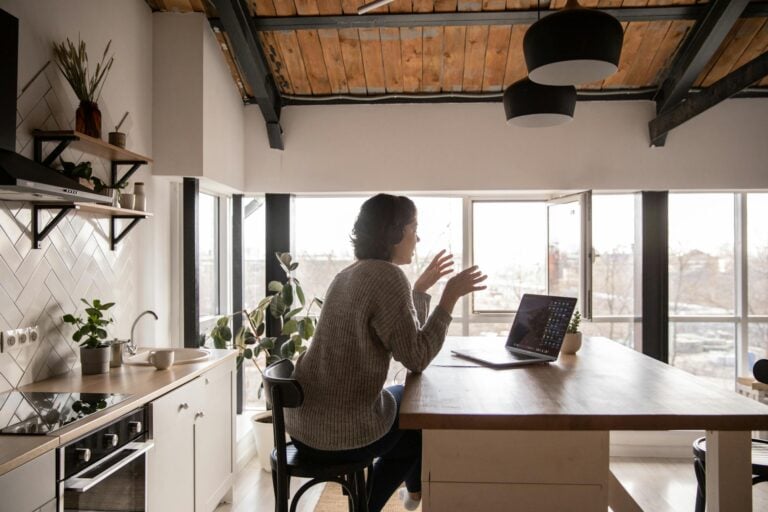

Introverts and extroverts can absolutely get along in a family, but it requires something most families skip entirely: a genuine understanding of how differently each person is wired. When a family member who recharges through solitude lives alongside someone who draws energy from constant connection, friction isn’t a character flaw on either side. It’s a natural collision of two legitimate ways of being human.
The families that handle this well aren’t the ones where everyone agrees on how much noise is acceptable at dinner. They’re the ones where people have stopped expecting everyone else to experience the world the same way they do.
If you’re trying to make sense of the tension in your own household, our Introvert Family Dynamics and Parenting hub covers the full range of these challenges, from parenting styles to sibling relationships to how personality shapes communication across generations. This article focuses on one specific layer: what it actually takes for introverts and extroverts to coexist, and sometimes even thrive, under the same roof.

Why Do Introverts and Extroverts Clash at Home?
My father was the loudest person in any room. Not aggressively loud, just genuinely energized by people, by noise, by the chaos of a full house. Sunday dinners at our place meant neighbors dropping by unannounced, the television on in the background, and conversations happening in three rooms at once. He was in his element. I was quietly calculating how long until I could disappear to my bedroom.
What’s your personality type?
Take our free 40-question assessment and get a detailed personality profile with dimension breakdowns, context analysis, and personalised insights.
Discover Your Type8-12 minutes · 40 questions · Free
What I didn’t understand then, and what took me decades to articulate, is that we weren’t fighting about noise levels. We were experiencing fundamentally different nervous system responses to the same environment. Research from the National Institutes of Health has found that temperament traits linked to introversion appear early in life and show meaningful stability into adulthood, suggesting these differences aren’t preferences we choose. They’re wired in.
That framing matters enormously inside a family. When an extroverted parent interprets a teenager’s need for alone time as sulking or withdrawal, they’re not being cruel. They’re reading behavior through their own wiring. An extrovert genuinely experiences isolation as something to be fixed. An introvert experiences it as something to be protected. Neither is wrong. Both are operating from a completely sincere internal logic.
Family dynamics, as Psychology Today describes them, are shaped by the interaction patterns, communication styles, and emotional responses that each member brings to the household. When those patterns are built around an implicit assumption that everyone recharges the same way, the introvert in the family almost always ends up accommodating, shrinking, or quietly exhausted.
Running advertising agencies for over two decades gave me a front-row seat to this same dynamic playing out in professional settings. I had account teams full of extroverts who processed ideas by talking through them out loud, often in real time, often at volume. Meanwhile, I was sitting at the head of a conference table doing my best analysis internally, wishing everyone would stop talking so I could think. Neither approach was wrong. But when we didn’t name the difference, we wasted enormous energy on misreading each other’s intentions.
What Does Each Personality Type Actually Need at Home?
One of the most useful things I’ve done, both personally and professionally, is stop treating personality differences as abstract concepts and start treating them as practical operating instructions. Before you can bridge the gap between introversion and extroversion in a family, you need to be honest about what each person actually requires to function well.
Extroverts need connection. They need interaction that feels spontaneous, social energy that’s available, and a household that doesn’t feel like a library. They often process their emotions and decisions out loud, which means they need someone to talk to, not just someone who will listen patiently from behind a closed door. When extroverts don’t get this within the family, they can become restless, frustrated, or genuinely confused about why everyone seems to be pulling away from them.
Introverts need space. Not emotional distance, but literal, physical, temporal space to decompress. They need the option to disengage from social demands without it being interpreted as rejection. Many introverts I know, myself included, are deeply caring and relational people. The need for solitude isn’t about loving people less. It’s about how we refuel so we can show up fully when it counts. If you want a more structured way to understand where you fall on this spectrum, the Big Five Personality Traits test measures extraversion as one of five core dimensions and can give you a more nuanced picture of your own tendencies.
The problem in most families isn’t that these needs are incompatible. The problem is that they’re rarely stated directly. Instead, the extrovert keeps suggesting family activities and feels rejected when the introvert declines. The introvert keeps retreating and feels guilty for not wanting to be more present. Both people are trying to meet their own legitimate needs, but without a shared vocabulary for what those needs actually are, the whole thing reads like conflict.

How Do You Build Communication That Works for Both?
Communication is where the introvert-extrovert divide shows up most visibly, and where the most practical adjustments can be made.
Extroverts tend to think out loud. They arrive at conclusions through conversation, which means early-stage thinking can sound like a finished position when it isn’t. Introverts tend to think before speaking. They arrive at conversations with conclusions already formed, which can make them seem rigid or closed off when they’re actually just prepared. When these two styles meet in a heated family discussion, the extrovert may feel like the introvert isn’t engaging, while the introvert feels steamrolled before they’ve had time to formulate a response.
I watched this play out constantly in agency life. Some of my most valuable creative directors were introverts who would sit quietly through an entire brainstorm and then send an email two hours later with the best idea in the room. If I had judged their contribution by their participation in the meeting, I would have missed what they actually had to offer. The same principle applies at home. Giving an introverted family member time to process before expecting a response isn’t accommodation. It’s just accurate communication.
A few things that genuinely help:
Signal before engaging. Extroverts can help by giving introverts a heads-up before launching into a conversation that requires real engagement. “Can we talk about the weekend plans after dinner?” gives an introvert time to mentally prepare instead of being ambushed mid-decompression.
Create low-stakes connection rituals. Not every family interaction needs to be a deep conversation. Watching a show together, cooking side by side, or taking a walk can meet an extrovert’s need for togetherness while respecting an introvert’s preference for lower-intensity interaction.
Name the need, not the behavior. “I need some quiet time this afternoon” lands very differently than simply disappearing and hoping no one notices. And “I’m feeling a little disconnected from you lately” lands better than “You’re always hiding in your room.” Naming what you need, rather than critiquing what the other person is doing, changes the entire emotional register of the conversation.
There’s also something worth noting about how likeability plays into this. Introverts often worry that their quietness reads as coldness or disinterest, especially in families where extroversion is the default mode. If you’ve ever wondered how you come across in close relationships, the Likeable Person test offers an interesting lens on how warmth and connection are perceived by others, which can be genuinely useful when you’re trying to bridge a personality gap at home.
What Happens When Children Are Caught Between Introvert and Extrovert Parents?
Some of the most complicated introvert-extrovert dynamics I hear about involve children who are wired differently from one or both parents. An introverted child raised by extroverted parents often grows up feeling like something is wrong with them. An extroverted child raised by introverted parents can feel chronically understimulated or emotionally unmet.
Neither scenario is inevitable, but both require parents to do something genuinely difficult: set aside their own wiring and try to see the world through their child’s. An extroverted parent who interprets their introverted child’s preference for solo play as loneliness may push social interaction in ways that exhaust rather than enrich the child. An introverted parent who is uncomfortable with their extroverted child’s constant need for engagement may unintentionally communicate that the child’s energy is too much.
This is especially layered for parents who are also highly sensitive. If you’re parenting with a heightened sensitivity to sensory input and emotional undercurrents, the challenge of meeting an extroverted child’s high-stimulation needs can be genuinely depleting. The article on HSP parenting and raising children as a highly sensitive parent addresses exactly this tension and is worth reading if that resonates.
What helps is curiosity over correction. When a parent approaches a child’s personality with genuine interest rather than a desire to modify it, the child learns something foundational: who I am is acceptable. That message, delivered consistently over years, does more for a child’s development than any particular activity or parenting strategy.

It’s also worth acknowledging that personality isn’t the only variable in play. The American Psychological Association notes that early experiences, including trauma and stress, can significantly shape how personality traits express themselves over time. A child who seems withdrawn may be introverted. They may also be responding to something in their environment that needs attention. Good parenting means holding both possibilities without collapsing them into one.
How Can Introverts and Extroverts Negotiate Shared Space?
Physical space is a surprisingly underrated source of family conflict. Extroverts tend to experience shared space as naturally communal. An open floor plan, a family room with the television on, a kitchen where everyone congregates, these feel like features to an extrovert. To an introvert, they can feel like a lack of refuge.
One of the most practical things a mixed-personality family can do is create what I’d call designated quiet zones and designated social zones, and honor both without making either feel like a punishment or a privilege. A bedroom with a closed door that’s respected. A common area where noise and conversation are welcome. The physical architecture of the home can either support or undermine everyone’s needs.
I spent years in open-plan agency offices that were designed for extroverted collaboration and were genuinely hostile to introverted deep work. When I finally restructured one of my agencies to include both collaborative spaces and quiet individual work areas, productivity went up across the board. Not because the introverts were finally comfortable, but because everyone was able to work in the mode that matched what they were actually doing. The same logic applies at home.
Scheduling also matters more than most families realize. Extroverts often prefer spontaneous social plans. Introverts tend to do better with predictability, knowing in advance when social demands are coming so they can prepare. A family calendar that includes both planned social activities and explicitly protected quiet time isn’t controlling. It’s a practical acknowledgment that both types of time have value.
Some families also benefit from understanding the full personality picture beyond just introversion and extroversion. Tools like the Personal Care Assistant test can surface insights about how someone naturally relates to others in caregiving contexts, which is relevant when you’re thinking about how different family members show up for each other emotionally. Similarly, understanding someone’s approach to structure, discipline, and motivation, qualities that the Certified Personal Trainer test touches on in a professional context, can offer useful parallels for how people approach accountability and encouragement within a family system.
What Role Does Respect Play in Mixed-Personality Families?
Every piece of practical advice in this article rests on a foundation that can’t be manufactured through technique: genuine respect for a personality type that isn’t yours.
This is harder than it sounds. Most of us carry implicit assumptions that our way of experiencing the world is the default, and that other approaches are variations or deviations from that default. Extroverts sometimes experience introversion as aloofness, as a failure to connect, or as something that needs to be coaxed out of. Introverts sometimes experience extroversion as exhausting, as a lack of depth, or as an inability to be alone with one’s own thoughts. Both of these are projections, and they do real damage inside families.
Genuine respect means accepting that an extroverted family member’s need for constant connection is as legitimate as your need for quiet. It means accepting that an introverted family member’s withdrawal isn’t rejection, even when it feels that way. It means building family rituals around what actually works for everyone, not just replicating the patterns that came naturally to whoever has the most social energy in the household.
Published research in PubMed Central has explored how personality differences within close relationships affect satisfaction and conflict patterns over time. What consistently emerges is that the quality of communication and mutual understanding matters more than whether two people share the same personality profile. Similarity makes things easier. Understanding makes things work.
There’s also a more uncomfortable layer here. Sometimes what looks like an introvert-extrovert conflict is actually something else entirely. Persistent patterns of emotional reactivity, difficulty with boundaries, or chronic misreading of others’ intentions can have roots that go beyond personality type. If you’re noticing patterns in a family member that feel more intense or destabilizing than typical personality differences, it may be worth exploring further. The Borderline Personality Disorder test isn’t a diagnostic tool, but it can be a useful starting point for reflection when emotional dynamics in a family feel consistently difficult to understand.

Can Introvert-Extrovert Differences Actually Strengthen a Family?
Some of my most effective working relationships over the years were with people who were my temperamental opposite. I had a business development partner at one of my agencies who was a natural extrovert, the kind of person who could walk into a room full of strangers and leave with three new clients. I could walk into the same room and produce a thorough strategic analysis of why two of those clients weren’t worth pursuing. Together, we were genuinely better than either of us alone.
The same dynamic can play out in families. An extroverted parent who keeps the household connected to community, who plans gatherings and maintains social relationships, provides something an introverted parent might not naturally prioritize. An introverted parent who creates space for depth, who notices what’s happening beneath the surface, who asks questions and actually waits for the answer, provides something an extroverted parent might rush past. Children raised in households where both of these orientations are valued tend to develop a broader range of relational skills than children who only see one mode modeled.
Additional research published in PubMed Central on personality complementarity in close relationships suggests that differences in extraversion don’t inherently predict conflict or dissatisfaction. What predicts those outcomes is how the differences are handled, whether they’re acknowledged, negotiated, and respected, or ignored, pathologized, and fought over.
Blended families add another layer of complexity to this. When you’re bringing together children and adults from different households, each with their own established personality norms, the introvert-extrovert dynamic can become especially pronounced. Psychology Today’s coverage of blended family dynamics offers useful context for understanding how these patterns form and shift when new personalities enter an existing family system.
What I’ve come to believe, after years of watching this play out in both professional and personal contexts, is that the introvert-extrovert divide is one of the most misunderstood sources of family conflict, and one of the most solvable. It doesn’t require anyone to become someone they’re not. It requires everyone to become more curious about who the people around them actually are.

There’s a lot more to explore on this topic, and if today’s article resonated with you, the full Introvert Family Dynamics and Parenting hub is a good place to keep reading. It covers everything from how personality shapes parenting to how introverted children experience family life, all through a lens that takes introversion seriously as a strength rather than a limitation.
About the Author
Keith Lacy is an introvert who’s learned to embrace his true self later in life. After 20 years in advertising and marketing leadership, including running agencies and managing Fortune 500 accounts, Keith now channels his experience into helping fellow introverts understand their strengths and build fulfilling careers. As an INTJ, he brings analytical depth and authentic perspective to every article, drawing from both professional expertise and personal growth.
Frequently Asked Questions
Can an introvert and extrovert have a healthy family relationship?
Yes, and in many cases the combination produces something genuinely stronger than a household where everyone shares the same personality orientation. The families that handle this well are the ones where both types of needs are named and respected rather than quietly competed over. An extrovert’s need for connection and an introvert’s need for space aren’t mutually exclusive. They require negotiation, not compromise in the sense of both people losing something, but in the sense of both people gaining clarity about what the other actually needs.
Why do introverts and extroverts clash in family settings?
Most clashes between introverts and extroverts in families stem from misreading each other’s behavior through their own wiring. An extrovert who sees an introvert withdrawing interprets it as rejection or sulking. An introvert who sees an extrovert pushing for more social time interprets it as insensitivity or a failure to respect their limits. Neither reading is accurate, but without a shared understanding of how differently these two types experience social energy, both people end up defending themselves against something that was never actually an attack.
How should introverted parents handle extroverted children?
With curiosity rather than correction. An introverted parent’s instinct may be to create a quieter, more contained home environment, which can leave an extroverted child feeling chronically understimulated or emotionally unmet. The most effective approach is to find ways to honor the child’s need for engagement and social connection without completely depleting yourself. This often means building in structured social time for the child, maintaining relationships with other families, and being honest with yourself about when you need to hand off some of the relational load to a partner, a relative, or a community.
What communication strategies work best for mixed-personality families?
A few things make a consistent difference. Giving introverts advance notice before expecting meaningful engagement, rather than launching into conversations mid-decompression. Creating low-intensity shared rituals that meet an extrovert’s need for togetherness without requiring an introvert to be fully socially “on.” Naming needs directly rather than critiquing behavior. And building in both planned social time and explicitly protected quiet time on the family calendar, so neither type of need is treated as an afterthought. The underlying principle is that both sets of needs are legitimate, and both deserve to be planned for.
How do you stop introvert-extrovert differences from becoming resentment?
Resentment usually builds when one person’s needs are consistently treated as the default and the other person’s needs are treated as an inconvenience. In families where extroversion is the dominant mode, introverts often end up accommodating constantly and quietly depleting themselves. In families where introversion sets the tone, extroverts can feel starved for connection and chronically understimulated. The antidote isn’t perfect balance in every moment. It’s a shared acknowledgment that both orientations are valid, followed by consistent, small adjustments that prevent either person from feeling like they’re always the one giving ground.