

Becoming an ambivert is less about changing who you are and more about expanding how you operate. Most people sit somewhere on a spectrum between introversion and extroversion, and with intentional practice, many introverts can develop the flexibility to draw energy from social situations without abandoning their need for quiet. It’s not a personality transplant. It’s a skill set.
That said, the question deserves more nuance than most answers give it. Can anyone truly become an ambivert, or are we just learning to perform extroversion when circumstances demand it? After two decades running advertising agencies, I’ve had to wrestle with this question in ways that felt deeply personal.
Before we get into the mechanics of how this works, it helps to understand where ambiverts fit within the broader personality landscape. Our Introversion vs Other Traits hub maps out the full spectrum of personality orientations, from deeply introverted to strongly extroverted, and everything in between. Ambiverts occupy a fascinating middle ground, and understanding that context makes the practical advice in this article click into place.
What Does It Actually Mean to Be an Ambivert?
An ambivert is someone who exhibits both introverted and extroverted tendencies, shifting between the two depending on context, mood, and environment. They’re not stuck in one mode. A packed networking event might energize them one evening and drain them the next. They can hold a room in conversation and then genuinely crave three hours alone afterward.
What’s your personality type?
Take our free 40-question assessment and get a detailed personality profile with dimension breakdowns, context analysis, and personalised insights.
Discover Your Type8-12 minutes · 40 questions · Free
What separates an ambivert from someone who simply performs extroversion out of social obligation is internalized flexibility. Ambiverts don’t just tolerate social engagement, they can genuinely draw something from it, even if their baseline preference leans quieter.
To understand what that flexibility looks like in practice, it’s worth getting clear on what extroverted actually means at a psychological level. It’s not just being loud or sociable. Extroversion is fundamentally about where your energy comes from. Extroverts recharge through external stimulation, social interaction, and engagement with the outside world. Ambiverts have developed, or were born with, a nervous system that can find fuel in both directions.
Early in my agency career, I assumed ambiversion was just a polite way of saying “not a strong introvert.” I was wrong. Some of the most effective leaders I’ve hired over the years were genuine ambiverts, people who could read a room, shift gears, and adapt their social energy with a fluidity I genuinely admired and sometimes envied as an INTJ who had to work much harder at that same flexibility.
Is Ambiverts a Fixed Trait or Something You Can Develop?
Personality research has moved significantly away from the idea that introversion and extroversion are completely fixed. The Big Five model of personality, which is among the more empirically grounded frameworks in psychology, treats extraversion as a dimension rather than a binary category. Most people fall somewhere in the middle of that dimension, not at the extremes.
What does shift with intention and practice is your behavioral range. You may be wired as an introvert at your core, but you can genuinely expand the conditions under which social engagement feels manageable, even rewarding. That expansion is what moving toward ambiversion looks like in real life.
A piece published in PubMed Central examining personality trait malleability supports the idea that personality dimensions show meaningful variation across life contexts and that deliberate behavioral change can influence how traits express themselves over time. The core wiring doesn’t disappear, but the range of what feels accessible expands.
Before assuming you need to become an ambivert, it’s worth knowing where you currently sit. Taking an introvert, extrovert, ambivert, omnivert test gives you a clearer baseline. Knowing your actual starting point matters, because the path toward more flexible social energy looks different depending on whether you’re fairly introverted or sitting close to the middle already.

How Far Are You Starting From the Middle?
Not all introverts are starting from the same place, and that matters enormously when you’re thinking about developing more ambivert-like flexibility. Someone who is fairly introverted versus extremely introverted faces a very different set of challenges and a different realistic ceiling for how much their social energy can expand.
A fairly introverted person might find that a few targeted practices, like building in recovery time after social events or reframing networking as genuine curiosity rather than performance, move them meaningfully toward ambiversion within months. An extremely introverted person might develop real social competence and even find certain interactions genuinely rewarding, but their nervous system will likely always need more recovery time than someone wired closer to the middle.
I sit firmly in the INTJ category, which means deep introversion combined with strong analytical preferences. Over my career, I’ve developed what I’d call functional ambiversion in professional contexts. I can run a client presentation, hold a room during a pitch, and work a conference floor when I need to. But I know, with complete clarity now that I’ve stopped fighting it, that I’m drawing on a reserve when I do those things. I’m not replenishing. That awareness is actually what makes the flexibility sustainable. I know when to stop, and I know what I need afterward.
What’s the Difference Between an Ambivert and an Omnivert?
One distinction that often gets blurred in these conversations is the difference between ambiverts and omniverts. They sound similar and both involve flexibility, but the underlying experience is meaningfully different.
An ambivert tends to occupy a stable middle ground, comfortable in both social and solitary settings without dramatic swings. An omnivert experiences more pronounced shifts, fully introverted in some contexts and fully extroverted in others, often with less predictability. The comparison between omnivert vs ambivert personalities reveals that omniverts can sometimes feel less in control of their social energy, while ambiverts tend to have more consistent access to both modes.
If you’re working toward ambiversion, success doesn’t mean swing wildly between states. It’s to develop a more stable, accessible range. That distinction shapes the practices worth focusing on.
There’s also a related concept worth knowing. The otrovert vs ambivert distinction explores another variation in how people experience social energy, particularly those who appear extroverted in behavior but are internally oriented in processing. Understanding where you fall among these overlapping categories helps you set realistic expectations for what development actually looks like.
What Practical Steps Actually Build Ambivert Flexibility?
Here’s where the conversation gets concrete. Developing more ambivert-like flexibility isn’t about pretending to be someone you’re not. It’s about systematically expanding your comfort zone in social situations while building the self-awareness to manage your energy honestly.
Start With Low-Stakes Social Exposure
Ambiverts aren’t born comfortable in every social context. Many develop that comfort through repeated, low-pressure exposure. Choosing smaller, more focused social settings before tackling large crowds gives your nervous system a chance to build positive associations with engagement rather than treating all social interaction as a drain.
Early in my career, I avoided industry events almost entirely. They felt like noise with no signal. What shifted things for me was committing to one coffee meeting per week with someone whose work I genuinely respected. No agenda beyond curiosity. Those conversations gave me something I could actually use, and they started rewiring my association between social time and depletion. Slowly, they became a source of energy rather than a cost.
Build Recovery Into Your Social Calendar
One of the most practical things introverts can do when developing ambivert flexibility is to stop treating recovery as a failure. Ambiverts need recovery time too. They just tend to need less of it, or they’ve learned to schedule it without guilt.
When I was running my agency and managing a full client roster, I kept what I privately called “buffer blocks” in my calendar after any high-engagement event. A pitch followed by two hours of protected thinking time. A client dinner followed by a slow morning. This wasn’t avoidance. It was resource management. And it meant I could show up fully in the social moments that mattered rather than arriving already depleted.

Reframe Social Engagement as Information Gathering
Many introverts find social situations exhausting partly because they’re focused on performance rather than observation. Shifting your internal frame from “I need to be engaging” to “I’m here to notice things” can make a significant difference.
As an INTJ, I’m naturally wired for pattern recognition. Once I started treating client meetings and industry events as data collection rather than performance exercises, my experience of them changed. I was doing something I was actually good at. The social engagement became a vehicle for something I cared about, and that reframe reduced the energy cost considerably.
This connects to something Psychology Today has noted about introverts and conversation quality: introverts often find deeper, more purposeful conversations genuinely energizing in ways that surface-level small talk isn’t. Seeking out those richer exchanges, rather than forcing yourself through networking small talk, is a more sustainable path toward enjoying social engagement.
Practice Initiating Rather Than Always Waiting
Ambiverts tend to be comfortable initiating social contact, not just responding to it. For introverts, initiating can feel counterintuitive because it requires expending energy before you know whether the interaction will be worthwhile.
Building the habit of initiating, even in small ways, shifts your relationship with social energy from reactive to intentional. Sending the first message, suggesting the meeting, opening the conversation. Each small act of initiation builds a slightly different self-concept, one where social engagement is something you choose rather than something that happens to you.
Develop Genuine Curiosity About Other People
Ambiverts tend to find people genuinely interesting across a wider range of contexts than introverts typically do. Cultivating authentic curiosity, not performative interest, is one of the most effective ways to make social engagement feel less like work.
Over the years managing creative teams, I noticed that the people on my staff who were most naturally ambivert weren’t just comfortable in social situations, they were genuinely curious about whoever they were talking to. Not in a surface way. They asked follow-up questions. They remembered details. They made people feel seen. That quality made social interaction self-sustaining for them in a way it rarely is for someone running on performance alone.
Are There Professional Benefits to Developing Ambivert Tendencies?
The professional case for developing more ambivert flexibility is real, particularly in leadership and client-facing roles. Ambiverts tend to be effective across a wider range of professional situations because they can adapt their communication style without losing authenticity.
A piece from Harvard’s Program on Negotiation explores how introverts can actually bring significant strengths to negotiation contexts, including careful listening and patience, but also notes that flexibility in approach matters. Developing the ability to shift between more assertive and more receptive modes, which is essentially ambivert flexibility applied to negotiation, makes introverts more effective across a wider range of deal dynamics.
In my agency years, the most consistently successful account directors I hired weren’t the loudest people in the room. They were the ones who could read when to press and when to hold back, when to energize a client relationship with enthusiasm and when to let silence do the work. That’s ambivert intelligence in action.
There’s also strong evidence that introverts who develop social flexibility tend to find more satisfaction in their careers overall. Rasmussen University’s research on introverts in business contexts highlights that introverts who lean into their analytical strengths while developing interpersonal range often outperform colleagues who rely on charisma alone, particularly in complex, long-cycle professional environments.

What Should Introverts Realistically Expect From This Process?
Honesty matters here. Developing ambivert flexibility doesn’t mean becoming someone who finds all social situations equally easy or energizing. Some introverts will develop a genuinely stable ambivert orientation over time. Others will develop strong social competence while remaining fundamentally introverted in their energy needs. Both outcomes are valuable. Neither requires pretending.
What changes most reliably with intentional practice is the range of contexts in which you can show up effectively without significant cost. That range expanding is real progress, even if your baseline preference for quiet never disappears.
A useful way to check whether you’re developing genuine flexibility versus performing extroversion is to take an introverted extrovert quiz periodically. Not to chase a particular result, but to notice whether your honest responses are shifting over time. Self-awareness about where you actually sit, rather than where you want to sit, keeps the process grounded.
There’s also a broader psychological dimension worth acknowledging. Research published in PubMed Central on personality and well-being suggests that acting in ways consistent with your core personality tends to support greater life satisfaction, while sustained acting against type carries real psychological costs. The goal of developing ambivert flexibility should be expanding your authentic range, not suppressing your genuine nature in favor of a more socially acceptable presentation.
I spent the better part of my thirties trying to be more extroverted because I thought that’s what agency leadership required. The cost was real, chronic low-grade exhaustion, a sense of performing rather than leading, and a persistent feeling that I was slightly fraudulent in my own career. What actually worked was understanding my introversion clearly enough to work with it strategically, developing flexibility in specific professional contexts while protecting the conditions I needed to do my best thinking.
Can Therapy or Coaching Accelerate the Process?
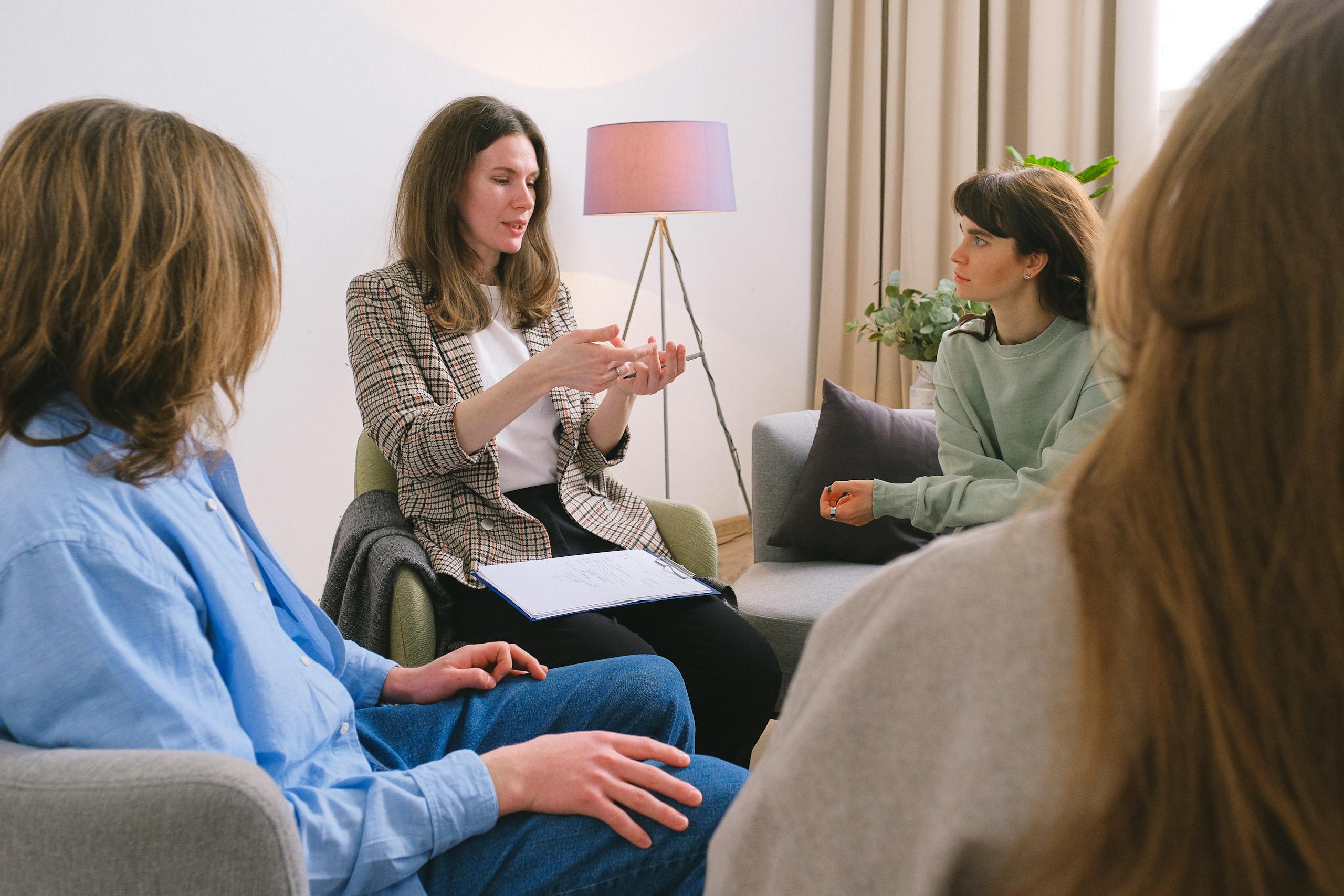
For some introverts, working with a therapist or coach who understands personality differences can meaningfully accelerate the development of social flexibility. The benefit isn’t just skill-building. It’s often the deeper work of disentangling introversion from anxiety, shame, or self-limiting beliefs that have accumulated over years of feeling out of step with extroverted norms.
Many introverts carry a quiet belief that their preference for solitude is a deficiency rather than a characteristic. That belief, more than the introversion itself, is often what keeps social flexibility out of reach. Addressing it directly tends to accelerate everything else.
As Point Loma Nazarene University notes in its counseling psychology resources, introverts bring genuine strengths to therapeutic relationships, including depth of listening and careful observation. A good therapist who understands introversion can help you build social flexibility from a place of self-respect rather than self-correction.
Conflict situations are another area where developing ambivert flexibility pays real dividends. Psychology Today’s framework for introvert-extrovert conflict resolution outlines how introverts can develop more direct, engaged approaches to disagreement without abandoning their reflective strengths. That kind of situational flexibility is exactly what ambiversion looks like in practice.
A broader look at how personality intersects with behavior in social contexts appears in this 2024 Frontiers in Psychology article, which examines how personality traits interact with situational demands. The takeaway relevant here is that behavioral flexibility is a learnable skill that operates somewhat independently of underlying trait preferences. You can develop ambivert-like behavior without your core personality fundamentally changing.

What’s the Honest Bottom Line on Becoming an Ambivert?
You can develop meaningful ambivert flexibility. Many introverts do, often without fully recognizing that’s what they’ve built. The process involves expanding your behavioral range in social contexts, building genuine curiosity about people, managing your energy honestly, and letting go of the belief that introversion is a problem to fix.
What you probably won’t do is erase your introversion entirely. Nor should you want to. The depth of processing, the capacity for sustained focus, the quality of observation that comes with being wired as an introvert, those are assets. success doesn’t mean trade them in for social ease. It’s to add range without losing what makes you effective.
After twenty-plus years in advertising, working with some of the largest brands in the world, I can tell you that the introverts who thrived weren’t the ones who successfully pretended to be extroverts. They were the ones who developed genuine flexibility while staying rooted in who they actually were. That combination is more powerful than either pure introversion or performed extroversion, and it’s accessible to most people who want it badly enough to work for it honestly.
For a broader look at how introversion, extroversion, and the traits in between shape how we work and connect, the full Introversion vs Other Traits hub covers the complete landscape, from the science behind personality differences to practical guidance on working with your natural wiring.
About the Author
Keith Lacy is an introvert who’s learned to embrace his true self later in life. After 20 years in advertising and marketing leadership, including running agencies and managing Fortune 500 accounts, Keith now channels his experience into helping fellow introverts understand their strengths and build fulfilling careers. As an INTJ, he brings analytical depth and authentic perspective to every article, drawing from both professional expertise and personal growth.
Frequently Asked Questions
Can a true introvert actually become an ambivert?
Yes, with intentional practice, many introverts develop genuine ambivert flexibility. The core personality wiring doesn’t disappear, but the range of social contexts in which a person can engage effectively and even find energy does expand meaningfully over time. The result may be functional ambiversion rather than a complete personality shift, but that expanded range is real and valuable.
How long does it take to develop ambivert tendencies?
There’s no fixed timeline, and it varies considerably depending on how introverted you are at baseline, how consistently you practice, and whether you’re also working through any social anxiety or self-limiting beliefs alongside the behavioral development. Some people notice meaningful shifts within months of deliberate practice. For others, it’s a gradual process that unfolds over years of accumulated experience.
What’s the difference between becoming an ambivert and just faking extroversion?
The difference lies in whether you’re drawing genuine energy from social situations or simply performing engagement while running on reserves. Faking extroversion tends to be exhausting and unsustainable. Developing ambivert flexibility means building an actual capacity to find social interaction rewarding in certain contexts, even if your baseline preference remains quieter. The test is whether social engagement sometimes replenishes you, not just costs you.
Do ambiverts still need alone time to recharge?
Most ambiverts do still need some alone time, though typically less than strongly introverted people. Even genuine ambiverts tend to have contexts or situations where social engagement drains rather than energizes them. The difference is that ambiverts have more consistent access to both modes and tend to recover more quickly from socially demanding situations than those who are more deeply introverted.
Is it worth trying to become an ambivert, or should introverts just embrace who they are?
Both. Embracing your introversion and developing greater social flexibility are not mutually exclusive. success doesn’t mean replace your introverted strengths with extroverted ones. It’s to expand your range so you can access more of your potential in more contexts. Introverts who develop genuine social flexibility while staying rooted in their natural strengths tend to be more effective professionally and more satisfied personally than those who either suppress their introversion entirely or limit themselves unnecessarily.