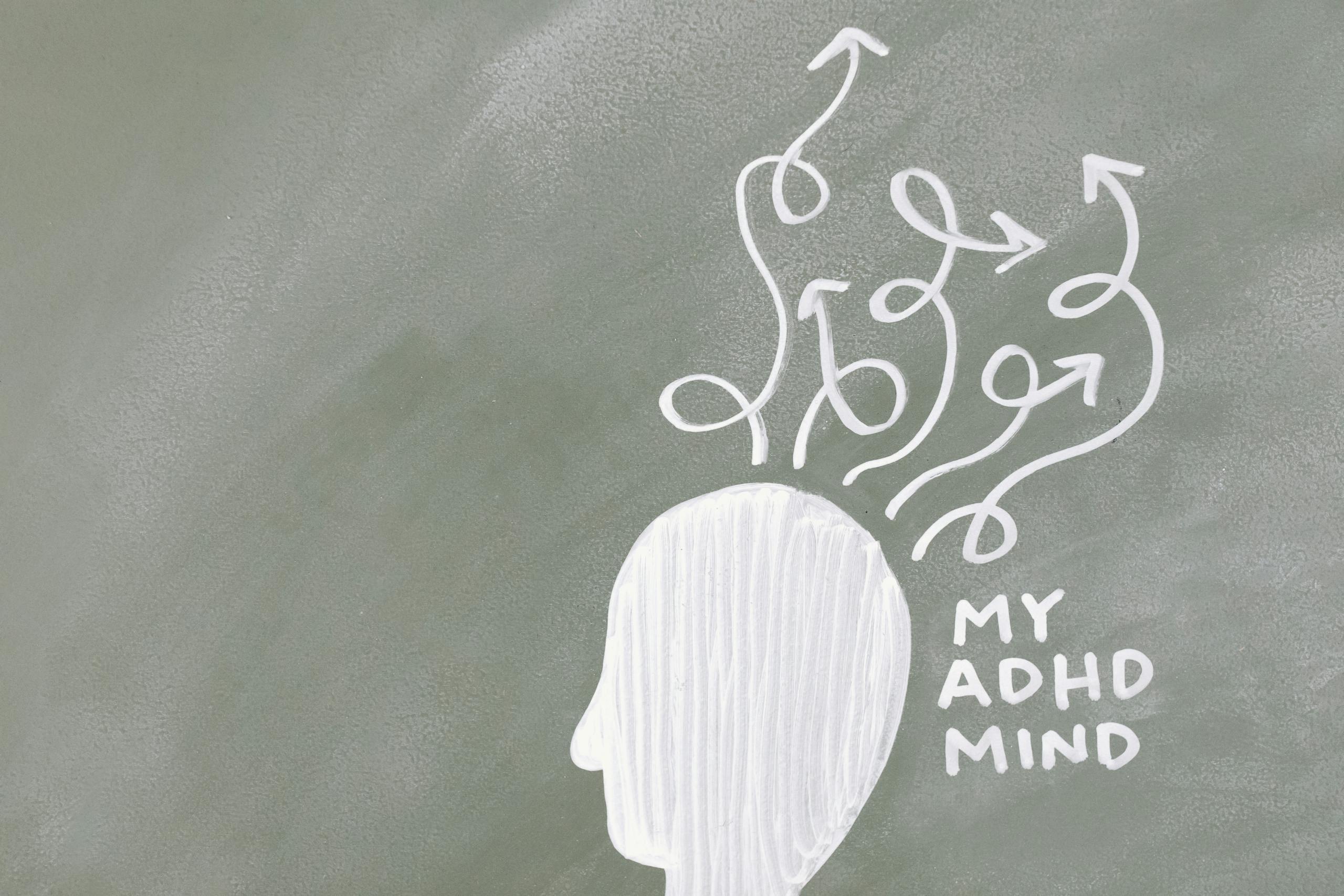

Extroverted thinking shows up in behavior long before it shows up in conversation. It’s the colleague who processes ideas by saying them aloud, the meeting that exists not to decide but to think, the manager who equates visibility with contribution. Extroverted thinking is a cognitive and cultural pattern where external engagement, spoken reasoning, and outward energy are treated as the default mode of intelligence.
Once you recognize how this pattern operates, you start seeing it everywhere. And if you’re wired the way I am, you also start understanding why you’ve spent so much of your career feeling slightly out of step with the room.

There’s a broader conversation happening about where introversion fits within the spectrum of personality, and our Introversion vs Other Traits hub is a good place to start if you want context for how these patterns compare and connect. But this particular piece is about something more specific: what extroverted thinking actually looks like when it’s playing out in real time, and why it matters so much to those of us who process the world from the inside out.
What Does Extroverted Thinking Actually Look Like?
Most people have a rough intuition about what it means to be extroverted. If you want a fuller picture of the trait itself, what does extroverted mean is worth reading before going further. But extroverted thinking is a more specific concept, and it shows up in ways that aren’t always labeled as such.
Career Coaching for Introverts
One-on-one career strategy sessions with Keith Lacy. 20 years of Fortune 500 leadership as an introvert, now helping others build careers that work with their wiring.
Learn More50-minute Zoom session · $175
At its core, extroverted thinking is the tendency to process ideas externally. Where introverted thinkers tend to develop conclusions internally before sharing them, extroverted thinkers construct their reasoning through conversation, debate, and real-time feedback. Neither approach is better. They’re genuinely different cognitive strategies. The problem is that most professional environments were built around the extroverted version.
I saw this constantly in my agency years. We’d convene a creative brief meeting, and within minutes, two or three voices would be riffing off each other, building ideas in real time, filling every available silence. The energy was contagious. The ideas felt alive. And I’d sit there with a fully formed perspective that I hadn’t yet figured out how to insert into the rapid-fire exchange. By the time I had the right opening, the conversation had moved on.
That’s extroverted thinking at work. It’s not just personality preference. It’s a structural feature of how ideas get generated, validated, and acted on in most organizations.
How Does Extroverted Thinking Shape Workplace Culture?
The influence of extroverted thinking on professional culture runs deeper than most people acknowledge. It shapes meeting formats, performance reviews, promotion criteria, and even what gets counted as “leadership potential.”
Consider the open-plan office, which became a dominant workspace model partly because it was assumed that proximity and spontaneous interaction would generate better ideas. That assumption is rooted in extroverted thinking: the belief that good ideas emerge from continuous external exchange. For people who think best in quiet, that model creates a constant low-level friction that rarely gets named for what it is.
Or consider the brainstorm. As a format, it favors those who can generate and articulate ideas quickly under social pressure. The person who needs an hour of quiet reflection before they know what they actually think is structurally disadvantaged, not because their ideas are weaker, but because the format wasn’t designed for their process.
Running agencies taught me how much of what we call “good communication” is really just extroverted communication. Clients wanted energy in the room. They wanted to feel the team’s enthusiasm through volume and pace. I learned to perform that, but it always felt like a translation exercise, converting my actual thinking into a format the room could receive. That gap between how I thought and how I was expected to present thought was exhausting in ways I couldn’t articulate for years.

There’s a Psychology Today piece on the value of deeper conversations that captures something important here: the kinds of exchanges that introverts find most meaningful are often the ones that extroverted thinking culture treats as inefficient. Depth gets sacrificed for speed. Reflection gets mistaken for hesitation.
Why Do Introverts Struggle in Extroverted Thinking Environments?
The struggle isn’t about intelligence or capability. It’s about cognitive timing and the mismatch between how introverts process information and what most environments reward.
Introverts tend to think before they speak. They form complete thoughts internally, test them against existing knowledge, and share them once they’ve reached some level of confidence. Extroverted thinkers often do the opposite: they speak in order to think, using conversation as the medium through which ideas take shape. Both processes are legitimate. But in a meeting room, one style is visible and the other is invisible, which means one style gets credit and the other often doesn’t.
There’s also the energy dimension. Extroverted thinking environments are high-stimulus by design. Constant interaction, rapid topic shifts, overlapping conversations. For someone whose cognitive resources deplete under social stimulation rather than recharge, those environments create a compounding tax. You’re not just thinking. You’re also managing the effort of sustained external engagement, which leaves less bandwidth for the actual thinking.
It’s worth noting that where someone falls on the introversion spectrum matters here too. The experience of someone who is fairly introverted vs extremely introverted can differ significantly. A person with moderate introversion might find high-stimulus environments tiring but manageable. Someone on the more extreme end may find them genuinely depleting in ways that affect performance and wellbeing over time.
I managed a team of about fourteen people at one point in my agency career. Among them was an account strategist who was, by any measure, one of the sharpest thinkers I’d ever worked with. She rarely spoke in group settings. In one-on-one conversations, her analysis was precise and often ahead of where the rest of the team was thinking. In performance reviews, multiple colleagues described her as “quiet” and “hard to read.” That feedback was a function of extroverted thinking culture, not an accurate assessment of her contribution.
Does Extroverted Thinking Affect How We Communicate Under Pressure?
Pressure situations are where the difference between thinking styles becomes most visible and most consequential.
In high-stakes moments, extroverted thinkers tend to externalize. They talk through the problem, consult widely, and build consensus through dialogue. That approach can be genuinely effective, particularly when speed matters and the problem benefits from multiple perspectives in real time. Introverted thinkers tend to internalize. They withdraw slightly, process deeply, and re-emerge with a more fully formed position. That approach can also be highly effective, particularly when the problem is complex and benefits from sustained analytical attention.
The conflict arises when the two styles are operating in the same room under the same pressure. The extroverted thinker interprets the introvert’s silence as disengagement or uncertainty. The introvert interprets the extrovert’s rapid verbal processing as impulsive or undisciplined. Both interpretations are wrong, but both feel true from inside each cognitive style.
A Psychology Today framework for introvert-extrovert conflict resolution addresses exactly this dynamic, and it’s worth reading if you’ve ever been in a situation where your thinking style was being read as a personality flaw rather than a cognitive difference.
One of the more useful things I did late in my agency career was start naming the dynamic explicitly in team settings. Before a difficult client presentation, I’d say something like: some of us will want to think out loud in the room, and some of us will want to listen first and respond after. Both approaches are valid here. That framing alone reduced a lot of the friction that had previously gone unnamed.
How Does Extroverted Thinking Show Up in Leadership?
Leadership culture has long been shaped by extroverted thinking norms. The charismatic communicator, the visionary who rallies the room, the decisive executive who projects certainty under ambiguity. These archetypes are real, and they’re genuinely valuable. But they represent one model of leadership, not the only one.
Extroverted thinking in leadership tends to show up as a preference for open discussion over written analysis, for consensus-building through conversation rather than independent assessment, and for visible energy as a proxy for competence. Leaders who operate this way often create cultures that reward the same traits, which means introverted thinkers on their teams face a double challenge: managing their own cognitive style while also performing within a culture designed around a different one.
There’s relevant insight in Harvard’s work on introverts in negotiation contexts, which explores how the assumption that louder and more assertive equals more capable affects outcomes in high-stakes professional settings. The same dynamic plays out in leadership evaluation all the time.
As an INTJ, I spent the first decade of my career trying to approximate the extroverted leadership style I saw rewarded around me. I got reasonably good at it. I could run a client pitch with energy and presence. I could hold a room during a difficult conversation. But it was always effortful in a way that I suspect it wasn’t for my more extroverted peers. And the effort showed up as depletion, not in the moment, but in the days after a particularly high-intensity period.
What changed was recognizing that my actual leadership strengths, strategic clarity, precise communication, the ability to see patterns others missed, were products of my introverted thinking style, not despite it. The goal wasn’t to become a different kind of thinker. It was to build environments where my kind of thinking was visible and valued.
Are Some People Caught Between Both Thinking Styles?
Not everyone experiences this as a clean binary. Some people find that their thinking style shifts depending on context, energy level, or the nature of the problem at hand. They might process creatively through conversation in low-stakes situations, then retreat into internal analysis when the stakes rise. Or they might be extroverted thinkers in domains where they have deep expertise and introverted thinkers in areas where they feel less certain.
This kind of variability is part of why personality frameworks sometimes feel imprecise. If you’ve ever wondered whether you fit neatly into one category or another, the distinction between omnivert vs ambivert is worth understanding. Omniverts shift between styles situationally, sometimes dramatically, while ambiverts tend to occupy a more consistent middle ground. Both experiences are real, and both affect how extroverted thinking patterns land differently for different people.
There’s also the question of how people present versus how they actually process. Some introverts become skilled at performing extroverted thinking, speaking before they’re fully ready, participating in real-time brainstorms, projecting the kind of visible engagement that professional culture rewards. The performance can be convincing. It’s also exhausting, and it often means the person’s best thinking never fully surfaces in group settings because they’re spending cognitive resources on the performance rather than the substance.
If you’re not sure where you fall, the introvert extrovert ambivert omnivert test can give you a useful starting point. It’s not about putting yourself in a box. It’s about having clearer language for patterns you’ve probably already noticed in yourself.

What Happens When Extroverted Thinking Becomes the Invisible Standard?
The most insidious aspect of extroverted thinking isn’t that it exists. It’s that it often goes unnamed, which means it gets treated as neutral rather than as one approach among several.
When a meeting format is designed around rapid verbal exchange, that’s a choice that favors extroverted thinkers. When performance feedback consistently rewards “presence” and “energy” without defining what those terms mean, that’s a standard built around extroverted expression. When the person who speaks most confidently in a room is assumed to be the most competent, that’s an inference rooted in extroverted thinking norms.
None of these choices are necessarily malicious. They often emerge from leaders who genuinely think this way and assume their process is universal. But the effect on people who think differently is real. Many introverts internalize the message that their natural cognitive style is a deficit rather than a difference. They work to correct it rather than work with it. And in doing so, they often cut themselves off from the very strengths that make them valuable.
Some psychological frameworks suggest that the pressure to conform to extroverted norms can have measurable effects on wellbeing over time. A look at this PubMed Central piece on personality and behavioral patterns offers useful grounding for understanding how sustained misalignment between natural disposition and environmental demands creates friction that goes beyond simple preference.
The concept of “acting out of character” is relevant here. When introverts consistently perform extroverted thinking behaviors, they’re not just tired afterward. They’re often less effective, because the performance consumes resources that would otherwise go toward the quality of the thinking itself.
How Can Introverts Work Effectively Within Extroverted Thinking Cultures?
Adaptation is possible without abandonment. success doesn’t mean become an extroverted thinker. It’s to build enough fluency in extroverted thinking contexts to participate effectively while protecting the conditions your actual thinking requires.
A few things made a genuine difference for me over the years. Pre-meeting preparation became a deliberate practice rather than an optional habit. If I knew a discussion was coming, I’d spend time with the material beforehand so that my internal processing happened before the room filled up. That way, I wasn’t trying to think and perform simultaneously. I was translating conclusions I’d already reached into a form the room could receive.
Written communication became a strength to lean into rather than a fallback. Some of my most effective client work happened in memos and strategy documents rather than in live presentations. Writing let me think at my own pace and present the result with precision. Over time, clients came to value that precision in ways that made the format less of a compromise and more of a signature.
There’s also something worth saying about the value of finding roles and environments where introverted thinking is structurally rewarded. Not every organization runs on extroverted thinking norms. Some fields and functions, analysis, strategy, writing, research, design, create natural space for the kind of deep, internal processing that introverts do well. If you’re interested in how this plays out professionally, this Rasmussen piece on marketing for introverts touches on how introverted thinking strengths translate into specific professional contexts.
It’s also worth knowing that the experience of being an introvert in an extroverted thinking culture isn’t uniform. The idea of an otrovert vs ambivert distinction captures something real about how different people experience the pull between internal and external processing. Understanding your own version of that pull is more useful than trying to fit into a single category.
Does Extroverted Thinking Affect How Introverts See Themselves?
Yes, and this is probably the dimension that matters most over the long run.
When extroverted thinking is treated as the standard for intelligence, competence, and leadership, introverts receive a consistent implicit message that their way of thinking is inadequate. That message accumulates. It shows up as self-doubt in meetings, as hesitation before sharing ideas, as the assumption that the person who spoke fastest must have thought best.
There’s a particular kind of professional self-erasure that happens when introverts spend years in extroverted thinking environments without ever having their cognitive style named or validated. They don’t recognize what’s happening as a structural mismatch. They experience it as personal failure. They become quieter, more deferential, more convinced that their instinct to think before speaking is a flaw rather than a feature.
Some of the most capable people I worked with over my career carried this kind of accumulated self-doubt. It didn’t show up in the quality of their work. It showed up in how they advocated for themselves, how they responded to feedback, how willing they were to claim credit for contributions that were genuinely theirs. Understanding the relationship between personality traits and self-perception sheds some light on why this pattern is so persistent and why it requires active counter-effort to address.
If you’ve ever taken an introverted extrovert quiz and felt surprised by your results, that surprise is often a product of exactly this dynamic. Years of extroverted thinking culture can make it genuinely difficult to accurately assess your own natural tendencies because you’ve spent so long performing something different.
There’s a moment I return to often. Late in my agency career, I was working through a particularly complex strategic problem for a Fortune 500 client. I spent two days thinking about it almost entirely in my head, taking long walks, filling a legal pad with notes I never shared, letting the problem settle. When I finally presented my recommendation, the client’s CMO said it was the clearest strategic framing she’d seen on the issue. My response, internally, was something close to surprise. Because the process had felt so private, so un-performative, I’d half-convinced myself it didn’t count as real work.
That’s what extroverted thinking culture does at its worst. It makes internal processing feel illegitimate, even to the person doing it.

There’s much more to explore about how introversion interacts with other personality dimensions, including where extroverted thinking fits within broader frameworks of personality and temperament. The full Introversion vs Other Traits hub covers that territory in depth if you want to keep pulling on this thread.
About the Author
Keith Lacy is an introvert who’s learned to embrace his true self later in life. After 20 years in advertising and marketing leadership, including running agencies and managing Fortune 500 accounts, Keith now channels his experience into helping fellow introverts understand their strengths and build fulfilling careers. As an INTJ, he brings analytical depth and authentic perspective to every article, drawing from both professional expertise and personal growth.
Frequently Asked Questions
What is extroverted thinking and how is it different from introversion?
Extroverted thinking is a cognitive pattern where ideas are processed externally, through conversation, debate, and real-time interaction. It’s different from introversion in that introversion describes an energy orientation (where you recharge and how stimulation affects you), while extroverted thinking describes a processing style (how you develop and refine ideas). Someone can be introverted in their energy needs and still occasionally think out loud, and vice versa. The two dimensions overlap but aren’t identical.
Why do introverts often feel disadvantaged in meetings?
Most meeting formats are designed around extroverted thinking norms: rapid verbal exchange, real-time idea generation, visible participation as a proxy for engagement. Introverts tend to process more thoroughly before speaking, which means their best thinking often happens before or after the meeting rather than during it. In environments that reward speed and volume of contribution over depth and precision, introverts are structurally disadvantaged not because their thinking is weaker, but because the format doesn’t surface it effectively.
Can introverts succeed in extroverted thinking environments?
Yes, and many do. The most effective adaptation strategies involve preparing thoroughly before high-stimulus interactions, leveraging written communication as a strength, and finding ways to make internal processing visible without abandoning it. success doesn’t mean become an extroverted thinker, but to develop enough fluency in extroverted thinking contexts to participate effectively while preserving the conditions your natural thinking requires. Over time, many introverts also find that naming the dynamic explicitly, both to themselves and to colleagues, reduces friction significantly.
How does extroverted thinking affect leadership culture?
Leadership culture has historically been shaped by extroverted thinking norms: the assumption that visible energy, confident verbal expression, and real-time decisiveness are markers of leadership capability. This creates environments that reward extroverted thinking styles in hiring, promotion, and performance evaluation, often without recognizing that the criteria themselves reflect a particular cognitive style rather than universal competence. Introverted leaders who build environments that accommodate multiple thinking styles tend to get better outcomes from diverse teams, because they create space for contributions that extroverted thinking cultures often miss.
Does extroverted thinking culture affect how introverts see themselves professionally?
It often does, and the effect is cumulative. When extroverted thinking is treated as the default standard for intelligence and competence, introverts receive a persistent implicit message that their cognitive style is a deficit. Over time, this can manifest as professional self-doubt, reluctance to advocate for their own contributions, and difficulty accurately assessing their own strengths. Recognizing extroverted thinking as a cultural norm rather than a universal standard is often the first step toward reclaiming confidence in a thinking style that has real and distinct value.