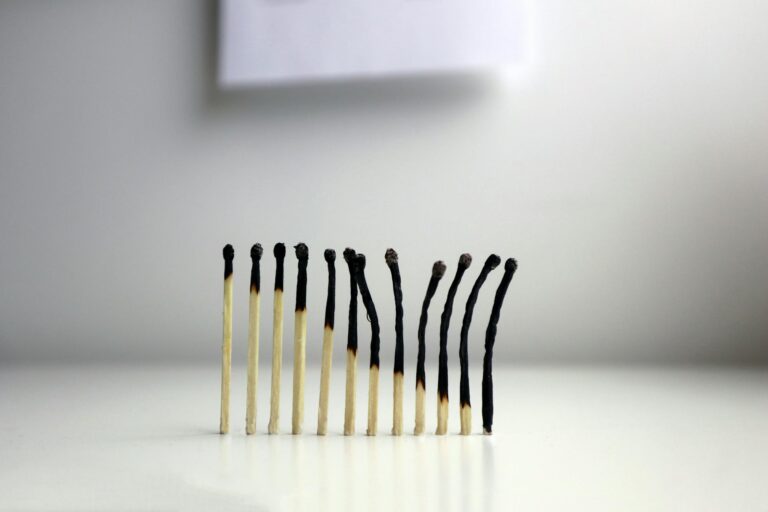

Yes, introverts can absolutely act like extroverts for a night, and doing it well comes down to strategy, not personality change. You’re not rewiring your brain or pretending to be someone else. You’re borrowing a set of behaviors temporarily, the way an athlete trains in conditions they don’t prefer so they can perform when it counts.
Knowing how to be an extrovert for a night is a practical skill, not a betrayal of who you are. It means showing up fully to a work event, a celebration, or a social obligation without burning out before the appetizers arrive.

Before we get into the mechanics of pulling this off, it helps to understand what you’re actually doing when you flip that switch. If you’ve ever wondered what the full spectrum of personality types looks like and where you actually fall on it, our Introvert vs Extrovert hub maps out the differences, the overlaps, and the territory in between. That context matters here, because “acting extroverted” means something different depending on whether you’re deeply introverted, moderately so, or somewhere in the middle.
What Does It Actually Mean to Act Extroverted?
Most people assume extroversion is about being loud or charismatic. That’s not quite right. To understand what you’re actually mimicking, it helps to get precise about what extroverted means at its core. Extroversion is primarily about where you draw energy from and how you process your social environment. Extroverts tend to think out loud, seek stimulation, and feel recharged by interaction rather than depleted by it.
Career Coaching for Introverts
One-on-one career strategy sessions with Keith Lacy. 20 years of Fortune 500 leadership as an introvert, now helping others build careers that work with their wiring.
Learn More50-minute Zoom session · $175
When you act extroverted for a night, you’re not manufacturing fake energy. You’re consciously choosing behaviors that extroverts use naturally: initiating conversations, speaking before you’ve fully processed your thoughts, moving through a room with intention, and staying present in the noise rather than retreating inward. These are learnable behaviors. They just cost introverts more fuel to run.
I spent over two decades running advertising agencies, and a significant portion of that time was spent in rooms where extroverted behavior wasn’t just expected, it was the currency. Client pitches, award shows, new business dinners, agency parties. The expectation was that you’d be “on” for hours at a stretch. As an INTJ, my natural inclination was to observe, assess, and speak only when I had something precise to say. That approach works well in a strategy session. It reads as cold in a cocktail room.
So I learned to borrow the behaviors. Not the personality, just the moves.
How Much Does Your Introversion Depth Affect This?
Not all introverts face the same challenge here. Someone who’s mildly introverted might find a social evening only slightly draining, while someone at the far end of the spectrum might find a two-hour party genuinely exhausting at a physiological level. Understanding your own depth matters before you commit to a strategy.
There’s a real difference between being fairly introverted versus extremely introverted, and that difference shapes how you should approach an evening that demands extroverted output. A fairly introverted person might need one solid recovery day afterward. An extremely introverted person might need to build in micro-recovery moments throughout the evening itself, not just after.
Knowing your depth also helps you set realistic expectations. If you’re deeply introverted, the goal for the night isn’t to become the life of the party. The goal is to be present, engaged, and effective for a defined window of time. That’s a completely achievable target.

What Are the Practical Strategies That Actually Work?
Over the years, I refined a set of approaches that let me function effectively in high-stimulation social environments without feeling like I’d been hit by a bus the next morning. Some of these came from trial and error. Some came from watching genuinely extroverted colleagues and reverse-engineering what they did naturally.
Prepare Like You’re Going Into a Presentation
Extroverts rarely need to prepare for a party. They arrive, they adapt, they feed off the room. Introverts do better with a plan. Before a significant social event, I’d spend ten minutes thinking through who would likely be there, what I genuinely wanted to get out of the evening, and two or three conversation topics I could lean on if things stalled. This isn’t scripting, it’s loading your working memory with material so you’re not burning cognitive fuel in the moment trying to generate it from scratch.
One of the most useful things I ever did before a major client dinner was write down three questions I was genuinely curious about asking specific people. Not small talk questions. Real ones. What’s the biggest challenge your team is facing right now? What made you take that account in-house? That kind of preparation let me show up as engaged and curious rather than quiet and distant, which is how introverted reticence often reads to extroverts.
Use the First Ten Minutes Aggressively
Social momentum is real. The longer you stand on the edge of a room watching, the harder it becomes to enter the flow of it. Extroverts know this intuitively. They walk in and immediately engage. For introverts, the temptation is to get a drink, find a wall, and wait for the room to come to you. That approach costs you more energy in the long run, not less.
Committing to one genuine conversation in the first ten minutes changes the entire arc of an evening. Once you’re in motion, it’s easier to stay in motion. This is basic physics applied to social dynamics, and it works. The psychological friction of starting is almost always greater than the friction of continuing.
At a large agency awards event early in my career, I spent the first half hour near the bar pretending to check my phone. By the time I finally started talking to people, I was already depleted from the effort of avoiding interaction. I’d wasted my best energy on avoidance. After that, I made a rule: first conversation within five minutes of arriving, no exceptions.
Anchor Yourself to One or Two People
Extroverts often work a room in wide arcs, touching many conversations briefly. That’s genuinely energizing for them. For introverts, that pattern is exhausting because each new conversation requires a fresh social calibration. A more sustainable approach is to find one or two people you can have real conversations with and let those interactions be the substance of your evening.
Depth is actually an introvert’s natural advantage in social settings. Psychology Today notes that deeper, more meaningful conversations tend to generate greater satisfaction and connection than surface-level exchanges. When you anchor to a real conversation, you’re not performing extroversion poorly. You’re doing something better, and doing it in a way that costs you less.
Build In Micro-Recovery Without Disappearing
One of the things I figured out through years of client events is that brief, intentional pauses can extend your social endurance significantly. A two-minute walk to refill your drink. A short detour to the restroom. Stepping outside for a moment of air. These aren’t retreats, they’re refueling stops. The difference between a micro-recovery and a full withdrawal is intention and duration.
what matters is not letting a pause become a disappearance. Extroverts notice when someone vanishes for twenty minutes. A two-minute reset doesn’t register. Give yourself permission to step back briefly, recharge your internal battery, and re-enter. Done consistently throughout an evening, these small pauses can mean the difference between leaving at 9 PM depleted or staying until 11 PM and feeling genuinely glad you did.

Are You an Introvert, or Something More Complicated?
Some people who struggle with this question aren’t purely introverted at all. They might be ambiverts, omniverts, or something else entirely. If you’ve ever felt like you can be genuinely outgoing in some contexts and deeply withdrawn in others, you might want to take our introvert, extrovert, ambivert, and omnivert test before deciding which strategy applies to you.
There’s a meaningful difference, for example, between an omnivert and an ambivert. An omnivert swings between introverted and extroverted states depending on context, sometimes dramatically. An ambivert sits more consistently in the middle. Understanding omnivert vs ambivert distinctions matters here because the strategies for managing a social evening look different depending on which pattern describes you.
An omnivert who happens to be in an extroverted phase might actually thrive at a big event with very little effort. The same person in an introverted phase might find the identical event genuinely painful. If you recognize that pattern in yourself, your preparation strategy shifts from “how do I perform extroversion” to “how do I create conditions that bring out my extroverted side tonight.”
Similarly, if you’ve ever wondered whether you might be what some call an “introverted extrovert,” meaning someone who presents as sociable but needs significant recovery time, taking our introverted extrovert quiz can help clarify your actual wiring. That clarity changes how aggressively you need to apply these strategies.
What About the Emotional Cost of Performing?
There’s a version of this conversation that never gets said directly: performing extroversion when you’re deeply introverted isn’t just tiring, it can feel dishonest. I’ve been in that place. Standing at a networking event, laughing at the right moments, asking the right follow-up questions, and feeling somewhere underneath it all like I was playing a character. That feeling is worth examining.
There’s a difference between adapting your behavior and suppressing your identity. Adapting means choosing to be more expressive, more initiating, more present in the social current for a defined period of time. Suppressing means pretending you don’t need what you need, hiding your nature, and performing a personality that isn’t yours. The first is a skill. The second is a slow drain.
The framing that helped me most was thinking of it as code-switching rather than identity-switching. Professionals do this constantly. A Rasmussen University piece on marketing for introverts makes the point that introverts can be exceptionally effective in client-facing roles precisely because they listen more carefully and communicate more deliberately, not despite their introversion but because of it. That reframe changed how I approached social performance. I wasn’t pretending to be something I wasn’t. I was deploying a specific skill set for a specific context.
What I’ve also noticed is that the emotional cost drops significantly when you’ve chosen to be there. Obligatory events drain introverts faster than chosen ones. When I genuinely wanted to be at a dinner because I respected the people or cared about the outcome, I had more to give. When I was there out of obligation alone, the performance felt hollow and the recovery took longer. Whenever possible, choose your high-stimulation evenings rather than simply enduring them.
How Do You Handle Conflict or Tension in Social Settings?
One of the harder versions of this challenge comes when a social event isn’t just demanding, it’s charged. A work function where there’s existing tension. A family gathering where someone always pushes buttons. A professional dinner where a client is unhappy and everyone knows it.
Introverts often go very quiet when social tension rises, which can read as withdrawal or disengagement to others. Extroverts tend to talk through conflict, sometimes making it louder before it resolves. Neither pattern is inherently better, but understanding the dynamic helps you choose your response more deliberately. Psychology Today’s four-step introvert-extrovert conflict resolution framework offers some practical scaffolding for these moments, particularly the idea of naming your processing style to others so they don’t misread your silence as indifference.
In high-stakes client situations, I learned to say something simple when I needed a beat: “Let me think about that for a moment.” Four words. They signal engagement, not withdrawal. They buy me the processing time I need without making the room uncomfortable. That small phrase changed how I was perceived in tense situations, and it’s available to any introvert who needs it.

What Happens After? Recovery Without Guilt
One of the most underrated parts of this whole equation is what comes after a high-stimulation evening. Many introverts feel guilty about needing recovery time, as if the need itself is a character flaw. It isn’t. It’s physiology.
There’s solid grounding in the science here. Work published in PubMed Central examining personality and arousal systems supports the idea that introverts have fundamentally different baseline arousal levels than extroverts, which helps explain why the same social environment that energizes one person genuinely fatigues another. You’re not being dramatic. You’re experiencing a real neurological difference.
Plan your recovery the same way you planned your evening. If you know Thursday night is the big work event, protect Friday morning. Don’t schedule a breakfast meeting. Don’t volunteer for the 8 AM call. Give yourself a quiet window to process and restore. Treating recovery as a planned element rather than an emergency measure changes your relationship to the whole experience.
Additional research in PubMed Central’s work on personality and social behavior points to the idea that introverts who accept their need for solitude rather than fighting it tend to report higher wellbeing overall. Recovery isn’t weakness. It’s maintenance.
Can You Build This Skill Over Time?
Yes, and it does get easier with practice. Not because you become more extroverted, but because the behaviors become more automatic and the anxiety around them decreases. What costs ten units of energy the first time costs six the tenth time, because you’ve proven to yourself that you can do it and survive.
There’s also a confidence dimension here that matters. Introverts who’ve had successful social evenings, who’ve left a party feeling like they genuinely connected with people rather than just endured the event, carry that evidence forward. Each good experience becomes a reference point. “I did that last time. I can do it again.”
I’ve watched this play out with introverted people on my teams over the years. One creative director I managed was deeply quiet in group settings, almost to the point where clients sometimes questioned his engagement. Over about eighteen months, as he took on more client-facing responsibility, I watched him build a repertoire of social behaviors that let him show up effectively in those rooms. He didn’t become an extrovert. He became a skilled introvert who knew how to perform when performance was required. That’s a different and arguably more valuable thing.
Understanding where you fall on the personality spectrum also helps with this long-term skill building. If you’ve never formally mapped your own wiring, exploring the otrovert vs ambivert distinction can add another layer of self-awareness to how you approach social situations. Knowing your own patterns precisely gives you better data to work with as you build these skills.
Some introverts also find that leadership contexts specifically accelerate this development. Harvard’s Program on Negotiation makes the case that introverts are not at a disadvantage in high-stakes interpersonal situations and may actually hold advantages in listening and preparation. That reframe matters. You’re not compensating for a deficit. You’re applying a different and legitimate set of strengths.
And for those who feel like they’re always pushing against their own nature in professional settings, there’s also a broader question worth sitting with: are you in the right environment? Frontiers in Psychology has examined how person-environment fit affects wellbeing and performance, and the findings consistently point toward the idea that when your environment demands something fundamentally misaligned with your wiring on a daily basis, the cost compounds over time. Knowing how to be an extrovert for a night is a useful skill. Needing to do it every night is a different problem.

At the end of the day, success doesn’t mean stop being who you are. It’s to have more choices about how you show up. There’s a lot more to explore about where introversion ends and extroversion begins, and our full Introvert vs Extrovert resource hub covers the full range of personality distinctions, overlaps, and everything in between.
About the Author
Keith Lacy is an introvert who’s learned to embrace his true self later in life. After 20 years in advertising and marketing leadership, including running agencies and managing Fortune 500 accounts, Keith now channels his experience into helping fellow introverts understand their strengths and build fulfilling careers. As an INTJ, he brings analytical depth and authentic perspective to every article, drawing from both professional expertise and personal growth.
Frequently Asked Questions
Can introverts genuinely act like extroverts for a night?
Yes. Introverts can adopt extroverted behaviors temporarily without changing their fundamental personality. Extroversion involves specific behaviors like initiating conversations, thinking out loud, and staying actively engaged in social settings. These are learnable and practicable. The difference is that introverts spend more energy running these behaviors than extroverts do, which is why preparation and recovery planning matter so much.
How long can an introvert sustain extroverted behavior before burning out?
This varies significantly depending on how deeply introverted you are, how well you’ve prepared, and whether you’ve built in micro-recovery moments throughout the evening. Extremely introverted people may find two to three hours is their practical limit before the quality of their engagement drops noticeably. Fairly introverted people might sustain four or five hours with the right pacing. Knowing your own depth, and planning accordingly, is more useful than trying to push through without a strategy.
Is it healthy for introverts to act extroverted regularly?
Occasional code-switching is healthy and builds a valuable skill set. Doing it constantly without adequate recovery, or doing it in environments that chronically misalign with your wiring, carries a real cost over time. The distinction worth making is between choosing to perform extroversion for specific, meaningful situations versus feeling forced to perform it as your default mode every day. The first expands your capability. The second erodes your wellbeing.
What’s the fastest way to recover after an extroverted evening?
Plan your recovery before the event, not after. Protect the morning following a high-stimulation evening. Avoid scheduling demanding social or professional obligations for the next day. Quiet, solitary activities work best: reading, a slow walk, time without screens or conversation. Many introverts also find that processing the evening mentally, thinking through what went well and what felt authentic, helps them close the loop and restore their sense of self more quickly.
Does practicing extroverted behavior make it easier over time?
Yes, meaningfully so. The energy cost of unfamiliar behaviors decreases as they become more practiced. More importantly, successful social experiences build a reference bank that reduces anticipatory anxiety before future events. You’re not becoming more extroverted through practice. You’re becoming a more skilled introvert who has a wider behavioral range to draw from when the situation calls for it. That’s a genuine and lasting development.