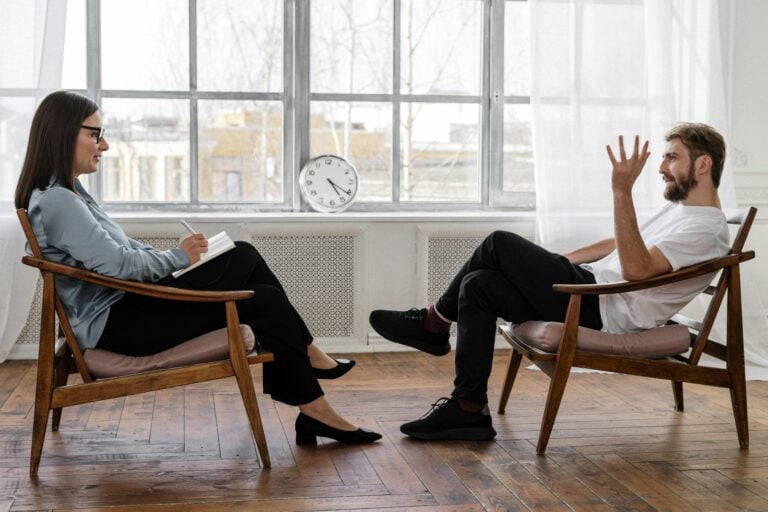

Shyness in teenagers is one of the most misunderstood experiences in adolescent development. It sits somewhere between a personality trait and a social fear, and for many teens, it quietly shapes every interaction, every missed opportunity, and every moment they hold back something worth saying. Helping a shy teenager doesn’t mean pushing them toward extroversion. It means giving them the tools to move through the world with enough confidence to show up as themselves.
That distinction matters more than most parents realize.

If you’re trying to understand what’s happening beneath the surface of a teenager who avoids social situations, struggles to speak up, or seems to disappear into themselves, you’re not dealing with a flaw that needs fixing. You’re dealing with a young person who processes the world differently, and who probably needs more support than correction. Our Introvert Family Dynamics and Parenting hub covers a wide range of topics at the intersection of personality and family life, and shyness in teens is one of the most common threads parents bring to that conversation.
Is Your Teen Shy or Introverted, and Does the Difference Matter?
Most people use shyness and introversion interchangeably. They’re not the same thing, and collapsing the two actually makes it harder to help a teenager who’s struggling.
What’s your personality type?
Take our free 40-question assessment and get a detailed personality profile with dimension breakdowns, context analysis, and personalised insights.
Discover Your Type8-12 minutes · 40 questions · Free
Introversion is a personality orientation. An introverted teenager prefers depth over breadth in social connection, needs time alone to recharge, and may find large social gatherings draining rather than energizing. That’s not a problem. That’s a wiring preference, and it’s a completely valid way to exist in the world. The National Institutes of Health has noted that temperament traits visible in infancy, including behavioral inhibition, tend to predict introverted tendencies into adulthood. Some kids are simply built this way from the beginning.
Shyness, on the other hand, involves anxiety. A shy teenager wants to connect but feels afraid. They may desperately want to speak up in class, join a conversation at a party, or make a new friend, but something inside them freezes. That fear of judgment, of saying the wrong thing, of being seen and found lacking, is what makes shyness different from introversion. It’s not a preference. It’s a barrier.
Some teenagers are both introverted and shy, which compounds the challenge. Others are extroverted and shy, which surprises parents who assume their outgoing kid couldn’t possibly be anxious in social situations. Getting clear on which dynamic is at play shapes everything about how you approach helping them.
One practical starting point is helping your teenager understand their own personality more clearly. Tools like the Big Five Personality Traits test can give teens a language for what they’re experiencing, including where they fall on the introversion and neuroticism scales, which are both relevant to shyness. When a teenager can name what’s happening inside them, they tend to feel less broken by it.
What Does Shyness Actually Feel Like From the Inside?
I didn’t fully understand my own social anxiety until I was well into my thirties. As an INTJ who spent two decades running advertising agencies, I had learned to perform confidence in client meetings and boardrooms. But underneath that performance was a teenager who had never really disappeared. He was still there in every room where I didn’t know anyone, still calculating the social geometry of who to approach and what to say, still convinced that saying the wrong thing would cost me something I couldn’t afford to lose.
What I know now is that shyness is often less about the external situation and more about what the brain is doing with perceived threat. A teenager walking into a school cafeteria isn’t objectively in danger. But their nervous system may be treating the situation as if they are. The physical symptoms are real: the tight chest, the flushed face, the sudden inability to remember how normal conversation works. For a teenager who doesn’t have the vocabulary or the perspective to understand what’s happening, that experience can feel overwhelming and deeply personal, like evidence of something fundamentally wrong with them.

That internalization is one of the most damaging aspects of adolescent shyness. When a teen repeatedly avoids social situations, they don’t just miss the experience. They reinforce a story about themselves: that they’re awkward, unlikable, or somehow less than. Over time, that story becomes identity. And identity, once hardened, is much harder to shift than a behavior pattern.
It’s worth noting that for some teenagers, what looks like shyness may be something more complex. Persistent withdrawal, intense fear of judgment, and avoidance that significantly disrupts daily life can sometimes signal anxiety disorders or other conditions worth exploring with a professional. The American Psychological Association’s resources on trauma are a useful reference point for parents trying to understand whether a teen’s withdrawal might have deeper roots than temperament alone.
How Can Parents Actually Help Without Making Things Worse?
This is where most well-meaning parents stumble. The instinct is to push. Sign them up for the drama club. Force them to go to the party. Tell them they’ll thank you later. And sometimes, a gentle nudge toward new experiences does help. But there’s a meaningful difference between encouraging growth and creating conditions that confirm a teenager’s worst fears about themselves.
Early in my agency career, I had a young account manager on my team who was brilliant at strategy but visibly terrified of presenting to clients. My first instinct was to put her in front of the room and let the experience build her confidence. What actually happened was that she froze, the client noticed, and she spent the next three months avoiding any situation that might lead to a repeat of that moment. I had pushed when what she needed was scaffolding.
What works better with shy teenagers is a graduated approach. Start with low-stakes social situations where the cost of awkwardness is minimal. Help them build one genuine connection before expecting them to work a room. Focus on depth rather than breadth, because a shy teenager who has one real friend is doing better than a teenager who has twenty surface-level acquaintances and still feels completely alone.
Validation matters enormously here. Not the hollow kind where you tell a teenager their feelings aren’t a big deal, but the real kind where you acknowledge that social situations genuinely feel hard for them, that their experience is legitimate, and that you’re not trying to change who they are. Parents who are themselves highly sensitive or introverted sometimes have a particular advantage in this space. If that resonates with you, the piece on HSP parenting and raising children as a highly sensitive parent speaks directly to how your own wiring shapes the way you connect with a child who processes the world intensely.
One thing I’d caution against is making shyness the family narrative around a teenager. When a parent consistently introduces their child as “the shy one” or apologizes for their quietness in social settings, the teenager absorbs that framing. They begin to perform the role. Shyness becomes part of how the family sees them, and stepping outside it starts to feel like a betrayal of identity rather than growth.
What Role Does Social Skills Practice Play?
There’s a practical dimension to helping shy teenagers that gets overlooked in conversations that focus only on feelings. Social confidence, like most skills, improves with deliberate practice. A teenager who has rarely been in situations that required them to introduce themselves, ask questions, or sustain a conversation with someone new is going to find those situations harder than a teenager who has had regular low-pressure opportunities to practice.
This doesn’t mean enrolling a shy teen in a public speaking course against their will. It means looking for organic opportunities to build the specific micro-skills that make social interaction feel more manageable. Teaching a teenager to ask follow-up questions in conversation, for example, gives them a simple tool that takes the pressure off performance. They don’t have to be interesting. They just have to be curious. And curiosity, for most introverted and shy teenagers, comes naturally once the anxiety drops enough to let it through.

Eye contact, body language, and the rhythm of conversation are learnable. So is the art of making someone else feel genuinely seen, which is one of the most powerful social tools a shy person can develop. Interestingly, shy teenagers often make excellent listeners, and that quality is something other people find deeply appealing. Tools like the Likeable Person test can be a surprisingly useful conversation starter with a teenager, not as a diagnostic, but as a way to help them see that the qualities they already have, attentiveness, thoughtfulness, depth, are the exact things that draw people in.
Some teenagers also benefit from structured environments where social interaction has a clear purpose. A robotics club, a writing group, a volunteer role, any setting where the shared activity provides a natural scaffold for conversation can reduce the pressure of pure social performance. The activity becomes the point. Connection happens as a byproduct. For a shy teenager who freezes when the goal is just “be social,” having a concrete shared focus can make all the difference.
When Should You Consider Professional Support?
Most teenagers experience some degree of social self-consciousness, especially during the middle and high school years when identity is still forming and peer perception feels like everything. Some shyness is developmentally normal and tends to ease as teenagers build more experience and self-awareness.
That said, there are situations where shyness crosses into territory that warrants professional attention. When a teenager is consistently avoiding school, refusing to participate in any social activities, showing signs of significant distress before routine interactions, or expressing persistent beliefs that they are fundamentally unlovable or defective, those patterns deserve a closer look. Social anxiety disorder is a real and treatable condition, and the earlier it’s addressed, the less it shapes the trajectory of a young person’s life.
A therapist who works with adolescents can help a teenager understand the cognitive patterns driving their avoidance and build more adaptive responses over time. Cognitive behavioral approaches in particular have a strong track record with social anxiety. If you’re unsure where to start, your teenager’s pediatrician or school counselor can be a useful first point of contact.
It’s also worth considering whether other factors might be contributing to a teenager’s withdrawal. Personality structure is one piece of the picture, but experiences of bullying, family stress, grief, or other challenges can intensify shyness in ways that go beyond temperament. Some families find it helpful to have teenagers complete assessments that give a fuller picture of their emotional and relational patterns. Resources like the Borderline Personality Disorder test aren’t diagnostic tools, but they can sometimes surface patterns worth discussing with a professional, particularly around emotional regulation and fear of rejection, which overlap with severe social anxiety in ways that are worth understanding.
The research published in PubMed Central on adolescent social development points to the significant role that early intervention plays in preventing shyness from calcifying into more entrenched avoidance patterns. Getting support sooner rather than later gives teenagers more runway to build the skills and self-concept they need before the stakes of adult social and professional life arrive.
How Does Shyness Affect a Teenager’s Sense of Future Possibility?
One thing I’ve thought about a lot, looking back on my own experience, is how much shyness shaped the choices I made about what I was capable of. As a teenager, I ruled out entire categories of possibility before I’d even tried them, because the social demands they implied felt too high. Public roles, leadership positions, anything that required me to be visible and evaluated by others. I told myself those weren’t for me. What I actually meant was that they felt too frightening to attempt.
That self-limiting is one of the quieter costs of unaddressed shyness. It doesn’t announce itself. It just slowly narrows the frame of what a teenager believes is possible for them. And because teenagers are still in the process of forming their identity, those early conclusions about capability can become surprisingly durable.

Helping a shy teenager expand their sense of what’s possible for them isn’t just about social confidence. It’s about career thinking, about the kinds of roles they imagine themselves in, about whether they believe they could lead a team, advocate for a cause, or pursue work that puts them in front of other people. Many of the most effective and fulfilled people in demanding careers are introverts who learned to manage their shyness rather than be defined by it.
I’ve seen this play out in the adults I’ve worked with over the years. One of the most capable people I ever hired at my agency had been painfully shy as a teenager, by her own account. She had found her way into a role that suited her depth and precision, a data strategist who occasionally had to present findings to clients. She was never the loudest person in the room. But she had learned that her value didn’t depend on that. The roles that suited her best played to her strengths while giving her enough structure to manage the social demands. Helping teenagers see that kind of fit is possible is one of the most useful things a parent can do.
Interestingly, some shy teenagers find that careers involving structured helping relationships, roles where there’s a clear purpose and a defined dynamic, feel more manageable than open-ended social situations. Fields like healthcare, counseling, or fitness training can provide that structure. If a teenager is drawn toward helping others, exploring something like the Personal Care Assistant test online or the Certified Personal Trainer test can be a useful way to explore whether those kinds of structured service roles might be a good fit for their personality and interests. Having a direction, even a tentative one, can give a shy teenager something to move toward rather than just something to avoid.
What Can Parents Model That Actually Helps?
Teenagers are watching. Whatever we tell them about handling social discomfort, what they actually absorb is what they observe us doing. If a parent consistently avoids social situations, expresses anxiety about interactions, or dismisses their own social needs as weakness, a shy teenager picks that up as confirmation that their own experience is shameful or permanent.
What helps more is modeling honest engagement with social challenge. Talking openly about times you felt nervous in a social situation and what you did with that feeling. Demonstrating that you can be uncomfortable and still show up. Letting your teenager see you recover from a socially awkward moment without catastrophizing it. These small moments of visible resilience teach more than any direct advice about confidence.
There’s also something powerful about modeling genuine curiosity about other people. One of the most useful social skills I ever developed, and it came late, was learning to be genuinely interested in the person in front of me rather than managing my own performance. When I stopped trying to seem impressive in client meetings and started focusing on understanding what the client actually needed, my anxiety dropped considerably. Not because I cared less about the outcome, but because my attention had somewhere better to go. Teaching a shy teenager to be curious about others shifts the focus outward in a way that relieves some of the internal pressure.
Family dynamics play a significant role in all of this. The Psychology Today overview of family dynamics is worth reading for any parent trying to understand how the patterns within a family system shape individual development, including how children develop (or don’t develop) the emotional resources to handle social challenge.
And for families handling more complex relational terrain, the PubMed Central research on adolescent social and emotional development offers useful context for understanding how family environment intersects with individual temperament during the teenage years.
Building Long-Term Confidence in a Shy Teenager
Confidence in a shy teenager doesn’t arrive all at once. It accumulates through small experiences of showing up, surviving the discomfort, and discovering that the feared outcome didn’t materialize, or that even when it did, they were okay. Each one of those experiences adds a small deposit to what psychologists sometimes call self-efficacy, the belief that you are capable of handling what’s in front of you.
That accumulation takes time. It also takes a parent who is willing to celebrate the small wins rather than only noticing when the teenager falls short of some external standard of social ease. A teenager who speaks up once in class when they usually say nothing has done something genuinely hard. Acknowledging that specifically and sincerely, without overpraising in a way that feels patronizing, matters more than most parents realize.

Something else worth holding onto: many of the qualities that make a teenager shy are the same qualities that will make them exceptional in the right contexts. The sensitivity to social nuance, the careful observation of others, the preference for depth over performance, these are not liabilities to be corrected. They are assets waiting for the right environment. Your job as a parent isn’t to produce an extroverted teenager. It’s to help a shy teenager believe that who they already are is worth bringing into the world.
That belief, once established, changes everything.
There’s much more to explore at the intersection of personality, family, and how we raise teenagers who know themselves well. The full range of those conversations lives in our Introvert Family Dynamics and Parenting hub, which is worth bookmarking if these topics resonate with your family’s experience.
About the Author
Keith Lacy is an introvert who’s learned to embrace his true self later in life. After 20 years in advertising and marketing leadership, including running agencies and managing Fortune 500 accounts, Keith now channels his experience into helping fellow introverts understand their strengths and build fulfilling careers. As an INTJ, he brings analytical depth and authentic perspective to every article, drawing from both professional expertise and personal growth.
Frequently Asked Questions
Is shyness in teenagers something they grow out of naturally?
Some teenagers do become more socially comfortable as they mature, build experience, and develop a stronger sense of identity. That said, shyness doesn’t automatically resolve with age. Without some deliberate effort, whether through gradual exposure to social situations, building specific skills, or working with a therapist, shyness can persist well into adulthood. The key factor is whether a teenager is having enough positive social experiences to gradually shift their self-concept, or whether avoidance is reinforcing the belief that social situations are too threatening to attempt.
How is shyness different from social anxiety disorder?
Shyness is a personality trait involving discomfort in social situations, particularly unfamiliar ones. Social anxiety disorder is a clinical condition characterized by intense, persistent fear of social situations that causes significant distress and interferes with daily functioning. A shy teenager may feel nervous at parties but still attend them. A teenager with social anxiety disorder may avoid school, refuse social engagements entirely, or experience panic-level physical symptoms before routine interactions. If a teenager’s social fear is significantly disrupting their life, a mental health professional can assess whether clinical anxiety is a factor.
Can pushing a shy teenager into social situations backfire?
Yes, it can. Forcing a shy teenager into high-pressure social situations without preparation or support can confirm their worst fears about themselves and increase avoidance. What tends to work better is a graduated approach: starting with lower-stakes situations, building specific micro-skills like asking questions and maintaining eye contact, and celebrating small wins rather than measuring progress against an extroverted standard. The goal is to expand a teenager’s comfort zone incrementally, not to overwhelm it.
What can parents say to a shy teenager that actually helps?
Validation is more useful than reassurance. Telling a shy teenager “you’ll be fine” minimizes their experience. Acknowledging that social situations genuinely feel hard for them, and that their feelings make sense, creates a foundation of trust. From there, specific and honest encouragement works better than general praise. Pointing out a specific moment when they handled something well gives them something concrete to build on. Avoid labeling them as “the shy one” in front of others, as that framing can become a self-fulfilling identity.
Are introverted teenagers more likely to be shy?
Introversion and shyness often overlap but they are distinct. An introverted teenager prefers less social stimulation and needs solitude to recharge, which is a temperament preference rather than a fear response. A shy teenager experiences anxiety about social judgment, regardless of whether they are introverted or extroverted. Some introverted teenagers are perfectly comfortable in social situations, they simply prefer fewer and deeper connections. Others are both introverted and shy, which can make social situations feel doubly demanding. Understanding which dynamic is at play helps parents offer more targeted support.