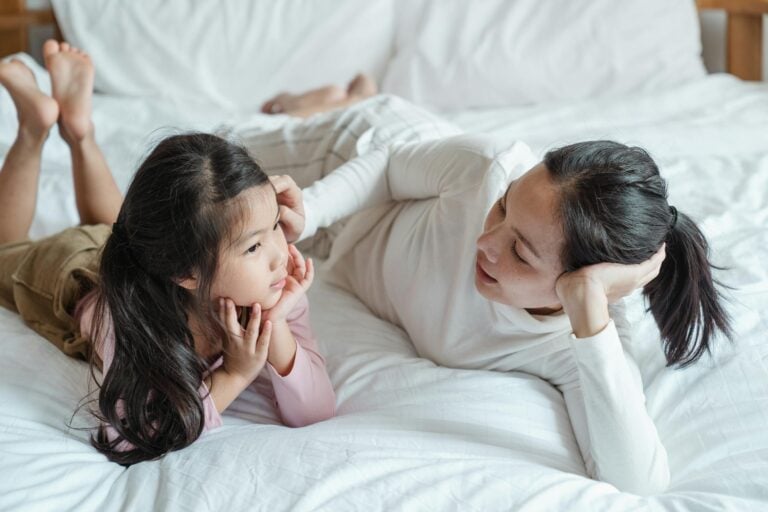

Coping with an introverted child starts with a single reframe: your child doesn’t need to be fixed. They need to be understood. Introversion is a natural, stable personality trait, not a phase to grow out of or a problem to solve. When parents learn to work with their child’s wiring instead of against it, something shifts in the whole family.
I say this as someone who was that child. Quiet at family gatherings. Slow to warm up to new people. Happiest with a book or a project in my room. Nobody handed my parents a guide. They did their best, but there were years where I felt subtly wrong, like I was falling short of some unspoken expectation to be louder, more social, more present in the way other kids seemed to be. I carried that feeling into my career, into my first agency leadership role, and honestly, into my forties. So when I write about introverted children, I’m not writing from a clinical distance. I’m writing from the inside.

If you’re a parent trying to figure out how to support a child who seems to live mostly inside their own head, you’re already doing something right by asking the question. This isn’t about coping in the sense of tolerating something difficult. It’s about building a relationship with who your child actually is.
There’s a lot more to explore on this topic across different family contexts. Our Introvert Family Dynamics and Parenting hub covers the full range of how introversion shapes family life, from parenting styles to sibling dynamics to the way personality differences ripple through a household. This article zooms in on one of the most common questions parents bring to that conversation: how do you actually support an introverted child day to day?
Why Does Introversion Show Up So Early in Children?
One of the things parents often wonder is whether their child’s quietness is a personality trait or something situational. The short answer is that introversion tends to be deeply wired. Research from the National Institutes of Health found that infant temperament, specifically how reactive a baby is to new stimuli, can predict introversion in adulthood. Children who showed high reactivity as infants were more likely to grow into introverted, thoughtful adults. That’s not a flaw in development. That’s a personality taking shape.
What’s your personality type?
Take our free 40-question assessment and get a detailed personality profile with dimension breakdowns, context analysis, and personalised insights.
Discover Your Type8-12 minutes · 40 questions · Free
What this means practically is that your child’s preference for quiet, their need for time alone after school, their discomfort in loud group settings, these aren’t behaviors they’re choosing out of stubbornness or social anxiety. They reflect a nervous system that processes the world more intensely and needs more downtime to recover. The introversion is real. It’s consistent. And it tends to stay.
Understanding personality at a foundational level helps enormously here. If you want a structured way to think about your own personality and how it interacts with your child’s, exploring the Big Five Personality Traits test can give you a useful framework. The Big Five measures openness, conscientiousness, extraversion, agreeableness, and neuroticism, and it’s one of the most well-validated personality models in psychology. Knowing where you and your child both land on the extraversion-introversion spectrum can make a real difference in how you interpret each other’s behavior.
I remember hiring a junior copywriter early in my agency career who reminded me of myself at that age. She was brilliant but almost invisible in team meetings. She’d submit work that was head and shoulders above everyone else’s, and then sit in silence while louder colleagues got all the credit. I pulled her aside after a few weeks not to push her to speak up more, but to ask her what she needed to do her best work. That conversation changed how I managed people. She needed time to prepare, smaller feedback loops, and the freedom to contribute in writing rather than always out loud. Sound familiar?
What Do Introverted Children Actually Need from Their Parents?

The most important thing an introverted child needs is permission. Permission to be quiet. Permission to need time alone. Permission to think before they speak. Permission to feel overwhelmed by situations that other kids seem to handle easily. Without that permission, children learn to perform extroversion, and that performance is exhausting in ways that compound over years.
Beyond permission, there are several concrete things that make a genuine difference.
Predictability and Transition Time
Introverted children often struggle with abrupt transitions. Ending playtime suddenly, arriving at a party without warning, being asked to perform socially before they’ve had time to settle. Giving advance notice, “We’re leaving in ten minutes,” or “There will be about fifteen people at this birthday party,” helps enormously. It gives an introverted child time to mentally prepare, which is something their nervous system genuinely needs rather than a preference they should grow out of.
Quiet Recharge Time After Stimulating Events
A school day is genuinely taxing for many introverted children. Six hours of social interaction, noise, group work, and performance. When they come home and want to decompress alone, that’s not rudeness or avoidance. That’s recovery. Fighting this instinct by filling afternoons with back-to-back activities tends to create friction and meltdowns. Building in unstructured quiet time after school, before homework or activities, can change the entire emotional temperature of your evenings.
Deep Conversation Over Small Talk
Introverted children often feel disconnected from surface-level conversation but come alive when topics go deeper. Instead of “How was school?” try “What was the most interesting thing you thought about today?” or “Was there anything that bothered you this week?” These aren’t trick questions. They’re invitations to the kind of depth introverted kids actually want to engage with. The connection happens in the substance, not the chatter.
This mirrors something I noticed in my agency years. My most introverted team members would go quiet in brainstorming sessions but produce the most original thinking in one-on-one conversations or written briefs. I learned to create more of those smaller, deeper touchpoints rather than expecting everyone to perform in the same format. The same principle applies at home.
How Do You Handle Social Situations Without Forcing Your Child?
This is where a lot of well-meaning parents hit a wall. You want your child to have friends, to feel comfortable at birthday parties, to be able to introduce themselves to adults without hiding behind your leg. Those are reasonable hopes. The tension comes when the methods used to get there involve pressure, criticism, or comparison to more social kids.
Introverted children don’t need more social exposure. They need better social experiences. There’s a real difference. Forcing a quiet child into overwhelming group situations and expecting them to adapt through repetition often backfires. What actually helps is finding social contexts that fit their style: one-on-one playdates rather than group parties, shared-interest activities where conversation has a natural focus, and enough preparation time before any new social situation.
Family dynamics research from Psychology Today consistently points to the importance of matching parenting approaches to a child’s actual temperament rather than an idealized version of who the child should be. Children who feel seen and accepted for who they are tend to develop stronger social confidence over time, not despite their introversion, but alongside it.
One thing worth considering is whether your child might also be a highly sensitive person. Introversion and high sensitivity often overlap but aren’t the same thing. If your child seems particularly affected by sensory input, emotional undercurrents, or the feelings of others, they may need additional support beyond what introversion alone explains. The article on HSP parenting and raising children as a highly sensitive parent goes into this territory in detail and is worth reading alongside this one.

Also worth examining: your own relationship with your child’s introversion. If you’re an extrovert, your child’s need for quiet might feel like rejection or withdrawal. If you’re an introvert yourself, you might over-identify and inadvertently reinforce avoidance rather than helping your child build genuine confidence. Both patterns are worth watching for honestly.
When Should You Be Concerned, and When Is It Just Introversion?
This question comes up constantly, and it deserves a straightforward answer. Introversion is a personality trait, not a mental health condition. A child being quiet, preferring solo play, needing time alone, or feeling drained after social events is not a warning sign. That’s introversion, and it’s completely healthy.
What warrants attention is when quietness is accompanied by persistent distress, avoidance that’s escalating, social withdrawal that’s getting more extreme over time, or signs of anxiety that interfere with daily functioning. There’s a meaningful difference between a child who prefers one friend over a large group and a child who is so anxious about social situations that they can’t attend school. The first is introversion. The second may involve anxiety, and that’s a different conversation.
The American Psychological Association’s resources on trauma are worth reviewing if your child has experienced significant stress or disruption, since trauma can sometimes look like introversion from the outside while requiring very different support. A child who has become suddenly more withdrawn after a major life change, a move, a loss, a family disruption, may be processing something that needs professional attention.
Personality assessments can also be a useful tool for understanding what you’re actually dealing with. If you’re wondering whether what you’re seeing in your child reflects something deeper about their personality structure, working through a likeability and social traits assessment yourself can sometimes illuminate how you’re interpreting your child’s behavior through your own social lens. Our perceptions of our children are always filtered through our own personalities, and that’s worth accounting for.
There’s also the question of whether a child’s emotional patterns might reflect something more complex than introversion. Certain emotional regulation challenges can look like introversion from the outside. If you have concerns about your child’s emotional patterns, speaking with a child psychologist is always a good step. And for adults trying to understand their own emotional patterns in the context of parenting, our borderline personality disorder screening tool can be a starting point for self-reflection, though it’s not a substitute for professional evaluation.
How Does School Handle Introverted Children, and What Can You Do About It?
Schools are often designed for extroverts. Group work, participation grades, open-plan classrooms, constant collaboration. These structures favor children who think out loud and thrive in social settings. Introverted children frequently find them draining, and many talented quiet kids end up underestimated because they don’t perform their intelligence in the expected ways.
Published research in behavioral sciences has examined how classroom environments affect children with different temperaments, with quieter, more reflective children often showing stronger performance in lower-stimulation settings. This isn’t about lowering expectations. It’s about recognizing that the format of learning matters as much as the content.
As a parent, you can advocate for your child without pathologizing their introversion. Talk to teachers directly about how your child learns best. Ask whether participation grades can account for written contributions, not just verbal ones. Request that your child be given processing time before being called on rather than being put on the spot. Most teachers respond well to specific, concrete requests, especially when you frame them around your child’s strengths rather than their limitations.
I’ve had this conversation from the other side. When I was managing creative teams at the agency, I had clients who wanted constant verbal updates, brainstorming sessions, rapid-fire feedback rounds. I had to advocate for my quieter team members in those settings, explaining to clients that the best thinking often came back in writing the next morning rather than in the room in the moment. That advocacy made a real difference in what those team members were able to produce. Your child needs someone doing that same work on their behalf.

What About Career Thinking? Is It Too Early to Think About This?
It might seem premature to think about career paths when you’re trying to get through a Tuesday afternoon without a meltdown. But the messages we send introverted children about their worth, their strengths, and their place in the world accumulate. Children who grow up hearing that their quietness is a limitation tend to carry that belief into adulthood, into job interviews, into leadership roles, into relationships.
The truth is that introverted adults thrive in a wide range of careers, including ones that require deep interpersonal skill. Many helping professions are well-suited to introverted personalities because they involve sustained one-on-one connection rather than constant group performance. If your child shows interest in supporting others, working with their hands, or helping people through structured care, those instincts are worth nurturing. Our personal care assistant career assessment is one resource that can help older teens or young adults think through whether caregiving roles align with their strengths.
Similarly, fields that require disciplined physical training and individual client relationships can be a strong fit for introverts who are drawn to health and fitness. Our certified personal trainer assessment walks through what that career path looks like and whether it might suit an introvert’s working style.
The broader point is this: your introverted child’s personality is not a career obstacle. It’s a set of genuine strengths, depth of focus, careful listening, thoughtful analysis, independent work ethic, that translate powerfully into adult professional life. The earlier they hear that message, the better equipped they’ll be to build on it.
How Do You Talk to Your Introverted Child About Who They Are?
Language matters more than most parents realize. The words you use to describe your child’s quietness shape how they understand themselves. There’s a real difference between “you’re shy” and “you like to think before you speak.” Between “you’re antisocial” and “you recharge when you have time to yourself.” Between “why can’t you just be normal?” and “I know big gatherings are a lot for you.”
Giving children vocabulary for their own experience is one of the most powerful things you can do. When a child understands that introversion is a real thing, that lots of people share it, that it comes with genuine strengths, they stop interpreting their own needs as failures. That shift in self-understanding can take years to happen on its own. You can accelerate it with the right conversations.
Age-appropriate books about introversion exist and are worth finding. Conversations about famous introverts, historical figures, scientists, writers, leaders, help broaden a child’s sense of what’s possible. And modeling your own introversion honestly, if you share that trait, is one of the most effective things you can do. When a child sees a parent say “I need some quiet time to recharge after that event,” they learn that introversion is something you manage with self-awareness, not something you hide in shame.
Research published in developmental psychology supports the idea that parental warmth and accurate attunement to a child’s temperament are among the strongest predictors of positive long-term outcomes for children across personality types. You don’t have to be a perfect parent. You have to be an attuned one.

There’s one more thing I want to say before we get to the practical questions. Raising an introverted child well requires a certain kind of courage, especially if you’re surrounded by a culture that prizes extroversion. It means resisting the pressure to push your child to perform socially. It means having conversations with other parents, with teachers, with family members, who might not understand why your child needs what they need. It means trusting your child’s experience even when it doesn’t match the norm.
That’s not easy. But it matters enormously. The introverted adults who feel most at peace with themselves almost always trace that peace back to at least one person in their childhood who saw them clearly and said, without reservation, that what they saw was good.
If you want to keep exploring how introversion shapes family life across different contexts and relationships, the full Introvert Family Dynamics and Parenting hub is a good place to continue. There’s a lot more ground to cover, and you don’t have to cover it all at once.
About the Author
Keith Lacy is an introvert who’s learned to embrace his true self later in life. After 20 years in advertising and marketing leadership, including running agencies and managing Fortune 500 accounts, Keith now channels his experience into helping fellow introverts understand their strengths and build fulfilling careers. As an INTJ, he brings analytical depth and authentic perspective to every article, drawing from both professional expertise and personal growth.
Frequently Asked Questions
Is introversion in children something they grow out of?
No. Introversion is a stable personality trait, not a developmental phase. While introverted children can absolutely develop strong social skills and learn to manage group settings more comfortably over time, the underlying preference for quiet, depth, and internal processing tends to remain consistent across their lifetime. The NIH has documented that temperament patterns visible in infancy often persist into adulthood. Supporting your child’s introversion rather than trying to change it produces far better outcomes than treating it as something to overcome.
How do I know if my child is introverted or just anxious?
Introversion and social anxiety can look similar from the outside, but they feel very different from the inside. An introverted child who prefers solitude is generally content in that solitude. A child with social anxiety experiences distress, avoidance driven by fear, and often a strong wish to connect that’s blocked by anxiety. If your child seems genuinely distressed rather than simply preferring quiet, or if avoidance is escalating and interfering with daily life, speaking with a child psychologist is a worthwhile step. Introversion alone doesn’t require clinical intervention. Anxiety often does.
Should I push my introverted child to be more social?
Gentle encouragement toward social experiences that fit your child’s style is healthy. Pressure, criticism, or forced exposure to overwhelming social situations tends to backfire. success doesn’t mean make your child extroverted. It’s to help them develop confidence within their own personality. One-on-one playdates, shared-interest activities, and advance preparation for new social situations tend to build genuine social skill more effectively than simply increasing the volume of social exposure.
How do I talk to my child’s teacher about their introversion?
Frame the conversation around your child’s strengths and specific needs rather than limitations. Explain that your child thinks deeply and produces their best work with processing time, and ask whether there are ways to accommodate that in the classroom. Specific requests tend to land better than general ones. For example, asking whether your child can contribute to discussions in writing as well as verbally, or whether they can be given a moment to prepare before being called on, gives a teacher something concrete to work with. Most teachers respond well to parents who come with knowledge of their child rather than complaints about the school.
What are the strengths of introverted children that parents should nurture?
Introverted children often show remarkable depth of focus, strong listening skills, creative and independent thinking, careful observation, and the ability to form deep rather than wide friendships. They tend to be thoughtful before acting and often develop strong internal resources for self-direction. These traits translate powerfully into adult life across a wide range of fields and relationships. Naming these strengths explicitly and often, rather than treating quietness as a neutral trait to be managed, helps introverted children build an accurate and positive self-concept that serves them well into adulthood.