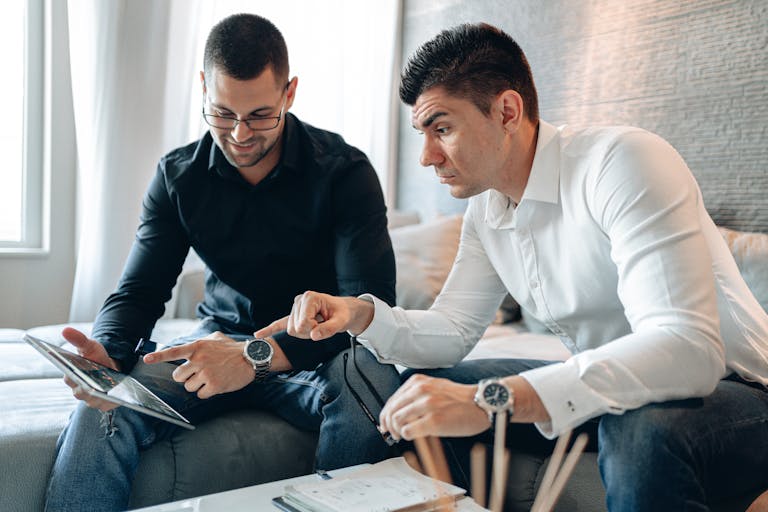

Dating someone with a dismissive avoidant attachment style means caring deeply for a person who has learned, often through years of emotional experience, to treat closeness as a threat. They are not indifferent to you. They have simply built an internal system that mutes emotional needs and keeps intimacy at arm’s length. Understanding that distinction changes everything about how you approach this relationship.
Dismissive avoidant attachment sits at the high-avoidance, low-anxiety end of the attachment spectrum. People with this orientation tend to value independence above almost everything else, downplay emotional needs in themselves and others, and withdraw when relationships start to feel too close or too demanding. The feelings are there, even when the behavior suggests otherwise. What looks like coldness is usually a well-practiced defense mechanism, not a character flaw.
If you are an introvert in this kind of relationship, you may recognize some of the same surface behaviors in yourself, the need for space, the discomfort with emotional pressure, the preference for quiet over constant contact. But introversion and dismissive avoidant attachment are genuinely different things, and conflating them will lead you in the wrong direction. Introversion is about where you get your energy. Avoidant attachment is about how you protect yourself from emotional vulnerability. One is a personality trait. The other is a relational defense strategy.

Much of what I write at Ordinary Introvert sits inside a broader conversation about how introverts build meaningful connections. If you are working through the complexities of attraction and partnership, our Introvert Dating and Attraction hub is a good place to ground yourself before going deeper into the attachment dynamics covered here.
What Does Dismissive Avoidant Attachment Actually Look Like in a Relationship?
Dismissive avoidant partners often present as self-sufficient to the point of seeming unreachable. They are frequently competent, independent, and even charming in the early stages of dating, when emotional stakes feel low. Problems tend to surface once the relationship deepens and the implicit expectation of mutual vulnerability arrives.
What’s your personality type?
Take our free 40-question assessment and get a detailed personality profile with dimension breakdowns, context analysis, and personalised insights.
Discover Your Type8-12 minutes · 40 questions · Free
Common patterns include minimizing emotional conversations, becoming distant when you express needs, idealizing independence as a core identity value, and pulling away precisely when closeness increases. They may describe past relationships as suffocating or clingy even when those partners had entirely reasonable expectations. They tend to intellectualize emotional experiences rather than sit inside them.
One thing worth understanding clearly: dismissive avoidants are not emotionally empty. Physiological research has shown that people with avoidant attachment actually experience internal emotional arousal in stressful relational situations, even when they appear calm and detached on the outside. The suppression is real, but it is a learned response, not an absence of feeling. Knowing this helped me reframe how I think about emotional unavailability. It is not that the person does not care. It is that their nervous system has learned to treat emotional closeness as something to manage rather than something to move toward.
I spent two decades running advertising agencies, and I managed teams where some of the most talented people I ever worked with had this exact relational style. One creative director I worked with for years was exceptional at his craft, reliable under pressure, and deeply committed to the work. But any conversation that touched on team dynamics, conflict, or his own emotional experience in the agency would produce a kind of instant detachment. He would become analytical, distant, almost clinical. It took me a long time to stop reading that as disinterest and start recognizing it as a protective response. Once I did, I could work with him far more effectively.
Why Are Introverts Sometimes Drawn to Dismissive Avoidant Partners?
There is a particular pull that many introverts feel toward people who seem self-contained and emotionally self-sufficient. After years of being pressured to be more open, more expressive, more “present” in the extroverted sense, finding someone who does not demand constant emotional performance can feel like relief.
Dismissive avoidant partners often give you space without you having to ask for it. They do not overwhelm you with emotional processing requests. They seem comfortable with silence. For an introvert who has spent years apologizing for needing quiet, this can feel like compatibility when it is actually something more complicated.
The difference matters. An introvert who is securely attached is comfortable with both closeness and solitude. They can move toward a partner emotionally and then return to themselves without either state feeling threatening. A dismissive avoidant partner keeps distance not because they are comfortable, but because closeness triggers a deactivating response in their attachment system. What reads as ease is often suppression.
Understanding how introverts fall in love and the relationship patterns that follow is genuinely useful here, because it helps you separate your own need for solitude from your partner’s avoidance of intimacy. They can look similar from the outside. They feel very different from the inside.

How Do You Build Connection Without Triggering the Withdrawal Response?
This is where most advice about dating a dismissive avoidant person gets it wrong. The instinct, especially for people with anxious attachment, is to pursue harder when someone pulls away. More reassurance-seeking, more emotional expression, more intensity. That approach tends to accelerate the withdrawal rather than slow it.
What actually creates safety for a dismissive avoidant partner is consistency without pressure. You are not pursuing them relentlessly. You are also not disappearing. You are simply remaining present in a way that does not demand they match your emotional intensity on your timeline.
Some practical approaches that tend to work well:
Express needs as preferences, not ultimatums. “I’d love to spend Saturday together” lands very differently than “You never make time for me.” The first is an invitation. The second activates their defense system immediately.
Give them room to come toward you. Dismissive avoidants often move closer once they feel the pressure has lifted. If you can tolerate the discomfort of not chasing, you will frequently find they re-engage on their own terms.
Connect through activity rather than direct emotional conversation. Side-by-side experiences, shared projects, doing something together, often create more genuine closeness with avoidant partners than face-to-face emotional processing conversations. The intimacy builds indirectly.
Keep your own life full and rich. This is not a manipulation tactic. It is genuinely important. If your entire emotional world centers on whether this person is pulling away or moving closer, you will become hypervigilant to every shift, and that vigilance will exhaust both of you. A full life outside the relationship is protective for everyone involved.
As an INTJ, I am wired for strategy and long-term thinking, and I will admit that early in my personal life I approached emotional relationships the same way I approached client strategy: identify the problem, develop a plan, execute. What I eventually understood is that emotional connection does not respond to execution. It responds to presence. That shift took me years.
What Communication Styles Actually Work With Dismissive Avoidant Partners?
Direct, low-drama communication is almost always more effective than emotional escalation. Dismissive avoidant people tend to process information analytically even in emotional contexts, so framing conversations in terms of observable behavior and specific needs rather than feelings and interpretations tends to land better.
Instead of “You always shut down when I try to get close,” try “When we don’t talk for several days after an intense conversation, I start to feel disconnected. Can we check in more regularly?” One version is an accusation. The other is a specific, solvable request.
Timing matters enormously. Bringing up emotional topics when they are already stressed, overstimulated, or in a public setting will almost always produce the defensive, distant response you are trying to avoid. Choose moments when the environment is calm and there is no implicit pressure to perform emotionally.
Something I cover more fully in my piece on how introverts experience and express love feelings is the idea that many introverts already communicate affection indirectly. That same principle applies here: with a dismissive avoidant partner, recognizing the quieter signals of connection matters as much as asking for louder ones.
One thing worth naming directly: if emotional conversations consistently end with your partner dismissing your feelings entirely, not just needing space but actively invalidating your experience, that is a different problem than attachment style. Attachment patterns explain behavior. They do not excuse contempt or chronic emotional neglect.

How Do You Manage Your Own Needs When Your Partner Keeps Pulling Away?
This may be the most important section of this entire article, and it is the one most people skip because they are focused on changing their partner’s behavior. Your own emotional needs are real and legitimate. A relationship with a dismissive avoidant person does not require you to shrink those needs into nothing. It requires you to be thoughtful about how and where you get them met.
Some of what you need may not be available from this particular partner, at least not right now. That is not a failure. It is information. Close friendships, meaningful work, creative outlets, and your own inner life can carry a significant portion of your emotional weight. This is not settling. It is building a life that does not depend entirely on one person to function.
Something I have observed consistently, both in my own relationships and in watching colleagues handle theirs, is that people who maintain a strong sense of self outside their romantic partnerships tend to handle the rhythms of avoidant attachment far more steadily. They can tolerate the distance without interpreting it as abandonment, because their identity does not collapse when the relationship goes quiet.
Many introverts already have a natural capacity for solitude that serves them well here. The challenge is making sure that capacity comes from genuine self-sufficiency rather than from suppressing your own attachment needs to match your partner’s avoidance. Those are not the same thing, even though they can look identical from the outside.
If you identify as a highly sensitive person, this dynamic carries additional weight. The emotional attunement that makes HSPs such perceptive partners also makes the push-pull of avoidant attachment particularly exhausting. The complete guide to HSP relationships addresses this intersection in depth, and I’d encourage you to read it alongside this article if that description fits you.
Can Dismissive Avoidant Attachment Actually Change Over Time?
Yes. Attachment styles are not fixed personality traits. They are learned relational strategies, and learned strategies can shift. The concept of “earned secure” attachment is well-documented in the psychological literature: people who began with insecure attachment orientations can develop secure functioning through therapy, through corrective relational experiences, and through sustained self-awareness work.
That said, change requires the person with the avoidant pattern to recognize it and want to work on it. You cannot want this on their behalf. You cannot love someone into a different attachment style. The most you can do is create conditions that make growth possible, stay clear about your own needs, and decide honestly whether the relationship as it currently exists is workable for you.
Therapy tends to accelerate this process significantly. Emotionally Focused Therapy (EFT) in particular has a strong track record with couples handling attachment insecurity. Schema therapy and EMDR have also shown meaningful results for individuals working through avoidant patterns. If your partner is open to professional support, that openness itself is a significant indicator of potential growth.
What does not tend to work is waiting indefinitely for change while absorbing the emotional cost of the current dynamic. Patience is valuable. Indefinite self-erasure is not. There is a meaningful difference between giving a relationship time to develop and spending years hoping someone will eventually become available.
A resource from PubMed Central examining attachment and relationship outcomes offers useful context on how attachment security develops and shifts across adult relationships, which I find more grounding than the oversimplified “once avoidant, always avoidant” framing that circulates online.
What Happens When Two Introverts Are in This Dynamic?
One of the more nuanced situations I see is when both partners are introverts, and one has dismissive avoidant attachment. From the outside, and sometimes from the inside, it can be genuinely difficult to tell what is healthy introvert solitude and what is avoidant withdrawal. Both people want space. Both may prefer quieter, less emotionally intense interactions. The distinction gets blurry.
The question worth asking is whether both partners feel genuinely close and secure, even during the quiet periods, or whether one person consistently feels uncertain about where they stand. Healthy introvert-introvert relationships include real emotional intimacy even when they look quiet from the outside. Avoidant withdrawal, by contrast, creates a low-grade sense of disconnection that does not resolve even when everything seems calm.
My piece on what happens when two introverts fall in love covers the unique dynamics of these relationships in detail. What I would add here is that two introverts can absolutely build deeply secure partnerships. The introversion itself is not the obstacle. The attachment patterns underneath it are what need attention.

How Do You Recognize Love and Affection From Someone Who Struggles to Show It?
Dismissive avoidant partners often express care in ways that are easy to miss if you are looking for conventional emotional displays. They may show up reliably in practical ways, solving problems, remembering small details, being physically present even when emotionally distant. They may express affection through action far more readily than through words or emotional vulnerability.
Learning to read these quieter signals is not about lowering your standards. It is about developing a fuller picture of how this particular person communicates care. That said, it is also worth being honest with yourself about whether what you are receiving is genuinely enough, or whether you are working very hard to interpret minimal investment as meaningful love.
There is a broader conversation about this in my article on how introverts express love and show affection, which covers the ways quieter personalities demonstrate care that often goes unrecognized. Many of those same patterns appear in dismissive avoidant partners, though for different underlying reasons.
One thing I have come to believe firmly: you should not have to decode someone’s love indefinitely. Some degree of translation is natural in any relationship. But if you spend most of your energy trying to determine whether your partner actually cares about you, that uncertainty itself is worth examining seriously.
When Does This Relationship Dynamic Become Genuinely Unhealthy?
There is a point where understanding someone’s attachment style shifts from compassionate awareness into rationalization of behavior that is actually harmful. Knowing that someone is dismissive avoidant does not mean accepting chronic emotional unavailability, repeated dismissal of your feelings, or a relationship where your needs are consistently treated as a burden.
Some warning signs that the dynamic has moved beyond attachment style into something more concerning: your partner consistently ridicules emotional expression rather than simply finding it uncomfortable, you feel worse about yourself after most interactions with them, you have stopped bringing up your needs entirely because the response is too discouraging, or you feel more alone inside the relationship than you would outside of it.
Conflict is another area where this becomes visible. Dismissive avoidant partners often stonewall or withdraw during disagreements, which can leave the other person feeling unheard and unresolved. If you identify as highly sensitive, that pattern is particularly difficult to manage. The guide to handling conflict peacefully as an HSP addresses some of the specific challenges that arise when your nervous system processes relational tension intensely and your partner’s response is to disengage.
Attachment theory is a genuinely useful lens, but it is one lens among many. Communication patterns, life stressors, values alignment, and individual mental health all shape how relationships function. Not every relationship problem is an attachment problem, and not every avoidant partner is someone who will eventually grow into the relationship you need. Some people are not available for the kind of partnership you are looking for, regardless of the reason.
A thoughtful overview from PubMed Central on adult attachment and relationship functioning provides useful context on how these patterns play out across long-term relationships, which I find more nuanced than most pop-psychology takes on the subject.
What Does a Healthy Relationship With a Dismissive Avoidant Partner Actually Look Like?
It is possible. I want to say that clearly, because a lot of the content about dismissive avoidant attachment trends toward the conclusion that these relationships are inherently doomed. That is not accurate. Many couples with avoidant-anxious or avoidant-secure dynamics develop genuinely functional, loving partnerships over time, especially with mutual awareness and often with professional support.
What tends to characterize the relationships that work: both people have some degree of self-awareness about their patterns, there is a shared commitment to working through difficulty rather than avoiding it, the avoidant partner is willing to tolerate some discomfort in the direction of closeness, and the other partner is able to maintain their own groundedness without requiring constant reassurance.
From my own experience as an INTJ who spent years learning to be more emotionally present in both professional and personal relationships, I can say that the growth is real and it is worth pursuing. My instinct as an INTJ is to analyze, systematize, and maintain control, which served me well in running agencies but created distance in personal relationships. Learning to stay present with emotional discomfort rather than retreating into analysis was some of the most meaningful personal work I have done. I am not dismissive avoidant, but I understand the pull toward emotional self-protection better than I once did.
A Psychology Today piece on dating introverts touches on some of the relational dynamics that overlap with this territory, particularly around respecting the need for space while still building genuine connection.
Healthy relationships with dismissive avoidant partners tend to have clear agreements about communication, predictable rhythms that do not require constant negotiation, and a mutual understanding that closeness does not mean merger. The avoidant partner learns that intimacy is survivable. The other partner learns that space is not rejection. That is a long process, but it is a real one.

Should You Stay or Walk Away?
No article can answer this for you, and I am skeptical of any that tries. What I can offer is a framework for thinking it through honestly.
Ask yourself whether your partner demonstrates any awareness of their patterns. Not perfection, not constant emotional availability, but some recognition that they tend to pull away and some willingness to examine that. Awareness is the minimum condition for change.
Ask yourself whether your fundamental needs are being met at a level you can genuinely live with, not a level you are rationalizing as acceptable because you care about this person. There is a difference between a relationship that is imperfect but nourishing and one that is slowly depleting you.
Ask yourself whether you are growing in this relationship or contracting. The best relationships, even difficult ones, tend to expand who you are over time. If you are becoming smaller, more anxious, less yourself, that is worth taking seriously regardless of how much you love the person.
An additional perspective worth reading comes from Psychology Today’s examination of romantic introvert patterns, which offers some useful framing around what introverts genuinely need from intimate relationships, a helpful baseline when you are trying to assess whether what you have is close enough to what you need.
The Healthline overview of common myths about introverts and extroverts is also worth a read if you find yourself conflating your introversion with your partner’s avoidance. Getting clear on that distinction tends to make the relationship dynamics much easier to see accurately.
For more on how introverts approach love, attraction, and partnership across different relationship dynamics, the full Introvert Dating and Attraction hub at Ordinary Introvert covers the territory from multiple angles.
About the Author
Keith Lacy is an introvert who’s learned to embrace his true self later in life. After 20 years in advertising and marketing leadership, including running agencies and managing Fortune 500 accounts, Keith now channels his experience into helping fellow introverts understand their strengths and build fulfilling careers. As an INTJ, he brings analytical depth and authentic perspective to every article, drawing from both professional expertise and personal growth.
Frequently Asked Questions
Is dismissive avoidant attachment the same as introversion?
No. Introversion describes where a person gets their energy, preferring solitude and quieter environments over constant social stimulation. Dismissive avoidant attachment is a relational defense strategy in which a person suppresses emotional needs and maintains distance to avoid the vulnerability of intimacy. An introvert can be securely attached and deeply capable of emotional closeness. A dismissive avoidant person may be introverted or extroverted. The two traits are independent of each other.
Can a relationship with a dismissive avoidant person actually work long-term?
Yes, with the right conditions. Many couples where one or both partners have avoidant attachment patterns develop secure, functional relationships over time. What tends to make the difference is mutual awareness of the dynamic, some willingness on the avoidant partner’s part to work toward greater emotional availability, and the other partner’s ability to maintain their own groundedness without requiring constant reassurance. Couples therapy, particularly Emotionally Focused Therapy, can accelerate this process significantly.
Why does a dismissive avoidant partner pull away when things get closer?
Dismissive avoidant attachment involves a deactivating strategy in the attachment system. When closeness increases, it triggers an internal response that registers intimacy as threatening rather than comforting. The person pulls away not because they do not care but because their nervous system has learned to treat emotional vulnerability as a risk to be managed. Research using physiological measures has shown that avoidant individuals experience internal emotional arousal in these moments even when they appear outwardly calm and detached.
How do you tell the difference between needing space and avoidant withdrawal?
The most reliable indicator is how you feel during the quiet periods. Healthy solitude in a relationship leaves both people feeling secure even when apart. Avoidant withdrawal tends to create a low-grade sense of disconnection and uncertainty in the other partner. If you consistently find yourself wondering whether your partner still cares about you during the quiet times, that uncertainty is worth paying attention to. Healthy space does not usually generate that kind of ongoing anxiety.
Can dismissive avoidant attachment change with therapy or a good relationship?
Yes. Attachment styles are not fixed traits. They are learned relational strategies that can shift through therapy, through corrective relationship experiences, and through sustained personal development work. The concept of earned secure attachment is well-documented: people who began with insecure attachment can develop secure functioning over time. That said, change requires the person with the avoidant pattern to recognize it and want to work on it. Therapeutic approaches including Emotionally Focused Therapy, schema therapy, and EMDR have all shown meaningful results in this area.