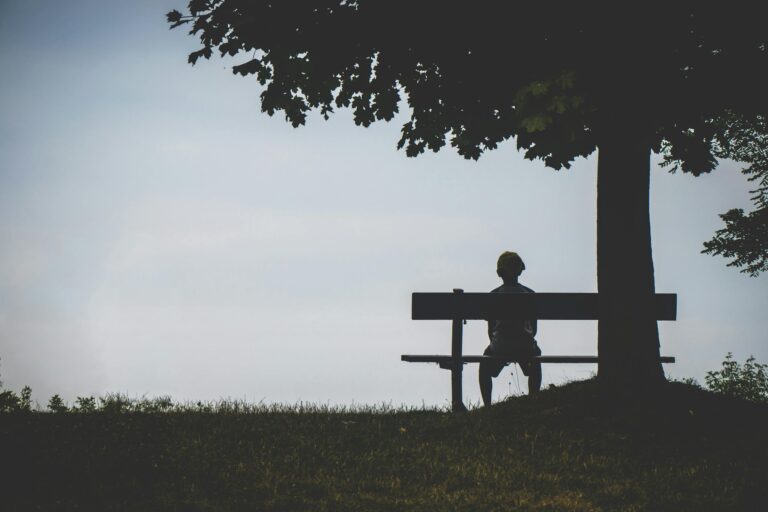

Explaining asocial behavior to an extrovert can feel like describing color to someone who has only ever seen in black and white. The short answer is this: asocial behavior in introverts isn’t avoidance, hostility, or sadness. It’s a genuine preference for solitude that restores energy, deepens thinking, and produces the kind of focused work that social settings simply can’t support.
That distinction matters more than most people realize, and getting it right can change how your relationships feel on both sides of the conversation.

My introvert personality traits hub covers the full spectrum of what it means to be wired this way, but asocial behavior sits at the center of the most common misunderstandings. If you’ve ever struggled to explain why you didn’t want to attend the after-party, why you went quiet at dinner, or why a weekend alone genuinely sounded better than a weekend with people you love, this article is for you. Our Introvert Personality Traits hub explores the broader landscape of how introverts think, feel, and function, and asocial behavior is one of the most misread pieces of that picture.
What Does Asocial Actually Mean?
Most people confuse asocial with antisocial, and that confusion does real damage. Antisocial behavior involves hostility, disregard for others, or active harm to social norms. Asocial behavior simply means preferring less social interaction, or finding social engagement draining rather than energizing. There’s no malice in it. There’s no rejection of the people involved. There’s just a nervous system that processes stimulation differently.
Career Coaching for Introverts
One-on-one career strategy sessions with Keith Lacy. 20 years of Fortune 500 leadership as an introvert, now helping others build careers that work with their wiring.
Learn More50-minute Zoom session · $175
The American Psychological Association defines introversion as a personality orientation characterized by a focus on internal mental life rather than external stimulation. That internal focus isn’t a flaw in the software. It’s the operating system itself.
I spent the better part of my advertising career pretending otherwise. Running agencies means client dinners, industry events, pitch presentations, and team celebrations. I showed up to all of it, and I was genuinely good at it. But what my extroverted colleagues couldn’t see was the cost. After a long day of back-to-back meetings, I wasn’t winding down at happy hour. I was calculating how quickly I could get home, close a door, and sit in silence for an hour before I felt like myself again. That wasn’t depression or social anxiety. That was my baseline need for recovery.
Worth noting: asocial behavior isn’t the same as social anxiety, either. Healthline draws a clear line between introversion and social anxiety, pointing out that introverts may enjoy social situations but simply find them tiring, while social anxiety involves fear, avoidance driven by distress, and significant discomfort. Many introverts genuinely like people. They just like them in smaller doses, in quieter settings, with more intentional conversation.
Why Do Extroverts Struggle to Understand This?
Extroverts aren’t being obtuse when they push back on asocial behavior. Their confusion comes from a genuinely different experience of the world. For someone who gains energy from social interaction, choosing to be alone can only register as one of a few things: sadness, conflict, rejection, or illness. None of those are accurate, but they’re the only frameworks available when solitude has never felt restorative.
One of my account directors at the agency was the kind of extrovert who genuinely couldn’t understand why I’d close my office door after a big client win. In her mind, celebration meant gathering. In mine, it meant decompressing. She once knocked on my door twenty minutes after we’d landed a major contract and asked if I was upset about something. I wasn’t. I was processing the win in the way that actually felt satisfying to me, quietly, with my thoughts. That moment taught me that my silence read as distress to someone whose internal experience was wired so differently from mine.

Part of what makes this so hard to explain is that the extrovert’s interpretation isn’t entirely wrong based on their own experience. If they went quiet and closed a door after a team win, something probably would be wrong. The behavior looks the same from the outside. The internal reality is completely different.
There’s also the cultural layer. Most workplaces, social structures, and relationship norms were built around extroverted defaults. Showing up, being present, engaging loudly, and celebrating collectively are treated as signs of health, investment, and happiness. Opting out of those things, even temporarily, reads as a problem to solve rather than a preference to respect. Psychology Today has written about the introvert advantage in professional settings, but that advantage rarely gets communicated clearly to the extroverts working alongside introverts every day.
How Is Asocial Behavior Different From Being Unfriendly?
This is the question that stings most, because it touches something personal. Introverts aren’t cold. Many of us are deeply loyal, attentive, and caring friends and partners. We just express and experience connection differently than extroverts expect.
Some of the most meaningful qualities introverts bring to relationships are precisely the ones that get misread as distance. The tendency to listen more than speak. The preference for one deep conversation over ten surface-level ones. The habit of thinking before responding instead of filling silence with words. These aren’t signs of disinterest. They’re signs of someone who takes connection seriously enough to do it carefully.
There’s a piece I wrote about 15 traits introverts have that most people don’t understand that gets into this in more depth, because the gap between how introverts experience themselves and how others perceive them is genuinely wide. Asocial behavior is one of the most visible expressions of that gap.
At one of the agencies I ran, I had a creative director who was brilliant and warm and almost entirely asocial outside of work hours. She came to every required team event, contributed meaningfully, and then disappeared. Her extroverted teammates interpreted her absence from optional social gatherings as a sign she didn’t care about the team. The reality was the opposite. She cared so much that she protected her energy carefully so she could show up fully when it mattered. Once I helped her articulate that to her team, the dynamic shifted completely.
The Psychology Today piece on whether introverts make better friends raises an interesting point about depth versus breadth in relationships. Introverts tend to invest deeply in fewer connections, which can look like exclusivity or coldness from the outside but feels like loyalty and intention from the inside.
What’s the Difference Between Asocial Behavior and Introversion Itself?
Not every introvert is equally asocial, and not everyone who displays asocial behavior is a textbook introvert. Personality is more layered than a single label can capture.
Consider the range of personality types that can produce asocial tendencies. Someone with ambivert characteristics might be asocial in some contexts and energized by social engagement in others, depending on the setting, the people, and their current stress level. That variability can be just as confusing to extroverts as consistent introversion, because it seems inconsistent rather than principled.

Similarly, people who lean toward introverted extrovert behavior traits may genuinely love social interaction but still need significant recovery time afterward. Their asocial periods look the same as a deep introvert’s, but the underlying wiring is different. Explaining that to someone who sees you laughing at a party on Friday and then completely unavailable on Saturday requires a level of self-awareness that takes years to develop.
Pure introversion, as most personality frameworks describe it, involves a consistent preference for internal processing and a reliable need for solitude to restore energy. Asocial behavior is one of the most visible expressions of that need, but it exists on a spectrum. Some introverts are highly social within small, trusted groups. Others genuinely prefer to spend most of their time alone. Both are valid. Both can be misread.
What connects them is the underlying mechanism: social interaction costs energy rather than generating it. Understanding which quality is most characteristic of introverts helps clarify why asocial behavior isn’t a mood or a phase. It’s a feature of how the brain processes stimulation, not a response to a specific person or situation.
How Do You Actually Explain This to an Extrovert?
Explanation works best when it’s specific, honest, and framed around the extrovert’s experience rather than your own. Abstract concepts about energy and stimulation don’t land as well as concrete, relatable analogies.
One approach that worked well for me was the battery analogy. I’d tell people: imagine starting every social interaction with a full phone battery. Every conversation, every meeting, every event drains it a little. For extroverts, being around people charges the battery. For me, it drains it. Alone time is the charger. Neither is better. They’re just different power sources.
That framing helped my team understand why I sometimes needed to step out of a long brainstorm, why I didn’t always join the group for lunch, and why my best ideas often came from a quiet morning at my desk rather than a collaborative session. It wasn’t that I didn’t value their input. It was that I processed it best after the room cleared.
A few principles that make these conversations go better:
Be specific about what you need, not just what you don’t want. “I need an hour to decompress before dinner” lands better than “I don’t want to talk right now.” Specificity signals intention rather than rejection.
Separate the behavior from the relationship. “My going quiet after a long day has nothing to do with how I feel about you” is worth saying out loud, even when it feels obvious to you. It’s not obvious to someone whose experience of withdrawal is always relational.
Acknowledge their experience without abandoning yours. “I know this can feel like I’m pulling away, and I understand why it reads that way” validates their perception without accepting a false narrative about your intentions.
Invite them into your actual experience when the timing is right. Some extroverts, once they understand the mechanics, become genuinely curious. They want to know what solitude actually feels like, what you do with it, why it matters. That curiosity is worth meeting with openness rather than defensiveness.
The Harvard Health guide to social engagement for introverts makes a useful point about the value of setting clear expectations in relationships. Extroverts aren’t the only ones who benefit from that clarity. Introverts often find that naming their needs in advance reduces the guilt and misreading that comes from unannounced withdrawal.
Does Gender Change How Asocial Behavior Gets Perceived?
Yes, and significantly so. Social expectations around warmth, availability, and emotional expression vary by gender in ways that affect how asocial behavior gets interpreted.
Introverted women often face a sharper version of this misreading. The social expectation that women be warm, communicative, and relationally available means that asocial behavior in women gets labeled as cold, difficult, or even unfriendly more quickly than the same behavior in men. A man who goes quiet after a meeting is “focused.” A woman who does the same is “upset about something.”

The piece on female introvert characteristics goes into this dynamic in detail, and it’s worth reading if you’re a woman trying to explain your asocial tendencies to people who keep projecting emotional meaning onto your preference for solitude. The misreading isn’t just annoying. It can create real pressure to perform extroversion in order to be seen as competent, likable, or mentally well.
I watched this play out at the agency level more times than I can count. Female account managers who preferred to work through problems independently before bringing them to the group were sometimes flagged as “not collaborative enough” in performance reviews. Their male counterparts who did the same thing were described as “thoughtful” or “strategic.” The behavior was identical. The interpretation wasn’t.
What Role Does Neuroscience Play in Asocial Preferences?
The science here is genuinely interesting, even if it’s often oversimplified in popular writing. The basic picture is that introvert and extrovert brains respond differently to stimulation, and those differences have measurable physiological roots.
Introvert brains tend to be more reactive to dopamine, the neurotransmitter associated with reward and arousal. That heightened reactivity means that the same level of social stimulation that feels energizing to an extrovert can feel overwhelming to an introvert. Solitude isn’t chosen despite being social creatures. It’s chosen because it regulates a nervous system that’s already running at a higher baseline of internal activity.
A study published in PubMed Central on personality and brain function examines how individual differences in neural sensitivity relate to behavioral tendencies like introversion and extroversion. The takeaway for practical purposes is that asocial behavior has a physiological basis, not just a psychological one. It’s not a choice in the way that choosing a restaurant is a choice. It’s a response to genuine neurological need.
That framing can be surprisingly useful in conversations with extroverts. Many people who resist accepting asocial behavior as a preference will soften when they understand it as a biological reality. “My brain processes stimulation differently and needs recovery time” is harder to argue with than “I just prefer to be alone.”
The National Library of Medicine’s overview of personality research provides useful context for understanding how stable these traits are across a lifetime. Asocial tendencies in introverts aren’t a phase, a response to a bad experience, or something that therapy should fix. They’re a consistent feature of how a particular kind of nervous system works.
How Do You Protect Your Need for Solitude Without Damaging Relationships?
This is where most introverts feel the most tension. The need for solitude is real. The desire to maintain close relationships is also real. Finding a way to honor both without constantly explaining yourself is a skill that takes time to develop.
Some approaches that have worked for me and for introverts I’ve known well:
Build recovery time into your schedule visibly. When people can see that your alone time is planned and consistent, it stops reading as a reaction to them specifically. A standing Sunday morning that’s yours, a lunch break you spend alone, a no-plans rule on certain evenings: these become part of who you are rather than something you’re doing in response to a particular person or event.
Offer alternative forms of connection. Asocial doesn’t mean unavailable. A phone call instead of a party, a one-on-one dinner instead of a group outing, a text exchange instead of an impromptu visit: these offer genuine connection in a format that doesn’t deplete you as quickly. Most extroverts will accept the alternative once they understand it comes from genuine care rather than avoidance.
Name your state without making it the other person’s problem. “I’m in a low-energy stretch right now and need some quiet time this week” is informative without being accusatory. It gives the extrovert in your life information they can work with rather than a silence they have to interpret.
Follow up after asocial periods. One of the simplest things I learned was to reach out after a stretch of withdrawal, not to apologize for needing it, but to re-engage on my own terms. A message that says “I’ve been in my head this week, but I’ve been thinking about what you said and wanted to pick that conversation back up” tells the other person they weren’t forgotten during your quiet period.
The National Library of Medicine’s work on social behavior and wellbeing reinforces something introverts often know intuitively: quality of social connection matters more than quantity. Protecting your need for solitude isn’t antisocial. It’s a way of ensuring that the social time you do invest in is genuine, present, and meaningful rather than depleted and performative.
When Does Asocial Behavior Become Something Worth Examining?
Honesty matters here. Not all withdrawal is healthy introversion. There’s a real difference between choosing solitude because it restores you and retreating from connection because something is wrong.
Healthy asocial behavior feels like a preference. It’s chosen, not compelled. You can engage when you want to. You feel better after your alone time, not worse. Your relationships don’t suffer because of it. You’re not avoiding specific people or situations out of fear or shame.
Withdrawal that deserves a closer look looks different. It intensifies during periods of stress rather than staying consistent. It’s accompanied by a loss of interest in things you normally care about. It feels like hiding rather than resting. It creates a persistent sense of disconnection rather than a satisfying sense of peace.
The Healthline piece on introversion versus social anxiety is worth revisiting here, because the line between personality preference and anxiety-driven avoidance isn’t always obvious from the inside. If your asocial tendencies are causing you distress or making your life smaller than you want it to be, that’s worth exploring with a professional, not because introversion is a problem, but because anxiety sometimes wears introversion as a costume.
I’ve had periods in my career where what I called “needing quiet” was actually avoidance of a difficult conversation or a decision I didn’t want to make. Distinguishing between those two things required more self-honesty than I was always comfortable with. The introvert character traits that make us good at internal processing can also make us good at rationalizing. Knowing the difference is part of the work.
If you want to go deeper into how these traits show up across different personality profiles and life contexts, the full collection of articles in our Introvert Personality Traits hub is a good place to spend some time. There’s a lot more nuance in how introversion plays out than any single article can cover.
About the Author
Keith Lacy is an introvert who’s learned to embrace his true self later in life. After 20 years in advertising and marketing leadership, including running agencies and managing Fortune 500 accounts, Keith now channels his experience into helping fellow introverts understand their strengths and build fulfilling careers. As an INTJ, he brings analytical depth and authentic perspective to every article, drawing from both professional expertise and personal growth.
Frequently Asked Questions
Is asocial behavior the same as being antisocial?
No. Asocial behavior means preferring less social interaction or finding it draining rather than energizing. Antisocial behavior involves hostility, disregard for others, or actions that harm social norms. An asocial person may genuinely care about others and maintain meaningful relationships while still preferring solitude as their default state.
How do I explain my need for alone time without hurting someone’s feelings?
Separate the behavior from the relationship explicitly. Tell the person that your need for solitude isn’t a response to them specifically, it’s a consistent feature of how you restore energy. Offer a specific alternative, such as a one-on-one plan later in the week, so your withdrawal doesn’t read as permanent disengagement. Being proactive rather than reactive makes a significant difference in how the conversation lands.
Can an extrovert and an introvert have a healthy relationship?
Absolutely, and many do. The most important factor is mutual understanding of each other’s energy needs. Extroverts need to understand that an introvert’s solitude isn’t rejection. Introverts need to understand that an extrovert’s desire for togetherness isn’t pressure or neediness. When both people can name their needs clearly and respect the difference, the relationship tends to become stronger rather than strained.
How do I know if my asocial behavior is healthy introversion or something else?
Healthy asocial behavior feels like a preference rather than a compulsion. You choose solitude because it restores you, you feel better after it, and your relationships remain intact. Withdrawal worth examining tends to intensify during stress, feels more like hiding than resting, or is accompanied by a loss of interest in things you normally enjoy. If your solitude is making your life smaller or causing persistent distress, speaking with a mental health professional is worth considering.
What’s the best analogy for explaining asocial behavior to an extrovert?
The battery analogy tends to work well. Explain that social interaction drains your battery while solitude charges it, and that for extroverts the opposite is true. Neither is better or worse. They’re simply different power sources. This framing removes the personal dimension from your withdrawal and gives the extrovert a concrete way to understand something that may feel completely foreign to their own experience.