
Self doubt is not a character flaw. It is what happens when a reflective mind turns its considerable analytical power inward and starts questioning its own worth. For introverts, and especially for those of us wired to process deeply before we speak or act, overcoming self doubt means learning to work with that inward focus rather than being consumed by it.
Self doubt whispers loudest in the moments when we are most exposed: presenting to a room full of executives, speaking up in a meeting dominated by louder voices, or stepping into a leadership role that everyone else seems to wear more comfortably than we do. What I have learned, after two decades running advertising agencies and managing teams across Fortune 500 accounts, is that the doubt was never evidence of inadequacy. It was evidence of awareness.
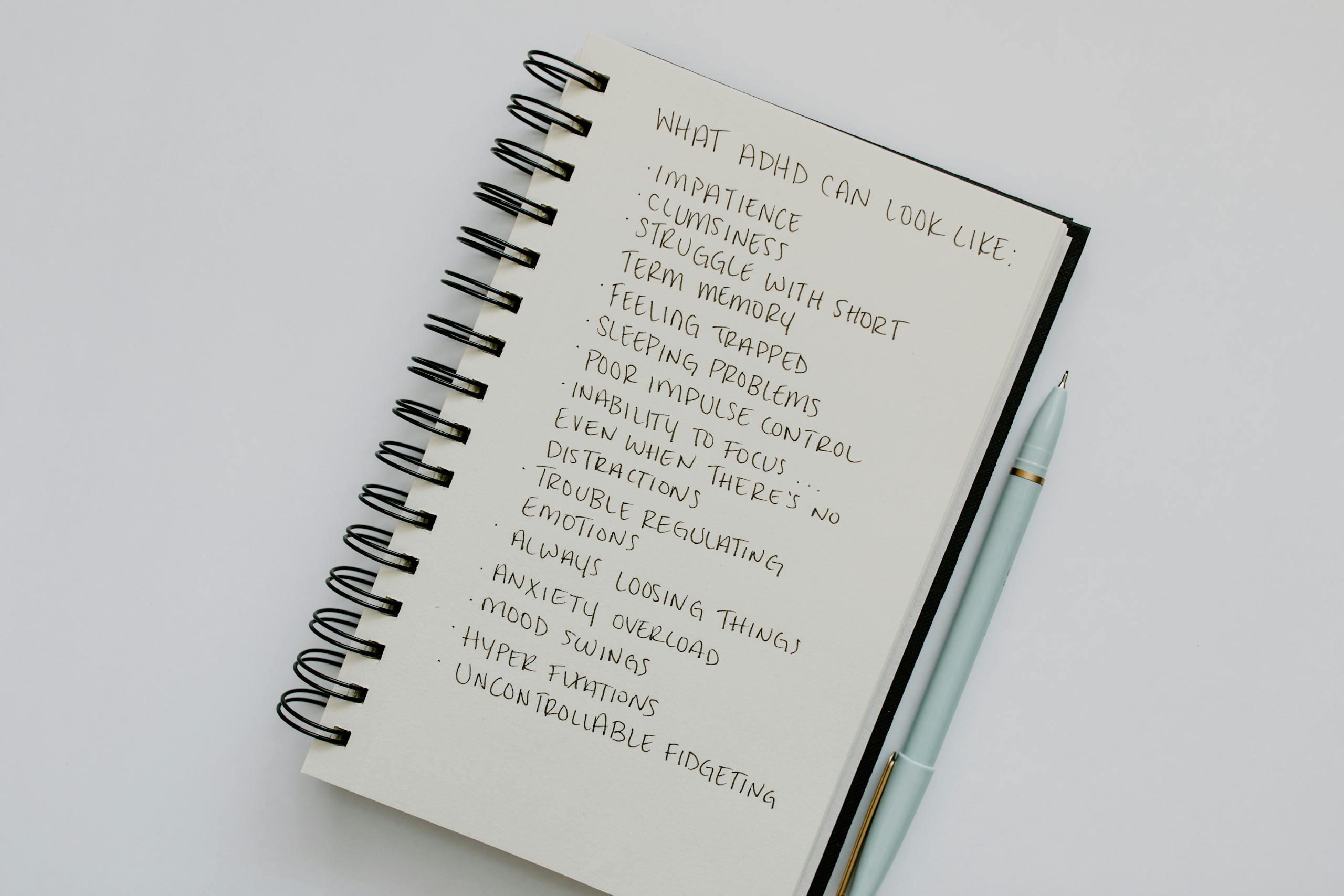
Self doubt and introversion are not the same thing, but they share territory. Both involve a lot of internal conversation. Both can make the outside world feel louder and more confident than it actually is. And both deserve more honest attention than they typically get. If you are working through the mental and emotional weight of this, our Introvert Mental Health Hub covers the full range of what quiet minds carry, from anxiety and perfectionism to emotional processing and rejection. This article focuses specifically on the self doubt piece and what it actually takes to move through it.
Why Do Introverts Seem to Struggle With Self Doubt More Than Others?
Not every introvert struggles with self doubt, and not every extrovert is free of it. But there are real reasons why introspective people tend to experience it more acutely, and understanding those reasons is the first step toward doing something about them.
Career Coaching for Introverts
One-on-one career strategy sessions with Keith Lacy. 20 years of Fortune 500 leadership as an introvert, now helping others build careers that work with their wiring.
Learn More50-minute Zoom session · $175
Introverts process internally. We do not think out loud the way many extroverts do. We observe, absorb, and filter before we respond. That depth of processing is genuinely valuable. It produces careful thinking, considered decisions, and a quality of attention that many environments desperately need. Yet that same inward orientation means we spend a lot of time examining ourselves, sometimes more critically than the situation warrants.
Early in my agency career, I sat in new business pitches watching my extroverted colleagues command the room with what looked like effortless confidence. They riffed, they improvised, they fed off the energy of the clients in front of them. I prepared meticulously, knew the strategy cold, and still walked out of those meetings questioning whether I had contributed enough. The doubt was not about competence. It was about comparison. I was measuring my internal experience against their external performance, and that is a comparison no one wins.
There is also the question of sensitivity. Many introverts, particularly those who identify as highly sensitive people, carry a heightened awareness of emotional undercurrents in a room. That sensitivity is a genuine strength in many contexts, but it also means picking up on every frown, every pause, every slight shift in tone and running it through an internal analysis. When you feel things that deeply, and when you process them as thoroughly as many introverts do, the material for self doubt is never in short supply. If you recognize this pattern in yourself, the piece on HSP emotional processing and feeling deeply speaks directly to what happens when that internal world gets overwhelming.
What Does Self Doubt Actually Feel Like From the Inside?
Self doubt rarely announces itself clearly. It tends to arrive sideways, dressed up as practical concern or reasonable caution. It sounds like “I should probably let someone else handle this” or “maybe I am not ready yet” or “they probably didn’t mean it as a compliment.” It is the voice that talks you out of things before you even begin.
For me, it showed up most reliably in the gap between what I knew and what I said. I would be in a strategy meeting with a client’s senior leadership team, holding a perspective I was confident in, and I would watch the moment pass without speaking. Not because I lacked the words. Because some part of me was still running a background check on whether I had the right to say them out loud.
That gap between knowing and speaking is where self doubt lives. And it costs real things. Opportunities, relationships, the chance to contribute something that might have mattered.

Self doubt also has a physical texture. A tightness before a presentation. A rehearsed quality to conversations that should feel natural. A tendency to over-explain or over-qualify, as though preemptively defending against criticism that has not arrived. The National Institute of Mental Health describes how persistent worry and self-questioning can escalate into anxiety that affects daily functioning, and for many introverts, the line between ordinary self doubt and something more consuming can be thin. Recognizing where you are on that spectrum matters.
One thing I noticed managing creative teams at my agencies was that the people most plagued by self doubt were often the most talented. The designers who second-guessed every concept. The strategists who rewrote briefs until the deadline forced them to stop. High sensitivity and high standards tend to travel together, and the combination can make doubt feel like diligence when it is actually something else. If that resonates, the work on HSP perfectionism and breaking the high standards trap addresses exactly this pattern.
Where Does the Self Doubt Actually Come From?
Tracing self doubt to its source does not eliminate it, but it does change your relationship to it. When you understand where a voice comes from, it loses some of its authority.
For many introverts, the roots run through years of receiving the message, sometimes explicitly and sometimes through accumulated small signals, that the way they naturally operate is insufficient. Too quiet. Too slow. Not enough of a presence. Not enough enthusiasm in the room. I absorbed that message early and spent the first decade of my career trying to perform a version of leadership that did not fit how I was wired. The exhaustion of that performance was its own kind of confirmation that something was wrong with me, when in reality something was wrong with the performance.
Environmental factors compound this. Workplaces built around open offices, brainstorming sessions, and spontaneous verbal performance tend to reward extroverted presentation styles regardless of the quality of thinking behind them. When your natural strengths are invisible to the systems being used to evaluate you, doubt becomes a reasonable response to an unreasonable environment.
There is also the role of HSP empathy as a double-edged quality. Introverts who are highly attuned to others often absorb other people’s anxiety, criticism, and uncertainty and mistake it for their own. I once had a client, a marketing director at a major consumer packaged goods brand, who was deeply insecure about her own strategic instincts. Every meeting with her left me questioning work I had been confident in walking in. It took me longer than I would like to admit to recognize that I was carrying her doubt, not mine.
Psychological research points to the relationship between early criticism, attachment patterns, and the development of an inner critic that persists into adulthood. A study published in PubMed Central examining self-criticism and psychological wellbeing found meaningful connections between harsh self-evaluation and outcomes including depression and anxiety, reinforcing what many introverts already sense: the inner critic is not neutral, and it is not harmless.
How Does Self Doubt Connect to Anxiety and Overwhelm?
Self doubt and anxiety are close relatives. They feed each other in a cycle that can be hard to interrupt once it gains momentum. Doubt generates hesitation. Hesitation creates delay. Delay produces more material for the inner critic to work with. And the whole loop runs on a kind of nervous energy that is exhausting to sustain.
For introverts who are also highly sensitive, this cycle can be amplified by the sheer volume of sensory and emotional input they are processing at any given moment. A high-stakes meeting is not just a high-stakes meeting. It is the lighting, the competing conversations, the unspoken tension between two colleagues, the awareness of your own body language, and the simultaneous attempt to think clearly and perform competently. That kind of layered overwhelm creates fertile ground for doubt. The piece on managing HSP overwhelm and sensory overload addresses the physiological side of this, which is worth understanding separately from the cognitive piece.

What I found in my own experience was that the doubt was loudest when I was most depleted. After a week of back-to-back client meetings, pitches, and internal reviews, my capacity to push back against the inner critic was genuinely lower. The voice that said “you’re not sure about this strategy” or “you came across as uncertain in that presentation” had more room to operate when I had less reserve to draw on.
This is not weakness. It is biology. The PubMed Central resource on cognitive behavioral approaches to self-critical thinking highlights how fatigue and chronic stress reduce the cognitive flexibility needed to challenge distorted thinking patterns, which is exactly what self doubt produces. Managing your energy is not a soft skill. It is a prerequisite for managing your mind.
The anxiety piece is worth taking seriously on its own terms too. HSP anxiety and its specific coping strategies covers the territory where heightened sensitivity and anxious self-monitoring intersect, which is a particularly common experience for introverts who grew up being told they were too sensitive or too in their own heads.
What Are the Most Effective Strategies for Overcoming Self Doubt?
Overcoming self doubt is not about silencing the inner critic permanently. That is not a realistic goal, and chasing it tends to make the voice louder. What works is changing your relationship to the doubt so that it informs you without controlling you.
Separate the observation from the verdict
Self doubt collapses two things that need to stay separate: noticing something and judging yourself for it. Noticing that you were nervous in a presentation is information. Concluding that you are not cut out for leadership is a verdict, and it does not follow from the observation. As an INTJ, I am naturally drawn to analysis, and I had to learn to apply that analytical instinct to my own thought patterns, asking whether the conclusion actually followed from the evidence, or whether I had skipped several logical steps to arrive at a self-critical place.
This is where cognitive behavioral frameworks become genuinely useful. The practice of identifying cognitive distortions, particularly catastrophizing and overgeneralization, gives you a structured way to examine the inner critic’s claims rather than accepting them wholesale. A PubMed Central review on self-compassion and self-criticism found that the ability to observe one’s own experience without harsh judgment was associated with significantly better psychological outcomes, not because it eliminated difficulty, but because it changed how people processed it.
Build evidence intentionally
Self doubt thrives in the absence of counter-evidence. One of the most practical things I did during a particularly rough stretch in my agency years was to keep a running document of specific wins, not a motivational list, but a factual record. A client who renewed because of a campaign we built. A team member who grew significantly under my leadership. A pitch we won in a competitive review. The inner critic is not impressed by vague reassurances, but it struggles to argue with specifics.
This is not about inflating your ego. It is about giving your analytical mind accurate data to work with. Introverts tend to remember criticism more vividly than praise, partly because we process everything more deeply and partly because criticism confirms the fears we already carry. Deliberately cataloging evidence of competence corrects that imbalance.
Stop performing confidence and start practicing it
There is a difference between performing confidence, which is exhausting and unconvincing, and practicing it, which is incremental and sustainable. Performance means putting on a version of yourself that does not fit. Practice means taking small, specific actions that build genuine familiarity with situations that currently trigger doubt.
For me, this looked like deliberately taking the first question in a client meeting rather than waiting to see how the room settled. It felt uncomfortable every single time at first. Over months, it became natural. Not because I became a different person, but because I accumulated enough repetitions that the action no longer required the same cognitive overhead.
The American Psychological Association’s work on resilience frames this kind of incremental exposure as central to building psychological strength. Resilience is not a trait you either have or lack. It develops through repeated engagement with difficulty, which is a genuinely encouraging frame for anyone whose self doubt has been telling them they are fundamentally not resilient.
Address the perfectionism underneath
Much of what presents as self doubt is actually perfectionism operating in disguise. The fear is not that you will fail. The fear is that you will produce something imperfect and be judged for it. That distinction matters because perfectionism requires a different response than simple confidence-building.
A study from Ohio State University examining perfectionism found that the drive for flawlessness often increases anxiety rather than improving performance, a pattern many high-achieving introverts will recognize immediately. Raising your standards does not automatically raise your output. Sometimes it just raises your doubt.
I watched this play out repeatedly with creative directors at my agencies. The ones who produced the best work were not the ones who held everything to an impossible standard. They were the ones who knew when something was good enough to move forward, and who had made peace with the reality that no piece of work is ever truly finished, only released.
Recognize how rejection shapes the inner critic
Self doubt often has a specific origin story, and for many introverts, that story involves rejection. Professional rejection. Social rejection. The accumulated experience of being overlooked, dismissed, or misread. Rejection leaves a residue, and that residue becomes the raw material the inner critic uses to construct its arguments.
Understanding the specific rejections that shaped your doubt gives you something concrete to work with. The piece on HSP rejection, processing, and healing is worth reading alongside this one, because the way sensitive people experience and store rejection is meaningfully different from how others do, and the path through it requires acknowledging that difference rather than dismissing it.

How Do You Sustain Progress When Self Doubt Returns?
Self doubt does not disappear permanently. Anyone who tells you otherwise is selling something. What changes with sustained effort is the duration and the intensity. The voice gets quieter. The recovery time shortens. You develop enough history with yourself to know that doubt is a weather pattern, not a permanent climate.
A few things that have helped me sustain progress over years rather than just weeks.
First, I stopped treating setbacks as evidence that I had not made progress. There is a version of this work where every return of doubt feels like a failure, which is itself a form of perfectionism applied to personal growth. Progress is not linear. Expecting it to be creates another layer of self-criticism on top of the original problem.
Second, I got more deliberate about the environments I placed myself in. Some contexts reliably amplified my doubt and some reliably diminished it. Understanding which was which, and making intentional choices about where I spent my energy, was not avoidance. It was strategy. An introvert who consistently places themselves in environments that are structurally misaligned with how they work is not building resilience. They are depleting reserves that could be used for actual growth.
Third, I found that sharing the doubt, selectively and with people I trusted, consistently reduced its power. There is something about naming the fear out loud to another person that interrupts the internal loop. A University of Northern Iowa study on self-disclosure and wellbeing found that selective, intentional sharing of personal struggles was associated with reduced rumination and improved sense of social connection. Not oversharing, not performing vulnerability, but honest conversation with people who have earned that kind of trust.
And finally, I came to understand that being an introvert in a world designed for extroverts creates a specific kind of chronic stress that feeds self doubt in ways that have nothing to do with actual competence. The Psychology Today piece on introverts and social expectations captures some of this tension well. When you spend years being evaluated by metrics that do not measure your actual strengths, doubt is not irrational. It is a reasonable response to a misaligned system. Recognizing that distinction is part of what makes it possible to stop internalizing external misalignment as personal failure.
What Role Does Self Compassion Play in Overcoming Self Doubt?
Self compassion is one of those concepts that sounds soft until you actually try to practice it, at which point it becomes clear that it requires more discipline than self criticism does. Self criticism is automatic. Self compassion is a choice you have to make repeatedly, against the grain of deeply ingrained habits.
For analytical introverts, particularly INTJs who are wired to identify flaws and improve systems, self compassion can feel like lowering standards. It is not. It is recognizing that the same rigorous analysis you apply to external problems deserves to be applied to your own inner experience, and that analysis, done honestly, usually reveals that the inner critic is not being rigorous at all. It is being sloppy, overgeneralizing from limited data, ignoring counter-evidence, and reaching conclusions that would not survive scrutiny if they appeared in a client brief.
The practice of self compassion is not about telling yourself everything is fine when it is not. It is about applying the same quality of care to yourself that you would extend to someone you respected who was struggling with the same thing. Most of us are considerably more generous with others than we are with ourselves. Closing that gap is not indulgence. It is accuracy.

There is also something worth naming about the specific texture of self doubt for people who feel things deeply. Introverts who are highly sensitive do not just think about their failures. They feel them, viscerally and at length. That emotional depth is not a problem to be fixed. It is part of what makes sensitive people capable of genuine connection, creative insight, and the kind of careful attention that produces excellent work. The challenge is ensuring that depth gets directed toward growth rather than self-punishment.
Self compassion creates the conditions in which that redirection becomes possible. Without it, the analytical mind has no safe place to land, and it keeps circling back to the same critical conclusions because those feel, at least, like solid ground.
If you are working through any of these patterns and want to explore the broader landscape of introvert mental health, the complete Introvert Mental Health Hub brings together everything from emotional processing to anxiety management in one place.
About the Author
Keith Lacy is an introvert who’s learned to embrace his true self later in life. After 20 years in advertising and marketing leadership, including running agencies and managing Fortune 500 accounts, Keith now channels his experience into helping fellow introverts understand their strengths and build fulfilling careers. As an INTJ, he brings analytical depth and authentic perspective to every article, drawing from both professional expertise and personal growth.
Frequently Asked Questions
Is self doubt more common in introverts than extroverts?
Self doubt affects people across the personality spectrum, but introverts tend to experience it more intensely because of how they process information. The same inward focus that produces careful thinking and deep analysis also creates more opportunity for self-scrutiny. When you spend a lot of time inside your own head, the inner critic has more airtime. Add the experience of operating in environments built around extroverted norms, and the conditions for chronic self doubt become very specific to how many introverts move through the world.
Can self doubt ever be useful?
Yes, in limited doses. Healthy self-questioning prompts preparation, encourages intellectual humility, and keeps you from overestimating your knowledge in areas where you genuinely need to learn more. The problem is not doubt itself but chronic doubt that persists regardless of evidence, that talks you out of acting on things you are genuinely capable of, and that functions as a default response rather than a calibrated one. The goal is not to eliminate doubt but to develop enough self-awareness to distinguish useful caution from habitual self-undermining.
How does perfectionism connect to self doubt?
Perfectionism and self doubt reinforce each other in a tight loop. Perfectionism sets standards that are, by definition, impossible to meet consistently. Every gap between those standards and actual performance becomes fuel for the inner critic. The doubt that follows then motivates more perfectionism as a compensating strategy, which raises the bar further and produces more material for doubt. Breaking this cycle requires addressing both the unrealistic standards and the self-critical response to falling short of them, not just one or the other.
What is the difference between self doubt and imposter syndrome?
Self doubt is a broader pattern of questioning your own worth, capability, or judgment across many contexts. Imposter syndrome is a more specific experience in which you attribute your successes to luck or external factors rather than your own competence, and live with persistent fear of being exposed as less capable than others believe you to be. They often co-exist, and both are common among high-achieving introverts who have spent years in environments that undervalued their natural working style. Both respond to similar strategies, including evidence-building, cognitive reframing, and intentional self-compassion practice.
When should self doubt prompt someone to seek professional support?
When self doubt is persistent, pervasive, and significantly interfering with your ability to function at work, in relationships, or in daily life, professional support is worth pursuing. This is especially true when doubt has crossed into chronic anxiety, depression, or patterns of avoidance that are narrowing your life in meaningful ways. A therapist trained in cognitive behavioral approaches can help you examine the specific thought patterns driving the doubt and develop more effective responses. Seeking that support is not evidence of weakness. It is a practical decision to use the most effective tools available.