

Participating in class with social anxiety means finding ways to contribute on your own terms, even when your nervous system is telling you to stay invisible. It rarely means forcing yourself to speak first or loudest. With the right strategies, students who experience social anxiety can build genuine confidence in classroom settings without betraying who they are.
Social anxiety in academic settings is not simply shyness or introversion. It involves a real fear of being evaluated, embarrassed, or judged by others, and that fear can make something as ordinary as answering a question feel genuinely threatening. If you’ve ever rehearsed a comment in your head, then watched the moment pass because the risk felt too high, you already know what that experience costs.
There’s a lot of territory between “never speaks” and “always speaks up,” and that’s exactly where most of this work happens. Our Introvert Mental Health hub covers the full landscape of anxiety, emotional processing, and self-understanding for introverts, and this piece adds a specific layer: what to actually do when participation feels like a performance you didn’t audition for.

Why Does Classroom Participation Feel So Threatening?
Most people assume that the hard part of speaking in class is not knowing the answer. For someone with social anxiety, that’s rarely the issue. You might know the answer perfectly well and still feel your heart rate spike the moment you consider raising your hand. The threat isn’t the content of what you’d say. It’s the exposure of saying it.
What’s your personality type?
Take our free 40-question assessment and get a detailed personality profile with dimension breakdowns, context analysis, and personalised insights.
Discover Your Type8-12 minutes · 40 questions · Free
Classrooms are unusually high-stakes social environments. You’re surrounded by peers whose opinions feel consequential. An authority figure is watching. Your words are heard in real time with no ability to edit them. And unlike a conversation with a friend, you can’t easily redirect or recover if something comes out wrong. For someone whose nervous system is already primed to scan for social threat, that combination is genuinely overwhelming.
The American Psychological Association draws an important distinction between shyness and social anxiety disorder, noting that social anxiety involves a persistent, intense fear of social situations where scrutiny is possible. That distinction matters because the strategies that help with ordinary shyness, like just pushing yourself to speak more, often backfire for people with clinical-level social anxiety. Forcing exposure without support doesn’t build confidence. It builds dread.
I spent two decades running advertising agencies, and I watched this dynamic play out in conference rooms constantly. Some of the sharpest thinkers on my teams would sit through entire client presentations without saying a word, not because they had nothing to offer, but because the performance pressure of speaking in a group short-circuited everything they knew. I understood that feeling intimately, even as the person running the room.
What Makes Social Anxiety Different From Being an Introvert?
This distinction trips people up, and it’s worth getting clear on. Introversion is a preference for quieter, less stimulating environments. It’s about energy and processing style, not fear. Social anxiety is a fear response. You can be an extrovert with social anxiety, and you can be an introvert without it, though the two do overlap more than people realize.
As Psychology Today notes, many introverts carry some degree of social anxiety precisely because the world is designed around extroverted norms. When you’re wired for depth and internal reflection, being pushed to perform publicly and spontaneously can feel like being asked to operate in a language you never fully learned. That’s not pathology. That’s a mismatch between your natural processing style and what the environment demands.
For students who are both introverted and socially anxious, classroom participation sits at a particularly uncomfortable intersection. The introversion makes spontaneous verbal performance feel unnatural. The anxiety makes it feel dangerous. And if you’re also a highly sensitive person, the emotional weight of being watched and evaluated adds another layer entirely. If that resonates, the work on HSP anxiety and coping strategies offers a useful framework for understanding why your nervous system responds so intensely to social evaluation.

How Do You Prepare Before Class to Make Participation Easier?
One of the most effective things you can do happens before you ever set foot in the classroom. Preparation shifts participation from reactive to intentional, and that shift matters enormously when your nervous system is already working against you.
Read ahead. Not just to understand the material, but to identify one or two points you find genuinely interesting or confusing. Write them down. Having something specific in your notes that you’re prepared to say removes a huge layer of uncertainty. You’re no longer waiting to see if inspiration strikes in the moment. You’ve already done that work.
Formulate a question rather than a comment. Questions are lower-risk than statements because they’re explicitly positioned as incomplete. You’re not claiming to know something. You’re asking to understand something better. That framing tends to feel less exposing, and it’s also genuinely valuable to classroom discussion.
Practice saying your prepared contribution out loud before class. Not to memorize it word for word, but to hear your own voice say it. There’s something about that rehearsal that reduces the shock of hearing yourself speak in a group. The words feel less foreign when they’ve already left your mouth at least once.
This is something I started doing before major client presentations in my agency years. I’d walk through my key points in the car on the way to the meeting, not scripting them, just warming up the mental pathway. By the time I was in the room, the ideas had already been spoken. That made a real difference in how grounded I felt when the actual conversation started.
What Are the Lowest-Stakes Ways to Start Participating?
Classroom participation doesn’t have to mean raising your hand during whole-class discussion. That’s one form of participation, and for someone with significant social anxiety, it might not be the right starting point. There are smaller entry points that build the same muscle with considerably less exposure.
Talk to the professor before or after class. This is one-on-one, lower stakes, and often more substantive than anything that happens in the group setting. Many professors genuinely appreciate students who engage with them directly, and it builds a relationship that can make the classroom itself feel less threatening over time. You’re no longer speaking to a stranger in front of strangers. You’re speaking to someone who knows you a little.
Contribute in writing when the option exists. Discussion boards, response papers, and in-class written prompts are all forms of participation. They allow you to process and articulate your thoughts without the real-time exposure of speaking. If your class offers these options, use them fully and use them well. Strong written contributions can also give you more confidence when you do eventually speak, because you already know you have something worth saying.
In small group work, aim to contribute one clear idea per session. Small groups reduce the audience size dramatically, which lowers the threat level for most people with social anxiety. You’re not speaking to the whole class. You’re talking to two or three people. That’s a fundamentally different cognitive and emotional task.
Many highly sensitive students find that even these smaller forms of participation can feel emotionally charged, especially when they’re deeply invested in how their ideas land. If you recognize that pattern in yourself, the piece on HSP emotional processing explores why some people feel the weight of social moments so intensely, and what that depth actually offers.
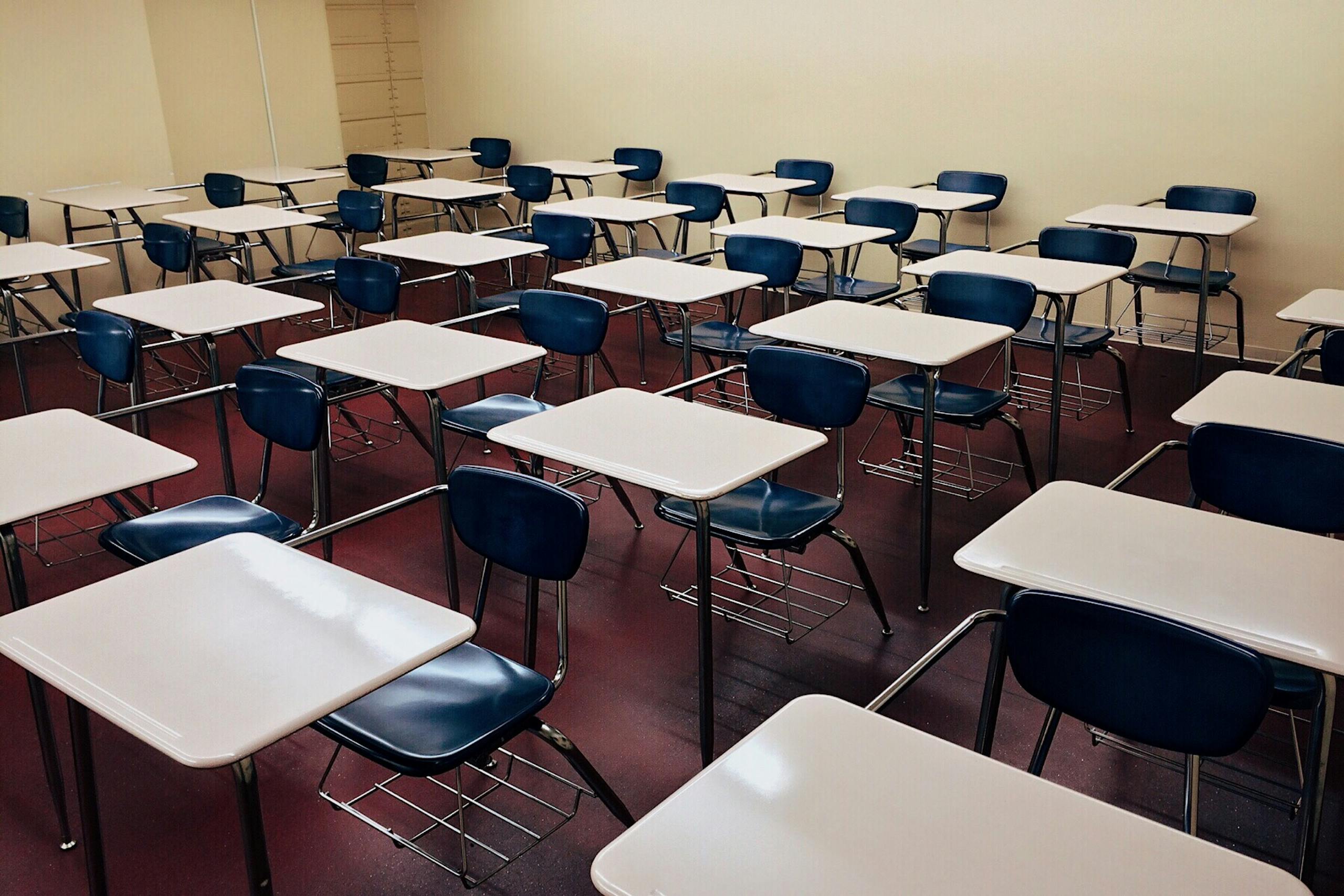
How Do You Handle the Physical Symptoms in the Moment?
Social anxiety isn’t only a mental experience. It’s physical. Racing heart, flushed face, shaky voice, sudden inability to remember what you were about to say. These symptoms are real, and they’re often more visible in your own perception than they are to anyone else in the room. That gap between how you feel and how you appear is worth holding onto.
Controlled breathing is one of the most well-documented tools for managing acute anxiety symptoms. Slow, deliberate exhales activate the parasympathetic nervous system, which is the part of your nervous system responsible for calming the stress response. Before you speak, take a slow breath out. Not a dramatic, obvious one. Just a quiet, intentional exhale. It won’t eliminate the anxiety, but it can take the edge off enough to let your words come through.
Ground yourself physically. Feel your feet on the floor. Notice the chair beneath you. These small physical anchors can interrupt the spiral of anxious anticipation and bring you back to the present moment, which is the only moment where you actually have to speak.
Accept the symptoms rather than fighting them. Paradoxically, trying hard to not seem anxious often makes anxiety worse. When you notice your voice shaking and immediately think “everyone can hear that, this is a disaster,” you add a second layer of anxiety on top of the first. Acknowledging the symptom without judgment, “my voice is shaking, that’s okay, I’m still saying something worth saying,” tends to reduce its power more effectively than resistance does.
The Harvard Health Publishing overview on social anxiety disorder treatments touches on this acceptance-based approach as part of broader cognitive behavioral work. It’s not a quick fix, but over time, changing your relationship to the symptoms changes the symptoms themselves.
Does Perfectionism Make Social Anxiety Worse in Class?
Almost always, yes. Perfectionism and social anxiety are deeply entangled, particularly in academic settings where evaluation is explicit and constant. When you hold yourself to a standard where any contribution must be insightful, well-phrased, and perfectly timed, the bar for speaking becomes impossibly high. Most people can’t clear it. So they don’t speak.
What makes this particularly painful is that the standard is self-imposed. The professor isn’t expecting you to say something brilliant every time you open your mouth. Your classmates aren’t waiting to judge the quality of your contribution. That scrutiny exists primarily in your own mind, amplified by anxiety into something that feels like fact.
I saw this in my own leadership for years. As an INTJ, I had a strong internal standard for the quality of ideas I’d put forward. If I wasn’t confident something was solid, I’d hold it back. That instinct served me well in strategy work. In collaborative discussions, it sometimes meant I withheld contributions that would have been genuinely useful, not because they weren’t good enough, but because they weren’t perfect yet. Good enough, offered in the moment, is almost always more valuable than perfect, offered too late.
The deeper work on HSP perfectionism and high standards examines why some people are wired to hold themselves to such exacting measures, and what it actually costs to live that way. It’s worth reading if the fear of saying something imperfect is what’s keeping you quiet.
What Role Does Fear of Rejection Play in Staying Silent?
For many students with social anxiety, the core fear isn’t embarrassment in the abstract. It’s rejection. The fear that what you say will be dismissed, contradicted, or met with indifference, and that this will mean something about your worth. That’s a heavy weight to carry into a classroom discussion.
Social rejection activates some of the same neural pathways as physical pain. That’s not metaphorical. The experience of being dismissed or ignored in a social context registers in the brain as a genuine threat. For people with social anxiety, that threat response is amplified, which means even a mild, neutral reaction to something you’ve said can feel like a significant rejection.
One thing that helped me reframe this in my professional life was recognizing that most “rejections” in group settings aren’t actually personal. When a client pushed back on a campaign concept I’d developed, my first instinct was to feel it as a judgment of my thinking. Over time, I learned to separate the idea from my identity. The idea could be wrong without me being wrong. That distinction sounds simple, but it took years to actually feel true.
In classroom settings, a similar reframe applies. Your comment might not land the way you hoped. The discussion might move on quickly. Someone might disagree. None of that is evidence of your inadequacy. It’s just how group conversation works. The piece on HSP rejection and healing goes deeper into why some people feel the sting of these moments so acutely, and how to process that experience without letting it shut you down entirely.

How Can You Work With Your Professor Instead of Around Them?
Many students with social anxiety treat professors as part of the threatening environment rather than as potential allies. That’s understandable, but it’s worth reconsidering. Most professors want students to engage with the material. They’re not looking for perfect performance. They’re looking for genuine intellectual presence.
If social anxiety is significantly affecting your ability to participate, consider being honest with your professor. You don’t need to disclose a diagnosis or provide extensive detail. A brief, direct conversation, “I find large group discussions difficult and I’m working on it, I wanted you to know I’m engaged even when I’m quiet,” can shift how a professor perceives and supports you.
Ask whether there are alternative ways to demonstrate engagement. Many professors are more flexible than their syllabi suggest. Written reflections, office hour discussions, and email follow-ups can all signal intellectual investment without requiring you to perform in front of the group.
Some students find it helpful to ask professors to call on them specifically in advance. It sounds counterintuitive, but knowing you’ll be asked a particular question removes the uncertainty that often makes anticipatory anxiety so intense. You can prepare a thoughtful response instead of white-knuckling through an open-ended call for volunteers.
The research published in PubMed Central on social anxiety in educational contexts points to the value of environmental accommodation, meaning adjusting the conditions around you rather than forcing yourself to perform under conditions that are actively working against you. That’s not avoidance. That’s intelligent self-advocacy.
How Does Sensory Overload Affect Participation in Busy Classrooms?
Not every classroom is the same. A seminar with twelve students is a fundamentally different environment from a lecture hall with three hundred. For students who are both anxious and highly sensitive, the sensory environment of the classroom itself can affect how much cognitive and emotional bandwidth they have available for participation.
Fluorescent lighting, ambient noise, the physical proximity of many people, the unpredictable rhythm of open discussion. All of these can contribute to a kind of overstimulation that makes clear thinking and confident speaking harder. When your nervous system is already managing a high sensory load, adding the performance demand of speaking in public compounds the difficulty significantly.
Choosing where you sit can make a real difference. Sitting near the front reduces visual distraction and often creates a slightly more contained social field. You’re less aware of the full scope of the audience behind you. Sitting near the door can reduce the feeling of being trapped, which matters for people whose anxiety has a physical component.
Arriving early is another underrated strategy. When you arrive before the room fills up, you have time to settle into the environment before it becomes socially demanding. You can choose your seat deliberately, exchange a few low-stakes words with someone nearby, and let your nervous system acclimate before the pressure of participation begins. The work on managing HSP sensory overload offers practical tools for exactly this kind of environmental management.
What About the Empathy Piece? How Does It Complicate Participation?
Some students with social anxiety are also deeply empathic, and that combination creates a particular challenge in group settings. You’re not only managing your own anxiety. You’re also absorbing the emotional atmosphere of the room, the professor’s mood, the tension when a discussion gets heated, the discomfort of a classmate who gives a struggling answer. That’s a lot of simultaneous processing.
High empathy can make participation feel even more fraught because you’re acutely aware of how your words might land for others. You might hold back a comment not because you’re afraid of being judged, but because you’re worried about how it might affect someone else in the room. That’s a kind of social sensitivity that often goes unrecognized as a factor in participation anxiety.
On my best teams at the agency, the people who were most empathically attuned were also often the quietest in group settings. They were processing so much more than the surface conversation. When I learned to recognize that and create space for their contributions in other ways, the quality of our work improved significantly. Their silence wasn’t disengagement. It was a different kind of attention.
If you recognize yourself in this description, the exploration of HSP empathy as a double-edged trait speaks directly to this experience, including how to work with your empathic sensitivity rather than being overwhelmed by it in social contexts.
When Should You Seek Professional Support for Social Anxiety?
Self-help strategies are genuinely useful, but they have limits. If social anxiety is significantly affecting your academic performance, your ability to complete assignments that require group work, or your broader quality of life, professional support is worth pursuing. Not as a last resort, but as a reasonable and effective option.
Cognitive behavioral therapy has a strong track record with social anxiety. It works by helping you identify and challenge the thought patterns that fuel anxious responses, and by building gradual, supported exposure to feared situations. The American Psychological Association’s overview on anxiety outlines evidence-based approaches that are well-established and widely available through campus counseling centers.
Most universities offer counseling services specifically for students. If the wait time is long, ask about group therapy options, which are often more readily available and, interestingly, can themselves be a form of supported exposure to the exact situations that trigger classroom anxiety.
There’s also medication to consider for some people. This isn’t the right path for everyone, but for students whose anxiety is severe enough to be functionally disabling, a conversation with a physician or psychiatrist about options is worth having. success doesn’t mean eliminate all anxiety. It’s to bring it down to a level where the strategies above can actually work.
Additional clinical research available through PubMed Central supports the combined effectiveness of behavioral and pharmacological approaches for social anxiety disorder, particularly when the anxiety is severe enough to impair functioning across multiple domains of life.

What Does Progress Actually Look Like?
Progress with social anxiety in classroom settings rarely looks like a dramatic transformation. It looks like speaking once in a class where you previously said nothing. It looks like sending an email to a professor instead of avoiding the question entirely. It looks like noticing your heart rate spike before you speak and speaking anyway, not because the fear is gone, but because it’s become slightly more manageable.
Measuring progress against the most confident person in your class is the wrong metric. Measure it against yourself. Where were you six weeks ago? What felt impossible then that feels merely difficult now? That’s the direction that matters.
Something I’ve come to believe after years of watching people grow in professional environments is that confidence is almost never built through a single courageous act. It’s built through accumulated small acts, each one slightly less terrifying than the last. The student who speaks once in week three, twice in week five, and three times in week eight isn’t doing something dramatically different each time. They’re just building a track record with themselves.
Your voice in a classroom deserves to be heard. Not because you’re obligated to perform, but because your perspective is genuinely worth contributing. Social anxiety lies to you about that. Part of this work is learning to trust your own thinking more than you trust the fear.
There’s much more on the intersection of anxiety, sensitivity, and self-understanding in the Introvert Mental Health hub, including resources that speak to the specific emotional landscape introverts and highly sensitive people carry into every social situation.
About the Author
Keith Lacy is an introvert who’s learned to embrace his true self later in life. After 20 years in advertising and marketing leadership, including running agencies and managing Fortune 500 accounts, Keith now channels his experience into helping fellow introverts understand their strengths and build fulfilling careers. As an INTJ, he brings analytical depth and authentic perspective to every article, drawing from both professional expertise and personal growth.
Frequently Asked Questions
Can social anxiety be confused with introversion in a classroom setting?
Yes, and it happens often. Introversion is a preference for quieter, less stimulating environments and a tendency to process internally. Social anxiety is a fear response centered on being evaluated or judged by others. Both can result in a student who doesn’t speak much in class, but the underlying experience is very different. An introvert may simply prefer not to speak in groups. A person with social anxiety wants to speak but feels genuinely prevented by fear. Many students are both introverted and socially anxious, which compounds the challenge.
What is the easiest first step for someone with social anxiety who wants to participate more in class?
Talking to the professor one-on-one before or after class is often the lowest-stakes entry point. It builds a relationship with the person running the room, which makes the classroom itself feel less threatening over time. It also demonstrates engagement without requiring you to perform in front of a group. From there, preparing one specific comment or question before each class gives you something concrete to work toward, without the pressure of generating ideas spontaneously in the moment.
Is it okay to tell a professor about social anxiety?
Yes, and it’s often more helpful than staying silent. You don’t need to provide a detailed explanation or share a diagnosis. A brief, honest statement, such as noting that you find group discussions difficult and are actively working on it, gives the professor useful context. Many professors are more flexible about participation formats than students realize. Some will offer alternative ways to demonstrate engagement, such as written responses, office hour conversations, or email exchanges, that allow you to contribute meaningfully without the high-exposure format of whole-class discussion.
How do you stop your voice from shaking when you speak in class?
A slow, deliberate exhale before you speak can help reduce the physical intensity of anxiety symptoms in the moment. Beyond that, accepting the shaking rather than fighting it tends to work better than trying to suppress it. When you notice your voice is unsteady and respond with self-judgment, you add a second layer of anxiety on top of the first. Acknowledging the symptom without catastrophizing it, and continuing to speak anyway, gradually reduces its power. Most listeners are far less aware of vocal trembling than the person experiencing it.
When should a student seek professional help for social anxiety in school?
Professional support is worth pursuing when social anxiety is consistently affecting academic performance, preventing you from completing required assignments involving group work, or significantly diminishing your quality of life outside the classroom. Cognitive behavioral therapy is one of the most well-established approaches for social anxiety and is often available through university counseling centers. If wait times are long, ask about group therapy options. For severe cases, a conversation with a physician about additional options may be appropriate. Seeking support is not a sign of weakness. It’s a practical decision to address something that is genuinely getting in your way.