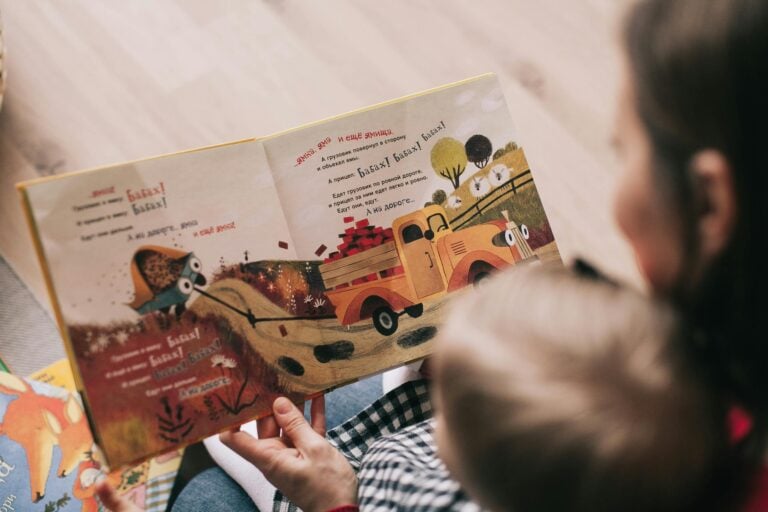

Raising an extroverted child as an introverted parent is one of the most quietly challenging experiences in family life. Your child’s need for constant stimulation, social connection, and external processing runs directly counter to your own need for stillness, depth, and recovery time. These differences are real, they matter, and they deserve more than a generic “just communicate better” answer.
My own experience with this came not from parenting, but from two decades of leading advertising agencies where I managed teams full of people wired completely differently from me. The extroverts on my staff taught me something I’ve never forgotten: their energy wasn’t a problem to manage. It was a language I had to learn to speak. That same shift in perspective is what introverted parents of extroverted children need most.
If you’re exploring how personality shapes your family relationships, our Introvert Family Dynamics and Parenting hub covers the full landscape of these dynamics, from sensory sensitivities to sibling differences to the particular exhaustion that comes from parenting someone whose inner world looks nothing like yours.

Why Does an Extroverted Child Feel So Draining to an Introverted Parent?
Extroverted children process the world outwardly. They think by talking. They recharge through social interaction. They need an audience for their ideas, their jokes, their feelings, their discoveries. Every single one of those things costs an introverted parent something real.
What’s your personality type?
Take our free 40-question assessment and get a detailed personality profile with dimension breakdowns, context analysis, and personalised insights.
Discover Your Type8-12 minutes · 40 questions · Free
As an INTJ, I process information internally before I’m ready to speak. I observe, I analyze, I formulate. Then I respond. My extroverted account executives at the agency did the opposite. They’d call a meeting to figure out what they thought. They’d work through a problem by talking it out with whoever was nearby, sometimes me, sometimes a junior copywriter, sometimes a potted plant. It was genuinely disorienting at first. I kept waiting for them to arrive at a point. They were already there. The talking was the thinking.
Extroverted children are the same. When your seven-year-old narrates every moment of their day at full volume from the moment they get home from school, they’re not being inconsiderate. They’re processing. Their brain is doing what it needs to do. The problem is that your brain needs exactly the opposite to function, and both of you are right.
The National Institutes of Health has noted that temperament traits observable in infancy, including the tendency toward high reactivity and stimulation-seeking, show continuity into adulthood. In other words, your extroverted child’s energy isn’t a phase. It’s a fundamental part of how they’re built. Accepting that early changes everything about how you approach parenting them.
What Does Your Extroverted Child Actually Need From You?
Extroverted children need presence, responsiveness, and social fuel. They need someone to witness their experience. They need to feel that their outward energy is welcomed rather than tolerated. And they need a parent who understands that their social hunger is as real and legitimate as an introvert’s need for quiet.
One of the most useful things I ever did as an agency leader was take a Big Five personality traits test alongside my senior leadership team. Seeing our scores mapped against each other gave us a shared vocabulary for our differences. High extraversion scores weren’t a judgment. They were information. We started designing meetings and workflows around those differences rather than pretending everyone functioned the same way.
You can do something similar with your child, age-appropriately. Not by giving them a formal test, but by helping them understand their own wiring. Saying “you get your energy from being with people, and that’s a wonderful thing” validates their nature. It also opens the door for them to understand yours.
Extroverted children also tend to need more social scheduling than introverted parents naturally think to provide. Playdates, group activities, team sports, drama clubs, anything that puts them in regular contact with peers. An introverted parent’s default is often to protect their own social calendar. The challenge is learning to build a child’s social life that genuinely serves the child, even when it costs you something personally.

How Do You Protect Your Own Energy Without Failing Your Child?
This is the question I hear most often, and it’s the one introverted parents feel most guilty about asking. The guilt itself is worth examining. Needing recovery time doesn’t make you a bad parent. It makes you a human being with a nervous system that has real limits.
At my agency, I learned that my best leadership happened when I protected specific windows of quiet. Not because I was selfish, but because I was useless without them. My team got a depleted, reactive version of me when I pushed through without rest. They got a focused, genuinely present version when I’d had time to think. My extroverted clients and colleagues deserved the latter. So did my team.
Your extroverted child deserves your best version too. That means being honest with yourself about what you need to show up well. Some parents I’ve spoken with build in twenty minutes of quiet after school pickup, giving their child a snack and independent play time while they decompress before engaging. Others create a family rhythm where Saturday mornings are social and Sunday mornings are slow. The structure matters less than the intention behind it.
What doesn’t work is white-knuckling through constant stimulation until you snap. Extroverted children are emotionally perceptive. They notice when you’re checked out or irritable. They may not understand why, and they may internalize it as something they caused. Being proactive about your own energy management is, paradoxically, one of the most loving things you can do for them.
It’s also worth noting that some introverted parents carry additional sensory sensitivities that make this even more complex. If you find that noise, chaos, and constant movement affect you at a physical level, not just an emotional one, the lens of highly sensitive parenting may be worth exploring. Our piece on HSP parenting and raising children as a highly sensitive parent addresses exactly that intersection.
How Do You Communicate Across This Personality Gap?
Extroverted children often communicate in ways that feel overwhelming to introverted parents. They interrupt. They talk over silences. They want immediate responses. They share feelings in real time rather than after they’ve processed them. For an INTJ like me, who needs to think before speaking, this can feel like being asked to perform surgery while someone plays a drum kit in the room.
The adaptation has to go both ways, and as the adult, you’re the one who needs to move first.
One thing that helped me enormously with extroverted team members was learning to give partial responses. Instead of waiting until I had a fully formed opinion to share, I’d say something like “I’m still thinking through that, but my first instinct is…” It signaled that I was engaged, bought me processing time, and kept the conversation moving. With children, this translates to something like “Tell me more while I think about that” or “I heard you. Give me a second.” Small phrases that acknowledge their need to be received without requiring you to respond instantly.
Extroverted children also tend to be highly attuned to social feedback. They want to know how they’re landing with you. Regular, warm check-ins matter to them in ways they may not matter as naturally to you. A quick “I love hearing about your day” goes further than you might expect. It’s not about performing enthusiasm. It’s about making sure they feel genuinely seen.
On the topic of social attunement, it’s worth considering how likability and social warmth develop in children. If you’re curious about how those traits show up in yourself as a parent, the Likeable Person Test offers some interesting self-reflection on how warmth and approachability read to others, which can inform how you show up for your extroverted child’s social world.

What Happens When Your Child’s Social Needs Exceed What You Can Provide?
Here’s something introverted parents rarely hear permission to acknowledge: you cannot be your extroverted child’s primary social outlet. You shouldn’t try to be. And the fact that you can’t sustain that role isn’t a failure. It’s reality.
Extroverted children need peer relationships, extended family engagement, community involvement, and ideally at least one adult outside the immediate family who genuinely delights in their energy. Grandparents, aunts and uncles, coaches, teachers, neighbors who love conversation. Building your child’s village isn’t outsourcing your parenting. It’s giving them the full social diet they actually require.
Some extroverted children also thrive in structured support roles. Activities like youth volunteer programs, peer mentoring, or even jobs like working with elderly residents in assisted living settings can channel their social energy productively. Interestingly, many of the same traits that make extroverted people excellent in caregiving roles also make them well-suited for careers in personal support. The Personal Care Assistant test online explores some of those aptitudes, and while it’s designed for adults considering that field, it offers a useful window into the traits that make socially energized people genuinely good at supporting others.
The broader point is that an extroverted child’s social drive, when properly channeled, becomes a genuine strength. Your job isn’t to contain it. It’s to help them find the right containers.
How Do You Raise a Confident Extrovert Without Losing Yourself?
Confidence in extroverted children often develops through social success. They need to experience being welcomed, included, and celebrated in group settings. An introverted parent’s instinct can sometimes be to shield a child from social complexity, not out of malice, but because social complexity is genuinely exhausting to the parent. The challenge is ensuring that instinct doesn’t accidentally limit the child’s social development.
I watched this play out in a professional context years ago. One of my senior account directors, a powerfully extroverted woman who could walk into any room and immediately own it, had been raised by parents who were both deeply introverted. She told me once that as a child, she’d been quietly discouraged from being “too much.” Too loud, too enthusiastic, too social. She’d spent her early career learning to reclaim the parts of herself that had been dimmed down. She was extraordinary at her job, but it took her years to stop apologizing for her energy.
That story stayed with me. The goal for an introverted parent isn’t to raise a quieter version of your extroverted child. It’s to raise a child who understands their own nature, respects yours, and moves through the world with both confidence and consideration.
Confidence also means emotional health. If your child is showing signs of emotional dysregulation that go beyond typical extroverted intensity, things like extreme mood swings, difficulty with boundaries, or persistent relational instability, it’s worth exploring whether something more specific is at play. The Borderline Personality Disorder test isn’t a diagnostic tool, but it can be a useful starting point for understanding emotional patterns that might benefit from professional support.
The research on family dynamics and child development consistently points to parental attunement as one of the strongest predictors of healthy outcomes, not parental personality type. An introverted parent who genuinely tries to understand and support an extroverted child’s nature does more for that child than a perfectly matched parent who’s disengaged.

What About the Long Game? Raising an Extrovert Who Respects Introversion
One of the most meaningful things you can do for your extroverted child is raise them to genuinely understand introversion, not just tolerate it. Children who grow up with introverted parents have a rare opportunity to develop empathy for a personality style that the broader culture often undervalues or misunderstands.
This starts with honest, age-appropriate conversations about how different people are wired. “I need quiet time to feel my best, the same way you need time with friends to feel your best” is a statement most children can grasp by age five or six. It normalizes difference without creating hierarchy. Neither style is better. Both are real.
As your child gets older, those conversations can deepen. Talking about how workplaces, schools, and social systems often favor extroverted styles gives them a framework for understanding the world more clearly. Many extroverted adults I’ve worked with told me they wished they’d understood introversion earlier. It would have made them better collaborators, better partners, better friends.
There’s also something powerful about modeling self-knowledge. When you say “I’m going to take twenty minutes to myself because I need to recharge,” you’re showing your child what it looks like to know yourself and act on that knowledge. That’s a life skill. It applies to introverts and extroverts alike. Extroverted children who learn to recognize their own energy patterns and needs, rather than just chasing stimulation reactively, grow into more self-aware adults.
The Psychology Today overview of family dynamics frames healthy family functioning around mutual understanding and adaptive communication, not personality uniformity. That framing resonates with me. Some of the most functional families I’ve observed contain wildly different personality types, precisely because they’ve built real fluency in each other’s needs.
Your extroverted child may also grow into careers that lean heavily on social skill and physical presence. Fields like personal training, coaching, or performance-based roles suit many extroverts well. If your child shows strong interest in health and fitness alongside their social drive, the aptitudes explored in the Certified Personal Trainer test can offer an interesting early look at whether that direction might be a natural fit as they grow.
Beyond career direction, the long game is really about relationship. An extroverted child raised by an introverted parent who truly tried to meet them where they are tends to develop a particular kind of depth. They’ve had to learn that not everyone processes the world the way they do. That lesson, absorbed young, is a genuine gift.
Understanding the science of temperament can also help you hold the long view with more patience. Published research on personality development suggests that while temperament is relatively stable, social skills, emotional regulation, and interpersonal adaptability continue developing well into young adulthood. Your child’s current intensity doesn’t define their ceiling. It’s raw material you’re helping shape.

What Does Good Enough Look Like in This Kind of Family?
Good enough doesn’t mean perfect. It means consistent, honest, and warm. It means showing up for your extroverted child’s school play even when the auditorium noise makes your head pound. It means planning the birthday party they need, even when you’d rather have a quiet weekend. It means saying “I love who you are, even when I need a break from the volume.”
At the agency, I used to tell my team that the best leaders weren’t the ones who had no limits. They were the ones who knew their limits and worked around them honestly. I wasn’t going to become an extrovert. My team knew that. What they needed was to know I was genuinely invested in their success, even when my style looked different from theirs. That was enough. More than enough, actually.
Your extroverted child needs the same thing. Not a parent who becomes someone else. A parent who stays present, stays honest, and keeps choosing connection even when it costs something. The American Psychological Association’s work on family stress and resilience consistently finds that the quality of the parent-child relationship matters far more than the specific parenting style or personality match. You don’t have to be your child’s personality twin. You have to be their safe place.
Some days that will look like you at a crowded birthday party, quietly proud and quietly exhausted. Some days it will look like you sitting on the edge of the bed at 9 PM listening to a story that has seventeen tangents and no clear ending, genuinely glad to be there. Some days it will look like you saying “I need ten minutes and then I’m all yours,” and meaning both parts of that sentence equally.
That’s not a failure of parenting. That’s honest parenting. And honest parenting, in my experience, is the kind that actually holds.
There’s much more to explore on these dynamics across different family configurations. Our complete Introvert Family Dynamics and Parenting hub brings together resources on sensitive parenting, personality differences in families, and the particular challenges that arise when family members are wired differently from each other.
About the Author
Keith Lacy is an introvert who’s learned to embrace his true self later in life. After 20 years in advertising and marketing leadership, including running agencies and managing Fortune 500 accounts, Keith now channels his experience into helping fellow introverts understand their strengths and build fulfilling careers. As an INTJ, he brings analytical depth and authentic perspective to every article, drawing from both professional expertise and personal growth.
Frequently Asked Questions
Can an introverted parent truly meet the needs of an extroverted child?
Yes, absolutely. Meeting an extroverted child’s needs doesn’t require becoming extroverted yourself. It requires understanding what your child genuinely needs, building a social environment that supports them, and showing up consistently even when it costs you energy. Parental attunement, not personality matching, is what research points to as the most significant factor in healthy child development. An introverted parent who is honest, warm, and genuinely invested can raise a thriving extroverted child.
How do I explain introversion and extroversion to my young child?
Keep it concrete and non-hierarchical. Something like “some people get their energy from being with others, and some people get their energy from quiet time” works well for children as young as five or six. Frame both as equally valid. You might say “you’re someone who feels great after playing with friends, and I’m someone who feels great after some quiet time. We’re just different, and that’s okay.” Avoid language that implies one style is better, harder, or more mature than the other.
Is it harmful to set quiet time boundaries with an extroverted child?
No, and in fact the opposite is often true. Modeling healthy self-awareness and self-care teaches your child something genuinely valuable. When you say “I need twenty minutes of quiet to recharge, and then I’m all yours,” you’re demonstrating that knowing your own needs and acting on them is a strength, not a weakness. That lesson serves extroverted children well as they grow, helping them develop their own self-awareness alongside their natural social drive. what matters is pairing the boundary with genuine follow-through on the reconnection.
What if my extroverted child’s energy triggers my anxiety or overwhelm?
This is more common than many introverted parents realize, especially those with heightened sensory sensitivity. If your child’s noise, movement, and constant stimulation affect you at a physical or emotional level beyond ordinary tiredness, it’s worth exploring whether highly sensitive person traits are part of your experience. Building intentional recovery time into your daily rhythm, seeking support from a partner or co-parent, and being honest with your child’s other caregivers about your needs can all help. If the overwhelm is significantly affecting your parenting or wellbeing, speaking with a therapist who understands introversion and sensitivity is a worthwhile step.
How do I make sure my extroverted child gets enough social connection when I find socializing exhausting?
Build your child’s social life around structures that don’t require your constant active participation. Team sports, group classes, playdates at other families’ homes, and community activities give your child the social fuel they need without requiring you to be the primary source of it. Cultivating relationships with other families, grandparents, and trusted adults who genuinely enjoy your child’s energy is one of the most practical things you can do. You’re not outsourcing your parenting. You’re building the village your extroverted child actually needs.