Video call anxiety for introverted employees is a real and measurable response to an environment that demands constant visibility, immediate reactions, and sustained social performance, often for hours at a time. Reducing that anxiety starts with understanding what actually triggers it, because the camera isn’t the problem. The structure around it is. Once you see that clearly, you can build practical habits that make video calls feel manageable rather than exhausting.
My name is Keith Lacy, and I ran advertising agencies for more than two decades. I sat in more video calls than I can count, leading client presentations for Fortune 500 brands, managing remote creative teams, and fielding real-time feedback from people who expected me to perform on demand. As an INTJ, I found that exhausting in ways I couldn’t always name. This article is what I wish someone had handed me earlier.

If video calls are one piece of a larger professional challenge you’re working through, the Career Skills and Professional Development Hub covers the full range of workplace topics built specifically around how introverts think and operate. It’s worth bookmarking as a resource alongside this article.
Why Do Video Calls Feel So Much Harder Than In-Person Meetings?
There’s a specific kind of exhaustion that sets in after a day heavy with video calls. It’s different from the tiredness that follows a long in-person meeting. Something about the format amplifies the cognitive load, and for introverts, that amplification is significant.
What’s your introvert superpower?
Every introvert has a quiet strength others overlook. Our free quiz identifies yours and shows you how to leverage it in your career and relationships.
Discover Your Superpower2-3 minutes · 10 questions · Free
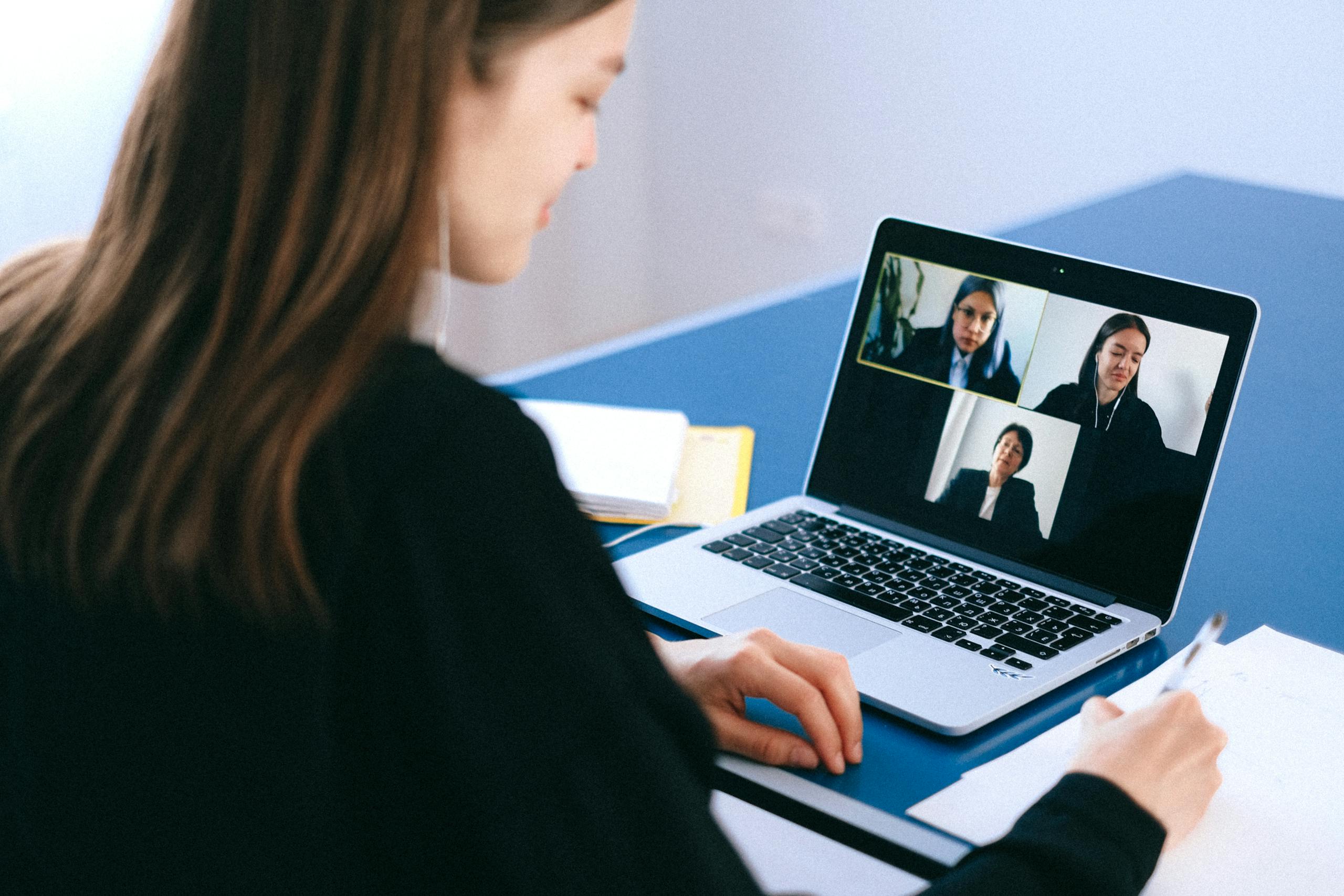
Part of what makes video calls so draining is that they strip away the natural social cues that help us process a room. In person, you can read body language across a full field of vision. You can feel the energy shift when someone grows restless or engaged. On a video call, you’re watching a grid of faces, each one slightly delayed, often poorly lit, and cropped at the shoulders. Your brain works overtime trying to fill in the gaps.
A 2021 study published by PubMed Central found that video-mediated communication places higher cognitive demands on participants compared to audio-only or in-person interactions, largely because of the visual complexity and the effort required to maintain eye contact with a camera rather than a person. For those who process information deeply and quietly, that added cognitive weight compounds quickly.
There’s also the self-view problem. Seeing your own face in real time while trying to think and speak is genuinely disorienting. Research cited by the American Psychological Association on self-focused attention and social anxiety suggests that increased self-monitoring during performance situations heightens anxiety responses. Staring at your own thumbnail while presenting to a client is, in effect, a continuous loop of self-monitoring.
Add to that the expectation of constant visibility and immediate verbal responses, and you have a format that runs directly against how many introverts do their best thinking. We process internally. We prefer to consider before we speak. Video calls, by design, reward the opposite.
What’s Actually Happening in Your Body During Video Call Anxiety?
Anxiety isn’t just a mindset. It’s a physiological event, and understanding that changes how you approach it.
When a video call triggers anxiety, your nervous system reads the situation as a form of social threat. Your heart rate increases. Your breathing becomes shallower. Your prefrontal cortex, the part of the brain responsible for clear thinking and measured communication, becomes less accessible as stress hormones flood your system. You might notice your mind going blank at exactly the moment you need it most.
A body of work from PubMed Central on social anxiety and autonomic nervous system responses confirms that social evaluation contexts, including performance in front of others, reliably activate threat responses in the body. Video calls, especially those involving presentations or performance review, qualify as evaluation contexts even when they’re framed as casual check-ins.
What helped me understand my own response was recognizing that my anxiety wasn’t irrational. It was my nervous system doing exactly what it was built to do in a high-stakes social situation. That reframe matters. You’re not broken. Your system is responding to real pressure, and the goal is to give it better information so it can calibrate down.
One of the most effective ways to interrupt that threat response is through controlled breathing before and during calls. Harvard researchers studying mindfulness practices found that deliberate breathing and mindfulness interventions measurably shift brain activity away from stress-reactive patterns. A few slow, deliberate exhales before you click “join” aren’t just a nice idea. They’re a physiological intervention.
How Does the Pressure to Perform Visually Make Things Worse?
One thing I noticed running agency teams through the early years of remote work was how quickly video calls became a performance medium rather than a communication one. People started worrying about their backgrounds, their lighting, whether they looked engaged enough, whether they were nodding at the right moments. The meeting became secondary to the appearance of attending the meeting.
For introverts, that layer of performance is particularly costly. We already spend energy managing social interactions that extroverts find energizing. When you add a visual performance dimension on top of the communication itself, you’re doubling the cognitive and emotional load.
A concept worth understanding here is masking. Psychology Today defines masking as the conscious or unconscious suppression of natural behaviors in order to conform to social expectations. Many introverts do this constantly in professional settings, performing extroversion to meet workplace norms. Video calls intensify masking because your face is literally on display, making every expression a potential signal to manage.
The practical implication is that reducing video call anxiety isn’t just about calming nerves. It’s about reducing the performance burden so you can show up as yourself, think clearly, and communicate what you actually know.
Some of the most effective professionals I’ve worked with in introvert-friendly fields, from software development to UX design, have built careers that minimize this kind of constant visibility. If you’re curious how those fields structure work differently, Introvert Software Development: Programming Career Excellence and Introvert UX Design: User Experience Professional Success both explore how introverts build sustainable professional environments with less performative pressure.
What Practical Strategies Actually Help Before a Video Call?
Preparation is where introverts genuinely have an advantage, and it’s the most underused tool in managing video call anxiety. The more you can convert an unpredictable situation into a structured one, the less your nervous system has to improvise in real time.
Before a significant call, I used to write out the three things I most needed to communicate. Not a script, just anchors. If the conversation drifted or I felt my mind start to blur, I could mentally return to those three points. That simple habit reduced my anxiety more than any breathing technique, because it gave me a foundation to stand on when the pressure was highest.
Build a Pre-Call Routine That Signals Safety to Your Nervous System
Your nervous system responds to patterns. A consistent pre-call ritual, even a brief one, tells your body that what’s coming is familiar and manageable. This might look like five minutes of quiet before joining, a short walk, reviewing your agenda notes, or doing a few slow exhales. The specific activity matters less than the consistency of the signal.
Avoid scheduling video calls immediately after other high-demand tasks when you have control over your calendar. Introverts need transition time between intensive activities. Back-to-back calls without a break between them compound anxiety because you’re already depleted when the next one begins.
Turn Off Self-View Whenever Possible
Most video platforms allow you to hide your own thumbnail during a call. Do this. Watching yourself in real time while trying to think and communicate is a documented contributor to video call fatigue and self-consciousness. You wouldn’t hold a mirror in front of your face during an in-person conversation. Remove that distraction.
Request Agendas and Pre-Read Materials in Advance
Introverts think better when they’ve had time to process. Asking for agendas or context documents before a meeting isn’t a sign of unpreparedness. It’s how you show up fully prepared. In my agency years, I made it a policy to send pre-read materials before any significant client call. It improved the quality of every conversation because everyone arrived having already done the first layer of thinking.
Advocating for this kind of structure benefits the whole team, not just you. Framing it as a meeting quality improvement rather than a personal accommodation tends to get better buy-in from colleagues and managers.
How Can You Manage Anxiety During the Call Itself?
Even with solid preparation, anxiety can spike once a call begins. Having strategies that work in the moment, without drawing attention to the fact that you’re using them, is worth building into your toolkit.
Use the Chat Window as a Thinking Tool
Most video platforms have a chat function that runs parallel to the verbal conversation. For introverts, this is genuinely useful. You can type a thought before you say it, which gives you a moment to refine it. You can contribute ideas in writing when you’re not ready to jump into a verbal exchange. You can use it to track the thread of a conversation when multiple people are talking over each other.
Some of the most effective contributions I’ve seen in client calls came through the chat, not the microphone. Don’t treat the chat as a lesser form of participation. It’s often a more precise one.
Give Yourself Permission to Take Notes Visibly
Telling people at the start of a call that you’ll be taking notes serves two functions. It explains why you might be looking down or typing. And it gives you a legitimate task to anchor to during moments when the conversation is moving faster than you can comfortably track. Writing things down while listening is a natural introvert behavior. Make it visible rather than apologizing for it.
Develop a Phrase for Buying Thinking Time
Develop a Phrase for Buying Thinking Time
One of the most anxiety-producing moments in a video call is being put on the spot with a question you need time to consider. Having a ready phrase that buys you a few seconds without sounding evasive is genuinely useful. Something like “Let me think about that for a moment” or “Good question, I want to give you a considered answer” signals thoughtfulness rather than hesitation. Practiced naturally, it becomes a professional asset rather than a crutch.
In negotiations and vendor discussions, this habit is particularly valuable. The ability to pause before responding, rather than filling silence with half-formed thoughts, is a recognized strength in high-stakes conversations. Vendor Management: Why Introverts Really Excel at Deals goes into this in more depth, but the short version is that thoughtful pausing reads as confidence to most people, not uncertainty.
What Recovery Looks Like After Difficult Calls
Recovery is not optional. It’s part of the work.
An insight that took me years to fully accept is that my need for quiet after a demanding call wasn’t weakness or inefficiency. It was my nervous system doing what it needed to do to restore capacity. Pushing through that need consistently, as I did for most of my agency career, led to a kind of low-grade chronic depletion that affected my thinking, my relationships, and my leadership quality in ways I didn’t fully recognize until I stepped back.
A 2016 report from the American Psychological Association on workplace well-being found that employees who feel psychologically safe and have adequate recovery time between demanding tasks perform significantly better over time. Recovery isn’t a luxury. It’s a performance variable.
What recovery looks like varies by person. For me, it’s fifteen minutes of silence, often outside if I can manage it. For others, it’s a short walk, a few minutes of reading something unrelated to work, or simply sitting without a screen in front of them. The specifics matter less than the commitment to actually doing it rather than immediately opening the next task.

If burnout from sustained video call demands has become a larger issue, the Psychology Today guidance on returning to work after burnout offers a grounded framework for rebuilding capacity without overextending yourself in the process.
How Do You Advocate for Yourself Without Feeling Like You’re Making Excuses?
This is where many introverts get stuck. They know what they need. They’re reluctant to ask for it because asking feels like admitting a deficit.
Reframing helps here. Advocating for meeting structures that allow for preparation time, async communication options, or camera-optional calls isn’t asking for special treatment. It’s advocating for conditions that produce better work from you, which is something any thoughtful manager should want.
When I started being more direct with my own team about how I worked best, something shifted. I told them I needed agendas in advance, that I preferred to respond to complex strategic questions in writing before discussing them verbally, and that I worked better when meetings had clear purposes rather than open-ended formats. Far from undermining my authority, it modeled a kind of professional self-awareness that my team respected. Several of them told me later it gave them permission to advocate for their own working styles too.
The language of self-advocacy matters. Framing requests around outcomes rather than personal preference tends to land better. “I find I contribute more effectively when I’ve had time to review the agenda in advance” is more persuasive than “I don’t like being surprised in meetings.” Both are true. One focuses on what you deliver. Lead with that.
Writers and creative professionals who work independently often develop these self-advocacy skills out of necessity, since they’re managing their own energy and output without a team structure around them. Writing Success: 7 Secrets That Actually Work touches on how introverted professionals build those habits in solo creative work, many of which translate directly to team environments.
Can Video Call Anxiety Actually Signal Something Deeper Worth Addressing?
Sometimes, yes. And it’s worth being honest about that rather than treating every anxious moment as a simple tactical problem.
For some people, video call anxiety is a surface symptom of broader social anxiety that deserves professional attention. A 2024 study available through PubMed Central on social anxiety in digital communication contexts found that video-mediated interactions can amplify existing social anxiety symptoms in ways that in-person interactions sometimes don’t, partly because of the increased self-focus and reduced natural social feedback. If the strategies in this article don’t provide meaningful relief, or if anxiety is significantly affecting your work performance or professional relationships, speaking with a therapist who specializes in workplace anxiety is a reasonable and worthwhile step.
There’s also a career-fit question worth sitting with. Some roles and organizations are structured in ways that make sustained video call demands unavoidable. If that structure is fundamentally at odds with how you work best, the anxiety you’re feeling might partly be your instincts telling you something worth listening to. Not every environment can be adapted. Sometimes the more honest work is assessing whether the environment itself is a good match.
For introverts building their own professional paths outside traditional employment structures, Introvert Business Growth: What Actually Works explores how to build client relationships and professional momentum in ways that align with introvert strengths rather than working against them.
What Long-Term Habits Reduce Video Call Anxiety Over Time?
Managing video call anxiety isn’t a one-time fix. It’s a practice that builds over time through consistent habits and, importantly, through accumulating evidence that you can handle these situations well.
Every call you get through, even imperfectly, adds to a body of evidence your nervous system can draw on. The anxiety response is partly driven by uncertainty. The more experience you accumulate, the more your system can accurately assess the situation as manageable rather than threatening.
Build Voluntary Low-Stakes Video Practice
Seeking out lower-stakes video interactions, casual catch-ups with colleagues you’re comfortable with, informal team check-ins, optional social calls, gives your nervous system repeated exposure to the format in contexts where the performance pressure is minimal. Over time, this desensitizes the anxiety response in a way that avoidance never can.
Avoidance is the most reliable way to keep anxiety strong. Every time you avoid a video call, you confirm to your nervous system that the threat was real and the avoidance was necessary. Gradual, voluntary exposure does the opposite.
Develop a Post-Call Reflection Practice
After significant calls, spend a few minutes noting what went well alongside what felt difficult. Most people, especially those prone to anxiety, have a negativity bias that causes them to catalog the stumbles and overlook the successes. Deliberately noting moments where you communicated clearly, handled a question well, or contributed something useful builds an accurate picture of your actual capability.
This isn’t about false positivity. It’s about accuracy. Anxiety distorts the record. A brief reflection practice corrects for that distortion.
Invest in Your Physical Setup
Your physical environment affects your psychological state more than most people realize. A camera that shows you in poor lighting, a microphone that requires you to lean awkwardly forward, a background that feels chaotic or exposed, all of these add low-level stress to an already demanding situation.
Good lighting, a decent microphone, and a background you feel comfortable with are not vanity investments. They reduce the ambient anxiety that comes from feeling visually unprepared. When you know your setup is solid, one layer of uncertainty disappears.
How Do Introverts in Creative Fields Handle Video Call Demands Differently?
How Do Introverts in Creative Fields Handle Video Call Demands Differently?
Creative introverts often develop distinctive approaches to video call anxiety because their work gives them a clearer relationship with their own output. They have something concrete to anchor to in a call: the work itself.
Presenting work you believe in shifts the dynamic meaningfully. Instead of performing yourself, you’re communicating something you’ve already thought through deeply. That shift reduces self-consciousness because the focus moves from you to the work. Building calls around concrete deliverables, whether designs, proposals, written pieces, or prototypes, gives introverts a structural advantage.
Artistic introverts who’ve built sustainable professional lives tend to be particularly skilled at this. ISFP Creative Careers: How Artistic Introverts Build Thriving Professional Lives explores how that works in practice, including how creative professionals structure client interactions to minimize anxiety and maximize the quality of their communication.
More resources on handling the professional challenges introverts face, from communication strategies to career development, are gathered in the Career Skills and Professional Development Hub, which I’d encourage you to explore as you build your own approach.
Know your quiet strength?
Six superpower types, each with career implications and curated reading to develop your specific strength further.
Take the Free Quiz2-3 minutes · 10 questions · Free
About the Author
Keith Lacy is an introvert who’s learned to embrace his true self later in life. After 20 years in advertising and marketing leadership, including running agencies and managing Fortune 500 accounts, Keith now channels his experience into helping fellow introverts understand their strengths and build fulfilling careers. As an INTJ, he brings analytical depth and authentic perspective to every article, drawing from both professional expertise and personal growth.
Frequently Asked Questions
Is video call anxiety more common in introverts than extroverts?
Video call anxiety affects people across the personality spectrum, but introverts tend to experience it more intensely because the format amplifies several specific challenges: the demand for immediate verbal responses, sustained visible performance, and the loss of natural social cues that help with processing. Introverts process information internally and prefer depth over speed, which means the real-time, high-visibility nature of video calls runs against their natural strengths. That said, the strategies for managing it are practical and learnable regardless of personality type.
How do I stop my mind going blank during video calls?
Mind blanking during calls is typically a stress response where anxiety temporarily reduces access to the prefrontal cortex, the part of the brain responsible for clear thinking and articulate communication. The most effective countermeasures are preparation-based: writing down two or three anchor points before the call, having notes visible during the call, and developing a ready phrase that buys you a few seconds of thinking time when you’re put on the spot. Slow, deliberate breathing before joining a call also helps by calming the physiological stress response before it peaks.
Should I tell my manager about my video call anxiety?
Disclosure is a personal decision that depends on your workplace culture and your relationship with your manager. You don’t need to frame it as anxiety to advocate for conditions that help you perform better. Requesting agendas in advance, suggesting camera-optional meetings for certain types of calls, or asking for a few minutes between back-to-back calls are all reasonable professional requests that don’t require explaining your internal experience. If your anxiety is significantly affecting your performance, speaking with a manager you trust, or with HR, about workplace accommodations may be appropriate. Frame the conversation around what helps you do your best work rather than around what’s difficult for you.
Does hiding your self-view during video calls actually help with anxiety?
Yes, and there’s solid reasoning behind it. Watching your own face in real time while trying to think and speak increases self-focused attention, which is a well-documented driver of social anxiety. Most video platforms allow you to hide your own thumbnail without affecting what others see. Removing that self-view reduces the cognitive load of the call and eliminates a continuous source of self-monitoring. Many people report immediate relief from this single adjustment. It’s one of the simplest and most effective changes you can make.
How long does it take to reduce video call anxiety through practice?
There’s no fixed timeline, but gradual exposure to lower-stakes video interactions consistently reduces anxiety over weeks to months for most people. The process works because repeated experience builds evidence that the situation is manageable, which recalibrates the nervous system’s threat response. Combining exposure with preparation habits, physical setup improvements, and recovery practices accelerates the process. If anxiety remains severe after consistent effort over several months, working with a therapist who specializes in workplace or social anxiety is a worthwhile step rather than continuing to push through alone.