

Running a brainstorm that actually works for everyone in the room means understanding how differently people generate, process, and share ideas. Introverts tend to think before they speak, needing time to develop ideas internally before voicing them. Extroverts often think out loud, building energy through the act of talking. A brainstorm designed around one style will consistently underserve the other.
Most brainstorms are built for extroverts. Not intentionally, but structurally. The format rewards whoever speaks first and loudest, which means a huge portion of your team’s best thinking never makes it onto the whiteboard.

Over the years, I’ve written a lot about how introverts and extroverts approach the world differently. If you want to go deeper on that foundation, our Introversion vs Other Traits hub covers the full spectrum, from energy patterns to communication styles to how personality type shapes the way we work.
Why Does the Traditional Brainstorm Format Fail Introverts?
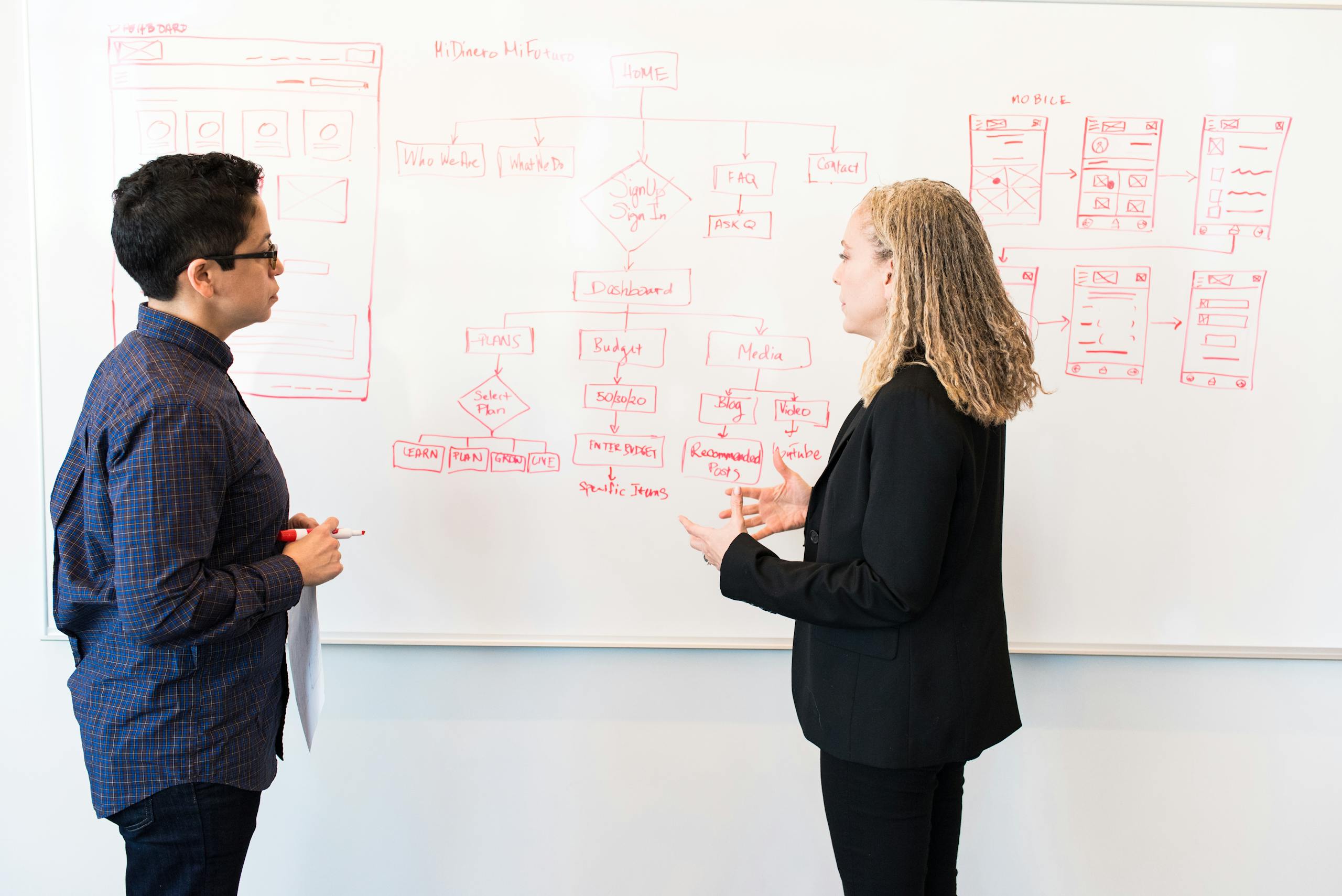
Picture the standard agency brainstorm. Someone books a conference room, writes a brief on the whiteboard, and says, “Okay, let’s go. Shout out whatever comes to mind.” Within about thirty seconds, three people are talking over each other, the energy spikes, and the room fills with noise.
What’s your personality type?
Take our free 40-question assessment and get a detailed personality profile with dimension breakdowns, context analysis, and personalised insights.
Discover Your Type8-12 minutes · 40 questions · Free
I ran that format for years. And I watched the same pattern repeat itself across every agency I led. The extroverts lit up. The introverts went quiet. Then, two hours later, one of my quieter strategists would send me an email with three ideas that were better than anything we’d generated in the room.
That gap bothered me. Not because the extroverts were doing something wrong, but because I knew we were leaving real creative value on the table. The problem wasn’t the people. It was the format.
Traditional brainstorming assumes that ideas emerge through immediate verbal expression. For people who are wired to think out loud, that assumption holds. But for those who process internally, the pressure to speak before they’ve fully formed a thought creates friction. They either force out half-baked ideas just to participate, or they stay quiet and disengage entirely.
Understanding what it means to be extroverted, and how that differs from introversion, matters here. If you’ve ever wondered exactly what does extroverted mean at a neurological and behavioral level, the answer shapes everything about how you design collaborative sessions. Extroverts genuinely gain energy from the stimulus of group interaction. That’s not performance. That’s how their brains work. The issue arises when we treat that one cognitive style as the default for everyone.
What Does Introvert Depth Actually Bring to a Brainstorm?
My most valuable creative partner during my agency years was a senior copywriter I’ll call Marcus. He almost never spoke in brainstorms. In early sessions, I honestly wondered if he was checked out. Then I started noticing that his written ideas, submitted after the meeting, were consistently the sharpest in the room. They were more developed, more specific, and more strategically grounded than what we’d generated collectively in ninety minutes of group energy.
What Marcus was doing wasn’t disengagement. He was processing. His mind was running through implications, stress-testing angles, and filtering noise. He just needed space and time to do it, which the standard brainstorm format never gave him.
Introverts often bring a particular quality to creative work: depth. Where extroverts might generate ten ideas quickly, an introvert might surface two or three that have already been examined from multiple angles. Both outputs are valuable. A good brainstorm captures both.
There’s also a meaningful difference between being fairly introverted and being deeply, consistently introverted in how much cognitive energy group settings consume. If you’re curious where you or someone on your team falls on that spectrum, the piece on fairly introverted vs extremely introverted offers a useful framework. Someone who is moderately introverted might warm up after twenty minutes in a group session. Someone who is strongly introverted may never fully relax in that environment, no matter how well the session is run.

How Do You Actually Structure a Brainstorm That Works for Both Types?
After years of running sessions that favored the loudest voices, I started experimenting with structure. What I found was that small, deliberate changes to the format made an enormous difference, without diminishing the energy that extroverts bring to the process.
Send the Brief Early
This single change had more impact than anything else I tried. Sending the creative brief or problem statement to participants twenty-four to forty-eight hours before the session gives introverts time to think before the pressure of the group setting kicks in. They arrive with ideas already forming. Extroverts, who often do their best thinking in the moment, aren’t disadvantaged by this. They can review the brief or ignore it and still perform well in the room.
When I started doing this at my agency, the quality of our opening round of ideas improved noticeably. We weren’t spending the first thirty minutes warming up. We were starting from a higher baseline.
Build in Silent Writing Time
Open the session with five to ten minutes of individual silent ideation. Everyone writes down their ideas independently before any group discussion begins. This technique, sometimes called “brainwriting,” levels the playing field immediately. It prevents the anchoring effect where the first idea spoken shapes everything that follows, and it gives introverts a protected window to contribute without having to compete for airtime.
Some of my best Fortune 500 campaign concepts came out of sessions where we spent the first ten minutes in complete silence. It felt awkward at first, especially with clients in the room. But the output was consistently richer.
Use Rounds, Not Free-for-All
Structure the verbal sharing portion in rounds rather than open discussion. Each person shares one idea at a time, going around the table in sequence. No interrupting, no building on ideas mid-round. This format ensures every voice gets heard and prevents the session from being dominated by the two or three most verbally confident participants.
Extroverts sometimes find this format slower than they’d like. That’s worth acknowledging directly. You can frame it as a discipline that strengthens the group’s output, rather than a constraint on individual expression. In my experience, once extroverts see the quality of ideas that emerge from quieter team members under this structure, they become advocates for it.
Create Multiple Input Channels
Not everyone contributes best through speaking. Sticky notes, shared digital documents, anonymous idea boards, and follow-up emails all serve as legitimate input channels. When I ran sessions with large cross-functional teams, I’d always have a shared document open where people could type ideas in real time alongside the verbal discussion. The introverts gravitated toward the document. The extroverts gravitated toward the room. Both streams fed the same output.
A piece in Psychology Today on the introvert preference for deeper conversations captures something relevant here: introverts aren’t reluctant to engage, they’re reluctant to engage superficially. Give them a channel that rewards depth and they’ll fill it.
What Role Does Personality Spectrum Play in Group Dynamics?
Not everyone in your brainstorm will fall neatly into “introvert” or “extrovert.” Many people sit somewhere in the middle, and that middle ground is more nuanced than most personality conversations acknowledge.
There’s an important distinction between someone who is an ambivert, genuinely balanced between introversion and extroversion, and someone who is an omnivert, whose orientation shifts situationally. Understanding the difference between omnivert vs ambivert matters when you’re reading a room. An ambivert will likely feel comfortable in most brainstorm formats with minor adjustments. An omnivert might be energized in one session and completely drained in the next, depending on context, stress levels, and the specific people involved.
I’ve managed both on my teams, and the difference shows up in how they respond to structure. Ambiverts tend to be flexible and adapt well to whatever format you use. Omniverts need you to read them in the moment and adjust accordingly. If you’re not sure which category someone falls into, you can point them toward our introvert extrovert ambivert omnivert test as a starting point for self-awareness.
There’s also a related concept worth knowing about: the otrovert vs ambivert distinction. An otrovert is someone who presents as extroverted in social settings but recharges like an introvert, needing solitude after sustained social engagement. In a brainstorm, they might look like your most energized participant. By the afternoon, they’re spent. Designing sessions with natural breaks and follow-up windows respects that pattern.
How Do You Facilitate Without Favoring One Type?
Facilitation is where most brainstorms succeed or fail. A facilitator who naturally leans extroverted will often unconsciously reward verbal energy, calling on people who are already talking, building momentum through volume and speed. A facilitator who leans introverted might create too much structure, slowing the session down and frustrating the people who generate ideas through spontaneous exchange.
As an INTJ, I had to work hard on this. My instinct was always to over-structure. I wanted clear phases, timed segments, defined outputs. That worked well for the analytical members of my team. It frustrated the creatives who needed more organic space to riff. Over time, I learned to hold structure loosely: have the framework ready, but be willing to let a genuinely productive tangent run for a few minutes before pulling the group back.
Some practical facilitation moves that help across personality types:
- Use explicit “building” rounds where participants can expand on someone else’s idea, separate from the initial generation phase. This gives extroverts the collaborative energy they thrive on without derailing the introvert’s initial contribution.
- Check in with quiet participants directly but gently. “Marcus, I’d love to hear what you’re thinking” is an invitation, not a demand. Pair it with genuine wait time. Don’t fill the silence immediately.
- Explicitly validate written contributions as equal to verbal ones. If someone emails ideas after the session, bring them back to the group in the next meeting. That signal matters.
- Close sessions with a synthesis phase where one person summarizes the ideas generated. This gives introverts a moment to see the full picture and often prompts them to add connections the group missed.
Conflict in brainstorms, when someone dismisses an idea too quickly or dominates the room, can shut down contribution from quieter team members for the rest of the session. The approach outlined in this Psychology Today piece on introvert-extrovert conflict resolution offers a useful framework for addressing those moments without escalating tension.
What About People Who Don’t Know Where They Fall on the Spectrum?
One challenge in designing inclusive brainstorms is that many people haven’t examined their own cognitive style closely enough to know what they need. They’ve just been told they’re shy, or that they’re a people person, without understanding the underlying energy patterns that drive those observations.
Early in my career, I had a creative director who insisted she was an extrovert because she was warm, funny, and socially comfortable. She was also consistently exhausted after client presentations and needed a full day alone to recover from major pitches. She wasn’t an extrovert. She was a highly skilled introvert who had learned to perform extroversion well, which is a very different thing.
Helping your team members develop self-awareness about their own style makes them better collaborators and better advocates for what they need in group settings. Our introverted extrovert quiz is a good starting point for people who’ve always felt like they don’t fit neatly into either category.
The broader point is that personality type isn’t binary. Most people exist on a spectrum, and where they fall on that spectrum affects not just whether they prefer group work, but how much preparation they need, how long they can sustain high-engagement sessions, and what kinds of input channels bring out their best thinking.

Does Remote Brainstorming Change the Equation?
Remote and hybrid work changed brainstorming in ways that haven’t been fully acknowledged. My initial assumption was that virtual sessions would disadvantage extroverts, who lose the physical energy of a shared room. What I found was more complicated.
Many introverts on my teams reported feeling more comfortable contributing in virtual sessions. The chat function gave them a written channel. The reduced physical exposure lowered the social stakes. The ability to mute themselves and think for a moment before speaking removed some of the pressure of real-time performance.
At the same time, the loss of physical cues made facilitation harder. Reading the room, which I’d always relied on to know when someone had something to say, became much more difficult on a screen. I had to be more explicit about creating space, more deliberate about calling on people, and more structured about rotating through participants.
Virtual brainstorming tools like shared digital whiteboards and collaborative documents helped considerably. They created a persistent visual record that everyone could contribute to at their own pace, which suited both the introverts who preferred asynchronous input and the extroverts who wanted to see the group’s thinking evolve in real time.
One finding worth noting: a paper published in Frontiers in Psychology explored how personality traits interact with collaborative work contexts, and the patterns it identified around individual differences in group performance align with what I observed in practice over two decades. People perform differently depending on the match between their cognitive style and the structure of the task they’re given.
What Are the Practical Mistakes That Undermine Inclusive Brainstorms?
After running hundreds of these sessions across different agency environments and client teams, a handful of mistakes come up repeatedly.
Calling on people without warning is one of the most common. Extroverts generally handle this well. Introverts often freeze, not because they lack ideas, but because they haven’t had time to prepare a verbal response. A simple fix is to tell the group at the start of the session that you’ll be going around the room, giving everyone a moment to gather their thoughts before their turn comes.
Running sessions too long without breaks is another. Sustained group engagement drains introverts faster than extroverts. A ninety-minute session without a break will lose your introverted participants somewhere around the hour mark. Build in a ten-minute break at the midpoint. Let people step away, recharge, and return with fresh capacity.
Evaluating ideas in real time is a third mistake. When someone shares an idea and it’s immediately questioned or critiqued, it creates a chilling effect on subsequent contributions. The introvert who was considering sharing something half-formed will decide it’s not worth the risk. Separate the generation phase from the evaluation phase completely. No criticism during ideation, full stop.
Treating the in-room session as the only valid contribution window is perhaps the most consequential error. Some of your team’s best thinking will happen after the session ends, when the pressure lifts and the introvert’s mind continues working through the problem in solitude. Build a structured follow-up window, twenty-four to forty-eight hours where people can submit additional ideas in writing, and treat those contributions with the same weight as what was generated in the room.
The negotiation literature at Harvard’s Program on Negotiation makes a related point about introverts in high-stakes group settings: the disadvantage isn’t cognitive, it’s structural. Change the structure and the disadvantage largely disappears.

How Do You Sustain an Inclusive Brainstorm Culture Over Time?
Changing one session is relatively straightforward. Changing the culture around how your team generates ideas together takes longer and requires consistency.
The most effective thing I did at my agency was make the process explicit. I told my team directly: we’re going to run brainstorms differently because we’ve been leaving good ideas on the table. I named the introvert-extrovert dynamic without making it a source of shame for either group. I explained the specific changes we were making and why. That transparency built buy-in from both sides.
Over time, team members started advocating for each other. The extroverts learned to pause and invite quieter colleagues to share. The introverts started arriving to sessions more prepared and more willing to contribute verbally, because they’d learned the environment was safe for incomplete ideas. The quality of our creative output improved measurably, and so did the team’s cohesion.
There’s a broader principle at work here that applies beyond brainstorming. When you build systems that respect different cognitive styles, you don’t just improve the output of a single session. You signal to your team that their natural way of thinking has value. For introverts who’ve spent years being implicitly told that the extroverted approach is the correct one, that signal matters more than most leaders realize.
Some useful context on how introverts approach professional environments more broadly can be found in this Rasmussen College piece on marketing for introverts, which touches on how introverts can leverage their natural strengths in collaborative and client-facing work rather than trying to suppress them.
The science of how personality type shapes workplace behavior is also worth exploring. Two papers from PubMed Central, one examining personality and cognitive processing styles and another on social behavior and individual differences, offer grounding for why these structural accommodations aren’t just nice-to-haves. They reflect real differences in how brains process and generate information under social conditions.
If you want to go further in understanding the full range of personality orientations and how they shape the way people show up in collaborative settings, our complete Introversion vs Other Traits hub is where I’d point you next.
About the Author
Keith Lacy is an introvert who’s learned to embrace his true self later in life. After 20 years in advertising and marketing leadership, including running agencies and managing Fortune 500 accounts, Keith now channels his experience into helping fellow introverts understand their strengths and build fulfilling careers. As an INTJ, he brings analytical depth and authentic perspective to every article, drawing from both professional expertise and personal growth.
Frequently Asked Questions
Why do introverts struggle in traditional brainstorms?
Traditional brainstorms reward immediate verbal expression, which suits people who think out loud. Introverts tend to process ideas internally before speaking, so the pressure to contribute in real time creates friction. They often have strong ideas that simply need more development time before they’re ready to share verbally. The format, not the person, is what creates the struggle.
What is the single most effective change you can make to a brainstorm to help introverts?
Sending the brief or problem statement to participants at least twenty-four hours before the session is the highest-impact change. It gives introverts time to think before the social pressure of the group setting begins. They arrive with ideas already forming, which means the session starts from a stronger baseline for everyone, not just the introverts.
Does making brainstorms introvert-friendly disadvantage extroverts?
No. Extroverts still bring their natural verbal energy and real-time thinking to the session. Structured rounds, silent writing phases, and follow-up windows don’t eliminate spontaneous discussion. They add channels alongside it. Extroverts often find that the ideas generated by quieter team members under these structures give them more to build on, which actually enhances the collaborative dynamic they thrive in.
How does remote brainstorming affect introverts versus extroverts?
Remote sessions often benefit introverts more than expected. Chat functions, shared documents, and the reduced physical exposure of a screen lower the social stakes and create written input channels that suit introverted processing styles. Extroverts lose some of the physical energy of a shared room, which can reduce their enthusiasm for the format. Hybrid approaches that combine real-time verbal discussion with asynchronous written contribution tend to serve both groups well.
How do you handle team members who don’t know whether they’re introverted or extroverted?
Many people genuinely don’t know where they fall on the spectrum, especially if they’ve developed strong social skills that mask their natural orientation. Encouraging self-reflection through tools like personality assessments is a good starting point. More practically, pay attention to how people behave after high-engagement sessions. Those who seem energized have likely been drawing on extroverted processing. Those who seem drained, regardless of how well they performed, are probably more introverted than they realize. Design your sessions to accommodate both patterns and you’ll serve everyone regardless of where they land.