

You cannot stop being an empath any more than you can stop being left-handed. The capacity to absorb other people’s emotions, to feel the weight of a room before anyone speaks, to carry home feelings that were never yours to begin with, that is not a habit you developed. It is part of how your nervous system processes the world. What you can do is stop letting it run unchecked, and start building the kind of boundaries that protect your sensitivity without destroying it.
Many people searching for how to stop being an empath are not actually trying to become cold or disconnected. They are exhausted. They have absorbed one too many crises that belonged to someone else. They want relief, not erasure. And that distinction matters enormously when you start figuring out what to actually do about it.

Sensitivity is one of the most layered and often misunderstood traits a person can carry. Our HSP and Highly Sensitive Person hub covers the full spectrum of what it means to feel deeply in a world that tends to reward those who feel less, and this article adds a specific dimension: what to do when your empathy stops feeling like a gift and starts feeling like a liability.
What Does It Actually Mean to Be an Empath?
The word “empath” gets used loosely, and that looseness creates confusion. In popular culture, it often describes someone who is simply kind or perceptive. In more clinical conversations, it points to something more specific: a person whose nervous system responds to other people’s emotional states as though they were their own.
What’s your personality type?
Take our free 40-question assessment and get a detailed personality profile with dimension breakdowns, context analysis, and personalised insights.
Discover Your Type8-12 minutes · 40 questions · Free
A 2024 study published in Frontiers in Psychology examined how individual differences in emotional sensitivity affect stress processing and interpersonal functioning. People with higher emotional sensitivity showed measurably different physiological responses to the emotional states of others, not just different interpretations, but different body-level reactions. That distinction is worth sitting with. Being an empath is not just a matter of caring more. It is a matter of your body registering other people’s pain as signal.
There is also an important difference between empaths and highly sensitive people, though the two often overlap. Psychology Today notes that highly sensitive people process sensory and emotional information more deeply due to a biological trait called sensory processing sensitivity, while empaths describe an additional layer of absorbing and internalizing others’ emotional states. You can be one without the other, though many people identify with both. If you are curious about where you fall, the comparison I wrote on introvert vs HSP traits might help you sort through the distinctions.
What I know from my own experience is that neither label is the problem. The problem is what happens when you have no system for managing what comes in.
Why “Just Stop Feeling So Much” Is the Wrong Approach
Early in my agency career, I thought the solution to emotional overwhelm was suppression. I was managing a team of twenty people, running client relationships with brands that had serious money on the line, and absorbing the stress of everyone in the building. My instinct was to build a wall. Stop noticing. Stop caring so much about the undercurrent in every room.
What actually happened was that I became less effective, not more. I missed things. I stopped reading the early signals that told me a client relationship was fraying or that someone on my team was about to burn out. The sensitivity I was trying to mute was also the thing that made me good at my job. Suppressing it created a blunt instrument where I had once had something precise.
A 2019 study in PubMed on emotional regulation strategies found that suppression, as a coping mechanism, tends to increase physiological stress markers even as it reduces visible emotional expression. You do not actually feel less. You just stop showing it while your body keeps the score. That is not a sustainable strategy for someone whose nervous system is already running hot.
Suppression is also, frankly, a kind of self-abandonment. And it is worth noting, as this Psychology Today piece points out, that high sensitivity is not a trauma response or a disorder to be corrected. It is a neurological trait. Trying to eliminate it is like trying to eliminate your height.
What Emotional Boundaries Actually Look Like for Empaths
The phrase “set boundaries” gets repeated so often it has lost most of its meaning. For empaths specifically, boundaries are not primarily about what you say to other people. They are about what you do internally with what comes in.
There is a practice I stumbled into during a particularly brutal stretch of agency life, a period when we were managing three simultaneous account crises and I was absorbing the anxiety of clients, staff, and partners all at once. I started asking myself a single question at the end of each day: whose feeling is this? Not in a mystical sense, but as a genuine audit. When I felt dread about a Monday morning meeting, was that my dread or had I picked it up from someone else’s offhand comment on Friday? When I felt guilty about a decision, was that my guilt about something I actually did wrong, or was I carrying someone else’s unprocessed disappointment?
That question alone changed my relationship with my own emotional life. Not because it made feelings disappear, but because it helped me stop treating borrowed emotions as though they were mine to solve.
Practical boundary-building for empaths tends to involve a few consistent elements:
Physical space matters more than most people acknowledge. Empaths often need literal distance to reset. Leaving a room, taking a walk, choosing a seat that is not in the center of a group, these are not antisocial behaviors. They are regulation strategies. Yale’s environmental psychology research on nature immersion and health consistently shows that even brief exposure to natural environments reduces cortisol and restores attentional capacity. For someone whose system is chronically overloaded, that kind of reset is not optional. It is maintenance.
Deliberate transitions between emotional contexts also help. I learned to build small rituals between work and home, a specific playlist in the car, ten minutes of silence before walking through the door, a change of clothes that signaled a change of mode. These felt almost embarrassingly small when I started doing them. Their cumulative effect was not small at all.
Selective disclosure is another piece. Empaths often attract people who need to process out loud, and there is nothing wrong with being that person for someone you care about. What becomes unsustainable is being that person for everyone, all the time, without reciprocity. Choosing carefully who you open yourself to, and being honest with yourself about which relationships consistently drain without replenishing, is not selfishness. It is survival.
How Empathy Shapes Your Closest Relationships
Empathy does not distribute itself evenly across all relationships. It concentrates in the ones closest to you, which means the people you love most are also the ones most likely to inadvertently overwhelm you.
In romantic partnerships, this creates a specific dynamic. An empath in a relationship often absorbs their partner’s stress, anxiety, or low moods and experiences them as their own, sometimes before their partner has even identified what they are feeling. That can be a profound form of attunement. It can also make it nearly impossible to know where you end and your partner begins. The piece I wrote on HSP and intimacy gets into this territory in more depth, because physical and emotional closeness carry particular weight for people who feel things this intensely.
The introvert-extrovert pairing adds another layer. When an empathic introvert is partnered with someone who processes externally and at high volume, the introvert often ends up holding the emotional weight of both people. That is not inherently a problem, but it requires conscious negotiation. The article on HSP dynamics in introvert-extrovert relationships addresses some of the specific friction points that come up in these pairings and what actually helps.
What I have found in my own life is that the relationships that work best for someone wired like me are the ones where my sensitivity is named and respected, not exploited. That requires a level of self-knowledge and honest communication that takes time to develop. It also requires the other person to understand what it actually means to live with someone who feels this way, which is its own kind of education. The guide on living with a highly sensitive person is one I often point people toward when they want to understand the experience from the outside.

When You Are Raising a Child Who Feels Everything
Parenting as an empath is its own particular challenge, and it intensifies exponentially when your child shares the same trait. You are not just managing your own emotional load. You are also absorbing your child’s, while simultaneously trying to model healthy emotional regulation for them.
One of the most important things I have come to believe about sensitive children is that they do not need to be toughened up. They need to be equipped. There is a meaningful difference. Toughening up implies that sensitivity is the problem. Equipping acknowledges that the world can be genuinely hard for someone wired this way, and that the right response is tools, not suppression.
The article on HSP parenting covers this in detail, but the short version is this: a sensitive parent raising a sensitive child has a unique advantage. You understand what your child is experiencing from the inside. The risk is that your own unprocessed emotional patterns get transmitted before you have had a chance to examine them. That is the work. Not eliminating the sensitivity, but making sure what you pass on is the managed version, not the overwhelmed one.
Does Your Career Make Your Empathy Harder to Carry?
Some work environments are genuinely incompatible with how empaths function. Others are surprisingly well-suited to it. The difference often comes down to two factors: the volume of interpersonal demand and the degree of autonomy you have over your environment.
Running an advertising agency meant I was in a high-demand interpersonal environment almost constantly. Clients needed reassurance. Staff needed direction. Partners needed alignment. Every room I walked into had an emotional weather system, and I was picking up all of it. There were periods where that felt like an asset, because I could read a client’s unspoken hesitation before it became a problem, or sense when a creative team was demoralized before the work started to suffer. There were other periods where it simply ground me down.
What made the difference was structure. When I had clear boundaries around my time and clear transitions between contexts, I could use my sensitivity productively. When those structures collapsed, usually during crises, I absorbed everything indiscriminately and became less functional, not more.
For empaths thinking seriously about career fit, the question is not just “what am I good at” but “what kind of environment allows me to use what I am good at without destroying me in the process.” The resource on career paths for highly sensitive people approaches this from a practical angle, looking at which roles tend to offer the combination of meaningful work and sustainable conditions that sensitive people need.
The Real Work: Shifting From Absorption to Witnessing
There is a concept in contemplative psychology that I have found more practically useful than almost anything else I have encountered on this subject: the difference between absorption and witnessing.
Absorption is what happens when you take in someone else’s emotional state and it becomes yours. You feel their anxiety as anxiety. Their grief as grief. Their frustration as something you now need to resolve. Witnessing is different. You perceive the emotional state fully, you understand it, you can even feel moved by it, but you remain distinct from it. You are present with the feeling without being consumed by it.
That shift does not happen automatically. It is a skill, and like most skills, it requires deliberate practice over time. Some people develop it through therapy. Some through meditation or mindfulness practices. Some through the slow accumulation of experience and self-reflection. What matters is that it is learnable. You do not have to choose between feeling everything and feeling nothing.
In my own life, the shift came through a combination of things. Therapy helped me understand the difference between empathy and enmeshment. Meditation gave me a framework for observing my own emotional states without immediately acting on them. And honestly, some of it came simply from getting older and accumulating enough evidence that absorbing other people’s crises never actually solved them.
What I found on the other side of that work was not a diminished version of myself. It was a more functional one. The sensitivity remained. The capacity to read a room, to feel the emotional undercurrent of a conversation, to understand what someone was not saying, all of that stayed intact. What changed was the relationship I had with it. It became something I could use rather than something that used me.
Practical Strategies That Actually Hold Up Over Time
Most advice for empaths focuses on protection, shielding yourself from input, limiting exposure, creating distance. That is useful up to a point. What tends to be underemphasized is recovery, the active process of discharging what you have taken in and returning to your own baseline.
Recovery looks different for different people, but some patterns show up consistently among those who manage high sensitivity well over the long term. Solitude is not just pleasant for empaths. It is genuinely restorative in a physiological sense. Time alone allows the nervous system to stop processing incoming emotional data and begin integrating what has already come in. Even twenty minutes of genuine solitude, no phone, no background noise, no social obligation, can meaningfully shift your state.
Creative output also functions as a release valve for many empaths. Writing, making things, playing music, cooking, any activity that channels absorbed emotional energy into something external can help complete the processing loop that empathic absorption starts. This is not metaphor. It is consistent with what we understand about how the nervous system processes stress and emotion.
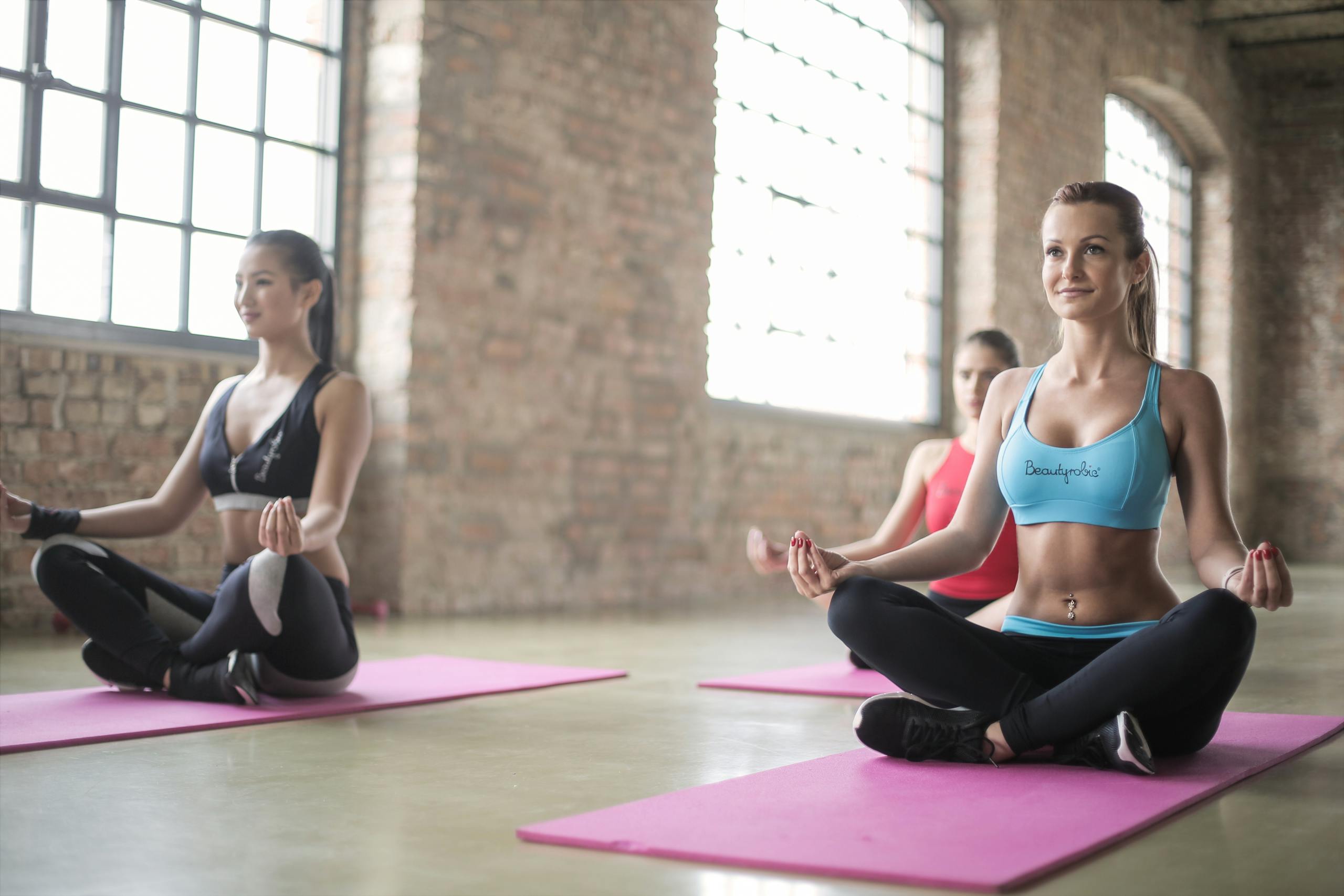
Body-based practices matter too. Empaths often experience emotional overwhelm somatically, as tension, fatigue, or physical discomfort. Movement, whether that is walking, yoga, swimming, or anything else that reconnects you with your physical body, tends to interrupt the loop of emotional rumination more effectively than thinking your way through it.
And perhaps most importantly: being honest with yourself about what is actually too much. Not what should be too much, based on what other people seem to handle easily, but what is actually, genuinely, too much for you. That kind of self-honesty requires setting aside the comparison and the shame that often accompany it. It is also the foundation of everything else.

Reframing the Question Entirely
Somewhere in the middle of writing this, I want to gently push back on the premise of the question itself. Not because it is the wrong thing to wonder about, but because what most people mean when they ask how to stop being an empath is really: how do I stop suffering from this?
Those are different questions with different answers. The first implies that the sensitivity itself is the problem. The second locates the problem more accurately: in the absence of tools, structure, and self-understanding that would allow the sensitivity to function as an asset rather than a wound.
I spent a significant portion of my adult life treating my own depth of feeling as a professional liability. Something to manage, minimize, and hide. The INTJ in me wanted to operate on pure analysis, and the empathic part of me kept complicating that. What I eventually understood was that the two were not in conflict. The emotional attunement was feeding the analysis. The capacity to feel what was happening in a room was giving me information that pure logic could not access.
Sensitivity is not the enemy. Unmanaged sensitivity is exhausting. Managed sensitivity is one of the most powerful things a person can bring to their work, their relationships, and their own life. The goal is not less of it. The goal is more agency over it.
That shift in framing changed everything for me. Not overnight, and not without ongoing effort. But it changed the direction of travel. Instead of trying to become someone who felt less, I started building the capacity to feel fully without being swept away by it. That is a goal worth working toward. And it is entirely achievable.
There is much more to explore on this topic across the full HSP and Highly Sensitive Person resource hub, including how sensitivity intersects with relationships, parenting, career choices, and daily life as an introvert.
About the Author
Keith Lacy is an introvert who’s learned to embrace his true self later in life. After 20 years in advertising and marketing leadership, including running agencies and managing Fortune 500 accounts, Keith now channels his experience into helping fellow introverts understand their strengths and build fulfilling careers. As an INTJ, he brings analytical depth and authentic perspective to every article, drawing from both professional expertise and personal growth.
Frequently Asked Questions
Can you actually stop being an empath?
No, and that is not the right goal. Being an empath reflects how your nervous system processes emotional information, and that is not something you can simply switch off. What you can do is develop skills that help you manage the input more effectively, so that your sensitivity becomes something you direct rather than something that directs you. The aim is agency, not elimination.
What is the difference between being an empath and being a highly sensitive person?
A highly sensitive person (HSP) has a biologically based trait called sensory processing sensitivity, which means they process both sensory and emotional information more deeply than average. Empaths describe a more specific experience of absorbing and internalizing other people’s emotional states as though they were their own. Many people identify with both, but they are distinct traits. You can be highly sensitive without being an empath, and some people identify as empaths without meeting the full criteria for high sensitivity.
Why do empaths feel so drained after social interactions?
Empaths absorb emotional data from the people around them, often involuntarily. Social interactions mean continuous processing of other people’s emotional states, moods, and undercurrents, on top of managing their own. That kind of sustained processing is genuinely taxing on the nervous system. The fatigue is not imaginary or excessive. It is the predictable result of running a more intensive emotional processing operation than most people are aware of.
How do you set boundaries as an empath without becoming cold or distant?
Empathic boundaries are primarily internal rather than interpersonal. The most useful practice is learning to distinguish between your own emotional states and those you have absorbed from others. From there, building deliberate recovery time into your day, choosing your environments with more intention, and being selective about which relationships you open yourself to fully, all of these create protection without requiring you to shut down emotionally. The goal is presence with discernment, not withdrawal.
Is being an empath a strength or a weakness?
It is neither inherently, and the answer depends almost entirely on whether you have the tools to manage it. Unmanaged empathy can lead to chronic exhaustion, poor boundaries, and emotional overwhelm. Managed empathy is a significant advantage in leadership, caregiving, creative work, and any context that requires genuine attunement to other people. The trait itself is neutral. What you do with it, and how well you understand it, determines whether it works for you or against you.