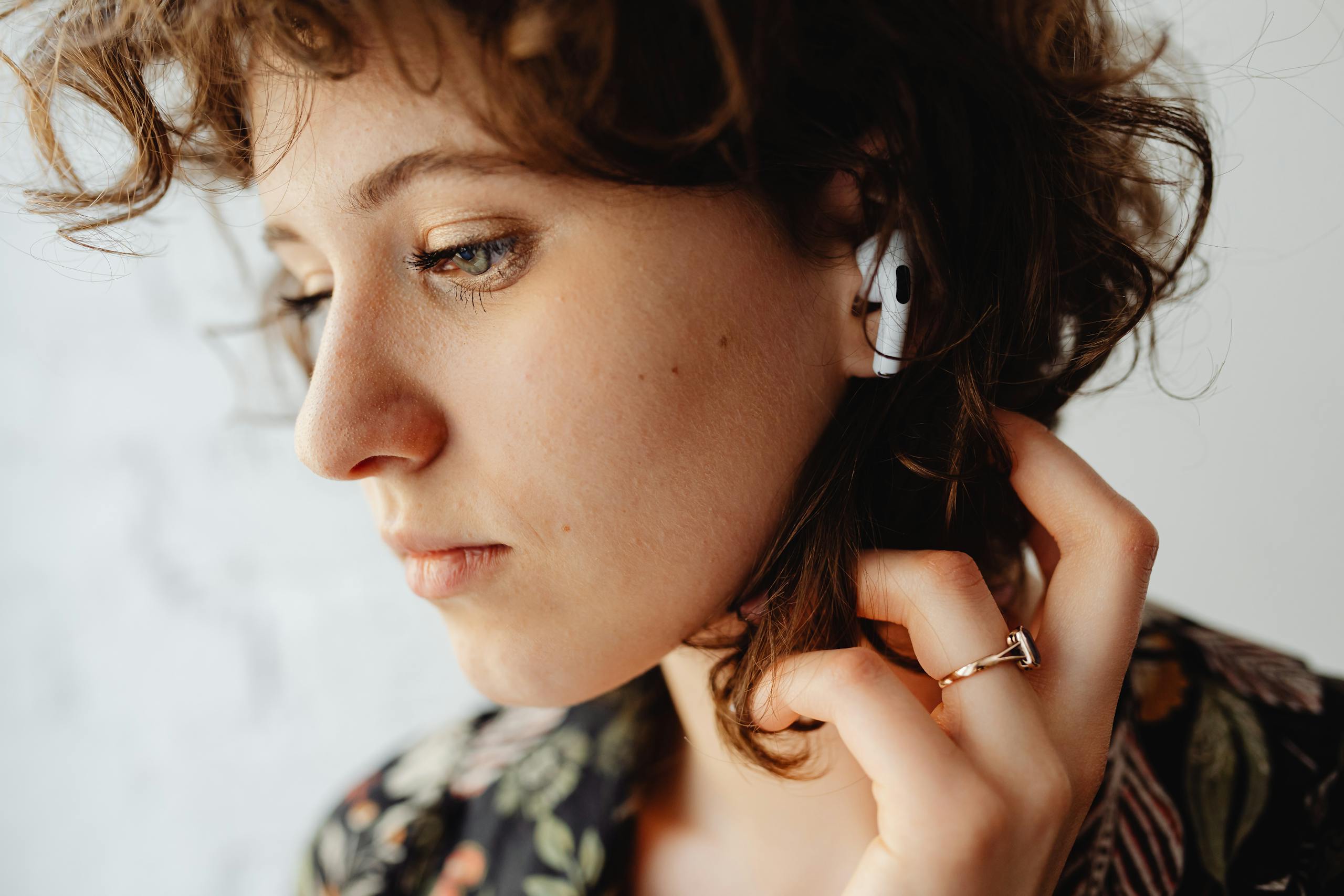

Sensitive, intuitive artists process emotion at a depth most people never access. For highly sensitive people, that depth isn’t a liability, it’s the raw material of creative work that resonates. HSP artists don’t just feel more, they translate those feelings into layered, authentic art that connects with audiences in ways that technically polished but emotionally shallow work simply cannot.
My mind has always worked this way. Before I understood what it meant to be an HSP or an INTJ, I just knew that I experienced things differently. A difficult client meeting would stay with me for days, not because I couldn’t let go, but because I was processing every layer of what had happened: the subtext, the emotional undercurrent, the things nobody said out loud. That same quality that made corporate life exhausting also made me good at my work. Advertising is fundamentally about emotional resonance. You’re trying to make someone feel something. And people who feel deeply tend to understand that territory better than most.
What I didn’t realize for a long time was that this depth of processing, this sensitivity that I’d spent years trying to manage and contain, is actually a creative advantage. For HSP artists, the nervous system that picks up on everything becomes the instrument through which meaningful work is made.
Our HSP and Highly Sensitive Person hub covers the full landscape of what it means to live with this trait, but the creative dimension adds its own particular texture. Sensitive, intuitive artists aren’t just using their emotions as inspiration. They’re engaging in a fundamentally different creative process, one rooted in deep observation, layered interpretation, and an almost involuntary attunement to meaning beneath the surface.

What Makes Sensitive, Intuitive Artists Different From Other Creatives?
Not every creative person is a highly sensitive person, and not every HSP makes art. But when these two things overlap, something distinctive happens. The creative process becomes inseparable from deep emotional processing, and the work that comes out of it carries a particular quality that audiences often describe as “real” or “moving” without being able to articulate exactly why.
What’s your personality type?
Take our free 40-question assessment and get a detailed personality profile with dimension breakdowns, context analysis, and personalised insights.
Discover Your Type8-12 minutes · 40 questions · Free
Elaine Aron, whose foundational research on high sensitivity has shaped how we understand this trait, describes HSPs as having a nervous system that processes sensory and emotional information more deeply than most people. According to the American Psychological Association, this heightened processing affects everything from how people respond to stimuli to how they form memories and integrate experience. For artists, that means the raw material of creative work, observation, feeling, and memory, arrives with more texture and complexity than it does for non-HSPs.
Sensitive, intuitive artists tend to work from the inside out. Where some creatives start with technique or concept, HSP artists often start with a feeling they’re trying to understand or communicate. The work becomes a form of sense-making, a way of processing experience that can’t be fully contained in thought alone. That’s why HSP art so often resonates at an emotional frequency that bypasses intellectual analysis and lands somewhere more immediate.
I saw this dynamic play out in my agency work in ways I didn’t fully understand at the time. The creative directors I worked with who produced the most emotionally compelling campaigns weren’t always the most technically brilliant. They were the ones who seemed to genuinely feel the problem they were solving. They’d sit with a brief for days, absorbing it, before producing anything. That incubation period, which looked like delay to some clients, was actually where the real work was happening.
How Does Deep Emotional Processing Actually Shape Creative Work?
Deep emotional processing isn’t just about feeling things intensely. It’s about the layered way that HSPs integrate experience over time. A single conversation, a piece of music, a moment of unexpected beauty, any of these can set off a chain of internal processing that unfolds across hours or days. For artists, this is the engine of creative work.
A 2018 study published through the National Institutes of Health found that highly sensitive individuals show greater activation in brain regions associated with awareness, empathy, and integration of sensory information. This isn’t just about emotional reactivity. It’s about a fundamentally different mode of processing that connects emotional experience to meaning-making in ways that directly translate to creative output.
For HSP artists, this plays out in several concrete ways. First, observation is more granular. Details that most people filter out, the slight tension in someone’s voice, the way light shifts in the late afternoon, the emotional atmosphere of a room, register clearly and stay accessible as creative material. Second, emotional memory is more vivid. HSPs tend to retain the emotional texture of experience, not just the facts, which means their creative work can draw on a richer archive of felt experience.
Third, and perhaps most importantly, sensitive, intuitive artists are often working with material that hasn’t been fully processed yet. The creative act becomes part of the processing itself. Making something, whether it’s a painting, a piece of writing, a musical composition, is how the experience gets understood. This is why HSP artists often describe their work as necessary rather than optional. It’s not just expression. It’s how they make sense of being alive.
Running advertising agencies, I learned something similar about my own process. I couldn’t do my best thinking in meetings. My best ideas came later, after I’d had time to absorb what I’d heard and let it settle. I used to apologize for this, framing it as a weakness. A client would want an immediate creative reaction, and I’d have to buy time. What I eventually understood was that the delay was the process. The thinking that happened in that quiet space after a meeting was where the real insight lived.

Are HSP Artists More Vulnerable to Creative Burnout?
Yes, and this is worth being honest about. The same sensitivity that fuels deep creative work also makes HSP artists more susceptible to overwhelm, emotional depletion, and the specific kind of exhaustion that comes from processing too much for too long without adequate recovery.
Creative environments can be particularly demanding for highly sensitive people. The pressure to produce, the exposure of sharing personal work publicly, the unpredictability of freelance or artistic careers, the noise and stimulation of collaborative spaces: all of these hit HSPs harder than they hit non-sensitive creatives. The Mayo Clinic notes that chronic overstimulation contributes significantly to stress-related health outcomes, and HSPs are by definition more prone to overstimulation.
What this means practically is that HSP artists need to be more intentional about their working conditions than most creatives. The romantic image of the artist who thrives on chaos and late nights and constant social stimulation is genuinely incompatible with how highly sensitive people function at their best. HSP artists tend to do their best work in quieter conditions, with more control over their environment and schedule, and with built-in recovery time after periods of intense creative output.
I’ve written before about how environment shapes performance for sensitive people, and the same principles that apply in professional settings apply in creative ones. If you’re an HSP artist who’s struggling to maintain a consistent creative practice, it’s worth examining your working conditions before concluding that something is wrong with your creative capacity. Often, the problem isn’t the sensitivity. It’s the environment that’s incompatible with it.
For HSPs managing the demands of professional creative work, the HSP Career Survival Guide covers practical strategies for protecting your energy while still doing meaningful work. Many of those strategies translate directly to the creative context, particularly around managing overstimulation and building sustainable rhythms.
Sleep is also a significant factor that often gets overlooked in conversations about creative sustainability. HSPs tend to be more affected by sleep disruption than the general population, and sleep quality directly affects both emotional regulation and creative capacity. If you’re an HSP artist who’s noticed that your creative output suffers during periods of poor sleep, that’s not coincidental. It’s a meaningful signal worth paying attention to. Some HSP artists have found that managing their sleep environment carefully, including sound management, makes a measurable difference in their creative energy. The white noise machine guide for sensitive sleepers is one practical resource that addresses this directly.
What Role Does Intuition Play in the HSP Creative Voice?
Sensitive, intuitive artists often describe their creative process as one that operates below the level of conscious decision-making. They don’t always know why a particular choice feels right. They just know that it does, and that the work suffers when they override that knowing in favor of something more rational or commercially safe.
This intuitive dimension of the HSP creative voice is worth examining carefully, because it’s often misunderstood, both by the artists themselves and by the people around them. In cultures that prize analytical justification and explicit reasoning, intuition can look like irrationality or indecision. For HSP artists, it’s actually the product of extensive unconscious processing. The intuitive “hit” that arrives without explanation is the surface expression of deep pattern recognition happening below conscious awareness.
Psychology Today has published extensively on the neuroscience of intuition, describing it as the brain’s ability to draw on accumulated experience and pattern recognition to generate rapid assessments that feel like gut feelings but are actually grounded in real information. For HSPs, who process experience more deeply and retain emotional texture more vividly, this intuitive capacity is particularly well-developed.
In practical terms, this means that HSP artists often have strong intuitions about what their work needs, what’s working and what isn’t, and what direction to take a piece, even before they can articulate why. Learning to trust that intuition, rather than second-guessing it in favor of more externally legible logic, is one of the central developmental challenges for sensitive, intuitive artists.
My own experience with this was shaped significantly by personality type work. Understanding that as an INTJ, I was wired for both deep intuition and internal processing helped me stop apologizing for a thinking style that didn’t match the more extroverted, verbally expressive norms of agency culture. If you’re curious about how personality type intersects with sensitivity and creative work, the MBTI development guide covers some of the deeper dimensions of how type shapes how we process and create.

How Can Sensitive Artists Build a Creative Practice That Works With Their Wiring?
Building a sustainable creative practice as an HSP requires a different framework than the one most creative advice assumes. Most productivity and creativity advice is written for people who aren’t highly sensitive, which means it often recommends things that are actively counterproductive for HSP artists: forcing output during periods of overstimulation, working in noisy or chaotic environments, prioritizing quantity over depth, and treating creative blocks as problems to be pushed through rather than signals to be read.
What actually works for sensitive, intuitive artists tends to look quite different.
Protecting the Conditions for Deep Work
HSP artists do their best work in conditions that support depth rather than speed. That usually means quieter environments, more control over interruptions, and longer unbroken blocks of time than most creative advice recommends. It also means being honest with yourself about what conditions actually support your creative process, rather than trying to adapt to conditions that don’t fit.
In my agency years, I eventually stopped trying to have my best ideas in the middle of busy open-plan offices and started protecting early mornings for the thinking that mattered most. It felt almost transgressive at first, like I was opting out of the collaborative energy that everyone else seemed to thrive on. What I discovered was that my creative contribution was actually better when I came to collaborative sessions having already done the deep work privately. The extroverted brainstorm was more productive when I’d already processed the problem internally.
Working With Creative Rhythms Rather Than Against Them
HSP artists tend to have pronounced creative rhythms, periods of high generativity followed by periods that feel fallow or depleted. Non-sensitive creatives experience these rhythms too, but for HSPs they tend to be more pronounced and more directly connected to emotional and sensory load.
A 2020 study cited by Harvard Business Review found that creative professionals who worked with their natural energy rhythms rather than against them reported significantly higher creative output and lower burnout rates. For HSP artists, this isn’t just about scheduling. It’s about recognizing that the quieter periods aren’t creative failures. They’re part of the process. The incubation that happens during apparent inactivity is often where the most important creative work occurs.
Managing the Emotional Weight of Creative Work
Because HSP artists draw so directly on emotional experience, their creative work can carry real emotional weight. Making something that matters, sharing it publicly, receiving criticism, all of these land differently for highly sensitive people than they do for non-HSPs. The emotional processing that makes the work rich also makes the vulnerability of sharing it more intense.
Developing practices that help you process the emotional dimensions of creative work, separate from the work itself, is genuinely important for HSP artists who want to sustain their practice over time. That might mean journaling, therapy, trusted creative relationships, or simply building in more recovery time after periods of intense creative exposure. What matters is that the emotional processing has somewhere to go beyond the work itself.
Finding Your Creative Environment
Environment matters more for HSP artists than for most creatives. The physical space where you work, the sounds around you, the light, the temperature, the degree of order or chaos in your surroundings: all of these affect your creative capacity more directly than they would for a non-sensitive person.
This isn’t fussiness or weakness. It’s an accurate recognition of how your nervous system works. Investing time and attention in creating a physical environment that supports deep work is one of the most practical things an HSP artist can do. For many sensitive creatives, this means a dedicated space that they control, with minimal unpredictable interruption and sensory conditions they’ve calibrated to their own needs.

Does Being an HSP Make You a Better Artist?
This is a question worth sitting with honestly, because the answer is more nuanced than either “yes, sensitivity is a superpower” or “no, it’s just a trait like any other.”
High sensitivity doesn’t automatically produce better art. Plenty of highly sensitive people struggle creatively, either because they haven’t found ways to work with their trait rather than against it, or because the emotional weight of creative exposure is more than they’ve developed the capacity to manage. Sensitivity is raw material, not a guarantee.
What it does provide is access to a particular kind of depth. Sensitive, intuitive artists who have learned to work with their wiring tend to produce work that carries emotional specificity and resonance that’s genuinely difficult to achieve through technique alone. The work feels true in a way that audiences respond to, often without being able to articulate exactly why.
The American Psychological Association has documented that emotional authenticity in creative work correlates strongly with audience engagement across multiple art forms. What HSP artists bring to that equation is an unusual degree of access to authentic emotional experience, combined with the processing depth to translate it into something communicable.
The artists I’ve found most compelling throughout my life, in music, in visual art, in writing, share a quality that I now recognize as the signature of deep emotional processing. There’s a specificity to the feeling in their work that suggests they weren’t generalizing from a concept of emotion but working from direct, felt experience. That quality is what HSP artists are uniquely positioned to bring.
How Do Personality Type and Sensitivity Intersect for Creative People?
High sensitivity isn’t a personality type. It’s a trait that cuts across personality types. HSPs exist across the full range of MBTI types, across introvert and extrovert, sensing and intuitive, thinking and feeling. That said, certain combinations seem to produce particularly distinctive creative profiles.
Introverted, intuitive types who are also highly sensitive tend to have particularly rich inner creative lives, precisely because they’re processing deeply on multiple levels simultaneously. The introversion provides the internal orientation that makes depth possible. The intuition provides the pattern-recognition and meaning-making that shapes creative work. The sensitivity provides the emotional texture and observational granularity that makes it resonate.
My own combination, INTJ with high sensitivity, produced a creative style that was analytical and emotionally precise at the same time. In advertising, that meant I was good at understanding what an audience would feel without necessarily being able to explain the logic of why. The intuition and the sensitivity were working together in ways I couldn’t fully articulate, but that produced results I could point to.
Understanding how personality type and sensitivity interact is worth the investment if you’re trying to understand your own creative process more clearly. Some personality configurations are genuinely rare in the population, which can make it harder to find models or frameworks that fit your experience. The science behind rare personality types offers some useful context for understanding why certain combinations feel so different from the norm, and why that difference shows up so clearly in creative work.
It’s also worth noting that the experience of being a creative person with an unusual personality configuration in professional settings carries its own particular challenges. Workplaces, including creative industries, tend to be structured around more common personality profiles. If you’ve ever felt like your creative instincts were consistently at odds with the environments you were working in, that’s worth examining through the lens of both sensitivity and type. The challenges rare personality types face at work addresses some of this territory directly.
What Do HSP Artists Need From the People Around Them?
One of the more practical questions for HSP artists is about the relational context of creative work. Making art doesn’t happen in isolation, even for the most introverted and independent creators. There are collaborators, clients, teachers, critics, audiences, and loved ones who all intersect with the creative process in ways that can either support or undermine it.
HSP artists tend to need a particular kind of relational environment to do their best work. That doesn’t mean they need constant validation or protection from all difficulty. What they do need is an absence of certain specific things: unpredictable emotional volatility in their working relationships, criticism delivered without care for how it lands, pressure to produce on timelines that don’t allow for the incubation their process requires, and environments where their sensitivity is treated as a problem to be managed rather than a capacity to be respected.
I spent years in client relationships where I was expected to produce creative thinking on demand, in real time, in rooms full of people with strong opinions and short attention spans. Some of those clients got genuinely good work from me. The ones who got my best work were the ones who gave me room to process before presenting, who trusted that the time I needed wasn’t wasted time, and who responded to my ideas with engagement rather than immediate judgment. The relational conditions made a real difference in the quality of what I could produce.
For HSP artists in collaborative or commercial creative work, learning to communicate about these needs clearly and without apology is a significant skill. It requires understanding your own process well enough to explain it to others, and enough confidence in the value of that process to advocate for the conditions it requires.
One thing worth noting: the experience of feeling like your natural way of engaging with the world doesn’t quite fit the standard categories is common among HSPs, and particularly among those whose personality type doesn’t map neatly onto familiar frameworks. If you’ve ever wondered whether you might be somewhere in the middle of the introvert-extrovert spectrum, the ambivert personality analysis is worth reading, particularly for what it reveals about how we often misread our own social and creative needs.

How Can HSP Artists Protect Their Creative Voice in Commercial Contexts?
Commercial creative work, whether in advertising, design, publishing, music, or any other field where art meets commerce, creates particular pressures for HSP artists. The feedback loops are faster, the stakes feel higher, and the distance between what you made and what the market wants can be genuinely painful to inhabit.
HSP artists in commercial contexts often face a specific dilemma: the sensitivity that makes their work distinctive is also what makes commercial feedback land so hard. A critique that a non-sensitive creative might process and move past in an afternoon can occupy an HSP artist for days. The emotional processing that’s an asset in the making becomes a liability in the receiving of criticism.
There are a few things that help with this. First, developing a clear internal sense of what your creative voice actually is, separate from what any particular client or audience thinks of it, provides a stable reference point when external feedback is destabilizing. Second, learning to distinguish between feedback that’s genuinely useful and feedback that’s just noise takes time, but it’s one of the most valuable skills an HSP artist can develop. Not all criticism deserves the same weight.
Third, and perhaps most importantly, finding or building creative communities where sensitivity is understood and respected makes a real difference. The experience of having your process witnessed by people who get it, who understand why you need more time, why certain feedback lands harder, why the emotional stakes of creative work feel so high, is genuinely sustaining in a way that’s hard to replicate through solo practice alone.
According to Psychology Today, social support from people who understand your experience is one of the most reliable buffers against the stress effects of overstimulation and emotional overload. For HSP artists, that means the quality of your creative community matters as much as the quality of your creative practice.
What Does the Research Actually Say About Sensitivity and Creativity?
The research on high sensitivity and creativity is still developing, but what exists is genuinely interesting. The sensory processing sensitivity trait, as Elaine Aron originally described it, involves deeper cognitive processing of stimuli, greater awareness of subtleties in the environment, and stronger emotional reactivity. All three of these dimensions have direct implications for creative capacity.
A study published through the National Institutes of Health found that highly sensitive individuals showed greater activation in brain regions associated with empathy, self-awareness, and the processing of complex social and emotional information. These are precisely the cognitive capacities that support the kind of emotionally resonant creative work that sensitive, intuitive artists tend to produce.
What the research also makes clear is that high sensitivity is a genuinely biological trait, not a psychological construct or a learned behavior pattern. It shows up consistently across cultures and has been identified in over 100 species beyond humans, suggesting it serves an evolutionary function related to careful observation and deep processing of environmental information. For artists, that evolutionary heritage translates into a nervous system that’s been optimized, in a sense, for exactly the kind of attentive, layered engagement with experience that creative work requires.
The World Health Organization recognizes the relationship between mental and emotional wellbeing and creative expression, noting that creative engagement supports psychological health in meaningful ways. For HSPs, this relationship runs particularly deep, because the creative process isn’t just expressive. It’s often genuinely regulatory, a way of processing emotional experience that would otherwise remain unresolved.
What all of this means for HSP artists is that the way they create isn’t just a personal style or preference. It’s grounded in how their nervous systems actually work. Understanding that foundation can help sensitive, intuitive artists stop apologizing for their process and start designing their creative lives around it with intention.
If you’re finding yourself somewhere in the middle of this territory, not quite sure whether the sensitivity you experience fits neatly into any single category, that’s worth exploring more broadly. The full range of what it means to be highly sensitive, across personality types, life contexts, and creative domains, is something we cover extensively in our HSP and Highly Sensitive Person hub.
About the Author
Keith Lacy is an introvert who’s learned to embrace his true self later in life. After 20 years in advertising and marketing leadership, including running agencies and managing Fortune 500 accounts, Keith now channels his experience into helping fellow introverts understand their strengths and build fulfilling careers. As an INTJ, he brings analytical depth and authentic perspective to every article, drawing from both professional expertise and personal growth.
Frequently Asked Questions
Are highly sensitive people naturally more creative?
High sensitivity doesn’t guarantee creativity, but it does provide access to creative raw material that non-sensitive people don’t have in the same way. HSPs process emotional and sensory experience more deeply, retain emotional texture in memory more vividly, and tend to notice details that others filter out. When these capacities are channeled into creative work, they produce art with a particular quality of emotional specificity and resonance. The sensitivity is the material. What the artist does with it determines the outcome.
How do sensitive, intuitive artists handle creative criticism?
Criticism lands harder for HSP artists than for non-sensitive creatives, and that’s worth acknowledging honestly rather than trying to overcome through sheer willpower. What helps most is developing a stable internal sense of your own creative voice that doesn’t depend on external validation, learning to distinguish between feedback that’s genuinely useful and feedback that’s just noise, and building recovery time into your creative schedule after periods of intense feedback or public exposure. The emotional processing that makes the work rich also makes the vulnerability of sharing it more intense. That’s not a flaw to fix. It’s a reality to work with.
What creative environments work best for HSP artists?
HSP artists generally do their best creative work in quieter, more controlled environments with minimal unpredictable interruption. Sensory conditions matter more for highly sensitive people than for the general population, including sound levels, lighting, temperature, and the degree of order in the physical space. Many HSP artists find that dedicated creative spaces they control, with built-in transitions between creative work and recovery, support significantly more consistent and higher-quality output than the chaotic, stimulating environments that popular creative culture sometimes romanticizes.
Can an HSP artist sustain a commercial creative career?
Yes, and many do, though it requires more intentional design of working conditions than it might for non-sensitive creatives. The most sustainable commercial creative careers for HSPs tend to involve significant control over environment and schedule, clear boundaries around the kind and pace of feedback they receive, and creative communities that understand and respect the depth their process requires. The sensitivity that can make commercial creative environments challenging is also what makes the work distinctive and valuable. The goal is building a professional context where that value is recognized and the conditions that support it are protected.
How does the HSP creative voice develop over time?
The HSP creative voice tends to deepen with time and experience, particularly as artists develop greater trust in their own intuition and less need for external validation. Early in a creative career, the sensitivity can feel more like a liability, making the exposure of sharing work and the weight of criticism harder to manage. Over time, with accumulated experience and a clearer sense of what the work is actually for, many HSP artists find that their sensitivity becomes a more reliable creative asset. The depth of processing that felt overwhelming at twenty becomes the source of the most distinctive work at forty. Patience with the process matters.