
Large gatherings can push highly sensitive people to their absolute edge, and that’s not weakness or social anxiety. It’s biology. HSPs process sensory information more deeply than most people, which means a crowded room isn’t just loud, it’s an overwhelming flood of competing stimuli that the nervous system struggles to sort and filter in real time.
Surviving HSP crowds means building a deliberate strategy before, during, and after any large event. With the right approach, you can show up, engage meaningfully, and leave with something left in the tank.
I spent two decades running advertising agencies where large gatherings were practically a professional requirement. Industry conferences, client award dinners, new business pitches in packed boardrooms, holiday parties for 200 people I barely knew. As an INTJ who also identifies as highly sensitive, I learned that surviving those events wasn’t about pushing through the discomfort. It was about understanding what was actually happening in my nervous system and working with it instead of against it.

Everything we cover here connects to a broader set of ideas about what it means to live and thrive as an introvert or highly sensitive person. Our General Introvert Life hub covers the full landscape of that experience, from daily energy management to handling social expectations. This article goes deeper into one of the most specific and challenging situations that sensitive people face: what to do when the crowd closes in.
What Actually Happens in Your Body at a Crowded Event?
Most people assume that HSPs simply don’t like crowds the way some people don’t like broccoli. A preference, easily overridden with enough willpower. That framing misses the physiological reality entirely.
What drains your social battery?
Not all social exhaustion is the same. Our free quiz identifies your specific drain pattern and gives you personalised recharging strategies.
Find Your Drain PatternUnder 2 minutes · 8 questions · Free
Research published by Frontiers in Psychology found that high sensitivity is associated with greater neural activation in areas of the brain linked to awareness, empathy, and emotional processing. This isn’t a metaphor. Sensitive people’s brains are literally doing more work in stimulating environments, processing more of what they see, hear, feel, and sense from others around them.
At a large gathering, that means your nervous system is absorbing the overlapping conversations, the competing smells, the shifting light, the body language of strangers, the emotional undercurrents of the room, all at once. Where someone with lower sensitivity might filter most of that out without effort, you’re taking it all in. A study in PubMed Central examining sensory processing sensitivity confirms that this depth of processing is a stable, trait-level characteristic, not something that changes with practice or positive thinking.
I remember a particular industry conference in Chicago, probably fifteen years into my agency career. It was a networking event, two hundred people in a hotel ballroom with a DJ playing at a volume that made normal conversation physically difficult. I stood in that room and felt something I couldn’t name at the time. It wasn’t shyness. It wasn’t social anxiety. It was more like my entire system was being asked to process too many data streams simultaneously, and the processing was starting to lag. I ended up in the hotel stairwell for twenty minutes, not because I was hiding, but because I genuinely needed to let my nervous system catch up.
The CDC’s research on noise exposure makes clear that loud environments create measurable physiological stress responses, even in people who don’t identify as sensitive. For HSPs, that baseline stress is amplified by the additional processing load that comes with high sensitivity. Knowing this matters, because it reframes the experience from personal failure to biological reality.
Why Do HSPs Often Feel Pressure to Just Push Through?
There’s a persistent cultural narrative that sensitivity is something to be overcome. Show up anyway. Push past the discomfort. Don’t let it hold you back. That narrative does real harm to people with this trait, because it frames a neurological difference as a character flaw requiring correction.
One of the most persistent introversion myths is that discomfort in social settings reflects some deficiency, something broken that needs fixing. Highly sensitive people absorb that message early and spend years trying to perform their way out of a trait that’s simply part of how they’re wired. The performance is exhausting, and it usually backfires.
In my agency days, I watched colleagues who seemed to thrive in chaotic, high-energy environments. They appeared energized by the noise, the competition, the constant stimulation. I spent a long time trying to replicate that response, thinking if I just attended enough events, worked enough rooms, stayed late enough at enough parties, I’d eventually feel what they seemed to feel. What actually happened was that I got better at masking the exhaustion, not at reducing it.
The pressure to push through is also reinforced by workplaces and social circles that treat participation in large gatherings as proof of commitment or likability. Missing the company holiday party reads as antisocial. Leaving a conference reception early reads as disengaged. These interpretations ignore the reality that sensitive people often contribute more meaningfully in smaller, quieter settings, and that protecting their capacity to do so is a legitimate priority. Understanding introvert discrimination in professional environments helps clarify why so many HSPs feel this pressure so acutely, and why pushing back on it matters.

How Do You Prepare for a Large Gathering Before You Arrive?
Preparation is where HSPs have the most leverage. By the time you’re standing in a crowded room, your options narrow. Before the event, they’re wide open.
Start with an honest assessment of your current baseline. How depleted are you going into this? A large gathering on a day when you’re already running low on reserves is a fundamentally different experience than the same event after a genuinely restful morning. This isn’t about finding excuses to opt out. It’s about accurate self-assessment so you can make smart decisions about how much to give and when to pull back.
Set a clear intention for the event. Not a vague hope to “do well” or “be social enough,” but a specific, achievable goal. At agency conferences, I started doing this deliberately. My intention might be: have three substantive conversations with people I don’t already know well. That’s it. Not to work the entire room, not to stay until the last person leaves, not to collect twenty business cards. Three real conversations. Having that anchor kept me from spiraling into ambient performance anxiety and gave me a clear signal for when I’d accomplished what I came to do.
Plan your exit before you walk in. Know where the quieter spaces are, or at least that they exist. Know what time you’re planning to leave and give yourself permission to honor that plan without apology. The simple act of knowing you have an exit strategy reduces the trapped feeling that often accelerates overwhelm for sensitive people.
Sleep matters more than most people realize. A 2020 study from Frontiers in Psychology found that sleep quality significantly affects emotional reactivity and sensory tolerance. Arriving at a large gathering already sleep-deprived is like showing up to a marathon with a pulled muscle. Harvard Health’s guidance on sleep hygiene offers practical strategies that can meaningfully improve how you feel walking into demanding social situations.
What Strategies Actually Work During the Event Itself?
Once you’re in the room, the work shifts from planning to real-time management. A few approaches have made a consistent difference for me over the years.
Anchor yourself to one person or a small cluster early. Large gatherings feel most overwhelming when you’re floating, unattached, scanning a room full of strangers with no clear point of entry. Finding one familiar face or one genuinely interesting person and committing to that conversation creates a contained, manageable interaction within the larger chaos. It also gives your nervous system something specific to focus on rather than trying to process everything at once.
Use the edges of the room strategically. This isn’t hiding. It’s sensory management. The center of a crowded space is typically louder, more chaotic, and more visually overwhelming than the perimeter. Positioning yourself near a wall, a window, or a quieter corner gives you a slightly reduced input load while still keeping you present and engaged. At a client dinner event years ago, I spent most of the cocktail hour near the bar at the back of the room, not because I was drinking heavily, but because it was fifteen decibels quieter than the center and gave me a clear sightline to the whole space without being engulfed by it.
Build in micro-recoveries. A bathroom break, a brief step outside, two minutes of quiet in a hallway. These aren’t signs of weakness. They’re maintenance. A 2019 study from PubMed Central examining emotional regulation found that brief disengagement from high-stimulation environments can meaningfully restore attentional resources. In practical terms: stepping away for five minutes can extend your functional capacity for another hour. That’s a worthwhile trade.
Lean into your natural gift for depth. One of the genuine strengths that comes with high sensitivity is the capacity for deep empathy and attunement to others. In a large gathering full of surface-level small talk, a person who can actually listen and engage with what someone is saying stands out. You don’t need to be the most energetic person in the room. Being the most genuinely present person in a conversation is its own form of social currency, and it plays to your actual strengths rather than asking you to perform someone else’s.

Give yourself explicit permission to leave when you said you would. This sounds simple, but it’s genuinely difficult for many HSPs who have internalized the message that leaving early is rude, antisocial, or reflects poorly on them. It doesn’t. Honoring your own capacity is a form of self-respect, and it preserves your ability to show up well the next time. The quiet power that sensitive people bring to their relationships and communities depends on not running themselves empty. Understanding the quiet power of introverts reframes this kind of boundary not as retreat but as strategic preservation of your most valuable asset.
How Do You Recover After a Large Gathering?
Recovery isn’t optional for HSPs. It’s part of the cost of attendance, and treating it that way changes how you plan and protect your time after large events.
The first thing I’d say is: don’t schedule anything demanding immediately after. This was a hard-won lesson from my agency years. I’d attend a major client event on a Thursday evening, then wonder why Friday morning’s creative review felt like trying to think through wet concrete. The event hadn’t drained my social battery alone. It had depleted something deeper, my capacity to process, to think clearly, to access the kind of analytical depth that my work required. Protecting the morning after a large gathering became as important to me as the preparation before.
Quiet, unstructured time is the most effective recovery tool I’ve found. Not productive quiet, not catching up on emails in a silent room, but genuinely open time where your mind can wander without agenda. A walk without headphones. Sitting with coffee and a window. Reading something that doesn’t require you to produce anything in response. This kind of space lets the nervous system process what it absorbed and return to baseline.
Some HSPs find physical movement helpful in the recovery phase, particularly rhythmic, low-stimulation movement like walking, swimming, or gentle stretching. Others need complete stillness. Pay attention to which direction your system pulls after overstimulation, and trust that signal rather than overriding it with what you think you should need.
It’s also worth doing a brief, honest debrief with yourself after significant events. Not a harsh critique of everything you said or didn’t say, but a genuine reflection on what worked, what didn’t, and what you’d adjust. Over time, these reflections build a personal map of your specific triggers and your most effective responses. My map looks different from yours, because sensitivity expresses differently in different people. Building your own is more useful than following a generic prescription.
When Should You Decline Large Gatherings Entirely?
Not every large gathering is worth attending. That’s a statement that might feel radical if you’ve spent years operating under the assumption that opting out is always the wrong choice, but it’s simply true.
There are events where your presence matters deeply, where the relationship or professional context makes attendance genuinely important. And there are events where your presence is essentially decorative, where attendance is expected but the actual cost to you far exceeds any meaningful benefit. Learning to distinguish between these two categories is one of the most practically useful skills a sensitive person can develop.
Ask yourself a few honest questions before committing. What’s the actual cost of not attending? What’s the realistic benefit of attending? Is the obligation you feel based on genuine relational importance or on a fear of judgment? Could the same connection or outcome be achieved in a smaller, less overwhelming setting?
At one point in my agency career, I was attending an industry event almost every month, not because they were generating meaningful business or relationships, but because I’d convinced myself that visibility required constant presence. When I finally did an honest audit, I realized that maybe a third of those events had produced anything of lasting value. The others had simply cost me energy I could have spent on work or people that actually mattered to me. Cutting back didn’t damage my reputation or my business. It freed up capacity that made me more effective in the contexts that genuinely counted.
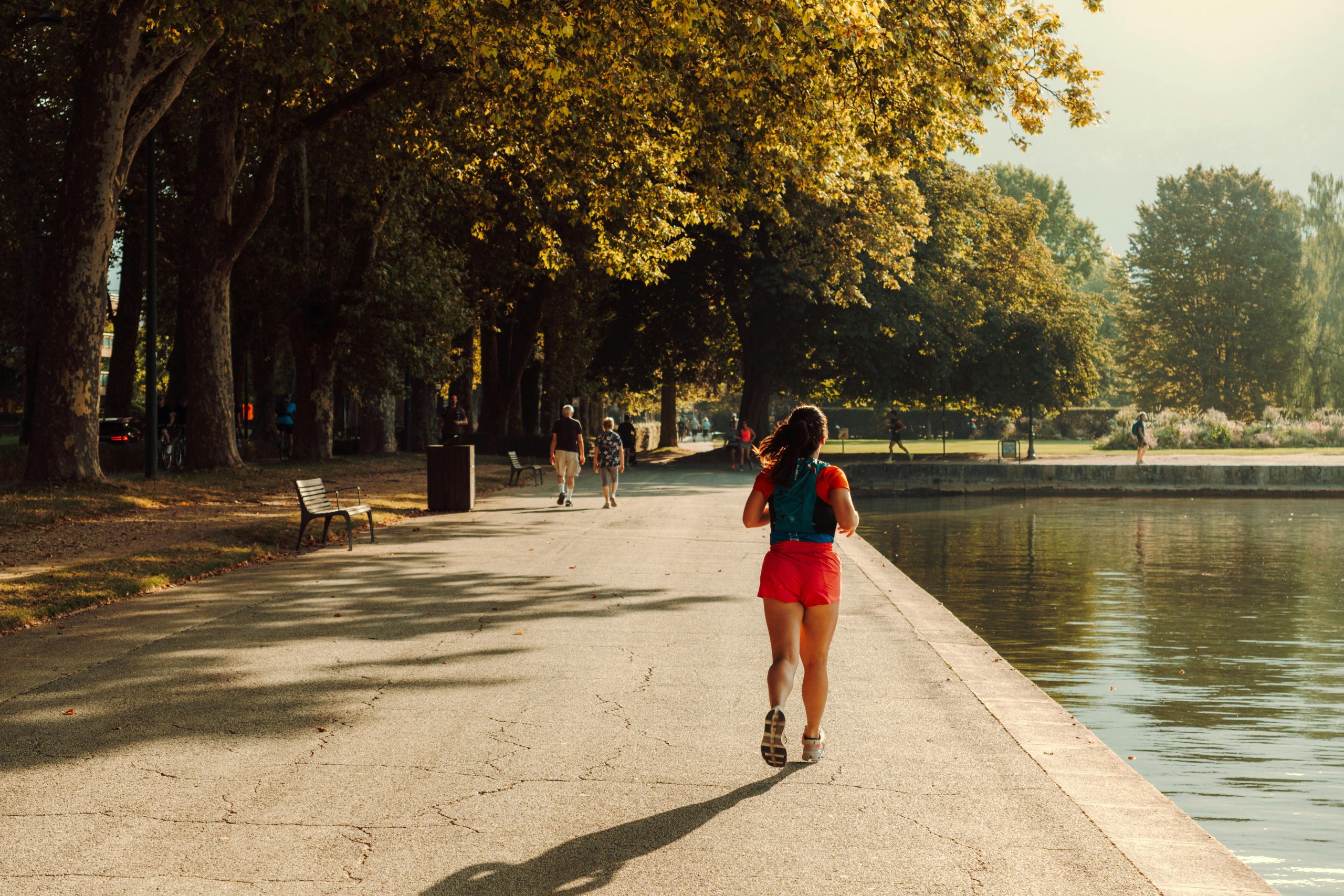
There’s a meaningful difference between avoidance driven by fear and selective participation driven by self-knowledge. The first keeps you small. The second makes you sustainable. Finding that distinction in your own life is part of the broader work of living as an introvert in an extroverted world without losing yourself in the process.
What Long-Term Habits Protect HSPs in Social Environments?
Surviving individual large gatherings matters. Building a life that doesn’t constantly put you in a position of needing to survive matters more.
Protecting your baseline is the foundation. An HSP who is well-rested, genuinely nourished, and operating from a place of relative calm handles stimulation far better than one who is already running on empty. This sounds obvious, but the cumulative effect of consistently neglecting your baseline is that every challenging situation becomes harder than it needs to be. Prioritizing sleep, protecting genuinely quiet time in your daily rhythm, and maintaining relationships that restore rather than deplete you are not luxuries. They are maintenance.
Build your social calendar intentionally rather than reactively. Many sensitive people end up overwhelmed not because of any single event but because they’ve said yes to too many things in too short a window. Spacing out large gatherings, protecting recovery time between them, and being deliberate about which events make the cut changes the entire texture of your social life.
Cultivate relationships in formats that suit your sensitivity. Deep one-on-one conversations, small dinners, quiet shared activities. These aren’t consolation prizes compared to large gatherings. For many HSPs, they’re the contexts where genuine connection actually happens. Investing in these kinds of relationships means you’re not starting from zero every time you need to be around people. You have a network of depth that sustains you without the constant overstimulation of crowd-based socializing.
It’s also worth recognizing that the school and workplace environments many of us spent years in were rarely designed with sensitive people in mind. If you grew up feeling like something was wrong with you because large group settings were harder for you than they seemed to be for everyone else, that early conditioning runs deep. The back to school experience for introverts is a useful lens for understanding how early those patterns form and how much intentional work it can take to rewrite them as adults.
What I’ve found, after two decades of professional environments that prized extroversion and constant social engagement, is that the path to genuine wellbeing isn’t about becoming someone who loves crowds. It’s about building a life where you can participate meaningfully in the world without being consumed by it. That’s not a compromise. That’s clarity. And it’s available to every highly sensitive person willing to stop apologizing for how they’re wired and start working with it instead.
The broader work of finding peace in a noisy world is exactly that: not eliminating noise, but building enough internal steadiness that the noise no longer has the power to undo you.

Find more articles, tools, and honest conversations about the full range of introvert experience in our General Introvert Life hub.
Running on empty?
Five drain profiles, each with specific triggers, warning signs, and a recharging playbook.
Take the Free QuizUnder 2 minutes · 8 questions · Free
About the Author
Keith Lacy is an introvert who’s learned to embrace his true self later in life. After 20 years in advertising and marketing leadership, including running agencies and managing Fortune 500 accounts, Keith now channels his experience into helping fellow introverts understand their strengths and build fulfilling careers. As an INTJ, he brings analytical depth and authentic perspective to every article, drawing from both professional expertise and personal growth.
Frequently Asked Questions
Are highly sensitive people the same as introverts?
Not exactly, though there’s meaningful overlap. High sensitivity is a neurological trait involving deeper processing of sensory and emotional information, while introversion describes where you direct your energy and how social interaction affects you. Many HSPs are also introverts, but some are extroverted and still experience the same sensory overwhelm in crowded environments. The two traits can coexist and often amplify each other, but they describe different things.
How long does it take to recover after a large gathering as an HSP?
Recovery time varies significantly from person to person and depends on factors like the intensity and duration of the event, your baseline energy going in, and how well you managed stimulation during the gathering itself. Some people feel restored after a few hours of quiet. Others need a full day or more, particularly after multi-day events like conferences. Tracking your own recovery patterns over time gives you the most accurate picture of what you personally need.
Is it okay to skip large social events if they’re too overwhelming?
Yes, with some nuance. Selectively declining events that cost more than they return is a legitimate and healthy choice. The distinction worth making is between avoidance driven by fear or anxiety and selective participation based on honest self-knowledge. Consistently skipping every social situation can reinforce isolation and make future events feel even more daunting. Being thoughtful about which events genuinely matter, attending those, and declining the rest is a sustainable middle ground.
What’s the most effective thing an HSP can do during a crowded event?
Anchor yourself to one meaningful conversation rather than trying to engage with the full crowd. Highly sensitive people do their best connecting in depth, not breadth. Finding one person worth talking to and giving that conversation your genuine attention plays to your natural strengths, reduces the ambient overwhelm of scanning the entire room, and often produces more satisfying outcomes than working a crowd ever would. Building in brief recovery moments throughout the event also makes a significant difference in how long you can sustain quality engagement.
Can HSPs get better at handling large gatherings over time?
Better at managing them, yes. The underlying trait doesn’t change. High sensitivity is a stable neurological characteristic, not a phase or a skill gap. What does develop over time is self-knowledge: understanding your specific triggers, knowing which strategies work for your particular nervous system, and building the confidence to honor your needs without apology. Many HSPs find that their relationship with large gatherings improves significantly not because they become less sensitive, but because they stop fighting their sensitivity and start working with it.