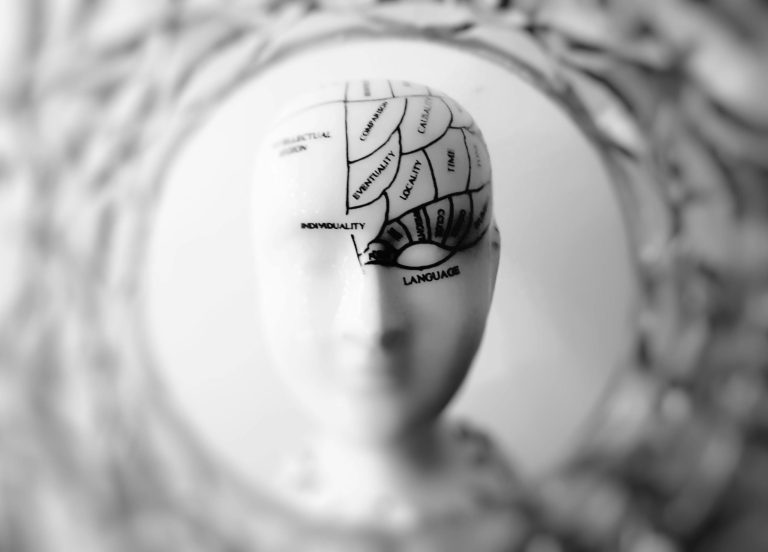
An HSP INTJ is someone who combines the INTJ personality type, characterized by strategic thinking, independence, and intense focus on systems and ideas, with the trait of high sensitivity, meaning their nervous system processes sensory and emotional information more deeply than most people do. This combination is rarer than you might expect, and it creates a person who is simultaneously analytical and acutely attuned to the emotional and sensory texture of the world around them.
If you identify with both labels, you already know the tension. You want solitude to think clearly, yet you absorb the emotional weight of every room you walk into. You build long-range strategies in your head while also noticing the slight shift in a colleague’s tone that everyone else missed. That is not a contradiction. That is your wiring, and it is worth understanding deeply.
I spent more than two decades running advertising agencies, managing teams, and sitting across the table from Fortune 500 clients. Nobody handed me a framework for being an INTJ who also happened to feel everything. I figured it out the hard way, and I want to share what I learned.
If you want broader context on what it means to live as a highly sensitive person, our HSP and Highly Sensitive Person hub covers the full range of experiences, from relationships to careers to daily coping strategies. This article focuses specifically on what happens when that sensitivity intersects with the INTJ personality type.
What Does It Actually Mean to Be Both an HSP and an INTJ?
High sensitivity is a biological trait, not a personality type. Researcher Elaine Aron first identified it in the 1990s, and subsequent neuroscience work has confirmed that highly sensitive people show measurably different brain activity when processing stimuli. A study published in PubMed Central found that HSPs show greater activation in brain regions associated with awareness, empathy, and action planning, which starts to explain why the HSP INTJ combination produces such a particular kind of intensity.
What’s your personality type?
Take our free 40-question assessment and get a detailed personality profile with dimension breakdowns, context analysis, and personalised insights.
Discover Your Type8-12 minutes · 40 questions · Free
The INTJ type, as described extensively in personality research and summarized well by 16Personalities, is defined by introverted intuition as the dominant function, supported by extraverted thinking. INTJs are drawn to patterns, systems, and long-range thinking. They are often described as private, confident in their vision, and somewhat impatient with inefficiency or shallow thinking.
Put those two things together and you get someone who sees the big picture with unusual clarity, feels the emotional undercurrents of situations with unusual depth, and processes all of it internally before saying a word. That is a powerful combination. It is also exhausting in ways that are hard to explain to people who do not share it.
One thing worth clarifying early: being an HSP is not the same as being an introvert, even though the two overlap significantly. Most HSPs are introverted, but about 30 percent are extroverted. And not all introverts are highly sensitive. If you want to understand where those lines fall, I wrote more about this in my piece on introvert vs HSP comparisons, which breaks down the differences and overlaps clearly.
Why Does the HSP INTJ Feel So Misunderstood?
Part of the challenge is that INTJs are often perceived as emotionally detached. The stereotype leans toward the cold strategist, the person who runs on logic and has little patience for feelings. Add high sensitivity to that profile and you create someone who does not fit that stereotype at all, yet may have spent years trying to perform it anyway.
That was my experience. Early in my agency career, I believed that good leadership meant projecting certainty and keeping emotion out of the room. I watched extroverted colleagues command attention through sheer energy and volume, and I tried to compete on those terms. What I did not realize was that my sensitivity was actually one of my strongest professional assets. I was picking up on client discomfort before it became a problem. I was reading team dynamics accurately. I was noticing when a campaign strategy had an emotional gap that the data had not flagged yet.
The misunderstanding cuts in another direction too. People who know that HSPs are emotionally attuned sometimes assume sensitivity means softness or instability. An HSP INTJ is neither. The INTJ structure provides a kind of internal scaffolding. Feelings are processed, analyzed, and integrated rather than simply expressed or suppressed. That is a very different relationship with emotion than most people expect from someone described as highly sensitive.

A 2024 paper in Frontiers in Psychology examined sensory processing sensitivity in relation to emotional regulation and found that HSPs who developed strong internal processing strategies reported significantly better outcomes in both professional and personal domains. That matches what I have observed: the HSP INTJ who learns to work with their wiring, rather than against it, tends to develop a kind of quiet effectiveness that is hard to replicate.
How Does High Sensitivity Shape the INTJ’s Inner World?
INTJs already have rich inner lives. Their dominant function, introverted intuition, is constantly scanning for patterns, making connections, and building mental models of how things work. Add high sensitivity and that inner world becomes even more textured. Sensory details register more vividly. Emotional information from other people arrives with more force. The gap between what is happening on the surface and what is actually going on beneath it becomes something the HSP INTJ tracks almost automatically.
I remember sitting in a pitch meeting with a major retail client, maybe fifteen years into my agency work. We had prepared for months. The presentation was strong. But about twenty minutes in, I noticed something shift in the room. The client’s body language changed slightly. A particular slide had landed wrong, not because the data was off, but because the framing had implied something about their internal team’s competence that they had not appreciated. Nobody else in the room caught it. I paused the presentation, reframed the point, and the meeting recovered. That was not strategic genius. That was sensitivity doing its job.
The inner world of an HSP INTJ is also shaped by a strong need for meaning. Neither high sensitivity nor the INTJ type is well-suited to shallow engagement. Surface-level interactions feel draining. Work that lacks purpose feels hollow. Relationships that stay superficial feel like a waste of time. That combination pushes the HSP INTJ toward depth in every domain, which is a strength, even when it makes small talk at networking events feel genuinely painful.
The cognitive neuroscience behind this is worth noting. Work published through Nature’s cognitive neuroscience research has increasingly shown that individual differences in neural processing explain a significant portion of personality variation. The HSP INTJ is not simply choosing to be intense. Their brain is built to process deeply, and that architecture shapes everything from how they experience music to how they recover from criticism.
What Are the Specific Strengths of the HSP INTJ?
There is a tendency in personality writing to focus on the challenges of being an HSP INTJ, and those challenges are real. Yet the strengths deserve equal attention, because they are genuinely impressive when understood clearly.
Strategic empathy is perhaps the most distinctive strength. The INTJ’s systems thinking combines with the HSP’s emotional attunement to produce someone who can model how a decision will affect people across multiple levels, not just logistically, but emotionally and relationally. In my agency years, this showed up most clearly in brand strategy work. I could hold the data in one hand and the human experience of the consumer in the other, and find the connection point between them. That is a rare skill in rooms full of either pure analysts or pure creatives.
Deep focus is another significant strength. HSP INTJs tend to work best in conditions of low distraction and high engagement. When those conditions are met, their concentration is formidable. They notice nuances in problems that others skip past. They stay with complexity long enough to find solutions that are not obvious on first pass.
Ethical clarity also stands out. Both HSPs and INTJs tend to have strong internal value systems. The combination often produces someone with an unusually clear sense of what matters and why, along with a low tolerance for work or relationships that conflict with those values. That can create friction in environments that prioritize expediency over integrity. It also means the HSP INTJ tends to build trust over time, because their consistency is genuine rather than performed.

A PubMed Central study on sensory processing sensitivity found that HSPs showed stronger responses to both positive and negative stimuli, meaning they are not simply more reactive to difficulty. They also experience joy, beauty, and connection more intensely. That capacity for positive experience is part of the HSP INTJ’s strength profile too, even if it gets less attention than the challenges.
What Challenges Does the HSP INTJ Face That Others Don’t?
Overstimulation is the most immediate challenge. INTJs already prefer limited social contact and quiet environments. Add high sensitivity and the threshold for overwhelm drops further. Loud open offices, back-to-back meetings, emotionally charged team dynamics, all of these hit harder and take longer to recover from. I managed this for years by building recovery time into my schedule without labeling it. I called it “thinking time.” It was actually decompression, and it was non-negotiable for me to function well.
The internal conflict between logic and feeling creates its own kind of friction. The INTJ framework pushes toward rational analysis. The HSP experience keeps delivering emotional data that demands attention. An HSP INTJ can spend significant energy trying to reconcile these two streams, especially in situations where the emotional read and the logical analysis point in different directions. Learning to treat both as valid inputs, rather than treating one as noise, is a significant piece of personal development for people with this combination.
Perfectionism tends to run deep. INTJs hold high standards. HSPs feel the gap between what is and what could be with particular sharpness. Together, those tendencies can produce a relentless internal critic that makes it genuinely difficult to ship work, make decisions, or accept outcomes that fall short of the internal ideal. I have had to consciously practice what I think of as strategic sufficiency, knowing when something is good enough to move forward, even when my instinct is to keep refining.
Relationships present their own complexity. The INTJ’s natural reserve and the HSP’s need for depth and authenticity can make it hard to find connections that feel genuinely satisfying. Surface-level friendships feel like a drain rather than a resource. Yet the vulnerability required to build deep relationships can feel risky for someone who processes everything so internally. I explore this dynamic more in my article on HSP and intimacy, where I look at how physical and emotional closeness works differently for highly sensitive people.
How Does the HSP INTJ Function in Relationships?
Relationships for an HSP INTJ are rarely casual. They invest deeply when they invest at all, and they tend to be highly attuned to the emotional state of the people they care about. That attunement is a gift in close relationships. It can also become a burden when it is not reciprocated or when the HSP INTJ absorbs too much of another person’s emotional experience without adequate boundaries.
Partners and close friends of an HSP INTJ sometimes find the combination confusing. The person can seem emotionally perceptive one moment and emotionally unavailable the next. What is actually happening in those moments of apparent unavailability is usually intensive internal processing. The HSP INTJ has not checked out. They are working through something with the full weight of their attention, just not visibly.
One of the most useful things I ever did in my personal life was learn to communicate that explicitly. Saying “I need some time to process this before I can talk about it well” sounds simple, but it changed the quality of my most important relationships significantly. It gave people a frame for what was happening rather than leaving them to interpret my silence as indifference.
For those living alongside an HSP INTJ, understanding the need for both solitude and genuine connection is essential. My piece on living with a highly sensitive person offers practical perspective for partners, family members, and housemates who want to support an HSP without inadvertently overwhelming them.
The dynamics shift further in mixed-temperament relationships. When an HSP INTJ is partnered with someone who is more extroverted or less sensitive, the differences in stimulation needs and emotional processing styles can create real friction. That does not make those relationships impossible. It makes them require more intentional communication. My article on HSP in introvert-extrovert relationships goes deeper on how those dynamics play out and what actually helps.

How Does Being an HSP INTJ Shape Parenting?
Parenting as an HSP INTJ comes with its own particular texture. The sensitivity means you pick up on your child’s emotional states quickly, often before they can articulate what they are feeling. The INTJ structure means you are already thinking about what they need developmentally and how to support their growth strategically. That combination can make you an unusually perceptive parent.
It also means the noise, chaos, and unpredictability of parenting can push your overstimulation threshold hard. Young children do not modulate their volume or emotional intensity for your benefit. The sensory demands of parenting, particularly in the early years, can be genuinely depleting for an HSP INTJ in ways that are hard to acknowledge without feeling like you are failing somehow.
Recognizing that your needs are legitimate, not weaknesses, is foundational. My article on HSP and children explores what parenting looks like through the lens of high sensitivity, including how to build the recovery time you need without guilt.
What Career Paths Suit the HSP INTJ Best?
Work environments matter enormously for an HSP INTJ. The wrong environment does not just feel uncomfortable. It actively degrades performance and wellbeing over time. The right environment, one that offers autonomy, meaningful work, reasonable sensory conditions, and the ability to work deeply, can produce extraordinary results.
Careers in research, strategy, writing, counseling, architecture, data science, and systems design tend to suit this combination well. These fields reward depth, pattern recognition, and the ability to hold complexity without oversimplifying. They also tend to offer more control over working conditions than high-traffic, high-noise environments like sales floors or event management.
According to the Psychology Today HSP blog, highly sensitive people often thrive in roles that allow them to use their perceptiveness constructively, whether in creative work, therapeutic settings, or analytical fields. The INTJ adds a preference for independence and long-range thinking that narrows the field further toward roles with strategic scope.
Leadership roles are not off the table, despite what the introvert and HSP stereotypes might suggest. My own career is evidence of that. Yet the HSP INTJ tends to lead best in structures that allow for thoughtful decision-making rather than constant reactive management. The Bureau of Labor Statistics occupational outlook for life and social science careers shows strong growth in fields that align naturally with the HSP INTJ’s strengths, including psychology, research, and social work.
For a more complete look at where highly sensitive people tend to thrive professionally, my article on highly sensitive person jobs and career paths covers the full landscape with specific role suggestions and environment considerations.

How Can an HSP INTJ Build a Life That Actually Works?
The practical answer starts with honest self-knowledge. You cannot build a life that works for your wiring if you are still trying to convince yourself your wiring should be different. That sounds obvious, but it took me years of agency life, years of trying to be louder, more available, more socially fluid, before I accepted that my way of operating was not a deficiency. It was a design.
Boundary-setting is non-negotiable for the HSP INTJ. Not because boundaries are a trendy self-care concept, but because without them, the combination of deep processing and high sensitivity will consistently produce overwhelm. Boundaries around time, sensory input, emotional labor, and the depth of engagement you offer in relationships are all legitimate and necessary. They are not walls. They are the conditions under which you actually show up fully.
Solitude needs to be protected, not apologized for. The HSP INTJ who does not get adequate time alone will gradually lose access to their best thinking. That quiet time is not laziness or antisocial behavior. It is the processing space where the combination of intuition and sensitivity does its most valuable work. Some of my best strategic thinking across twenty years in advertising happened in the hour before anyone else arrived at the office, with a cup of coffee and no interruptions.
Finding community with people who understand the combination also matters more than it might seem. Connecting with other HSPs, other INTJs, or other people who simply value depth over volume can shift the experience of daily life significantly. The Psychology Today HSP community is one accessible starting point for that kind of connection.
Finally, the HSP INTJ benefits from treating their sensitivity as information rather than noise. Every strong emotional reaction, every moment of overwhelm, every flash of aesthetic or ethical discomfort carries data. Learning to read that data accurately, rather than either suppressing it or being swept away by it, is the skill that makes everything else possible.
You can explore the full range of highly sensitive person experiences, from relationships to identity to daily life, in our HSP and Highly Sensitive Person hub.
About the Author
Keith Lacy is an introvert who’s learned to embrace his true self later in life. After 20 years in advertising and marketing leadership, including running agencies and managing Fortune 500 accounts, Keith now channels his experience into helping fellow introverts understand their strengths and build fulfilling careers. As an INTJ, he brings analytical depth and authentic perspective to every article, drawing from both professional expertise and personal growth.
Frequently Asked Questions
Can someone really be both an HSP and an INTJ?
Yes, and it is more common than many people realize. High sensitivity is a neurological trait that exists independently of personality type. Estimates suggest that around 15 to 20 percent of the population is highly sensitive, and that percentage is distributed across all personality types, including INTJ. The combination creates a person who is both strategically oriented and deeply attuned to sensory and emotional experience, which can feel contradictory but is actually a coherent and functional profile when understood clearly.
How does high sensitivity affect the INTJ’s characteristic emotional detachment?
INTJs are often perceived as emotionally detached, but that perception reflects how they express emotion rather than whether they experience it. An HSP INTJ experiences emotion intensely. They process it internally, through the INTJ’s dominant introverted intuition and supporting extraverted thinking, rather than expressing it outwardly. The result can look like detachment from the outside while being quite the opposite on the inside. The HSP dimension adds emotional depth and sensory richness to an already complex inner life.
What are the biggest challenges specific to the HSP INTJ combination?
The most significant challenges include overstimulation from environments or social demands that exceed the HSP threshold, internal conflict between logical analysis and emotional data, deep perfectionism that can make it difficult to accept imperfect outcomes, and difficulty finding relationships that offer the depth the HSP INTJ needs without the social volume that drains them. Managing the gap between their high internal standards and the realities of working with other people is also a recurring challenge in professional settings.
Are HSP INTJs well-suited to leadership roles?
HSP INTJs can be highly effective leaders, particularly in roles that reward strategic thinking, long-range planning, and the ability to read people accurately. Their sensitivity gives them an advantage in understanding team dynamics, anticipating client or stakeholder concerns, and building environments where people feel genuinely seen. They tend to lead best in structures that allow for thoughtful decision-making rather than constant reactive management, and in organizations where depth and integrity are valued over high-volume social performance.
How can an HSP INTJ manage overstimulation without withdrawing completely?
The most effective approach involves building proactive recovery time into daily and weekly schedules before overstimulation occurs, rather than waiting until depletion forces withdrawal. This means protecting quiet time in the morning or evening, limiting back-to-back social or high-stimulation commitments, creating clear physical spaces for decompression, and communicating honestly with close relationships about what recovery looks like. Treating solitude as a legitimate need rather than a preference to be apologized for makes a significant difference in how sustainably an HSP INTJ can engage with the world.