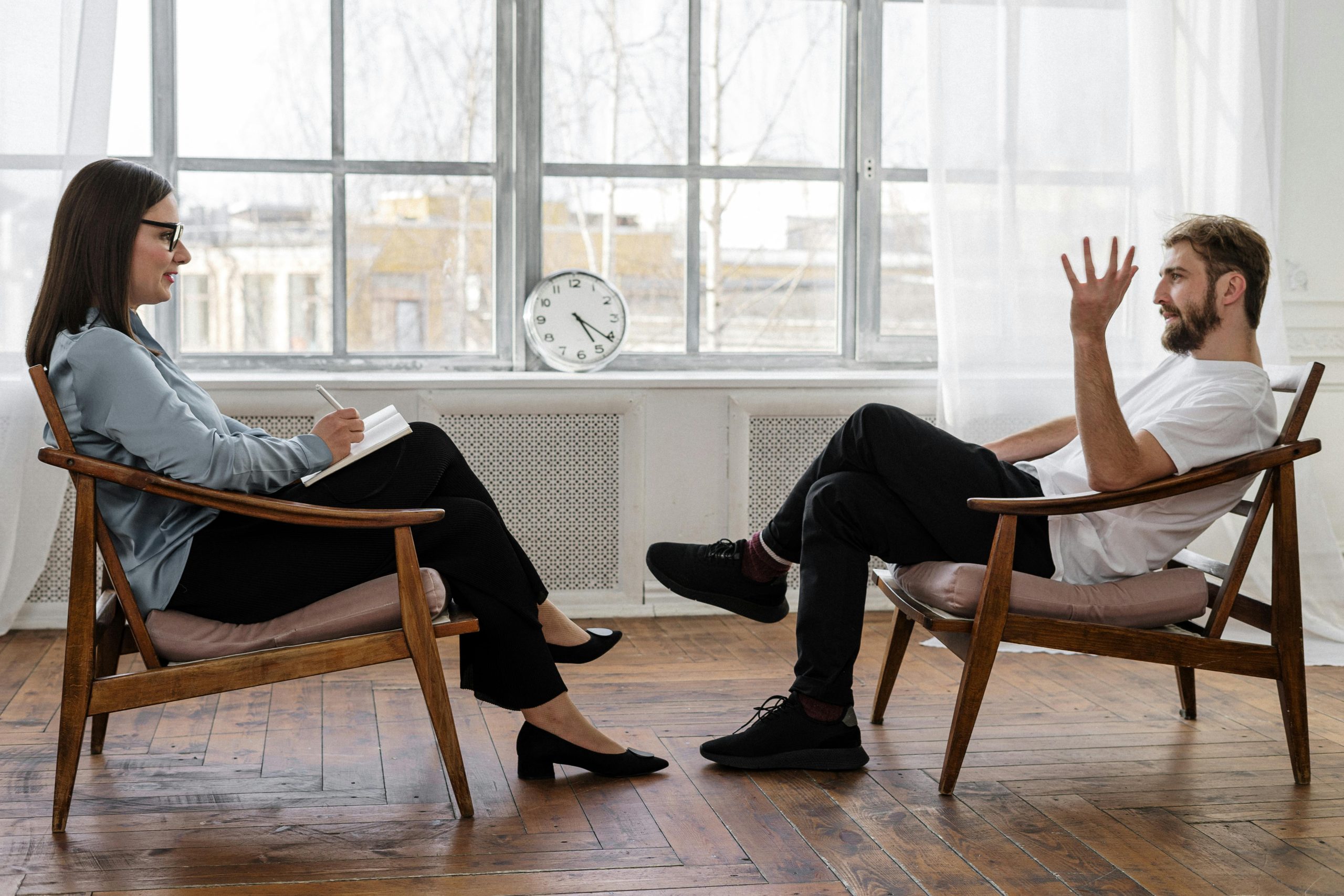

HSP minimalism is the practice of intentionally reducing sensory input, physical clutter, and environmental complexity to protect the nervous system of a highly sensitive person. For those who process the world more deeply than most, a simplified home isn’t an aesthetic choice, it’s a genuine act of self-care. Fewer objects, softer sounds, and calmer visual fields translate directly into lower stress and better functioning.
Highly sensitive people, estimated to make up around 15 to 20 percent of the population according to psychologist Elaine Aron’s foundational research, experience sensory and emotional information at a much greater intensity than others. A cluttered room isn’t just untidy to an HSP. It’s loud. It’s demanding. It pulls at attention constantly, draining energy that could go toward creativity, connection, and recovery. Minimalism, approached thoughtfully, changes all of that.
My own path toward simplicity didn’t start with a design philosophy. It started with exhaustion. After years running advertising agencies, managing client relationships across Fortune 500 brands, and spending entire days in environments engineered for stimulation, I’d come home and feel like I had nothing left. My home was full of things I didn’t need, and somehow that fullness made everything worse. It took me longer than I’d like to admit to connect those dots.
If you’re exploring how your living environment shapes your inner life, our Introvert Home Environment hub covers the full range of topics around creating spaces that actually support the way sensitive, introverted people are wired. This article adds a specific layer: what minimalism looks like when your nervous system needs it most.

What Makes HSPs Different When It Comes to Their Environment?
Sensory processing sensitivity is a biological trait, not a personality flaw or a sign of weakness. A 2018 study published in Frontiers in Psychology identified that people with high sensory processing sensitivity show deeper neural processing of environmental stimuli, meaning the brain genuinely works harder in response to sensory input. That’s not a metaphor. It’s measurable.
What’s your personality type?
Take our free 40-question assessment and get a detailed personality profile with dimension breakdowns, context analysis, and personalised insights.
Discover Your Type8-12 minutes · 40 questions · Free
What this means practically is that an environment most people find neutral, a moderately busy room, background music, a few stacks of mail on the counter, registers as genuinely taxing to an HSP. The nervous system is doing more work. It’s processing more layers of information simultaneously, and that processing has a cost. Over time, an overstimulating home environment doesn’t just feel unpleasant. It contributes to chronic fatigue, difficulty concentrating, heightened emotional reactivity, and disrupted sleep.
I noticed this pattern clearly during a particularly intense campaign push at the agency. We were managing a major product launch for a consumer goods client, and I was absorbing everyone’s stress along with my own. By the time I got home each evening, even small things felt enormous. The dog barking, a pile of dishes, the television my wife had on in the background. My threshold for input had been completely depleted by the day. What I needed was genuine quiet and genuine visual calm. What I had was a home that asked things of me the moment I walked through the door.
That experience pushed me toward understanding what kind of home environment would actually restore rather than continue to drain. The answer, for me and for many HSPs, pointed toward intentional simplicity. Not stark emptiness, but thoughtful reduction. A home where the visual field rests the eyes rather than activating them.
How Does Clutter Actually Affect a Sensitive Nervous System?
There’s a physiological reason clutter feels so oppressive to highly sensitive people. A 2011 study from Princeton University’s Neuroscience Institute found that physical disorder in the visual field competes for neural resources, reducing the brain’s ability to focus and increasing cortisol production. For someone whose nervous system already processes environmental information more intensely, visual clutter isn’t background noise. It’s foreground noise.
Think about what happens when you walk into a room with too many objects competing for attention. Your eyes move from surface to surface. Your mind, even unconsciously, begins cataloging what’s there, what needs to be done, what’s out of place. For an HSP, that mental cataloging happens faster, goes deeper, and persists longer. A cluttered kitchen counter isn’t just visually messy. It’s a running list of tasks, a source of low-grade anxiety, and a constant reminder that the space doesn’t feel settled.
Sound works the same way. The CDC’s occupational noise research documents how persistent background noise elevates stress hormones and degrades cognitive performance, even at levels that don’t register as consciously loud. For an HSP, the hum of a refrigerator, traffic outside, a neighbor’s television through the wall, these aren’t just minor annoyances. They’re ongoing demands on an already active nervous system.
Minimalism addresses both of these realities. Fewer objects mean fewer visual demands. Thoughtful acoustic choices, soft furnishings, sound-absorbing materials, strategic use of white noise, reduce auditory load. The result isn’t a sterile or cold environment. It’s a space that stops working against you and starts working for you.
Getting there requires a particular kind of decluttering process, one that accounts for the emotional weight objects carry for sensitive people. That’s worth addressing directly, because standard decluttering advice often misses this entirely. If you’ve struggled with the emotional side of letting things go, decluttering without emotional overwhelm offers a framework that takes the HSP’s attachment to objects seriously, rather than dismissing it.

Where Do You Start When Everything Feels Like Too Much?
One of the most common traps HSPs fall into when approaching minimalism is trying to do too much at once. The desire to transform everything immediately is understandable, especially once you’ve connected the dots between your environment and your wellbeing. Yet attempting a whole-home overhaul in a single weekend almost always backfires. The emotional energy required to evaluate every possession, make rapid decisions, and manage the disruption of reorganizing your entire living space can itself become overwhelming.
A more sustainable approach starts with identifying your highest-drain zones. These are the areas of your home where you feel most depleted, most scattered, or most anxious. For many HSPs, the bedroom tops this list, because sleep quality is directly tied to environmental calm. A 2019 study referenced in Harvard Health’s sleep hygiene guidance found that visual and sensory stimulation in the bedroom environment significantly impacts the ability to fall and stay asleep. Reducing clutter in your sleeping space, darkening it effectively, and minimizing electronic devices isn’t just tidying. It’s protecting your most essential recovery time.
Start with one room. Preferably the one where you spend the most time recovering. Evaluate everything in that space through a single lens: does this object serve a clear function, or does it add visual weight without adding genuine value? Objects with strong emotional associations deserve more consideration and more time. Set them aside rather than making rushed decisions. Come back to them when your energy is higher.
Once one room feels right, the process becomes easier. You develop a clearer sense of your own threshold, the point at which a space feels calm versus the point at which it feels bare. That threshold is personal and worth paying attention to. Minimalism for an HSP isn’t about achieving some magazine-perfect aesthetic. It’s about finding the specific level of simplicity that allows your nervous system to exhale.
For a deeper look at how intentional organization supports this kind of ongoing calm, home organization for minimalist introverts covers the practical systems that make a simplified space easy to maintain over time.
What Does a Sensory-Aware Minimalist Home Actually Look Like?
Minimalism for HSPs has a different texture than the aesthetic minimalism you see in design magazines. It’s less about white walls and empty shelves, and more about deliberate sensory calibration. Every element in the space is chosen with awareness of how it will register on the nervous system over time, not just how it looks in a photograph.
Color matters more than most people realize. Highly saturated colors, particularly in large quantities, can function as low-grade stressors for sensitive people. Muted, earthy tones, soft greens, warm whites, gentle grays, tend to support a calmer baseline. This doesn’t mean your home needs to be colorless. It means being intentional about where and how color appears, using it as an accent rather than a dominant force.
Texture plays a similar role. Soft, natural materials like linen, cotton, and wood tend to feel grounding and gentle. Highly reflective surfaces, hard plastics, and synthetic materials can contribute to a sense of coldness or visual sharpness that works against sensory ease. The goal is a space that feels warm and settled rather than sharp and demanding.
Lighting deserves particular attention. Harsh overhead lighting is one of the most common sources of sensory strain in home environments, yet it’s often the default. Layered lighting, combining ambient light with softer task and accent sources, gives you far more control over the sensory quality of a room at different times of day. Dimmers are genuinely worth the investment for an HSP. The ability to shift a room from bright and functional to soft and restorative in seconds is not a small thing.
Scent is the sensory channel most HSPs think about last, yet it has a direct line to the limbic system, the brain’s emotional processing center. A 2020 study published in Frontiers in Psychology found that ambient scent significantly influences mood, cognitive performance, and perceived stress levels. For an HSP home, this means being mindful about synthetic fragrances, which can be overwhelming, and considering gentle natural scents like cedarwood, lavender, or eucalyptus in small amounts.
Creating a sanctuary requires thinking across all of these sensory dimensions at once. The guide to creating your introvert sanctuary goes deeper on this multi-sensory approach to designing a genuinely restorative home environment.

How Do You Maintain Minimalism Without Constant Re-Decluttering?
One thing I’ve observed in myself and in conversations with other introverts is that the initial simplification is often the easy part. What’s harder is keeping a space simple over time, especially when life keeps adding things. Gifts arrive. Projects accumulate materials. Convenience items multiply. Without some kind of maintenance structure, the calm you’ve worked to create gradually erodes.
The most effective approach I’ve found is what I think of as the one-in-one-out principle applied consistently rather than aspirationally. Every time something new enters your home, something leaves. Not eventually. Now. This isn’t about being rigid or joyless. It’s about recognizing that your sensory environment has a carrying capacity, and that exceeding it has a real cost to your wellbeing.
Routine maintenance also matters enormously for HSPs. A cluttered space that builds gradually over weeks creates a kind of slow-rising anxiety that’s easy to normalize until it becomes significant. Short, regular maintenance sessions, fifteen to twenty minutes a few times a week, prevent that accumulation from happening. They also feel far more manageable than the marathon decluttering sessions that follow weeks of neglect.
Practical cleaning routines support this. Cleaning schedules that actually work offers realistic frameworks for maintaining a calm environment without turning home maintenance into another source of overwhelm. The emphasis there on sustainable systems rather than perfectionistic standards aligns well with how HSPs actually function best.
There’s also a psychological dimension to maintenance that’s worth naming. HSPs often form strong attachments to objects, not out of materialism but out of depth of feeling. A gift from someone meaningful, an object tied to a significant memory, a book that changed how you saw the world. These things carry emotional weight, and that weight can make decluttering feel like loss rather than liberation.
The solution isn’t to dismiss those attachments. It’s to be selective about which ones you honor with physical space. Not every meaningful object needs to live in your home. Some can be photographed and released. Some can be stored rather than displayed. The distinction between objects that genuinely restore you when you see them and objects that simply carry guilt about letting go is worth developing over time.
Can Minimalism Actually Improve Productivity for Sensitive People?
There’s a strong case to be made that environmental simplicity isn’t just about comfort for HSPs. It’s about cognitive capacity. When your nervous system isn’t spending energy managing sensory overload, that energy becomes available for the things that actually matter to you: deep work, creative thinking, meaningful connection, and genuine rest.
A 2008 study in PubMed Central examining attention restoration theory found that environments with reduced complexity and natural elements significantly improved directed attention capacity, the kind of focused concentration that deep work requires. For HSPs, who often have exceptional capacity for depth and nuance when their environment supports it, this is meaningful. The right environment doesn’t just reduce discomfort. It amplifies capability.
My own experience of this was striking once I finally made the connection. During the years when I was managing multiple agency teams and carrying the cognitive load of dozens of client relationships simultaneously, my thinking was clearest not in the office but in a particular corner of my home that I’d kept deliberately simple. A chair, a lamp, a small table, a few books. No screens, no clutter, no visual demands. I did my best strategic thinking there. The space wasn’t just comfortable. It was genuinely enabling.
A 2020 study published in PubMed Central on environmental psychology and cognitive performance reinforced what I’d experienced intuitively: physical environment quality has measurable effects on executive function, creative problem-solving, and sustained attention. For people who process their environment deeply, those effects are amplified.
If you work from home, the relationship between your physical environment and your cognitive performance becomes even more direct. Transforming your home into a productivity powerhouse addresses this specifically, with practical guidance for designing a home workspace that supports deep, focused work rather than fragmenting it.

What About the Emotional Side of Sensitivity and Simplicity?
Highly sensitive people don’t just process sensory information more deeply. They process emotional information more deeply too. The capacity for empathy that characterizes many HSPs, the ability to feel the emotional texture of a room, to pick up on unspoken tension, to be genuinely moved by beauty or pain, is both a profound gift and a source of significant depletion. Berkeley’s Greater Good Science Center describes empathy as involving both cognitive and affective components, and for HSPs, both channels tend to be wide open simultaneously.
What this means for a home environment is that the emotional associations of objects matter as much as their physical presence. A room full of things that carry complicated feelings, objects from difficult relationships, reminders of unfinished obligations, inherited items tied to family tension, can create an emotional weight that’s just as draining as visual clutter. Minimalism, approached with this awareness, includes clearing emotional residue, not just physical objects.
This is where HSP minimalism diverges most clearly from standard minimalism. Standard minimalism often focuses on functionality: keep what you use, release what you don’t. HSP minimalism adds an emotional layer: keep what genuinely nourishes you, release what drains you, regardless of its practical utility.
A decorative object you’ve never liked but feel obligated to display because it was a gift carries a cost every time you see it. That cost is small individually, but over years of daily exposure, it accumulates. Releasing it isn’t ingratitude. It’s protecting your own energy.
Conversely, objects that genuinely restore you deserve to stay even if they don’t serve a conventional function. A piece of art that consistently lifts your mood. A plant that makes a room feel alive. A small collection of objects from places that matter to you. These aren’t clutter. They’re intentional anchors to what genuinely feeds your spirit. The distinction between nourishing and draining is more useful for an HSP than the distinction between useful and decorative.
How Do You Create a Sanctuary Within a Minimalist Framework?
Minimalism and sanctuary aren’t the same thing, but for an HSP they overlap significantly. A sanctuary is a space that actively restores you, a place where your nervous system can genuinely downregulate after the demands of the day. Minimalism creates the conditions for sanctuary by removing the things that prevent restoration. But the sanctuary itself requires something more: intentional warmth, beauty, and sensory pleasure calibrated to your specific needs.
Think about what genuinely calms you. Not what’s supposed to calm you, but what actually does. For some HSPs, it’s natural elements, plants, stones, water features, wood grain, the presence of living things. For others, it’s particular sounds, soft instrumental music, rain, birdsong. For others still, it’s specific textures, a weighted blanket, a particularly soft rug, the feel of natural fiber upholstery.
A minimalist sanctuary for an HSP is built around these specific anchors. It’s not empty. It’s precisely full of the right things. Every object and sensory element has been chosen because it contributes to a particular quality of calm that is specific to you. This is the opposite of decorating by default, accumulating things without intention and hoping the result feels good.
The concept of a dedicated decompression space is worth considering seriously. Even in a small home, having one corner, one chair, one room that is specifically designated as a recovery zone and protected from competing uses can make a significant difference. This is the space you retreat to after overstimulating days, after difficult conversations, after social events that have depleted your reserves. Its effectiveness depends partly on its physical qualities and partly on the habit of actually using it for recovery rather than letting it get absorbed into general household function.
For HSPs who regularly experience overstimulation, the guide to home sanctuary creation for overstimulated introverts addresses this specific need in depth, including how to design a space that functions as genuine nervous system relief rather than just a pleasant room.

What Does Long-Term HSP Minimalism Feel Like?
There’s a shift that happens when you’ve been living in a genuinely simplified, sensory-aware home for some time. It’s not dramatic. It’s quiet. You notice that you’re less reactive when you come home. That the transition from the demands of the external world to the restoration of your private space happens faster and more completely. That you sleep better, think more clearly, and have more genuine emotional availability for the people and work you care about.
You also start to notice more acutely when you’re in environments that don’t support you. Visiting a cluttered, overstimulating space after living in a calm one makes the contrast unmistakable. This isn’t snobbery. It’s calibration. You’ve learned what your nervous system actually needs, and that knowledge becomes a useful compass for all kinds of decisions beyond home design.
What I’ve found personally is that the discipline of maintaining a simplified home has carried over into other areas of my life. Fewer commitments. Cleaner communication. Less tolerance for complexity that doesn’t serve a real purpose. HSP minimalism, practiced consistently, tends to become a broader orientation toward intentionality. You stop accepting the default and start asking whether each element of your life actually belongs there.
That’s not a small thing for someone who spent two decades in an industry that ran on stimulation, noise, and constant motion. Learning to value quiet, to protect it, and to build a life and home around it rather than apologizing for needing it, has been one of the most meaningful shifts of my adult life.
Sensitive people don’t need to become less sensitive to thrive. They need environments that honor how they’re wired. HSP minimalism is one of the most concrete, practical ways to build that kind of environment, one intentional choice at a time.
Find more resources on designing a home that supports the way you’re wired in the complete Introvert Home Environment hub.
About the Author
Keith Lacy is an introvert who’s learned to embrace his true self later in life. After 20 years in advertising and marketing leadership, including running agencies and managing Fortune 500 accounts, Keith now channels his experience into helping fellow introverts understand their strengths and build fulfilling careers. As an INTJ, he brings analytical depth and authentic perspective to every article, drawing from both professional expertise and personal growth.
Frequently Asked Questions
What is HSP minimalism and how is it different from regular minimalism?
HSP minimalism is a sensory-aware approach to simplifying your home environment, designed specifically for highly sensitive people whose nervous systems process environmental input more intensely than average. Unlike conventional minimalism, which focuses primarily on reducing possessions for aesthetic or functional reasons, HSP minimalism prioritizes the emotional and sensory impact of every object and design choice. The goal isn’t a particular look. It’s a particular feeling: a home where your nervous system can genuinely rest, recover, and function at its best.
How does clutter affect highly sensitive people differently than others?
Highly sensitive people process visual and sensory information more deeply than most, which means physical clutter registers as a more significant stressor. Where a non-HSP might see a messy counter as mildly annoying, an HSP often experiences it as a persistent source of low-grade anxiety, a constant demand on attention that depletes mental energy over time. Research on sensory processing sensitivity confirms that HSP brains show greater neural activation in response to environmental stimuli, making the quality of the physical environment a direct factor in daily wellbeing and cognitive capacity.
Where should an HSP start when beginning a minimalism practice?
Start with your highest-drain zone, typically the bedroom or the space where you spend the most time recovering. Attempting a whole-home overhaul at once often creates more overwhelm than it relieves, particularly for HSPs who form strong emotional attachments to objects. Work through one space at a time, evaluating each item by whether it genuinely serves you or simply adds visual and emotional weight. Set emotionally complex items aside for later consideration rather than forcing rapid decisions. Building momentum in one calm space makes the rest of the process feel more manageable.
Can a minimalist home still feel warm and personal for an HSP?
Absolutely. HSP minimalism isn’t about sterile emptiness. It’s about precision and intention. A home designed for a sensitive person should include objects, textures, scents, and sensory elements that genuinely nourish and restore, chosen carefully rather than accumulated by default. Natural materials, soft lighting, meaningful art, living plants, and personally significant objects all have a place in an HSP minimalist home. The difference from a cluttered space is that everything present has been chosen because it contributes to calm and wellbeing, rather than simply accumulating over time.
How do you maintain a minimalist home long-term without constant effort?
The most effective long-term maintenance strategy for HSPs is consistent small effort rather than periodic large effort. A one-in-one-out rule, where something leaves whenever something new arrives, prevents gradual accumulation. Short maintenance sessions of fifteen to twenty minutes several times per week keep the environment from drifting back toward clutter without requiring exhausting marathon sessions. Building simple organizational systems that make it easy to put things away, rather than relying on willpower, also significantly reduces the ongoing effort required to maintain a calm and ordered space.