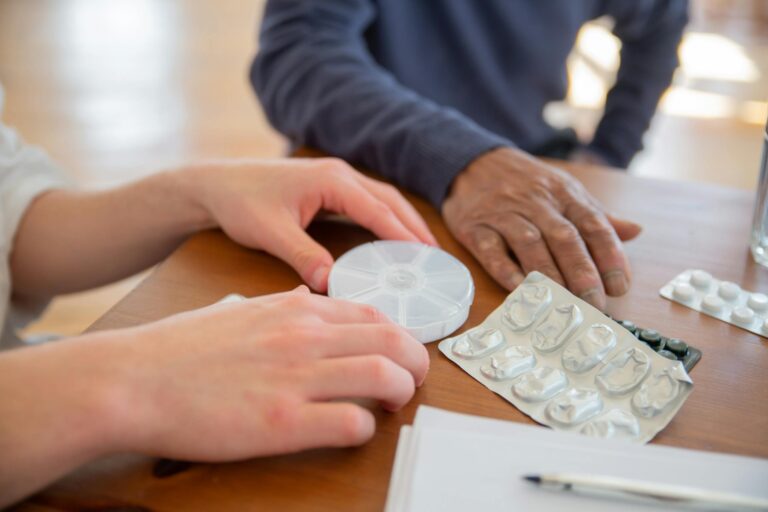

An HSP pharmacist brings something to patient care that no textbook can teach: the ability to sense what a patient isn’t saying, to notice the hesitation before a question, to feel the weight of a prescription that represents a diagnosis someone is still processing. Highly sensitive people in pharmacy don’t just dispense medications, they absorb the emotional context of every interaction and use it to serve patients more completely. That sensitivity, which can feel like a liability in louder professional environments, becomes a genuine clinical strength behind the pharmacy counter.
Pharmacy is one of those careers where the HSP trait aligns with the actual demands of the work in ways that aren’t immediately obvious from the outside. The attention to detail, the careful processing of complex information, the capacity for empathy in high-stakes moments, these are not soft extras. They are core competencies. And for highly sensitive people who have spent years wondering whether their wiring fits the professional world, pharmacy offers a compelling answer.
If you’ve been exploring whether your sensitivity is a professional asset or a complication, you’re asking exactly the right question. Our HSP and Highly Sensitive Person hub covers the full landscape of what it means to be wired this way, from relationships to career paths to daily life. This article focuses specifically on what it looks like when a highly sensitive person chooses pharmacy as their professional home.

Why Does the HSP Nervous System Actually Fit Pharmacy Work?
My years running advertising agencies taught me something counterintuitive about sensitive people in high-stakes environments. The ones who picked up on subtle client signals, who noticed when a presentation was landing wrong before anyone said a word, who felt the emotional undercurrent of a room, those were often the people who made the fewest costly mistakes. Sensitivity wasn’t a liability in that world. It was a form of intelligence that most people weren’t even measuring.
What’s your personality type?
Take our free 40-question assessment and get a detailed personality profile with dimension breakdowns, context analysis, and personalised insights.
Discover Your Type8-12 minutes · 40 questions · Free
Pharmacy operates on similar logic, even if the stakes are measured in patient safety rather than campaign budgets. The HSP nervous system is wired for what Dr. Elaine Aron, the psychologist who pioneered HSP research, describes as deep processing. Highly sensitive people don’t skim information. They layer it, cross-reference it, and hold it alongside everything else they know. In a profession where a missed drug interaction or a misread dosage can have serious consequences, that kind of processing is not a personality quirk. It’s a professional advantage.
A 2022 study published in Frontiers in Psychology found that sensory processing sensitivity is associated with stronger empathic accuracy and heightened awareness of others’ emotional states. For a pharmacist, this translates directly into the ability to notice when a patient seems confused about their dosing instructions, when someone is embarrassed to ask a question, or when the person picking up a prescription for a family member is carrying more than just a paper bag out the door.
There’s also the matter of conscientiousness. Highly sensitive people tend to be thorough in ways that feel almost compulsive to them but look like excellence from the outside. I experienced this in my own work. I was never the loudest person in a client meeting, but I was almost always the person who had read every brief twice, who had thought through the counterarguments before anyone raised them, who had noticed the inconsistency in the data that everyone else glossed over. That same quality in a pharmacist means catching the contraindication that a less careful eye might miss.
| Career / Role | Why It Fits | Key Strength Used | Watch Out For |
|---|---|---|---|
| Clinical Pharmacist | Intellectually deep work with meaningful patient interactions and clear purpose. Complex medication regimens allow for the layered processing HSPs naturally excel at. | Deep processing ability and attention to subtle clinical details | Emotional intensity of patient cases may require careful recovery time management between shifts |
| Oncology Pharmacist | Emotionally demanding specialty where HSP attunement to patient needs becomes a clinical asset. Requires the empathy and nuanced communication HSPs naturally provide. | Emotional intelligence and capacity for deep patient attunement | Cumulative emotional weight of working with seriously ill patients requires strong boundary setting and recovery practices |
| Telepharmacy Specialist | Remote work reduces sensory overload from fluorescent lighting and constant interruptions while maintaining clinical engagement. Allows focus on medication review from quieter settings. | Deep focus and attention to detail without environmental sensory stress | Lack of visual cues in phone interactions may require extra skill development in verbal communication clarity |
| Drug Information Consultant | Complex research and analysis work plays to HSP strengths in layered processing. Typically allows control over work environment and pace, reducing sensory demands. | Thorough information processing and ability to notice subtle patterns | Isolated work may feel lonely for some HSPs; intentional relationship building with colleagues needed |
| Specialty Pharmacy Consultant | Longer patient relationships with nuanced conversations allow HSPs to use their attunement skills effectively. Less high-volume chaos than retail settings. | Capacity for meaningful relationships and reading unspoken patient needs | Complex cases may carry emotional weight; compartmentalization between patients important for wellbeing |
| Pharmacy Supervisor or Director | Quiet leadership style often proves more effective than aggressive management. HSP ability to notice team member needs and unspoken concerns creates better workplace culture. | Perceptiveness about team dynamics and genuine care for staff wellbeing | Managing conflict may feel emotionally draining; developing assertive communication skills without losing authenticity matters |
| Patient Counseling Specialist | HSPs excel at reading what patients actually need beyond literal questions. Attunement to hesitation, body language, and emotional undercurrent improves medication adherence and outcomes. | Ability to detect unspoken concerns and create safe space for honest conversation | Emotional labor of holding patient distress may accumulate; scheduled breaks and decompression time essential |
| Pharmacy Educator or Clinical Trainer | Teaching allows HSPs to use their depth of processing to explain complex concepts clearly. One-on-one mentoring leverages their attunement to learner needs and confidence levels. | Ability to sense where learners struggle and adapt explanations accordingly | Teaching large groups with high energy may feel more draining than small group or one-on-one training |
| Remote Medication Review Specialist | Detailed analytical work from controlled environment matches HSP needs. Thorough medication regimen review requires exactly the kind of deep processing HSPs do naturally. | Meticulous attention to detail and ability to process complex medication information deeply | Risk of burnout from taking on too many cases; strict workload boundaries prevent overextension |
What Specific Pharmacy Roles Align Best With High Sensitivity?
Not all pharmacy environments are created equal, and for an HSP, the setting matters enormously. The difference between thriving and burning out in this profession often comes down to choosing the right corner of a very large field.
Clinical pharmacy is a natural fit. Working within a hospital or specialty clinic, clinical pharmacists collaborate with medical teams, review patient medication regimens, and provide direct consultation. The work is intellectually deep, the patient interactions are meaningful rather than transactional, and there’s a clear sense of purpose in each day. For someone who processes at the depth most HSPs do, this kind of complexity is energizing rather than draining.
Oncology pharmacy deserves particular mention. It’s emotionally demanding in ways that would overwhelm someone who hasn’t made peace with their sensitivity, but for an HSP who has learned to channel that depth, it can be profoundly meaningful. Patients in oncology are handling some of the most frightening moments of their lives. A pharmacist who can hold that reality with them, who notices the fear behind a question about side effects and responds to the whole person rather than just the clinical query, provides something irreplaceable.
For those who want the intellectual rigor without the constant patient-facing intensity, pharmaceutical research and drug information services offer excellent alternatives. These roles lean heavily on the HSP’s capacity for thorough analysis, pattern recognition across complex data sets, and careful written communication. The quiet focus required for this kind of work plays directly to the strengths that many highly sensitive people have spent years apologizing for.
Consulting and medication therapy management are also worth considering. These roles involve extended one-on-one conversations with patients about their complete medication picture, their lifestyle, their concerns, and their goals. For an HSP who finds brief transactional interactions less satisfying than genuine connection, this format is far more aligned with how they naturally engage. Our broader look at highly sensitive person jobs and career paths explores this principle across many professions: HSPs tend to do their best work in roles that allow depth over volume.

Where Does the Retail Pharmacy Environment Create Real Challenges for HSPs?
I want to be honest here, because I think glossing over the hard parts does more harm than good. Retail pharmacy is often where new pharmacists start, and for many HSPs, it’s also where they first feel the friction between their wiring and their environment.
The sensory load alone can be significant. Fluorescent lighting, constant background noise, phone calls layered over in-person conversations, the relentless pace of a high-volume dispensing environment. A 2024 study in Frontiers in Psychology reinforced what many HSPs already know from lived experience: environments with high sensory stimulation and frequent interruptions create measurably higher stress responses in people with elevated sensory processing sensitivity.
I remember a particular period in my agency years when we were managing six simultaneous pitches across three cities. The office was loud, the pace was relentless, and I was expected to make rapid decisions with incomplete information while maintaining perfect client-facing composure. I was good at it on the surface, but it cost me enormously. I would go home and feel a kind of bone-deep exhaustion that went beyond physical tiredness. That’s overstimulation, and it’s something every HSP in a high-volume retail pharmacy will recognize.
The interpersonal complexity adds another layer. Retail pharmacy involves managing frustrated customers, handling insurance disputes, handling prescription errors under pressure, and doing all of this with a line of people watching. For an HSP who processes criticism deeply and feels the emotional weight of every difficult interaction, these moments don’t just pass. They linger.
None of this means retail pharmacy is impossible for an HSP. It means it requires deliberate strategies for managing overstimulation and emotional recovery. It also means that if retail pharmacy is creating chronic burnout rather than manageable stress, the answer isn’t to push harder. It’s to consider whether a different pharmacy setting might let your actual strengths lead.
How Does Being an HSP Shape Patient Communication in Pharmacy?
Patient counseling is one of the most undervalued skills in pharmacy, and it’s one where highly sensitive people have a structural advantage. The ability to read what a patient actually needs from a conversation, rather than just answering the literal question asked, changes the quality of care in ways that are hard to quantify but easy to feel.
Consider the patient who picks up a new antidepressant and asks a technical question about timing. On the surface, it’s a dosing question. An HSP pharmacist might notice the slight hesitation, the way the person glances around before asking, the undercurrent of something that isn’t quite a clinical question at all. They might pause, slow down, and create space for the real conversation. That moment of attunement can matter more than any printed medication guide.
This connects to something I think about often in the context of sensitive people and relationships. The same qualities that make HSPs exceptional at reading emotional subtext in professional settings also shape how they experience intimacy and connection in their personal lives. If you’re curious about that dimension, our piece on HSP and intimacy explores how sensitivity shapes both physical and emotional connection in ways that go well beyond the workplace.
Back to patient communication: highly sensitive pharmacists also tend to be exceptionally good at explaining complex medication information in accessible language. They process the information thoroughly themselves before communicating it, which means they’re less likely to rely on jargon or to gloss over the parts that patients find confusing. They notice when comprehension isn’t landing and adjust without being asked.
A study published in PubMed Central examining patient-centered communication in pharmacy found that pharmacists who demonstrated higher empathy scores were significantly associated with better patient medication adherence outcomes. That’s not a coincidence. Empathy in clinical communication isn’t a soft skill. It’s a clinical outcome driver.

What Does the HSP Trait Mean for Pharmacy School and Early Career Stress?
Pharmacy school is demanding by design, and for highly sensitive students, the combination of academic intensity, competitive culture, and high-stakes clinical rotations can feel particularly overwhelming. Understanding that your nervous system processes stress differently isn’t a weakness to hide. It’s information you can use.
One of the most important things I’ve come to understand about my own sensitivity is that it requires deliberate management of my recovery time. During my agency years, I didn’t understand this. I thought the exhaustion I felt after intense periods was a character flaw, evidence that I wasn’t cut out for the pace. What I eventually understood is that I needed more recovery time than my extroverted colleagues, not because I was weaker, but because I was processing everything more deeply. The same volume of experience costs more cognitive and emotional energy when you’re an HSP.
For pharmacy students with this trait, this means being strategic about study environments, protecting downtime between clinical rotations, and building in genuine recovery rather than treating rest as laziness. It also means being honest with yourself about which rotations are energizing and which are depleting, because that information will be useful when you’re choosing your specialty.
It’s also worth noting that many pharmacy students who identify as highly sensitive also wonder whether they’re introverts, extroverts, or something in between. The distinction matters and it’s worth understanding clearly. Our comparison of introvert vs HSP breaks down where these two traits overlap and where they diverge, because conflating them can lead to misunderstanding your own needs.
Early career pharmacists who are highly sensitive should also pay attention to the culture of their workplace before accepting a position. A high-volume chain pharmacy that celebrates speed above all else will create a very different experience than a specialty pharmacy where the culture values thoroughness and patient relationships. The credential is the same. The daily experience is not.
How Can HSP Pharmacists Protect Their Wellbeing Without Sacrificing Career Ambition?
Sustainability is the word I keep coming back to when I think about career advice for highly sensitive people. Not just surviving a career, but building one that doesn’t require you to become someone else to maintain it.
For HSP pharmacists, sustainability starts with environment. Remote and hybrid work has opened meaningful options in pharmacy that didn’t exist a decade ago. Telepharmacy, remote medication review, and drug information consulting can all be done from quieter settings. Stanford research on remote work has consistently shown that knowledge workers, including many healthcare roles, can maintain or improve performance in home-based settings. For an HSP, the reduction in sensory load alone can significantly improve both wellbeing and output quality.
Boundary-setting is another non-negotiable. Not aggressive boundary-setting, but clear and consistent communication about what you need to do your best work. In my agency years, I eventually learned to block protected thinking time on my calendar and treat it as client-facing time. No one questioned it. The quality of my strategic work improved measurably. HSP pharmacists can apply the same principle: protecting time for thorough medication review, limiting the number of simultaneous demands during peak counseling hours, or simply advocating for workflow structures that allow depth rather than forcing speed.
The emotional recovery piece deserves its own attention. Pharmacy involves regular exposure to patient suffering, difficult diagnoses, and emotionally loaded conversations. For an HSP who absorbs emotional context rather than deflecting it, this accumulates. Building in genuine decompression rituals, whether that’s a walk between shifts, a quiet lunch, or a hard stop on work-related thinking after hours, isn’t self-indulgence. It’s professional maintenance.
The people in an HSP pharmacist’s personal life also feel the ripple effects of this emotional load. Partners and family members often find themselves on the receiving end of a sensitive person’s overflow. Our piece on living with a highly sensitive person offers perspective that’s genuinely useful for the people who love HSPs, and sometimes for HSPs themselves who want to understand how their processing affects those around them.

What Happens When an HSP Pharmacist Is Also Managing Personal Relationships?
This is a dimension of the HSP pharmacist experience that rarely gets addressed in career guides, and I think that’s a mistake. Highly sensitive people don’t leave their sensitivity at the pharmacy door. They bring it home, and the interactions between a demanding clinical career and a rich emotional personal life are worth understanding.
Many HSP pharmacists find that their capacity for empathy and emotional attunement, which serves them so well with patients, can create complexity in romantic relationships. They may feel the needs of a partner with the same intensity they feel a patient’s distress. They may need more quiet time at home than their partner expects, especially after an emotionally heavy shift. If that partner is an extrovert with different processing needs, the gap can feel significant. Our look at HSP dynamics in introvert-extrovert relationships addresses exactly this kind of friction and offers practical perspective for both people in the relationship.
For HSP pharmacists who are also parents, the demands multiply in ways that are worth acknowledging honestly. Coming home from a shift that required sustained emotional attunement and then being present for children who have their own emotional needs is genuinely hard. It’s not a failure of love or commitment. It’s a resource management challenge. Our piece on HSP parenting explores how highly sensitive people can show up fully for their children while also protecting the reserves they need to function.
What I’ve found in my own life is that the people who understand my sensitivity best are the ones I’ve been honest with about what it actually means. Not as an apology or an excuse, but as information. “I need twenty minutes of quiet when I get home before I can be fully present” is not a rejection. It’s a description of how I work. HSP pharmacists who can communicate this clearly tend to build home environments that actually support their professional sustainability rather than competing with it.
Is Pharmacy Leadership Realistic for a Highly Sensitive Person?
Every time I write about sensitive people in leadership roles, I feel the weight of my own history with this question. For most of my agency career, I assumed that leadership meant performing a kind of confident extroversion that didn’t come naturally to me. I spent enormous energy trying to match a style that wasn’t mine, and it was exhausting in a way that had nothing to do with the actual work.
What I eventually understood, and what Psychology Today has explored in depth, is that quiet leadership isn’t a lesser version of leadership. It’s a different expression of the same essential qualities, and in many contexts, it’s more effective. HSP pharmacists who move into director, chief pharmacy officer, or clinical leadership roles bring something specific to those positions: the ability to listen before deciding, to notice team dynamics that louder leaders miss, to create cultures of psychological safety because they genuinely feel the cost of its absence.
The research coming out of institutions like Stony Brook University, where much of the foundational work on sensory processing sensitivity has been conducted, consistently points to the adaptive advantages of high sensitivity in complex social environments. Leadership is one of the most complex social environments that exists. An HSP who has learned to work with their wiring rather than against it can be an exceptionally effective leader, particularly in healthcare settings where emotional intelligence is not optional.
The path to pharmacy leadership for an HSP looks different than the conventional model. It tends to be built on depth of expertise, quality of relationships, and reputation for thoroughness rather than on volume, visibility, or political maneuvering. That’s a slower path in some ways. In other ways, it’s more durable.
Also worth considering: the CDC’s research on workplace wellbeing has highlighted that autonomy and control over one’s work environment are among the strongest predictors of sustained professional performance. For HSP pharmacists in leadership, advocating for structural changes that support the whole team, quieter spaces, protected focus time, more intentional meeting cultures, isn’t just self-serving. It creates better conditions for everyone.

What Practical Steps Can an HSP Take When Considering Pharmacy as a Career?
If you’re an HSP weighing pharmacy as a career choice, or reassessing a pharmacy career you’re already in, the most useful thing you can do is get specific about your own needs before making decisions.
Start by auditing your sensory tolerances honestly. High-volume retail pharmacy involves sustained noise, frequent interruptions, and rapid task-switching. Clinical pharmacy involves deeper focus with more complex information. Specialty pharmacy often involves longer patient relationships and more nuanced conversations. None of these is objectively better. They’re different, and knowing which environment energizes you versus which depletes you is essential information.
Shadow pharmacists in multiple settings before committing to a specialty. Pharmacy school rotations are designed for exactly this kind of exploration, and HSPs should use them deliberately rather than just completing requirements. Pay attention to how you feel at the end of each rotation day, not just what you learned or how well you performed. The emotional and physical data is as important as the clinical data.
Build a support network that understands high sensitivity. This might include a therapist who works with HSPs, colleagues who share similar wiring, or mentors who have found sustainable paths in pharmacy. Isolation amplifies the challenges of high sensitivity. Community moderates them.
Consider how your pharmacy career will interact with the rest of your life. Not as a secondary concern, but as a primary design criterion. A career that looks impressive on paper but leaves you too depleted to be present for the people and experiences that matter to you is not a successful career. It’s a trade-off that deserves to be made consciously.
Finally, stop treating your sensitivity as something to manage around and start treating it as something to build on. The most effective HSP pharmacists I’ve observed are not the ones who have learned to suppress their sensitivity in professional contexts. They’re the ones who have learned to deploy it with precision, using their depth of processing, their empathic accuracy, and their attention to detail as active clinical tools rather than passive personality traits.
Explore more perspectives on what it means to be wired this way in our complete HSP and Highly Sensitive Person hub, where we cover everything from relationships to career paths to daily life as a sensitive person.
About the Author
Keith Lacy is an introvert who’s learned to embrace his true self later in life. After 20 years in advertising and marketing leadership, including running agencies and managing Fortune 500 accounts, Keith now channels his experience into helping fellow introverts understand their strengths and build fulfilling careers. As an INTJ, he brings analytical depth and authentic perspective to every article, drawing from both professional expertise and personal growth.
Frequently Asked Questions
Is pharmacy a good career for highly sensitive people?
Pharmacy can be an excellent career for highly sensitive people, particularly in clinical, specialty, or consulting roles. The HSP traits of deep processing, empathic accuracy, and thoroughness align well with the demands of medication management and patient counseling. The key consideration is environment: high-volume retail pharmacy can be overstimulating for many HSPs, while clinical and specialty settings often provide better conditions for the depth-oriented work where sensitive people excel.
What pharmacy specialties are best suited to HSPs?
Clinical pharmacy, oncology pharmacy, medication therapy management, pharmaceutical research, and drug information services tend to be strong fits for highly sensitive people. These specialties reward thoroughness, sustained attention, and meaningful patient relationships over speed and volume. Telepharmacy and remote medication review roles are also worth considering, as they reduce sensory load while maintaining the intellectual depth that HSPs find engaging.
How do HSPs handle the emotional demands of patient-facing pharmacy work?
HSPs in patient-facing pharmacy roles benefit from deliberate recovery strategies, including protected downtime between demanding interactions, clear boundaries around after-hours emotional processing, and regular decompression practices. Many HSP pharmacists find that understanding their emotional absorption as a professional tool rather than a vulnerability helps them use it more effectively. Building a support system, whether through therapy, peer relationships, or mentorship, is also important for long-term sustainability in emotionally demanding roles.
Can a highly sensitive person succeed in pharmacy leadership?
Yes, and often with distinctive effectiveness. HSP pharmacists in leadership roles tend to build strong team cultures, make thoughtful decisions, and create environments of psychological safety that benefit the whole organization. Their sensitivity to interpersonal dynamics and emotional undercurrents makes them attuned leaders who notice what others miss. The path to leadership for an HSP typically emphasizes depth of expertise and quality of relationships rather than high visibility or political maneuvering, which is a different route but often a more durable one.
How does the HSP trait affect pharmacy school performance?
Highly sensitive pharmacy students often excel academically due to their deep processing and conscientiousness, yet may find the pace and sensory demands of certain clinical rotations more draining than their peers. Managing this effectively means being strategic about recovery time, choosing study environments that minimize overstimulation, and using rotation experiences deliberately to identify which pharmacy settings feel sustainable. Understanding that needing more recovery time is a feature of how HSPs process, not a weakness, is one of the most important reframes a sensitive pharmacy student can make.