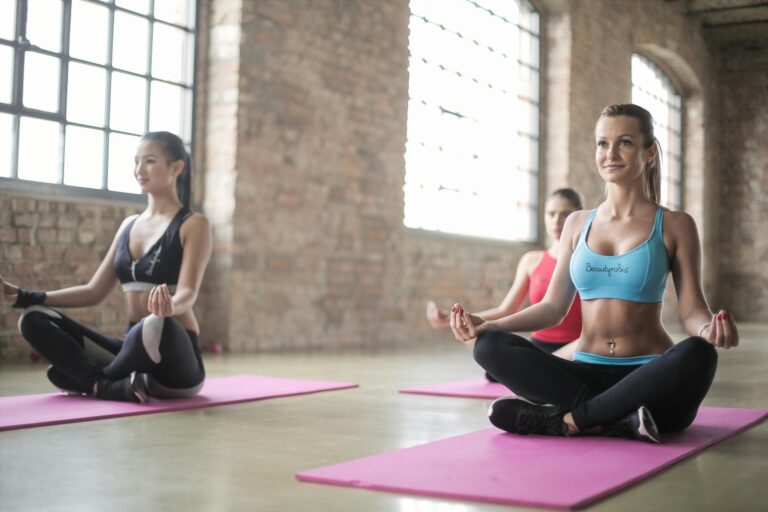

HSP self-care isn’t a luxury or an indulgence. For highly sensitive people, it’s the difference between functioning and flourishing, between getting through the day and actually living it. Daily practices that protect your nervous system, honor your depth, and create space for genuine recovery aren’t optional extras. They’re the foundation everything else rests on.
Highly sensitive people process sensory input, emotional information, and environmental stimuli more deeply than most. A 2024 study published in Frontiers in Psychology confirmed that high sensitivity involves distinct neurological patterns of deeper cognitive processing, not simply a tendency toward being “too emotional.” That distinction matters enormously when you’re building a self-care practice that actually fits who you are.
What follows isn’t a checklist of generic wellness tips repackaged for sensitive people. These are practices I’ve come to understand through years of getting it wrong first, through boardrooms that left me hollow, through client dinners that cost me three days of recovery, and through the slow, honest work of learning what my nervous system actually needs.

If you want a broader view of how solitude, recharging, and intentional self-care fit together for sensitive introverts, our Solitude, Self-Care & Recharging hub covers the full landscape. This article goes deeper into the daily practices specifically, the small, consistent choices that compound into something meaningful over time.
What Makes HSP Self-Care Different From General Wellness Advice?
Most wellness content is written for people who need a nudge toward self-care. Highly sensitive people don’t need the nudge. They need the right kind of care, delivered in ways that match how their nervous system actually operates.
What’s your personality type?
Take our free 40-question assessment and get a detailed personality profile with dimension breakdowns, context analysis, and personalised insights.
Discover Your Type8-12 minutes · 40 questions · Free
General wellness advice tends to treat self-care as additive. Add a meditation practice. Add a gratitude journal. Add a morning run. For highly sensitive people, the more pressing question is often subtractive. What can you remove from your day that’s draining you faster than any practice can replenish?
I ran advertising agencies for over twenty years, and I was genuinely good at the work. Strategy, creative direction, client relationships. But I consistently underestimated how much the environment cost me. Open-plan offices, back-to-back meetings, constant context-switching. I thought the exhaustion was a character flaw. Something to push through. It took me an embarrassingly long time to understand that my nervous system was simply processing everything at a higher volume than most of my colleagues, and that no amount of willpower was going to change that underlying reality.
Psychology Today’s coverage of high sensitivity research makes an important clarification worth holding onto: high sensitivity is a trait, not a wound. It’s not something that happened to you. It’s how you were built. That reframe changes everything about how you approach self-care, because you stop trying to fix yourself and start trying to support yourself instead.
How Does Morning Routine Shape an HSP’s Entire Day?
The first hour of the day sets a neurological tone that carries forward. For highly sensitive people, that’s not a metaphor. It’s fairly literal. How you enter the day determines how much buffer you have when things get loud later.
Slow mornings aren’t laziness. They’re a form of preparation. When I finally stopped checking email before I’d had coffee, stopped letting the day’s demands rush in before I’d had five minutes of quiet, the difference was noticeable within a week. Not dramatic. Not overnight. But real.
A few morning practices that genuinely help:
Protecting the First Twenty Minutes
No phone. No news. No social media. This isn’t about being uninformed or disconnected. It’s about giving your nervous system a chance to come online at its own pace before the world starts making demands. For highly sensitive people, that transition from sleep to full wakefulness benefits from some breathing room.
A 2017 study in PubMed Central found that mindfulness practices in the morning reduced cortisol reactivity throughout the day, which matters significantly for people whose stress response is already more finely tuned than average. You don’t need a formal meditation practice to get some of that benefit. Quiet tea. A few minutes of stillness. Enough space to arrive in the day rather than being thrown into it.
Intentional Sensory Input
What you hear, see, and feel in the morning matters more than most people realize. Highly sensitive people absorb environmental input continuously, so choosing that input deliberately is an act of care. Soft lighting instead of overhead fluorescents. Music you find genuinely calming rather than background noise that just happens to be on. A temperature that feels comfortable rather than tolerable.
These feel like small things. They accumulate into something significant across a week.

What Role Does Solitude Play in Daily HSP Self-Care?
Solitude isn’t a retreat from life for highly sensitive people. It’s where processing happens. Where the day’s emotional residue gets sorted. Where you return to yourself after spending hours in environments that required constant adaptation.
I’ve written before about how solitude isn’t selfish, it’s essential, and that’s doubly true for people with high sensitivity. The question isn’t whether you need alone time. It’s whether you’re building it into your day with the same intentionality you’d give any other non-negotiable commitment.
During my agency years, I had an informal practice I didn’t have a name for at the time. After particularly dense days, I’d take the long way home. An extra twenty minutes in the car, no music, no podcasts, no calls. Just the road and the quiet. My wife eventually pointed out that I was measurably more present when I arrived home on those evenings. I’d been giving myself a decompression chamber without realizing that’s what it was.
Building deliberate solitude into your day doesn’t require grand gestures. It requires consistency. A lunch break spent alone rather than at a group table. A short walk between meetings. Fifteen minutes after work before engaging with household demands. These pockets of solitude function as reset points for a nervous system that’s been absorbing and processing all day.
For highly sensitive people who also identify as introverts, the need for this kind of recovery time is compounded. Our comprehensive look at introvert self-care strategies covers the broader framework, but the daily application comes down to protecting these small pockets of restoration before the day fills them in.
How Can Mindfulness Support an HSP’s Sensitive Nervous System?
Mindfulness gets recommended so broadly that it can start to feel like a platitude. But for highly sensitive people, it has a specific and practical function: it creates a small gap between stimulus and response. That gap is where you get to choose how you engage with what you’re experiencing, rather than being swept along by it.
The challenge is that standard mindfulness instruction often doesn’t account for the particular experience of high sensitivity. Sitting in silence and “observing your thoughts” can feel overwhelming when you’re someone who processes at depth and volume. The thoughts aren’t gentle background noise. They’re a full-production experience.
A more useful framing for HSPs is mindfulness as sensory anchoring. Rather than trying to quiet the internal world, you give your attention something specific and manageable to rest on. The weight of your hands. The temperature of the air. The sound of rain against a window. Practices that work with your sensory attunement rather than against it.
Our guide to mindfulness and meditation practices that actually work for introverts covers specific techniques in detail. What I’d add from personal experience is that the most effective practice is the one you’ll actually do consistently, even if it’s only five minutes. Consistency matters more than duration.
A 2014 study in PubMed found that even brief mindfulness interventions reduced emotional reactivity and improved cognitive flexibility. For people who are already doing a lot of internal processing, that reduction in reactivity creates meaningful breathing room across the day.
Why Is Nature Exposure a Core HSP Self-Care Practice?
Highly sensitive people tend to respond to natural environments with particular intensity. The relief of stepping outside after hours in an office, the way a walk in a park can shift your entire internal state. That’s not imagination. There’s a real physiological basis for it.
A piece from Yale’s Environment 360 on ecopsychology documents how time in natural settings reduces cortisol, lowers blood pressure, and decreases activity in the prefrontal cortex regions associated with rumination. For someone whose mind processes continuously and deeply, that last point is worth sitting with. Nature doesn’t just feel calming. It actively reduces the kind of mental churning that highly sensitive people are particularly prone to.
I had a client, a major consumer packaged goods brand, whose account required quarterly trips to their headquarters in a dense urban center. Three days of back-to-back meetings, client dinners, and the particular sensory intensity of a city I wasn’t used to. By the end of those trips I was wrung out in a way that a weekend of rest didn’t fully address. What actually helped was building in a morning walk through whatever green space I could find, even a city park, before the day started. It wasn’t a cure, but it was a genuine buffer.
You don’t need wilderness access to benefit from nature exposure. A park bench. A garden. A tree-lined street. Twenty minutes of deliberate attention to the natural world around you can shift your nervous system’s baseline in ways that carry through the rest of the day.
How Should HSPs Approach Boundaries as a Self-Care Practice?
Boundaries aren’t a self-care topic that gets discussed enough in the context of high sensitivity, possibly because the word itself has become so loaded with self-help language that it’s hard to talk about practically. So let me be specific.
For highly sensitive people, boundaries are primarily about managing your exposure to overstimulation before it reaches the point of overwhelm. That means making decisions in advance, when you’re calm and thinking clearly, rather than in the moment when you’re already depleted and more likely to either capitulate or overcorrect.
Some examples from my own experience:
Declining evening events when I had early morning deliverables. Not because I was antisocial, but because I knew the combination would cost me two days of real productivity. Telling clients that I was available for calls between specific hours, and holding that line even when it felt uncomfortable. Leaving conferences after the sessions I’d planned to attend rather than staying for the full social program.
None of these felt easy at first. There’s a particular flavor of anxiety that comes with saying no when you’re someone who processes social dynamics deeply and worries about how you’re perceived. But the alternative, saying yes to everything and then managing the fallout internally, was far more costly.
Building the confidence to communicate these limits clearly is its own practice. Our piece on introvert communication confidence addresses the self-doubt that often gets in the way, and it’s worth reading alongside this one, because the internal work and the external communication are deeply connected.
What Does Evening Recovery Look Like for Highly Sensitive People?
The evening is where the day’s processing either gets completed or gets carried into sleep. For highly sensitive people, that distinction matters. Incomplete processing tends to surface as rumination, restless sleep, or a vague sense of heaviness that follows you into the next morning.
Evening self-care for HSPs has a specific goal: helping your nervous system complete what it started during the day, so you can actually rest.
Reflective Writing
Journaling is recommended so often that it risks sounding generic. But for highly sensitive people, writing serves a specific neurological function. It externalizes the internal, gives form to experience, and creates enough distance from the day’s events to process them rather than just relive them.
Research published in PubMed Central found that expressive writing reduced psychological distress and improved emotional regulation, particularly for individuals with high emotional reactivity. You don’t need to write pages. Even ten minutes of honest, unfiltered writing about what you experienced that day can help close the loop on unfinished processing.
The depth that highly sensitive people bring to reflection is genuinely valuable, not just personally but professionally. Our article on the importance of reflection for introverts explores this as a cognitive strength worth cultivating, not just a coping mechanism.
Sensory Wind-Down
The hour before sleep is not the time for high-stimulation content. For highly sensitive people, what you consume in that final hour tends to stay with you. A tense drama, a heated podcast, even an absorbing novel can keep your nervous system engaged long after you’ve closed the screen or the book.
Deliberately lowering sensory input in the evening, dimmer light, quieter sound, slower movement, signals to your nervous system that the day is actually ending. That transition matters more for HSPs than for most, because the processing doesn’t stop just because you’ve decided it’s time to sleep. You have to create the conditions for it to slow down.

How Do Highly Sensitive People Manage Emotional Residue From Others?
One of the more specific challenges of high sensitivity is that other people’s emotional states don’t stay with those people. They come with you. A colleague’s anxiety, a client’s frustration, a friend’s grief. These register at depth, and they require active processing to move through rather than accumulate.
A 2019 study in PubMed found that highly sensitive individuals showed significantly stronger neural responses to others’ emotional expressions, particularly positive ones, suggesting that the heightened empathic response is neurologically based rather than simply a personality preference. You’re not choosing to absorb the room. Your brain is built to do it.
Knowing that doesn’t make it easier to manage automatically, but it does change how you approach the management. Instead of trying to stop absorbing, you create practices that help you discharge what you’ve taken on.
Physical movement helps. Not necessarily intense exercise, though that works for some people, but movement that’s rhythmic and grounding. Walking. Swimming. Yoga. Something that brings you back into your body and out of the emotional residue you’ve been carrying.
Naming what you’re carrying also helps. There’s a meaningful difference between feeling vaguely heavy and being able to say “I absorbed a lot of tension in that meeting and I’m still holding it.” The specificity creates some distance. It shifts you from experiencing the emotion to observing it, which is where your capacity to process it actually lives.
What Does Sustainable HSP Self-Care Actually Look Like Over Time?
Sustainability is where most self-care advice fails. It’s easy to build an elaborate morning routine when you have a clear week ahead. The real test is what you maintain when a client crisis lands, when travel disrupts your schedule, when life compresses everything you’d carefully structured.
For highly sensitive people, sustainable self-care tends to be simpler than we initially design it. The elaborate systems collapse under pressure. What survives is whatever you’ve made genuinely non-negotiable, the two or three practices you protect even when everything else falls away.
For me, those have settled into three things: morning quiet before anything else enters, some form of outdoor time during the day however brief, and reflective writing before sleep. Everything else I do is supplementary. When things get hard, I don’t try to maintain the full practice. I protect those three.
Building that kind of tiered approach, knowing which practices are your foundation and which are your ideal, is part of what makes self-care actually sustainable for people who are already doing a great deal of internal work just to move through ordinary days.
For a comprehensive look at how this fits into a broader self-care framework, The Introvert’s Guide to Self-Care covers the full picture of thriving in a world that often defaults to extroverted norms. The daily practices in this article are most powerful when they sit inside that larger understanding of who you are and what you need.
High sensitivity, at its core, is a capacity for depth. The same nervous system that makes crowded airports exhausting is the one that makes you extraordinary at reading a room, at noticing what others miss, at bringing genuine care to your work and relationships. The self-care practices that serve you best aren’t about dampening that capacity. They’re about giving it the conditions it needs to function at its best rather than its most overwhelmed.
That’s the reframe that changed everything for me. Not “how do I manage this trait” but “how do I support it.” The practices follow naturally from there.
Find more resources on building a life that honors how you’re wired in our Solitude, Self-Care & Recharging hub, where we cover the full range of practices for introverts and highly sensitive people who want to thrive on their own terms.
About the Author
Keith Lacy is an introvert who’s learned to embrace his true self later in life. After 20 years in advertising and marketing leadership, including running agencies and managing Fortune 500 accounts, Keith now channels his experience into helping fellow introverts understand their strengths and build fulfilling careers. As an INTJ, he brings analytical depth and authentic perspective to every article, drawing from both professional expertise and personal growth.
Frequently Asked Questions
What is HSP self-care and why does it differ from general self-care?
HSP self-care refers to practices specifically designed for highly sensitive people, whose nervous systems process sensory and emotional information more deeply and intensely than average. General self-care advice is often additive, encouraging people to add more practices to their routine. For highly sensitive people, effective self-care is frequently about reducing overstimulation, protecting recovery time, and creating consistent daily rhythms that prevent depletion rather than just responding to it after the fact.
How much alone time do highly sensitive people actually need each day?
There’s no universal number, but most highly sensitive people benefit from at least one to two intentional periods of solitude daily, even if each is only fifteen to twenty minutes. The quality of that time matters as much as the quantity. Solitude spent scrolling through your phone doesn’t offer the same recovery as solitude spent in genuine quiet or in nature. The goal is giving your nervous system time to process and reset without new input arriving continuously.
Can mindfulness make high sensitivity worse by increasing self-awareness?
Standard mindfulness instruction can feel counterproductive for highly sensitive people if it’s approached as “observe everything you’re feeling without judgment,” because HSPs are already doing a great deal of that observing. A more effective approach for people with high sensitivity is sensory anchoring, directing attention to a specific physical sensation rather than the broader field of internal experience. This creates the gap between stimulus and response that mindfulness is meant to provide, without amplifying the already-intense internal processing that HSPs naturally do.
Is high sensitivity the same as being an introvert?
High sensitivity and introversion overlap significantly but are distinct traits. Research suggests that roughly 70 percent of highly sensitive people are introverts, but about 30 percent are extroverts. Both traits involve a preference for less stimulation than the average person seeks, but introversion is primarily about where you direct your energy and attention, while high sensitivity is about the depth and intensity with which you process all incoming information, whether social, sensory, or emotional. Many of the self-care practices that support one trait also support the other.
What are the most important daily HSP self-care practices to start with?
If you’re building a daily practice from scratch, start with three things: protect the first twenty minutes of your morning from incoming demands, build at least one period of genuine solitude into your day, and create a wind-down routine in the evening that lowers sensory input before sleep. These three practices address the beginning, middle, and end of your nervous system’s daily cycle. Once these are consistent, you can layer in additional practices like mindfulness, nature exposure, or reflective writing based on what your particular experience of high sensitivity most needs.