

Wanting to leave your homebody ways behind doesn’t mean something is wrong with you, and it doesn’t mean something was ever wrong with staying home in the first place. It means you’ve changed, or the world around you has shifted, or you’ve simply reached a point where the comfort you once found in your own four walls has started to feel more like a ceiling than a refuge.
Many introverts arrive at this exact crossroads. The home that once felt like the answer starts to feel like the only answer, and that’s a different thing entirely.

There’s a whole conversation happening around how introverts relate to their home environments, and it’s worth spending time in that space before drawing conclusions about what your restlessness actually means. Our Introvert Home Environment hub explores how introverts experience, create, and sometimes outgrow their domestic sanctuaries. This article sits inside that larger conversation, focused on the specific moment when “I love being home” quietly becomes “I want something more.”
What Does It Actually Mean When You Don’t Want to Be a Homebody Anymore?
Somewhere around year fifteen of running my agency, I noticed something uncomfortable. My home had become less of a recharge station and more of a hiding place. The distinction matters. A recharge station is where you go to fill back up so you can engage with the world more fully. A hiding place is where you go to avoid the world altogether.
What’s your personality type?
Take our free 40-question assessment and get a detailed personality profile with dimension breakdowns, context analysis, and personalised insights.
Discover Your Type8-12 minutes · 40 questions · Free
Both can look identical from the outside. Both involve a quiet evening, a comfortable couch, a book or a screen. But they feel completely different from the inside, and I think that feeling is exactly what many people are trying to name when they say they don’t want to be a homebody anymore.
They’re not rejecting introversion. They’re not suddenly craving packed social calendars or loud Friday nights. What they’re rejecting is the version of home life that has started to contract around them rather than expand them. There’s a meaningful difference between choosing solitude and defaulting to it, and that difference is worth examining honestly.
A study published in PubMed Central explored how social connection and physical environment interact with overall wellbeing, and the findings point toward something introverts often resist acknowledging: even people who genuinely prefer solitude experience measurable costs when social engagement drops below a certain threshold. Not because introversion is a flaw, but because humans are wired for connection at some level, regardless of where they fall on the personality spectrum.
Is This Restlessness a Sign Something Is Wrong With You?
No. And I want to say that clearly because the introvert community can sometimes create its own version of the pressure it’s trying to escape. There’s a quiet orthodoxy that says real introverts love being home, full stop, end of conversation. Any deviation from that becomes suspect, a sign that you’ve been influenced by extrovert culture, or that you’re not really as introverted as you thought.
That framing is just as limiting as the extrovert culture it’s pushing back against.
Introversion describes where you draw your energy, not the full shape of your life. An introvert can love hiking with a small group of friends, can crave new experiences, can feel genuinely bored by too much sameness, and can want to build a life that includes more than the carefully curated comfort of home. None of that contradicts being introverted. It just means you’re a complete person with layered needs.

I’ve watched this play out in my own life in specific ways. After my agency grew to a certain size, I had more financial freedom than I’d ever had before, and I found myself spending it almost entirely on things for my home. Better furniture. A reading setup I’d always wanted. Upgrades that made staying in even more appealing. At the time, I told myself I was investing in my environment. Looking back, I was building a more elaborate version of the same comfortable avoidance.
There’s nothing inherently wrong with loving your home. If you’re exploring what makes a homebody’s space genuinely nourishing, the ideas in a good homebody book can offer real perspective on the difference between a space that supports you and one that simply contains you. But the restlessness I’m describing isn’t solved by a better reading nook. It’s a signal worth taking seriously.
When Did Being a Homebody Shift From a Strength to a Limitation?
This is the question that actually matters, and it’s more specific than it sounds. There’s usually a moment, or a slow accumulation of moments, where the shift happened. Identifying it helps separate the real issue from the surface-level discomfort.
For some people, the shift comes after a major life change. A relationship ends, or a job changes, or a close friend moves away, and suddenly the home that was built around a certain version of your life no longer fits the life you’re actually living. The comfort remains, but it’s hollow in a new way.
For others, the shift is more gradual. Years of prioritizing home over everything else have created a life that is, objectively, quite small. Not small in a pejorative sense, but small in the sense that the range of experiences, relationships, and challenges you’re encountering has narrowed significantly. And some part of you, the part that is curious and alive and wants to grow, has started to push back.
A 2024 paper in Frontiers in Psychology examined how personality traits interact with life satisfaction over time, and one consistent thread in that research is that stagnation, regardless of how comfortable it looks, tends to erode wellbeing in ways that are slow but cumulative. The person who has everything they need but nothing pulling them forward often can’t name exactly why they feel off. They just know something is missing.
For highly sensitive introverts in particular, this can be especially confusing. The home environment has been so carefully calibrated for comfort and low stimulation that stepping outside it feels disproportionately difficult. If you’ve spent time thinking about HSP minimalism and how sensitive people create supportive spaces, you know how much intentional work can go into building a home that genuinely works for your nervous system. The challenge is that the same intentionality can tip into over-engineering a life that never has to be uncomfortable, which is a different problem entirely.
What Are You Actually Craving When You Want More Than Home?
Getting specific here is important, because “I don’t want to be a homebody anymore” can mean several different things, and they each point toward different responses.
Sometimes what you’re craving is genuine human connection, the kind that happens in person, with depth and presence and the specific texture of being physically near someone you care about. This is worth acknowledging directly. Many introverts have found ways to meet their social needs through digital means, and those can be genuinely valuable. Online spaces and chat rooms built for introverts can offer real connection on your own terms. Even so, there’s something that digital connection doesn’t fully replicate, and if that’s what you’re missing, no amount of optimizing your home environment will address it.
Sometimes the craving is for novelty and stimulation, not social stimulation necessarily, but the kind that comes from being in new places, encountering unexpected things, having your assumptions disrupted by the world outside your carefully arranged space. Introverts need this too, even when they resist admitting it.

And sometimes, honestly, the craving is for a sense of purpose or contribution that home life alone can’t provide. This was the one that snuck up on me. My home was genuinely restorative. My home office was productive. My routines were solid. Yet something felt unfinished, like I was only using part of what I was capable of. Psychology Today has written about the introvert’s deep need for meaningful engagement, and that framing clicked for me in a way that “get out more” never did. It wasn’t about quantity of experience. It was about depth and meaning, and I had somehow arranged my life to be comfortable without being fully engaged.
How Do You Start Expanding Your Life Without Abandoning What Works?
This is where the practical conversation begins, and I want to be honest that it’s not a clean process. There’s no tidy framework for “transitioning from homebody to more engaged person while preserving your introversion.” What there is, is a series of small experiments and honest assessments.
Start with the lowest-stakes version of what you’re craving. If you want more in-person connection, don’t sign up for a weekly social obligation that will exhaust you within a month. Find one person you genuinely want to spend time with and make a specific plan. Not “let’s get together sometime” but “can we have dinner on the 12th.” One concrete thing.
If you want more novelty, you don’t have to overhaul your life. Walk a different route. Try a coffee shop you’ve never been to. Go to a museum alone on a Tuesday morning when it’s quiet. Novelty doesn’t require company or spectacle. It just requires showing up somewhere that isn’t your usual space.
If what you’re missing is purpose and contribution, that often requires more honest reflection. What did you care about before you got so comfortable? What skills do you have that you’re not using? What would you regret not having tried? These questions don’t have quick answers, but sitting with them is more productive than rearranging your home for the fifteenth time.
I’ll tell you what this looked like for me specifically. After years of building a life that was professionally successful and personally comfortable but quietly contracted, I started writing. Not for anyone else initially, just for myself. Then I started sharing it. Then I built Ordinary Introvert. The process was slow and uncomfortable in ways my optimized home life had taught me to avoid. But the discomfort was generative rather than depleting, which is the key distinction I’d learned to look for.
There’s a related point worth making about the physical space itself. A PubMed Central piece on environment and psychological wellbeing touches on how physical spaces shape behavior in ways we often underestimate. If your home is optimized entirely for staying in, it will subtly reinforce staying in. That’s not an argument for making your home less comfortable. It’s an argument for being intentional about whether your space supports the full life you want, not just the version of life that requires the least friction.
What Do You Do With the Identity Shift That Comes With This Change?
This part doesn’t get talked about enough. Being a homebody can become an identity, not just a preference. It’s how you explain yourself to others. It’s how you decline invitations without having to justify yourself. It’s a shorthand that has probably served you well. When you start to move away from it, even gradually, there’s a real disorientation that comes with that.
People who know you as the homebody might push back, not maliciously, but because your change disrupts the story they have about you. You might find yourself second-guessing whether you’re being authentic or just caving to social pressure. You might feel like you’re betraying something, even though you can’t quite name what.

What I’ve found, both personally and in talking with other introverts who’ve been through this, is that the identity shift is easier when you’re expanding rather than replacing. You’re not giving up your love of home. You’re adding to what home means in the context of a larger life. The couch is still there. The quiet evenings are still there. The careful, deliberate way you process the world hasn’t gone anywhere. You’re just choosing to bring that same quality of attention to more of the world than you previously allowed yourself.
Speaking of that couch, there’s something worth acknowledging here. The homebody’s relationship with their couch is genuinely symbolic of something real, the comfort of a space that asks nothing of you. That comfort has real value. success doesn’t mean eliminate it. The goal is to make sure it’s a choice you’re making rather than a default you’ve fallen into.
Identity shifts of this kind can also affect relationships in ways that are worth anticipating. If you’ve built close friendships primarily around shared homebodiness, moving toward a more engaged life might create some friction. Psychology Today’s framework for introvert-extrovert conflict resolution offers some useful thinking here, not because the conflict is necessarily with extroverts, but because the underlying dynamic of handling different social needs is relevant whenever two people’s preferences diverge.
How Do You Know the Difference Between Growth and Self-Betrayal?
This is the question that sits underneath all the others, and it’s one I’ve wrestled with more than I’d like to admit.
Early in my agency career, I pushed myself to be more extroverted because I thought that’s what leadership required. I went to every networking event. I performed enthusiasm I didn’t feel. I told myself I was growing when I was actually just exhausting myself in ways that served other people’s expectations of what a leader should look like. That wasn’t growth. That was self-betrayal dressed up as ambition.
The difference, as best as I can articulate it, comes down to the direction of the energy. When I’m pushing myself to do something that depletes me in a way that doesn’t replenish, that leaves me feeling less like myself rather than more, that requires me to perform rather than engage, that’s usually a sign I’m moving in the wrong direction for the wrong reasons.
When I’m doing something that’s uncomfortable but alive, that challenges me without erasing me, that connects me to something I actually care about, the discomfort feels different. It’s the discomfort of growth rather than the discomfort of suppression. Learning to tell those two apart has been one of the more useful things I’ve done.
If you’re in the process of figuring this out, it can help to pay attention to what you’re drawn to when you imagine a more engaged life. Not what you think you should want, not what would impress people who know you as the homebody, but what actually pulls at you when you’re honest. That pull is usually pointing toward something real.
And if you’re still in a season where home is genuinely what you need, there’s no shame in that either. The people in your life who understand you well enough to celebrate your homebody tendencies, the ones who give you gifts for homebodies that actually reflect who you are, those people know something true about you. Honoring that truth while also allowing it to evolve is not a contradiction.
What Does a More Engaged Introvert Life Actually Look Like in Practice?
Not like an extrovert’s life. That’s worth saying plainly, because the fear underneath “I don’t want to be a homebody anymore” is sometimes that the only alternative is becoming someone you’re not.
A more engaged introvert life looks like one meaningful conversation per week rather than five shallow ones. It looks like one new experience per month, chosen deliberately, experienced fully, and then processed quietly at home afterward. It looks like a project or a purpose that pulls you outside your comfort zone in a direction that matters to you, not one that performs engagement for an audience.
It still involves a lot of time at home. That doesn’t change. What changes is the relationship between home and the rest of life. Home becomes the place you return to with something to reflect on, rather than the place you never leave because there’s nothing to reflect on.
I’ve had seasons where I found the right balance and seasons where I lost it again. The agency years were often too much outward engagement with too little genuine depth. The early years of Ordinary Introvert swung in the other direction, too much solitude, too little real connection. Finding the right ratio is an ongoing process, not a destination you arrive at once and stay.
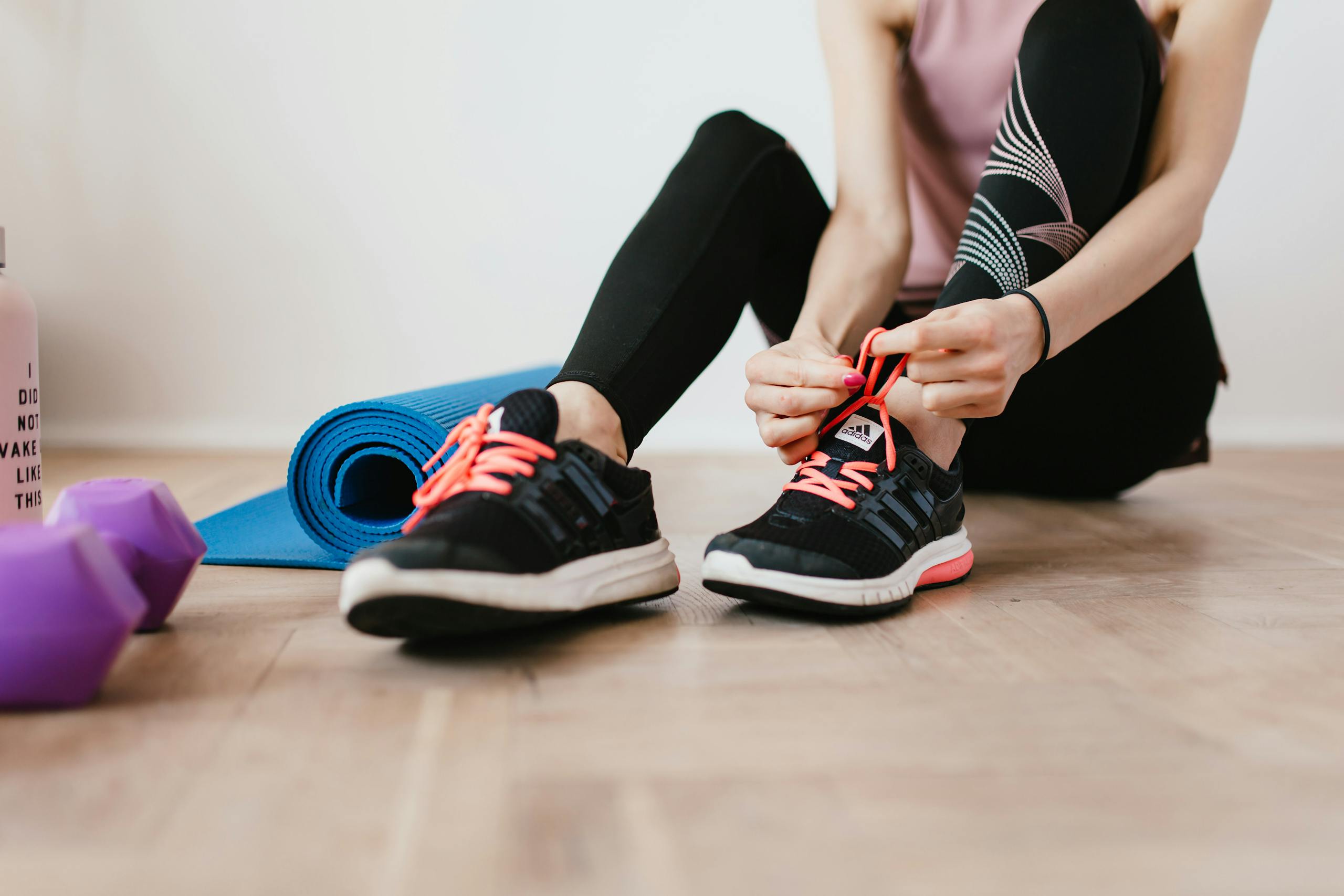
What helps is having a home environment that supports the full version of you, not just the version that wants to stay in. If you’ve been curating your space primarily around comfort and retreat, it might be worth thinking about whether it also supports preparation and return. A space that helps you get ready to go out, that welcomes you back with genuine restoration after you do, is different from a space that simply makes leaving feel unnecessary.
There’s a whole category of things that make this balance more sustainable, the kinds of items that show up in a thoughtful homebody gift guide aren’t just about staying in. The best ones support the full rhythm of an introvert’s life, the going out and the coming back, the engagement and the restoration. That rhythm is what a genuinely well-lived introvert life looks like, not an endless retreat from the world, but a sustainable cycle of engagement and renewal.
If you want to explore more of the ideas around how introverts relate to their home environments, including when those environments support growth and when they limit it, the full Introvert Home Environment hub covers the range of that conversation in depth.
About the Author
Keith Lacy is an introvert who’s learned to embrace his true self later in life. After 20 years in advertising and marketing leadership, including running agencies and managing Fortune 500 accounts, Keith now channels his experience into helping fellow introverts understand their strengths and build fulfilling careers. As an INTJ, he brings analytical depth and authentic perspective to every article, drawing from both professional expertise and personal growth.
Frequently Asked Questions
Is it normal for an introvert to not want to be a homebody anymore?
Yes, and it’s more common than the introvert community often acknowledges. Introversion describes your energy source, not the full scope of what you need from life. Many introverts reach a point where the comfort of home life starts to feel limiting rather than restorative. That shift usually signals a need for more meaningful engagement, deeper connection, or new experiences, none of which contradict being introverted. It means you’re growing, and your needs are evolving along with you.
What’s the difference between healthy solitude and unhealthy isolation?
Healthy solitude is chosen and purposeful. You’re at home because it genuinely restores you, and you’ll engage with the world again when you’re ready. Unhealthy isolation tends to be avoidant. You’re at home because going out feels too hard, too risky, or too effortful, and the idea of engaging with the world has started to feel more threatening than appealing. The practical test is whether your time at home leaves you feeling more capable and connected to life, or less. If staying in consistently makes the outside world feel more distant and more daunting, that’s worth paying attention to.
Can you stop being a homebody without losing your introversion?
Completely. Introversion is a stable trait related to how you process stimulation and where you draw energy. Being a homebody is a lifestyle pattern, and lifestyle patterns can change without changing who you fundamentally are. Many introverts live quite engaged, outward-facing lives while still needing and prioritizing significant time alone to recharge. success doesn’t mean stop being introverted. It’s to stop letting introversion become a reason to avoid the parts of life that would actually enrich you.
How do you start expanding your life when staying home has become a deep habit?
Start smaller than feels necessary. The instinct is often to make a dramatic change, to sign up for something big or commit to a new social routine. That approach tends to fail quickly because it asks too much too soon. A more sustainable approach is to identify one specific thing you’ve been avoiding that you actually want, and take the smallest possible step toward it. One conversation, one outing, one new experience. Build from there based on what actually resonates rather than what you think you should be doing. Gradual expansion tends to stick in a way that dramatic overhauls rarely do.
What if the people in your life expect you to stay a homebody?
Other people’s expectations of you are based on the version of you they’ve known. When you change, even in healthy ways, it can create friction with people who’ve organized their understanding of you around a particular set of behaviors. That friction is normal and doesn’t mean you’re doing something wrong. You don’t owe anyone a static version of yourself. What helps is being honest about what you’re working toward without framing it as a rejection of who you were. You’re not abandoning your introversion or your love of home. You’re expanding what your life includes. Most people who genuinely care about you will adjust to that over time.