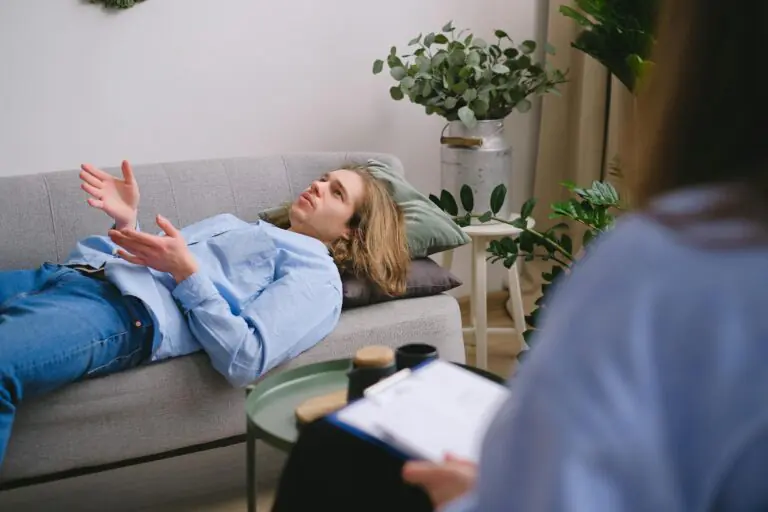

Wanting to be alone when you’re married doesn’t mean something is broken in your relationship. Many introverts find themselves craving solitude not because they love their partner less, but because their nervous system genuinely requires quiet time to function well. The tension between “I’d rather be alone than spend time with my wife” and “I deeply love this woman” is real, and it’s more common in introvert marriages than most people admit.
My wife knows I love her. She also knows that after a full week of client presentations, agency fire drills, and back-to-back Zoom calls with Fortune 500 brand managers, I sometimes need a Saturday morning alone more than I need conversation. That’s not rejection. That’s wiring.

If you’re an introvert who has ever caught yourself thinking you’d genuinely rather be alone than sit on the couch with your spouse, this article is for you. Not to fix you. Not to suggest you’re a bad partner. But to help you understand what’s actually happening, and how to talk about it in ways that protect the relationship you’ve built.
Our Introvert Dating and Attraction hub covers the full spectrum of how introverts approach romantic connection, but the dynamic of needing space inside a committed relationship adds a particular layer of complexity that deserves its own honest conversation.
Why Do Introverts Sometimes Prefer Solitude Over Their Own Partner?
There’s a version of this question that sounds alarming, and a version that sounds completely reasonable once you understand introvert neurology. The alarming version is: “Do you actually not want to be around the person you married?” The reasonable version is: “Is your need for solitude so fundamental that even the people you love most can feel like too much sometimes?”
What’s your personality type?
Take our free 40-question assessment and get a detailed personality profile with dimension breakdowns, context analysis, and personalised insights.
Discover Your Type8-12 minutes · 40 questions · Free
For most introverts, it’s the second one. Completely.
Introversion isn’t shyness, and it isn’t a preference for being lonely. At its core, it’s about how your nervous system processes stimulation. Social interaction, even enjoyable social interaction, costs energy for introverts. After a long week, the deficit can be significant enough that even the warmth of a loving spouse feels like more input than your system can handle gracefully.
I ran an advertising agency for years. Some weeks, I’d have creative reviews on Monday, new business pitches Tuesday and Wednesday, a client dinner Thursday, and a team offsite Friday. By Saturday morning, I was running on empty in a way that had nothing to do with how much I loved my wife. My tank was simply drained. Choosing to sit quietly in my home office with a book wasn’t a statement about our marriage. It was a biological necessity.
What makes this complicated is that many introverts, especially those who haven’t fully accepted their wiring yet, feel tremendous guilt about this preference. They interpret their own need for solitude as evidence that something is wrong with them, or worse, that they’ve married the wrong person. Neither conclusion is accurate.
Understanding how introverts fall in love and what relationship patterns emerge can reframe a lot of this guilt. Introverts don’t love less deeply. They often love more quietly, and that includes needing quiet to sustain the love they feel.
Is Wanting Space From Your Spouse a Sign of a Relationship Problem?
Not automatically. Context matters enormously here.
Wanting space because you’ve been overstimulated and need to recharge is fundamentally different from wanting space because you’re emotionally withdrawn, avoiding conflict, or feeling disconnected from your partner. One is a nervous system response. The other is a relationship signal worth paying attention to.
The distinction often comes down to what happens after the solitude. If you spend two hours alone, feel restored, and come back to your spouse genuinely glad to see them, that’s healthy introvert recharging. If you spend two hours alone, feel nothing, and dread returning to shared space, that’s worth examining more carefully with a therapist or counselor.
There’s also a third scenario that many introverts don’t talk about: the cumulative weight of being in a relationship with someone whose social needs are significantly higher than yours. If your partner is an extrovert who genuinely refuels through connection and conversation, and you’re an introvert who depletes through those same things, the gap between your needs can start to feel exhausting even when the relationship is fundamentally healthy.
One of the people I worked with most closely at my agency was an extroverted account director who processed everything out loud. Every campaign challenge, every client concern, every creative direction she was considering got verbalized in real time. She wasn’t being inconsiderate. That was genuinely how her brain worked. But I’d leave our one-on-ones feeling like I’d run a sprint I hadn’t trained for. Multiply that dynamic by a marriage, and you start to understand why some introvert spouses find themselves quietly retreating more than they expected to.
The CDC has noted that social disconnection carries real health risks, which is worth keeping in mind. Solitude that restores you is healthy. Chronic isolation that distances you from the people you love is something different, and it’s worth understanding which side of that line you’re on.
How Does an Introvert’s Need for Solitude Affect Their Emotional Availability?
This is the question underneath the question, and it’s the one that actually worries most introvert spouses.
When you’re depleted, your emotional availability shrinks. You can still love someone fully and be genuinely poor at showing it when your reserves are low. You might give shorter answers, seem distracted, or physically be present while mentally being somewhere quiet and far away. From the outside, especially to a partner who doesn’t share your wiring, this can look like indifference or emotional withdrawal.
It isn’t. But perception shapes relationship reality, and if your spouse consistently experiences you as emotionally absent, the impact on the relationship is real regardless of your intentions.
Introverts often express love in ways that don’t register as love to partners who expect more verbal or physical demonstration. How introverts show affection tends to run through action, quality attention, and quiet presence rather than constant conversation or effusive emotional expression. The challenge is that these expressions can be invisible to someone who reads love through a different lens.
What I’ve found in my own marriage is that naming this explicitly changed everything. Not “I need space from you” but “I need to recharge so I can actually be here with you.” The distinction feels subtle, but it lands completely differently. One sounds like rejection. The other sounds like self-awareness in service of the relationship.
A paper published in Frontiers in Psychology examining personality traits and relationship satisfaction found that how partners communicate their needs, not just what those needs are, plays a significant role in long-term relationship health. Introverts who can articulate their solitude needs clearly tend to fare better relationally than those who simply disappear without explanation.
What Happens When Both Partners Are Introverts?
You might think two introverts together would solve the problem entirely. And in some ways, it does make things easier. There’s an inherent understanding of the need for quiet, a shared comfort with parallel activities, and far less pressure to perform socially for each other.
Yet two-introvert couples come with their own specific challenges. When both partners need to recharge simultaneously, who initiates connection? When both default to internal processing during conflict, how do important conversations actually happen? When both prefer depth over frequency in emotional sharing, how do you ensure the relationship doesn’t quietly drift into comfortable distance?

The patterns that emerge when two introverts fall in love are genuinely different from introvert-extrovert pairings, and understanding those patterns helps couples build intentional connection rather than assuming shared wiring means shared needs.
Two introverts can easily create a household that feels peaceful and low-conflict while quietly becoming emotionally parallel rather than genuinely intimate. Both people are happy alone. Both are comfortable with silence. Both avoid the friction of difficult conversations. Over time, this can look like a good marriage from the outside while feeling hollow from the inside.
The fix isn’t to manufacture extroverted behavior. It’s to be deliberate about the moments of genuine connection that you both might otherwise let slide because neither of you is pushing for them.
How Do You Talk to Your Partner About Needing More Alone Time?
This conversation is one of the hardest ones in an introvert marriage, and most introverts handle it poorly the first several times they try.
The typical pattern goes something like this: the introvert says nothing until they’re so depleted that they snap or withdraw visibly. The partner, confused and hurt, asks what’s wrong. The introvert either says “nothing” (deflecting) or says “I just need space” (which sounds like rejection). The partner feels pushed away. The introvert feels guilty and resentful simultaneously. Nobody wins.
A better approach starts long before you’re depleted. It’s a proactive conversation about how you’re wired, what solitude does for you, and what you need it to look like in your shared life. Not as a complaint or a negotiation, but as an act of transparency with someone you love.
Some things that have worked for me personally:
Being specific about what recharging looks like. “I need about an hour of quiet after work before I can be fully present” is actionable. “I need space” is vague enough to feel threatening.
Separating the need from the relationship. “This is about my nervous system, not about you or us” requires saying out loud, more than once, because partners will default to personalizing it unless you actively redirect.
Naming what comes after. “When I’ve had that time, I’m genuinely excited to be with you” gives your partner something to hold onto instead of just the absence.
Understanding how introverts process and express love feelings can also help you explain your internal experience to a partner who might be reading your need for solitude as emotional distance. Sometimes the most loving thing an introvert can do is give their partner a window into how their inner world actually works.
What Role Does High Sensitivity Play in Needing More Solitude?
Not every introvert is a highly sensitive person, but there’s significant overlap between the two. If you’re both introverted and highly sensitive, your need for solitude can be even more pronounced, and the emotional stakes of relationship friction can feel considerably higher.
Highly sensitive people process sensory and emotional information more deeply than average. A raised voice, a tense silence, an ambiguous text message, all of these register more intensely for an HSP than they might for someone without that trait. In a marriage, this means that even minor interpersonal friction can leave an HSP spouse needing significant recovery time.

I’ve watched this pattern play out in people I’ve worked with over the years. One of my former creative directors was both introverted and highly sensitive, and after any tense client meeting, she needed at least an hour of genuine quiet before she could function creatively again. It wasn’t weakness. It was how her system processed intensity.
If you recognize this in yourself, the complete guide to HSP relationships covers the specific dynamics that emerge when high sensitivity intersects with romantic partnership. And if conflict in your marriage tends to linger longer than it should, understanding how HSPs can work through disagreements without being overwhelmed is genuinely worth your time.
There’s also a body of work from UCLA’s psychology department on emotional processing and relationship satisfaction that points to the same conclusion: people who process emotions deeply need more recovery time between intense interpersonal experiences. That’s not a character flaw. It’s a measurable difference in how nervous systems operate.
Can Solitude Actually Make You a Better Spouse?
Yes, and this reframe has been one of the most useful things I’ve brought to my own marriage.
When I honor my need for solitude proactively, I show up as a genuinely better partner. I’m more patient, more present, more emotionally available, and more capable of real conversation. When I don’t honor it, I’m physically in the room but mentally somewhere else entirely, giving my wife a version of me that’s distracted, short, and hollow.
Solitude isn’t the enemy of intimacy. Chronic depletion is.
There’s something worth noting from Berkeley’s Greater Good Science Center on solitude and creativity: time alone doesn’t just restore energy, it also allows for the kind of internal processing that makes people more thoughtful and more genuinely engaged when they return to social contexts. For an introvert in a marriage, that processing time often includes reflecting on the relationship itself, noticing what’s working, what needs attention, what you appreciate about your partner that the noise of daily life drowns out.
Some of my clearest thinking about my marriage has happened during solo runs or quiet mornings alone with coffee. Not because I was avoiding my wife, but because I had the mental space to actually think about us without the static of everything else.
The research published in PubMed Central on introversion and well-being supports this: introverts who have adequate solitude report higher life satisfaction and better emotional regulation than those who are chronically overstimulated. Better emotional regulation, in the context of a marriage, means fewer reactive arguments, more considered responses, and a greater capacity for genuine empathy.
When Should You Be Concerned About Your Preference for Solitude?
There are circumstances where preferring solitude over your spouse’s company is worth taking seriously as a relationship signal rather than just a personality trait.
Watch for these patterns:
You’re not just recharging, you’re actively avoiding. If solitude has become a way to sidestep difficult conversations or unresolved tension, the solitude itself isn’t the issue. The avoidance is.
You feel relief when your spouse leaves, not just when you get quiet time. There’s a meaningful difference between savoring peaceful solitude and feeling genuine relief that your partner isn’t home. The second one deserves honest examination.
Your need for solitude has increased significantly without a clear reason. If you’ve always needed an hour alone after work and that’s shifted to needing the entire evening, something may have changed in the relationship or in your own mental health that’s worth addressing.
Your spouse has named the pattern as a problem more than once. Partners don’t typically raise concerns about solitude lightly. If yours has mentioned feeling lonely or disconnected, that’s information worth sitting with rather than deflecting.
A study in PubMed Central examining relationship quality and personality factors found that the intentionality behind solitude, whether it’s restorative or avoidant, matters as much as the solitude itself. Introverts who use alone time to genuinely restore tend to have healthier relationships than those using it as emotional distance management.
If you’re unsure which category you’re in, a few sessions with a couples therapist can bring remarkable clarity. It’s not an admission that the marriage is failing. It’s an investment in understanding it more honestly.

How Do You Build a Marriage That Honors Both Solitude and Connection?
The marriages that work well for introverts aren’t the ones where the introvert eventually learns to need less solitude. They’re the ones where both partners develop a shared language around needs, and build a life structure that accommodates both.
Practically, this often looks like:
Designated recharge time that’s understood and respected. Not negotiated every time, not explained every time, just built into the rhythm of the week. Sunday mornings are mine. My wife knows this. She has her own equivalent. Neither of us is taking something from the other.
Quality over quantity in shared time. An introvert who spends four hours genuinely present with their spouse is giving more than an introvert who spends eight hours in the same room while mentally checked out. Protecting your solitude so that your shared time is actually good time is a legitimate relationship strategy.
Regular check-ins about how the balance is feeling. Not every week, but often enough that neither partner is quietly accumulating resentment. My wife and I do this loosely, checking in on whether the rhythm of connection and space is working for both of us. It rarely requires major adjustment, but the act of asking matters.
Transparency about what depletion looks like. My wife can read my energy reasonably well now, but early in our marriage she couldn’t, and I wasn’t explaining it. Teaching your partner what your depleted state looks like, and what you need from them in those moments, removes a lot of the guesswork that breeds hurt feelings.
A Psychology Today article on dating and partnering with introverts makes the point that successful introvert relationships tend to involve partners who understand the difference between being alone and being lonely. That understanding, once genuinely internalized by both people, changes the entire emotional texture of the relationship.
And if you’re the extroverted partner reading this, trying to understand your introverted spouse, consider what Psychology Today describes as the romantic introvert: someone whose love runs deep and quiet, who shows up fully when they’re resourced, and who needs solitude not as an escape from you but as the means by which they return to you whole.
There’s more to explore about how introverts approach every stage of romantic connection in the Introvert Dating and Attraction hub, from first attraction through long-term partnership.
About the Author
Keith Lacy is an introvert who’s learned to embrace his true self later in life. After 20 years in advertising and marketing leadership, including running agencies and managing Fortune 500 accounts, Keith now channels his experience into helping fellow introverts understand their strengths and build fulfilling careers. As an INTJ, he brings analytical depth and authentic perspective to every article, drawing from both professional expertise and personal growth.
Frequently Asked Questions
Is it normal for an introvert to prefer being alone over spending time with their spouse?
Yes, and it’s more common than most introverts realize. Preferring solitude isn’t a reflection of how much you love your partner. It’s a reflection of how your nervous system manages stimulation and energy. Introverts recharge through alone time, and that need doesn’t disappear in marriage. What matters is whether the solitude is restorative and you return to your partner genuinely present, or whether it’s become a way to emotionally distance yourself. The first is healthy wiring. The second is worth exploring with a therapist.
How do I explain to my wife that I need alone time without hurting her feelings?
Frame it around your nervous system rather than her company. “I need to recharge so I can actually be present with you” lands very differently than “I need space.” Be specific about what recharging looks like and how long you need. Name what comes after: that you’ll be more engaged, more patient, and genuinely glad to be with her once you’ve had that time. Have this conversation proactively, before you’re depleted, so it doesn’t come out as a reaction to something she’s done.
Can needing solitude damage a marriage over time?
It can, if it’s not communicated well or if it tips from recharging into avoidance. A partner who consistently feels lonely or disconnected will eventually stop reaching toward you, and that emotional distance compounds quietly over years. The solitude itself isn’t the problem. The lack of transparency around it, and the failure to invest in genuine connection when you are resourced, are what cause long-term relationship damage. Introverts who communicate clearly and show up fully when they’re recharged tend to have strong, lasting marriages.
What if my wife takes my need for solitude personally no matter how I explain it?
Some partners, particularly those with anxious attachment styles or high social needs, will struggle with this even when you explain it clearly. That doesn’t mean you’ve failed to communicate. It may mean you’re dealing with a deeper incompatibility in needs that requires more than a conversation to resolve. A couples therapist can be genuinely helpful here, not because the marriage is broken, but because a neutral third party can help both of you understand each other’s wiring without it feeling like criticism or rejection.
How much alone time is too much for an introvert in a marriage?
There’s no universal number. What matters is whether both partners feel adequately connected and whether the solitude is serving the relationship or straining it. A useful signal: if you’re recharged and still choosing to be alone rather than with your spouse, that’s worth paying attention to. If you’re taking the time you need and returning to the relationship genuinely engaged and present, the amount is probably appropriate. Check in with your partner periodically about how the balance feels to them. Their experience of the relationship is real data, even when your intentions are good.