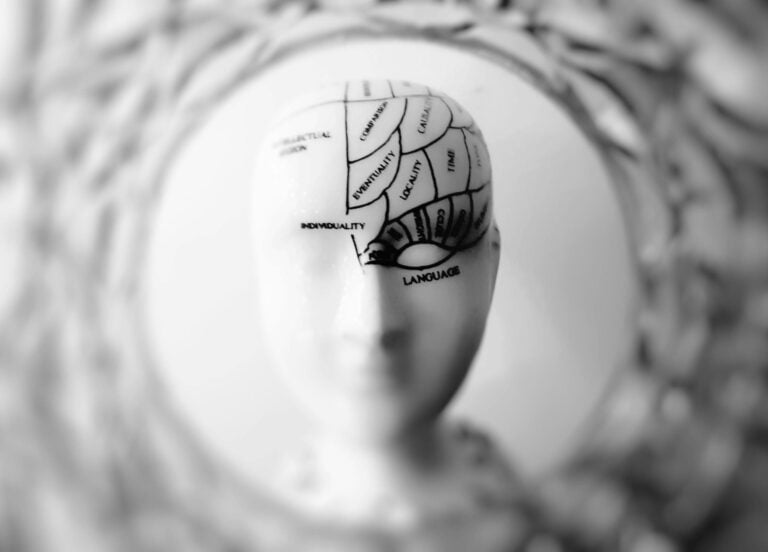
Everyone has a blind spot in their personality. Not the kind you can fix by adjusting a mirror, but a psychological vulnerability buried in your unconscious that emerges during stress and sabotages your best efforts.
Your inferior function is the fourth and least developed cognitive process that operates opposite to your dominant function in every way. When activated by exhaustion or crisis, this underdeveloped function can temporarily overpower your conscious personality, causing intelligent professionals to unravel in ways that contradict everything they’ve built.
Throughout two decades of managing Fortune 500 accounts, I watched senior professionals fall into this exact trap. A strategic director who’d revolutionized three product lines would suddenly micromanage spreadsheet formatting during a crisis. A relationship-focused account lead who’d retained clients through impossible situations would fire off emotionally cold emails when under pressure. These weren’t character flaws. They were intelligent people temporarily controlled by their least developed cognitive function.
The Myers-Briggs Type Indicator describes the inferior function as the fourth and least conscious process in your cognitive stack, operating opposite to your dominant function in every way. When resources from your primary mental processes are exhausted, this underdeveloped function can emerge and attempt to overpower your conscious personality.

How Does Your Inferior Function Actually Work?
Carl Jung’s typology established that we cannot develop all psychological functions equally. Society and survival demand that we differentiate one function more than others, creating our dominant way of processing information and making decisions.
What’s your personality type?
Take our free 40-question assessment and get a detailed personality profile with dimension breakdowns, context analysis, and personalised insights.
Discover Your Type8-12 minutes · 40 questions · Free
This specialization carries a cost. The function opposite to your dominant becomes your inferior function, least developed, largely unconscious, and prone to childish expression when activated. Personality Junkie explains that Jung characterized this quest to integrate the missing function as central to psychological development, symbolized in myths as searching for the Holy Grail.
Your cognitive stack follows a hierarchy. Those with dominant Introverted Thinking (Ti) will have inferior Extraverted Feeling (Fe). Individuals leading with Introverted Intuition (Ni) struggle most with Extraverted Sensing (Se). The pattern holds across all eight cognitive functions, your weakest function always opposes your strongest.
How Each Type’s Inferior Function Manifests
Different types experience characteristic inferior function patterns:
- Thinking dominants (INTP, ISTP, ENTJ, ESTJ): Inferior Feeling erupts in emotional outbursts, hypersensitivity to criticism, paranoid speculation about others’ intentions
- Feeling dominants (INFP, ISFP, ENFJ, ESFJ): Inferior Thinking produces harsh judgments, rigid categorization, obsessive analysis of trivial details
- Intuitive dominants (INFJ, INTJ, ENFP, ENTP): Inferior Sensing drives compulsive organization of physical space, overindulgence in sensory pleasures, hypochondria
- Sensing dominants (ISFJ, ISTJ, ESFP, ESTP): Inferior Intuition generates catastrophic thinking, paranoid speculation about hidden meanings, obsessive future worries
One client, an INTJ department head, maintained exceptional strategic vision through multiple reorganizations. During an unexpected merger, his inferior Se took control. He spent entire meetings fixating on the conference room temperature and whether anyone had moved his preferred chair. These weren’t personality quirks, they were his least conscious function attempting to process overwhelming stress.

What Triggers Your Inferior Function to Take Over?
The inferior function rarely emerges during normal conditions. It requires specific circumstances to overpower your conscious personality.
Exhaustion activates it first. Physical fatigue, emotional depletion, chronic stress, these drain the resources your dominant and auxiliary functions need to maintain control. Research on Jungian shadow work demonstrates that psychological integration requires recognizing when these unconscious aspects influence behavior.
Major life transitions trigger inferior function emergence. Career changes, relationship endings, health crises, relocations, transitions that destabilize your identity create openings where your least developed function can seize control. You temporarily lose access to the mental processes that made you effective.
Prolonged exposure to situations requiring your inferior function wears down defenses:
- Chronic stress that depletes your primary mental resources
- Extended periods working in your weak areas without adequate recovery time
- Major identity shifts like career changes, relationship transitions, or health crises
- Perfectionist pressure in areas where you naturally struggle
- Sleep deprivation and physical exhaustion that reduce cognitive control
Leading agency client presentations, I relied heavily on Extraverted Thinking to structure complex information clearly. After three consecutive days of back-to-back presentations, my inferior Fi would take over. Small comments from team members would trigger disproportionate emotional reactions I’d normally never display.
The “Grip” State Experience
Psychologists call temporary inferior function control “being in the grip.” MBTI Notes describes the grip state as feeling like something is happening to you rather than feeling like you’re choosing your responses. You’re aware enough to recognize you’re behaving strangely, but not in control enough to stop.
Common grip experiences include:
- Catastrophizing minor problems into major crises
- Making uncharacteristic decisions that contradict your usual patterns
- Experiencing emotions that don’t match the situation’s severity
- Losing access to your typical problem-solving abilities
- Behaving in ways you’d normally consider immature
One account director with dominant Fe could read client moods instantly and adjust communication perfectly. During a company restructuring that threatened multiple roles, his inferior Ti gripped him. He produced elaborate spreadsheets analyzing every possible outcome, logic trees mapping decision points, and categorization systems for information nobody needed organized. His team needed emotional reassurance. His inferior function gave them data.

Why Does Your Inferior Function Matter More Than You Think?
Jung insisted that psychological wholeness requires integrating the inferior function. This isn’t optional development, it’s central to becoming a complete person.
Your inferior function holds what Jung called “the gold” of your personality. The qualities you most need for growth live in the function you’re most inclined to ignore. When personality types get stuck in cognitive function loops, the missing inferior function often holds the key to breaking free.
The shadow and inferior function connect intimately. Carl Jung explained in Psychology and Religion that “the less the shadow is embodied in the individual’s conscious life, the blacker and denser it is.” Your inferior function forms a significant component of your psychological shadow, everything about yourself you deny, repress, or fail to recognize.
Developmental psychology research cited by Selfgazer’s analysis of Jung’s shadow theory suggests less than 5% of people reach mature psychological development. One critical factor separating those who achieve wholeness from those who don’t is willingness to engage with the inferior function.
The Projection Problem
What you can’t integrate, you project onto others. Your inferior function’s qualities show up as the traits that most irritate you in other people.
| Inferior Function | Common Projections | What You’re Actually Rejecting |
| Extraverted Thinking | “Rigid,” “controlling,” “cold” | Your need for logical structure |
| Introverted Feeling | “Too sensitive,” “making it personal” | Your authentic emotional responses |
| Extraverted Sensing | “Shallow,” “impulsive,” “materialistic” | Your connection to present-moment reality |
| Introverted Intuition | “Unrealistic,” “impractical,” “cryptic” | Your capacity for deeper meaning |
Early in my career, I consistently clashed with team members who seemed “too detail-focused” and “unable to see the bigger picture.” Years later, working on developing my own inferior Se, I recognized those colleagues weren’t the problem. They were displaying competence in an area where I felt most vulnerable and insecure.

How Do You Develop Your Inferior Function Without Forcing Growth?
Your inferior function will never become as developed as your dominant. Attempting to force equal development creates psychological distress and ultimately fails.
Marie-Louise von Franz, Jung’s colleague, explained in Psychotherapy that the inferior function is “the one which is apparently not meant to be locked.” You cannot master it through willpower alone. Development requires a different approach.
Recognize Pattern Signals
Awareness precedes integration. Notice when your inferior function activates:
- Physical tension and unexplained fatigue
- Emotional intensity disproportionate to the situation
- Thoughts and behaviors that feel “not like you”
- Sudden perfectionism in areas you usually ignore
- Compulsive behaviors related to your weak function
Keep a record of circumstances that trigger grip experiences. Specific types of conflict, time pressure, particular decision categories, patterns emerge that help you anticipate vulnerability.
Create Space for Expression
Your inferior function needs outlets that don’t risk important outcomes. INTJs with inferior Se might engage physical hobbies where perfectionism doesn’t matter. INTPs with inferior Fe could volunteer in structured helping roles rather than forcing emotional connection in high-stakes personal relationships.
Choose low-risk environments where your inferior function can practice without consequences:
- Hobby contexts where failure doesn’t matter
- Volunteer work that engages your weak function
- Creative projects with no external pressure
- Social situations with low emotional stakes
- Physical activities that require present-moment awareness
The goal isn’t mastery, it’s familiarity and acceptance.
Learn From Others Who Excel
Observe people whose dominant function matches your inferior. Watch how they approach problems, make decisions, and process information. Don’t try to copy them, their natural approach won’t work for you, but notice the value they provide that your cognitive stack overlooks.
One senior client with dominant Ti hired an ENFJ assistant specifically because her Fe dominance compensated for his weakest function. Rather than viewing this as weakness, he recognized complementary strength. He didn’t need to become excellent at Extraverted Feeling. He needed access to its perspective.
Accept Developmental Limitations
Jung emphasized that development of the inferior function “tends to come in late midlife.” This isn’t a timeline you can accelerate through effort. Premature attempts to develop your fourth function often trigger psychological resistance and stress.
Your personality type exists for a reason. The dominance of certain functions over others allows you to achieve things other types cannot. Attempting to become balanced across all functions reduces your natural strengths to below-average competence.

How Can You Use Inferior Function Awareness Practically?
Understanding your inferior function changes how you navigate stress, make career decisions, and structure your environment for optimal performance.
Career Planning With Function Awareness
Roles requiring constant use of your inferior function create chronic stress and burnout. Someone with inferior Sensing shouldn’t pursue careers demanding continuous detail management and sensory awareness. An individual with inferior Thinking will struggle in positions requiring emotionally detached logical analysis as a primary function. Career satisfaction for different MBTI types depends heavily on matching roles to cognitive function strengths.
This doesn’t mean avoiding these functions entirely. It means ensuring your role primarily engages your dominant and auxiliary functions while providing support systems for inferior function demands.
During my agency years, I structured roles around each person’s cognitive stack. Detail-oriented project managers (dominant Si) handled implementation specifics. Strategic directors (dominant Ni) focused on long-term positioning. Nobody was asked to make their inferior function their primary job requirement.
Relationship Dynamics and Function Differences
Many relationship conflicts stem from inferior function triggers. Your partner’s natural way of processing information might directly activate your least developed function, creating consistent friction.
Someone with dominant Fe and inferior Ti might partner with a Ti-dominant person. The Fe user feels criticized by their partner’s logical analysis. The Ti user feels overwhelmed by emotional processing demands. Neither person is wrong. They’re triggering each other’s inferior functions.
Awareness allows you to recognize when conflict stems from function differences rather than incompatibility:
- Identify trigger patterns in your relationship conflicts
- Create support systems where neither person operates constantly through their weakest process
- Negotiate complementary roles that play to each person’s cognitive strengths
- Recognize grip states in your partner and respond with patience rather than criticism
Managing Stress Before Grip States Emerge
Recognizing pre-grip signals allows intervention before losing conscious control. Increased sensitivity, rigid thinking, unusual emotional reactions, these precede full grip experiences.
Create protocols for these early warnings. One executive I worked with carried a simple card listing his grip signals: perfectionism about minor details, physical restlessness, irritation at colleagues’ emotional expressions. Noticing these patterns, he’d reschedule important decisions for when his dominant and auxiliary functions could re-engage.
When Should You Seek Professional Help?
Some inferior function patterns indicate deeper psychological issues requiring professional support.
Frequent grip states despite adequate rest and stress management suggest unresolved psychological conflict. Inferior function activation causing significant relationship damage or career problems needs therapeutic intervention. Inability to exit grip states or extended periods where your fourth function dominates your personality warrants consultation with professionals trained in Jungian analysis.
Therapy focused on individuation and shadow work helps integrate inferior function patterns without forcing artificial development. A qualified Jungian analyst can guide you through the specific dynamics your type faces.
The Paradox of Accepting Your Weakest Function
Your inferior function represents both your greatest vulnerability and your path toward wholeness. This paradox defines much of adult psychological development.
You cannot eliminate your fourth function’s influence. Attempting to ignore it strengthens its unconscious control. You cannot force rapid development. Premature integration attempts trigger resistance and stress. What you can do is build awareness, create appropriate outlets, recognize triggers, and accept limitations.
The executive who spent twenty years trying to be someone he wasn’t eventually accepted his natural cognitive stack. He stopped forcing himself into roles requiring constant inferior function engagement. He built teams with complementary strengths. He recognized grip states early and created space for recovery. His effectiveness increased not through fixing his weakness, but through working with his actual personality structure.
Jung wrote that “development of character” requires allowing “the inferior function to find expression.” Not mastery. Not transformation. Expression. Your least developed function doesn’t need to become your strength. It needs recognition, acceptance, and appropriate integration within your complete personality.
The gold Jung promised lives in the inferior function isn’t a treasure you dig up and possess. It’s the wisdom that comes from recognizing you’re complete precisely because you’re not equally developed in all areas. Your weakness, properly understood, illuminates the path toward becoming who you actually are rather than who you think you should be.
Frequently Asked Questions
Can you change your inferior function?
No. Your inferior function is determined by your dominant function and remains opposite to it throughout your life. What changes is your relationship with it, developing awareness, reducing unconscious control, and integrating its perspective without expecting mastery.
How do I know which function is my inferior?
Your inferior function is always the opposite of your dominant function. If you lead with Introverted Intuition (Ni), your inferior is Extraverted Sensing (Se). Thinking types have inferior Feeling. Identify your dominant function first, then the inferior becomes clear through opposition.
Why does my inferior function cause so many problems?
Because it operates largely outside conscious control. Your inferior function developed least during childhood and adolescence, making it immature compared to your other functions. When activated by stress or exhaustion, it takes over with childish, all-or-nothing intensity your conscious personality cannot modulate effectively.
Should I choose careers that avoid my inferior function entirely?
Not entirely, but your primary responsibilities should engage your dominant and auxiliary functions. Roles requiring constant inferior function use create chronic stress. Seek positions where your natural strengths lead and your weaknesses receive support rather than constant demand.
Is being in the grip of your inferior function the same as having a breakdown?
No. Grip states are temporary experiences where your least developed function temporarily controls behavior. They’re uncomfortable and disorienting but usually resolve once stress reduces. Psychological breakdowns involve more severe disruptions requiring professional intervention. Frequent or extended grip states, however, might indicate deeper issues worth exploring with a therapist.
Explore more insights on personality types in our complete MBTI General & Personality Theory Hub.
About the Author
Keith Lacy is someone who embraced his true self later in life. With a background in marketing and a successful career in media and advertising, Keith has worked with some of the world’s biggest brands. Leading senior teams in the industry, he built extensive knowledge in marketing strategy. Now, he’s on a mission to educate both those who identify as introverted and those who don’t about the power of this personality trait and how understanding it can unlock new levels of productivity, self-awareness, and success.