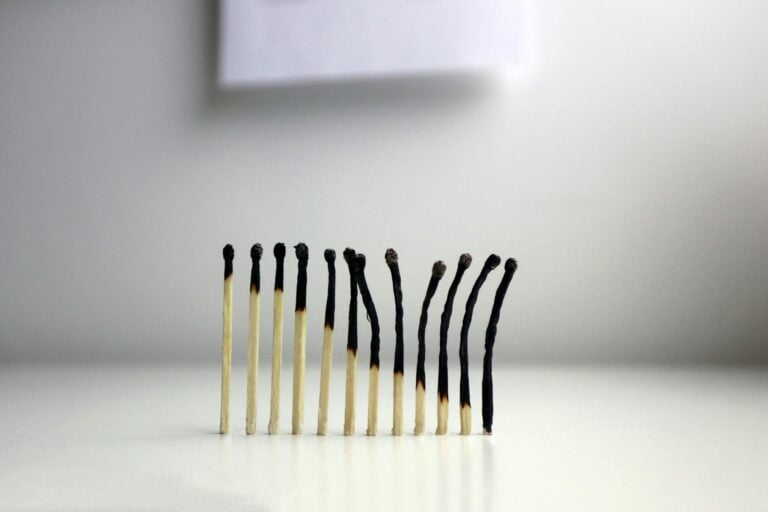

An INFJ’s first year of marriage is one of the most emotionally complex periods they will ever experience. The combination of deep idealism, heightened sensitivity, and an almost compulsive need for authentic connection means this personality type processes marriage differently than most, often cycling through profound joy, unexpected grief, and quiet recalibration all within the same week.
What makes this stage so distinct for an INFJ is the collision between their inner vision of what marriage should be and the reality of what it actually is. That gap, and how they handle it, shapes everything about their first year as a spouse.
Understanding the specific psychological stages an INFJ moves through during that first year can make the difference between a marriage that deepens beautifully and one that quietly erodes under the weight of unspoken expectations.
If you want broader context on how INFJs and INFPs approach relationships and identity, our MBTI Introverted Diplomats (INFJ & INFP) hub covers the full emotional and relational landscape of these two rare personality types. The first year of marriage, though, deserves its own focused conversation.
What Does the INFJ Actually Experience in the First Months of Marriage?

Most people expect the first months of marriage to feel like a honeymoon extended. For an INFJ, the experience is far more layered. Yes, there is genuine warmth and deep gratitude for the person they have chosen. Yet there is also something that catches many INFJs off guard: a strange internal mourning.
What’s your personality type?
Take our free 40-question assessment and get a detailed personality profile with dimension breakdowns, context analysis, and personalised insights.
Discover Your Type8-12 minutes · 40 questions · Free
I am not an INFJ, but I have worked alongside several over my two decades in advertising, and I have watched this pattern play out in ways that fascinated me. One of my most talented creative directors was an INFJ who had just gotten married. She described it to me once over a long agency dinner as feeling like she had finally arrived somewhere she had always wanted to be, and then immediately started wondering whether she was doing it right. That quiet internal audit, the checking and rechecking of emotional accuracy, is deeply characteristic of this type.
A 2022 study published in PubMed Central examining relationship satisfaction in the early stages of marriage found that individuals with high trait sensitivity reported both greater relational depth and greater vulnerability to perceived emotional misalignment. That finding maps almost perfectly onto what INFJs describe about their first year.
The INFJ enters marriage carrying an extraordinarily detailed internal blueprint of what the relationship should feel like. Not necessarily what it should look like in practical terms, but what the emotional texture should be. When daily life introduces friction, that blueprint gets compared to reality constantly, and the INFJ can spend enormous energy trying to reconcile the two.
To understand why this happens at such a deep level, it helps to read about the full architecture of this personality type. The INFJ Personality: The Complete Introvert Guide to The Advocate Type offers a thorough look at how Introverted Intuition and Extraverted Feeling combine to create someone who is simultaneously visionary and emotionally attuned in ways that can be both a gift and a source of exhaustion.
How Does the INFJ’s Idealism Create Specific Challenges in Year One?
An INFJ does not just hope their marriage will be meaningful. They have often been constructing an internal model of it for years. That model includes emotional safety, intellectual resonance, shared values, and a quality of presence from their partner that most people would find exhausting to sustain consistently.
When reality falls short, even temporarily, the INFJ does not simply feel disappointed. They feel something closer to cognitive dissonance. Their intuition, which they trust deeply, told them this person was right. So when a conflict arises or their partner seems emotionally unavailable on a given evening, the INFJ’s mind immediately begins running scenarios. Did I misread them? Is something fundamentally wrong? Are we compatible in the way I believed?
This is not catastrophizing in the clinical sense. It is the INFJ’s Introverted Intuition doing what it always does: pattern-matching, projecting forward, searching for meaning beneath the surface. The problem is that in a marriage, especially a new one, this process can generate unnecessary anxiety around situations that are simply normal relational friction.
There is also what I would call the performance pressure of idealism. An INFJ does not just hold their partner to a high standard. They hold themselves to one. They want to be the person their partner deserves, and they monitor themselves for signs of failure with the same intensity they apply to everything else. That internal pressure, sustained over months, is genuinely tiring.
One of the more illuminating resources on this dynamic is the piece on INFJ Paradoxes: Understanding Contradictory Traits, which explores how the same qualities that make INFJs exceptional partners, their depth of feeling, their commitment to authenticity, their sensitivity to emotional undercurrents, can also make ordinary relationship challenges feel disproportionately significant.

What Happens When the INFJ Starts Absorbing Their Partner’s Emotional World?
One of the least-discussed challenges of the INFJ’s first year of marriage is emotional absorption. INFJs are extraordinarily attuned to the emotional states of people they love. In a dating relationship, this attunement is one of their most compelling qualities. In a marriage, where two people share physical space and daily life, it can become overwhelming.
An INFJ spouse does not simply notice when their partner is stressed. They feel it. They carry it. They often begin problem-solving their partner’s emotional experience before their partner has even articulated what is wrong. This is not a choice; it is how their nervous system processes the people closest to them.
I have seen a version of this play out in professional settings too. During my years running advertising agencies, I noticed that the most empathically gifted people on my teams, often INFJs or similar types, would absorb the stress of a difficult client meeting in a way that lasted long after the meeting ended. They would carry the emotional residue home. Marriage amplifies this dynamic significantly because the emotional stakes are so much higher and the exposure is continuous.
The American Psychological Association has noted that close social bonds create both emotional support and emotional vulnerability, and that the quality of a person’s primary relationship has an outsized effect on their overall wellbeing. For an INFJ, this bidirectional emotional connection is felt at an intensity most people do not experience.
What this means practically in year one is that the INFJ needs to develop what might be called emotional boundaries within intimacy. Not walls. Not distance. But a conscious practice of distinguishing between their own emotional state and their partner’s. Without that practice, the INFJ can arrive at month six of marriage feeling depleted in ways they cannot fully explain, because they have been quietly carrying two people’s emotional weight while believing they were simply being a good spouse.
How Does the Need for Solitude Create Tension in a Shared Life?
Marriage means sharing space, time, and emotional bandwidth with another person every single day. For an INFJ, who genuinely needs periods of deep solitude to process their inner world, this adjustment is one of the most significant of the entire first year.
The challenge is not that the INFJ does not want to be with their partner. They do, often intensely. The challenge is that they also need to be alone with their own thoughts in a way that can feel confusing, even hurtful, to a partner who does not share that need. An INFJ who retreats to read, to think, or simply to sit quietly is not withdrawing from the marriage—they are maintaining the internal equilibrium that allows them to show up fully when they are present.
Communicating this need clearly and early is one of the most important things an INFJ can do in year one. Not as an apology, but as an explanation of how they are wired. A partner who understands that solitude is restorative rather than rejecting will respond very differently than one who interprets every quiet evening as emotional distance.
Psychology Today’s overview of introversion describes how introverted individuals recharge through time alone and can experience genuine cognitive and emotional fatigue from sustained social interaction, even with people they love. That framing, recharging rather than retreating, can be a useful way for an INFJ to explain their needs to a partner who leans extroverted.
Some of the most revealing insights about how this type processes their inner life come through in the piece on INFJ Secrets: Hidden Personality Dimensions, which examines the aspects of the INFJ’s psychology that rarely surface in surface-level descriptions of the type. The solitude need is one of them, and understanding its depth helps both the INFJ and their partner approach it with more compassion.

What Role Does Communication Play in the INFJ’s First Year of Marriage?
An INFJ communicates with remarkable depth when they feel safe. The first year of marriage is, in part, a process of establishing whether that safety exists within the specific context of this permanent commitment. The stakes feel different from dating. A conversation about a conflict in a dating relationship carries the implicit possibility of ending things. In marriage, that exit has been consciously closed, which changes the emotional texture of every difficult conversation.
Many INFJs find that they become temporarily more guarded in the early months of marriage, not less. This surprises them, because they expected the security of commitment to make them more open. What actually happens is that the INFJ’s awareness of what is now at stake activates a protective instinct. They choose words more carefully. They sit with concerns longer before voicing them. They try to process internally before bringing something to their partner.
This internal processing is not avoidance. It is how INFJs ensure they are communicating accurately rather than reactively. The problem arises when the processing period stretches too long, and concerns that needed to be voiced early become calcified resentments or sources of quiet disconnection.
Early in my agency career, I made a version of this mistake regularly. I would sit with a concern about a client relationship or a team dynamic for so long that by the time I finally addressed it, the window for easy resolution had closed. I had processed it thoroughly, but I had processed it alone. Marriage, like any close partnership, requires bringing your partner into that processing rather than presenting them with finished conclusions.
A 2016 study from PubMed Central on emotional regulation in intimate relationships found that partners who shared their emotional processing in real time, rather than after the fact, reported significantly higher relationship satisfaction over time. For an INFJ, whose natural instinct is to process privately first, building habits of shared processing is one of the most meaningful investments they can make in year one.
How Does an INFJ Handle the Disillusionment Stage That Almost Every Marriage Passes Through?
Relationship researchers have long identified a predictable arc in early marriage that includes a phase of disillusionment, when the idealized image of a partner begins to give way to a more accurate, more human one. For most people, this is a gradual and manageable process. For an INFJ, it can feel like a crisis.
The INFJ’s Introverted Intuition is extraordinarily good at reading people. They often feel, with genuine confidence, that they know their partner deeply before the marriage even begins. When the first year reveals dimensions of their partner they did not anticipate, whether that is a different conflict style, an unexpected emotional limitation, or simply habits that were invisible during dating, the INFJ can experience a profound sense of disorientation.
This is not about being naive. INFJs are perceptive people. It is about the difference between understanding someone intellectually and living alongside them in the full complexity of daily life. Marriage surfaces things that no amount of intuitive reading can fully anticipate.
The INFJ who handles this stage well is the one who can hold two truths simultaneously: their partner is not who they imagined, and their partner is still exactly who they chose. Those two things coexist, and accepting that coexistence is one of the most mature emotional moves the first year asks of this type.
It is also worth noting that the INFJ’s partner is going through their own version of disillusionment. The INFJ, who presents so warmly and empathically in the early stages of a relationship, can surprise their spouse with their intensity, their need for meaning in every interaction, or their occasional withdrawal. Understanding how both partners experience this stage with compassion for each other’s wiring is what separates couples who grow through it from those who get stuck in it.
It can also be genuinely helpful for an INFJ to understand how a partner who might be an INFP experiences this same stage differently. The How to Recognize an INFP: The Traits Nobody Mentions piece offers insight into a type that shares some surface similarities with the INFJ but processes disillusionment through a very different internal lens, one that is more values-driven and less pattern-focused.

What Are the Genuine Strengths an INFJ Brings to the First Year of Marriage?
It would be easy to read everything above and conclude that the INFJ’s first year of marriage is primarily a series of challenges to manage. That would be a distortion. The same qualities that create complexity also create something rare and genuinely valuable in a marriage.
An INFJ spouse pays attention in ways most people simply do not. They notice when their partner is carrying something unspoken. They remember the details of conversations from months ago and connect them to what is happening today. They bring a quality of intentionality to the relationship that their partner often describes as feeling truly seen, sometimes for the first time in their life.
They are also deeply committed. An INFJ does not enter marriage lightly, and once committed, they bring a consistency of care and investment that sustains a relationship through its harder seasons. Their idealism, which can be a source of pain when reality falls short, is also the engine behind their willingness to keep working, to keep growing, to keep choosing their partner even when it is difficult.
The INFJ’s capacity for depth also means that their first year of marriage, even with all its complexity, tends to produce a level of emotional intimacy that other couples spend years trying to build. They ask the questions that matter. They create the conversations that go somewhere real. They hold space for their partner’s full humanity in a way that is genuinely rare.
A 2021 analysis from the National Institutes of Health on attachment and relationship quality found that emotional attunement in a primary partner was one of the strongest predictors of long-term relationship satisfaction. The INFJ’s natural attunement, when channeled with awareness rather than anxiety, is one of the most powerful assets any marriage can have.
How Should an INFJ Protect Their Mental Health During This Transition?
The first year of marriage is a significant psychological transition for anyone. For an INFJ, who processes everything at depth and carries the emotional weight of their closest relationships with particular intensity, it can place real strain on mental health if approached without awareness.
One of the most important things an INFJ can do is maintain at least some of the individual practices that sustained them before the marriage. Whether that is journaling, time in nature, creative work, or simply unscheduled hours alone, these are not luxuries. They are the maintenance that keeps the INFJ’s inner world functional. A partner who understands this will support it. A partner who does not yet understand it needs to be told, clearly and warmly, why it matters.
The National Institute of Mental Health notes that chronic stress and emotional depletion are significant risk factors for depression, and that maintaining personal routines and social support structures during major life transitions is one of the most effective protective factors available. For an INFJ in their first year of marriage, this is not abstract advice. It is genuinely relevant.
Therapy can also be a valuable resource, both individual and couples. An INFJ often finds individual therapy particularly useful because it gives them a dedicated space to process their inner world with someone trained to hold it, rather than always bringing it to their partner. If you are looking for support, consider exploring alternative therapy approaches for introverts, as traditional talk therapy may not resonate with everyone, or use Psychology Today’s therapist directory as a reliable starting point for finding someone who understands introversion and high sensitivity—much like the kind of strategic counsel INFJs naturally provide to those they care about.
There is also something worth saying about the INFJ’s tendency to neglect their own needs while attending to everyone else’s. In a marriage, this pattern can intensify. The INFJ gives generously, notices their partner’s needs before their own, and can spend months in a quiet deficit before realizing they have been running on empty. Building habits of self-check rather than only partner-check is one of the most important internal shifts the first year asks of this type.
For INFJs who are also exploring their own identity more broadly during this period, the INFP Self-Discovery: Life-Changing Personality Insights piece offers some genuinely transferable reflections on how introverted feeling types process major life transitions and find their footing through self-understanding. The specific type differs, yet the underlying emotional territory often rhymes.
What Does Thriving in Year One Actually Look Like for an INFJ?

Thriving does not mean having a frictionless first year. It means moving through the friction with increasing self-awareness and decreasing self-judgment. An INFJ who is thriving in year one has started to loosen their grip on the internal blueprint of what the marriage should be, while holding firmly to the values that make the marriage meaningful.
They have begun to communicate their needs without apologizing for them. They have found at least one or two practices that protect their inner world without creating distance from their partner. They have experienced the disillusionment stage and come out the other side with a more accurate, more grounded love for the person they married.
They have also, ideally, started to let their partner in on the experience of being an INFJ. Not as a label or an excuse, but as an honest description of how they move through the world. The 16Personalities framework can be a useful starting point for these conversations, giving both partners a shared vocabulary for discussing personality differences without either person feeling criticized or pathologized.
What I have observed, both in my own long-term relationship and in watching the people I have worked with over the years, is that the couples who build something genuinely strong are not the ones who never struggle. They are the ones who struggle with enough self-awareness to learn from it rather than just survive it. An INFJ brings exactly the kind of depth and intentionality that makes that kind of growth possible, if they can stay patient with themselves through the process.
There is also something quietly powerful in what the INFJ’s partner gains from this type’s presence. The article INFP Entrepreneurship: Why Traditional Careers May Fail You explores how introverted feeling types bring gifts to relationships that are often invisible until they are absent. Many of those same gifts apply to the INFJ, and recognizing them, in yourself and in your partner, is part of what makes year one more than just a period to get through.
The first year of marriage for an INFJ is not a problem to solve. It is a process of becoming, of learning what it means to love someone with your full depth while also remaining a whole person yourself. That balance is not achieved once and then maintained automatically. It is something the INFJ returns to, refines, and deepens over time. Year one just happens to be where the work begins in earnest.
Find more resources on how introverted and intuitive types approach relationships and identity in our MBTI Introverted Diplomats (INFJ & INFP) hub, where we cover the full range of experiences unique to these personality types.
About the Author
Keith Lacy is an introvert who’s learned to embrace his true self later in life. After 20 years in advertising and marketing leadership, including running agencies and managing Fortune 500 accounts, Keith now channels his experience into helping fellow introverts understand their strengths and build fulfilling careers. As an INTJ, he brings analytical depth and authentic perspective to every article, drawing from both professional expertise and personal growth.
Frequently Asked Questions
Why do INFJs often feel an unexpected sense of loss in the first months of marriage?
INFJs carry a detailed internal vision of what their marriage will feel like, built over years of intuitive processing. When daily married life introduces ordinary friction and imperfection, the gap between that vision and reality can feel like a loss even when the relationship itself is healthy. This is not a sign that something is wrong with the marriage. It is the INFJ’s idealism adjusting to the more nuanced reality of sustained intimate partnership.
How can an INFJ explain their need for solitude to a spouse who finds it hurtful?
The most effective approach is to frame solitude as restorative rather than rejecting. An INFJ who retreats to recharge is not withdrawing from their partner. They are maintaining the internal equilibrium that allows them to be genuinely present when they are together. Explaining this early, and consistently, helps a partner understand that solitude is a feature of how the INFJ is wired, not a reflection of how they feel about the relationship.
Is it normal for an INFJ to feel emotionally depleted in their first year of marriage?
Yes, and it is more common than most INFJs expect. The combination of emotional absorption, sustained close proximity, and the internal pressure of meeting their own high standards for the relationship can create a quiet but real form of depletion. Maintaining individual restorative practices, building habits of self-check alongside partner-check, and considering individual therapy are all practical ways to address this before it becomes a more significant concern.
How does an INFJ move through the disillusionment stage without it damaging the marriage?
The INFJ who moves through disillusionment well is the one who can hold two truths at once: their partner is more complex and imperfect than the idealized image they carried into the marriage, and their partner is still genuinely the person they chose. Accepting that coexistence, rather than trying to resolve it in favor of one truth or the other, is the emotional work the disillusionment stage asks of this type. Shared processing, where both partners talk openly about what they are experiencing, significantly accelerates this adjustment.
What communication habits should an INFJ build in their first year of marriage?
The most important shift for an INFJ is moving from private processing to shared processing. Their natural instinct is to work through concerns internally before bringing them to a partner, which can mean concerns are raised too late or not at all. Building a habit of voicing things earlier, even imperfectly, and inviting a partner into the processing rather than presenting finished conclusions, creates the kind of ongoing emotional connection that sustains a marriage through its more difficult seasons.