

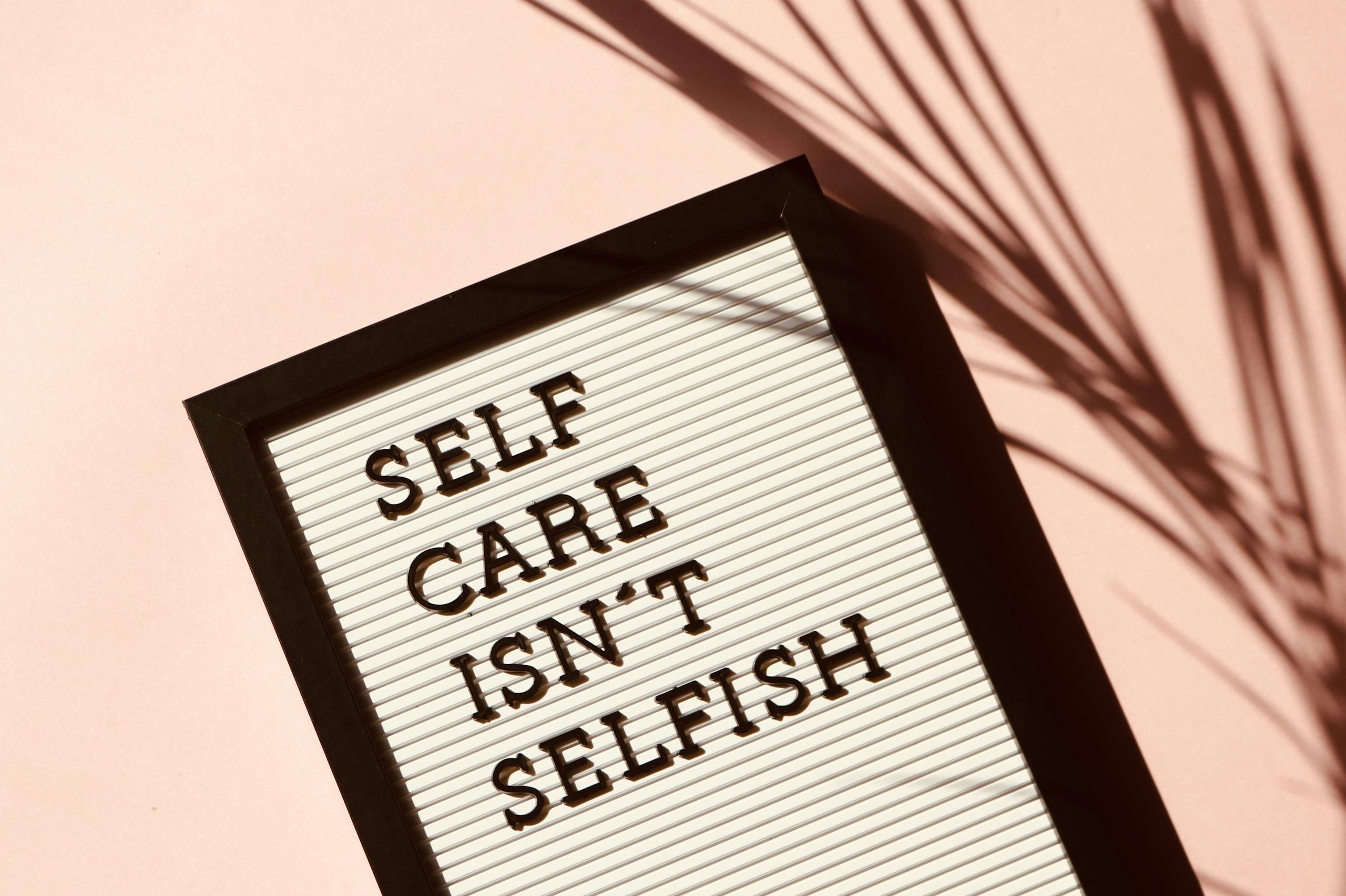
INFJ selfishness is a label this personality type carries without deserving it. INFJs give deeply, feel intensely, and absorb the emotional weight of everyone around them. When they finally choose themselves, even briefly, guilt rushes in. But self-care isn’t selfishness. It’s the condition that makes everything INFJs offer sustainable.

You know that particular exhaustion that has nothing to do with sleep? The kind that settles in after you’ve spent weeks being everything to everyone, listening deeply, holding space for other people’s pain, smoothing over tensions before they become conflicts? That’s not tiredness. That’s depletion. And for people with the INFJ personality type, it’s almost a default setting.
My agency years taught me a version of this. As an INTJ running teams of creative and account people, I operated in a constant state of giving: strategic direction, emotional steadiness, decisive calls under pressure. I told myself that was leadership. What I didn’t understand until much later was that I was running on fumes, and calling it professionalism. The moment I started protecting my own energy with the same intention I protected client relationships, everything changed. Not because I became less committed to the people around me, but because I finally had something real to give them.
INFJs face a version of this reckoning constantly. And the question worth sitting with isn’t whether self-care is selfish. It’s why this type, above almost any other, struggles so hard to believe it isn’t.
If you’re exploring what it means to be an INFJ or want to confirm your type before reading further, our free MBTI personality test is a good place to start. Knowing your type with clarity changes how you interpret everything that follows.
The INFJ experience sits at the center of our MBTI Introverted Diplomats hub, which covers the full emotional and relational landscape of INFJ and INFP types. This article goes deep on one specific piece of that landscape: the guilt around self-care, and why it’s worth examining honestly.
Is INFJ Selfishness Real, or Is It a Story You’ve Been Told?
Most INFJs arrive at the selfishness question from the outside in. Someone in their life, a parent, a partner, a colleague, expressed disappointment when the INFJ said no, withdrew, or prioritized their own needs. The INFJ, wired to absorb that disappointment and search for its cause, concluded the problem was them.
What’s your personality type?
Take our free 40-question assessment and get a detailed personality profile with dimension breakdowns, context analysis, and personalised insights.
Discover Your Type8-12 minutes · 40 questions · Free
That conclusion sticks. It gets reinforced every time the INFJ notices their own need for solitude, their preference for depth over availability, their instinct to protect emotional bandwidth. Over time, the internal narrative becomes: wanting space is selfish. Saying no is selfish. Choosing myself is selfish.
None of that is accurate. What it actually reflects is a personality type so attuned to others’ needs that it has difficulty distinguishing between genuine self-centeredness and basic self-preservation. Those are not the same thing, and conflating them has a real cost.
A 2023 review published by the American Psychological Association found that chronic self-neglect in high-empathy individuals correlates strongly with burnout, compassion fatigue, and diminished relational quality over time. In other words, the very thing INFJs fear, becoming less available to the people they love, is exactly what happens when they refuse to care for themselves.
Selfishness, properly defined, is the disregard for others’ wellbeing in favor of your own. An INFJ who takes a quiet afternoon to recharge so they can show up fully tomorrow is not disregarding anyone. They’re doing the opposite.
Why Do INFJs Feel Guilty for Having Needs?
The guilt isn’t random. It comes from somewhere specific, and understanding where it originates makes it easier to challenge.
INFJs lead with Introverted Intuition and support it with Extraverted Feeling. That combination means they process the world through pattern recognition and internal insight, and they express themselves outward through care, connection, and attunement to others’ emotional states. Extraverted Feeling, in particular, creates a constant low-level awareness of how others are doing. An INFJ in a room full of people is quietly tracking emotional undercurrents, noticing who seems off, sensing what’s unspoken.
That’s a gift. It’s also exhausting in ways that are hard to explain to people who don’t experience it.
When an INFJ withdraws, even briefly, that Extraverted Feeling function doesn’t switch off. It keeps scanning. Is someone disappointed? Did I let someone down? Should I be doing something right now? The guilt isn’t a character flaw. It’s a cognitive function working overtime in a direction it was never meant to sustain indefinitely.
I watched this play out with a creative director I managed early in my agency career. She was an extraordinary empath, the person everyone came to when a client relationship got rocky, when a team member needed support, when a pitch needed heart. She was also the person who stayed late every Friday not because the work required it, but because she felt guilty leaving before everyone else. She burned out inside eighteen months. The team lost her not because she was selfish, but because no one, including her, had given her permission to stop.
The National Institute of Mental Health has documented the relationship between sustained emotional labor and mental health outcomes, noting that individuals who consistently suppress their own needs in service of others face elevated risks of anxiety and depressive episodes. For INFJs, who often don’t recognize their own emotional labor as labor, that risk is compounded by invisibility.
What Does INFJ Self-Care Actually Look Like?
Generic self-care advice rarely lands for this personality type. “Take a bath” and “practice gratitude” are fine suggestions, but they don’t address the specific texture of INFJ depletion, which is less about physical rest and more about psychic overload.
INFJ self-care tends to work best when it involves three things: solitude with intention, creative or intellectual engagement, and the deliberate release of others’ emotional weight.
Solitude with intention means more than being alone. It means being alone without an agenda, without the background hum of guilt about what you should be doing instead. An INFJ who spends their solitary time mentally reviewing conversations, worrying about relationships, or planning how to help others isn’t actually resting. They’re just doing emotional labor in a quieter room.
Creative or intellectual engagement gives the INFJ’s Introverted Intuition somewhere to go that isn’t other people. Reading, writing, making something, thinking through a complex problem for the pleasure of it, these activities feed the internal world that makes an INFJ who they are. They’re not indulgences. They’re maintenance.
Releasing others’ emotional weight is the hardest piece. INFJs absorb. They carry things for people long after the conversation ends. Developing practices that create a conscious boundary between what belongs to you and what belongs to someone else, whether that’s journaling, physical movement, or simply naming the distinction out loud, is genuinely restorative in ways that passive rest often isn’t.
The Mayo Clinic describes boundaries in caregiving contexts as essential rather than optional, noting that without them, even the most committed helpers lose their capacity to help. That framing tends to resonate with INFJs more than “take care of yourself” does. Boundaries aren’t about pulling back from people. They’re about remaining capable of showing up for them.
How Does the INFJ Tendency to Keep Peace Make Self-Care Harder?
One of the patterns I see most consistently in INFJs is the way peacekeeping and self-neglect reinforce each other. An INFJ who avoids difficult conversations to preserve harmony ends up carrying resentment they can’t express, which depletes them further, which makes them less able to advocate for their own needs, which leads to more peacekeeping, and so on.
This is worth naming directly: the hidden cost of keeping peace for INFJs is often their own wellbeing. Every time an INFJ swallows a need to avoid friction, they’re making a small deposit into an account that eventually overdraws.
I spent years doing a version of this in client relationships. There were accounts where the dynamic was genuinely unhealthy, where the client’s demands were unreasonable and the relationship was costing my team more than it was worth. I kept the peace. I smoothed things over. I told myself it was professionalism. What it actually was, in retrospect, was an inability to have the conversation that needed to happen, because I was more afraid of the conflict than I was committed to what was right.
INFJs who want to build sustainable self-care practices often have to start with this: learning that their needs are worth the discomfort of naming them. That discomfort is temporary. The depletion of never naming them is cumulative.
There’s also a communication dimension here that’s easy to miss. Many INFJs struggle not just with conflict, but with the earlier, quieter moments where they could have set a boundary or expressed a need before things escalated. Understanding your INFJ communication blind spots is often where the real work begins, because those blind spots are usually the reason needs go unspoken until they become crises.

Is the INFJ Door Slam Actually a Form of Delayed Self-Care?
One of the more fascinating and painful expressions of INFJ self-protection is what’s commonly called the door slam, the sudden, complete emotional withdrawal from a person or relationship that has depleted or hurt the INFJ one too many times.
From the outside, it looks abrupt. From the inside, it rarely is. By the time an INFJ door slams, they’ve typically been tolerating the situation for far longer than was healthy, giving the other person chance after chance, absorbing impact after impact, until something finally breaks.
In that sense, the door slam is a form of self-care, but it’s the emergency exit version. It’s what happens when smaller, earlier acts of self-protection were skipped for too long. Understanding why INFJs door slam and what alternatives exist is genuinely useful here, because success doesn’t mean never protect yourself. It’s to build enough smaller protections that the complete shutdown becomes unnecessary.
A 2022 paper cited by Psychology Today on emotional withdrawal in high-empathy individuals found that abrupt disconnection often follows extended periods of unaddressed emotional boundary violations. The withdrawal itself isn’t pathological. The conditions that made it feel necessary often are.
What this means practically: if you’re an INFJ who has door slammed, or who fears you’re approaching that threshold, the question isn’t what’s wrong with you. The question is what you’ve been tolerating that you shouldn’t have been, and what would have needed to be different earlier for things not to reach that point.
Can INFJs Practice Self-Care Without Feeling Like They’re Abandoning Others?
Yes. And the reframe that makes it possible is this: self-care isn’t time you take away from others. It’s capacity you build for them.
That distinction mattered enormously to me in my agency years. At some point, I stopped thinking of my solo thinking time as antisocial and started recognizing it as where my best strategic work actually happened. The hours I spent away from meetings, processing, reflecting, integrating, weren’t selfish. They were where I became useful. Protecting that time wasn’t about withdrawing from my team. It was how I showed up for them with something worth offering.
INFJs can apply the same logic to their emotional lives. The afternoon spent in solitude isn’t time stolen from a relationship. It’s the reason the relationship can continue to receive your full presence. The boundary you set isn’t rejection. It’s the condition that makes genuine connection possible.
The American Psychological Association has written extensively on the concept of emotional sustainability in helping relationships, consistently finding that helpers who maintain their own wellbeing are more effective, more present, and more capable of genuine empathy than those who don’t. Depletion doesn’t make you more available. It makes you less.
There’s something worth noting for INFJs who also have INFP friends or family members in their lives: this dynamic isn’t unique to one type. INFPs face their own version of this struggle, particularly around having hard conversations without losing themselves and why they take conflict so personally. The guilt looks different, but the underlying pattern, prioritizing others at cost to self, runs through both types.

What Happens to INFJs Who Never Learn to Prioritize Themselves?
The long-term picture isn’t abstract. INFJs who consistently neglect their own needs in favor of others’ don’t become more giving over time. They become more brittle, more resentful, more prone to the kind of complete withdrawal that damages the very relationships they were trying to protect.
Burnout in high-empathy types tends to be slower and quieter than the dramatic crash people imagine. It looks more like a gradual dimming: less enthusiasm, less creativity, a growing sense of going through motions, a flatness where depth used to be. The INFJ who once brought warmth and insight to every room starts showing up present in body but absent in the ways that matter.
The National Institute of Mental Health notes that sustained emotional exhaustion is a significant predictor of clinical anxiety and depression, particularly in individuals with high baseline empathy. That’s not meant to alarm. It’s meant to contextualize why self-care for this personality type isn’t optional maintenance. It’s foundational.
One of the things I’ve come to believe, after years of watching this pattern in myself and in the people I worked with, is that the most generous thing an INFJ can do is take their own sustainability seriously. Not as an afterthought, not as something they’ll get to when everyone else is okay, but as a genuine priority that shapes how they structure their time, their relationships, and their commitments.
The influence an INFJ carries, that quiet intensity that draws people in and makes them feel genuinely seen, depends on the INFJ being present enough to offer it. Understanding how that quiet influence actually works makes it clearer why protecting it matters. You can’t give from empty.
A Harvard Business Review analysis on sustainable leadership found that leaders who actively managed their own energy, not just their time, consistently outperformed those who didn’t across measures of team engagement, decision quality, and long-term effectiveness. The same principle applies outside leadership contexts. Managing your energy isn’t selfishness. It’s stewardship.
How Do You Start Choosing Yourself Without the Guilt?
Slowly, and with honesty about what you’re actually doing.
The guilt doesn’t disappear the moment you decide self-care matters. For most INFJs, it lingers for a while, showing up as second-guessing, as the urge to check in one more time, as the quiet voice asking whether you’ve done enough. Expecting the guilt to vanish immediately sets you up to interpret its presence as evidence that you’re doing something wrong. You’re not. You’re just changing a pattern that’s been in place for a long time.
Start with small, concrete acts. Say no to one thing this week that you would normally say yes to out of obligation rather than genuine desire. Spend thirty minutes doing something that feeds your internal world without framing it as productive. Notice the guilt when it arrives, name it, and let it pass without acting on it.
Over time, the practice builds its own evidence. You show up better after you’ve rested. Your relationships improve when you’re not running on depletion. The people in your life receive more of you, not less, when you’ve actually taken care of yourself. That evidence matters. Let it accumulate until it becomes louder than the old story.
The Mayo Clinic recommends treating self-care as a scheduled commitment rather than something that happens in leftover time, particularly for individuals in caregiving roles. For INFJs, who often experience their entire relational life as a kind of caregiving, that framing is worth taking seriously. Put it on the calendar. Protect it the way you’d protect a commitment to someone else.

There’s more to explore about how INFJs and INFPs experience relationships, conflict, and self-expression in our complete MBTI Introverted Diplomats resource hub, which covers the full range of challenges and strengths these types carry.
About the Author
Keith Lacy is an introvert who’s learned to embrace his true self later in life. After 20 years in advertising and marketing leadership, including running agencies and managing Fortune 500 accounts, Keith now channels his experience into helping fellow introverts understand their strengths and build fulfilling careers. As an INTJ, he brings analytical depth and authentic perspective to every article, drawing from both professional expertise and personal growth.
Frequently Asked Questions
Are INFJs actually selfish?
No. INFJs are among the most other-focused personality types, often to their own detriment. The perception of INFJ selfishness typically arises when they finally set a limit or withdraw after extended periods of giving without reciprocation. That’s not selfishness. It’s a delayed and often overdue act of self-preservation from a type that consistently prioritizes others first.
Why do INFJs feel guilty about self-care?
INFJs feel guilty about self-care because their dominant cognitive functions, particularly Extraverted Feeling, keep them constantly attuned to others’ needs and emotional states. Stepping back from that attunement, even temporarily, triggers an internal alarm that reads as abandonment or selfishness. The guilt is a feature of how this type is wired, not evidence that self-care is actually wrong.
What kind of self-care works best for INFJs?
INFJs tend to benefit most from solitude with genuine intention, meaning time alone that isn’t spent mentally managing other people’s emotions. Creative engagement, intellectual stimulation, and practices that help them consciously release the emotional weight they carry for others are particularly restorative. Generic self-care advice often misses the mark for this type because INFJ depletion is more psychic than physical.
How does the INFJ door slam relate to self-care?
The INFJ door slam is often a form of emergency self-protection that happens when smaller, earlier acts of self-care were skipped for too long. By the time an INFJ reaches that threshold, they’ve typically been absorbing harm or imbalance far past what was healthy. Building regular self-care habits and learning to express needs earlier can reduce the likelihood of reaching the door slam point, because the pressure doesn’t accumulate to that degree.
Can self-care make INFJs better at caring for others?
Yes, consistently. INFJs who maintain their own wellbeing are more present, more genuinely empathetic, and more capable of the depth of connection this type is known for. Depletion doesn’t increase availability. It diminishes it. The most generous long-term choice an INFJ can make is to take their own sustainability seriously, because everything they offer others depends on it.