
An INFJ workspace setup works best when it supports deep focus, emotional regulation, and sensory comfort simultaneously. The right physical and digital tools reduce friction, protect energy, and create the conditions where this personality type’s natural strengths, including pattern recognition, empathy, and long-range thinking, can actually show up.
What makes workspace design genuinely different for INFJs isn’t just aesthetics or preference. It’s the way this type processes the world. Meaning filters through layers of intuition and feeling before it becomes output. That process needs protection, and the right tools provide it.
If you’re not yet sure whether INFJ fits you, take our free MBTI test before reading further. Knowing your type changes how you interpret everything that follows.
This article is part of a broader conversation happening in our MBTI Introverted Diplomats (INFJ and INFP) hub, where we explore what makes these two types tick, how they differ, and how they can build lives that actually fit them. Workspace design is one piece of that puzzle, and it connects directly to how INFJs manage energy, meaning, and their relationship with the outside world.
What Does an INFJ Actually Need From a Workspace?
Most workspace advice focuses on productivity metrics. Output. Efficiency. Speed. That framing misses what actually matters to someone wired the way INFJs are wired.
INFJs don’t struggle to think deeply. They struggle to protect the conditions that allow deep thinking to happen. Noise, visual clutter, interruptions, and emotional residue from other people all chip away at the internal clarity this type depends on. A well-designed workspace isn’t a luxury for an INFJ. It’s a functional requirement.
Early in my agency years, I ran a creative department out of an open-plan office that looked like every startup cliché you’ve ever seen. Exposed brick, communal tables, a foosball table nobody touched. It was designed to signal collaboration and energy. What it actually did was make sustained thinking nearly impossible. I’d arrive early to get two quiet hours before the noise started, then spend the rest of the day managing the sensory load rather than doing real work. It took me years to name what was happening, and longer still to do something about it.
For anyone who identifies with the INFJ personality type, the Advocate type is defined by a rare combination of deep empathy, visionary thinking, and a strong need for solitude to recharge. Those traits don’t disappear at your desk. They shape everything about how you work, including what your physical environment needs to provide.
A 2021 study published in PubMed Central found that environmental stressors including noise and visual clutter measurably impair cognitive performance and increase cortisol levels, particularly in individuals who score high on sensitivity measures. INFJs, who tend toward high sensitivity, feel this acutely.
Which Lighting Tools Make the Biggest Difference for INFJ Focus?
Lighting is the most underestimated variable in workspace design, and it’s one INFJs notice more than most.
Harsh overhead fluorescent light creates a kind of low-grade agitation that’s hard to name but easy to feel. It flattens the environment, makes everything feel clinical, and subtly signals urgency in a way that works against the slow, layered thinking INFJs do best. Warm, adjustable lighting does the opposite. It creates a sense of safety and permission to go inward.
The products worth considering here fall into a few categories. A smart bulb system like Philips Hue or LIFX lets you program different lighting scenes for different work modes. A cool, brighter setting for analytical tasks, a warmer dimmer tone for writing or reflection, and a very low warm light for winding down after deep work sessions. These transitions matter because INFJs often struggle to shift gears without environmental cues helping the transition.
A dedicated desk lamp with adjustable color temperature is worth the investment even if you don’t go the smart bulb route. BenQ makes a line of monitor-mounted lamps specifically designed to reduce eye strain during screen-heavy work. For INFJs who spend long hours writing, researching, or doing creative work, that kind of sustained comfort pays off in concentration and reduced fatigue.
Natural light matters too, but with nuance. Direct sunlight creates glare and heat that can be distracting. A sheer curtain that diffuses natural light without blocking it entirely gives you the mood benefit without the sensory irritation.

How Should INFJs Approach Sound Management in Their Workspace?
Sound is where INFJ workspace design gets personal fast.
Some INFJs work best in complete silence. Others find that a consistent ambient sound layer, rain, white noise, lo-fi music without lyrics, actually helps by masking unpredictable interruptions. The unpredictability is usually the problem, not the sound level itself. A sudden voice, a door slamming, a phone notification from across the room: these micro-interruptions pull INFJs out of depth in a way that takes significant time to recover from.
Noise-canceling headphones are close to non-negotiable for INFJs working in shared spaces. Sony WH-1000XM5 and Bose QuietComfort 45 are consistently rated at the top of their category. Both offer strong passive noise isolation plus active cancellation, and both have a comfortable fit for long wear. That last point matters more than spec sheets suggest. If the headphones become uncomfortable after an hour, you won’t wear them during the long sessions when you need them most.
For home offices, a white noise machine placed near the door creates a consistent sound buffer without requiring headphones at all. LectroFan and Marpac Dohm are the two products I’ve seen recommended most consistently in this category. The Dohm uses a mechanical fan to generate actual white noise rather than a digital loop, which many sensitive users find more natural.
One thing I learned managing creative teams was that the people doing the most sophisticated thinking were often the ones who looked least “busy.” They were quiet, headphones on, staring at something that wasn’t a screen. The open-plan culture I described earlier was actively hostile to that kind of work. Sound management tools are partly about productivity and partly about protecting the right to think without performing busyness.
This connects to something INFJ paradoxes often surface: the type that cares most deeply about people also needs the most protection from people in order to function. Sound management tools make that paradox livable.
What Desk and Ergonomic Products Support INFJ Work Patterns?
INFJs tend to work in long, immersive stretches when conditions are right. That’s a strength, and it’s also a physical risk if the workspace doesn’t support sustained sitting or standing.
A standing desk converter or a full sit-stand desk changes the physical experience of long work sessions in ways that go beyond back health. The ability to shift positions gives the body a kind of micro-reset that helps the mind stay engaged. Flexispot and Uplift Desk both make reliable options at different price points. If a full desk replacement isn’t feasible, a converter like the Flexispot M7B sits on top of an existing desk and raises the monitor and keyboard independently.
Chair quality matters enormously for long sessions. The Herman Miller Aeron remains the benchmark, though the price point is significant. The Autonomous ErgoChair Pro offers much of the same ergonomic functionality at roughly half the cost. What you’re looking for is lumbar support that doesn’t require constant manual adjustment, armrests that can be positioned to keep shoulders relaxed, and seat depth that accommodates your leg length without cutting off circulation.
Monitor placement deserves attention too. A monitor arm like the Ergotron LX removes the monitor from the desk surface entirely, frees up physical space, and allows precise positioning that reduces neck strain. For INFJs who process information visually and often have reference materials, notes, and a primary document open simultaneously, a dual-monitor setup supported by a dual arm can reduce the cognitive friction of switching between sources.
A research review published in PubMed Central found that ergonomic workspace interventions significantly reduce musculoskeletal discomfort and improve sustained work performance. For a type that does their best work in extended focused sessions, that kind of physical support isn’t a perk. It’s infrastructure.

Which Analog Tools Complement the INFJ’s Natural Thinking Style?
There’s something about putting pen to paper that digital tools haven’t replaced for most INFJs, and the research on why is worth understanding.
A 2014 study from Princeton and UCLA, later cited widely in educational research, found that handwriting engages deeper cognitive processing than typing. For INFJs whose thinking is inherently integrative, connecting disparate ideas into coherent meaning, handwriting slows the process enough to allow that integration to happen rather than just capturing surface-level information.
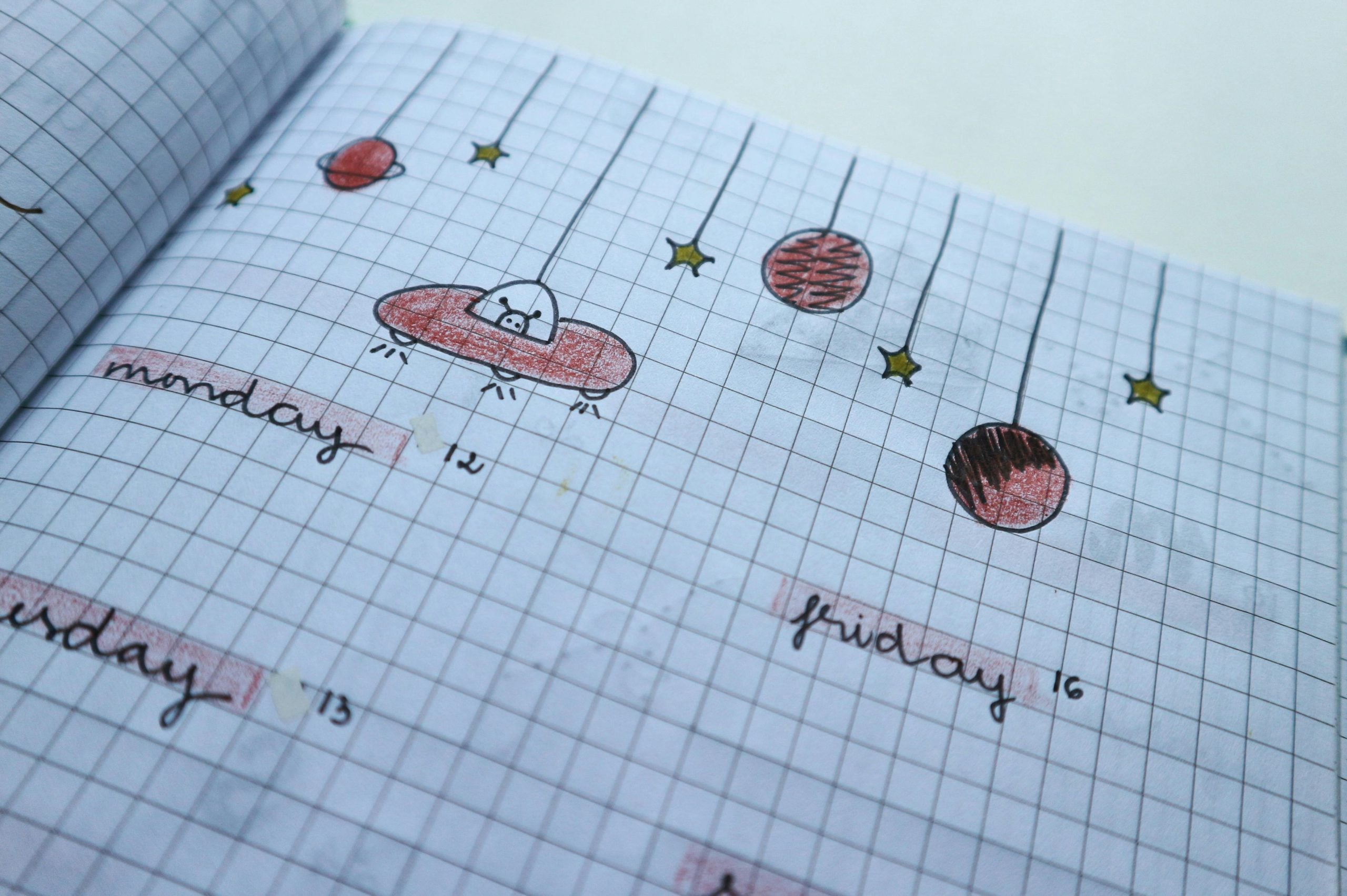
The notebook itself matters more than people admit. Leuchtturm1917 and Moleskine are the two most commonly cited options among people who write seriously. Leuchtturm has numbered pages and an index, which appeals to the INFJ tendency to want to find things again later. Moleskine has a slightly more substantial cover and a wider range of sizes. Both use quality paper that handles fountain pen ink without bleed-through.
Speaking of pens: a good writing instrument is worth the investment. Pilot G2 remains the reliable everyday choice. For something more considered, the LAMY Safari fountain pen runs about $30 and transforms the physical act of writing into something that feels intentional rather than mechanical. INFJs often describe their thinking as feeling more organized when the writing process itself feels deliberate.
A desk pad or large mouse pad that covers most of the desk surface serves both a functional and aesthetic purpose. It creates a defined work zone, protects the desk surface, and gives the workspace a sense of intentional design that INFJs respond to. Grovemade and Orbitkey both make high-quality leather and felt options. MOUS makes a more affordable cork version that works well.
I kept a dedicated notebook for every major client account during my agency years. Not a digital CRM, not a shared document, a physical notebook where I processed what I was observing about the client’s business, their culture, the gaps between what they said they wanted and what they actually needed. That notebook was where my best strategic thinking happened. The act of writing longhand forced me to synthesize rather than just record.
How Do Sensory Comfort Products Affect INFJ Work Quality?
Sensory comfort is a legitimate workspace variable, not a soft preference to be dismissed.
INFJs, like many introverts with high sensitivity profiles, process sensory input more thoroughly than average. A 2020 review in Psychology Today’s research coverage on empathy and sensitivity noted that highly empathic individuals show heightened neural responses to environmental stimuli, which means the sensory environment of a workspace has a more direct effect on cognitive and emotional state than it does for less sensitive types.
Temperature control is one area where small investments pay disproportionate dividends. A personal desk fan like the Vornado FLIPPI V6 or a small ceramic space heater gives you local temperature control independent of whatever the building thermostat is doing. Being too cold or too warm creates a background discomfort that drains attention in ways that are easy to attribute to other causes.
Scent is another variable worth considering. A diffuser with essential oils isn’t aromatherapy as a wellness trend. It’s a tool for creating a consistent sensory signature for your workspace that helps signal to your nervous system that this is a place for focused work. Lavender and eucalyptus are commonly associated with calm focus. Peppermint and citrus are associated with alertness. URPOWER and InnoGear both make reliable ultrasonic diffusers at accessible price points.
Plants deserve mention here too. Beyond the aesthetic dimension, research cited by the National Institutes of Health supports the connection between indoor greenery and reduced psychological stress. For INFJs who work alone for long stretches, a few plants add a quality of aliveness to the space that matters more than it sounds. Low-maintenance options like pothos, snake plants, and ZZ plants thrive in typical office light conditions without demanding much attention.

What Digital Tools Help INFJs Protect Their Attention Without Overcomplicating Their Setup?
Digital tool fatigue is real, and INFJs are particularly susceptible to it. The same depth of engagement that makes this type excellent at meaningful work also means they can get absorbed in optimizing their tools rather than using them.
The principle worth holding onto is this: fewer tools used deeply beat more tools used shallowly. An INFJ who has mastered one note-taking app, one task manager, and one calendar system will outperform the version of themselves who has five apps for each category and spends mental energy managing the system rather than working within it.
For attention protection specifically, Freedom and Cold Turkey are the two most effective website and app blockers available. Freedom works across devices simultaneously, which matters when you have a phone next to your computer. Cold Turkey has a stricter lockout mode that makes it harder to override in a moment of weakness. Both allow you to create scheduled block sessions that run automatically, removing the daily decision about whether to block distractions.
A second monitor dedicated primarily to reference material, rather than active applications, reduces the cognitive cost of context switching. For INFJs who work on complex projects that require holding multiple threads simultaneously, having reference material visible without requiring a window switch preserves the mental continuity that’s so hard to rebuild once broken.
Keyboard shortcuts are worth learning systematically. The time investment is small, and the payoff in reduced friction compounds over thousands of work hours. A tool like CheatSheet (Mac) or AutoHotKey (Windows) can surface available shortcuts for any active application without requiring you to memorize them all upfront.
One digital tool that often gets overlooked is a dedicated browser profile for work. Chrome and Firefox both support multiple profiles with separate bookmarks, extensions, and history. A clean work profile with only work-relevant bookmarks and extensions reduces the visual noise and temptation that comes from a browser that contains your entire digital life.
The 16Personalities profile for INFJs describes this type as prone to perfectionism and overextension, two tendencies that digital tool proliferation actively feeds. Keeping the digital workspace as intentional as the physical one is a form of self-knowledge in practice.
How Can INFJs Design Their Workspace for Emotional Transitions?
One of the most overlooked aspects of workspace design for INFJs is the question of transitions. Not just entering the workspace, but moving between different types of work, ending the workday, and recovering from emotionally demanding interactions.
INFJs absorb emotional content from their environment and from the people they interact with. This is partly what makes them exceptional at empathy and insight. It’s also what makes them vulnerable to emotional residue that lingers after a difficult meeting, a tense email exchange, or a piece of work that required sustained emotional engagement. A workspace that supports transitions helps process that residue rather than carrying it forward into the next task.
A few specific tools support this. A physical inbox and outbox on the desk creates a visual boundary between what’s active and what’s complete. It sounds simple, and it is. Yet the psychological effect of moving something from “in progress” to “done” has a measurable impact on closure and mental release. The Poppin Stackable Letter Tray and similar options from Blu Monaco are affordable and visually clean.
A dedicated end-of-day ritual object, something as simple as a specific tea mug you only use during the wind-down period, or a small candle you light only when the workday is closing, creates a sensory anchor for the transition out of work mode. INFJs respond strongly to symbolic and ritual meaning. Using that tendency deliberately in workspace design is a form of self-awareness that pays off in reduced evening anxiety and better sleep.
This emotional dimension of workspace design connects to something I’ve seen come up repeatedly when comparing INFJ and INFP approaches to self-care and productivity. Reading about INFP self-discovery often surfaces similar themes around emotional processing and the need for rituals that mark meaningful transitions. The specific needs differ, but the underlying sensitivity to emotional environment is shared.
A 2022 study referenced in the National Institute of Mental Health’s resources on depression and mood regulation found that structured daily routines and environmental anchors significantly support emotional regulation in individuals prone to mood sensitivity. For INFJs, workspace rituals aren’t indulgences. They’re practical mental health tools.
Late in my agency career, I started keeping a small wooden box on my desk where I’d physically place a written note at the end of each day summarizing what I’d completed and what I was leaving for tomorrow. It was a five-minute practice that cost almost nothing. What it gave me was a clean break between the workday and the evening, something I’d struggled to create for years. The workspace object made the mental transition real in a way that a digital to-do list never had.

What Boundary-Setting Products Help INFJs in Shared or Home Workspaces?
Boundary-setting is something INFJs often experience as a core survival skill, not a preference. The type’s combination of deep empathy and strong need for solitude creates a particular tension in shared workspaces, whether that’s a home office shared with a partner or family, a coworking space, or a traditional office environment.
Physical signals that communicate “I’m in deep work mode” without requiring a verbal conversation are worth their weight. A simple “do not disturb” sign with a timer, a specific desk lamp color that signals unavailability, or even a closed door with a small whiteboard for leaving messages all reduce the social friction of protecting focus time.
For home offices specifically, a room divider or bookshelf used as a spatial separator creates psychological distance even in a small space. IKEA’s KALLAX shelving unit is a classic for this purpose. It’s functional storage on both sides and a visual boundary that signals workspace versus living space.
A dedicated work phone or a phone stand with a strict notification schedule removes the most common source of interruption without requiring willpower. The Twelve South HiRise stand or any similar vertical phone stand keeps the device visible for genuine emergencies while the notification settings do the actual work of filtering.
Understanding how INFJs differ from their close neighbors in the type system helps here. The way INFJs and INFPs approach boundary-setting differs in meaningful ways. INFPs tend to protect their inner world through emotional withdrawal, while INFJs often use structural and environmental tools to create the separation they need. Comparing how to recognize an INFP versus an INFJ can clarify which boundary strategies are actually suited to your type rather than borrowed from someone else’s experience.
A cable management system deserves a mention here too, not as a boundary tool in the social sense, but as a boundary tool for visual attention. Visible cable chaos creates low-grade cognitive noise that INFJs feel more acutely than many other types. The JOTO cable management sleeve, Velcro cable ties, and a simple cable box for power strips can transform a visually chaotic desk into a clean surface in under an hour.
How Does Workspace Design Connect to INFJ Identity and Long-Term Wellbeing?
There’s a deeper reason workspace design matters so much to INFJs beyond productivity or comfort. It’s about identity.
INFJs have a strong sense of who they are and what they value, often from a young age. Yet they also have a persistent tendency to adapt to external expectations in ways that quietly erode that sense of self. A workspace that reflects genuine preferences, that’s designed for how you actually think rather than how you’re supposed to work, is a daily act of self-recognition.
Spending two decades in advertising, I watched a lot of talented introverts design their workdays around the preferences of extroverted colleagues and extroverted office cultures. Open-plan offices. Spontaneous brainstorms. Constant availability. The people who thrived weren’t the ones who adapted most completely. They were the ones who found ways to protect their actual working style within whatever constraints existed. Workspace tools were part of how they did that.
The question of whether INFJs are thriving or merely surviving in their work environments connects to broader questions about personality and meaning. The tragic pattern that shows up in INFP characters always dying in fiction reflects something real about what happens to idealists who can’t protect their inner world from external pressure. INFJs face a version of the same risk. A workspace that’s genuinely yours is one small but real way of pushing back against that pressure.
Personality type research from Harvard’s work on psychological wellbeing consistently finds that alignment between personal values and daily environment is one of the strongest predictors of sustained satisfaction and performance. For INFJs, workspace design is one of the most direct ways to create that alignment in the hours they spend working.
The comparison between INFJ and INFP decision-making styles is worth noting here too. Where INFPs often make workspace decisions based on emotional resonance in the moment, INFJs tend to think in systems and long-term patterns. Understanding that difference, explored in detail in the piece on ENFP vs INFP decision-making differences, can help INFJs recognize when they’re borrowing advice designed for a different cognitive style.
Build your workspace the way you’d build any system you intend to rely on for years. Start with what’s essential, test what’s optional, and remove what creates friction without adding value. Your workspace should feel like it belongs to you, because it does.
Explore more personality type resources and workspace insights in our MBTI Introverted Diplomats (INFJ and INFP) hub, where we cover everything from type identification to career strategies for this rare and thoughtful personality group.
About the Author
Keith Lacy is an introvert who’s learned to embrace his true self later in life. After 20 years in advertising and marketing leadership, including running agencies and managing Fortune 500 accounts, Keith now channels his experience into helping fellow introverts understand their strengths and build fulfilling careers. As an INTJ, he brings analytical depth and authentic perspective to every article, drawing from both professional expertise and personal growth.
Frequently Asked Questions
What is the most important workspace feature for an INFJ?
Sound management and lighting control are the two variables that most directly affect INFJ focus and emotional regulation. Unpredictable noise is particularly disruptive for this type because INFJs process sensory input deeply and take longer to recover from interruptions than many other personality types. Noise-canceling headphones, a white noise machine, and adjustable warm lighting address the most common workspace friction points without requiring a complete redesign of your environment.
Do INFJs work better at home or in an office?
Most INFJs report higher sustained productivity in environments they can control, which typically means a home office or a private office rather than an open-plan setting. The ability to manage noise, lighting, temperature, and interruption on their own terms allows the deep focus that INFJs depend on. That said, some INFJs benefit from occasional structured time in shared spaces for the social connection and accountability they provide. The difference lies in having the choice rather than being required to work in an environment that drains rather than supports them.
Are expensive workspace products worth it for INFJs?
Some investments pay disproportionate returns for INFJs. Quality noise-canceling headphones, a good ergonomic chair, and adjustable lighting are worth prioritizing because they directly address the sensory and physical factors that most affect this type’s ability to sustain deep work. Other products, like premium desk accessories or elaborate organizational systems, are worth less if they add visual complexity or require ongoing maintenance. Start with the tools that remove friction, and add aesthetic elements after the functional foundation is solid.
How can INFJs handle workspace interruptions from family or housemates?
Physical and visual signals work better than verbal requests for most INFJs because they remove the need for repeated social negotiation. A closed door, a specific lamp color that signals deep work mode, or a small whiteboard outside the workspace for leaving messages all communicate availability without requiring a conversation each time. Pairing these signals with a consistent schedule, so the people you live with know when you’re in focused work mode, reduces interruptions more reliably than any single tool.
What analog tools do INFJs tend to prefer for thinking and planning?
INFJs generally respond well to high-quality notebooks with structured layouts, particularly options like Leuchtturm1917 that include numbered pages and an index for later retrieval. The physical act of handwriting supports the integrative thinking INFJs do naturally, slowing the capture process enough to allow synthesis rather than just recording. A good pen, a desk pad that defines the work surface, and a simple inbox and outbox system for managing physical papers round out an analog toolkit that complements rather than competes with digital tools.