

Managing INFP ADHD in a senior role is one of the most quietly demanding combinations in the professional world. The INFP’s deep emotional processing and idealistic drive sit in constant tension with ADHD’s fractured attention and impulsivity, and when you add real executive responsibility to that mix, the internal pressure can become almost unbearable.
What makes this pairing so complex is that neither trait announces itself loudly. You look capable from the outside. You care deeply, you generate creative ideas, and you connect with your team in ways that matter. But underneath, you’re managing a brain that processes meaning at depth while simultaneously struggling to finish the email you started forty minutes ago.
There’s real hope in understanding how these two forces interact, and more importantly, how to work with them rather than against them at the leadership level.
Much of what I’ve written about INFP strengths and challenges lives in our INFP Personality Type hub, where we look at the full picture of what it means to be wired this way. But the specific experience of carrying ADHD into a senior role deserves its own honest conversation.
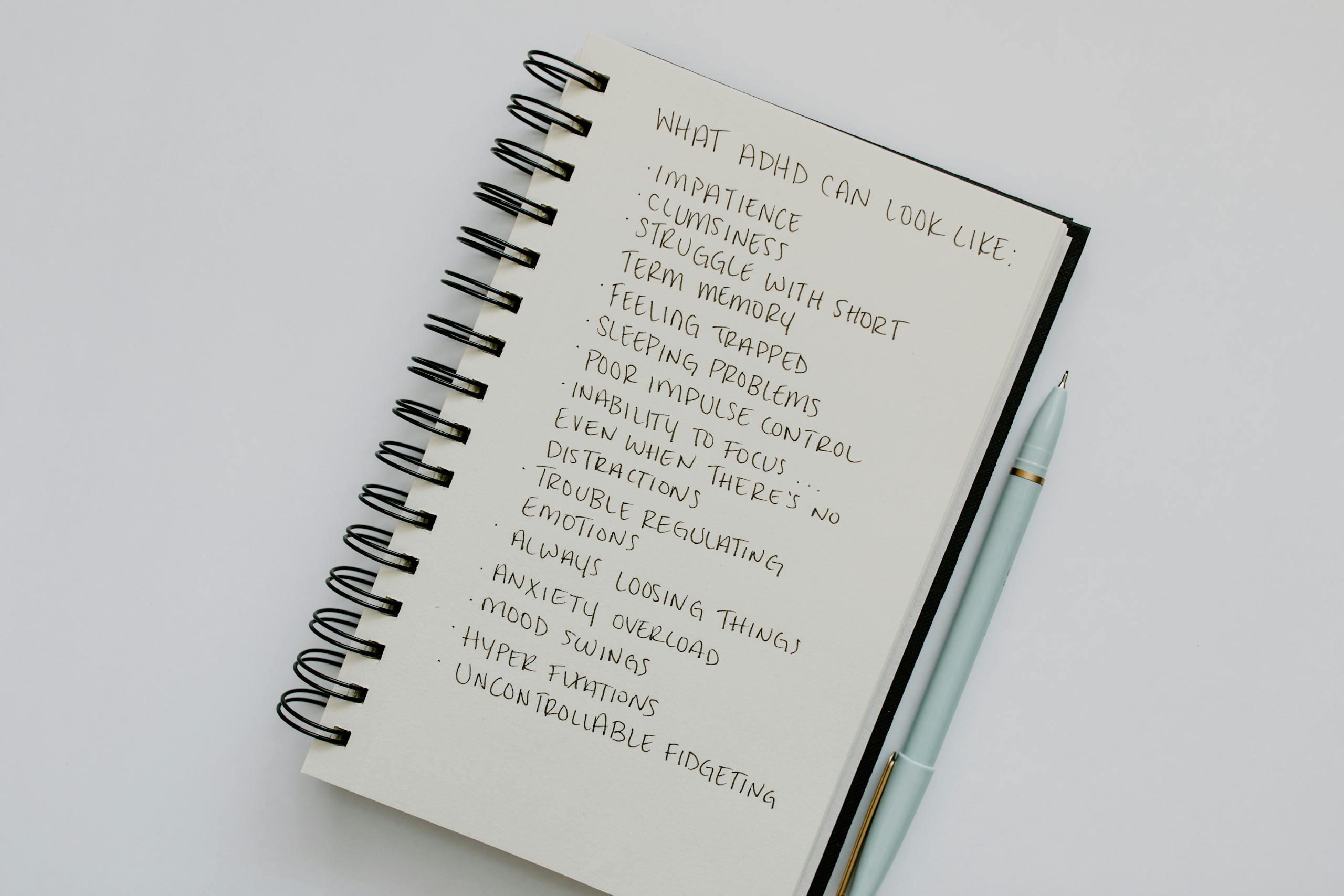
What Does INFP ADHD Actually Feel Like at the Executive Level?
Most descriptions of ADHD in the workplace focus on entry-level struggles: missed deadlines, disorganized desks, difficulty sitting through meetings. But when you’re the one running the meetings, chairing the strategy sessions, and responsible for outcomes that affect dozens of people, the texture of the experience changes completely.
What’s your personality type?
Take our free 40-question assessment and get a detailed personality profile with dimension breakdowns, context analysis, and personalised insights.
Discover Your Type8-12 minutes · 40 questions · Free
Early in my agency career, I managed a mid-size team on a major retail account. I had the ideas. I had the relationships. What I didn’t always have was the ability to sit with administrative complexity long enough to see it through. I’d hand off detail work because I told myself that’s what good leaders did. Delegate, right? Except sometimes I was delegating because the alternative was staring at a spreadsheet for two hours and producing nothing.
For an INFP with ADHD in a senior position, that tension is constant. Your values tell you that good leadership means showing up fully for your people. Your ADHD makes “showing up fully” feel like trying to tune a radio in a thunderstorm. And your INFP emotional depth means you feel the gap between who you want to be and who you’re managing to be, acutely and personally.
A 2023 study published in Frontiers in Psychology found that emotional dysregulation is one of the most underrecognized components of ADHD in adults, affecting not just mood but executive function, decision-making, and interpersonal effectiveness. For INFPs, whose emotional processing is already running at high intensity, this layer adds significant weight to every leadership interaction.
You might notice it in how you respond to criticism from a board member. Or how a difficult conversation with a direct report lingers in your mind for days when you should have moved on. Or how a particularly charged team meeting leaves you so depleted that the rest of your afternoon is essentially lost.
Why Does the INFP and ADHD Combination Create Unique Leadership Pressure?
INFPs lead from values. That’s not a cliché, it’s a functional description of how this personality type makes decisions, builds relationships, and evaluates success. When your leadership is grounded in authenticity and meaning, any gap between your intentions and your execution feels like a moral failure, not just a performance issue.
Add ADHD to that framework and you get a specific kind of internal conflict. You set an intention with complete sincerity. You want to follow through on the one-on-one you promised your team member. You want to finish the strategic brief before it goes stale. You want to be present in the budget meeting instead of mentally drafting a completely unrelated creative concept. And then your brain does what ADHD brains do, and the gap between intention and execution widens again.
What makes this particularly hard for INFPs is the self-judgment that follows. As Psychology Today notes, people with high empathic sensitivity often internalize failures in ways that others don’t, reading interpersonal shortcomings as evidence of deeper character flaws. For an INFP with ADHD, every missed deadline or distracted meeting isn’t just an inconvenience. It feels like evidence that you’re not the leader you’re supposed to be.
I watched this play out in myself over years of agency leadership. There were periods where I was genuinely effective, where my ability to see patterns others missed and build real trust with clients gave us an edge. And there were stretches where the administrative weight of running a business, the contracts, the billing cycles, the HR documentation, felt like it was actively trying to erase me. Not because I lacked intelligence or commitment, but because my brain simply wasn’t built for sustained linear processing.
If you’re not yet sure how your personality type intersects with your working style, it’s worth taking the time to take our free MBTI test and get a clearer picture of what you’re actually working with.

How Does ADHD Affect the INFP’s Communication in Senior Roles?
One of the most underappreciated challenges for INFP leaders with ADHD is communication. Not the content of what you say, INFPs are often gifted communicators with genuine warmth and depth. The problem is the structure and consistency of how that communication lands in a leadership context.
ADHD can cause you to over-explain in some moments and under-communicate in others. You might give a rambling, tangent-filled explanation in a team briefing because your brain is making connections faster than your mouth can organize them. Then you go radio silent for three days on a project update because you got pulled into something that captured your hyperfocus, and the team is left wondering what’s happening.
For INFPs specifically, there’s also the issue of conflict avoidance compounding communication gaps. When a conversation feels emotionally charged, the INFP instinct is often to delay, soften, or sidestep. Pair that with ADHD’s difficulty initiating tasks that feel aversive, and suddenly the difficult conversation you need to have with a direct report keeps getting pushed to next week.
This is something I’ve written about in depth when it comes to how INFPs approach hard talks without losing themselves, because the avoidance pattern is real and it has real costs at the senior level. When you’re leading a team, delayed conversations don’t just affect your own wellbeing. They affect team trust, project outcomes, and your credibility as a leader.
The ADHD layer makes this worse in a specific way. You might genuinely intend to have the conversation. You might even rehearse it mentally. But when the moment arrives, the emotional weight of it triggers what researchers describe as task aversion, and your brain finds seventeen other things to attend to instead.
A 2022 study from PubMed Central found that adults with ADHD show significantly higher rates of emotional avoidance behaviors, particularly in interpersonal contexts that require sustained attention and emotional regulation. For an INFP leader, that finding lands close to home.
What Strengths Does the INFP With ADHD Actually Bring to Leadership?
Here’s where I want to push back against the deficit-only framing, because it doesn’t tell the whole story.
Some of the most effective senior leaders I’ve encountered over two decades in advertising were people who thought differently. Not despite their neurodivergence, but partly because of it. The ability to make unexpected connections, to hyperfocus on a problem until it breaks open, to read the emotional temperature of a room with unusual accuracy, these aren’t incidental traits. They’re leadership assets.
INFPs with ADHD often bring a quality of creative urgency to their work. When something captures their genuine interest, the output can be extraordinary. I’ve seen this in creative directors, brand strategists, and account leads who would disappear into a problem for a weekend and emerge with something that changed the direction of a campaign entirely. That kind of depth doesn’t happen on a schedule, and it doesn’t come from a brain that processes everything in neat, linear steps.
There’s also the empathy dimension. As Healthline explains, people who process emotional information deeply often develop an intuitive sensitivity to others that becomes a genuine leadership strength. For an INFP with ADHD, that sensitivity is present even when attention is fractured. You might miss the agenda item, but you won’t miss the fact that someone in the room is struggling.
That matters more than most leadership frameworks acknowledge. Teams don’t follow titles. They follow people who make them feel seen. And INFPs, even those managing the daily chaos of ADHD, tend to be exceptionally good at that.
The challenge is building structures that support your strengths without requiring you to pretend you’re someone else. That’s the real work.

How Can an INFP With ADHD Manage the Structural Demands of a Senior Role?
Structure is the word most people use when they talk about managing ADHD, and it’s not wrong. But for INFPs, generic productivity advice often misses the mark because it doesn’t account for the values-driven way this personality type actually functions.
An INFP doesn’t follow a system because it’s efficient. They follow it because it feels meaningful. That distinction matters enormously when you’re trying to build sustainable work habits at the executive level.
What worked for me, eventually, was connecting administrative tasks to their human impact rather than treating them as separate from the “real” work. The budget review wasn’t just numbers. It determined whether we could afford to bring on the junior designer who was clearly talented and needed the opportunity. Framing it that way made it something my brain could engage with.
A few practical approaches that tend to resonate with INFPs managing ADHD in senior positions:
Anchor your schedule to meaning, not efficiency. Instead of blocking time for “administrative tasks,” block it for “protecting the team from chaos.” The underlying work is the same. The frame changes how your brain relates to it.
Use your hyperfocus deliberately. ADHD hyperfocus is real and it’s powerful. INFPs who learn to identify what triggers it, usually something with genuine creative or human stakes, can structure their most demanding cognitive work around those conditions. Save your calendar for the administrative grind and protect your hyperfocus windows for the work that actually requires your best thinking.
Build in emotional processing time. This isn’t soft advice. A 2016 study in PubMed Central found that emotional regulation difficulties in adults with ADHD are directly linked to reduced occupational functioning. For an INFP, whose emotional processing is already intensive, unscheduled recovery time isn’t a luxury. It’s a performance requirement.
Delegate with clarity, not avoidance. INFPs with ADHD sometimes use delegation as an escape hatch for tasks that feel aversive. The problem is that this pattern, over time, erodes your credibility and your team’s confidence. Effective delegation means being clear about what you’re handing off and why, not just disappearing from tasks that feel overwhelming.
How Does INFP ADHD Show Up in Conflict and Team Dynamics?
Conflict is where the INFP and ADHD combination creates some of its most visible friction in senior roles. INFPs tend to experience interpersonal tension as deeply personal, and ADHD can make the emotional regulation required to handle it constructively feel genuinely out of reach in the moment.
The pattern I’ve seen most often, in myself and in leaders I’ve worked alongside, goes something like this. A conflict arises. The INFP’s instinct is to withdraw and process internally. ADHD makes that internal processing scattered and repetitive rather than productive. The result is that you’re neither engaging with the conflict nor actually resolving it in your head. You’re just circling it.
Understanding why INFPs take conflict so personally is a useful starting point, because the pattern makes more sense once you see its roots. But at the senior level, the stakes of unresolved conflict are higher. Team morale, project momentum, and your own authority can all erode quietly while you’re still processing what happened in last Tuesday’s meeting.
There’s also the issue of impulsivity, which ADHD can introduce into what should be careful leadership moments. You might respond to a colleague’s challenge in a meeting with more emotional directness than you intended, then spend the next week in guilt and rumination. Or you might commit to a course of action in a moment of hyperfocused enthusiasm, then struggle to follow through when the execution phase demands sustained, linear effort.
It’s worth noting that some of the same dynamics show up in INFJ leaders, though with different emotional architecture. Reading about why INFJs door slam and what the alternatives look like can offer useful perspective on the broader pattern of how deeply feeling introverts handle conflict badly when they haven’t built intentional strategies.
For the INFP with ADHD, the most effective conflict strategies tend to involve a structured delay. Not avoidance, but a genuine pause with a committed return. Something like: “I want to address this properly. Can we schedule thirty minutes tomorrow?” That gives your brain time to regulate, your INFP processing time to find the authentic response, and signals to the other person that you’re taking it seriously.

What Does Sustainable Senior Leadership Actually Look Like for an INFP With ADHD?
Sustainable is the word I keep coming back to. Not perfect. Not optimized. Sustainable.
There’s a version of executive performance that looks good on paper and quietly destroys you. I’ve lived in that version. The packed calendar, the constant availability, the performance of confidence that costs three times what it appears to. For an INFP with ADHD, that model isn’t just exhausting. It’s genuinely incompatible with the way your brain and personality function.
Sustainable leadership for this combination looks different. It involves knowing your cognitive peak hours and protecting them fiercely. It means being honest with your team about how you work best, not as an excuse, but as information that helps them collaborate with you more effectively. It means building a leadership team that complements your gaps rather than expecting yourself to cover everything.
One thing I’ve noticed in leaders who manage this combination well is that they tend to be unusually good at influence without formal authority. Because they can’t always rely on consistent presence or administrative follow-through, they’ve developed the ability to shape culture and direction through the quality of their relationships and the clarity of their values. That’s a genuine skill. Reading about how quiet intensity actually works as influence captures something of this dynamic, even though it’s written from an INFJ perspective. The underlying principle translates.
Communication style matters enormously here too. INFPs with ADHD often communicate best in writing, where they can take the time to organize their thoughts without the pressure of real-time response. Leaning into that strength, sending thoughtful follow-up emails after meetings, writing out your thinking before a difficult conversation, using written check-ins with your team, can compensate for some of the real-time communication challenges.
Some of the same blind spots that affect INFJs in communication contexts also show up for INFPs, particularly around assuming others understand your intentions without explicit articulation. The piece on INFJ communication blind spots is worth reading alongside your own self-assessment, because several of the patterns overlap and the fixes are similar.
The 16Personalities framework describes INFPs as idealists who are driven by a deep commitment to their own values and to the wellbeing of others. At the senior level, that idealism can become a liability if it’s not grounded in realistic self-knowledge. Knowing that you have ADHD, knowing how it specifically affects your performance, and building structures around that knowledge isn’t a compromise of your values. It’s how you actually live them.
When Should an INFP With ADHD Seek Additional Support?
There’s a version of this conversation that stays entirely in the realm of personality and strategy, and that’s useful. But ADHD is also a neurological condition, and at the senior level, the demands on your executive function are significant enough that professional support is worth taking seriously.
According to PubMed Central’s clinical overview of ADHD, adult ADHD is frequently underdiagnosed, particularly in people who have developed sophisticated compensatory strategies over time. Many INFPs with ADHD have spent years finding workarounds that work just well enough to obscure the underlying pattern. Senior roles tend to expose those workarounds because the demands are simply higher.
If you’re finding that your ADHD symptoms are genuinely interfering with your ability to lead, not just making things harder but creating real consequences for your team and your outcomes, that’s worth addressing with a professional. Coaching, therapy, and in some cases medication can make a meaningful difference in how functional and sustainable your leadership feels.
The INFP tendency to internalize difficulty as a personal failing can make it hard to ask for help. There’s often a voice that says you should be able to manage this on your own, that needing support is somehow a sign of inadequacy. That voice is wrong. Getting support is a strategic decision, and it’s exactly the kind of decision that good leaders make.
It’s also worth paying attention to the communication patterns that develop when you’re not getting adequate support. When INFP leaders are overwhelmed, they often become less direct, more conflict-avoidant, and more likely to let important conversations slide. The piece on the hidden cost of keeping peace explores this from an INFJ lens, but the cost is equally real for INFPs who are managing too much and communicating too little.
Similarly, when the pressure gets high enough, some INFP leaders begin to withdraw from relationships that feel demanding, a softer version of the door slam that can quietly damage team trust over time. Recognizing that pattern early, before it becomes entrenched, is part of sustainable leadership at this level.

What Practical Habits Help INFP ADHD Leaders Stay Grounded?
Grounded is the right word. Not organized in the conventional sense. Not optimized. Grounded, meaning connected enough to your values and your actual capacity that you can lead with some degree of consistency.
A few habits that tend to work for this combination at the senior level:
Weekly values check-ins. INFPs function best when they can connect their daily work to something that matters. A brief weekly reflection, even ten minutes, asking whether your work this week reflected your actual values, can serve as a recalibration point that keeps you from drifting into performance mode.
Body-doubling for aversive tasks. This is a well-documented ADHD strategy where working in the presence of another person, even silently, improves task completion. For senior leaders, this might look like scheduling focused work sessions alongside a trusted colleague, or using virtual co-working formats. It sounds simple because it is, and it works.
Structured reflection after charged interactions. After a difficult conversation or a high-stakes meeting, INFPs with ADHD often need specific time to process what happened before they can move on. Without that, the emotional residue bleeds into the next thing and the next. Even fifteen minutes of journaling or quiet reflection can prevent that bleed.
Honest communication about your working style. This one takes courage, but it pays off. Telling your team “I do my best strategic thinking in the morning, so I protect that time” or “I follow up better in writing than verbally” isn’t weakness. It’s information that helps people work with you effectively. Most teams respond well to leaders who are self-aware enough to communicate their own patterns.
The INFP leader with ADHD who figures out how to work with their brain rather than against it doesn’t become a different kind of leader. They become a more sustainable version of the leader they already are. And that version, the one who shows up consistently, communicates authentically, and builds real trust over time, is genuinely powerful.
If you want to go deeper into the full picture of INFP strengths, challenges, and professional life, the INFP Personality Type hub is a good place to continue that exploration.
About the Author
Keith Lacy is an introvert who’s learned to embrace his true self later in life. After 20 years in advertising and marketing leadership, including running agencies and managing Fortune 500 accounts, Keith now channels his experience into helping fellow introverts understand their strengths and build fulfilling careers. As an INTJ, he brings analytical depth and authentic perspective to every article, drawing from both professional expertise and personal growth.
Frequently Asked Questions
Can an INFP with ADHD be effective in a senior leadership role?
Yes, and often in ways that more conventional leaders aren’t. INFPs with ADHD bring creative thinking, deep empathy, and a values-driven approach to leadership that can be genuinely powerful at the senior level. The challenge lies in building structures that support consistency and follow-through without suppressing the traits that make this combination effective. With the right support, self-awareness, and deliberate habits, INFP ADHD leaders can lead with both authenticity and real impact.
What are the biggest challenges for an INFP with ADHD in a senior role?
The most common challenges include managing the administrative demands of executive roles, handling difficult conversations without avoidance, regulating emotional responses to conflict, and maintaining consistent communication with teams. The combination of INFP emotional depth and ADHD executive function difficulties can make each of these areas feel more demanding than it would for other personality types. Recognizing these patterns is the first step toward addressing them constructively.
How does ADHD specifically affect the INFP personality type at work?
ADHD amplifies several tendencies already present in the INFP profile. It intensifies emotional reactivity, making the INFP’s natural sensitivity feel more overwhelming. It creates gaps between intention and execution that the INFP interprets as moral failure rather than neurological challenge. It also disrupts the sustained attention that detailed leadership tasks require, while leaving the INFP’s capacity for creative connection and deep empathy largely intact. Understanding this distinction helps separate what needs support from what’s actually a strength.
What strategies help INFP ADHD leaders manage their communication more effectively?
Leaning into written communication is one of the most effective strategies, as it allows time for the INFP’s natural depth of processing without the pressure of real-time response. Scheduling difficult conversations with a committed timeframe rather than avoiding them indefinitely helps prevent the avoidance pattern from compounding. Being transparent with your team about your working style, including when and how you communicate best, reduces misunderstandings and builds trust. Regular structured check-ins also help compensate for the inconsistency that ADHD can introduce into communication patterns.
When should an INFP with ADHD in a senior role seek professional support?
Professional support is worth pursuing when ADHD symptoms are creating consistent, concrete consequences rather than just making things harder. Signs include repeated failures to follow through on commitments to your team, significant difficulty managing the administrative requirements of your role, emotional dysregulation that affects your leadership relationships, or a persistent sense that you’re underperforming relative to your actual capability. Coaching, therapy, and medical evaluation are all valid options, and seeking support is a strategic decision, not a sign of inadequacy.