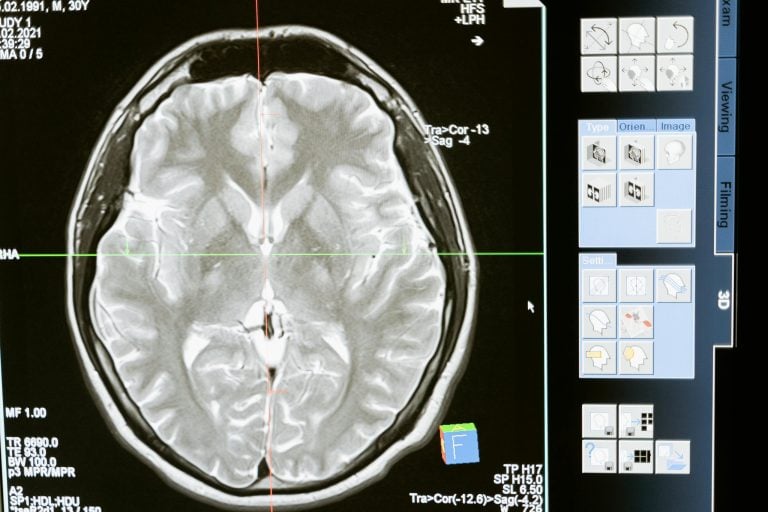

Getting an autism diagnosis at 40 while identifying as INFP can reframe decades of confusion, social exhaustion, and self-doubt into something that finally makes sense. Many INFPs who receive a late autism diagnosis discover that the two identities share significant overlap, including deep sensitivity, intense inner worlds, and difficulty with social performance, yet each explains something the other cannot. Together, they offer a more complete picture of who you actually are.

My own experience with late self-discovery came differently. I’m an INTJ, not an INFP, but I spent my entire career in advertising agencies watching people like me, people wired for depth and internal processing, struggle to make sense of why they felt so perpetually out of step. I managed teams of sensitive, creative people. Some of them, looking back, were almost certainly autistic and had no framework for understanding it. They’d been told they were “too sensitive,” “too intense,” or “too in their heads.” Sound familiar?
What strikes me most about the INFP and autism overlap is how thoroughly it can hide in plain sight. Both involve emotional depth. Both involve a rich inner life. Both involve exhaustion from social performance. So when someone finally gets a formal diagnosis at 40, the reaction isn’t usually shock. It’s relief. And then, often, grief for all the years spent not knowing.
Our MBTI Introverted Diplomats hub covers the full landscape of INFJ and INFP personality types, from communication patterns to conflict styles to how these types function under pressure. This article adds a layer that doesn’t get discussed enough: what happens when INFP meets a late autism diagnosis, and how that combination reshapes everything you thought you knew about yourself.
- Recognize that INFP personality type and autism spectrum diagnosis describe different aspects of identity and require separate understanding.
- Identify late autism diagnosis as relief mixed with grief for decades spent without proper self-understanding and framework.
- Notice how masking behaviors in autistic women create invisible autism that clinicians mistake for personality traits alone.
- Distinguish between MBTI preferences for engagement and neurological wiring to avoid misattributing autism symptoms to personality type.
- Accept that emotional intensity, deep processing, and social exhaustion can stem from autism rather than mere introversion.
What Is the Overlap Between INFP and Autism?
Personality type and neurodevelopmental profile are not the same thing. MBTI describes how you prefer to engage with the world. Autism describes how your nervous system is wired. Yet the surface behaviors can look almost identical, which is part of why so many autistic INFPs spend decades without a diagnosis.
What’s your personality type?
Take our free 40-question assessment and get a detailed personality profile with dimension breakdowns, context analysis, and personalised insights.
Discover Your Type8-12 minutes · 40 questions · Free
Both INFPs and autistic people tend to experience emotions intensely, think deeply before speaking, prefer meaningful one-on-one connection over group socializing, and struggle with environments that feel chaotic or overstimulating. Both are often described by others as “sensitive” or “quiet” or “hard to read.” Both can appear socially capable while privately exhausted from the effort of it.
A 2020 study published by the National Institute of Mental Health noted that autistic women and girls are significantly underdiagnosed compared to their male counterparts, often because they develop masking behaviors that make their autism less visible to clinicians. Many of those masking behaviors, careful social mimicry, scripted responses, intense observation of social cues, look a lot like the thoughtful, measured communication style that gets labeled “INFP” on a personality assessment.
So the question isn’t which one is “right.” Both can be true simultaneously. Your INFP preferences are real. Your autistic neurology is also real. What changes with a diagnosis is the depth of explanation available to you.
If you’re exploring your personality type for the first time, or wondering whether your results have been shaped by years of masking, taking a thoughtful MBTI personality test can be a useful starting point before working with a clinician on a formal autism evaluation.
Why Do So Many INFPs Receive an Autism Diagnosis After 40?
There are a few reasons late diagnosis clusters in this age range, and they matter for understanding your own story.
First, diagnostic criteria for autism were historically built around presentations in young boys. The quieter, more internalized presentations common in girls, women, and many people who identify as highly sensitive or introverted simply weren’t part of the clinical picture for decades. The Centers for Disease Control and Prevention has updated its prevalence data significantly in recent years as broader diagnostic criteria have been applied, but an entire generation of adults grew up without access to that framework.
Second, high-functioning autistic people often develop sophisticated compensation strategies. By the time you’re 40, you may have built an entire professional and social life around those strategies. You’ve learned what to say in meetings. You’ve figured out how to appear engaged at parties even when every cell in your body wants to leave. You’ve developed rituals and systems that keep you functional. From the outside, nothing looks “wrong.” From the inside, you’re running a constant background program that other people apparently don’t need to run.
I saw this pattern repeatedly in my agency years. Some of my most talented creative directors were people who could produce brilliant work in isolation but fell apart in open-plan offices or all-hands meetings. I didn’t have the vocabulary for it then. I just knew that the environment was wrong for them, and I tried to adjust what I could. A diagnosis would have given both of us so much more to work with.
Third, major life transitions often trigger the evaluation process. Burnout at work. A child’s diagnosis prompting parental recognition. A relationship crisis that exposes long-standing communication differences. At 40, many people have accumulated enough evidence, and enough exhaustion, to finally ask the question they’ve been circling for years.

How Does a Late Diagnosis Change How You See Your INFP Traits?
Something significant shifts when you have a diagnosis. Traits you’ve spent years apologizing for, or trying to fix, or explaining away, get recontextualized entirely.
Take the INFP tendency toward slow, careful communication. I’ve written about how my own mind processes information quietly, filtering meaning through layers of observation and intuition before I’m ready to speak. For autistic INFPs, that processing time is often even more pronounced, and it’s not a personality quirk. It’s neurological. The pressure to respond quickly in conversations, to match the pace of neurotypical social exchange, creates a specific kind of exhaustion that no amount of “leaning into your introversion” fully addresses.
The American Psychological Association has documented how late-diagnosed autistic adults frequently report a period of intense self-reexamination after receiving their diagnosis, often revisiting childhood memories, past relationships, and career experiences through a new lens. That process can be disorienting. It can also be deeply clarifying.
For INFPs specifically, the reexamination often centers on a few recurring themes. Why did certain friendships feel so draining even when you genuinely cared about the person? Why did you struggle so much with unspoken social rules that others seemed to absorb effortlessly? Why did certain sensory environments, a fluorescent-lit office, a crowded restaurant, a noisy open workspace, feel genuinely painful rather than just mildly unpleasant?
A diagnosis doesn’t answer every question. What it does is give you permission to stop treating those experiences as character flaws.
INFPs already have a complex relationship with conflict and difficult conversations. Add an autistic processing style to that mix, and the challenges become more specific and more manageable once named. If you’ve struggled with how to approach hard conversations without completely shutting down, the piece on INFP difficult conversations addresses the mechanics of that in practical terms. And if you’ve noticed that you tend to take conflict personally in ways that feel disproportionate even to you, the deeper look at why INFPs take everything personal may help you separate what’s INFP from what’s autistic from what’s simply human.
What Does Masking Look Like for an Autistic INFP?
Masking is the practice of suppressing or camouflaging autistic traits to appear neurotypical. For INFPs, it can be particularly hard to recognize because the INFP personality already involves a certain amount of internal-external translation. You feel things deeply inside and present something more composed on the surface. That’s not masking in the clinical sense, but it creates a layer of cover that can make autistic masking invisible even to yourself.
Common masking behaviors in autistic INFPs include scripting conversations in advance, mirroring the body language and speech patterns of people around you, suppressing sensory reactions in public, performing eye contact that doesn’t come naturally, and rehearsing social scenarios mentally before they happen. These behaviors are often so automatic by adulthood that you may not even recognize them as behaviors. They just feel like “how you are.”
A 2019 paper from researchers at the National Autistic Society in the UK found that chronic masking is strongly associated with burnout, anxiety, and depression in autistic adults. The energy cost is real and cumulative. You can sustain it for years, sometimes decades, before the system breaks down.
I watched this happen in agency environments more times than I can count. The person who was brilliant in small group strategy sessions but couldn’t survive a week of back-to-back client meetings. The writer who produced extraordinary work but needed two days of isolation to recover from a single day of presentations. I thought of these as introvert recovery patterns. Some of them were. Some of them were something more specific.
What makes the INFP-autism combination particularly interesting is that INFPs are already attuned to authenticity. The INFP value system centers on being genuine, on aligning outer expression with inner truth. Masking runs directly counter to that value. Many autistic INFPs describe a persistent sense of fraudulence, a feeling that the person others see is a performance rather than a self. That’s not a philosophical abstraction. It’s the lived experience of masking.

How Does Burnout Hit Differently When You’re Autistic and INFP?
Introvert burnout is real. I’ve written about it from my own experience, the slow drain of being in high-performance, high-contact environments for years without adequate recovery. But autistic burnout has a distinct profile that goes beyond what introvert recovery can address.
Autistic burnout typically involves a loss of previously held skills and coping abilities, not just exhaustion. Skills that felt automatic, social conversation, managing routines, tolerating sensory input, can temporarily disappear. The American Psychiatric Association has increasingly recognized autistic burnout as a distinct phenomenon separate from general burnout or depression, though it can co-occur with both.
For an INFP, this can be especially disorienting because your identity is so closely tied to your inner life. When the inner life goes quiet, when the creativity and the emotional attunement and the rich inner narrative that define you seem to vanish, it can feel like a loss of self rather than a temporary neurological state.
Recovery from autistic burnout requires more than a quiet weekend. It typically requires reducing demands significantly for an extended period, which can feel impossible in a career context. In my agency years, I had people on my team who would hit these walls and not know how to ask for what they actually needed, partly because they didn’t have language for it, and partly because the culture didn’t have space for it. A diagnosis changes what’s possible to ask for.
The communication patterns that surround burnout matter too. INFJs face their own version of this, and the dynamics around INFJ difficult conversations and the INFJ door slam offer useful context for understanding how introverted types handle the point where social capacity collapses entirely. The autistic dimension adds another layer of explanation for why that collapse can be so complete and so hard to reverse quickly.
What Changes After You Receive a Diagnosis?
A diagnosis at 40 doesn’t change who you are. It changes what you know about who you are, and that difference matters enormously.
Practically, it can open access to workplace accommodations that you’ve needed for years but couldn’t formally request. Noise-canceling headphones in an open office. Written communication preferences instead of impromptu verbal meetings. Flexible scheduling to account for recovery time after high-demand days. These aren’t special privileges. They’re adjustments that allow you to do your best work.
Relationally, a diagnosis gives you better language for conversations that have historically been confusing or painful. Instead of “I just need space” (which can feel like rejection to the people around you), you can explain the specific mechanics of what you need and why. That shift in communication precision can transform relationships that have been strained for years.
Internally, the most significant change is often the end of self-blame. The Mayo Clinic notes that many late-diagnosed autistic adults report significant improvement in mental health following diagnosis, not because anything about their neurology changes, but because the narrative around their experiences changes. You stop asking “what’s wrong with me” and start asking “what do I actually need.”
For INFPs, who already carry a strong orientation toward self-understanding and authenticity, that shift can feel like finally arriving somewhere you’ve been trying to reach for a very long time.
The communication skills that serve autistic INFPs best tend to be the same ones that help all introverted types: learning to express needs clearly, setting boundaries without excessive explanation, and finding ways to contribute that play to your actual strengths rather than compensating for neurological differences. The piece on INFJ communication blind spots covers some of these dynamics in ways that translate directly to INFP experience, and the exploration of how quiet intensity actually works is relevant for anyone who leads or influences from an introverted, deeply perceptive position.

How Do You Integrate INFP Identity and Autism Into a Coherent Self-Understanding?
The question I hear most often from people in this situation isn’t “which one am I” but “how do I hold both of these at once.” That’s the right question, and it has a practical answer.
Start by treating them as complementary lenses rather than competing explanations. Your INFP preferences describe your values, your decision-making style, your relational orientation, how you prefer to engage with ideas and people. Your autism describes your neurological processing, your sensory experience, your communication mechanics, the specific ways your nervous system takes in and responds to the world. Both are true. Neither cancels the other.
Where this gets practically useful is in self-advocacy. Knowing that you’re an INFP helps you articulate what kind of work feels meaningful to you. Knowing that you’re autistic helps you articulate what kind of environment and support structure you need to do that work. Together, they give you a much more complete picture to bring to employers, partners, therapists, and yourself.
I spent years in advertising trying to figure out why some of my most capable people kept burning out in environments that should have been creatively stimulating. The honest answer, which I can see clearly now, is that I was asking them to perform in ways that were neurologically expensive for them, and I didn’t know enough to create the conditions where they could actually thrive. Some of them knew they were introverts. None of them had a framework for the rest of it. A diagnosis would have changed what was possible for them, and for the agencies they worked in.
The integration process isn’t linear. There will be periods where the autism framework feels most relevant, usually during burnout, sensory overload, or communication breakdowns. There will be periods where your INFP values and relational style feel most salient. Over time, you stop switching between frameworks and start experiencing yourself as a whole person who simply has a specific, well-understood neurological and psychological profile.
That’s not the end of difficulty. It’s the beginning of working with yourself instead of against yourself.
If you’re working through any of this, the full range of INFP and INFJ resources in the MBTI Introverted Diplomats hub offers a solid foundation for understanding how these personality types function across communication, conflict, and influence, all of which take on new dimensions when neurodivergence is part of the picture.
About the Author
Keith Lacy is an introvert who’s learned to embrace his true self later in life. After 20 years in advertising and marketing leadership, including running agencies and managing Fortune 500 accounts, Keith now channels his experience into helping fellow introverts understand their strengths and build fulfilling careers. As an INTJ, he brings analytical depth and authentic perspective to every article, drawing from both professional expertise and personal growth.
Frequently Asked Questions
Can you be both INFP and autistic?
Yes. MBTI personality type and autism are separate frameworks describing different aspects of how you experience the world. INFP describes your preferences and values. Autism describes your neurological wiring. Many people are genuinely both, and having both frameworks often provides a more complete and useful self-understanding than either one alone.
Why is autism often missed in INFPs until adulthood?
Several factors contribute to late diagnosis in this group. Autistic traits in people who present as quiet, sensitive, and internally focused often don’t match the clinical picture that diagnostic criteria were historically built around. INFPs also tend to develop strong masking behaviors early, learning to mirror social norms in ways that make their autism less visible to others and sometimes to themselves. By adulthood, the masking can be so well-established that it takes a significant life event or period of burnout to prompt an evaluation.
What does autistic burnout feel like for an INFP?
Autistic burnout in INFPs often involves a temporary loss of the traits that feel most central to identity, including creativity, emotional attunement, and the capacity for meaningful connection. It goes beyond introvert exhaustion. Previously automatic social and coping skills can become inaccessible. Recovery typically requires a significant reduction in demands over an extended period, not just a quiet weekend. Many INFPs describe autistic burnout as feeling like they’ve lost themselves, which makes sense given how closely INFP identity is tied to inner richness and emotional depth.
How does a late autism diagnosis affect relationships for an INFP?
A diagnosis often improves relationships by providing better language for needs that have historically been difficult to explain. Instead of “I need space” (which can feel like rejection), a diagnosed INFP can describe the specific mechanics of sensory overload, communication processing time, or recovery needs. That precision tends to reduce the misunderstandings that have strained relationships for years. It can also prompt a re-examination of past relationship difficulties through a more compassionate lens, for yourself and for the people who were trying to understand you without the right information.
What should an INFP do if they think they might be autistic?
Start by documenting your experiences rather than trying to self-diagnose. Note patterns around sensory sensitivity, social exhaustion, communication preferences, and any areas where you’ve developed elaborate compensation strategies. Then seek evaluation from a clinician with specific experience in adult autism assessment, ideally one familiar with presentations in women or highly verbal, high-functioning individuals. A formal assessment gives you access to accommodations and support that self-identification alone cannot provide. In the meantime, reading about autistic experience from autistic writers, not just clinical literature, can help you recognize your own patterns more clearly.