

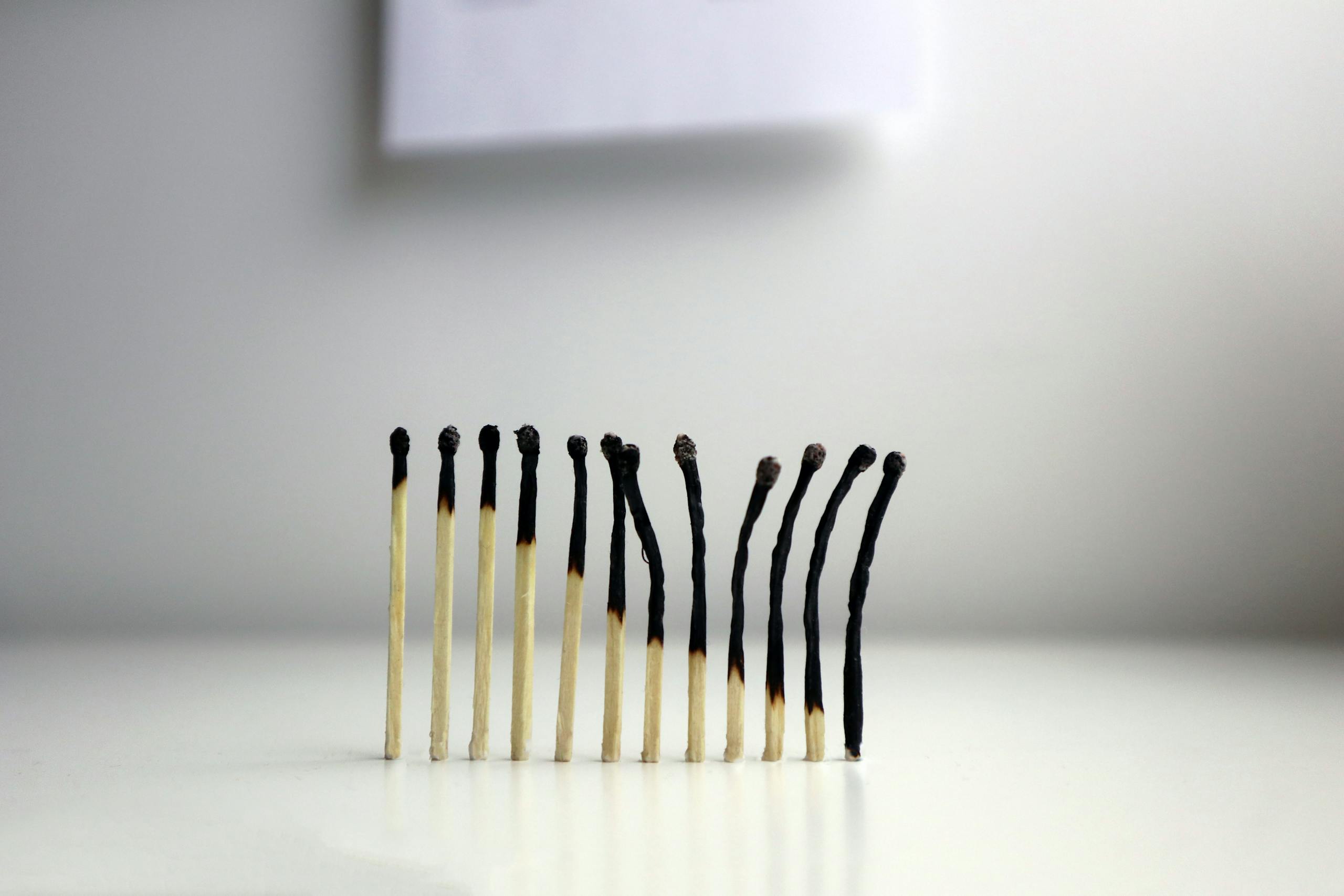
INFP burnout after promotion hits differently than ordinary workplace exhaustion. It isn’t just tiredness. It’s a specific kind of depletion that happens when someone wired for deep meaning, creative autonomy, and authentic connection gets placed into a role that demands the opposite of all three.
Promotions are supposed to feel like validation. For many INFPs, they quietly become the beginning of a slow unraveling.
If you’ve recently stepped into a new leadership role and found yourself feeling more lost than celebrated, more hollow than proud, you’re not experiencing weakness. You’re experiencing a very real collision between your inner architecture and the external demands of a role that wasn’t designed with your wiring in mind.
Our INFP Personality Type hub covers the full landscape of what makes this type so distinct, but the burnout that follows a promotion deserves its own honest conversation. Because the stakes are high, and the warning signs are easy to miss until the damage is already done.
Why Do INFPs Burn Out After Getting Promoted?
Most conversations about burnout focus on workload. Too many tasks, too few hours, not enough support. That’s real, but it’s not the whole picture for someone with the INFP personality type.
What’s your personality type?
Take our free 40-question assessment and get a detailed personality profile with dimension breakdowns, context analysis, and personalised insights.
Discover Your Type8-12 minutes · 40 questions · Free
INFPs are driven by internal values. They need their work to feel meaningful, and they need enough autonomy to express themselves authentically within it. A promotion often strips both of those things away at once. Suddenly there are performance reviews to conduct, budget spreadsheets to defend, and political dynamics to manage. The creative, values-aligned work that made the INFP excellent at their previous role gets buried under administrative weight.
A 2022 study published in PubMed Central found that emotional exhaustion is significantly higher among individuals whose work demands conflict with their personal values and identity. For INFPs, who experience identity and values as nearly inseparable, that gap between who they are and what the job now requires can become a source of chronic stress almost immediately.
I watched something similar happen to a creative director I worked with during my agency years. She was extraordinary at her craft, a writer who could find the emotional truth in any brief. We promoted her to group creative director, and within eight months she’d handed in her resignation. Not because she couldn’t handle the work. Because the work had stopped being hers. Every hour she spent in resourcing meetings or client escalation calls was an hour she wasn’t doing the thing that made her feel alive. The promotion honored her past contributions while quietly dismantling the conditions that made those contributions possible.
That’s the cruel irony of INFP burnout after promotion. The reward for doing meaningful work is often a role that removes the meaning.
What Does INFP Burnout Actually Feel Like From the Inside?
Burnout for an INFP doesn’t always look like collapse. It often looks like quiet withdrawal, a slow dimming rather than a sudden shutdown. That makes it harder to catch early, both for the person experiencing it and for the people around them.
From the inside, it can feel like a persistent low-grade grief. Something is wrong, but it’s hard to name. The INFP might still be showing up, still completing their work, still performing competently. Yet something essential has gone offline. The enthusiasm that once made their contributions feel effortless has been replaced by a kind of mechanical going-through-the-motions that feels foreign and exhausting.
Common internal experiences include a loss of creative inspiration, difficulty connecting emotionally with work that once felt purposeful, increasing cynicism or detachment, and a nagging sense of inauthenticity. That last one is particularly painful for INFPs, who have a finely tuned internal compass for whether they’re living in alignment with their values. When that compass says “this isn’t you,” it doesn’t whisper. It aches.
The National Institute of Mental Health notes that prolonged emotional exhaustion can blur into depressive symptoms, including loss of interest in previously enjoyable activities, persistent fatigue, and difficulty concentrating. For INFPs already prone to deep emotional processing, the line between burnout and depression can become genuinely difficult to distinguish without support.
Physically, INFP burnout often shows up as disrupted sleep, a racing mind at night that won’t stop processing the day, and a body that feels heavy even after rest. The internal world of an INFP is always active, and when that inner world is in conflict with the outer demands of a role, the nervous system pays the price.

How Does the Promoted INFP’s Relationship With Their Team Change?
One of the least discussed dimensions of INFP burnout after promotion is what happens to their relationships at work. INFPs are natural connectors. They build genuine bonds, they care deeply about the people they work alongside, and they often become the emotional anchor of a team without anyone formally assigning them that role.
Promotion changes that dynamic in ways that can feel like a quiet loss of identity.
The INFP now has authority over people they used to collaborate with as peers. Performance expectations, difficult feedback, and accountability conversations become part of the job. These aren’t abstract challenges. For someone who processes every interaction through an emotional lens and cares genuinely about the people involved, they’re deeply taxing.
If you’re finding the interpersonal weight of your new role particularly heavy, it’s worth reading about how to handle hard talks without losing yourself. The strategies there are grounded in the specific way INFPs experience conflict, which is with their whole emotional system, not just their rational mind.
The promoted INFP often finds themselves caught between two painful positions. They want to protect their team members from stress and difficulty, because they feel others’ discomfort acutely. At the same time, they now have organizational responsibilities that sometimes require delivering unwelcome news or holding people accountable. That tension doesn’t resolve easily, and carrying it day after day becomes its own form of exhaustion.
There’s also a loneliness that can set in. The peer relationships that once provided emotional sustenance shift. Former colleagues may become more guarded. The INFP, now a manager, may feel they can no longer be fully themselves around the team. That loss of authentic connection, something INFPs genuinely need to function well, accelerates burnout significantly.
What Specific Promotion Demands Deplete INFPs Most?
Not all parts of a promotion are equally draining for an INFP. Understanding which demands hit hardest can help you make smarter choices about how you spend your energy and where you might need to build support structures.
Sustained visibility is one of the biggest drains. Leadership roles often require being “on” in front of groups for extended periods, running meetings, presenting updates, representing the team in cross-functional discussions. INFPs, as introverts who process internally, find this kind of sustained performance genuinely exhausting in ways that extroverted colleagues may not fully appreciate.
Decision-making under ambiguity is another significant stressor. INFPs prefer to have time to reflect, to sit with a problem and feel their way toward the right answer. Leadership often demands fast decisions with incomplete information. The pressure to decide quickly, and to be seen deciding confidently, runs counter to how INFPs naturally process complexity.
Political dynamics within organizations also take a toll. INFPs have little patience for posturing, credit-claiming, or strategic maneuvering for its own sake. When a promotion places them in environments where these dynamics are constant, the inauthenticity of it all becomes genuinely distressing. According to 16Personalities’ framework, INFPs are among the types most sensitive to environments that conflict with their core values, and organizational politics often represent exactly that kind of conflict.
Running an agency meant I lived inside political dynamics every day. Clients, senior leadership, competing creative visions, budget pressures. I’m an INTJ, so I could compartmentalize some of that friction, but I still found it corrosive over time. For an INFP, who processes those dynamics emotionally rather than analytically, the toll would be considerably steeper. I saw it in the people I managed. The ones who cared most, who brought the most of themselves to their work, were often the ones who burned out fastest when the role stopped honoring that care.
If you’re not sure whether your personality type fully explains the weight you’re carrying, it might be worth taking our free MBTI personality test to get a clearer picture of your type and how it shapes your experience at work.

Why Do INFPs Struggle to Ask for Help When Burning Out?
Here’s something that doesn’t get said enough: INFPs are often the last people to admit they’re struggling, even when the evidence is visible to everyone around them.
Part of this comes from their idealism. INFPs hold strong internal visions of who they want to be, and admitting burnout can feel like a failure to live up to that vision. They may have told themselves a story about this promotion, that it was an opportunity to do more good, to have more impact, to express their values on a larger scale. Acknowledging that the reality has been painful feels like admitting the story was wrong.
There’s also a pattern worth examining around how INFPs handle conflict and tension in their relationships. Many INFPs have developed habits of absorbing difficulty rather than expressing it, of protecting others from their own distress. That pattern, while deeply compassionate, can become a trap. Understanding why INFPs take things so personally is part of understanding why they also struggle to surface their own needs before those needs become a crisis.
There’s also something about the INFP’s inner world that makes burnout feel private in a way that’s hard to explain. Their emotional experience is so rich and layered that translating it into words, especially words that might make them seem vulnerable or inadequate in a professional context, feels almost violating. So they stay quiet. They process alone. And the gap between what they’re experiencing internally and what they’re presenting externally widens until something breaks.
A 2016 study in PubMed Central found that emotional suppression, the pattern of experiencing strong emotions while actively concealing them, is significantly associated with higher rates of burnout and psychological distress. For INFPs who are already processing their experience intensely on the inside, adding the burden of concealment compounds the damage considerably.
How Can an INFP Recover Without Abandoning the Role?
Recovery from INFP burnout after promotion isn’t a single decision. It’s a series of small, deliberate recalibrations that gradually bring the person back into alignment with themselves.
The first step is honest self-assessment. What specifically is depleting you? Not in vague terms, but concretely. Is it the meeting load? The performance conversations? The loss of creative work? The political maneuvering? Naming the specific sources of depletion gives you something to work with. Vague exhaustion is hard to address. Specific friction points can often be renegotiated or restructured.
From there, the work is about protecting what the American Psychological Association identifies as essential to psychological wellbeing: authentic social connection, a sense of purpose, and the experience of personal agency. All three of these tend to erode in the early stages of a promotion that isn’t a good fit. Rebuilding them requires intentionality.
Rebuilding authentic connection might mean being more honest with a trusted colleague or mentor about what you’re experiencing. It might mean finding a peer group outside your organization, other people handling similar challenges, where you can speak freely. If the depletion has gone deep, working with a therapist who understands personality-driven stress can be genuinely valuable. Psychology Today’s therapist directory allows you to filter by specialty, including workplace stress and burnout, which can help you find someone equipped to support this specific kind of struggle.
Rebuilding purpose often means finding ways to reconnect with the work that originally lit you up, even in small doses. Can you carve out protected time for a project that uses your creative or empathic strengths? Can you mentor someone in a way that feels meaningful rather than administrative? Even a few hours a week doing work that resonates can shift the internal experience significantly.
Rebuilding agency means having honest conversations with your manager or organization about what you need to be effective. This is uncomfortable for INFPs, who often prefer to adapt rather than advocate for themselves. Yet advocating clearly for what you need is a form of integrity, and it’s also the only way the situation actually changes.
I spent years in agency leadership trying to be the version of a CEO I thought I was supposed to be, high-energy, always-on, performing confidence I didn’t always feel. It took me longer than I’d like to admit to realize that my actual strengths, the analytical depth, the ability to see patterns others missed, the capacity for genuine one-on-one connection with clients, were being diluted by my attempts to perform a different style entirely. Recovery, for me, looked like giving myself permission to lead in a way that was actually mine. That permission was harder to grant than any external approval I’d ever sought.

What Can INFPs Learn From How Other Introverted Types Handle Promotion Stress?
INFPs aren’t the only introverted type that struggles with the transition into leadership. Looking at how other types manage similar friction can offer useful perspective, even if the specific strategies need to be adapted.
INFJs, for example, share the INFP’s depth of emotional processing and their strong values orientation. They also tend to struggle with promotion-related burnout, particularly when the role requires them to be more overtly assertive than feels natural. One pattern that shows up frequently in INFJs is a tendency to avoid difficult conversations in the interest of preserving harmony, which in the end creates more tension than it resolves. If that pattern resonates, the discussion of the hidden cost of keeping peace is worth reading, because the dynamic it describes appears in INFPs too, even if the underlying mechanism is slightly different.
INFJs also face specific challenges around communication in leadership roles. There’s a detailed look at INFJ communication blind spots that touches on patterns like assuming others understand your reasoning without explaining it, or communicating with such nuance that the core message gets lost. INFPs can fall into similar traps, particularly when they’re emotionally depleted and their usual care for clarity has been eroded by exhaustion.
One area where INFPs can genuinely learn from INFJs is in the domain of influence. INFJs have a particular capacity for what might be called quiet intensity, a way of affecting the direction of a room or a conversation without needing formal authority or volume. That same capacity exists in INFPs, though it often goes unrecognized. Understanding how quiet intensity actually works as a form of influence can help INFPs recognize and develop a leadership style that draws on their actual strengths rather than attempting to replicate an extroverted model that will always feel like a costume.
Where INFPs and INFJs diverge significantly is in how they handle conflict. INFJs tend toward a specific pattern of emotional withdrawal when pushed too far, a kind of internal door-closing that can be abrupt and final. The exploration of why INFJs door slam is genuinely illuminating, even for INFPs, because it illustrates how deeply introverted types can be driven toward extreme self-protection when their emotional reserves are depleted. INFPs have their own version of this, a retreat into their inner world that can look like passivity but is actually a form of emotional self-preservation under pressure.
When Is Burnout a Sign the Role Itself Is Wrong?
Not every case of INFP burnout after promotion is a recovery story. Sometimes the honest answer is that the role itself is a mismatch, and the most courageous thing is to acknowledge that clearly rather than spending years trying to adapt to something fundamentally incompatible with who you are.
This is a genuinely difficult thing to assess from inside the experience, because burnout clouds judgment. Everything feels harder than it would at full capacity. The question isn’t whether the role feels hard right now. The question is whether the role, at its core, requires you to consistently operate against your values, your strengths, and your fundamental nature.
Some questions worth sitting with: Does the role offer any meaningful space for the kind of work that gives you energy? Is the burnout primarily about the transition period, which is genuinely hard for most people, or does it reflect something structural about what this job requires? Are there aspects of the role that, if the conditions were better, you could genuinely love? Or does the role itself feel wrong, regardless of conditions?
According to the Psychology Today overview of introversion, introverted individuals often perform best in roles that allow for depth of focus, meaningful contribution, and some degree of autonomy over their work environment. If the promoted role systematically removes all three, that’s important information, not a personal failing.
Stepping back from a promotion, or restructuring a role significantly, takes a kind of courage that doesn’t get celebrated enough. Our culture treats upward movement as unambiguously good, and declining or reversing that movement as failure. For an INFP who has spent years being told to be more ambitious, more visible, more strategic, admitting that the promotion isn’t working can feel like confirming every doubt they’ve ever had about themselves.
It isn’t. Knowing yourself well enough to recognize a mismatch is a form of wisdom. Acting on that knowledge, even when it’s uncomfortable, is a form of integrity. Both are things INFPs are actually quite good at, when they trust themselves enough to use them.

How Can INFPs Build Sustainable Leadership Without Losing Themselves?
Sustainable leadership for an INFP looks different from the default model most organizations celebrate. That’s not a deficit. It’s a design feature, provided the INFP is willing to build a leadership approach that’s genuinely their own rather than a pale imitation of someone else’s.
The INFPs who thrive in leadership over the long term tend to share a few things in common. They’ve identified the specific aspects of leadership that align with their strengths, typically the relational depth, the ability to inspire through meaning rather than authority, the capacity to see what others miss, and they’ve found ways to make those strengths central to how they lead.
They’ve also built structures that protect their energy. This might mean blocking time for deep work in a calendar otherwise full of meetings. It might mean being honest with their team about how they process information best, including a preference for written communication over impromptu verbal exchanges. It might mean creating rituals for decompression after high-demand periods, treating recovery not as a luxury but as a professional necessity.
Handling the interpersonal dimensions of leadership well is also critical. INFPs who learn to approach difficult conversations with clarity and self-awareness, rather than avoidance or emotional flooding, tend to fare significantly better over time. The framework for fighting without losing yourself is a useful resource here, particularly for the moments when leadership requires delivering feedback or addressing tension directly.
One thing I’ve come to believe firmly, after watching many different leadership styles across two decades of agency work, is that the leaders who last are the ones who lead from their actual nature rather than performing a version of leadership they think is expected. The INFP who leads with genuine care, who creates environments where people feel seen and valued, who brings moral clarity to decisions that others would rather leave ambiguous, that leader has something real to offer. The work is in building the conditions that let those strengths operate rather than get buried under demands that serve no one well.
If you want to go deeper into what makes INFPs tick across all dimensions of life and work, our complete INFP Personality Type resource is a good place to continue that exploration.
About the Author
Keith Lacy is an introvert who’s learned to embrace his true self later in life. After 20 years in advertising and marketing leadership, including running agencies and managing Fortune 500 accounts, Keith now channels his experience into helping fellow introverts understand their strengths and build fulfilling careers. As an INTJ, he brings analytical depth and authentic perspective to every article, drawing from both professional expertise and personal growth.
Frequently Asked Questions
Why do INFPs burn out more easily after a promotion than other personality types?
INFPs are driven by internal values and a need for meaningful, authentic work. Promotions often shift the nature of the role toward administrative oversight, political navigation, and sustained visibility, all of which conflict with how INFPs naturally operate. The result is a specific kind of depletion that goes beyond ordinary workload stress. It’s a values mismatch that depletes the INFP at a deeper level than task overload alone.
What are the early warning signs of INFP burnout after promotion?
Early signs include a loss of enthusiasm for work that once felt energizing, increasing emotional detachment from colleagues, a persistent sense of inauthenticity, difficulty sleeping due to mental overprocessing, and a growing cynicism that feels foreign to the INFP’s usual idealism. Because INFPs often present as composed even when struggling internally, these signs can be invisible to others until the burnout is already advanced.
Can an INFP recover from burnout while staying in the promoted role?
Yes, in many cases, though it requires honest assessment of what specifically is causing the depletion and a willingness to advocate for structural changes. Recovery often involves protecting time for meaningful work, building authentic connections within the new role, and developing clearer communication habits around personal needs and limits. In some cases, working with a therapist who specializes in workplace stress can provide essential support during the recovery period.
How should an INFP handle the difficult conversations that come with a leadership role?
INFPs tend to experience difficult conversations as emotionally costly, which can lead to avoidance that in the end creates more tension. The most effective approach involves preparing in advance, grounding the conversation in shared values rather than positional authority, and separating the INFP’s care for the person from the necessity of addressing the issue. Developing this capacity is one of the most important investments an INFP in leadership can make.
When should an INFP consider stepping back from a promotion?
Stepping back deserves serious consideration when the role structurally requires the INFP to operate against their core values on a sustained basis, when recovery efforts haven’t produced meaningful improvement over several months, and when the burnout has begun affecting health, relationships, or the ability to function in other areas of life. Choosing a role that fits well over a title that looks impressive is a legitimate and often wise decision, not a failure.