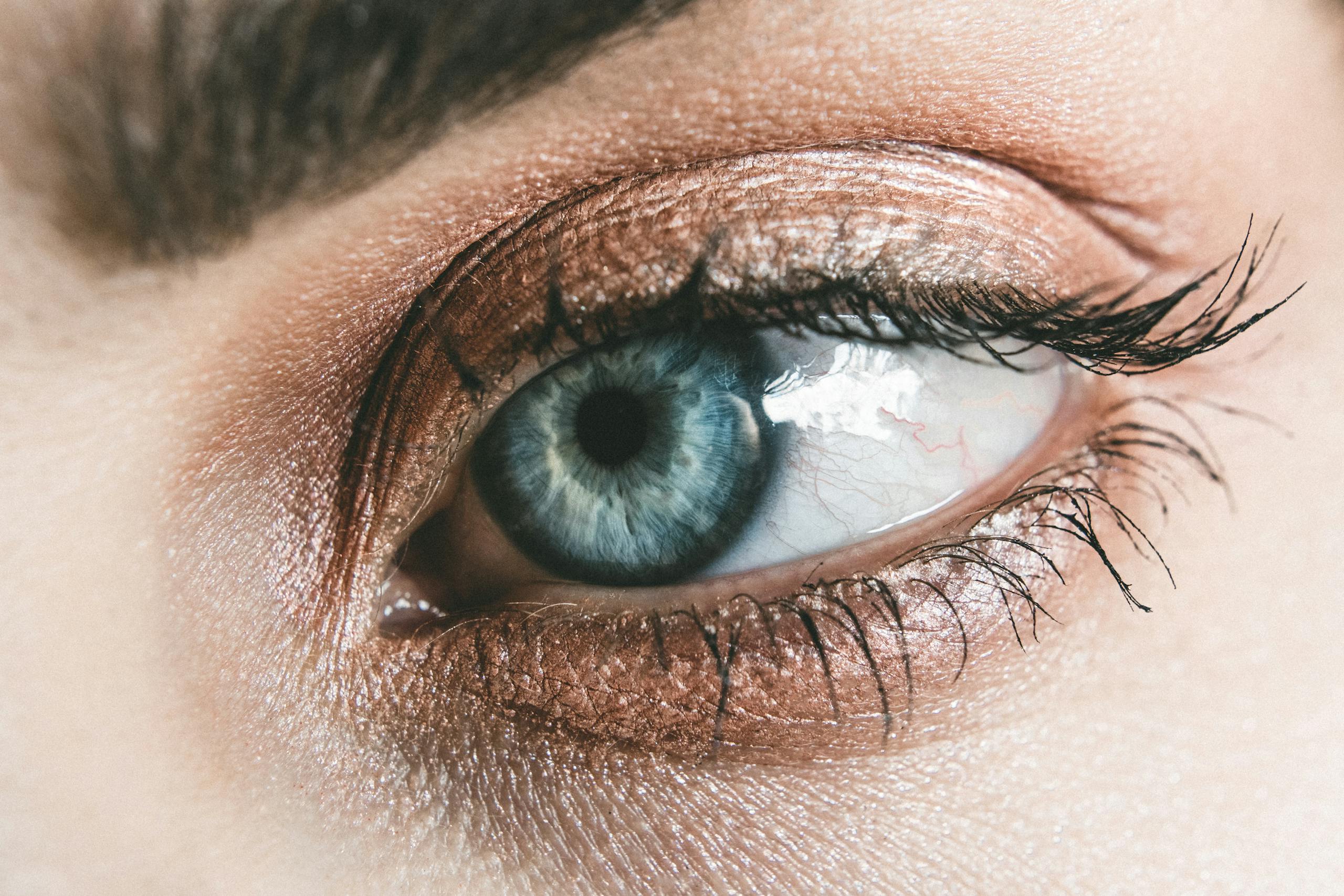
The INFP gaze, much like Luna Lovegood’s, is a way of perceiving the world that cuts beneath surface appearances and finds meaning where others see nothing worth examining. Luna doesn’t look at the world and see what everyone else sees. She looks at the world and sees what’s actually there, the hidden currents, the overlooked details, the emotional truth underneath the polished exterior. That quality isn’t a quirk. It’s a cognitive style, and if you’re an INFP, you know exactly what it feels like to carry it.
What makes Luna such a compelling mirror for INFPs isn’t her eccentricity. It’s her unshakeable commitment to her own perception, even when the people around her roll their eyes, laugh quietly, or simply walk away. She sees Thestrals when others see empty air. She believes in things that can’t be proven to people who haven’t experienced them. And she does all of this without apology, without shrinking, and without pretending to see what she doesn’t.

Our INFP Personality Type hub covers the full range of what it means to be wired this way, from values to relationships to how INFPs process conflict. But the specific quality of the INFP gaze, that particular way of seeing depth where others see surface, deserves its own examination. Because it shapes everything: how INFPs experience the world, how they’re misunderstood, and what they’re capable of when they stop second-guessing what they see.
What Is the INFP Gaze, Really?
Spend enough time in advertising, as I did for over two decades, and you develop a sharp eye for what people are actually communicating versus what they think they’re communicating. I worked with some genuinely brilliant extroverted strategists who could read a room in seconds, pick up on group energy, and pivot their pitch on the fly. That was their gift. My gift was different. I’d sit in a client meeting, quiet while others were talking, and notice the slight tension when the CFO glanced at the marketing director. I’d catch the pause before someone said “we’re aligned on this.” I’d feel the undercurrent of a room that was performing consensus while privately fracturing.
That’s the INFP gaze. It’s not mystical, though it can feel that way. It’s a combination of dominant introverted feeling, which processes emotional data with extraordinary depth, and auxiliary extraverted intuition, which connects patterns across seemingly unrelated observations. According to 16Personalities’ cognitive function theory, this combination produces people who are simultaneously deeply values-driven and remarkably perceptive about the hidden emotional architecture of any situation.
Luna Lovegood embodies this perfectly. She doesn’t perform perception. She simply has it. And she trusts it, even when trusting it costs her socially. That’s the part most INFP profiles gloss over: the cost. Seeing what others miss isn’t always comfortable. Sometimes it’s isolating. Sometimes it makes you feel like you’re living slightly out of phase with everyone around you.
Why Does the INFP Way of Seeing Feel So Lonely?
A 2023 study published in Frontiers in Psychology examined how individuals with high emotional sensitivity process social information differently, noting that heightened perceptual sensitivity often correlates with increased experiences of social disconnection. That finding resonates with something I’ve heard from INFPs again and again: the loneliness isn’t about lacking connection. It’s about the specific loneliness of seeing something clearly and having no one to share it with.
Luna Lovegood sits at the Gryffindor table with her copy of The Quibbler held upside down, and she is profoundly alone. Not because she lacks warmth or intelligence, but because the frequency she’s operating on doesn’t match the frequency of the people around her. Most of Hogwarts is focused on the visible, the measurable, the socially agreed-upon reality. Luna is focused on something else entirely.
INFPs often describe a similar experience. They walk into a room and immediately start picking up on emotional signals that no one else seems to register. They notice when someone’s smile doesn’t reach their eyes. They sense the shift in energy when a topic gets too close to something painful. Healthline’s overview of empathic sensitivity describes this as a form of emotional attunement that goes beyond ordinary empathy, a deep, often involuntary absorption of the emotional states of others.
The challenge is that this level of perception doesn’t come with a built-in social script for what to do with what you notice. Do you say something? Do you stay quiet? Do you trust what you’re sensing when everyone else seems fine? That internal negotiation is exhausting, and it’s one of the reasons INFPs can struggle with direct communication. For a deeper look at how these patterns play out, INFP Hard Talks: How to Fight Without Losing Yourself addresses exactly that tension between what you perceive and what you feel safe expressing.

How Luna’s Perception Mirrors the INFP Cognitive Stack
Luna trusts her inner compass completely. When she tells Harry that he’s going to need her, she’s not guessing. She’s perceiving something about his emotional state and the trajectory of events that he can’t yet see himself. That’s introverted feeling in action: a deep, private knowing that doesn’t require external validation to feel real.
What makes her perception so striking is that she pairs that inner knowing with an almost childlike openness to possibility. She doesn’t dismiss things because they haven’t been proven. She holds space for what might be true, what might be real, what might matter even if no one else has noticed yet. That’s extraverted intuition: the cognitive function that scans the external world for patterns, connections, and potential that others overlook.
Research on personality and perception, including work reviewed by PubMed Central on intuitive cognitive styles, suggests that individuals who rely heavily on intuitive processing tend to make connections across disparate domains more readily than those who favor sensing-based cognition. Luna does this constantly. She connects the emotional undercurrents of a conversation to broader patterns of meaning that others haven’t considered. She’s not being random. She’s being integrative.
I saw this quality in some of the most effective creative directors I worked with over the years. The ones who seemed to pull ideas from thin air were almost always people who had been quietly absorbing patterns for months, noticing what others dismissed, holding onto observations that hadn’t yet found their context. When the context arrived, they looked like geniuses. What they actually were was deeply attentive in a way the culture around them hadn’t learned to recognize.
What Does the INFP Gaze Cost?
There’s a scene in Harry Potter where Luna tells Harry that people have taken her things and hidden them, and she’s learned to wait because they always come back. She says it with complete equanimity. No bitterness, no performance of resilience. Just a quiet acceptance of a reality that would devastate most people.
That capacity for equanimity is real in many INFPs, and it’s genuinely admirable. Yet it can mask something that deserves more attention: the accumulated weight of being consistently misread. Seeing clearly and being dismissed takes a toll. Being the person who notices what’s wrong in a room and then watches everyone pretend everything is fine is not a neutral experience. It’s draining in a way that’s hard to articulate to people who don’t experience it.
A 2022 study from PubMed Central examining emotional processing and psychological wellbeing found that individuals with high affective sensitivity who lack effective expression strategies show significantly elevated rates of emotional exhaustion. That’s the clinical language for something INFPs often describe in much more personal terms: the feeling of carrying perceptions that have nowhere to go.
This is where the INFP gaze can become a source of conflict, not because INFPs are looking for trouble, but because they’re perceiving trouble that others haven’t acknowledged yet. When an INFP raises a concern that no one else sees as a concern, the social friction that follows can feel deeply personal. INFP Conflict: Why You Take Everything Personal examines why that dynamic hits so hard for this type, and why it’s not simply a matter of being “too sensitive.”
The cost is real. So is the gift.

How INFPs Can Trust Their Perception Without Losing Their Footing
One of the things I had to work through in my years running agencies was learning to trust my own read on situations without either dismissing it entirely or becoming so attached to it that I couldn’t hear other perspectives. That’s a genuinely difficult balance. My INTJ wiring gives me strong pattern recognition, and I’d often sense where a client relationship was heading long before the obvious signs appeared. The challenge was figuring out what to do with that information in a way that was useful rather than alienating.
INFPs face a version of this challenge that’s even more emotionally loaded, because their perception isn’t just analytical. It’s deeply values-connected. When an INFP senses that something is wrong, it’s often because they’re picking up on a misalignment between what’s being said and what’s actually true, or between how someone is being treated and how they deserve to be treated. That’s not paranoia. That’s moral perception, and it’s one of the most valuable things INFPs bring to any relationship or environment.
Trusting that perception starts with recognizing it as legitimate. Not every INFP gut feeling is correct, and calibration matters. Yet the impulse to immediately dismiss what you’re sensing because no one else seems to see it is worth examining carefully. Psychology Today’s research on empathy notes that empathic accuracy, the ability to correctly perceive another person’s emotional state, varies significantly across individuals, and some people are simply more accurate than the social average. INFPs tend to fall in that category.
Luna never apologizes for what she sees. She doesn’t perform certainty about it either. She holds her perception with a kind of open confidence: “This is what I notice. I’m not asking you to agree with me. I’m not going to pretend I don’t see it.” That’s a model worth studying.
The INFP Gaze in Relationships and Communication
Where the INFP perceptual style gets complicated is in close relationships, particularly when what an INFP perceives creates tension with someone they care about. Seeing clearly doesn’t automatically mean communicating clearly. And INFPs, who feel the weight of relational harmony deeply, often find themselves in the difficult position of knowing something needs to be said and being genuinely uncertain whether saying it is worth what it might cost.
This is a pattern I’ve seen in colleagues and collaborators over the years, people who would sit in a meeting, clearly perceiving the problem at the center of the conversation, and say nothing because the social cost of naming it felt too high. Sometimes that restraint was wisdom. More often, it was a loss: for the team, for the relationship, and for the person carrying the perception alone.
The INFJ experience of this dynamic has some overlap with the INFP version, though the cognitive machinery is different. INFJ Communication: 5 Blind Spots Hurting You explores how even highly perceptive introverts can develop habits that undermine their ability to share what they’re actually seeing. The specific blind spots differ by type, yet the underlying tension between perception and expression is familiar across the NF spectrum.
For INFPs, the relational stakes feel personal in a way that can make communication feel like a high-wire act. Saying “I noticed something” can feel like an accusation. Raising a concern can feel like starting a fight. And because INFPs process conflict through the lens of their values, even minor relational friction can carry enormous emotional weight. That’s not a flaw. It’s a feature of a cognitive style that takes relationships seriously. Yet it does mean that developing some communication tools matters enormously.
Luna handles this with characteristic grace. She says what she sees, plainly and without drama, and then she lets people do what they will with it. She doesn’t chase agreement. She doesn’t perform hurt when she’s dismissed. She simply offers her perception and trusts that the people who are ready to hear it will.

What Luna Teaches INFPs About Influence
There’s a moment in the Harry Potter series that I find genuinely moving. Luna gives Harry a eulogy for Dobby, and she does it with complete sincerity and without any of the social performance that most people bring to public grief. She simply tells the truth about what she observed and what she valued. And it lands. It lands because it’s real, and because real things, offered without agenda, have a kind of weight that polished performances never achieve.
That’s INFP influence at its most powerful. Not persuasion through force or volume or authority. Influence through authenticity. Through the willingness to say what’s true even when it’s not what people expect to hear. INFJ Influence: How Quiet Intensity Actually Works explores this dynamic from the INFJ perspective, and while the types differ in important ways, the core insight applies across NF types: depth and authenticity create impact that performance never can.
In my agency years, the most memorable pitches I witnessed weren’t the most polished ones. They were the ones where someone in the room said something true that everyone had been carefully avoiding. Those moments changed things. They shifted the energy, opened up new possibilities, and created the kind of trust that no amount of slick presentation could manufacture. INFPs have a natural capacity for those moments, because they’ve been seeing the truth that everyone else is avoiding for a long time before they finally say it.
A PubMed Central review of authentic leadership and interpersonal trust found that perceived authenticity is one of the strongest predictors of long-term influence in professional and personal relationships. INFPs who learn to channel their perceptive depth into authentic expression, rather than suppressing it to maintain surface harmony, consistently build deeper and more durable connections than people who rely on social performance.
When the INFP Gaze Turns Inward: Identity and Self-Perception
The most interesting thing about Luna isn’t how she sees others. It’s how she sees herself. She has a completely stable, completely undefensive sense of who she is. She doesn’t perform confidence. She doesn’t need external validation. She simply knows what she values, what she believes, and who she is, and she moves through the world from that center.
That kind of self-perception is something many INFPs aspire to and struggle to maintain. The same sensitivity that makes INFPs so perceptive about others can make them vulnerable to absorbing others’ perceptions of themselves. When someone dismisses an INFP’s observation, it’s easy for that dismissal to migrate inward and become a question: “Am I seeing things clearly, or am I just being oversensitive?” When a relationship becomes strained, INFPs often turn their perceptive gaze on themselves with a harshness they’d never apply to anyone else.
If you’re still figuring out whether you identify with the INFP type or another closely related profile, our free MBTI personality test can give you a clearer starting point. Understanding your type doesn’t resolve every question, yet it does provide a framework for understanding why you experience the world the way you do, and that framework can be genuinely clarifying.
The work of healthy INFP self-perception is learning to apply the same generous, curious, open-minded gaze inward that comes so naturally when directed outward. Luna doesn’t berate herself for seeing Thestrals. She doesn’t wonder if she’s broken because she perceives things others don’t. She accepts her own perception as valid, and she builds her identity from that acceptance rather than from the approval of people who see the world differently.
The INFP Gaze and the Courage to Stay Soft
One of the most counterintuitive things about Luna Lovegood is that her openness isn’t naivety. She’s been through genuine loss. She lost her mother young, she was bullied persistently, she was imprisoned by Death Eaters. Her softness isn’t the softness of someone who hasn’t been tested. It’s the softness of someone who has been tested and has chosen, deliberately, to remain open.
That distinction matters enormously for INFPs, because the pressure to harden, to become more guarded, more strategic, more conventionally resilient, is real and persistent. The world doesn’t always reward perceptive sensitivity. Sometimes it punishes it. And the temptation to build walls, to stop noticing so much, to stop caring so deeply, is understandable.
Yet something important gets lost when INFPs armor up. Not just for them personally, but for the people around them. The INFP capacity to see what’s actually happening in a room, to notice the person who’s struggling while everyone else is focused on the agenda, to perceive the emotional truth underneath the official narrative: that capacity is genuinely rare and genuinely valuable. Protecting it matters.
Some of the most meaningful feedback I ever received came from people on my teams who told me, years after the fact, that they’d felt seen during a difficult period. I hadn’t done anything dramatic. I’d simply noticed something and said something. That’s it. Yet for them, in that moment, it had mattered enormously. INFPs do this constantly, often without realizing the impact they’re having, because they’re so focused on whether they’re being too much or not enough.
The INFJ experience of handling this tension between openness and self-protection has its own specific shape. INFJ Difficult Conversations: The Hidden Cost of Keeping Peace examines what happens when the impulse toward harmony becomes a way of avoiding necessary honesty, and INFJ Conflict: Why You Door Slam (And Alternatives) looks at what happens when that avoidance finally breaks. INFPs have their own version of these patterns, and recognizing them is part of what makes staying open a choice rather than a default.
Seeing the Thestrals: What the INFP Gaze Is Actually For
Thestrals can only be seen by people who have witnessed death and processed that loss. They’re invisible to everyone else, not because they’re not real, but because seeing them requires a kind of experience that not everyone has had. Luna can see them. Harry can see them. And when Harry is struggling with what he’s witnessed and no one believes him, Luna’s ability to see the same creatures he sees is one of the first moments he feels genuinely understood.
That’s what the INFP gaze is for, at its deepest level. Not just to perceive what others miss, but to make people who have been unseen feel seen. To be the person who says, quietly and without drama, “I see it too.” That act of witnessing, of confirming someone’s reality when the rest of the world is looking the other way, is one of the most powerful things one person can do for another.
INFPs who are still working out how to channel this capacity, particularly in high-conflict situations where their perception is being challenged or dismissed, will find useful frameworks in resources that address the specific mechanics of how NF types handle friction. The dynamics around quiet influence and authentic presence apply in these moments, as does the work of understanding your own conflict patterns before they escalate.
The INFP gaze isn’t a problem to be managed. It’s a capacity to be developed. Luna Lovegood, in all her dreamy, clear-eyed, undefensive openness, is one of fiction’s most accurate portraits of what it looks like when someone has done that development work and arrived at a place of genuine integration. She sees clearly. She speaks honestly. She stays soft. And she changes every room she walks into, not by dominating it, but by perceiving it more fully than anyone else in it.
That’s worth aspiring to.
Find more resources on INFP strengths, patterns, and growth in our complete INFP Personality Type hub, where we cover everything from how INFPs process emotion to how they build careers and relationships that actually fit who they are.
About the Author
Keith Lacy is an introvert who’s learned to embrace his true self later in life. After 20 years in advertising and marketing leadership, including running agencies and managing Fortune 500 accounts, Keith now channels his experience into helping fellow introverts understand their strengths and build fulfilling careers. As an INTJ, he brings analytical depth and authentic perspective to every article, drawing from both professional expertise and personal growth.
Frequently Asked Questions
What is the INFP gaze and why is Luna Lovegood associated with it?
The INFP gaze refers to the distinctive way people with the INFP personality type perceive the world, characterized by deep emotional attunement, pattern recognition beneath surface appearances, and a strong values-based filter that shapes what they notice and why. Luna Lovegood is associated with this quality because she embodies it so completely: she sees what others miss, trusts her perception without requiring external validation, and maintains her openness even when the people around her dismiss what she’s observing. Her cognitive style mirrors the INFP combination of introverted feeling and extraverted intuition, which produces exactly this kind of deep, independent, meaning-oriented perception.
Why do INFPs often feel misunderstood despite being highly perceptive?
INFPs are frequently misunderstood precisely because of their perceptive depth. They notice emotional undercurrents, unspoken tensions, and value misalignments that most people haven’t registered yet. When they raise these observations, they’re often dismissed as oversensitive or reading too much into things, which creates a painful disconnect between what they’re genuinely perceiving and how that perception is received. This isn’t a failure of perception. It’s a mismatch between the depth at which INFPs process social and emotional information and the shallower level at which most social interaction operates. Over time, this mismatch can lead INFPs to suppress or second-guess their own observations, which compounds the feeling of being out of step with the people around them.
How can INFPs learn to trust their perceptions without becoming isolated?
Trusting INFP perception without becoming isolated requires developing two things in parallel: confidence in the validity of what you’re noticing, and communication tools for sharing those observations in ways others can receive. The first part involves recognizing that empathic accuracy varies across individuals and that INFPs genuinely do perceive emotional information that many people miss. That’s not arrogance. It’s an accurate assessment of a real cognitive difference. The second part involves learning to offer perceptions without demanding agreement, the way Luna Lovegood does. She states what she sees, plainly and without drama, and then allows others to do what they will with it. That posture, open but undefensive, makes it possible to share what you’re noticing without turning every observation into a confrontation.
What makes the INFP perceptive style different from other intuitive types like INFJs?
Both INFPs and INFJs are highly perceptive intuitives, yet their perceptive styles operate differently because of their distinct cognitive function stacks. INFJs lead with introverted intuition, which produces a pattern-recognition style oriented toward predicting how things will unfold over time. INFPs lead with introverted feeling, which produces a values-based perception that’s primarily focused on emotional authenticity and moral alignment. An INFJ might sense that a relationship is heading toward a particular outcome. An INFP is more likely to sense that something in a relationship is out of alignment with what’s genuinely true or genuinely good. Both types see beneath surfaces, yet what they’re looking for and how they process what they find differs significantly.
How does the INFP gaze show up as a strength in professional environments?
In professional contexts, the INFP perceptive style is a genuine asset in roles that require reading people accurately, identifying misalignments between stated and actual values, and creating environments where people feel genuinely seen. INFPs often excel in counseling, creative work, team leadership, and any role that requires understanding what’s actually motivating people as opposed to what they say is motivating them. The challenge is that professional cultures frequently undervalue this kind of perception, preferring metrics and explicit data to the quieter intelligence of emotional attunement. INFPs who find ways to articulate what they’re noticing in language that professional environments can receive, without losing the depth and authenticity of the perception itself, tend to become indispensable in ways that surprise even the people who initially underestimated them.