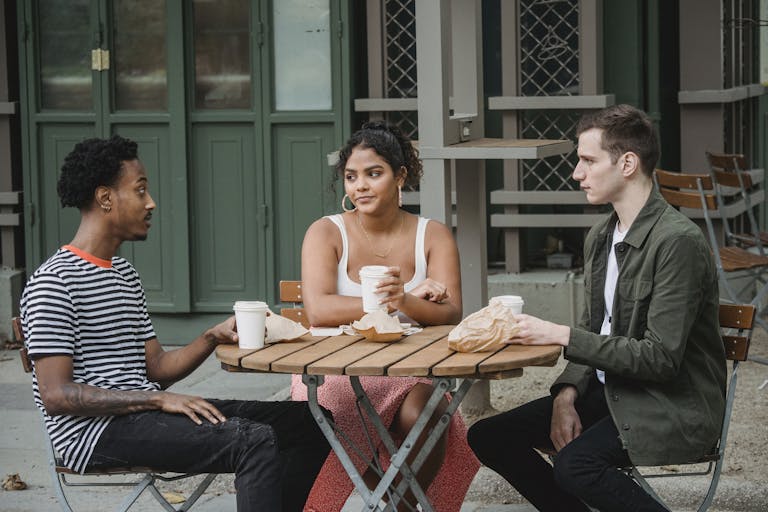
An INFP profile picture is rarely accidental. Where other personality types might grab a recent photo and move on, INFPs tend to agonize over the choice, sensing that something deeper is at stake than just a thumbnail image. The photo you choose to represent yourself online carries meaning about identity, values, and how much of your inner world you’re willing to share with strangers.
That tension between self-expression and self-protection sits right at the heart of how INFPs experience visibility. And once you understand what’s actually driving those choices, the whole process starts to make a lot more sense.

If you’re still figuring out whether INFP is actually your type, our INFP Personality Type hub covers everything from cognitive functions to career patterns and relationship dynamics. It’s worth starting there if any of this resonates and you want the fuller picture.
Why Does Choosing a Profile Picture Feel So Heavy for INFPs?
Most people I know in the extroverted world of advertising treated profile photos as a branding exercise. Pick something polished, professional, approachable. Done. I watched colleagues swap in new headshots the way they changed their email signatures, without much ceremony.
INFPs don’t work that way, and I say that with genuine respect. A profile picture, for someone whose dominant function is introverted feeling (Fi), isn’t just an image. It’s a statement of values. It’s a declaration about who you are and what matters to you. Choosing wrong feels like a small betrayal of your own identity.
Introverted feeling, as the dominant cognitive function in the INFP stack, processes the world through a deeply personal internal value system. It’s not about what feels socially appropriate or what others expect. It’s about what feels true. A photo that doesn’t align with that internal standard creates a kind of quiet dissonance, even if no one else would ever notice the difference.
Add to that the auxiliary function, extraverted intuition (Ne), and you get a mind that generates multiple possible interpretations of every image. What does this photo say about me? What might someone assume? What story does it tell that I didn’t intend? Ne is endlessly generative, which is a gift in creative work and a mild source of torment when you’re just trying to pick a LinkedIn headshot.
That combination, Fi’s need for authenticity and Ne’s tendency to see all the angles at once, explains why something as simple as a profile picture can take an INFP an entire afternoon to resolve.
What Patterns Show Up in INFP Profile Picture Choices?
After years of working with creative teams that skewed heavily toward intuitive feeling types, I started noticing patterns in how people presented themselves digitally. The INFPs in my orbit tended to cluster around a few distinct approaches, each revealing something about how they were managing the visibility question at that particular point in their lives.
The Nature or Landscape Substitute
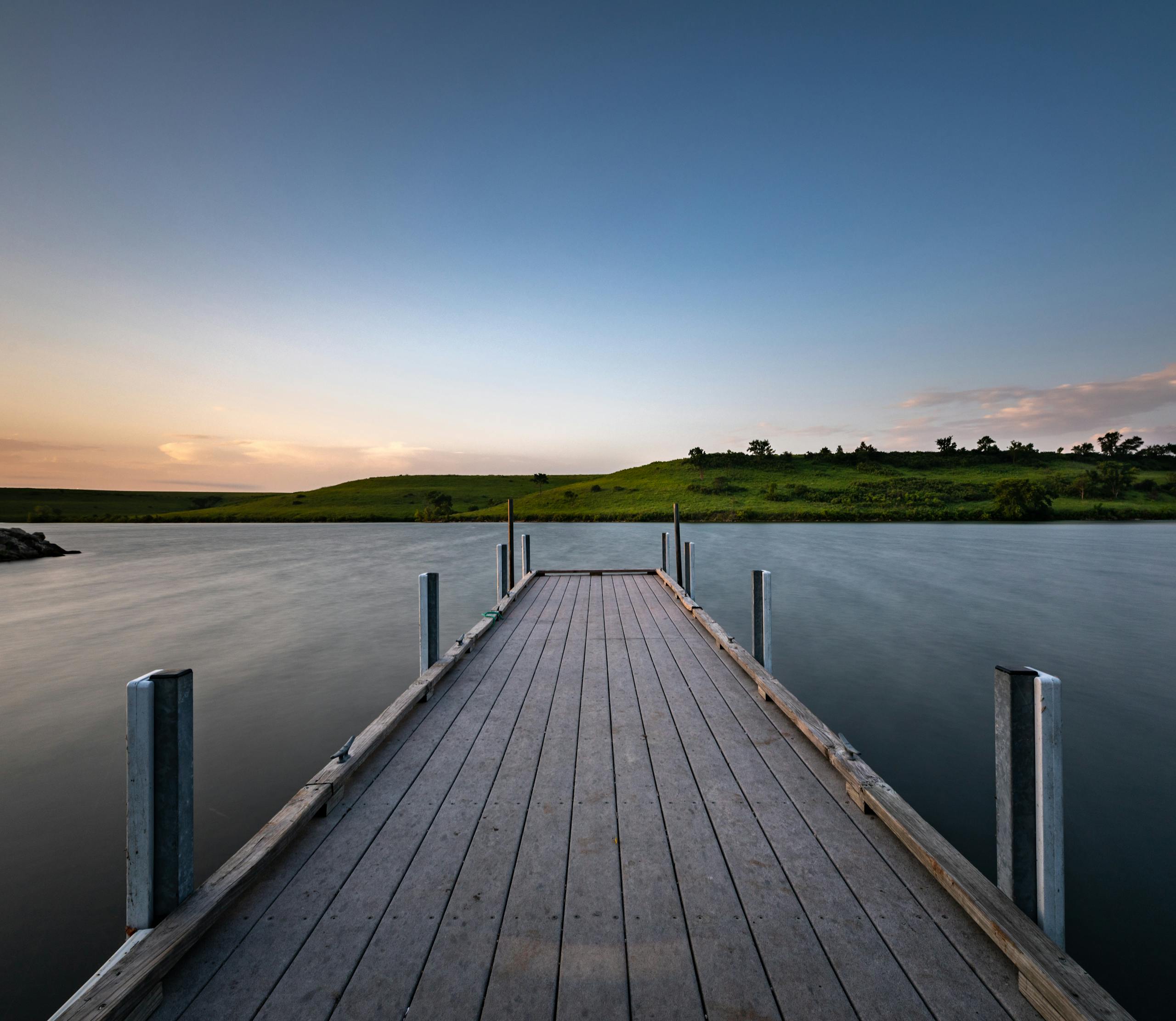
A significant number of INFPs choose a photo that doesn’t show their face at all. Instead, you get a forest path at dusk, a shoreline at low tide, a mountain range viewed from a distance. These aren’t evasions so much as genuine expressions of identity. For someone whose inner world is rich with imagery and symbolism, a landscape can communicate more about who they are than any posed headshot.
There’s also a layer of protection built into this choice. Sharing a beautiful image you love feels authentic without the vulnerability of putting your actual face forward. The photo says something real about your aesthetic sensibility and emotional world, while keeping a certain distance intact.
The Candid That Almost Wasn’t Shared
Some INFPs do choose photos of themselves, but rarely the polished, deliberately posed variety. More often, it’s a candid shot from a moment that felt genuinely good. Maybe it was taken by someone else, in a setting that mattered, during a conversation that went somewhere real. The image carries the weight of that specific memory, and that’s exactly why it was chosen.
What’s interesting is how much deliberation goes into selecting something that’s supposed to look effortless. The photo was chosen because it felt true, not because it was technically perfect. A slightly blurred background, imperfect lighting, an expression that’s more thoughtful than camera-ready. All of that is intentional, even when it doesn’t look it.
The Artistic or Abstract Choice
INFPs with a strong creative identity often use artwork, illustrations, or abstract imagery as their profile picture. Sometimes it’s their own work. Sometimes it’s a piece that captures something they couldn’t express any other way. Either way, the choice communicates: this is the part of me I most want you to see first.
This approach aligns with how INFPs often prefer to be known through their creations rather than their appearance. The work carries the meaning. The person behind it can remain slightly in the background, present but not fully exposed.
How Does the INFP Fear of Misrepresentation Play Out?
One thing I observed repeatedly in agency environments was how much certain team members dreaded being misread. Not misunderstood in the sense of “they got my idea wrong,” but misread at the level of character. Being seen as something you’re not feels like a particular kind of violation when your whole orientation is built around authenticity.
For INFPs, a profile picture carries this risk in concentrated form. A photo that reads as arrogant, or too casual, or performatively cheerful, or trying too hard, can feel worse than having no photo at all. The fear isn’t vanity. It’s the specific discomfort of being categorized incorrectly before you’ve had a chance to show who you actually are.
This connects to something worth exploring in how INFPs handle the broader challenge of being seen. The same sensitivity that makes misrepresentation feel so uncomfortable also shapes how INFPs approach conflict and difficult conversations. If you’ve ever found yourself replaying an interaction for days, wondering how you came across, you’ll recognize this dynamic. The article on how INFPs handle hard talks without losing themselves gets into this territory in a way that might feel surprisingly familiar.
The profile picture becomes a kind of first impression you can’t take back, which is why getting it right matters so much. And “right” for an INFP almost always means “true” rather than “impressive.”
What Does Cognitive Function Theory Actually Explain Here?
It’s worth pausing on the cognitive mechanics for a moment, because they do a lot of explanatory work here. The INFP function stack runs Fi dominant, Ne auxiliary, Si tertiary, and Te inferior. Each of these contributes something to how profile picture choices get made.
Dominant Fi means the primary question is always some version of: does this feel true to who I am? Not “will this impress people” or “what does this communicate professionally.” Those are Te and Fe concerns respectively. Fi asks about internal alignment first, and everything else comes second.
Auxiliary Ne generates possibilities and reads potential meanings. It’s the function that asks “but what if someone interprets this as…” before you’ve even finished your first thought. This is enormously useful in creative work. In the context of choosing a profile picture, it can become a loop of second-guessing that’s hard to exit.
Tertiary Si brings in memory and past experience. An INFP might find themselves drawn to a photo not because it’s the most recent or technically best, but because of what it recalls. A trip that changed something. A period when they felt most like themselves. Si connects present choices to a felt sense of personal history in ways that aren’t always easy to articulate.
Inferior Te is where things get interesting. Te is the function that handles external organization, efficiency, and practical decision-making. As the inferior function, it’s the least developed and most stress-prone. Under pressure, INFPs can either over-rely on Te (suddenly becoming overly rigid about criteria) or avoid it entirely (never actually making a decision). Both responses show up in the profile picture dilemma. Either the INFP creates an elaborate set of rules for what the photo must accomplish, or they keep the default avatar indefinitely because choosing feels too fraught.
Understanding this function stack doesn’t make the decision easier, exactly, but it does make the difficulty less mysterious. You’re not being irrational. You’re being fully INFP.
If you’re not certain about your own type yet, our free MBTI personality test is a good place to start before going deeper into any specific type profile.
How Does This Compare to How INFJs Approach the Same Problem?
INFJs and INFPs get grouped together often, and I understand why. Both are introverted, both lead with feeling in some form, both tend toward depth over breadth in how they engage with the world. But the differences matter, and they show up clearly in something like profile picture choices.
Where an INFP’s dominant Fi asks “does this feel true to me,” an INFJ’s dominant Ni is asking something more like “what does this communicate about who I am becoming?” INFJs are future-oriented in their self-perception. They’re often thinking about the version of themselves they’re moving toward, not just the one they are right now. A profile picture, for an INFJ, might carry aspirational weight alongside authenticity concerns.
INFJs also carry their auxiliary Fe, which attunes them to how their image lands with others. This doesn’t mean INFJs are more performative. It means they’re more naturally aware of the relational dimension of being seen. They want the photo to connect, not just to represent. There’s a social texture to that concern that Fi-dominant INFPs don’t experience in quite the same way.
Both types can struggle with visibility, though the underlying reasons differ. INFJs often wrestle with the gap between how they’re perceived and who they actually are, which is something the piece on INFJ communication blind spots addresses with some real honesty. INFPs wrestle more with the fear of misrepresentation and the challenge of compressing a rich inner world into a single image.
Both types also share a tendency to avoid conflict around how they’re perceived, which can mean staying quiet when someone misreads them rather than correcting the record. The ways INFJs and INFPs each handle that kind of tension is worth understanding separately. For INFJs, the cost of keeping peace is a real and specific dynamic. For INFPs, taking things personally in conflict situations adds another layer entirely.

What Happens When INFPs Have to Use a Professional Profile Picture?
Professional contexts add a specific kind of pressure. LinkedIn, company directories, conference speaker bios, these all carry an expectation of a certain type of image. Polished. Approachable. Competent. The kind of photo that signals you belong in professional spaces.
For an INFP, that expectation can feel like being asked to perform a version of yourself that doesn’t quite fit. Not because you’re unprofessional, but because the professional headshot convention often requires a particular kind of projected confidence that sits uncomfortably alongside Fi’s need for authenticity.
I remember a creative director I worked with years ago, clearly an intuitive feeling type, who spent weeks agonizing over her speaker photo for a major industry conference. Every option either looked “too corporate” or “too casual” or “like someone else entirely.” What she was really wrestling with was the gap between how professional contexts wanted her to present and who she actually was in the room.
What eventually worked for her was a photo taken during an actual work moment, not posed in front of a backdrop but captured mid-conversation, genuinely engaged. It wasn’t a traditional headshot. But it was true. And once she saw it, she knew immediately. That’s the Fi recognition at work: not analysis, just a felt sense of rightness.
The broader challenge here is one that INFPs face across professional environments: how to be visible in spaces that weren’t designed with your particular kind of presence in mind. That’s a question that extends well beyond profile pictures, into how you communicate, how you assert influence, and how you handle the moments when professional norms push against your natural instincts.
INFJs face a version of this too, particularly around how their quiet intensity gets received in high-visibility roles. The piece on how INFJ influence actually works is worth reading alongside this if you’re thinking about presence and professional visibility more broadly.
Is It Healthy to Think This Much About a Profile Picture?
Honestly, it depends on what the thinking is doing. Some of it is genuinely useful. INFPs bring a level of intentionality to self-presentation that most people don’t bother with. That care produces choices that are more considered, more authentic, and often more interesting than the default polished headshot. There’s real value in taking representation seriously.
Where it becomes less useful is when the deliberation becomes a way of avoiding the discomfort of being seen at all. A permanent default avatar, or a photo so abstract it communicates nothing, can be a way of opting out of visibility while maintaining the appearance of having made a choice. That’s worth noticing honestly.
Visibility carries risk, and INFPs know this viscerally. Being seen means being judged. Being judged means potentially being misread. Being misread feels like a violation of something important. The logic of avoidance is internally coherent. But it also has costs, particularly in professional contexts where presence matters.
There’s a parallel here to how INFPs handle conflict more broadly. The same impulse that makes a profile picture feel too exposing is often the same impulse that makes direct confrontation feel impossible. Both involve a version of the question: what happens when I put myself forward and it doesn’t go well? The piece on fighting without losing yourself addresses that fear directly and is worth sitting with if this resonates.
A useful reframe: the goal isn’t a perfect photo. It’s a true one. Those are different standards, and the second one is actually achievable.
What Actually Helps INFPs Make Peace With Being Seen?
Some of this is practical, and some of it is deeper. On the practical side: giving yourself a defined window for the decision rather than leaving it open-ended tends to help. Inferior Te, when it’s not spinning out into perfectionism or avoidance, is actually capable of making clean decisions. Giving it a clear brief and a deadline works better than leaving the question perpetually open.
It also helps to separate the contexts. Your LinkedIn photo doesn’t have to carry everything you want to communicate about yourself. Your personal social media can do different work. Your creative portfolio can do yet another kind of work. You don’t need a single image to hold your whole identity. Distributing that weight across contexts makes each individual choice feel less consequential.
On the deeper side: much of the difficulty around profile pictures is really difficulty around visibility itself. And visibility, for INFPs, is connected to the question of whether your particular kind of presence, quiet, values-driven, depth-seeking, is something the world has room for. That’s not a profile picture problem. That’s an identity question that deserves more than a quick fix.
What I’ve seen work, both in my own experience as an INTJ who spent years hiding behind a polished professional persona, and in watching the INFPs I’ve worked alongside, is finding specific contexts where being seen feels safe enough to practice. A small community. A trusted professional circle. A platform where the audience already shares your values. Visibility doesn’t have to be all-or-nothing. You can build toward it incrementally, in spaces that feel worth the risk.
INFJs work through a related version of this, particularly around the tension between wanting to be understood and fearing that full transparency creates vulnerability. The dynamic around why INFJs door slam and what they can do instead maps onto this territory in ways that are worth understanding even if you’re an INFP, because the underlying question is similar: what do you do when being seen feels like too much?
What Does a Good INFP Profile Picture Actually Look Like?
There’s no single answer, which is probably both reassuring and frustrating. What makes a profile picture work for an INFP isn’t a formula. It’s a felt sense of alignment between the image and the person’s current sense of who they are.
That said, a few things tend to show up in INFP profile pictures that actually feel right to the person who chose them. Natural settings over studio backdrops. Candid or semi-candid over fully posed. Genuine expression over performed confidence. Images that carry some texture of real life rather than the smooth surface of a professional production.
Context matters too. The photo that works for a personal creative platform might not be the right choice for a corporate directory. INFPs who’ve made peace with this distinction tend to approach each context with a clearer brief: what is this photo for, and what does it need to communicate in this specific setting? That question is more useful than “what is the perfect photo of me.”
Worth noting: personality type influences how we process identity and self-presentation, but it doesn’t determine outcomes. Research on personality and self-concept consistently shows that self-perception is shaped by a combination of stable traits and contextual factors. Being an INFP explains the pattern of difficulty around profile pictures. It doesn’t make that difficulty inevitable or permanent.
The broader point, and one worth sitting with, is that how you present yourself visually is one small piece of how you show up in the world. INFPs who’ve developed comfort with visibility tend to have done that work in relationships and communication first, not in photo editing software. The profile picture question is really a proxy for the larger question of how much of yourself you’re willing to bring forward, and in which contexts, and for whom.
That’s a question worth taking seriously. Not because a profile picture is that important in itself, but because the pattern it reveals often points to something that is.
Personality type frameworks like MBTI can be genuinely useful here, though it’s worth understanding their scope and limitations. The 16Personalities overview of personality theory offers a readable introduction to how these models work, while this peer-reviewed paper on personality and self-presentation provides some useful scientific context for the broader questions around identity and visibility.
For INFPs who want to explore the emotional dimension of this more deeply, Psychology Today’s overview of empathy is worth reading alongside MBTI theory, because the Fi function’s deep attunement to personal values is often confused with empathy as a general trait. They overlap, but they’re not the same thing. Understanding the distinction can help clarify what’s actually driving the difficulty around visibility.
And if you’re curious about the neurological side of personality and emotional processing, this Frontiers in Psychology article on personality and emotional experience offers some interesting perspective on why certain types process self-representation with more intensity than others.
There’s a lot more to explore about how INFPs move through the world, from relationships to career choices to the specific challenges of being a values-driven person in environments that don’t always reward that. The full INFP Personality Type hub is where we’ve collected all of that work, and it’s worth bookmarking if this kind of depth is useful to you.
About the Author
Keith Lacy is an introvert who’s learned to embrace his true self later in life. After 20 years in advertising and marketing leadership, including running agencies and managing Fortune 500 accounts, Keith now channels his experience into helping fellow introverts understand their strengths and build fulfilling careers. As an INTJ, he brings analytical depth and authentic perspective to every article, drawing from both professional expertise and personal growth.
Frequently Asked Questions
Why do INFPs struggle so much with choosing a profile picture?
INFPs lead with dominant introverted feeling (Fi), which means their primary concern is internal authenticity rather than external impression. A profile picture feels like a statement of identity, and getting it wrong, meaning choosing something that doesn’t feel true, creates a specific kind of discomfort that goes beyond vanity. Add auxiliary extraverted intuition (Ne) generating multiple possible interpretations of every image, and the decision becomes genuinely complex for this type.
What kinds of profile pictures do INFPs typically choose?
Common patterns include nature or landscape images used in place of a personal photo, candid shots from meaningful moments rather than posed headshots, and artwork or abstract imagery that expresses identity through creativity rather than appearance. Each approach reflects a different way of managing the tension between authentic self-expression and the vulnerability of being seen.
Is avoiding a face photo in a profile picture a sign of low self-esteem for INFPs?
Not necessarily. For many INFPs, choosing a landscape or abstract image is a genuine act of self-expression rather than avoidance. The choice communicates something real about aesthetic values and emotional world. That said, if the pattern extends to a broader reluctance to be seen or known in professional and personal contexts, it may be worth examining what’s driving it. Visibility discomfort and low self-esteem can overlap but they’re not the same thing.
How does the INFP approach to profile pictures differ from the INFJ approach?
INFPs are primarily asking whether the image feels true to their current sense of self, driven by dominant Fi. INFJs, whose dominant function is introverted intuition (Ni) with auxiliary extraverted feeling (Fe), tend to think more about what the image communicates to others and how it connects relationally. INFJs may also carry more aspirational weight in their profile picture choices, selecting images that reflect who they’re becoming rather than just who they are now.
What’s the most practical advice for an INFP who can’t settle on a profile picture?
Separate the contexts first. Your LinkedIn photo, personal social media image, and creative portfolio photo don’t all need to do the same work. Give each a specific brief: what does this photo need to communicate in this setting? Then set a defined window for the decision rather than leaving it permanently open. Inferior Te functions better with clear parameters and a deadline than with unlimited open-ended deliberation. And remember: the goal is a true photo, not a perfect one. Those are different standards, and the first one is actually within reach.