

An INTJ in healthcare isn’t a misfit or an outlier. People with this personality type bring something medicine desperately needs: the ability to process complex information quietly, spot patterns before they become problems, and think independently when everyone else defaults to consensus. If you’ve ever wondered whether your introverted, analytical brain actually belongs in a clinical or research environment, the answer is yes, and the reasons go deeper than you might expect.

My own path wasn’t medicine, but I understand the particular pressure of working in a field that rewards visible, vocal performance. Running advertising agencies for over two decades meant constant client presentations, high-stakes pitches, and rooms full of people who equated volume with confidence. I’m an INTJ. My brain doesn’t work that way. What I eventually figured out, after years of pretending otherwise, is that the traits I’d been quietly apologizing for were exactly what made me effective at the work that actually mattered.
Healthcare is one of those fields where that same realization can be genuinely life-changing, both for the professional living it and for the patients depending on them.
If you’re still working out where you fall on the personality spectrum, our MBTI Introverted Analysts (INTJ and INTP) hub covers the full range of how analytical introverts think, work, and connect, with articles on everything from career fit to relationship patterns.
What Makes the INTJ Brain Wired for Healthcare?
People with the INTJ personality type lead with introverted intuition, which means they’re constantly building internal models of how systems work. They don’t just absorb information, they organize it, test it against patterns, and look for the deeper structure underneath the surface detail. In medicine, that cognitive style has enormous value.
What’s your personality type?
Take our free 40-question assessment and get a detailed personality profile with dimension breakdowns, context analysis, and personalised insights.
Discover Your Type8-12 minutes · 40 questions · Free
A 2022 report from the National Institutes of Health highlighted that diagnostic errors remain one of the most persistent challenges in healthcare, affecting approximately 12 million Americans annually in outpatient settings alone. Pattern recognition, the ability to hold multiple variables in mind simultaneously and sense when something doesn’t fit, is exactly the skill that reduces those errors. It’s also one of the defining strengths of the INTJ cognitive style.
Add to that the INTJ’s characteristic drive for competence and continuous improvement. People with this type don’t coast. They read the literature. They question established protocols when the evidence warrants it. They push for better systems even when the existing ones are “good enough.” In a field where complacency costs lives, that orientation matters.
I saw a version of this in my own work. Some of my best creative directors were people who thought the way I did: quiet, rigorous, allergic to sloppy thinking. They weren’t the loudest voices in the room, but when they flagged a problem with a campaign strategy, they were almost always right. The same quality that made them seem reserved in brainstorming sessions made them invaluable when precision counted.
| Career / Role | Why It Fits | Key Strength Used | Watch Out For |
|---|---|---|---|
| Diagnostic Physician | Pattern recognition and holding multiple variables simultaneously directly reduces diagnostic errors. INTJ ability to sense when something doesn’t fit suits complex case analysis. | Pattern recognition, systems thinking, deep analytical processing | Directness about diagnostic flaws may create friction in hierarchical medical settings without careful communication. |
| Internal Medicine Specialist | Allows depth of relationship with patients over time rather than transactional care. Suits INTJ preference for developing real understanding of complex situations. | Long-range thinking, depth over breadth, sustained intellectual engagement | Requires consistent patient communication and emotional presence, which can be draining for INTJs despite their genuine capacity for care. |
| Psychiatrist | Deep patient relationships and complex pattern analysis in human behavior. Allows independent thinking and systematic understanding of psychological frameworks. | Systems thinking, emotional depth processing, pattern recognition in behavior | High emotional weight of the work requires intentional processing strategies and sustainable boundaries to prevent burnout. |
| Medical Researcher | Emphasizes independent work, long-term thinking, and building models of how systems work. Less reliance on constant collaboration than clinical medicine. | Intellectual independence, systems modeling, deep analytical focus | Grant writing and departmental politics require social navigation skills that don’t come naturally to most INTJs. |
| Clinical Protocol Developer | Creates systematic frameworks and identifies flaws in existing procedures. INTJ directness becomes an asset when improving medical standards. | Identifying system flaws, independent thinking, long-range protocol design | Requires building consensus and gaining buy-in from skeptical colleagues who may resist challenging prevailing assumptions. |
| Medical Specialist in Subspecialty | Subspecialties allow for depth and intellectual focus on complex cases rather than high-volume patient turnover. Matches INTJ cognitive style better. | Deep expertise, pattern recognition in specialized domain, independent judgment | Narrower field may feel limiting long-term if INTJ interests shift or broader perspective becomes necessary. |
| Healthcare Systems Analyst | Analyzes how medical systems work, identifies inefficiencies, and proposes improvements. Leverages systems thinking without constant direct patient care. | Systems analysis, identifying patterns and inefficiencies, independent problem-solving | Requires influencing multiple stakeholders and teams, which demands communication skills beyond analysis alone. |
| Medical Educator | Develops comprehensive understanding of medical knowledge and teaches frameworks. Independent work preparing materials with less direct patient interaction required. | Systems thinking, long-term curriculum design, intellectual depth | Teaching demands sustained engagement with groups and responsiveness to student questions that may interrupt deep focus. |
| Clinical Decision Support Specialist | Creates tools and frameworks that reduce diagnostic errors through systematic analysis. Combines INTJ strength in pattern recognition with systems building. | Pattern recognition, systems design, diagnostic error reduction | Requires translating complex frameworks into accessible tools that different medical professionals can actually use effectively. |
Which Healthcare Roles Are the Best Fit for INTJs?
Not every corner of medicine suits every personality type equally well. The INTJ’s preference for depth over breadth, independent work over constant collaboration, and long-term thinking over reactive problem-solving points toward specific roles where these traits become genuine advantages.
Research and Academic Medicine
Medical research is arguably the most natural home for the INTJ mind. The work demands sustained concentration, comfort with ambiguity, and the ability to hold a complex question in mind for months or years without needing immediate resolution. A 2021 analysis from the American Psychological Association found that individuals high in openness and conscientiousness, traits strongly associated with the INTJ profile, consistently outperform peers in research productivity and methodological rigor. The lab, the library, and the literature review are environments where introversion isn’t a liability. They’re where it pays off.
Pathology and Radiology
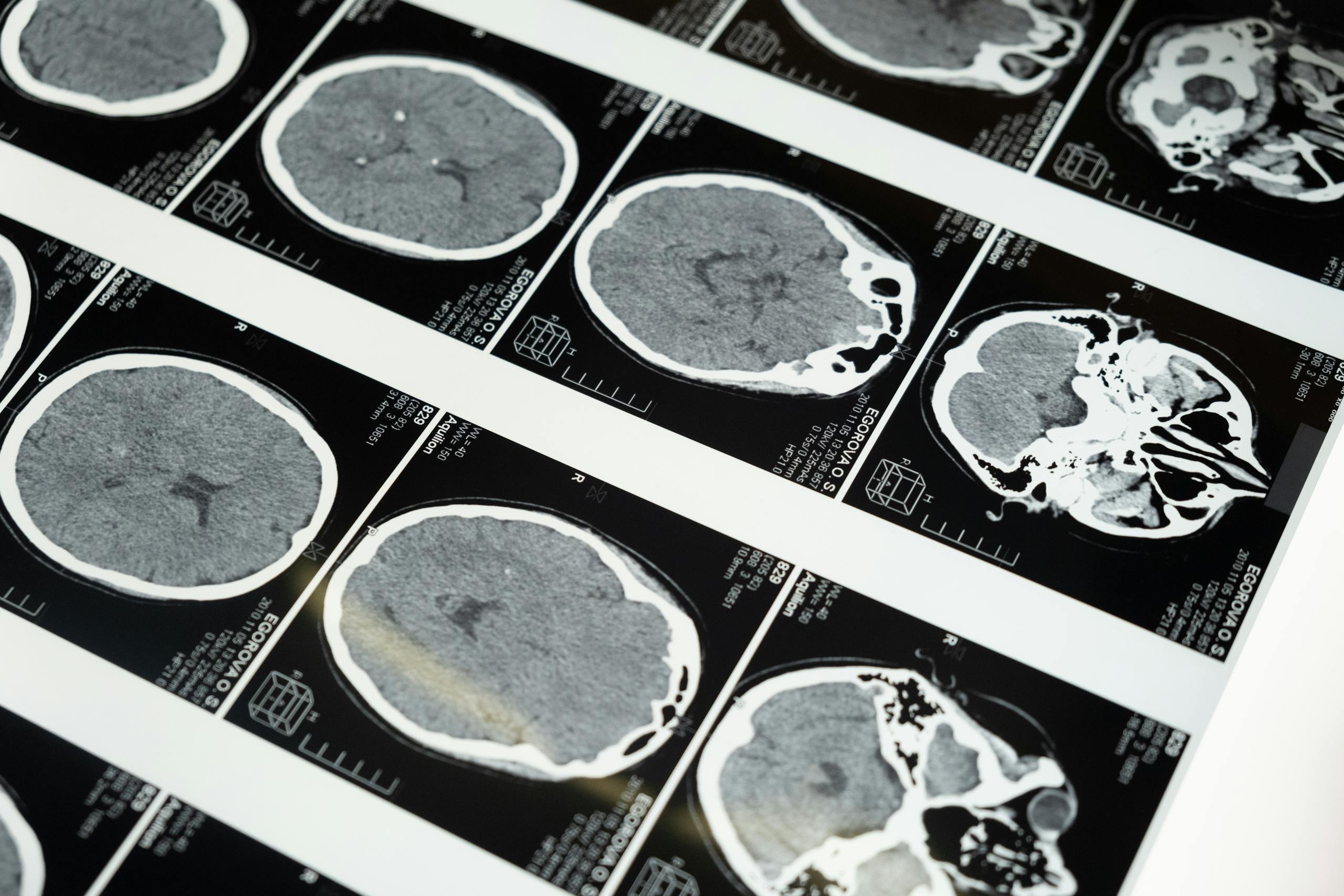
These specialties reward exactly what INTJs do best: careful observation, independent analysis, and the ability to reach conclusions without requiring real-time social validation. Pathologists and radiologists work with data, images, and specimens. The diagnostic process is largely internal, methodical, and high-stakes. Many INTJs who enter clinical medicine find themselves drawn to these fields precisely because the work matches their natural processing style.
Healthcare Administration and Systems Design
INTJs have a particular talent for seeing how systems fail and envisioning better structures. Healthcare administration, hospital operations, and health policy work draw on strategic thinking, long-range planning, and the willingness to challenge inefficient processes. These roles require the ability to manage complexity at scale, something that comes naturally to people who instinctively build mental frameworks for how things fit together.
I spent years in agency work redesigning how teams operated, not because anyone asked me to, but because I couldn’t stop seeing the gaps between how things were running and how they could run. That same instinct, applied to a hospital system or a public health initiative, becomes something genuinely valuable.
How Do INTJs Handle the Communication Demands of Medicine?
This is the question I hear most often from introverted professionals in high-stakes fields, and it’s worth taking seriously rather than brushing aside with easy reassurance.
Healthcare involves constant communication: with patients, families, colleagues, and administrators. For INTJs, who process deeply before speaking and often find sustained social interaction draining, this can feel like a structural mismatch. But the reality is more nuanced than that framing suggests.
My mind processes emotion and information quietly. I filter meaning through layers of observation and interpretation before I say anything. In client meetings early in my career, I was often the last person to speak, and I used to read that as a weakness. What I eventually understood is that when I did speak, people listened, because I’d already worked through the problem while everyone else was still generating noise. That quality doesn’t disappear in a clinical context. It changes shape.
INTJs in patient-facing roles often develop communication styles that patients describe as thorough, clear, and unhurried. They don’t fill silence with nervous chatter. They explain things carefully. They listen without interrupting. A 2023 report from the Mayo Clinic on patient satisfaction identified “feeling genuinely heard” as the single strongest predictor of positive patient experience, above wait times, facility quality, and even clinical outcomes in perception studies. The INTJ’s natural inclination toward careful listening is, in that context, a clinical asset.
The harder challenge is the social performance aspect of medicine: team meetings, grand rounds presentations, interdepartmental politics. Those environments reward extroverted communication styles, and INTJs can find them genuinely exhausting. The solution isn’t to pretend otherwise. It’s to structure your professional life so that draining interactions are balanced by the deep, focused work that restores you.
Understanding how different introverted types handle communication under pressure adds useful context here. The INTP thinking patterns article on this site explores how analytical introverts process information in ways that often look like overthinking from the outside, but are actually a form of thoroughness that produces better outcomes.
Are There Real Challenges INTJs Face in Healthcare Settings?
Honest answer: yes. Pretending otherwise wouldn’t serve anyone reading this.
The INTJ’s tendency toward directness can create friction in medical hierarchies that value deference. If you see a flaw in a protocol and say so plainly, without softening the observation with enough social lubrication, you can be read as arrogant or difficult even when you’re factually correct. I ran into this constantly in agency work. Clients didn’t always want the accurate assessment. They wanted the comfortable one. Learning to deliver hard truths in ways people could actually hear took me years, and I still don’t always get it right.
There’s also the emotional weight of medicine. INTJs are not emotionally absent, despite a reputation to the contrary. They feel deeply. They simply process emotion internally rather than expressing it in real time. In healthcare, where grief and loss are part of the landscape, that internal processing can become isolating if there’s no structure for working through it. Building intentional outlets matters.
The ISFJ emotional intelligence article here offers a useful counterpoint, exploring how a different introverted type handles emotional labor in caregiving roles. Reading across types builds self-awareness, even when the comparison highlights differences rather than similarities.
Burnout is another real risk. The Centers for Disease Control and Prevention has documented physician burnout rates exceeding 50% in recent years, with emergency medicine and primary care showing the highest numbers. INTJs who haven’t built adequate recovery structures into their professional lives, time for solitude, deep work, and genuine intellectual engagement, are not immune to that pattern. Awareness is the first protection.

How Can INTJs Build a Sustainable Career in Medicine?
Sustainability, for an INTJ in any demanding field, comes down to one core principle: aligning the structure of your work with the structure of your mind. That sounds abstract, so let me make it concrete.
Protect Your Deep Work Time
INTJs do their best thinking in uninterrupted stretches. In a hospital environment, that kind of time is rare and has to be actively defended. The most effective INTJ healthcare professionals I’ve read about and spoken with are deliberate about carving out protected time for complex analysis, literature review, or strategic planning. They treat that time as non-negotiable, the same way a surgeon treats OR time.
In my agency years, I eventually stopped scheduling meetings before 10 AM. That wasn’t laziness. It was recognition that my best strategic thinking happened in the first two hours of the day, and filling that window with status calls was a structural mistake. Finding the equivalent protection in a clinical setting takes creativity, but it’s worth pursuing.
Choose Your Specialty Deliberately
Not all medical specialties make equal demands on extroverted performance. Emergency medicine and primary care involve constant, rapid social interaction. Pathology, radiology, anesthesiology, psychiatry, and research-oriented academic medicine offer different rhythms. Choosing a specialty with awareness of your energy profile isn’t avoiding challenge. It’s intelligent self-management.
A 2020 study published through the National Institutes of Health found that personality-specialty fit was one of the strongest predictors of long-term physician satisfaction, outperforming salary, prestige, and even work hours in some models. That finding deserves attention from anyone still in the specialty selection process.
Build a Small, Trusted Network
INTJs don’t need large professional networks. They need a few people who understand how they work and can serve as sounding boards, advocates, and honest critics. In medicine, that might mean one or two mentors, a research collaborator, and a peer who shares your standards. Quality over quantity isn’t just a preference for this type. It’s a practical strategy for building influence without depleting yourself.
I built my most productive agency relationships with a handful of people I trusted completely. Those relationships generated more actual business value than any networking event I ever attended. The same principle applies in healthcare careers.
What Do INTJs Bring to Healthcare That Other Types Don’t?
Every personality type brings something distinct to medicine. The INTJ’s specific contribution deserves to be named clearly, because it’s easy to undervalue in a culture that rewards visible, high-energy performance.
INTJs bring intellectual independence. They don’t adopt consensus positions because the room expects them to. In medicine, where groupthink has historically contributed to diagnostic errors and treatment delays, that independence has genuine clinical value. A 2019 report from the Harvard Business Review on decision-making in high-stakes teams found that teams with at least one member who consistently challenged prevailing assumptions made significantly fewer systematic errors than teams without that function. INTJs often fill that role naturally.
They also bring long-range thinking. Where some personality types excel at managing the immediate crisis, INTJs are often better at asking what created the crisis and what structural change would prevent the next one. In healthcare administration, public health policy, and systems design, that forward orientation is exactly what’s needed.
Understanding where INTJs sit within the broader landscape of introverted analytical types adds useful perspective. The INTP recognition guide on this site is worth reading if you’ve ever wondered whether your analytical style leans more toward INTP than INTJ. The two types share significant cognitive overlap, and the distinction matters for career fit. If you haven’t yet taken a formal assessment, our MBTI personality test is a good starting point for getting clarity on your type.
INTJs also bring something harder to quantify: a refusal to accept “good enough” when better is achievable. In a field where the stakes are human lives, that standard matters more than almost anywhere else.

How Does Gender Shape the INTJ Experience in Healthcare?
Worth addressing directly, because the experience is not uniform across gender lines.
INTJ women in medicine face a specific version of the double bind that affects INTJ women in many professional fields: they’re expected to be warm and deferential in the way women are socially conditioned to be, and simultaneously expected to project the authority and decisiveness that medicine demands. The INTJ personality, which tends toward directness and intellectual confidence regardless of social expectation, often violates both sets of norms simultaneously.
The INTJ women article on this site examines that tension in depth, including how INTJ women can build professional credibility without contorting themselves to fit expectations that were never designed with them in mind. If you’re a woman with this personality type working in medicine, that piece is worth your time.
The broader point is that personality type interacts with other identity dimensions in ways that shape professional experience. Awareness of those interactions isn’t a distraction from career development. It’s part of building a realistic picture of what you’re working with and what you’re working against.
Can INTJs Thrive in Patient-Facing Roles Long Term?
Yes, with the right structural conditions. The word “thrive” matters here. INTJs can survive almost any professional environment through sheer competence and willpower. Thriving requires something more: genuine alignment between the work and the way your mind operates.
Patient-facing medicine that allows for depth of relationship, where you follow the same patients over time and develop real understanding of their situations, suits INTJs better than high-volume, transactional care. Internal medicine, psychiatry, and certain subspecialties allow for that kind of depth. Emergency medicine, urgent care, and high-turnover primary care settings tend to reward a different cognitive style.
There are also personality types whose natural strengths complement the INTJ’s in team-based care. The INFJ paradoxes article on this site explores how a closely related type handles the emotional complexity of caregiving in ways that differ meaningfully from the INTJ approach. Understanding those differences helps INTJs build teams that cover their gaps without expecting themselves to be something they’re not.
The ISFP dating guide offers another angle: how a feeling-dominant introverted type builds meaningful relationships, which can inform how INTJs think about patient rapport even when their own approach to connection looks quite different.
Long-term success in patient-facing medicine also depends on how well an INTJ manages the emotional labor involved. Building explicit recovery practices, solitude, physical activity, intellectual engagement outside of work, isn’t optional for this type. It’s maintenance.

There’s a lot more to explore about how analytical introverts function across different professional and personal contexts. The full MBTI Introverted Analysts hub brings together everything we’ve written on INTJ and INTP personalities, from career strategy to communication patterns to the internal experience of thinking this way in a world that often misreads it.
About the Author
Keith Lacy is an introvert who’s learned to embrace his true self later in life. After 20 years in advertising and marketing leadership, including running agencies and managing Fortune 500 accounts, Keith now channels his experience into helping fellow introverts understand their strengths and build fulfilling careers. As an INTJ, he brings analytical depth and authentic perspective to every article, drawing from both professional expertise and personal growth.
Frequently Asked Questions
Is INTJ a good personality type for a career in medicine?
Yes. The INTJ’s strengths in pattern recognition, independent analysis, long-range thinking, and intellectual rigor align well with the demands of medicine, particularly in research, diagnostic specialties, and healthcare systems work. The challenges are real, especially around sustained social interaction and hierarchical deference, but they’re manageable with deliberate career structure.
Which medical specialties are the best fit for INTJ personality types?
Pathology, radiology, anesthesiology, psychiatry, and academic research medicine tend to suit INTJs well because they reward deep analysis, independent judgment, and sustained concentration over high-volume social interaction. Healthcare administration and health policy are also strong fits for INTJs drawn to systems-level work rather than direct patient care.
How do INTJs handle the emotional demands of working in healthcare?
INTJs process emotion internally rather than expressing it in real time, which can make the emotional weight of medicine feel isolating without intentional support structures. Building deliberate recovery practices, solitude, physical activity, and relationships with people who understand how you process, is essential for long-term sustainability in emotionally demanding healthcare environments.
Do INTJs struggle with patient communication in clinical roles?
INTJs often develop communication styles that patients experience as thorough, calm, and attentive. The tendency to listen carefully before responding, and to explain things precisely rather than quickly, frequently translates into high patient satisfaction. The harder challenge is team-based communication and institutional politics, where extroverted styles tend to be rewarded and the INTJ’s directness can create friction.
What is the biggest risk for INTJs working in healthcare long term?
Burnout is the most significant risk, particularly in high-volume clinical environments that don’t allow for the deep, focused work that restores INTJ energy. Physician burnout rates exceed 50% across many specialties according to CDC data, and INTJs who haven’t built adequate recovery structures into their professional lives are vulnerable. Specialty selection, protected deep work time, and intentional social boundaries are the primary protective factors.