
Plants and Natural Elements
Task and Project Management
Todoist with its natural language input and priority system works well for INTJs who want a clean capture system without a lot of setup friction. Linear is worth exploring for those who do software or systems work and want something more structured. The common thread is that the best tools for this type capture information quickly and surface it reliably, without requiring daily maintenance rituals.

What Recovery Elements Belong in an INTJ Workspace?
This is the section most workspace guides skip entirely, and it’s the one that might matter most.
INTJs burn out in a specific way. It doesn’t announce itself loudly. It shows up as increasing irritability with interruptions, declining interest in problems that used to engage us, and a flattening of the strategic thinking that normally feels effortless. By the time it’s visible to others, it’s been building for weeks.
Building recovery into the workspace itself, rather than treating it as something that happens elsewhere, changes the pattern. I wrote more about this in my honest look at therapy apps versus real therapy for INTJs, where one of the clearest findings was that environmental design matters as much as any intervention for this type. You can’t think your way out of a depleted nervous system.
Plants and Natural Elements
A 2024 study cited by Psychology Today in their coverage of quiet leadership noted that introverted high-performers consistently cited environmental design as central to their sustained output. Natural elements, including plants, natural materials, and views of outdoor spaces, appear in workspace descriptions from high-functioning introverts at a higher rate than in extroverted counterparts.
A few low-maintenance plants on or near your desk, pothos, snake plants, or ZZ plants, add visual softness without adding maintenance burden. They’re not decoration. They’re part of the sensory environment that tells your nervous system it’s safe to settle.
A Dedicated Recovery Corner
If your space allows it, a chair positioned away from your work surface creates a physical separation between doing and recovering. Even a small reading chair in the corner of a home office signals a mode shift. When I moved to a home office setup after leaving my last agency, this was one of the first things I added. A chair with good lumbar support, a small side table, and a lamp positioned for reading. No screens in that zone. Just books, a notebook if something comes up, and deliberate rest.
This matters because INTJs often struggle to genuinely rest. We tend to treat downtime as inefficiency rather than as part of the productive cycle. Having a physical space designated for recovery makes it easier to actually use it.
How Does Workspace Design Connect to Broader INTJ Wellbeing?
There’s a version of workspace optimization that’s purely mechanical: better tools, faster systems, fewer interruptions. That version is useful but incomplete.
The deeper reason workspace design matters for INTJs is that our environment shapes our relationship with ourselves. A space that constantly demands social performance, visible work, or reactive attention trains us to operate in a mode that’s fundamentally misaligned with how we’re wired. Over time, that misalignment accumulates into something that looks like a productivity problem but is actually an identity problem.
I spent the first decade of my agency career in environments I hadn’t designed for myself. Open offices, glass-walled conference rooms, hot-desking arrangements that made it impossible to build any sense of territory or routine. The work got done, but it cost more than it should have. What I didn’t understand then was that the environment wasn’t neutral. It was actively working against my natural operating mode.
This connects to something I’ve noticed in how INTJs approach relationships, too. The patterns that show up in workspace preferences, the need for depth over breadth, the preference for intentional interaction over ambient socialization, appear in personal life as well. The relationship dynamics that INTPs work through share some of this territory, even across type differences, because both types are handling a world that often mistakes depth for distance.
A workspace that honors how you actually function is a form of self-respect. It says: my way of working is legitimate, and it deserves infrastructure.
What About Shared or Open Office Environments?
Not everyone has the luxury of a private home office. Many INTJs spend significant time in shared spaces, open-plan offices, or hybrid arrangements that mix both. The workspace setup principles don’t disappear in these contexts. They just require different implementation.
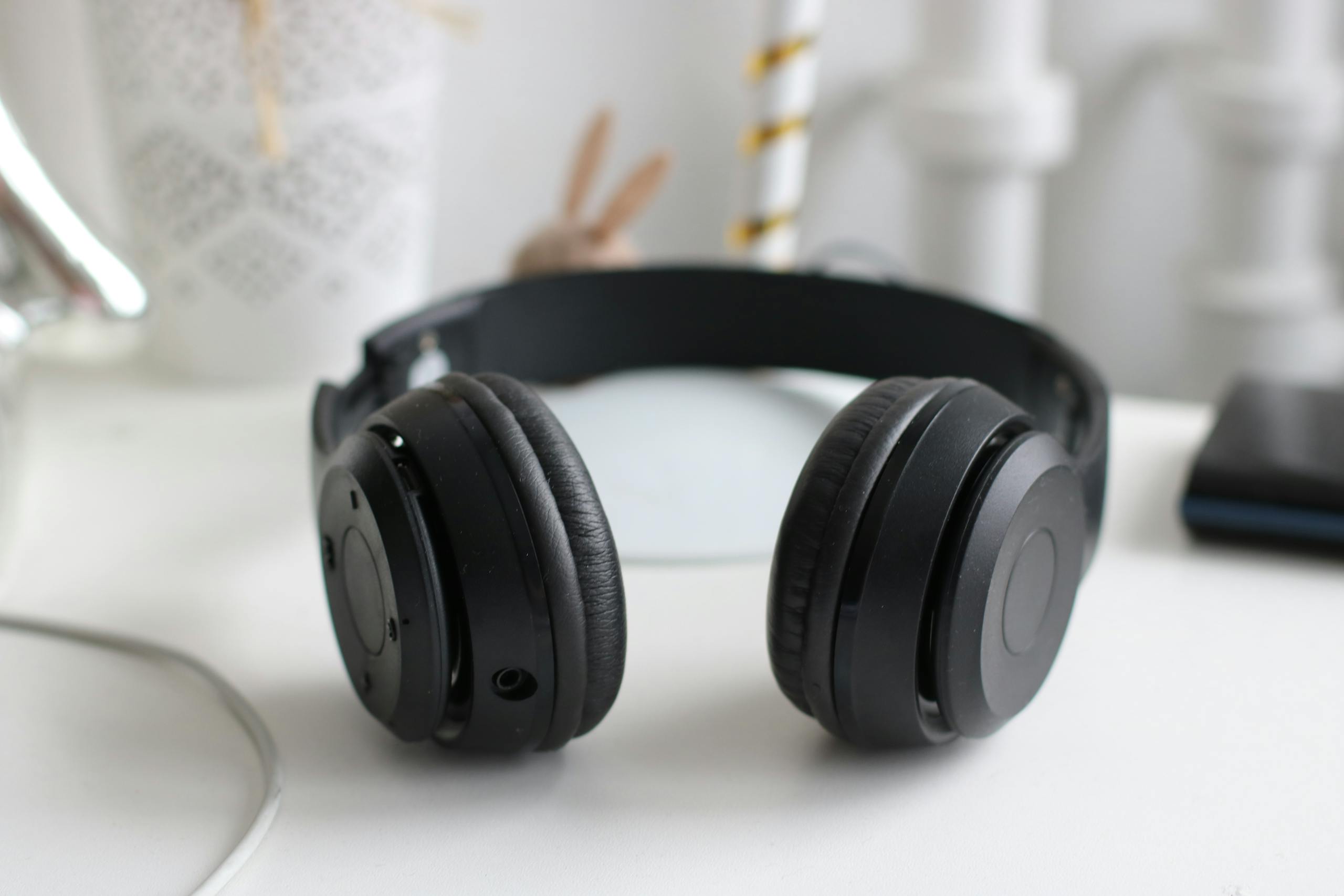
Portable tools become essential. A good pair of noise-canceling headphones is non-negotiable. A small desktop privacy panel that clips to most standard desks creates visual separation without requiring permission from facilities. A physical notebook that travels with you maintains the analog thinking layer regardless of where you’re sitting.
Time-based strategies matter more in shared environments. Arriving early or staying late to access genuinely quiet time isn’t a workaround, it’s a legitimate strategic choice. Blocking the first ninety minutes of the day for deep work before the office fills up is something I did consistently during my agency years, not because I was antisocial, but because those ninety minutes produced more than the next four hours combined.
It’s worth noting that the challenge of boredom and disengagement in environments that don’t fit your cognitive style isn’t unique to INTJs. The pattern of INTP developers becoming disengaged in poorly designed work environments follows a similar logic: when the environment fights your natural processing style, you spend energy on the fight rather than the work.
Truity’s research on introverted intuition notes that Ni-dominant types like INTJs process information through deep pattern recognition that requires sustained, undistracted attention. Environments that fragment attention don’t just reduce output. They prevent the kind of thinking that makes INTJs genuinely valuable in the first place.
How Do You Personalize This Setup for Your Specific INTJ Patterns?
Every INTJ is different in the specific ways they experience their type. Some are more sensitive to visual clutter than noise. Some do their best thinking in complete silence. Others need a specific kind of ambient sound. Some need physical movement integrated into their work session. Others need complete stillness.
The personalization process starts with honest observation rather than aspirational copying. Spend a week tracking what actually depletes you and what actually supports you in your current environment. Not what you think should work based on productivity advice you’ve read, but what actually happens in your body and mind across different conditions.
Pay attention to the moments when thinking feels genuinely effortless. What’s true about the environment in those moments? What’s the light like? What sounds are present or absent? What’s on the desk surface? What time of day is it? Those observations are more valuable than any product recommendation, because they point directly to your specific operating conditions.
The National Institute of Mental Health notes that environmental factors play a significant role in cognitive and emotional regulation. For INTJs who tend to intellectualize their experience, the physical environment is often the last variable they examine when something isn’t working. It’s worth examining first.
The relationship between environment and cognitive performance also shows up in adjacent contexts. Research from Harvard on cognitive load and decision fatigue suggests that reducing environmental friction, the small, constant decisions and adjustments that a poorly designed workspace requires, preserves mental resources for the work that actually matters. INTJs who design their environments deliberately aren’t being precious. They’re being strategic.
There’s also something worth saying about the social dimension of workspace personalization. INTJs sometimes hesitate to make their workspace preferences explicit, especially in shared environments, because it can feel like announcing high-maintenance needs. The reframe that helped me was thinking about it as professional optimization rather than personal accommodation. You wouldn’t apologize for adjusting your chair to the right height. Adjusting your acoustic environment is the same category of decision.
This same dynamic plays out in personal relationships, where INTJs and their partners sometimes misread environmental and social needs as rejection or coldness. The tension between logic-oriented types and feeling-oriented partners often centers on exactly this kind of misunderstanding, where a need for environmental control or solitude gets interpreted as emotional withdrawal rather than cognitive necessity.
Getting your workspace right is, in a real sense, getting clearer about who you are and what you actually need to function well. That clarity tends to extend outward into other areas of life, into how you communicate your needs, how you structure your time, and how you show up for the people and work that matter most to you.
Build the space that lets you think. Everything else follows from there.
Find more resources on how INTJs and INTPs approach work, relationships, and personal growth in our complete MBTI Introverted Analysts (INTJ & INTP) Hub.
About the Author
Keith Lacy is an introvert who’s learned to embrace his true self later in life. After 20 years in advertising and marketing leadership, including running agencies and managing Fortune 500 accounts, Keith now channels his experience into helping fellow introverts understand their strengths and build fulfilling careers. As an INTJ, he brings analytical depth and authentic perspective to every article, drawing from both professional expertise and personal growth.
Frequently Asked Questions
What is the most important element of an INTJ workspace setup?
Sound management tends to have the most immediate impact for most INTJs. Unpredictable noise is particularly disruptive to the sustained, complex reasoning this personality type does most naturally. A quality pair of active noise-canceling headphones, combined with a consistent audio signal like brown noise or instrumental music, creates the acoustic environment that allows deep focus. From there, visual privacy and lighting quality round out the highest-impact physical variables.
Can INTJs create an effective workspace in an open office?
Yes, with deliberate strategy. Portable tools like noise-canceling headphones, a desktop privacy panel, and a physical notebook that travels with you maintain the core elements of an INTJ-friendly workspace regardless of location. Time-based strategies matter equally: accessing the office before it fills up or after it empties creates genuine quiet time without requiring physical privacy. The goal is building portable versions of the environmental controls that support focused thinking.
What digital tools work best for INTJ thinking styles?
Obsidian is particularly well-suited to INTJ cognitive patterns because its bidirectional linking mirrors the interconnected, systems-level thinking this type does naturally. For task management, Todoist offers clean capture and reliable surfacing without excessive maintenance overhead. The consistent principle across digital tools for INTJs is choosing software that captures information quickly and gets out of the way, rather than tools that require ongoing organizational rituals or generate frequent notifications.
How do INTJs incorporate recovery into their workspace design?
Building recovery into the physical space itself is more reliable than relying on willpower. A dedicated recovery zone, even a single chair positioned away from the work surface, creates a physical mode-shift that makes genuine rest easier to access. Natural elements like plants, warm lighting, and a separation from screens in that zone reinforce the signal. INTJs who treat recovery as a structural element of their workspace rather than something that happens elsewhere tend to sustain output more consistently and avoid the gradual burnout that accumulates when rest is perpetually deferred.
How much should an INTJ invest in their workspace setup?
Prioritize by cognitive impact rather than price point. The highest-return investments tend to be noise-canceling headphones (significant daily impact, used for years), monitor positioning and ergonomics (affects every hour of desk work), and lighting quality (reduces accumulated fatigue). A sit-stand desk frame is worth the investment if you do four or more hours of desk work daily. Analog tools like a quality notebook and pen are low cost with high cognitive value for most INTJs. Start with the elements that address your specific pain points rather than building a complete setup at once.
Focus and Distraction Management Apps
Freedom or Cold Turkey for blocking distracting sites during focused work sessions. These tools matter because willpower is a finite resource, and INTJs who are deep in a problem have already spent significant mental energy getting there. Having a software layer that enforces boundaries removes the moment-to-moment decision of whether to check something.
This connects to a broader point I’ve thought about in the context of INTJ strategic career development: the people who consistently produce excellent strategic work aren’t necessarily more disciplined than others. They’ve built systems that make distraction structurally harder and focus structurally easier.
Task and Project Management
Todoist with its natural language input and priority system works well for INTJs who want a clean capture system without a lot of setup friction. Linear is worth exploring for those who do software or systems work and want something more structured. The common thread is that the best tools for this type capture information quickly and surface it reliably, without requiring daily maintenance rituals.
What Recovery Elements Belong in an INTJ Workspace?
This is the section most workspace guides skip entirely, and it’s the one that might matter most.
INTJs burn out in a specific way. It doesn’t announce itself loudly. It shows up as increasing irritability with interruptions, declining interest in problems that used to engage us, and a flattening of the strategic thinking that normally feels effortless. By the time it’s visible to others, it’s been building for weeks.
Building recovery into the workspace itself, rather than treating it as something that happens elsewhere, changes the pattern. I wrote more about this in my honest look at therapy apps versus real therapy for INTJs, where one of the clearest findings was that environmental design matters as much as any intervention for this type. You can’t think your way out of a depleted nervous system.
Plants and Natural Elements
A 2024 study cited by Psychology Today in their coverage of quiet leadership noted that introverted high-performers consistently cited environmental design as central to their sustained output. Natural elements, including plants, natural materials, and views of outdoor spaces, appear in workspace descriptions from high-functioning introverts at a higher rate than in extroverted counterparts.
A few low-maintenance plants on or near your desk, pothos, snake plants, or ZZ plants, add visual softness without adding maintenance burden. They’re not decoration. They’re part of the sensory environment that tells your nervous system it’s safe to settle.
A Dedicated Recovery Corner
If your space allows it, a chair positioned away from your work surface creates a physical separation between doing and recovering. Even a small reading chair in the corner of a home office signals a mode shift. When I moved to a home office setup after leaving my last agency, this was one of the first things I added. A chair with good lumbar support, a small side table, and a lamp positioned for reading. No screens in that zone. Just books, a notebook if something comes up, and deliberate rest.
This matters because INTJs often struggle to genuinely rest. We tend to treat downtime as inefficiency rather than as part of the productive cycle. Having a physical space designated for recovery makes it easier to actually use it.
How Does Workspace Design Connect to Broader INTJ Wellbeing?
There’s a version of workspace optimization that’s purely mechanical: better tools, faster systems, fewer interruptions. That version is useful but incomplete.
The deeper reason workspace design matters for INTJs is that our environment shapes our relationship with ourselves. A space that constantly demands social performance, visible work, or reactive attention trains us to operate in a mode that’s fundamentally misaligned with how we’re wired. Over time, that misalignment accumulates into something that looks like a productivity problem but is actually an identity problem.
I spent the first decade of my agency career in environments I hadn’t designed for myself. Open offices, glass-walled conference rooms, hot-desking arrangements that made it impossible to build any sense of territory or routine. The work got done, but it cost more than it should have. What I didn’t understand then was that the environment wasn’t neutral. It was actively working against my natural operating mode.
This connects to something I’ve noticed in how INTJs approach relationships, too. The patterns that show up in workspace preferences, the need for depth over breadth, the preference for intentional interaction over ambient socialization, appear in personal life as well. The relationship dynamics that INTPs work through share some of this territory, even across type differences, because both types are handling a world that often mistakes depth for distance.
A workspace that honors how you actually function is a form of self-respect. It says: my way of working is legitimate, and it deserves infrastructure.
What About Shared or Open Office Environments?
Not everyone has the luxury of a private home office. Many INTJs spend significant time in shared spaces, open-plan offices, or hybrid arrangements that mix both. The workspace setup principles don’t disappear in these contexts. They just require different implementation.
Portable tools become essential. A good pair of noise-canceling headphones is non-negotiable. A small desktop privacy panel that clips to most standard desks creates visual separation without requiring permission from facilities. A physical notebook that travels with you maintains the analog thinking layer regardless of where you’re sitting.
Time-based strategies matter more in shared environments. Arriving early or staying late to access genuinely quiet time isn’t a workaround, it’s a legitimate strategic choice. Blocking the first ninety minutes of the day for deep work before the office fills up is something I did consistently during my agency years, not because I was antisocial, but because those ninety minutes produced more than the next four hours combined.
It’s worth noting that the challenge of boredom and disengagement in environments that don’t fit your cognitive style isn’t unique to INTJs. The pattern of INTP developers becoming disengaged in poorly designed work environments follows a similar logic: when the environment fights your natural processing style, you spend energy on the fight rather than the work.
Truity’s research on introverted intuition notes that Ni-dominant types like INTJs process information through deep pattern recognition that requires sustained, undistracted attention. Environments that fragment attention don’t just reduce output. They prevent the kind of thinking that makes INTJs genuinely valuable in the first place.
How Do You Personalize This Setup for Your Specific INTJ Patterns?
Every INTJ is different in the specific ways they experience their type. Some are more sensitive to visual clutter than noise. Some do their best thinking in complete silence. Others need a specific kind of ambient sound. Some need physical movement integrated into their work session. Others need complete stillness.
The personalization process starts with honest observation rather than aspirational copying. Spend a week tracking what actually depletes you and what actually supports you in your current environment. Not what you think should work based on productivity advice you’ve read, but what actually happens in your body and mind across different conditions.
Pay attention to the moments when thinking feels genuinely effortless. What’s true about the environment in those moments? What’s the light like? What sounds are present or absent? What’s on the desk surface? What time of day is it? Those observations are more valuable than any product recommendation, because they point directly to your specific operating conditions.
The National Institute of Mental Health notes that environmental factors play a significant role in cognitive and emotional regulation. For INTJs who tend to intellectualize their experience, the physical environment is often the last variable they examine when something isn’t working. It’s worth examining first.
The relationship between environment and cognitive performance also shows up in adjacent contexts. Research from Harvard on cognitive load and decision fatigue suggests that reducing environmental friction, the small, constant decisions and adjustments that a poorly designed workspace requires, preserves mental resources for the work that actually matters. INTJs who design their environments deliberately aren’t being precious. They’re being strategic.
There’s also something worth saying about the social dimension of workspace personalization. INTJs sometimes hesitate to make their workspace preferences explicit, especially in shared environments, because it can feel like announcing high-maintenance needs. The reframe that helped me was thinking about it as professional optimization rather than personal accommodation. You wouldn’t apologize for adjusting your chair to the right height. Adjusting your acoustic environment is the same category of decision.
This same dynamic plays out in personal relationships, where INTJs and their partners sometimes misread environmental and social needs as rejection or coldness. The tension between logic-oriented types and feeling-oriented partners often centers on exactly this kind of misunderstanding, where a need for environmental control or solitude gets interpreted as emotional withdrawal rather than cognitive necessity.
Getting your workspace right is, in a real sense, getting clearer about who you are and what you actually need to function well. That clarity tends to extend outward into other areas of life, into how you communicate your needs, how you structure your time, and how you show up for the people and work that matter most to you.
Build the space that lets you think. Everything else follows from there.
Find more resources on how INTJs and INTPs approach work, relationships, and personal growth in our complete MBTI Introverted Analysts (INTJ & INTP) Hub.
About the Author
Keith Lacy is an introvert who’s learned to embrace his true self later in life. After 20 years in advertising and marketing leadership, including running agencies and managing Fortune 500 accounts, Keith now channels his experience into helping fellow introverts understand their strengths and build fulfilling careers. As an INTJ, he brings analytical depth and authentic perspective to every article, drawing from both professional expertise and personal growth.
Frequently Asked Questions
What is the most important element of an INTJ workspace setup?
Sound management tends to have the most immediate impact for most INTJs. Unpredictable noise is particularly disruptive to the sustained, complex reasoning this personality type does most naturally. A quality pair of active noise-canceling headphones, combined with a consistent audio signal like brown noise or instrumental music, creates the acoustic environment that allows deep focus. From there, visual privacy and lighting quality round out the highest-impact physical variables.
Can INTJs create an effective workspace in an open office?
Yes, with deliberate strategy. Portable tools like noise-canceling headphones, a desktop privacy panel, and a physical notebook that travels with you maintain the core elements of an INTJ-friendly workspace regardless of location. Time-based strategies matter equally: accessing the office before it fills up or after it empties creates genuine quiet time without requiring physical privacy. The goal is building portable versions of the environmental controls that support focused thinking.
What digital tools work best for INTJ thinking styles?
Obsidian is particularly well-suited to INTJ cognitive patterns because its bidirectional linking mirrors the interconnected, systems-level thinking this type does naturally. For task management, Todoist offers clean capture and reliable surfacing without excessive maintenance overhead. The consistent principle across digital tools for INTJs is choosing software that captures information quickly and gets out of the way, rather than tools that require ongoing organizational rituals or generate frequent notifications.
How do INTJs incorporate recovery into their workspace design?
Building recovery into the physical space itself is more reliable than relying on willpower. A dedicated recovery zone, even a single chair positioned away from the work surface, creates a physical mode-shift that makes genuine rest easier to access. Natural elements like plants, warm lighting, and a separation from screens in that zone reinforce the signal. INTJs who treat recovery as a structural element of their workspace rather than something that happens elsewhere tend to sustain output more consistently and avoid the gradual burnout that accumulates when rest is perpetually deferred.
How much should an INTJ invest in their workspace setup?
Prioritize by cognitive impact rather than price point. The highest-return investments tend to be noise-canceling headphones (significant daily impact, used for years), monitor positioning and ergonomics (affects every hour of desk work), and lighting quality (reduces accumulated fatigue). A sit-stand desk frame is worth the investment if you do four or more hours of desk work daily. Analog tools like a quality notebook and pen are low cost with high cognitive value for most INTJs. Start with the elements that address your specific pain points rather than building a complete setup at once.
Note-Taking and Knowledge Management
Obsidian is the tool I recommend most consistently for INTJs who do complex, interconnected thinking. It’s local-first, which means your notes live on your machine and aren’t dependent on a company’s continued existence. The bidirectional linking lets you build a genuine knowledge graph over time, where ideas connect to other ideas in ways that mirror how INTJ thinking actually works. It has a learning curve, but it rewards investment.
For people who want something simpler, Notion works well as a centralized hub for projects, references, and ongoing thinking. what matters is choosing one system and committing to it rather than maintaining parallel systems that create their own cognitive overhead.
Focus and Distraction Management Apps
Freedom or Cold Turkey for blocking distracting sites during focused work sessions. These tools matter because willpower is a finite resource, and INTJs who are deep in a problem have already spent significant mental energy getting there. Having a software layer that enforces boundaries removes the moment-to-moment decision of whether to check something.
This connects to a broader point I’ve thought about in the context of INTJ strategic career development: the people who consistently produce excellent strategic work aren’t necessarily more disciplined than others. They’ve built systems that make distraction structurally harder and focus structurally easier.
Task and Project Management
Todoist with its natural language input and priority system works well for INTJs who want a clean capture system without a lot of setup friction. Linear is worth exploring for those who do software or systems work and want something more structured. The common thread is that the best tools for this type capture information quickly and surface it reliably, without requiring daily maintenance rituals.
What Recovery Elements Belong in an INTJ Workspace?
This is the section most workspace guides skip entirely, and it’s the one that might matter most.
INTJs burn out in a specific way. It doesn’t announce itself loudly. It shows up as increasing irritability with interruptions, declining interest in problems that used to engage us, and a flattening of the strategic thinking that normally feels effortless. By the time it’s visible to others, it’s been building for weeks.
Building recovery into the workspace itself, rather than treating it as something that happens elsewhere, changes the pattern. I wrote more about this in my honest look at therapy apps versus real therapy for INTJs, where one of the clearest findings was that environmental design matters as much as any intervention for this type. You can’t think your way out of a depleted nervous system.
Plants and Natural Elements
A 2024 study cited by Psychology Today in their coverage of quiet leadership noted that introverted high-performers consistently cited environmental design as central to their sustained output. Natural elements, including plants, natural materials, and views of outdoor spaces, appear in workspace descriptions from high-functioning introverts at a higher rate than in extroverted counterparts.
A few low-maintenance plants on or near your desk, pothos, snake plants, or ZZ plants, add visual softness without adding maintenance burden. They’re not decoration. They’re part of the sensory environment that tells your nervous system it’s safe to settle.
A Dedicated Recovery Corner
If your space allows it, a chair positioned away from your work surface creates a physical separation between doing and recovering. Even a small reading chair in the corner of a home office signals a mode shift. When I moved to a home office setup after leaving my last agency, this was one of the first things I added. A chair with good lumbar support, a small side table, and a lamp positioned for reading. No screens in that zone. Just books, a notebook if something comes up, and deliberate rest.
This matters because INTJs often struggle to genuinely rest. We tend to treat downtime as inefficiency rather than as part of the productive cycle. Having a physical space designated for recovery makes it easier to actually use it.
How Does Workspace Design Connect to Broader INTJ Wellbeing?
There’s a version of workspace optimization that’s purely mechanical: better tools, faster systems, fewer interruptions. That version is useful but incomplete.
The deeper reason workspace design matters for INTJs is that our environment shapes our relationship with ourselves. A space that constantly demands social performance, visible work, or reactive attention trains us to operate in a mode that’s fundamentally misaligned with how we’re wired. Over time, that misalignment accumulates into something that looks like a productivity problem but is actually an identity problem.
I spent the first decade of my agency career in environments I hadn’t designed for myself. Open offices, glass-walled conference rooms, hot-desking arrangements that made it impossible to build any sense of territory or routine. The work got done, but it cost more than it should have. What I didn’t understand then was that the environment wasn’t neutral. It was actively working against my natural operating mode.
This connects to something I’ve noticed in how INTJs approach relationships, too. The patterns that show up in workspace preferences, the need for depth over breadth, the preference for intentional interaction over ambient socialization, appear in personal life as well. The relationship dynamics that INTPs work through share some of this territory, even across type differences, because both types are handling a world that often mistakes depth for distance.
A workspace that honors how you actually function is a form of self-respect. It says: my way of working is legitimate, and it deserves infrastructure.
What About Shared or Open Office Environments?
Not everyone has the luxury of a private home office. Many INTJs spend significant time in shared spaces, open-plan offices, or hybrid arrangements that mix both. The workspace setup principles don’t disappear in these contexts. They just require different implementation.
Portable tools become essential. A good pair of noise-canceling headphones is non-negotiable. A small desktop privacy panel that clips to most standard desks creates visual separation without requiring permission from facilities. A physical notebook that travels with you maintains the analog thinking layer regardless of where you’re sitting.
Time-based strategies matter more in shared environments. Arriving early or staying late to access genuinely quiet time isn’t a workaround, it’s a legitimate strategic choice. Blocking the first ninety minutes of the day for deep work before the office fills up is something I did consistently during my agency years, not because I was antisocial, but because those ninety minutes produced more than the next four hours combined.
It’s worth noting that the challenge of boredom and disengagement in environments that don’t fit your cognitive style isn’t unique to INTJs. The pattern of INTP developers becoming disengaged in poorly designed work environments follows a similar logic: when the environment fights your natural processing style, you spend energy on the fight rather than the work.
Truity’s research on introverted intuition notes that Ni-dominant types like INTJs process information through deep pattern recognition that requires sustained, undistracted attention. Environments that fragment attention don’t just reduce output. They prevent the kind of thinking that makes INTJs genuinely valuable in the first place.
How Do You Personalize This Setup for Your Specific INTJ Patterns?
Every INTJ is different in the specific ways they experience their type. Some are more sensitive to visual clutter than noise. Some do their best thinking in complete silence. Others need a specific kind of ambient sound. Some need physical movement integrated into their work session. Others need complete stillness.
The personalization process starts with honest observation rather than aspirational copying. Spend a week tracking what actually depletes you and what actually supports you in your current environment. Not what you think should work based on productivity advice you’ve read, but what actually happens in your body and mind across different conditions.
Pay attention to the moments when thinking feels genuinely effortless. What’s true about the environment in those moments? What’s the light like? What sounds are present or absent? What’s on the desk surface? What time of day is it? Those observations are more valuable than any product recommendation, because they point directly to your specific operating conditions.
The National Institute of Mental Health notes that environmental factors play a significant role in cognitive and emotional regulation. For INTJs who tend to intellectualize their experience, the physical environment is often the last variable they examine when something isn’t working. It’s worth examining first.
The relationship between environment and cognitive performance also shows up in adjacent contexts. Research from Harvard on cognitive load and decision fatigue suggests that reducing environmental friction, the small, constant decisions and adjustments that a poorly designed workspace requires, preserves mental resources for the work that actually matters. INTJs who design their environments deliberately aren’t being precious. They’re being strategic.
There’s also something worth saying about the social dimension of workspace personalization. INTJs sometimes hesitate to make their workspace preferences explicit, especially in shared environments, because it can feel like announcing high-maintenance needs. The reframe that helped me was thinking about it as professional optimization rather than personal accommodation. You wouldn’t apologize for adjusting your chair to the right height. Adjusting your acoustic environment is the same category of decision.
This same dynamic plays out in personal relationships, where INTJs and their partners sometimes misread environmental and social needs as rejection or coldness. The tension between logic-oriented types and feeling-oriented partners often centers on exactly this kind of misunderstanding, where a need for environmental control or solitude gets interpreted as emotional withdrawal rather than cognitive necessity.
Getting your workspace right is, in a real sense, getting clearer about who you are and what you actually need to function well. That clarity tends to extend outward into other areas of life, into how you communicate your needs, how you structure your time, and how you show up for the people and work that matter most to you.
Build the space that lets you think. Everything else follows from there.
Find more resources on how INTJs and INTPs approach work, relationships, and personal growth in our complete MBTI Introverted Analysts (INTJ & INTP) Hub.
About the Author
Keith Lacy is an introvert who’s learned to embrace his true self later in life. After 20 years in advertising and marketing leadership, including running agencies and managing Fortune 500 accounts, Keith now channels his experience into helping fellow introverts understand their strengths and build fulfilling careers. As an INTJ, he brings analytical depth and authentic perspective to every article, drawing from both professional expertise and personal growth.
Frequently Asked Questions
What is the most important element of an INTJ workspace setup?
Sound management tends to have the most immediate impact for most INTJs. Unpredictable noise is particularly disruptive to the sustained, complex reasoning this personality type does most naturally. A quality pair of active noise-canceling headphones, combined with a consistent audio signal like brown noise or instrumental music, creates the acoustic environment that allows deep focus. From there, visual privacy and lighting quality round out the highest-impact physical variables.
Can INTJs create an effective workspace in an open office?
Yes, with deliberate strategy. Portable tools like noise-canceling headphones, a desktop privacy panel, and a physical notebook that travels with you maintain the core elements of an INTJ-friendly workspace regardless of location. Time-based strategies matter equally: accessing the office before it fills up or after it empties creates genuine quiet time without requiring physical privacy. The goal is building portable versions of the environmental controls that support focused thinking.
What digital tools work best for INTJ thinking styles?
Obsidian is particularly well-suited to INTJ cognitive patterns because its bidirectional linking mirrors the interconnected, systems-level thinking this type does naturally. For task management, Todoist offers clean capture and reliable surfacing without excessive maintenance overhead. The consistent principle across digital tools for INTJs is choosing software that captures information quickly and gets out of the way, rather than tools that require ongoing organizational rituals or generate frequent notifications.
How do INTJs incorporate recovery into their workspace design?
Building recovery into the physical space itself is more reliable than relying on willpower. A dedicated recovery zone, even a single chair positioned away from the work surface, creates a physical mode-shift that makes genuine rest easier to access. Natural elements like plants, warm lighting, and a separation from screens in that zone reinforce the signal. INTJs who treat recovery as a structural element of their workspace rather than something that happens elsewhere tend to sustain output more consistently and avoid the gradual burnout that accumulates when rest is perpetually deferred.
How much should an INTJ invest in their workspace setup?
Prioritize by cognitive impact rather than price point. The highest-return investments tend to be noise-canceling headphones (significant daily impact, used for years), monitor positioning and ergonomics (affects every hour of desk work), and lighting quality (reduces accumulated fatigue). A sit-stand desk frame is worth the investment if you do four or more hours of desk work daily. Analog tools like a quality notebook and pen are low cost with high cognitive value for most INTJs. Start with the elements that address your specific pain points rather than building a complete setup at once.
Desk Lamps With Color Temperature Control
BenQ ScreenBar and Elgato Key Light both offer precise color temperature and brightness control, which lets you tune your environment to your current task and time of day. Cooler, brighter light for analytical work. Warmer, dimmer light for reading or recovery periods. Having that control at your fingertips, rather than requiring you to get up and adjust overhead lights, removes one more small friction point from the workday.
How Do Digital Tools Fit Into an INTJ Workspace Setup?
INTJs tend to be highly selective about software. We don’t adopt tools because they’re popular. We adopt them because they solve a specific problem cleanly and get out of the way. The worst digital tools for this type are the ones that require constant maintenance, send frequent notifications, or have interfaces that demand more attention than the work itself.
I’ve watched teams I managed spend more time organizing their project management tools than actually doing projects. That’s a particular kind of productivity theater that INTJs find genuinely maddening.
Note-Taking and Knowledge Management
Obsidian is the tool I recommend most consistently for INTJs who do complex, interconnected thinking. It’s local-first, which means your notes live on your machine and aren’t dependent on a company’s continued existence. The bidirectional linking lets you build a genuine knowledge graph over time, where ideas connect to other ideas in ways that mirror how INTJ thinking actually works. It has a learning curve, but it rewards investment.
For people who want something simpler, Notion works well as a centralized hub for projects, references, and ongoing thinking. what matters is choosing one system and committing to it rather than maintaining parallel systems that create their own cognitive overhead.
Focus and Distraction Management Apps
Freedom or Cold Turkey for blocking distracting sites during focused work sessions. These tools matter because willpower is a finite resource, and INTJs who are deep in a problem have already spent significant mental energy getting there. Having a software layer that enforces boundaries removes the moment-to-moment decision of whether to check something.
This connects to a broader point I’ve thought about in the context of INTJ strategic career development: the people who consistently produce excellent strategic work aren’t necessarily more disciplined than others. They’ve built systems that make distraction structurally harder and focus structurally easier.
Task and Project Management
Todoist with its natural language input and priority system works well for INTJs who want a clean capture system without a lot of setup friction. Linear is worth exploring for those who do software or systems work and want something more structured. The common thread is that the best tools for this type capture information quickly and surface it reliably, without requiring daily maintenance rituals.
What Recovery Elements Belong in an INTJ Workspace?
This is the section most workspace guides skip entirely, and it’s the one that might matter most.
INTJs burn out in a specific way. It doesn’t announce itself loudly. It shows up as increasing irritability with interruptions, declining interest in problems that used to engage us, and a flattening of the strategic thinking that normally feels effortless. By the time it’s visible to others, it’s been building for weeks.
Building recovery into the workspace itself, rather than treating it as something that happens elsewhere, changes the pattern. I wrote more about this in my honest look at therapy apps versus real therapy for INTJs, where one of the clearest findings was that environmental design matters as much as any intervention for this type. You can’t think your way out of a depleted nervous system.
Plants and Natural Elements
A 2024 study cited by Psychology Today in their coverage of quiet leadership noted that introverted high-performers consistently cited environmental design as central to their sustained output. Natural elements, including plants, natural materials, and views of outdoor spaces, appear in workspace descriptions from high-functioning introverts at a higher rate than in extroverted counterparts.
A few low-maintenance plants on or near your desk, pothos, snake plants, or ZZ plants, add visual softness without adding maintenance burden. They’re not decoration. They’re part of the sensory environment that tells your nervous system it’s safe to settle.
A Dedicated Recovery Corner
If your space allows it, a chair positioned away from your work surface creates a physical separation between doing and recovering. Even a small reading chair in the corner of a home office signals a mode shift. When I moved to a home office setup after leaving my last agency, this was one of the first things I added. A chair with good lumbar support, a small side table, and a lamp positioned for reading. No screens in that zone. Just books, a notebook if something comes up, and deliberate rest.
This matters because INTJs often struggle to genuinely rest. We tend to treat downtime as inefficiency rather than as part of the productive cycle. Having a physical space designated for recovery makes it easier to actually use it.
How Does Workspace Design Connect to Broader INTJ Wellbeing?
There’s a version of workspace optimization that’s purely mechanical: better tools, faster systems, fewer interruptions. That version is useful but incomplete.
The deeper reason workspace design matters for INTJs is that our environment shapes our relationship with ourselves. A space that constantly demands social performance, visible work, or reactive attention trains us to operate in a mode that’s fundamentally misaligned with how we’re wired. Over time, that misalignment accumulates into something that looks like a productivity problem but is actually an identity problem.
I spent the first decade of my agency career in environments I hadn’t designed for myself. Open offices, glass-walled conference rooms, hot-desking arrangements that made it impossible to build any sense of territory or routine. The work got done, but it cost more than it should have. What I didn’t understand then was that the environment wasn’t neutral. It was actively working against my natural operating mode.
This connects to something I’ve noticed in how INTJs approach relationships, too. The patterns that show up in workspace preferences, the need for depth over breadth, the preference for intentional interaction over ambient socialization, appear in personal life as well. The relationship dynamics that INTPs work through share some of this territory, even across type differences, because both types are handling a world that often mistakes depth for distance.
A workspace that honors how you actually function is a form of self-respect. It says: my way of working is legitimate, and it deserves infrastructure.
What About Shared or Open Office Environments?
Not everyone has the luxury of a private home office. Many INTJs spend significant time in shared spaces, open-plan offices, or hybrid arrangements that mix both. The workspace setup principles don’t disappear in these contexts. They just require different implementation.
Portable tools become essential. A good pair of noise-canceling headphones is non-negotiable. A small desktop privacy panel that clips to most standard desks creates visual separation without requiring permission from facilities. A physical notebook that travels with you maintains the analog thinking layer regardless of where you’re sitting.
Time-based strategies matter more in shared environments. Arriving early or staying late to access genuinely quiet time isn’t a workaround, it’s a legitimate strategic choice. Blocking the first ninety minutes of the day for deep work before the office fills up is something I did consistently during my agency years, not because I was antisocial, but because those ninety minutes produced more than the next four hours combined.
It’s worth noting that the challenge of boredom and disengagement in environments that don’t fit your cognitive style isn’t unique to INTJs. The pattern of INTP developers becoming disengaged in poorly designed work environments follows a similar logic: when the environment fights your natural processing style, you spend energy on the fight rather than the work.
Truity’s research on introverted intuition notes that Ni-dominant types like INTJs process information through deep pattern recognition that requires sustained, undistracted attention. Environments that fragment attention don’t just reduce output. They prevent the kind of thinking that makes INTJs genuinely valuable in the first place.
How Do You Personalize This Setup for Your Specific INTJ Patterns?
Every INTJ is different in the specific ways they experience their type. Some are more sensitive to visual clutter than noise. Some do their best thinking in complete silence. Others need a specific kind of ambient sound. Some need physical movement integrated into their work session. Others need complete stillness.
The personalization process starts with honest observation rather than aspirational copying. Spend a week tracking what actually depletes you and what actually supports you in your current environment. Not what you think should work based on productivity advice you’ve read, but what actually happens in your body and mind across different conditions.
Pay attention to the moments when thinking feels genuinely effortless. What’s true about the environment in those moments? What’s the light like? What sounds are present or absent? What’s on the desk surface? What time of day is it? Those observations are more valuable than any product recommendation, because they point directly to your specific operating conditions.
The National Institute of Mental Health notes that environmental factors play a significant role in cognitive and emotional regulation. For INTJs who tend to intellectualize their experience, the physical environment is often the last variable they examine when something isn’t working. It’s worth examining first.
The relationship between environment and cognitive performance also shows up in adjacent contexts. Research from Harvard on cognitive load and decision fatigue suggests that reducing environmental friction, the small, constant decisions and adjustments that a poorly designed workspace requires, preserves mental resources for the work that actually matters. INTJs who design their environments deliberately aren’t being precious. They’re being strategic.
There’s also something worth saying about the social dimension of workspace personalization. INTJs sometimes hesitate to make their workspace preferences explicit, especially in shared environments, because it can feel like announcing high-maintenance needs. The reframe that helped me was thinking about it as professional optimization rather than personal accommodation. You wouldn’t apologize for adjusting your chair to the right height. Adjusting your acoustic environment is the same category of decision.
This same dynamic plays out in personal relationships, where INTJs and their partners sometimes misread environmental and social needs as rejection or coldness. The tension between logic-oriented types and feeling-oriented partners often centers on exactly this kind of misunderstanding, where a need for environmental control or solitude gets interpreted as emotional withdrawal rather than cognitive necessity.
Getting your workspace right is, in a real sense, getting clearer about who you are and what you actually need to function well. That clarity tends to extend outward into other areas of life, into how you communicate your needs, how you structure your time, and how you show up for the people and work that matter most to you.
Build the space that lets you think. Everything else follows from there.
Find more resources on how INTJs and INTPs approach work, relationships, and personal growth in our complete MBTI Introverted Analysts (INTJ & INTP) Hub.
About the Author
Keith Lacy is an introvert who’s learned to embrace his true self later in life. After 20 years in advertising and marketing leadership, including running agencies and managing Fortune 500 accounts, Keith now channels his experience into helping fellow introverts understand their strengths and build fulfilling careers. As an INTJ, he brings analytical depth and authentic perspective to every article, drawing from both professional expertise and personal growth.
Frequently Asked Questions
What is the most important element of an INTJ workspace setup?
Sound management tends to have the most immediate impact for most INTJs. Unpredictable noise is particularly disruptive to the sustained, complex reasoning this personality type does most naturally. A quality pair of active noise-canceling headphones, combined with a consistent audio signal like brown noise or instrumental music, creates the acoustic environment that allows deep focus. From there, visual privacy and lighting quality round out the highest-impact physical variables.
Can INTJs create an effective workspace in an open office?
Yes, with deliberate strategy. Portable tools like noise-canceling headphones, a desktop privacy panel, and a physical notebook that travels with you maintain the core elements of an INTJ-friendly workspace regardless of location. Time-based strategies matter equally: accessing the office before it fills up or after it empties creates genuine quiet time without requiring physical privacy. The goal is building portable versions of the environmental controls that support focused thinking.
What digital tools work best for INTJ thinking styles?
Obsidian is particularly well-suited to INTJ cognitive patterns because its bidirectional linking mirrors the interconnected, systems-level thinking this type does naturally. For task management, Todoist offers clean capture and reliable surfacing without excessive maintenance overhead. The consistent principle across digital tools for INTJs is choosing software that captures information quickly and gets out of the way, rather than tools that require ongoing organizational rituals or generate frequent notifications.
How do INTJs incorporate recovery into their workspace design?
Building recovery into the physical space itself is more reliable than relying on willpower. A dedicated recovery zone, even a single chair positioned away from the work surface, creates a physical mode-shift that makes genuine rest easier to access. Natural elements like plants, warm lighting, and a separation from screens in that zone reinforce the signal. INTJs who treat recovery as a structural element of their workspace rather than something that happens elsewhere tend to sustain output more consistently and avoid the gradual burnout that accumulates when rest is perpetually deferred.
How much should an INTJ invest in their workspace setup?
Prioritize by cognitive impact rather than price point. The highest-return investments tend to be noise-canceling headphones (significant daily impact, used for years), monitor positioning and ergonomics (affects every hour of desk work), and lighting quality (reduces accumulated fatigue). A sit-stand desk frame is worth the investment if you do four or more hours of desk work daily. Analog tools like a quality notebook and pen are low cost with high cognitive value for most INTJs. Start with the elements that address your specific pain points rather than building a complete setup at once.
Bias Lighting and Monitor Glow
Bias lighting, the soft glow placed behind your monitor, reduces eye strain by decreasing the contrast between your bright screen and the darker room around it. Govee or Philips Hue gradient strips work well for this. Set them to a warm white around 4000K during daytime work and shift warmer in the evening if you work late.
Desk Lamps With Color Temperature Control
BenQ ScreenBar and Elgato Key Light both offer precise color temperature and brightness control, which lets you tune your environment to your current task and time of day. Cooler, brighter light for analytical work. Warmer, dimmer light for reading or recovery periods. Having that control at your fingertips, rather than requiring you to get up and adjust overhead lights, removes one more small friction point from the workday.
How Do Digital Tools Fit Into an INTJ Workspace Setup?
INTJs tend to be highly selective about software. We don’t adopt tools because they’re popular. We adopt them because they solve a specific problem cleanly and get out of the way. The worst digital tools for this type are the ones that require constant maintenance, send frequent notifications, or have interfaces that demand more attention than the work itself.
I’ve watched teams I managed spend more time organizing their project management tools than actually doing projects. That’s a particular kind of productivity theater that INTJs find genuinely maddening.
Note-Taking and Knowledge Management
Obsidian is the tool I recommend most consistently for INTJs who do complex, interconnected thinking. It’s local-first, which means your notes live on your machine and aren’t dependent on a company’s continued existence. The bidirectional linking lets you build a genuine knowledge graph over time, where ideas connect to other ideas in ways that mirror how INTJ thinking actually works. It has a learning curve, but it rewards investment.
For people who want something simpler, Notion works well as a centralized hub for projects, references, and ongoing thinking. what matters is choosing one system and committing to it rather than maintaining parallel systems that create their own cognitive overhead.
Focus and Distraction Management Apps
Freedom or Cold Turkey for blocking distracting sites during focused work sessions. These tools matter because willpower is a finite resource, and INTJs who are deep in a problem have already spent significant mental energy getting there. Having a software layer that enforces boundaries removes the moment-to-moment decision of whether to check something.
This connects to a broader point I’ve thought about in the context of INTJ strategic career development: the people who consistently produce excellent strategic work aren’t necessarily more disciplined than others. They’ve built systems that make distraction structurally harder and focus structurally easier.
Task and Project Management
Todoist with its natural language input and priority system works well for INTJs who want a clean capture system without a lot of setup friction. Linear is worth exploring for those who do software or systems work and want something more structured. The common thread is that the best tools for this type capture information quickly and surface it reliably, without requiring daily maintenance rituals.
What Recovery Elements Belong in an INTJ Workspace?
This is the section most workspace guides skip entirely, and it’s the one that might matter most.
INTJs burn out in a specific way. It doesn’t announce itself loudly. It shows up as increasing irritability with interruptions, declining interest in problems that used to engage us, and a flattening of the strategic thinking that normally feels effortless. By the time it’s visible to others, it’s been building for weeks.
Building recovery into the workspace itself, rather than treating it as something that happens elsewhere, changes the pattern. I wrote more about this in my honest look at therapy apps versus real therapy for INTJs, where one of the clearest findings was that environmental design matters as much as any intervention for this type. You can’t think your way out of a depleted nervous system.
Plants and Natural Elements
A 2024 study cited by Psychology Today in their coverage of quiet leadership noted that introverted high-performers consistently cited environmental design as central to their sustained output. Natural elements, including plants, natural materials, and views of outdoor spaces, appear in workspace descriptions from high-functioning introverts at a higher rate than in extroverted counterparts.
A few low-maintenance plants on or near your desk, pothos, snake plants, or ZZ plants, add visual softness without adding maintenance burden. They’re not decoration. They’re part of the sensory environment that tells your nervous system it’s safe to settle.
A Dedicated Recovery Corner
If your space allows it, a chair positioned away from your work surface creates a physical separation between doing and recovering. Even a small reading chair in the corner of a home office signals a mode shift. When I moved to a home office setup after leaving my last agency, this was one of the first things I added. A chair with good lumbar support, a small side table, and a lamp positioned for reading. No screens in that zone. Just books, a notebook if something comes up, and deliberate rest.
This matters because INTJs often struggle to genuinely rest. We tend to treat downtime as inefficiency rather than as part of the productive cycle. Having a physical space designated for recovery makes it easier to actually use it.
How Does Workspace Design Connect to Broader INTJ Wellbeing?
There’s a version of workspace optimization that’s purely mechanical: better tools, faster systems, fewer interruptions. That version is useful but incomplete.
The deeper reason workspace design matters for INTJs is that our environment shapes our relationship with ourselves. A space that constantly demands social performance, visible work, or reactive attention trains us to operate in a mode that’s fundamentally misaligned with how we’re wired. Over time, that misalignment accumulates into something that looks like a productivity problem but is actually an identity problem.
I spent the first decade of my agency career in environments I hadn’t designed for myself. Open offices, glass-walled conference rooms, hot-desking arrangements that made it impossible to build any sense of territory or routine. The work got done, but it cost more than it should have. What I didn’t understand then was that the environment wasn’t neutral. It was actively working against my natural operating mode.
This connects to something I’ve noticed in how INTJs approach relationships, too. The patterns that show up in workspace preferences, the need for depth over breadth, the preference for intentional interaction over ambient socialization, appear in personal life as well. The relationship dynamics that INTPs work through share some of this territory, even across type differences, because both types are handling a world that often mistakes depth for distance.
A workspace that honors how you actually function is a form of self-respect. It says: my way of working is legitimate, and it deserves infrastructure.
What About Shared or Open Office Environments?
Not everyone has the luxury of a private home office. Many INTJs spend significant time in shared spaces, open-plan offices, or hybrid arrangements that mix both. The workspace setup principles don’t disappear in these contexts. They just require different implementation.
Portable tools become essential. A good pair of noise-canceling headphones is non-negotiable. A small desktop privacy panel that clips to most standard desks creates visual separation without requiring permission from facilities. A physical notebook that travels with you maintains the analog thinking layer regardless of where you’re sitting.
Time-based strategies matter more in shared environments. Arriving early or staying late to access genuinely quiet time isn’t a workaround, it’s a legitimate strategic choice. Blocking the first ninety minutes of the day for deep work before the office fills up is something I did consistently during my agency years, not because I was antisocial, but because those ninety minutes produced more than the next four hours combined.
It’s worth noting that the challenge of boredom and disengagement in environments that don’t fit your cognitive style isn’t unique to INTJs. The pattern of INTP developers becoming disengaged in poorly designed work environments follows a similar logic: when the environment fights your natural processing style, you spend energy on the fight rather than the work.
Truity’s research on introverted intuition notes that Ni-dominant types like INTJs process information through deep pattern recognition that requires sustained, undistracted attention. Environments that fragment attention don’t just reduce output. They prevent the kind of thinking that makes INTJs genuinely valuable in the first place.
How Do You Personalize This Setup for Your Specific INTJ Patterns?
Every INTJ is different in the specific ways they experience their type. Some are more sensitive to visual clutter than noise. Some do their best thinking in complete silence. Others need a specific kind of ambient sound. Some need physical movement integrated into their work session. Others need complete stillness.
The personalization process starts with honest observation rather than aspirational copying. Spend a week tracking what actually depletes you and what actually supports you in your current environment. Not what you think should work based on productivity advice you’ve read, but what actually happens in your body and mind across different conditions.
Pay attention to the moments when thinking feels genuinely effortless. What’s true about the environment in those moments? What’s the light like? What sounds are present or absent? What’s on the desk surface? What time of day is it? Those observations are more valuable than any product recommendation, because they point directly to your specific operating conditions.
The National Institute of Mental Health notes that environmental factors play a significant role in cognitive and emotional regulation. For INTJs who tend to intellectualize their experience, the physical environment is often the last variable they examine when something isn’t working. It’s worth examining first.
The relationship between environment and cognitive performance also shows up in adjacent contexts. Research from Harvard on cognitive load and decision fatigue suggests that reducing environmental friction, the small, constant decisions and adjustments that a poorly designed workspace requires, preserves mental resources for the work that actually matters. INTJs who design their environments deliberately aren’t being precious. They’re being strategic.
There’s also something worth saying about the social dimension of workspace personalization. INTJs sometimes hesitate to make their workspace preferences explicit, especially in shared environments, because it can feel like announcing high-maintenance needs. The reframe that helped me was thinking about it as professional optimization rather than personal accommodation. You wouldn’t apologize for adjusting your chair to the right height. Adjusting your acoustic environment is the same category of decision.
This same dynamic plays out in personal relationships, where INTJs and their partners sometimes misread environmental and social needs as rejection or coldness. The tension between logic-oriented types and feeling-oriented partners often centers on exactly this kind of misunderstanding, where a need for environmental control or solitude gets interpreted as emotional withdrawal rather than cognitive necessity.
Getting your workspace right is, in a real sense, getting clearer about who you are and what you actually need to function well. That clarity tends to extend outward into other areas of life, into how you communicate your needs, how you structure your time, and how you show up for the people and work that matter most to you.
Build the space that lets you think. Everything else follows from there.
Find more resources on how INTJs and INTPs approach work, relationships, and personal growth in our complete MBTI Introverted Analysts (INTJ & INTP) Hub.
About the Author
Keith Lacy is an introvert who’s learned to embrace his true self later in life. After 20 years in advertising and marketing leadership, including running agencies and managing Fortune 500 accounts, Keith now channels his experience into helping fellow introverts understand their strengths and build fulfilling careers. As an INTJ, he brings analytical depth and authentic perspective to every article, drawing from both professional expertise and personal growth.
Frequently Asked Questions
What is the most important element of an INTJ workspace setup?
Sound management tends to have the most immediate impact for most INTJs. Unpredictable noise is particularly disruptive to the sustained, complex reasoning this personality type does most naturally. A quality pair of active noise-canceling headphones, combined with a consistent audio signal like brown noise or instrumental music, creates the acoustic environment that allows deep focus. From there, visual privacy and lighting quality round out the highest-impact physical variables.
Can INTJs create an effective workspace in an open office?
Yes, with deliberate strategy. Portable tools like noise-canceling headphones, a desktop privacy panel, and a physical notebook that travels with you maintain the core elements of an INTJ-friendly workspace regardless of location. Time-based strategies matter equally: accessing the office before it fills up or after it empties creates genuine quiet time without requiring physical privacy. The goal is building portable versions of the environmental controls that support focused thinking.
What digital tools work best for INTJ thinking styles?
Obsidian is particularly well-suited to INTJ cognitive patterns because its bidirectional linking mirrors the interconnected, systems-level thinking this type does naturally. For task management, Todoist offers clean capture and reliable surfacing without excessive maintenance overhead. The consistent principle across digital tools for INTJs is choosing software that captures information quickly and gets out of the way, rather than tools that require ongoing organizational rituals or generate frequent notifications.
How do INTJs incorporate recovery into their workspace design?
Building recovery into the physical space itself is more reliable than relying on willpower. A dedicated recovery zone, even a single chair positioned away from the work surface, creates a physical mode-shift that makes genuine rest easier to access. Natural elements like plants, warm lighting, and a separation from screens in that zone reinforce the signal. INTJs who treat recovery as a structural element of their workspace rather than something that happens elsewhere tend to sustain output more consistently and avoid the gradual burnout that accumulates when rest is perpetually deferred.
How much should an INTJ invest in their workspace setup?
Prioritize by cognitive impact rather than price point. The highest-return investments tend to be noise-canceling headphones (significant daily impact, used for years), monitor positioning and ergonomics (affects every hour of desk work), and lighting quality (reduces accumulated fatigue). A sit-stand desk frame is worth the investment if you do four or more hours of desk work daily. Analog tools like a quality notebook and pen are low cost with high cognitive value for most INTJs. Start with the elements that address your specific pain points rather than building a complete setup at once.
Whiteboards and Thinking Surfaces
A wall-mounted whiteboard, even a small one, gives you a vertical thinking surface that’s different from paper. Spatial reasoning and systems mapping work better when you can step back and see the whole structure at once. I kept a whiteboard in my office throughout my agency years and used it almost daily for mapping campaign architecture, org structures, and client strategy. The ability to erase and redraw without consequence encourages more experimental thinking than a document does.
Glass whiteboards are worth the premium if you have the budget. They don’t ghost, clean completely, and look significantly better than traditional boards. The Quartet Infinity is a reliable option that holds up over years of use.

Which Lighting Choices Support INTJ Focus and Energy?
Lighting is one of the most underestimated workspace variables. Poor lighting creates low-grade fatigue that accumulates across a workday without ever announcing itself as the cause. You just feel more drained than you should, and you can’t quite figure out why.
A 2020 review in PubMed Central on environmental health factors found that light quality, particularly color temperature and intensity, has measurable effects on alertness, mood, and cognitive function. For people who spend long hours in focused mental work, getting lighting right isn’t optional.
Natural light is the baseline. Position your desk to receive indirect daylight if possible. Direct sunlight on screens creates glare and temperature discomfort, but soft ambient daylight from a window to the side is genuinely better than any artificial alternative.
Bias Lighting and Monitor Glow
Bias lighting, the soft glow placed behind your monitor, reduces eye strain by decreasing the contrast between your bright screen and the darker room around it. Govee or Philips Hue gradient strips work well for this. Set them to a warm white around 4000K during daytime work and shift warmer in the evening if you work late.
Desk Lamps With Color Temperature Control
BenQ ScreenBar and Elgato Key Light both offer precise color temperature and brightness control, which lets you tune your environment to your current task and time of day. Cooler, brighter light for analytical work. Warmer, dimmer light for reading or recovery periods. Having that control at your fingertips, rather than requiring you to get up and adjust overhead lights, removes one more small friction point from the workday.
How Do Digital Tools Fit Into an INTJ Workspace Setup?
INTJs tend to be highly selective about software. We don’t adopt tools because they’re popular. We adopt them because they solve a specific problem cleanly and get out of the way. The worst digital tools for this type are the ones that require constant maintenance, send frequent notifications, or have interfaces that demand more attention than the work itself.
I’ve watched teams I managed spend more time organizing their project management tools than actually doing projects. That’s a particular kind of productivity theater that INTJs find genuinely maddening.
Note-Taking and Knowledge Management
Obsidian is the tool I recommend most consistently for INTJs who do complex, interconnected thinking. It’s local-first, which means your notes live on your machine and aren’t dependent on a company’s continued existence. The bidirectional linking lets you build a genuine knowledge graph over time, where ideas connect to other ideas in ways that mirror how INTJ thinking actually works. It has a learning curve, but it rewards investment.
For people who want something simpler, Notion works well as a centralized hub for projects, references, and ongoing thinking. what matters is choosing one system and committing to it rather than maintaining parallel systems that create their own cognitive overhead.
Focus and Distraction Management Apps
Freedom or Cold Turkey for blocking distracting sites during focused work sessions. These tools matter because willpower is a finite resource, and INTJs who are deep in a problem have already spent significant mental energy getting there. Having a software layer that enforces boundaries removes the moment-to-moment decision of whether to check something.
This connects to a broader point I’ve thought about in the context of INTJ strategic career development: the people who consistently produce excellent strategic work aren’t necessarily more disciplined than others. They’ve built systems that make distraction structurally harder and focus structurally easier.
Task and Project Management
Todoist with its natural language input and priority system works well for INTJs who want a clean capture system without a lot of setup friction. Linear is worth exploring for those who do software or systems work and want something more structured. The common thread is that the best tools for this type capture information quickly and surface it reliably, without requiring daily maintenance rituals.
What Recovery Elements Belong in an INTJ Workspace?
This is the section most workspace guides skip entirely, and it’s the one that might matter most.
INTJs burn out in a specific way. It doesn’t announce itself loudly. It shows up as increasing irritability with interruptions, declining interest in problems that used to engage us, and a flattening of the strategic thinking that normally feels effortless. By the time it’s visible to others, it’s been building for weeks.
Building recovery into the workspace itself, rather than treating it as something that happens elsewhere, changes the pattern. I wrote more about this in my honest look at therapy apps versus real therapy for INTJs, where one of the clearest findings was that environmental design matters as much as any intervention for this type. You can’t think your way out of a depleted nervous system.
Plants and Natural Elements
A 2024 study cited by Psychology Today in their coverage of quiet leadership noted that introverted high-performers consistently cited environmental design as central to their sustained output. Natural elements, including plants, natural materials, and views of outdoor spaces, appear in workspace descriptions from high-functioning introverts at a higher rate than in extroverted counterparts.
A few low-maintenance plants on or near your desk, pothos, snake plants, or ZZ plants, add visual softness without adding maintenance burden. They’re not decoration. They’re part of the sensory environment that tells your nervous system it’s safe to settle.
A Dedicated Recovery Corner
If your space allows it, a chair positioned away from your work surface creates a physical separation between doing and recovering. Even a small reading chair in the corner of a home office signals a mode shift. When I moved to a home office setup after leaving my last agency, this was one of the first things I added. A chair with good lumbar support, a small side table, and a lamp positioned for reading. No screens in that zone. Just books, a notebook if something comes up, and deliberate rest.
This matters because INTJs often struggle to genuinely rest. We tend to treat downtime as inefficiency rather than as part of the productive cycle. Having a physical space designated for recovery makes it easier to actually use it.
How Does Workspace Design Connect to Broader INTJ Wellbeing?
There’s a version of workspace optimization that’s purely mechanical: better tools, faster systems, fewer interruptions. That version is useful but incomplete.
The deeper reason workspace design matters for INTJs is that our environment shapes our relationship with ourselves. A space that constantly demands social performance, visible work, or reactive attention trains us to operate in a mode that’s fundamentally misaligned with how we’re wired. Over time, that misalignment accumulates into something that looks like a productivity problem but is actually an identity problem.
I spent the first decade of my agency career in environments I hadn’t designed for myself. Open offices, glass-walled conference rooms, hot-desking arrangements that made it impossible to build any sense of territory or routine. The work got done, but it cost more than it should have. What I didn’t understand then was that the environment wasn’t neutral. It was actively working against my natural operating mode.
This connects to something I’ve noticed in how INTJs approach relationships, too. The patterns that show up in workspace preferences, the need for depth over breadth, the preference for intentional interaction over ambient socialization, appear in personal life as well. The relationship dynamics that INTPs work through share some of this territory, even across type differences, because both types are handling a world that often mistakes depth for distance.
A workspace that honors how you actually function is a form of self-respect. It says: my way of working is legitimate, and it deserves infrastructure.
What About Shared or Open Office Environments?
Not everyone has the luxury of a private home office. Many INTJs spend significant time in shared spaces, open-plan offices, or hybrid arrangements that mix both. The workspace setup principles don’t disappear in these contexts. They just require different implementation.
Portable tools become essential. A good pair of noise-canceling headphones is non-negotiable. A small desktop privacy panel that clips to most standard desks creates visual separation without requiring permission from facilities. A physical notebook that travels with you maintains the analog thinking layer regardless of where you’re sitting.
Time-based strategies matter more in shared environments. Arriving early or staying late to access genuinely quiet time isn’t a workaround, it’s a legitimate strategic choice. Blocking the first ninety minutes of the day for deep work before the office fills up is something I did consistently during my agency years, not because I was antisocial, but because those ninety minutes produced more than the next four hours combined.
It’s worth noting that the challenge of boredom and disengagement in environments that don’t fit your cognitive style isn’t unique to INTJs. The pattern of INTP developers becoming disengaged in poorly designed work environments follows a similar logic: when the environment fights your natural processing style, you spend energy on the fight rather than the work.
Truity’s research on introverted intuition notes that Ni-dominant types like INTJs process information through deep pattern recognition that requires sustained, undistracted attention. Environments that fragment attention don’t just reduce output. They prevent the kind of thinking that makes INTJs genuinely valuable in the first place.
How Do You Personalize This Setup for Your Specific INTJ Patterns?
Every INTJ is different in the specific ways they experience their type. Some are more sensitive to visual clutter than noise. Some do their best thinking in complete silence. Others need a specific kind of ambient sound. Some need physical movement integrated into their work session. Others need complete stillness.
The personalization process starts with honest observation rather than aspirational copying. Spend a week tracking what actually depletes you and what actually supports you in your current environment. Not what you think should work based on productivity advice you’ve read, but what actually happens in your body and mind across different conditions.
Pay attention to the moments when thinking feels genuinely effortless. What’s true about the environment in those moments? What’s the light like? What sounds are present or absent? What’s on the desk surface? What time of day is it? Those observations are more valuable than any product recommendation, because they point directly to your specific operating conditions.
The National Institute of Mental Health notes that environmental factors play a significant role in cognitive and emotional regulation. For INTJs who tend to intellectualize their experience, the physical environment is often the last variable they examine when something isn’t working. It’s worth examining first.
The relationship between environment and cognitive performance also shows up in adjacent contexts. Research from Harvard on cognitive load and decision fatigue suggests that reducing environmental friction, the small, constant decisions and adjustments that a poorly designed workspace requires, preserves mental resources for the work that actually matters. INTJs who design their environments deliberately aren’t being precious. They’re being strategic.
There’s also something worth saying about the social dimension of workspace personalization. INTJs sometimes hesitate to make their workspace preferences explicit, especially in shared environments, because it can feel like announcing high-maintenance needs. The reframe that helped me was thinking about it as professional optimization rather than personal accommodation. You wouldn’t apologize for adjusting your chair to the right height. Adjusting your acoustic environment is the same category of decision.
This same dynamic plays out in personal relationships, where INTJs and their partners sometimes misread environmental and social needs as rejection or coldness. The tension between logic-oriented types and feeling-oriented partners often centers on exactly this kind of misunderstanding, where a need for environmental control or solitude gets interpreted as emotional withdrawal rather than cognitive necessity.
Getting your workspace right is, in a real sense, getting clearer about who you are and what you actually need to function well. That clarity tends to extend outward into other areas of life, into how you communicate your needs, how you structure your time, and how you show up for the people and work that matter most to you.
Build the space that lets you think. Everything else follows from there.
Find more resources on how INTJs and INTPs approach work, relationships, and personal growth in our complete MBTI Introverted Analysts (INTJ & INTP) Hub.
About the Author
Keith Lacy is an introvert who’s learned to embrace his true self later in life. After 20 years in advertising and marketing leadership, including running agencies and managing Fortune 500 accounts, Keith now channels his experience into helping fellow introverts understand their strengths and build fulfilling careers. As an INTJ, he brings analytical depth and authentic perspective to every article, drawing from both professional expertise and personal growth.
Frequently Asked Questions
What is the most important element of an INTJ workspace setup?
Sound management tends to have the most immediate impact for most INTJs. Unpredictable noise is particularly disruptive to the sustained, complex reasoning this personality type does most naturally. A quality pair of active noise-canceling headphones, combined with a consistent audio signal like brown noise or instrumental music, creates the acoustic environment that allows deep focus. From there, visual privacy and lighting quality round out the highest-impact physical variables.
Can INTJs create an effective workspace in an open office?
Yes, with deliberate strategy. Portable tools like noise-canceling headphones, a desktop privacy panel, and a physical notebook that travels with you maintain the core elements of an INTJ-friendly workspace regardless of location. Time-based strategies matter equally: accessing the office before it fills up or after it empties creates genuine quiet time without requiring physical privacy. The goal is building portable versions of the environmental controls that support focused thinking.
What digital tools work best for INTJ thinking styles?
Obsidian is particularly well-suited to INTJ cognitive patterns because its bidirectional linking mirrors the interconnected, systems-level thinking this type does naturally. For task management, Todoist offers clean capture and reliable surfacing without excessive maintenance overhead. The consistent principle across digital tools for INTJs is choosing software that captures information quickly and gets out of the way, rather than tools that require ongoing organizational rituals or generate frequent notifications.
How do INTJs incorporate recovery into their workspace design?
Building recovery into the physical space itself is more reliable than relying on willpower. A dedicated recovery zone, even a single chair positioned away from the work surface, creates a physical mode-shift that makes genuine rest easier to access. Natural elements like plants, warm lighting, and a separation from screens in that zone reinforce the signal. INTJs who treat recovery as a structural element of their workspace rather than something that happens elsewhere tend to sustain output more consistently and avoid the gradual burnout that accumulates when rest is perpetually deferred.
How much should an INTJ invest in their workspace setup?
Prioritize by cognitive impact rather than price point. The highest-return investments tend to be noise-canceling headphones (significant daily impact, used for years), monitor positioning and ergonomics (affects every hour of desk work), and lighting quality (reduces accumulated fatigue). A sit-stand desk frame is worth the investment if you do four or more hours of desk work daily. Analog tools like a quality notebook and pen are low cost with high cognitive value for most INTJs. Start with the elements that address your specific pain points rather than building a complete setup at once.
Notebooks Worth Buying
Leuchtturm1917 A5 dotted notebooks are the standard recommendation for good reason. The dot grid gives structure without imposing it, which suits the INTJ tendency to mix linear notes with diagrams and spatial thinking. The numbered pages and index are genuinely useful for a type that often wants to reference earlier thinking.
For those who prefer a more minimal option, Midori MD notebooks have a paper quality that makes writing feel different in a way that’s hard to explain until you try it. Some INTJs find that higher-quality materials make them more likely to actually use the notebook rather than treating it as too precious to touch.
Whiteboards and Thinking Surfaces
A wall-mounted whiteboard, even a small one, gives you a vertical thinking surface that’s different from paper. Spatial reasoning and systems mapping work better when you can step back and see the whole structure at once. I kept a whiteboard in my office throughout my agency years and used it almost daily for mapping campaign architecture, org structures, and client strategy. The ability to erase and redraw without consequence encourages more experimental thinking than a document does.
Glass whiteboards are worth the premium if you have the budget. They don’t ghost, clean completely, and look significantly better than traditional boards. The Quartet Infinity is a reliable option that holds up over years of use.
Which Lighting Choices Support INTJ Focus and Energy?
Lighting is one of the most underestimated workspace variables. Poor lighting creates low-grade fatigue that accumulates across a workday without ever announcing itself as the cause. You just feel more drained than you should, and you can’t quite figure out why.
A 2020 review in PubMed Central on environmental health factors found that light quality, particularly color temperature and intensity, has measurable effects on alertness, mood, and cognitive function. For people who spend long hours in focused mental work, getting lighting right isn’t optional.
Natural light is the baseline. Position your desk to receive indirect daylight if possible. Direct sunlight on screens creates glare and temperature discomfort, but soft ambient daylight from a window to the side is genuinely better than any artificial alternative.
Bias Lighting and Monitor Glow
Bias lighting, the soft glow placed behind your monitor, reduces eye strain by decreasing the contrast between your bright screen and the darker room around it. Govee or Philips Hue gradient strips work well for this. Set them to a warm white around 4000K during daytime work and shift warmer in the evening if you work late.
Desk Lamps With Color Temperature Control
BenQ ScreenBar and Elgato Key Light both offer precise color temperature and brightness control, which lets you tune your environment to your current task and time of day. Cooler, brighter light for analytical work. Warmer, dimmer light for reading or recovery periods. Having that control at your fingertips, rather than requiring you to get up and adjust overhead lights, removes one more small friction point from the workday.
How Do Digital Tools Fit Into an INTJ Workspace Setup?
INTJs tend to be highly selective about software. We don’t adopt tools because they’re popular. We adopt them because they solve a specific problem cleanly and get out of the way. The worst digital tools for this type are the ones that require constant maintenance, send frequent notifications, or have interfaces that demand more attention than the work itself.
I’ve watched teams I managed spend more time organizing their project management tools than actually doing projects. That’s a particular kind of productivity theater that INTJs find genuinely maddening.
Note-Taking and Knowledge Management
Obsidian is the tool I recommend most consistently for INTJs who do complex, interconnected thinking. It’s local-first, which means your notes live on your machine and aren’t dependent on a company’s continued existence. The bidirectional linking lets you build a genuine knowledge graph over time, where ideas connect to other ideas in ways that mirror how INTJ thinking actually works. It has a learning curve, but it rewards investment.
For people who want something simpler, Notion works well as a centralized hub for projects, references, and ongoing thinking. what matters is choosing one system and committing to it rather than maintaining parallel systems that create their own cognitive overhead.
Focus and Distraction Management Apps
Freedom or Cold Turkey for blocking distracting sites during focused work sessions. These tools matter because willpower is a finite resource, and INTJs who are deep in a problem have already spent significant mental energy getting there. Having a software layer that enforces boundaries removes the moment-to-moment decision of whether to check something.
This connects to a broader point I’ve thought about in the context of INTJ strategic career development: the people who consistently produce excellent strategic work aren’t necessarily more disciplined than others. They’ve built systems that make distraction structurally harder and focus structurally easier.
Task and Project Management
Todoist with its natural language input and priority system works well for INTJs who want a clean capture system without a lot of setup friction. Linear is worth exploring for those who do software or systems work and want something more structured. The common thread is that the best tools for this type capture information quickly and surface it reliably, without requiring daily maintenance rituals.
What Recovery Elements Belong in an INTJ Workspace?
This is the section most workspace guides skip entirely, and it’s the one that might matter most.
INTJs burn out in a specific way. It doesn’t announce itself loudly. It shows up as increasing irritability with interruptions, declining interest in problems that used to engage us, and a flattening of the strategic thinking that normally feels effortless. By the time it’s visible to others, it’s been building for weeks.
Building recovery into the workspace itself, rather than treating it as something that happens elsewhere, changes the pattern. I wrote more about this in my honest look at therapy apps versus real therapy for INTJs, where one of the clearest findings was that environmental design matters as much as any intervention for this type. You can’t think your way out of a depleted nervous system.
Plants and Natural Elements
A 2024 study cited by Psychology Today in their coverage of quiet leadership noted that introverted high-performers consistently cited environmental design as central to their sustained output. Natural elements, including plants, natural materials, and views of outdoor spaces, appear in workspace descriptions from high-functioning introverts at a higher rate than in extroverted counterparts.
A few low-maintenance plants on or near your desk, pothos, snake plants, or ZZ plants, add visual softness without adding maintenance burden. They’re not decoration. They’re part of the sensory environment that tells your nervous system it’s safe to settle.
A Dedicated Recovery Corner
If your space allows it, a chair positioned away from your work surface creates a physical separation between doing and recovering. Even a small reading chair in the corner of a home office signals a mode shift. When I moved to a home office setup after leaving my last agency, this was one of the first things I added. A chair with good lumbar support, a small side table, and a lamp positioned for reading. No screens in that zone. Just books, a notebook if something comes up, and deliberate rest.
This matters because INTJs often struggle to genuinely rest. We tend to treat downtime as inefficiency rather than as part of the productive cycle. Having a physical space designated for recovery makes it easier to actually use it.
How Does Workspace Design Connect to Broader INTJ Wellbeing?
There’s a version of workspace optimization that’s purely mechanical: better tools, faster systems, fewer interruptions. That version is useful but incomplete.
The deeper reason workspace design matters for INTJs is that our environment shapes our relationship with ourselves. A space that constantly demands social performance, visible work, or reactive attention trains us to operate in a mode that’s fundamentally misaligned with how we’re wired. Over time, that misalignment accumulates into something that looks like a productivity problem but is actually an identity problem.
I spent the first decade of my agency career in environments I hadn’t designed for myself. Open offices, glass-walled conference rooms, hot-desking arrangements that made it impossible to build any sense of territory or routine. The work got done, but it cost more than it should have. What I didn’t understand then was that the environment wasn’t neutral. It was actively working against my natural operating mode.
This connects to something I’ve noticed in how INTJs approach relationships, too. The patterns that show up in workspace preferences, the need for depth over breadth, the preference for intentional interaction over ambient socialization, appear in personal life as well. The relationship dynamics that INTPs work through share some of this territory, even across type differences, because both types are handling a world that often mistakes depth for distance.
A workspace that honors how you actually function is a form of self-respect. It says: my way of working is legitimate, and it deserves infrastructure.
What About Shared or Open Office Environments?
Not everyone has the luxury of a private home office. Many INTJs spend significant time in shared spaces, open-plan offices, or hybrid arrangements that mix both. The workspace setup principles don’t disappear in these contexts. They just require different implementation.
Portable tools become essential. A good pair of noise-canceling headphones is non-negotiable. A small desktop privacy panel that clips to most standard desks creates visual separation without requiring permission from facilities. A physical notebook that travels with you maintains the analog thinking layer regardless of where you’re sitting.
Time-based strategies matter more in shared environments. Arriving early or staying late to access genuinely quiet time isn’t a workaround, it’s a legitimate strategic choice. Blocking the first ninety minutes of the day for deep work before the office fills up is something I did consistently during my agency years, not because I was antisocial, but because those ninety minutes produced more than the next four hours combined.
It’s worth noting that the challenge of boredom and disengagement in environments that don’t fit your cognitive style isn’t unique to INTJs. The pattern of INTP developers becoming disengaged in poorly designed work environments follows a similar logic: when the environment fights your natural processing style, you spend energy on the fight rather than the work.
Truity’s research on introverted intuition notes that Ni-dominant types like INTJs process information through deep pattern recognition that requires sustained, undistracted attention. Environments that fragment attention don’t just reduce output. They prevent the kind of thinking that makes INTJs genuinely valuable in the first place.
How Do You Personalize This Setup for Your Specific INTJ Patterns?
Every INTJ is different in the specific ways they experience their type. Some are more sensitive to visual clutter than noise. Some do their best thinking in complete silence. Others need a specific kind of ambient sound. Some need physical movement integrated into their work session. Others need complete stillness.
The personalization process starts with honest observation rather than aspirational copying. Spend a week tracking what actually depletes you and what actually supports you in your current environment. Not what you think should work based on productivity advice you’ve read, but what actually happens in your body and mind across different conditions.
Pay attention to the moments when thinking feels genuinely effortless. What’s true about the environment in those moments? What’s the light like? What sounds are present or absent? What’s on the desk surface? What time of day is it? Those observations are more valuable than any product recommendation, because they point directly to your specific operating conditions.
The National Institute of Mental Health notes that environmental factors play a significant role in cognitive and emotional regulation. For INTJs who tend to intellectualize their experience, the physical environment is often the last variable they examine when something isn’t working. It’s worth examining first.
The relationship between environment and cognitive performance also shows up in adjacent contexts. Research from Harvard on cognitive load and decision fatigue suggests that reducing environmental friction, the small, constant decisions and adjustments that a poorly designed workspace requires, preserves mental resources for the work that actually matters. INTJs who design their environments deliberately aren’t being precious. They’re being strategic.
There’s also something worth saying about the social dimension of workspace personalization. INTJs sometimes hesitate to make their workspace preferences explicit, especially in shared environments, because it can feel like announcing high-maintenance needs. The reframe that helped me was thinking about it as professional optimization rather than personal accommodation. You wouldn’t apologize for adjusting your chair to the right height. Adjusting your acoustic environment is the same category of decision.
This same dynamic plays out in personal relationships, where INTJs and their partners sometimes misread environmental and social needs as rejection or coldness. The tension between logic-oriented types and feeling-oriented partners often centers on exactly this kind of misunderstanding, where a need for environmental control or solitude gets interpreted as emotional withdrawal rather than cognitive necessity.
Getting your workspace right is, in a real sense, getting clearer about who you are and what you actually need to function well. That clarity tends to extend outward into other areas of life, into how you communicate your needs, how you structure your time, and how you show up for the people and work that matter most to you.
Build the space that lets you think. Everything else follows from there.
Find more resources on how INTJs and INTPs approach work, relationships, and personal growth in our complete MBTI Introverted Analysts (INTJ & INTP) Hub.
About the Author
Keith Lacy is an introvert who’s learned to embrace his true self later in life. After 20 years in advertising and marketing leadership, including running agencies and managing Fortune 500 accounts, Keith now channels his experience into helping fellow introverts understand their strengths and build fulfilling careers. As an INTJ, he brings analytical depth and authentic perspective to every article, drawing from both professional expertise and personal growth.
Frequently Asked Questions
What is the most important element of an INTJ workspace setup?
Sound management tends to have the most immediate impact for most INTJs. Unpredictable noise is particularly disruptive to the sustained, complex reasoning this personality type does most naturally. A quality pair of active noise-canceling headphones, combined with a consistent audio signal like brown noise or instrumental music, creates the acoustic environment that allows deep focus. From there, visual privacy and lighting quality round out the highest-impact physical variables.
Can INTJs create an effective workspace in an open office?
Yes, with deliberate strategy. Portable tools like noise-canceling headphones, a desktop privacy panel, and a physical notebook that travels with you maintain the core elements of an INTJ-friendly workspace regardless of location. Time-based strategies matter equally: accessing the office before it fills up or after it empties creates genuine quiet time without requiring physical privacy. The goal is building portable versions of the environmental controls that support focused thinking.
What digital tools work best for INTJ thinking styles?
Obsidian is particularly well-suited to INTJ cognitive patterns because its bidirectional linking mirrors the interconnected, systems-level thinking this type does naturally. For task management, Todoist offers clean capture and reliable surfacing without excessive maintenance overhead. The consistent principle across digital tools for INTJs is choosing software that captures information quickly and gets out of the way, rather than tools that require ongoing organizational rituals or generate frequent notifications.
How do INTJs incorporate recovery into their workspace design?
Building recovery into the physical space itself is more reliable than relying on willpower. A dedicated recovery zone, even a single chair positioned away from the work surface, creates a physical mode-shift that makes genuine rest easier to access. Natural elements like plants, warm lighting, and a separation from screens in that zone reinforce the signal. INTJs who treat recovery as a structural element of their workspace rather than something that happens elsewhere tend to sustain output more consistently and avoid the gradual burnout that accumulates when rest is perpetually deferred.
How much should an INTJ invest in their workspace setup?
Prioritize by cognitive impact rather than price point. The highest-return investments tend to be noise-canceling headphones (significant daily impact, used for years), monitor positioning and ergonomics (affects every hour of desk work), and lighting quality (reduces accumulated fatigue). A sit-stand desk frame is worth the investment if you do four or more hours of desk work daily. Analog tools like a quality notebook and pen are low cost with high cognitive value for most INTJs. Start with the elements that address your specific pain points rather than building a complete setup at once.
White and Brown Noise Generators
A dedicated white noise machine like the LectroFan EVO or Marpac Dohm gives you analog sound masking without screen dependency. I keep one on my desk for calls and focus sessions alike. The consistent acoustic texture smooths out the unpredictable spikes that break concentration. Brown noise, which is lower-frequency and warmer than white noise, tends to work better for sustained cognitive tasks. Experiment with both before committing to a preference.
What Analog Tools Belong in an INTJ Workspace?
There’s a specific pleasure in reaching for a well-made pen and a blank notebook page. I don’t think that’s nostalgia. I think it’s a legitimate cognitive tool that digital systems haven’t fully replaced.
INTJs often use physical writing as a thinking process rather than a recording process. The act of putting ideas on paper, especially in a non-linear way, seems to engage a different kind of processing than typing. My best strategic frameworks from my agency years were sketched on paper first, often on the back of a brief or in the margins of a meeting agenda, before they ever made it into a presentation.
This connects to what I’ve written about in The INTJ Reading List That Changed My Strategic Thinking, where the books that most shaped how I approach problems were ones I read with a pen in hand, annotating and arguing in the margins. The analog layer isn’t separate from the digital thinking. It feeds it.
Notebooks Worth Buying
Leuchtturm1917 A5 dotted notebooks are the standard recommendation for good reason. The dot grid gives structure without imposing it, which suits the INTJ tendency to mix linear notes with diagrams and spatial thinking. The numbered pages and index are genuinely useful for a type that often wants to reference earlier thinking.
For those who prefer a more minimal option, Midori MD notebooks have a paper quality that makes writing feel different in a way that’s hard to explain until you try it. Some INTJs find that higher-quality materials make them more likely to actually use the notebook rather than treating it as too precious to touch.
Whiteboards and Thinking Surfaces
A wall-mounted whiteboard, even a small one, gives you a vertical thinking surface that’s different from paper. Spatial reasoning and systems mapping work better when you can step back and see the whole structure at once. I kept a whiteboard in my office throughout my agency years and used it almost daily for mapping campaign architecture, org structures, and client strategy. The ability to erase and redraw without consequence encourages more experimental thinking than a document does.
Glass whiteboards are worth the premium if you have the budget. They don’t ghost, clean completely, and look significantly better than traditional boards. The Quartet Infinity is a reliable option that holds up over years of use.
Which Lighting Choices Support INTJ Focus and Energy?
Lighting is one of the most underestimated workspace variables. Poor lighting creates low-grade fatigue that accumulates across a workday without ever announcing itself as the cause. You just feel more drained than you should, and you can’t quite figure out why.
A 2020 review in PubMed Central on environmental health factors found that light quality, particularly color temperature and intensity, has measurable effects on alertness, mood, and cognitive function. For people who spend long hours in focused mental work, getting lighting right isn’t optional.
Natural light is the baseline. Position your desk to receive indirect daylight if possible. Direct sunlight on screens creates glare and temperature discomfort, but soft ambient daylight from a window to the side is genuinely better than any artificial alternative.
Bias Lighting and Monitor Glow
Bias lighting, the soft glow placed behind your monitor, reduces eye strain by decreasing the contrast between your bright screen and the darker room around it. Govee or Philips Hue gradient strips work well for this. Set them to a warm white around 4000K during daytime work and shift warmer in the evening if you work late.
Desk Lamps With Color Temperature Control
BenQ ScreenBar and Elgato Key Light both offer precise color temperature and brightness control, which lets you tune your environment to your current task and time of day. Cooler, brighter light for analytical work. Warmer, dimmer light for reading or recovery periods. Having that control at your fingertips, rather than requiring you to get up and adjust overhead lights, removes one more small friction point from the workday.
How Do Digital Tools Fit Into an INTJ Workspace Setup?
INTJs tend to be highly selective about software. We don’t adopt tools because they’re popular. We adopt them because they solve a specific problem cleanly and get out of the way. The worst digital tools for this type are the ones that require constant maintenance, send frequent notifications, or have interfaces that demand more attention than the work itself.
I’ve watched teams I managed spend more time organizing their project management tools than actually doing projects. That’s a particular kind of productivity theater that INTJs find genuinely maddening.
Note-Taking and Knowledge Management
Obsidian is the tool I recommend most consistently for INTJs who do complex, interconnected thinking. It’s local-first, which means your notes live on your machine and aren’t dependent on a company’s continued existence. The bidirectional linking lets you build a genuine knowledge graph over time, where ideas connect to other ideas in ways that mirror how INTJ thinking actually works. It has a learning curve, but it rewards investment.
For people who want something simpler, Notion works well as a centralized hub for projects, references, and ongoing thinking. what matters is choosing one system and committing to it rather than maintaining parallel systems that create their own cognitive overhead.
Focus and Distraction Management Apps
Freedom or Cold Turkey for blocking distracting sites during focused work sessions. These tools matter because willpower is a finite resource, and INTJs who are deep in a problem have already spent significant mental energy getting there. Having a software layer that enforces boundaries removes the moment-to-moment decision of whether to check something.
This connects to a broader point I’ve thought about in the context of INTJ strategic career development: the people who consistently produce excellent strategic work aren’t necessarily more disciplined than others. They’ve built systems that make distraction structurally harder and focus structurally easier.
Task and Project Management
Todoist with its natural language input and priority system works well for INTJs who want a clean capture system without a lot of setup friction. Linear is worth exploring for those who do software or systems work and want something more structured. The common thread is that the best tools for this type capture information quickly and surface it reliably, without requiring daily maintenance rituals.
What Recovery Elements Belong in an INTJ Workspace?
This is the section most workspace guides skip entirely, and it’s the one that might matter most.
INTJs burn out in a specific way. It doesn’t announce itself loudly. It shows up as increasing irritability with interruptions, declining interest in problems that used to engage us, and a flattening of the strategic thinking that normally feels effortless. By the time it’s visible to others, it’s been building for weeks.
Building recovery into the workspace itself, rather than treating it as something that happens elsewhere, changes the pattern. I wrote more about this in my honest look at therapy apps versus real therapy for INTJs, where one of the clearest findings was that environmental design matters as much as any intervention for this type. You can’t think your way out of a depleted nervous system.
Plants and Natural Elements
A 2024 study cited by Psychology Today in their coverage of quiet leadership noted that introverted high-performers consistently cited environmental design as central to their sustained output. Natural elements, including plants, natural materials, and views of outdoor spaces, appear in workspace descriptions from high-functioning introverts at a higher rate than in extroverted counterparts.
A few low-maintenance plants on or near your desk, pothos, snake plants, or ZZ plants, add visual softness without adding maintenance burden. They’re not decoration. They’re part of the sensory environment that tells your nervous system it’s safe to settle.
A Dedicated Recovery Corner
If your space allows it, a chair positioned away from your work surface creates a physical separation between doing and recovering. Even a small reading chair in the corner of a home office signals a mode shift. When I moved to a home office setup after leaving my last agency, this was one of the first things I added. A chair with good lumbar support, a small side table, and a lamp positioned for reading. No screens in that zone. Just books, a notebook if something comes up, and deliberate rest.
This matters because INTJs often struggle to genuinely rest. We tend to treat downtime as inefficiency rather than as part of the productive cycle. Having a physical space designated for recovery makes it easier to actually use it.
How Does Workspace Design Connect to Broader INTJ Wellbeing?
There’s a version of workspace optimization that’s purely mechanical: better tools, faster systems, fewer interruptions. That version is useful but incomplete.
The deeper reason workspace design matters for INTJs is that our environment shapes our relationship with ourselves. A space that constantly demands social performance, visible work, or reactive attention trains us to operate in a mode that’s fundamentally misaligned with how we’re wired. Over time, that misalignment accumulates into something that looks like a productivity problem but is actually an identity problem.
I spent the first decade of my agency career in environments I hadn’t designed for myself. Open offices, glass-walled conference rooms, hot-desking arrangements that made it impossible to build any sense of territory or routine. The work got done, but it cost more than it should have. What I didn’t understand then was that the environment wasn’t neutral. It was actively working against my natural operating mode.
This connects to something I’ve noticed in how INTJs approach relationships, too. The patterns that show up in workspace preferences, the need for depth over breadth, the preference for intentional interaction over ambient socialization, appear in personal life as well. The relationship dynamics that INTPs work through share some of this territory, even across type differences, because both types are handling a world that often mistakes depth for distance.
A workspace that honors how you actually function is a form of self-respect. It says: my way of working is legitimate, and it deserves infrastructure.
What About Shared or Open Office Environments?
Not everyone has the luxury of a private home office. Many INTJs spend significant time in shared spaces, open-plan offices, or hybrid arrangements that mix both. The workspace setup principles don’t disappear in these contexts. They just require different implementation.
Portable tools become essential. A good pair of noise-canceling headphones is non-negotiable. A small desktop privacy panel that clips to most standard desks creates visual separation without requiring permission from facilities. A physical notebook that travels with you maintains the analog thinking layer regardless of where you’re sitting.
Time-based strategies matter more in shared environments. Arriving early or staying late to access genuinely quiet time isn’t a workaround, it’s a legitimate strategic choice. Blocking the first ninety minutes of the day for deep work before the office fills up is something I did consistently during my agency years, not because I was antisocial, but because those ninety minutes produced more than the next four hours combined.
It’s worth noting that the challenge of boredom and disengagement in environments that don’t fit your cognitive style isn’t unique to INTJs. The pattern of INTP developers becoming disengaged in poorly designed work environments follows a similar logic: when the environment fights your natural processing style, you spend energy on the fight rather than the work.
Truity’s research on introverted intuition notes that Ni-dominant types like INTJs process information through deep pattern recognition that requires sustained, undistracted attention. Environments that fragment attention don’t just reduce output. They prevent the kind of thinking that makes INTJs genuinely valuable in the first place.
How Do You Personalize This Setup for Your Specific INTJ Patterns?
Every INTJ is different in the specific ways they experience their type. Some are more sensitive to visual clutter than noise. Some do their best thinking in complete silence. Others need a specific kind of ambient sound. Some need physical movement integrated into their work session. Others need complete stillness.
The personalization process starts with honest observation rather than aspirational copying. Spend a week tracking what actually depletes you and what actually supports you in your current environment. Not what you think should work based on productivity advice you’ve read, but what actually happens in your body and mind across different conditions.
Pay attention to the moments when thinking feels genuinely effortless. What’s true about the environment in those moments? What’s the light like? What sounds are present or absent? What’s on the desk surface? What time of day is it? Those observations are more valuable than any product recommendation, because they point directly to your specific operating conditions.
The National Institute of Mental Health notes that environmental factors play a significant role in cognitive and emotional regulation. For INTJs who tend to intellectualize their experience, the physical environment is often the last variable they examine when something isn’t working. It’s worth examining first.
The relationship between environment and cognitive performance also shows up in adjacent contexts. Research from Harvard on cognitive load and decision fatigue suggests that reducing environmental friction, the small, constant decisions and adjustments that a poorly designed workspace requires, preserves mental resources for the work that actually matters. INTJs who design their environments deliberately aren’t being precious. They’re being strategic.
There’s also something worth saying about the social dimension of workspace personalization. INTJs sometimes hesitate to make their workspace preferences explicit, especially in shared environments, because it can feel like announcing high-maintenance needs. The reframe that helped me was thinking about it as professional optimization rather than personal accommodation. You wouldn’t apologize for adjusting your chair to the right height. Adjusting your acoustic environment is the same category of decision.
This same dynamic plays out in personal relationships, where INTJs and their partners sometimes misread environmental and social needs as rejection or coldness. The tension between logic-oriented types and feeling-oriented partners often centers on exactly this kind of misunderstanding, where a need for environmental control or solitude gets interpreted as emotional withdrawal rather than cognitive necessity.
Getting your workspace right is, in a real sense, getting clearer about who you are and what you actually need to function well. That clarity tends to extend outward into other areas of life, into how you communicate your needs, how you structure your time, and how you show up for the people and work that matter most to you.
Build the space that lets you think. Everything else follows from there.
Find more resources on how INTJs and INTPs approach work, relationships, and personal growth in our complete MBTI Introverted Analysts (INTJ & INTP) Hub.
About the Author
Keith Lacy is an introvert who’s learned to embrace his true self later in life. After 20 years in advertising and marketing leadership, including running agencies and managing Fortune 500 accounts, Keith now channels his experience into helping fellow introverts understand their strengths and build fulfilling careers. As an INTJ, he brings analytical depth and authentic perspective to every article, drawing from both professional expertise and personal growth.
Frequently Asked Questions
What is the most important element of an INTJ workspace setup?
Sound management tends to have the most immediate impact for most INTJs. Unpredictable noise is particularly disruptive to the sustained, complex reasoning this personality type does most naturally. A quality pair of active noise-canceling headphones, combined with a consistent audio signal like brown noise or instrumental music, creates the acoustic environment that allows deep focus. From there, visual privacy and lighting quality round out the highest-impact physical variables.
Can INTJs create an effective workspace in an open office?
Yes, with deliberate strategy. Portable tools like noise-canceling headphones, a desktop privacy panel, and a physical notebook that travels with you maintain the core elements of an INTJ-friendly workspace regardless of location. Time-based strategies matter equally: accessing the office before it fills up or after it empties creates genuine quiet time without requiring physical privacy. The goal is building portable versions of the environmental controls that support focused thinking.
What digital tools work best for INTJ thinking styles?
Obsidian is particularly well-suited to INTJ cognitive patterns because its bidirectional linking mirrors the interconnected, systems-level thinking this type does naturally. For task management, Todoist offers clean capture and reliable surfacing without excessive maintenance overhead. The consistent principle across digital tools for INTJs is choosing software that captures information quickly and gets out of the way, rather than tools that require ongoing organizational rituals or generate frequent notifications.
How do INTJs incorporate recovery into their workspace design?
Building recovery into the physical space itself is more reliable than relying on willpower. A dedicated recovery zone, even a single chair positioned away from the work surface, creates a physical mode-shift that makes genuine rest easier to access. Natural elements like plants, warm lighting, and a separation from screens in that zone reinforce the signal. INTJs who treat recovery as a structural element of their workspace rather than something that happens elsewhere tend to sustain output more consistently and avoid the gradual burnout that accumulates when rest is perpetually deferred.
How much should an INTJ invest in their workspace setup?
Prioritize by cognitive impact rather than price point. The highest-return investments tend to be noise-canceling headphones (significant daily impact, used for years), monitor positioning and ergonomics (affects every hour of desk work), and lighting quality (reduces accumulated fatigue). A sit-stand desk frame is worth the investment if you do four or more hours of desk work daily. Analog tools like a quality notebook and pen are low cost with high cognitive value for most INTJs. Start with the elements that address your specific pain points rather than building a complete setup at once.
Active Noise Cancellation Headphones
Sony WH-1000XM5 or Bose QuietComfort 45 are the two I recommend most consistently. Both offer industry-leading active noise cancellation, long battery life, and enough comfort for multi-hour sessions. The Sony edges ahead on sound quality and adaptive noise control. The Bose wins on comfort for people who find over-ear headphones fatiguing.
What matters is having a consistent audio signal, whether that’s brown noise, instrumental music, or silence, that your brain learns to associate with deep work mode. The headphones become a physical ritual cue as much as an acoustic tool.
White and Brown Noise Generators
A dedicated white noise machine like the LectroFan EVO or Marpac Dohm gives you analog sound masking without screen dependency. I keep one on my desk for calls and focus sessions alike. The consistent acoustic texture smooths out the unpredictable spikes that break concentration. Brown noise, which is lower-frequency and warmer than white noise, tends to work better for sustained cognitive tasks. Experiment with both before committing to a preference.
What Analog Tools Belong in an INTJ Workspace?
There’s a specific pleasure in reaching for a well-made pen and a blank notebook page. I don’t think that’s nostalgia. I think it’s a legitimate cognitive tool that digital systems haven’t fully replaced.
INTJs often use physical writing as a thinking process rather than a recording process. The act of putting ideas on paper, especially in a non-linear way, seems to engage a different kind of processing than typing. My best strategic frameworks from my agency years were sketched on paper first, often on the back of a brief or in the margins of a meeting agenda, before they ever made it into a presentation.
This connects to what I’ve written about in The INTJ Reading List That Changed My Strategic Thinking, where the books that most shaped how I approach problems were ones I read with a pen in hand, annotating and arguing in the margins. The analog layer isn’t separate from the digital thinking. It feeds it.
Notebooks Worth Buying
Leuchtturm1917 A5 dotted notebooks are the standard recommendation for good reason. The dot grid gives structure without imposing it, which suits the INTJ tendency to mix linear notes with diagrams and spatial thinking. The numbered pages and index are genuinely useful for a type that often wants to reference earlier thinking.
For those who prefer a more minimal option, Midori MD notebooks have a paper quality that makes writing feel different in a way that’s hard to explain until you try it. Some INTJs find that higher-quality materials make them more likely to actually use the notebook rather than treating it as too precious to touch.
Whiteboards and Thinking Surfaces
A wall-mounted whiteboard, even a small one, gives you a vertical thinking surface that’s different from paper. Spatial reasoning and systems mapping work better when you can step back and see the whole structure at once. I kept a whiteboard in my office throughout my agency years and used it almost daily for mapping campaign architecture, org structures, and client strategy. The ability to erase and redraw without consequence encourages more experimental thinking than a document does.
Glass whiteboards are worth the premium if you have the budget. They don’t ghost, clean completely, and look significantly better than traditional boards. The Quartet Infinity is a reliable option that holds up over years of use.
Which Lighting Choices Support INTJ Focus and Energy?
Lighting is one of the most underestimated workspace variables. Poor lighting creates low-grade fatigue that accumulates across a workday without ever announcing itself as the cause. You just feel more drained than you should, and you can’t quite figure out why.
A 2020 review in PubMed Central on environmental health factors found that light quality, particularly color temperature and intensity, has measurable effects on alertness, mood, and cognitive function. For people who spend long hours in focused mental work, getting lighting right isn’t optional.
Natural light is the baseline. Position your desk to receive indirect daylight if possible. Direct sunlight on screens creates glare and temperature discomfort, but soft ambient daylight from a window to the side is genuinely better than any artificial alternative.
Bias Lighting and Monitor Glow
Bias lighting, the soft glow placed behind your monitor, reduces eye strain by decreasing the contrast between your bright screen and the darker room around it. Govee or Philips Hue gradient strips work well for this. Set them to a warm white around 4000K during daytime work and shift warmer in the evening if you work late.
Desk Lamps With Color Temperature Control
BenQ ScreenBar and Elgato Key Light both offer precise color temperature and brightness control, which lets you tune your environment to your current task and time of day. Cooler, brighter light for analytical work. Warmer, dimmer light for reading or recovery periods. Having that control at your fingertips, rather than requiring you to get up and adjust overhead lights, removes one more small friction point from the workday.
How Do Digital Tools Fit Into an INTJ Workspace Setup?
INTJs tend to be highly selective about software. We don’t adopt tools because they’re popular. We adopt them because they solve a specific problem cleanly and get out of the way. The worst digital tools for this type are the ones that require constant maintenance, send frequent notifications, or have interfaces that demand more attention than the work itself.
I’ve watched teams I managed spend more time organizing their project management tools than actually doing projects. That’s a particular kind of productivity theater that INTJs find genuinely maddening.
Note-Taking and Knowledge Management
Obsidian is the tool I recommend most consistently for INTJs who do complex, interconnected thinking. It’s local-first, which means your notes live on your machine and aren’t dependent on a company’s continued existence. The bidirectional linking lets you build a genuine knowledge graph over time, where ideas connect to other ideas in ways that mirror how INTJ thinking actually works. It has a learning curve, but it rewards investment.
For people who want something simpler, Notion works well as a centralized hub for projects, references, and ongoing thinking. what matters is choosing one system and committing to it rather than maintaining parallel systems that create their own cognitive overhead.
Focus and Distraction Management Apps
Freedom or Cold Turkey for blocking distracting sites during focused work sessions. These tools matter because willpower is a finite resource, and INTJs who are deep in a problem have already spent significant mental energy getting there. Having a software layer that enforces boundaries removes the moment-to-moment decision of whether to check something.
This connects to a broader point I’ve thought about in the context of INTJ strategic career development: the people who consistently produce excellent strategic work aren’t necessarily more disciplined than others. They’ve built systems that make distraction structurally harder and focus structurally easier.
Task and Project Management
Todoist with its natural language input and priority system works well for INTJs who want a clean capture system without a lot of setup friction. Linear is worth exploring for those who do software or systems work and want something more structured. The common thread is that the best tools for this type capture information quickly and surface it reliably, without requiring daily maintenance rituals.
What Recovery Elements Belong in an INTJ Workspace?
This is the section most workspace guides skip entirely, and it’s the one that might matter most.
INTJs burn out in a specific way. It doesn’t announce itself loudly. It shows up as increasing irritability with interruptions, declining interest in problems that used to engage us, and a flattening of the strategic thinking that normally feels effortless. By the time it’s visible to others, it’s been building for weeks.
Building recovery into the workspace itself, rather than treating it as something that happens elsewhere, changes the pattern. I wrote more about this in my honest look at therapy apps versus real therapy for INTJs, where one of the clearest findings was that environmental design matters as much as any intervention for this type. You can’t think your way out of a depleted nervous system.
Plants and Natural Elements
A 2024 study cited by Psychology Today in their coverage of quiet leadership noted that introverted high-performers consistently cited environmental design as central to their sustained output. Natural elements, including plants, natural materials, and views of outdoor spaces, appear in workspace descriptions from high-functioning introverts at a higher rate than in extroverted counterparts.
A few low-maintenance plants on or near your desk, pothos, snake plants, or ZZ plants, add visual softness without adding maintenance burden. They’re not decoration. They’re part of the sensory environment that tells your nervous system it’s safe to settle.
A Dedicated Recovery Corner
If your space allows it, a chair positioned away from your work surface creates a physical separation between doing and recovering. Even a small reading chair in the corner of a home office signals a mode shift. When I moved to a home office setup after leaving my last agency, this was one of the first things I added. A chair with good lumbar support, a small side table, and a lamp positioned for reading. No screens in that zone. Just books, a notebook if something comes up, and deliberate rest.
This matters because INTJs often struggle to genuinely rest. We tend to treat downtime as inefficiency rather than as part of the productive cycle. Having a physical space designated for recovery makes it easier to actually use it.
How Does Workspace Design Connect to Broader INTJ Wellbeing?
There’s a version of workspace optimization that’s purely mechanical: better tools, faster systems, fewer interruptions. That version is useful but incomplete.
The deeper reason workspace design matters for INTJs is that our environment shapes our relationship with ourselves. A space that constantly demands social performance, visible work, or reactive attention trains us to operate in a mode that’s fundamentally misaligned with how we’re wired. Over time, that misalignment accumulates into something that looks like a productivity problem but is actually an identity problem.
I spent the first decade of my agency career in environments I hadn’t designed for myself. Open offices, glass-walled conference rooms, hot-desking arrangements that made it impossible to build any sense of territory or routine. The work got done, but it cost more than it should have. What I didn’t understand then was that the environment wasn’t neutral. It was actively working against my natural operating mode.
This connects to something I’ve noticed in how INTJs approach relationships, too. The patterns that show up in workspace preferences, the need for depth over breadth, the preference for intentional interaction over ambient socialization, appear in personal life as well. The relationship dynamics that INTPs work through share some of this territory, even across type differences, because both types are handling a world that often mistakes depth for distance.
A workspace that honors how you actually function is a form of self-respect. It says: my way of working is legitimate, and it deserves infrastructure.
What About Shared or Open Office Environments?
Not everyone has the luxury of a private home office. Many INTJs spend significant time in shared spaces, open-plan offices, or hybrid arrangements that mix both. The workspace setup principles don’t disappear in these contexts. They just require different implementation.
Portable tools become essential. A good pair of noise-canceling headphones is non-negotiable. A small desktop privacy panel that clips to most standard desks creates visual separation without requiring permission from facilities. A physical notebook that travels with you maintains the analog thinking layer regardless of where you’re sitting.
Time-based strategies matter more in shared environments. Arriving early or staying late to access genuinely quiet time isn’t a workaround, it’s a legitimate strategic choice. Blocking the first ninety minutes of the day for deep work before the office fills up is something I did consistently during my agency years, not because I was antisocial, but because those ninety minutes produced more than the next four hours combined.
It’s worth noting that the challenge of boredom and disengagement in environments that don’t fit your cognitive style isn’t unique to INTJs. The pattern of INTP developers becoming disengaged in poorly designed work environments follows a similar logic: when the environment fights your natural processing style, you spend energy on the fight rather than the work.
Truity’s research on introverted intuition notes that Ni-dominant types like INTJs process information through deep pattern recognition that requires sustained, undistracted attention. Environments that fragment attention don’t just reduce output. They prevent the kind of thinking that makes INTJs genuinely valuable in the first place.
How Do You Personalize This Setup for Your Specific INTJ Patterns?
Every INTJ is different in the specific ways they experience their type. Some are more sensitive to visual clutter than noise. Some do their best thinking in complete silence. Others need a specific kind of ambient sound. Some need physical movement integrated into their work session. Others need complete stillness.
The personalization process starts with honest observation rather than aspirational copying. Spend a week tracking what actually depletes you and what actually supports you in your current environment. Not what you think should work based on productivity advice you’ve read, but what actually happens in your body and mind across different conditions.
Pay attention to the moments when thinking feels genuinely effortless. What’s true about the environment in those moments? What’s the light like? What sounds are present or absent? What’s on the desk surface? What time of day is it? Those observations are more valuable than any product recommendation, because they point directly to your specific operating conditions.
The National Institute of Mental Health notes that environmental factors play a significant role in cognitive and emotional regulation. For INTJs who tend to intellectualize their experience, the physical environment is often the last variable they examine when something isn’t working. It’s worth examining first.
The relationship between environment and cognitive performance also shows up in adjacent contexts. Research from Harvard on cognitive load and decision fatigue suggests that reducing environmental friction, the small, constant decisions and adjustments that a poorly designed workspace requires, preserves mental resources for the work that actually matters. INTJs who design their environments deliberately aren’t being precious. They’re being strategic.
There’s also something worth saying about the social dimension of workspace personalization. INTJs sometimes hesitate to make their workspace preferences explicit, especially in shared environments, because it can feel like announcing high-maintenance needs. The reframe that helped me was thinking about it as professional optimization rather than personal accommodation. You wouldn’t apologize for adjusting your chair to the right height. Adjusting your acoustic environment is the same category of decision.
This same dynamic plays out in personal relationships, where INTJs and their partners sometimes misread environmental and social needs as rejection or coldness. The tension between logic-oriented types and feeling-oriented partners often centers on exactly this kind of misunderstanding, where a need for environmental control or solitude gets interpreted as emotional withdrawal rather than cognitive necessity.
Getting your workspace right is, in a real sense, getting clearer about who you are and what you actually need to function well. That clarity tends to extend outward into other areas of life, into how you communicate your needs, how you structure your time, and how you show up for the people and work that matter most to you.
Build the space that lets you think. Everything else follows from there.
Find more resources on how INTJs and INTPs approach work, relationships, and personal growth in our complete MBTI Introverted Analysts (INTJ & INTP) Hub.
About the Author
Keith Lacy is an introvert who’s learned to embrace his true self later in life. After 20 years in advertising and marketing leadership, including running agencies and managing Fortune 500 accounts, Keith now channels his experience into helping fellow introverts understand their strengths and build fulfilling careers. As an INTJ, he brings analytical depth and authentic perspective to every article, drawing from both professional expertise and personal growth.
Frequently Asked Questions
What is the most important element of an INTJ workspace setup?
Sound management tends to have the most immediate impact for most INTJs. Unpredictable noise is particularly disruptive to the sustained, complex reasoning this personality type does most naturally. A quality pair of active noise-canceling headphones, combined with a consistent audio signal like brown noise or instrumental music, creates the acoustic environment that allows deep focus. From there, visual privacy and lighting quality round out the highest-impact physical variables.
Can INTJs create an effective workspace in an open office?
Yes, with deliberate strategy. Portable tools like noise-canceling headphones, a desktop privacy panel, and a physical notebook that travels with you maintain the core elements of an INTJ-friendly workspace regardless of location. Time-based strategies matter equally: accessing the office before it fills up or after it empties creates genuine quiet time without requiring physical privacy. The goal is building portable versions of the environmental controls that support focused thinking.
What digital tools work best for INTJ thinking styles?
Obsidian is particularly well-suited to INTJ cognitive patterns because its bidirectional linking mirrors the interconnected, systems-level thinking this type does naturally. For task management, Todoist offers clean capture and reliable surfacing without excessive maintenance overhead. The consistent principle across digital tools for INTJs is choosing software that captures information quickly and gets out of the way, rather than tools that require ongoing organizational rituals or generate frequent notifications.
How do INTJs incorporate recovery into their workspace design?
Building recovery into the physical space itself is more reliable than relying on willpower. A dedicated recovery zone, even a single chair positioned away from the work surface, creates a physical mode-shift that makes genuine rest easier to access. Natural elements like plants, warm lighting, and a separation from screens in that zone reinforce the signal. INTJs who treat recovery as a structural element of their workspace rather than something that happens elsewhere tend to sustain output more consistently and avoid the gradual burnout that accumulates when rest is perpetually deferred.
How much should an INTJ invest in their workspace setup?
Prioritize by cognitive impact rather than price point. The highest-return investments tend to be noise-canceling headphones (significant daily impact, used for years), monitor positioning and ergonomics (affects every hour of desk work), and lighting quality (reduces accumulated fatigue). A sit-stand desk frame is worth the investment if you do four or more hours of desk work daily. Analog tools like a quality notebook and pen are low cost with high cognitive value for most INTJs. Start with the elements that address your specific pain points rather than building a complete setup at once.
Monitor Configuration for Deep Work
Two monitors, positioned at eye level, with the primary screen directly centered. This sounds obvious, but the specifics matter. A monitor arm rather than a stand gives you precise height control and clears desk surface for physical notes. An ultrawide single monitor is a reasonable alternative if you prefer unified visual space. What doesn’t work well for sustained deep thinking is a laptop screen alone, the screen real estate is too compressed for the kind of multi-document, multi-reference work INTJs typically do.

How Should INTJs Approach Sound Management in Their Workspace?
Sound is where I’ve seen INTJs suffer the most, and invest the least. We treat noise as something to endure rather than something to engineer. That’s a mistake.
Research published in Frontiers in Psychology examined how auditory environments affect cognitive performance across different task types. Complex reasoning tasks, exactly the kind INTJs spend most of their time on, showed the greatest sensitivity to unpredictable noise. It’s not volume that disrupts deep thinking most. It’s unpredictability.
This is why open offices are so brutal for this personality type. It’s not that they’re loud, it’s that the sound is random and socially charged. A conversation you might need to respond to, a name that sounds like yours, a laugh that signals something you might have missed. Your brain can’t fully filter these inputs because they might matter.
Active Noise Cancellation Headphones
Sony WH-1000XM5 or Bose QuietComfort 45 are the two I recommend most consistently. Both offer industry-leading active noise cancellation, long battery life, and enough comfort for multi-hour sessions. The Sony edges ahead on sound quality and adaptive noise control. The Bose wins on comfort for people who find over-ear headphones fatiguing.
What matters is having a consistent audio signal, whether that’s brown noise, instrumental music, or silence, that your brain learns to associate with deep work mode. The headphones become a physical ritual cue as much as an acoustic tool.
White and Brown Noise Generators
A dedicated white noise machine like the LectroFan EVO or Marpac Dohm gives you analog sound masking without screen dependency. I keep one on my desk for calls and focus sessions alike. The consistent acoustic texture smooths out the unpredictable spikes that break concentration. Brown noise, which is lower-frequency and warmer than white noise, tends to work better for sustained cognitive tasks. Experiment with both before committing to a preference.
What Analog Tools Belong in an INTJ Workspace?
There’s a specific pleasure in reaching for a well-made pen and a blank notebook page. I don’t think that’s nostalgia. I think it’s a legitimate cognitive tool that digital systems haven’t fully replaced.
INTJs often use physical writing as a thinking process rather than a recording process. The act of putting ideas on paper, especially in a non-linear way, seems to engage a different kind of processing than typing. My best strategic frameworks from my agency years were sketched on paper first, often on the back of a brief or in the margins of a meeting agenda, before they ever made it into a presentation.
This connects to what I’ve written about in The INTJ Reading List That Changed My Strategic Thinking, where the books that most shaped how I approach problems were ones I read with a pen in hand, annotating and arguing in the margins. The analog layer isn’t separate from the digital thinking. It feeds it.
Notebooks Worth Buying
Leuchtturm1917 A5 dotted notebooks are the standard recommendation for good reason. The dot grid gives structure without imposing it, which suits the INTJ tendency to mix linear notes with diagrams and spatial thinking. The numbered pages and index are genuinely useful for a type that often wants to reference earlier thinking.
For those who prefer a more minimal option, Midori MD notebooks have a paper quality that makes writing feel different in a way that’s hard to explain until you try it. Some INTJs find that higher-quality materials make them more likely to actually use the notebook rather than treating it as too precious to touch.
Whiteboards and Thinking Surfaces
A wall-mounted whiteboard, even a small one, gives you a vertical thinking surface that’s different from paper. Spatial reasoning and systems mapping work better when you can step back and see the whole structure at once. I kept a whiteboard in my office throughout my agency years and used it almost daily for mapping campaign architecture, org structures, and client strategy. The ability to erase and redraw without consequence encourages more experimental thinking than a document does.
Glass whiteboards are worth the premium if you have the budget. They don’t ghost, clean completely, and look significantly better than traditional boards. The Quartet Infinity is a reliable option that holds up over years of use.
Which Lighting Choices Support INTJ Focus and Energy?
Lighting is one of the most underestimated workspace variables. Poor lighting creates low-grade fatigue that accumulates across a workday without ever announcing itself as the cause. You just feel more drained than you should, and you can’t quite figure out why.
A 2020 review in PubMed Central on environmental health factors found that light quality, particularly color temperature and intensity, has measurable effects on alertness, mood, and cognitive function. For people who spend long hours in focused mental work, getting lighting right isn’t optional.
Natural light is the baseline. Position your desk to receive indirect daylight if possible. Direct sunlight on screens creates glare and temperature discomfort, but soft ambient daylight from a window to the side is genuinely better than any artificial alternative.
Bias Lighting and Monitor Glow
Bias lighting, the soft glow placed behind your monitor, reduces eye strain by decreasing the contrast between your bright screen and the darker room around it. Govee or Philips Hue gradient strips work well for this. Set them to a warm white around 4000K during daytime work and shift warmer in the evening if you work late.
Desk Lamps With Color Temperature Control
BenQ ScreenBar and Elgato Key Light both offer precise color temperature and brightness control, which lets you tune your environment to your current task and time of day. Cooler, brighter light for analytical work. Warmer, dimmer light for reading or recovery periods. Having that control at your fingertips, rather than requiring you to get up and adjust overhead lights, removes one more small friction point from the workday.
How Do Digital Tools Fit Into an INTJ Workspace Setup?
INTJs tend to be highly selective about software. We don’t adopt tools because they’re popular. We adopt them because they solve a specific problem cleanly and get out of the way. The worst digital tools for this type are the ones that require constant maintenance, send frequent notifications, or have interfaces that demand more attention than the work itself.
I’ve watched teams I managed spend more time organizing their project management tools than actually doing projects. That’s a particular kind of productivity theater that INTJs find genuinely maddening.
Note-Taking and Knowledge Management
Obsidian is the tool I recommend most consistently for INTJs who do complex, interconnected thinking. It’s local-first, which means your notes live on your machine and aren’t dependent on a company’s continued existence. The bidirectional linking lets you build a genuine knowledge graph over time, where ideas connect to other ideas in ways that mirror how INTJ thinking actually works. It has a learning curve, but it rewards investment.
For people who want something simpler, Notion works well as a centralized hub for projects, references, and ongoing thinking. what matters is choosing one system and committing to it rather than maintaining parallel systems that create their own cognitive overhead.
Focus and Distraction Management Apps
Freedom or Cold Turkey for blocking distracting sites during focused work sessions. These tools matter because willpower is a finite resource, and INTJs who are deep in a problem have already spent significant mental energy getting there. Having a software layer that enforces boundaries removes the moment-to-moment decision of whether to check something.
This connects to a broader point I’ve thought about in the context of INTJ strategic career development: the people who consistently produce excellent strategic work aren’t necessarily more disciplined than others. They’ve built systems that make distraction structurally harder and focus structurally easier.
Task and Project Management
Todoist with its natural language input and priority system works well for INTJs who want a clean capture system without a lot of setup friction. Linear is worth exploring for those who do software or systems work and want something more structured. The common thread is that the best tools for this type capture information quickly and surface it reliably, without requiring daily maintenance rituals.
What Recovery Elements Belong in an INTJ Workspace?
This is the section most workspace guides skip entirely, and it’s the one that might matter most.
INTJs burn out in a specific way. It doesn’t announce itself loudly. It shows up as increasing irritability with interruptions, declining interest in problems that used to engage us, and a flattening of the strategic thinking that normally feels effortless. By the time it’s visible to others, it’s been building for weeks.
Building recovery into the workspace itself, rather than treating it as something that happens elsewhere, changes the pattern. I wrote more about this in my honest look at therapy apps versus real therapy for INTJs, where one of the clearest findings was that environmental design matters as much as any intervention for this type. You can’t think your way out of a depleted nervous system.
Plants and Natural Elements
A 2024 study cited by Psychology Today in their coverage of quiet leadership noted that introverted high-performers consistently cited environmental design as central to their sustained output. Natural elements, including plants, natural materials, and views of outdoor spaces, appear in workspace descriptions from high-functioning introverts at a higher rate than in extroverted counterparts.
A few low-maintenance plants on or near your desk, pothos, snake plants, or ZZ plants, add visual softness without adding maintenance burden. They’re not decoration. They’re part of the sensory environment that tells your nervous system it’s safe to settle.
A Dedicated Recovery Corner
If your space allows it, a chair positioned away from your work surface creates a physical separation between doing and recovering. Even a small reading chair in the corner of a home office signals a mode shift. When I moved to a home office setup after leaving my last agency, this was one of the first things I added. A chair with good lumbar support, a small side table, and a lamp positioned for reading. No screens in that zone. Just books, a notebook if something comes up, and deliberate rest.
This matters because INTJs often struggle to genuinely rest. We tend to treat downtime as inefficiency rather than as part of the productive cycle. Having a physical space designated for recovery makes it easier to actually use it.
How Does Workspace Design Connect to Broader INTJ Wellbeing?
There’s a version of workspace optimization that’s purely mechanical: better tools, faster systems, fewer interruptions. That version is useful but incomplete.
The deeper reason workspace design matters for INTJs is that our environment shapes our relationship with ourselves. A space that constantly demands social performance, visible work, or reactive attention trains us to operate in a mode that’s fundamentally misaligned with how we’re wired. Over time, that misalignment accumulates into something that looks like a productivity problem but is actually an identity problem.
I spent the first decade of my agency career in environments I hadn’t designed for myself. Open offices, glass-walled conference rooms, hot-desking arrangements that made it impossible to build any sense of territory or routine. The work got done, but it cost more than it should have. What I didn’t understand then was that the environment wasn’t neutral. It was actively working against my natural operating mode.
This connects to something I’ve noticed in how INTJs approach relationships, too. The patterns that show up in workspace preferences, the need for depth over breadth, the preference for intentional interaction over ambient socialization, appear in personal life as well. The relationship dynamics that INTPs work through share some of this territory, even across type differences, because both types are handling a world that often mistakes depth for distance.
A workspace that honors how you actually function is a form of self-respect. It says: my way of working is legitimate, and it deserves infrastructure.
What About Shared or Open Office Environments?
Not everyone has the luxury of a private home office. Many INTJs spend significant time in shared spaces, open-plan offices, or hybrid arrangements that mix both. The workspace setup principles don’t disappear in these contexts. They just require different implementation.
Portable tools become essential. A good pair of noise-canceling headphones is non-negotiable. A small desktop privacy panel that clips to most standard desks creates visual separation without requiring permission from facilities. A physical notebook that travels with you maintains the analog thinking layer regardless of where you’re sitting.
Time-based strategies matter more in shared environments. Arriving early or staying late to access genuinely quiet time isn’t a workaround, it’s a legitimate strategic choice. Blocking the first ninety minutes of the day for deep work before the office fills up is something I did consistently during my agency years, not because I was antisocial, but because those ninety minutes produced more than the next four hours combined.
It’s worth noting that the challenge of boredom and disengagement in environments that don’t fit your cognitive style isn’t unique to INTJs. The pattern of INTP developers becoming disengaged in poorly designed work environments follows a similar logic: when the environment fights your natural processing style, you spend energy on the fight rather than the work.
Truity’s research on introverted intuition notes that Ni-dominant types like INTJs process information through deep pattern recognition that requires sustained, undistracted attention. Environments that fragment attention don’t just reduce output. They prevent the kind of thinking that makes INTJs genuinely valuable in the first place.
How Do You Personalize This Setup for Your Specific INTJ Patterns?
Every INTJ is different in the specific ways they experience their type. Some are more sensitive to visual clutter than noise. Some do their best thinking in complete silence. Others need a specific kind of ambient sound. Some need physical movement integrated into their work session. Others need complete stillness.
The personalization process starts with honest observation rather than aspirational copying. Spend a week tracking what actually depletes you and what actually supports you in your current environment. Not what you think should work based on productivity advice you’ve read, but what actually happens in your body and mind across different conditions.
Pay attention to the moments when thinking feels genuinely effortless. What’s true about the environment in those moments? What’s the light like? What sounds are present or absent? What’s on the desk surface? What time of day is it? Those observations are more valuable than any product recommendation, because they point directly to your specific operating conditions.
The National Institute of Mental Health notes that environmental factors play a significant role in cognitive and emotional regulation. For INTJs who tend to intellectualize their experience, the physical environment is often the last variable they examine when something isn’t working. It’s worth examining first.
The relationship between environment and cognitive performance also shows up in adjacent contexts. Research from Harvard on cognitive load and decision fatigue suggests that reducing environmental friction, the small, constant decisions and adjustments that a poorly designed workspace requires, preserves mental resources for the work that actually matters. INTJs who design their environments deliberately aren’t being precious. They’re being strategic.
There’s also something worth saying about the social dimension of workspace personalization. INTJs sometimes hesitate to make their workspace preferences explicit, especially in shared environments, because it can feel like announcing high-maintenance needs. The reframe that helped me was thinking about it as professional optimization rather than personal accommodation. You wouldn’t apologize for adjusting your chair to the right height. Adjusting your acoustic environment is the same category of decision.
This same dynamic plays out in personal relationships, where INTJs and their partners sometimes misread environmental and social needs as rejection or coldness. The tension between logic-oriented types and feeling-oriented partners often centers on exactly this kind of misunderstanding, where a need for environmental control or solitude gets interpreted as emotional withdrawal rather than cognitive necessity.
Getting your workspace right is, in a real sense, getting clearer about who you are and what you actually need to function well. That clarity tends to extend outward into other areas of life, into how you communicate your needs, how you structure your time, and how you show up for the people and work that matter most to you.
Build the space that lets you think. Everything else follows from there.
Find more resources on how INTJs and INTPs approach work, relationships, and personal growth in our complete MBTI Introverted Analysts (INTJ & INTP) Hub.
About the Author
Keith Lacy is an introvert who’s learned to embrace his true self later in life. After 20 years in advertising and marketing leadership, including running agencies and managing Fortune 500 accounts, Keith now channels his experience into helping fellow introverts understand their strengths and build fulfilling careers. As an INTJ, he brings analytical depth and authentic perspective to every article, drawing from both professional expertise and personal growth.
Frequently Asked Questions
What is the most important element of an INTJ workspace setup?
Sound management tends to have the most immediate impact for most INTJs. Unpredictable noise is particularly disruptive to the sustained, complex reasoning this personality type does most naturally. A quality pair of active noise-canceling headphones, combined with a consistent audio signal like brown noise or instrumental music, creates the acoustic environment that allows deep focus. From there, visual privacy and lighting quality round out the highest-impact physical variables.
Can INTJs create an effective workspace in an open office?
Yes, with deliberate strategy. Portable tools like noise-canceling headphones, a desktop privacy panel, and a physical notebook that travels with you maintain the core elements of an INTJ-friendly workspace regardless of location. Time-based strategies matter equally: accessing the office before it fills up or after it empties creates genuine quiet time without requiring physical privacy. The goal is building portable versions of the environmental controls that support focused thinking.
What digital tools work best for INTJ thinking styles?
Obsidian is particularly well-suited to INTJ cognitive patterns because its bidirectional linking mirrors the interconnected, systems-level thinking this type does naturally. For task management, Todoist offers clean capture and reliable surfacing without excessive maintenance overhead. The consistent principle across digital tools for INTJs is choosing software that captures information quickly and gets out of the way, rather than tools that require ongoing organizational rituals or generate frequent notifications.
How do INTJs incorporate recovery into their workspace design?
Building recovery into the physical space itself is more reliable than relying on willpower. A dedicated recovery zone, even a single chair positioned away from the work surface, creates a physical mode-shift that makes genuine rest easier to access. Natural elements like plants, warm lighting, and a separation from screens in that zone reinforce the signal. INTJs who treat recovery as a structural element of their workspace rather than something that happens elsewhere tend to sustain output more consistently and avoid the gradual burnout that accumulates when rest is perpetually deferred.
How much should an INTJ invest in their workspace setup?
Prioritize by cognitive impact rather than price point. The highest-return investments tend to be noise-canceling headphones (significant daily impact, used for years), monitor positioning and ergonomics (affects every hour of desk work), and lighting quality (reduces accumulated fatigue). A sit-stand desk frame is worth the investment if you do four or more hours of desk work daily. Analog tools like a quality notebook and pen are low cost with high cognitive value for most INTJs. Start with the elements that address your specific pain points rather than building a complete setup at once.
Standing Desk Converters and Sit-Stand Frames
INTJs tend to hyperfocus, which means we stay seated far longer than is physically healthy. A sit-stand desk frame with programmable height memory solves this without requiring willpower. Set a timer, change positions, keep thinking. The FlexiSpot E7 and Uplift V2 are both worth the investment for anyone doing four-plus hours of desk work daily. The physical position change also seems to shift cognitive mode slightly, which can be useful when you’re stuck on a problem.
Monitor Configuration for Deep Work
Two monitors, positioned at eye level, with the primary screen directly centered. This sounds obvious, but the specifics matter. A monitor arm rather than a stand gives you precise height control and clears desk surface for physical notes. An ultrawide single monitor is a reasonable alternative if you prefer unified visual space. What doesn’t work well for sustained deep thinking is a laptop screen alone, the screen real estate is too compressed for the kind of multi-document, multi-reference work INTJs typically do.
How Should INTJs Approach Sound Management in Their Workspace?
Sound is where I’ve seen INTJs suffer the most, and invest the least. We treat noise as something to endure rather than something to engineer. That’s a mistake.
Research published in Frontiers in Psychology examined how auditory environments affect cognitive performance across different task types. Complex reasoning tasks, exactly the kind INTJs spend most of their time on, showed the greatest sensitivity to unpredictable noise. It’s not volume that disrupts deep thinking most. It’s unpredictability.
This is why open offices are so brutal for this personality type. It’s not that they’re loud, it’s that the sound is random and socially charged. A conversation you might need to respond to, a name that sounds like yours, a laugh that signals something you might have missed. Your brain can’t fully filter these inputs because they might matter.
Active Noise Cancellation Headphones
Sony WH-1000XM5 or Bose QuietComfort 45 are the two I recommend most consistently. Both offer industry-leading active noise cancellation, long battery life, and enough comfort for multi-hour sessions. The Sony edges ahead on sound quality and adaptive noise control. The Bose wins on comfort for people who find over-ear headphones fatiguing.
What matters is having a consistent audio signal, whether that’s brown noise, instrumental music, or silence, that your brain learns to associate with deep work mode. The headphones become a physical ritual cue as much as an acoustic tool.
White and Brown Noise Generators
A dedicated white noise machine like the LectroFan EVO or Marpac Dohm gives you analog sound masking without screen dependency. I keep one on my desk for calls and focus sessions alike. The consistent acoustic texture smooths out the unpredictable spikes that break concentration. Brown noise, which is lower-frequency and warmer than white noise, tends to work better for sustained cognitive tasks. Experiment with both before committing to a preference.
What Analog Tools Belong in an INTJ Workspace?
There’s a specific pleasure in reaching for a well-made pen and a blank notebook page. I don’t think that’s nostalgia. I think it’s a legitimate cognitive tool that digital systems haven’t fully replaced.
INTJs often use physical writing as a thinking process rather than a recording process. The act of putting ideas on paper, especially in a non-linear way, seems to engage a different kind of processing than typing. My best strategic frameworks from my agency years were sketched on paper first, often on the back of a brief or in the margins of a meeting agenda, before they ever made it into a presentation.
This connects to what I’ve written about in The INTJ Reading List That Changed My Strategic Thinking, where the books that most shaped how I approach problems were ones I read with a pen in hand, annotating and arguing in the margins. The analog layer isn’t separate from the digital thinking. It feeds it.
Notebooks Worth Buying
Leuchtturm1917 A5 dotted notebooks are the standard recommendation for good reason. The dot grid gives structure without imposing it, which suits the INTJ tendency to mix linear notes with diagrams and spatial thinking. The numbered pages and index are genuinely useful for a type that often wants to reference earlier thinking.
For those who prefer a more minimal option, Midori MD notebooks have a paper quality that makes writing feel different in a way that’s hard to explain until you try it. Some INTJs find that higher-quality materials make them more likely to actually use the notebook rather than treating it as too precious to touch.
Whiteboards and Thinking Surfaces
A wall-mounted whiteboard, even a small one, gives you a vertical thinking surface that’s different from paper. Spatial reasoning and systems mapping work better when you can step back and see the whole structure at once. I kept a whiteboard in my office throughout my agency years and used it almost daily for mapping campaign architecture, org structures, and client strategy. The ability to erase and redraw without consequence encourages more experimental thinking than a document does.
Glass whiteboards are worth the premium if you have the budget. They don’t ghost, clean completely, and look significantly better than traditional boards. The Quartet Infinity is a reliable option that holds up over years of use.
Which Lighting Choices Support INTJ Focus and Energy?
Lighting is one of the most underestimated workspace variables. Poor lighting creates low-grade fatigue that accumulates across a workday without ever announcing itself as the cause. You just feel more drained than you should, and you can’t quite figure out why.
A 2020 review in PubMed Central on environmental health factors found that light quality, particularly color temperature and intensity, has measurable effects on alertness, mood, and cognitive function. For people who spend long hours in focused mental work, getting lighting right isn’t optional.
Natural light is the baseline. Position your desk to receive indirect daylight if possible. Direct sunlight on screens creates glare and temperature discomfort, but soft ambient daylight from a window to the side is genuinely better than any artificial alternative.
Bias Lighting and Monitor Glow
Bias lighting, the soft glow placed behind your monitor, reduces eye strain by decreasing the contrast between your bright screen and the darker room around it. Govee or Philips Hue gradient strips work well for this. Set them to a warm white around 4000K during daytime work and shift warmer in the evening if you work late.
Desk Lamps With Color Temperature Control
BenQ ScreenBar and Elgato Key Light both offer precise color temperature and brightness control, which lets you tune your environment to your current task and time of day. Cooler, brighter light for analytical work. Warmer, dimmer light for reading or recovery periods. Having that control at your fingertips, rather than requiring you to get up and adjust overhead lights, removes one more small friction point from the workday.
How Do Digital Tools Fit Into an INTJ Workspace Setup?
INTJs tend to be highly selective about software. We don’t adopt tools because they’re popular. We adopt them because they solve a specific problem cleanly and get out of the way. The worst digital tools for this type are the ones that require constant maintenance, send frequent notifications, or have interfaces that demand more attention than the work itself.
I’ve watched teams I managed spend more time organizing their project management tools than actually doing projects. That’s a particular kind of productivity theater that INTJs find genuinely maddening.
Note-Taking and Knowledge Management
Obsidian is the tool I recommend most consistently for INTJs who do complex, interconnected thinking. It’s local-first, which means your notes live on your machine and aren’t dependent on a company’s continued existence. The bidirectional linking lets you build a genuine knowledge graph over time, where ideas connect to other ideas in ways that mirror how INTJ thinking actually works. It has a learning curve, but it rewards investment.
For people who want something simpler, Notion works well as a centralized hub for projects, references, and ongoing thinking. what matters is choosing one system and committing to it rather than maintaining parallel systems that create their own cognitive overhead.
Focus and Distraction Management Apps
Freedom or Cold Turkey for blocking distracting sites during focused work sessions. These tools matter because willpower is a finite resource, and INTJs who are deep in a problem have already spent significant mental energy getting there. Having a software layer that enforces boundaries removes the moment-to-moment decision of whether to check something.
This connects to a broader point I’ve thought about in the context of INTJ strategic career development: the people who consistently produce excellent strategic work aren’t necessarily more disciplined than others. They’ve built systems that make distraction structurally harder and focus structurally easier.
Task and Project Management
Todoist with its natural language input and priority system works well for INTJs who want a clean capture system without a lot of setup friction. Linear is worth exploring for those who do software or systems work and want something more structured. The common thread is that the best tools for this type capture information quickly and surface it reliably, without requiring daily maintenance rituals.
What Recovery Elements Belong in an INTJ Workspace?
This is the section most workspace guides skip entirely, and it’s the one that might matter most.
INTJs burn out in a specific way. It doesn’t announce itself loudly. It shows up as increasing irritability with interruptions, declining interest in problems that used to engage us, and a flattening of the strategic thinking that normally feels effortless. By the time it’s visible to others, it’s been building for weeks.
Building recovery into the workspace itself, rather than treating it as something that happens elsewhere, changes the pattern. I wrote more about this in my honest look at therapy apps versus real therapy for INTJs, where one of the clearest findings was that environmental design matters as much as any intervention for this type. You can’t think your way out of a depleted nervous system.
Plants and Natural Elements
A 2024 study cited by Psychology Today in their coverage of quiet leadership noted that introverted high-performers consistently cited environmental design as central to their sustained output. Natural elements, including plants, natural materials, and views of outdoor spaces, appear in workspace descriptions from high-functioning introverts at a higher rate than in extroverted counterparts.
A few low-maintenance plants on or near your desk, pothos, snake plants, or ZZ plants, add visual softness without adding maintenance burden. They’re not decoration. They’re part of the sensory environment that tells your nervous system it’s safe to settle.
A Dedicated Recovery Corner
If your space allows it, a chair positioned away from your work surface creates a physical separation between doing and recovering. Even a small reading chair in the corner of a home office signals a mode shift. When I moved to a home office setup after leaving my last agency, this was one of the first things I added. A chair with good lumbar support, a small side table, and a lamp positioned for reading. No screens in that zone. Just books, a notebook if something comes up, and deliberate rest.
This matters because INTJs often struggle to genuinely rest. We tend to treat downtime as inefficiency rather than as part of the productive cycle. Having a physical space designated for recovery makes it easier to actually use it.
How Does Workspace Design Connect to Broader INTJ Wellbeing?
There’s a version of workspace optimization that’s purely mechanical: better tools, faster systems, fewer interruptions. That version is useful but incomplete.
The deeper reason workspace design matters for INTJs is that our environment shapes our relationship with ourselves. A space that constantly demands social performance, visible work, or reactive attention trains us to operate in a mode that’s fundamentally misaligned with how we’re wired. Over time, that misalignment accumulates into something that looks like a productivity problem but is actually an identity problem.
I spent the first decade of my agency career in environments I hadn’t designed for myself. Open offices, glass-walled conference rooms, hot-desking arrangements that made it impossible to build any sense of territory or routine. The work got done, but it cost more than it should have. What I didn’t understand then was that the environment wasn’t neutral. It was actively working against my natural operating mode.
This connects to something I’ve noticed in how INTJs approach relationships, too. The patterns that show up in workspace preferences, the need for depth over breadth, the preference for intentional interaction over ambient socialization, appear in personal life as well. The relationship dynamics that INTPs work through share some of this territory, even across type differences, because both types are handling a world that often mistakes depth for distance.
A workspace that honors how you actually function is a form of self-respect. It says: my way of working is legitimate, and it deserves infrastructure.
What About Shared or Open Office Environments?
Not everyone has the luxury of a private home office. Many INTJs spend significant time in shared spaces, open-plan offices, or hybrid arrangements that mix both. The workspace setup principles don’t disappear in these contexts. They just require different implementation.
Portable tools become essential. A good pair of noise-canceling headphones is non-negotiable. A small desktop privacy panel that clips to most standard desks creates visual separation without requiring permission from facilities. A physical notebook that travels with you maintains the analog thinking layer regardless of where you’re sitting.
Time-based strategies matter more in shared environments. Arriving early or staying late to access genuinely quiet time isn’t a workaround, it’s a legitimate strategic choice. Blocking the first ninety minutes of the day for deep work before the office fills up is something I did consistently during my agency years, not because I was antisocial, but because those ninety minutes produced more than the next four hours combined.
It’s worth noting that the challenge of boredom and disengagement in environments that don’t fit your cognitive style isn’t unique to INTJs. The pattern of INTP developers becoming disengaged in poorly designed work environments follows a similar logic: when the environment fights your natural processing style, you spend energy on the fight rather than the work.
Truity’s research on introverted intuition notes that Ni-dominant types like INTJs process information through deep pattern recognition that requires sustained, undistracted attention. Environments that fragment attention don’t just reduce output. They prevent the kind of thinking that makes INTJs genuinely valuable in the first place.
How Do You Personalize This Setup for Your Specific INTJ Patterns?
Every INTJ is different in the specific ways they experience their type. Some are more sensitive to visual clutter than noise. Some do their best thinking in complete silence. Others need a specific kind of ambient sound. Some need physical movement integrated into their work session. Others need complete stillness.
The personalization process starts with honest observation rather than aspirational copying. Spend a week tracking what actually depletes you and what actually supports you in your current environment. Not what you think should work based on productivity advice you’ve read, but what actually happens in your body and mind across different conditions.
Pay attention to the moments when thinking feels genuinely effortless. What’s true about the environment in those moments? What’s the light like? What sounds are present or absent? What’s on the desk surface? What time of day is it? Those observations are more valuable than any product recommendation, because they point directly to your specific operating conditions.
The National Institute of Mental Health notes that environmental factors play a significant role in cognitive and emotional regulation. For INTJs who tend to intellectualize their experience, the physical environment is often the last variable they examine when something isn’t working. It’s worth examining first.
The relationship between environment and cognitive performance also shows up in adjacent contexts. Research from Harvard on cognitive load and decision fatigue suggests that reducing environmental friction, the small, constant decisions and adjustments that a poorly designed workspace requires, preserves mental resources for the work that actually matters. INTJs who design their environments deliberately aren’t being precious. They’re being strategic.
There’s also something worth saying about the social dimension of workspace personalization. INTJs sometimes hesitate to make their workspace preferences explicit, especially in shared environments, because it can feel like announcing high-maintenance needs. The reframe that helped me was thinking about it as professional optimization rather than personal accommodation. You wouldn’t apologize for adjusting your chair to the right height. Adjusting your acoustic environment is the same category of decision.
This same dynamic plays out in personal relationships, where INTJs and their partners sometimes misread environmental and social needs as rejection or coldness. The tension between logic-oriented types and feeling-oriented partners often centers on exactly this kind of misunderstanding, where a need for environmental control or solitude gets interpreted as emotional withdrawal rather than cognitive necessity.
Getting your workspace right is, in a real sense, getting clearer about who you are and what you actually need to function well. That clarity tends to extend outward into other areas of life, into how you communicate your needs, how you structure your time, and how you show up for the people and work that matter most to you.
Build the space that lets you think. Everything else follows from there.
Find more resources on how INTJs and INTPs approach work, relationships, and personal growth in our complete MBTI Introverted Analysts (INTJ & INTP) Hub.
About the Author
Keith Lacy is an introvert who’s learned to embrace his true self later in life. After 20 years in advertising and marketing leadership, including running agencies and managing Fortune 500 accounts, Keith now channels his experience into helping fellow introverts understand their strengths and build fulfilling careers. As an INTJ, he brings analytical depth and authentic perspective to every article, drawing from both professional expertise and personal growth.
Frequently Asked Questions
What is the most important element of an INTJ workspace setup?
Sound management tends to have the most immediate impact for most INTJs. Unpredictable noise is particularly disruptive to the sustained, complex reasoning this personality type does most naturally. A quality pair of active noise-canceling headphones, combined with a consistent audio signal like brown noise or instrumental music, creates the acoustic environment that allows deep focus. From there, visual privacy and lighting quality round out the highest-impact physical variables.
Can INTJs create an effective workspace in an open office?
Yes, with deliberate strategy. Portable tools like noise-canceling headphones, a desktop privacy panel, and a physical notebook that travels with you maintain the core elements of an INTJ-friendly workspace regardless of location. Time-based strategies matter equally: accessing the office before it fills up or after it empties creates genuine quiet time without requiring physical privacy. The goal is building portable versions of the environmental controls that support focused thinking.
What digital tools work best for INTJ thinking styles?
Obsidian is particularly well-suited to INTJ cognitive patterns because its bidirectional linking mirrors the interconnected, systems-level thinking this type does naturally. For task management, Todoist offers clean capture and reliable surfacing without excessive maintenance overhead. The consistent principle across digital tools for INTJs is choosing software that captures information quickly and gets out of the way, rather than tools that require ongoing organizational rituals or generate frequent notifications.
How do INTJs incorporate recovery into their workspace design?
Building recovery into the physical space itself is more reliable than relying on willpower. A dedicated recovery zone, even a single chair positioned away from the work surface, creates a physical mode-shift that makes genuine rest easier to access. Natural elements like plants, warm lighting, and a separation from screens in that zone reinforce the signal. INTJs who treat recovery as a structural element of their workspace rather than something that happens elsewhere tend to sustain output more consistently and avoid the gradual burnout that accumulates when rest is perpetually deferred.
How much should an INTJ invest in their workspace setup?
Prioritize by cognitive impact rather than price point. The highest-return investments tend to be noise-canceling headphones (significant daily impact, used for years), monitor positioning and ergonomics (affects every hour of desk work), and lighting quality (reduces accumulated fatigue). A sit-stand desk frame is worth the investment if you do four or more hours of desk work daily. Analog tools like a quality notebook and pen are low cost with high cognitive value for most INTJs. Start with the elements that address your specific pain points rather than building a complete setup at once.
An INTJ workspace setup isn’t about aesthetics or following some productivity influencer’s desk tour. It’s about building an environment that matches how your mind actually works: deeply, strategically, and without tolerance for unnecessary friction. The right physical and digital setup removes the small irritations that drain your focus before the real thinking even begins.
After two decades running advertising agencies, I’ve arranged and rearranged more workspaces than I can count, chasing that elusive state where the environment disappears and the thinking takes over. What I’ve learned is that INTJs don’t just want a clean desk. We want a space that signals to our nervous system: you’re safe to go deep here.
This guide covers the specific products and setup decisions that actually serve the INTJ mind, not a generic list of “productivity must-haves,” but a curated approach built around how this personality type processes information, recovers energy, and protects strategic focus.
If you’re exploring what makes INTJs and INTPs tick across work, relationships, and personal growth, our MBTI Introverted Analysts (INTJ & INTP) hub pulls together the full picture. This article zooms in on one specific lever: the workspace itself, and why getting it right changes everything about how you think.

What Does an INTJ Actually Need From a Workspace?
Most workspace advice is built for people who work in short, interruptible bursts. INTJs don’t operate that way. We build elaborate mental models, hold complex threads simultaneously, and need long, unbroken stretches to do our best thinking. An environment that constantly pulls us out of that state isn’t just annoying, it’s genuinely costly.
A 2023 study published in PubMed Central found that environmental factors including noise, visual clutter, and interruption frequency have measurable effects on cognitive performance, particularly on tasks requiring sustained attention and complex reasoning. That’s the kind of work INTJs do constantly.
What this personality type needs from a workspace breaks down into four core requirements. First, sensory control: the ability to manage noise, light, and visual input. Second, cognitive support: tools that hold information externally so the mind can stay in thinking mode rather than memory mode. Third, boundary reinforcement: physical and digital signals that protect focused time. Fourth, recovery infrastructure: elements that support the mental reset between deep work sessions.
None of these requirements are about luxury. They’re about function. And once I understood that framing, my workspace decisions got dramatically cleaner. I stopped buying things because they looked good in photos and started buying things because they solved a specific cognitive problem.
If you haven’t yet confirmed your type, take our free MBTI test before investing in a setup built for a specific personality. The recommendations below are calibrated for INTJ cognitive patterns, and they won’t serve every type equally well.
Which Physical Desk Setup Elements Make the Biggest Difference?
My first real agency office was a glass-walled corner room that looked impressive and functioned terribly. Everyone could see me. I could see everyone. The visual noise was constant, and I spent enormous energy managing the awareness that I was being observed. My best thinking happened in my car during the commute, not at that desk.
Physical setup matters more than most people admit. consider this I’ve found actually moves the needle for this personality type.
Desk Positioning and Visual Privacy
Face the wall, not the room. This single change reduced my ambient anxiety in open-plan environments more than any other adjustment. When you can see foot traffic, your brain processes it whether you want it to or not. Positioning your primary work surface so that movement happens behind you, not in your visual field, removes that constant low-level processing load.
If you’re working from home, a corner desk configuration creates a natural sense of enclosure without requiring walls. If you’re in a shared office, a simple desktop privacy panel on three sides does the same work. These aren’t social statements. They’re cognitive tools.
Standing Desk Converters and Sit-Stand Frames
INTJs tend to hyperfocus, which means we stay seated far longer than is physically healthy. A sit-stand desk frame with programmable height memory solves this without requiring willpower. Set a timer, change positions, keep thinking. The FlexiSpot E7 and Uplift V2 are both worth the investment for anyone doing four-plus hours of desk work daily. The physical position change also seems to shift cognitive mode slightly, which can be useful when you’re stuck on a problem.
Monitor Configuration for Deep Work
Two monitors, positioned at eye level, with the primary screen directly centered. This sounds obvious, but the specifics matter. A monitor arm rather than a stand gives you precise height control and clears desk surface for physical notes. An ultrawide single monitor is a reasonable alternative if you prefer unified visual space. What doesn’t work well for sustained deep thinking is a laptop screen alone, the screen real estate is too compressed for the kind of multi-document, multi-reference work INTJs typically do.
How Should INTJs Approach Sound Management in Their Workspace?
Sound is where I’ve seen INTJs suffer the most, and invest the least. We treat noise as something to endure rather than something to engineer. That’s a mistake.
Research published in Frontiers in Psychology examined how auditory environments affect cognitive performance across different task types. Complex reasoning tasks, exactly the kind INTJs spend most of their time on, showed the greatest sensitivity to unpredictable noise. It’s not volume that disrupts deep thinking most. It’s unpredictability.
This is why open offices are so brutal for this personality type. It’s not that they’re loud, it’s that the sound is random and socially charged. A conversation you might need to respond to, a name that sounds like yours, a laugh that signals something you might have missed. Your brain can’t fully filter these inputs because they might matter.
Active Noise Cancellation Headphones
Sony WH-1000XM5 or Bose QuietComfort 45 are the two I recommend most consistently. Both offer industry-leading active noise cancellation, long battery life, and enough comfort for multi-hour sessions. The Sony edges ahead on sound quality and adaptive noise control. The Bose wins on comfort for people who find over-ear headphones fatiguing.
What matters is having a consistent audio signal, whether that’s brown noise, instrumental music, or silence, that your brain learns to associate with deep work mode. The headphones become a physical ritual cue as much as an acoustic tool.
White and Brown Noise Generators
A dedicated white noise machine like the LectroFan EVO or Marpac Dohm gives you analog sound masking without screen dependency. I keep one on my desk for calls and focus sessions alike. The consistent acoustic texture smooths out the unpredictable spikes that break concentration. Brown noise, which is lower-frequency and warmer than white noise, tends to work better for sustained cognitive tasks. Experiment with both before committing to a preference.
What Analog Tools Belong in an INTJ Workspace?
There’s a specific pleasure in reaching for a well-made pen and a blank notebook page. I don’t think that’s nostalgia. I think it’s a legitimate cognitive tool that digital systems haven’t fully replaced.
INTJs often use physical writing as a thinking process rather than a recording process. The act of putting ideas on paper, especially in a non-linear way, seems to engage a different kind of processing than typing. My best strategic frameworks from my agency years were sketched on paper first, often on the back of a brief or in the margins of a meeting agenda, before they ever made it into a presentation.
This connects to what I’ve written about in The INTJ Reading List That Changed My Strategic Thinking, where the books that most shaped how I approach problems were ones I read with a pen in hand, annotating and arguing in the margins. The analog layer isn’t separate from the digital thinking. It feeds it.
Notebooks Worth Buying
Leuchtturm1917 A5 dotted notebooks are the standard recommendation for good reason. The dot grid gives structure without imposing it, which suits the INTJ tendency to mix linear notes with diagrams and spatial thinking. The numbered pages and index are genuinely useful for a type that often wants to reference earlier thinking.
For those who prefer a more minimal option, Midori MD notebooks have a paper quality that makes writing feel different in a way that’s hard to explain until you try it. Some INTJs find that higher-quality materials make them more likely to actually use the notebook rather than treating it as too precious to touch.
Whiteboards and Thinking Surfaces
A wall-mounted whiteboard, even a small one, gives you a vertical thinking surface that’s different from paper. Spatial reasoning and systems mapping work better when you can step back and see the whole structure at once. I kept a whiteboard in my office throughout my agency years and used it almost daily for mapping campaign architecture, org structures, and client strategy. The ability to erase and redraw without consequence encourages more experimental thinking than a document does.
Glass whiteboards are worth the premium if you have the budget. They don’t ghost, clean completely, and look significantly better than traditional boards. The Quartet Infinity is a reliable option that holds up over years of use.
Which Lighting Choices Support INTJ Focus and Energy?
Lighting is one of the most underestimated workspace variables. Poor lighting creates low-grade fatigue that accumulates across a workday without ever announcing itself as the cause. You just feel more drained than you should, and you can’t quite figure out why.
A 2020 review in PubMed Central on environmental health factors found that light quality, particularly color temperature and intensity, has measurable effects on alertness, mood, and cognitive function. For people who spend long hours in focused mental work, getting lighting right isn’t optional.
Natural light is the baseline. Position your desk to receive indirect daylight if possible. Direct sunlight on screens creates glare and temperature discomfort, but soft ambient daylight from a window to the side is genuinely better than any artificial alternative.
Bias Lighting and Monitor Glow
Bias lighting, the soft glow placed behind your monitor, reduces eye strain by decreasing the contrast between your bright screen and the darker room around it. Govee or Philips Hue gradient strips work well for this. Set them to a warm white around 4000K during daytime work and shift warmer in the evening if you work late.
Desk Lamps With Color Temperature Control
BenQ ScreenBar and Elgato Key Light both offer precise color temperature and brightness control, which lets you tune your environment to your current task and time of day. Cooler, brighter light for analytical work. Warmer, dimmer light for reading or recovery periods. Having that control at your fingertips, rather than requiring you to get up and adjust overhead lights, removes one more small friction point from the workday.
How Do Digital Tools Fit Into an INTJ Workspace Setup?
INTJs tend to be highly selective about software. We don’t adopt tools because they’re popular. We adopt them because they solve a specific problem cleanly and get out of the way. The worst digital tools for this type are the ones that require constant maintenance, send frequent notifications, or have interfaces that demand more attention than the work itself.
I’ve watched teams I managed spend more time organizing their project management tools than actually doing projects. That’s a particular kind of productivity theater that INTJs find genuinely maddening.
Note-Taking and Knowledge Management
Obsidian is the tool I recommend most consistently for INTJs who do complex, interconnected thinking. It’s local-first, which means your notes live on your machine and aren’t dependent on a company’s continued existence. The bidirectional linking lets you build a genuine knowledge graph over time, where ideas connect to other ideas in ways that mirror how INTJ thinking actually works. It has a learning curve, but it rewards investment.
For people who want something simpler, Notion works well as a centralized hub for projects, references, and ongoing thinking. what matters is choosing one system and committing to it rather than maintaining parallel systems that create their own cognitive overhead.
Focus and Distraction Management Apps
Freedom or Cold Turkey for blocking distracting sites during focused work sessions. These tools matter because willpower is a finite resource, and INTJs who are deep in a problem have already spent significant mental energy getting there. Having a software layer that enforces boundaries removes the moment-to-moment decision of whether to check something.
This connects to a broader point I’ve thought about in the context of INTJ strategic career development: the people who consistently produce excellent strategic work aren’t necessarily more disciplined than others. They’ve built systems that make distraction structurally harder and focus structurally easier.
Task and Project Management
Todoist with its natural language input and priority system works well for INTJs who want a clean capture system without a lot of setup friction. Linear is worth exploring for those who do software or systems work and want something more structured. The common thread is that the best tools for this type capture information quickly and surface it reliably, without requiring daily maintenance rituals.
What Recovery Elements Belong in an INTJ Workspace?
This is the section most workspace guides skip entirely, and it’s the one that might matter most.
INTJs burn out in a specific way. It doesn’t announce itself loudly. It shows up as increasing irritability with interruptions, declining interest in problems that used to engage us, and a flattening of the strategic thinking that normally feels effortless. By the time it’s visible to others, it’s been building for weeks.
Building recovery into the workspace itself, rather than treating it as something that happens elsewhere, changes the pattern. I wrote more about this in my honest look at therapy apps versus real therapy for INTJs, where one of the clearest findings was that environmental design matters as much as any intervention for this type. You can’t think your way out of a depleted nervous system.
Plants and Natural Elements
A 2024 study cited by Psychology Today in their coverage of quiet leadership noted that introverted high-performers consistently cited environmental design as central to their sustained output. Natural elements, including plants, natural materials, and views of outdoor spaces, appear in workspace descriptions from high-functioning introverts at a higher rate than in extroverted counterparts.
A few low-maintenance plants on or near your desk, pothos, snake plants, or ZZ plants, add visual softness without adding maintenance burden. They’re not decoration. They’re part of the sensory environment that tells your nervous system it’s safe to settle.
A Dedicated Recovery Corner
If your space allows it, a chair positioned away from your work surface creates a physical separation between doing and recovering. Even a small reading chair in the corner of a home office signals a mode shift. When I moved to a home office setup after leaving my last agency, this was one of the first things I added. A chair with good lumbar support, a small side table, and a lamp positioned for reading. No screens in that zone. Just books, a notebook if something comes up, and deliberate rest.
This matters because INTJs often struggle to genuinely rest. We tend to treat downtime as inefficiency rather than as part of the productive cycle. Having a physical space designated for recovery makes it easier to actually use it.
How Does Workspace Design Connect to Broader INTJ Wellbeing?
There’s a version of workspace optimization that’s purely mechanical: better tools, faster systems, fewer interruptions. That version is useful but incomplete.
The deeper reason workspace design matters for INTJs is that our environment shapes our relationship with ourselves. A space that constantly demands social performance, visible work, or reactive attention trains us to operate in a mode that’s fundamentally misaligned with how we’re wired. Over time, that misalignment accumulates into something that looks like a productivity problem but is actually an identity problem.
I spent the first decade of my agency career in environments I hadn’t designed for myself. Open offices, glass-walled conference rooms, hot-desking arrangements that made it impossible to build any sense of territory or routine. The work got done, but it cost more than it should have. What I didn’t understand then was that the environment wasn’t neutral. It was actively working against my natural operating mode.
This connects to something I’ve noticed in how INTJs approach relationships, too. The patterns that show up in workspace preferences, the need for depth over breadth, the preference for intentional interaction over ambient socialization, appear in personal life as well. The relationship dynamics that INTPs work through share some of this territory, even across type differences, because both types are handling a world that often mistakes depth for distance.
A workspace that honors how you actually function is a form of self-respect. It says: my way of working is legitimate, and it deserves infrastructure.
What About Shared or Open Office Environments?
Not everyone has the luxury of a private home office. Many INTJs spend significant time in shared spaces, open-plan offices, or hybrid arrangements that mix both. The workspace setup principles don’t disappear in these contexts. They just require different implementation.
Portable tools become essential. A good pair of noise-canceling headphones is non-negotiable. A small desktop privacy panel that clips to most standard desks creates visual separation without requiring permission from facilities. A physical notebook that travels with you maintains the analog thinking layer regardless of where you’re sitting.
Time-based strategies matter more in shared environments. Arriving early or staying late to access genuinely quiet time isn’t a workaround, it’s a legitimate strategic choice. Blocking the first ninety minutes of the day for deep work before the office fills up is something I did consistently during my agency years, not because I was antisocial, but because those ninety minutes produced more than the next four hours combined.
It’s worth noting that the challenge of boredom and disengagement in environments that don’t fit your cognitive style isn’t unique to INTJs. The pattern of INTP developers becoming disengaged in poorly designed work environments follows a similar logic: when the environment fights your natural processing style, you spend energy on the fight rather than the work.
Truity’s research on introverted intuition notes that Ni-dominant types like INTJs process information through deep pattern recognition that requires sustained, undistracted attention. Environments that fragment attention don’t just reduce output. They prevent the kind of thinking that makes INTJs genuinely valuable in the first place.
How Do You Personalize This Setup for Your Specific INTJ Patterns?
Every INTJ is different in the specific ways they experience their type. Some are more sensitive to visual clutter than noise. Some do their best thinking in complete silence. Others need a specific kind of ambient sound. Some need physical movement integrated into their work session. Others need complete stillness.
The personalization process starts with honest observation rather than aspirational copying. Spend a week tracking what actually depletes you and what actually supports you in your current environment. Not what you think should work based on productivity advice you’ve read, but what actually happens in your body and mind across different conditions.
Pay attention to the moments when thinking feels genuinely effortless. What’s true about the environment in those moments? What’s the light like? What sounds are present or absent? What’s on the desk surface? What time of day is it? Those observations are more valuable than any product recommendation, because they point directly to your specific operating conditions.
The National Institute of Mental Health notes that environmental factors play a significant role in cognitive and emotional regulation. For INTJs who tend to intellectualize their experience, the physical environment is often the last variable they examine when something isn’t working. It’s worth examining first.
The relationship between environment and cognitive performance also shows up in adjacent contexts. Research from Harvard on cognitive load and decision fatigue suggests that reducing environmental friction, the small, constant decisions and adjustments that a poorly designed workspace requires, preserves mental resources for the work that actually matters. INTJs who design their environments deliberately aren’t being precious. They’re being strategic.
There’s also something worth saying about the social dimension of workspace personalization. INTJs sometimes hesitate to make their workspace preferences explicit, especially in shared environments, because it can feel like announcing high-maintenance needs. The reframe that helped me was thinking about it as professional optimization rather than personal accommodation. You wouldn’t apologize for adjusting your chair to the right height. Adjusting your acoustic environment is the same category of decision.
This same dynamic plays out in personal relationships, where INTJs and their partners sometimes misread environmental and social needs as rejection or coldness. The tension between logic-oriented types and feeling-oriented partners often centers on exactly this kind of misunderstanding, where a need for environmental control or solitude gets interpreted as emotional withdrawal rather than cognitive necessity.
Getting your workspace right is, in a real sense, getting clearer about who you are and what you actually need to function well. That clarity tends to extend outward into other areas of life, into how you communicate your needs, how you structure your time, and how you show up for the people and work that matter most to you.
Build the space that lets you think. Everything else follows from there.
Find more resources on how INTJs and INTPs approach work, relationships, and personal growth in our complete MBTI Introverted Analysts (INTJ & INTP) Hub.
About the Author
Keith Lacy is an introvert who’s learned to embrace his true self later in life. After 20 years in advertising and marketing leadership, including running agencies and managing Fortune 500 accounts, Keith now channels his experience into helping fellow introverts understand their strengths and build fulfilling careers. As an INTJ, he brings analytical depth and authentic perspective to every article, drawing from both professional expertise and personal growth.
Frequently Asked Questions
What is the most important element of an INTJ workspace setup?
Sound management tends to have the most immediate impact for most INTJs. Unpredictable noise is particularly disruptive to the sustained, complex reasoning this personality type does most naturally. A quality pair of active noise-canceling headphones, combined with a consistent audio signal like brown noise or instrumental music, creates the acoustic environment that allows deep focus. From there, visual privacy and lighting quality round out the highest-impact physical variables.
Can INTJs create an effective workspace in an open office?
Yes, with deliberate strategy. Portable tools like noise-canceling headphones, a desktop privacy panel, and a physical notebook that travels with you maintain the core elements of an INTJ-friendly workspace regardless of location. Time-based strategies matter equally: accessing the office before it fills up or after it empties creates genuine quiet time without requiring physical privacy. The goal is building portable versions of the environmental controls that support focused thinking.
What digital tools work best for INTJ thinking styles?
Obsidian is particularly well-suited to INTJ cognitive patterns because its bidirectional linking mirrors the interconnected, systems-level thinking this type does naturally. For task management, Todoist offers clean capture and reliable surfacing without excessive maintenance overhead. The consistent principle across digital tools for INTJs is choosing software that captures information quickly and gets out of the way, rather than tools that require ongoing organizational rituals or generate frequent notifications.
How do INTJs incorporate recovery into their workspace design?
Building recovery into the physical space itself is more reliable than relying on willpower. A dedicated recovery zone, even a single chair positioned away from the work surface, creates a physical mode-shift that makes genuine rest easier to access. Natural elements like plants, warm lighting, and a separation from screens in that zone reinforce the signal. INTJs who treat recovery as a structural element of their workspace rather than something that happens elsewhere tend to sustain output more consistently and avoid the gradual burnout that accumulates when rest is perpetually deferred.
How much should an INTJ invest in their workspace setup?
Prioritize by cognitive impact rather than price point. The highest-return investments tend to be noise-canceling headphones (significant daily impact, used for years), monitor positioning and ergonomics (affects every hour of desk work), and lighting quality (reduces accumulated fatigue). A sit-stand desk frame is worth the investment if you do four or more hours of desk work daily. Analog tools like a quality notebook and pen are low cost with high cognitive value for most INTJs. Start with the elements that address your specific pain points rather than building a complete setup at once.