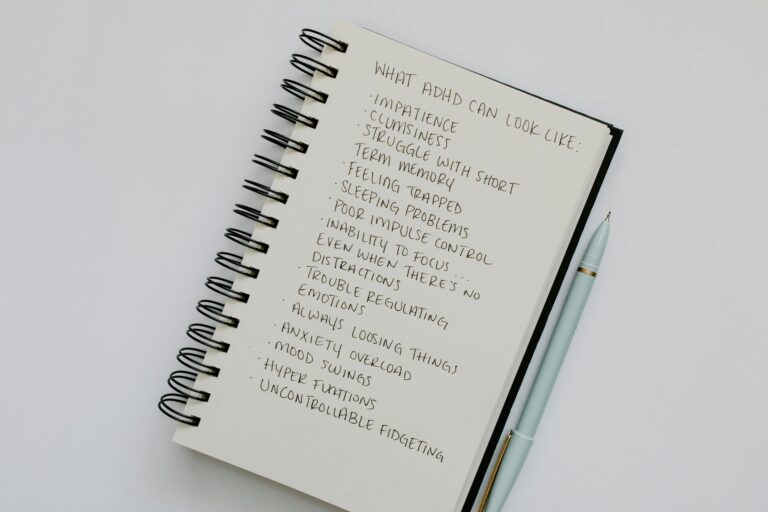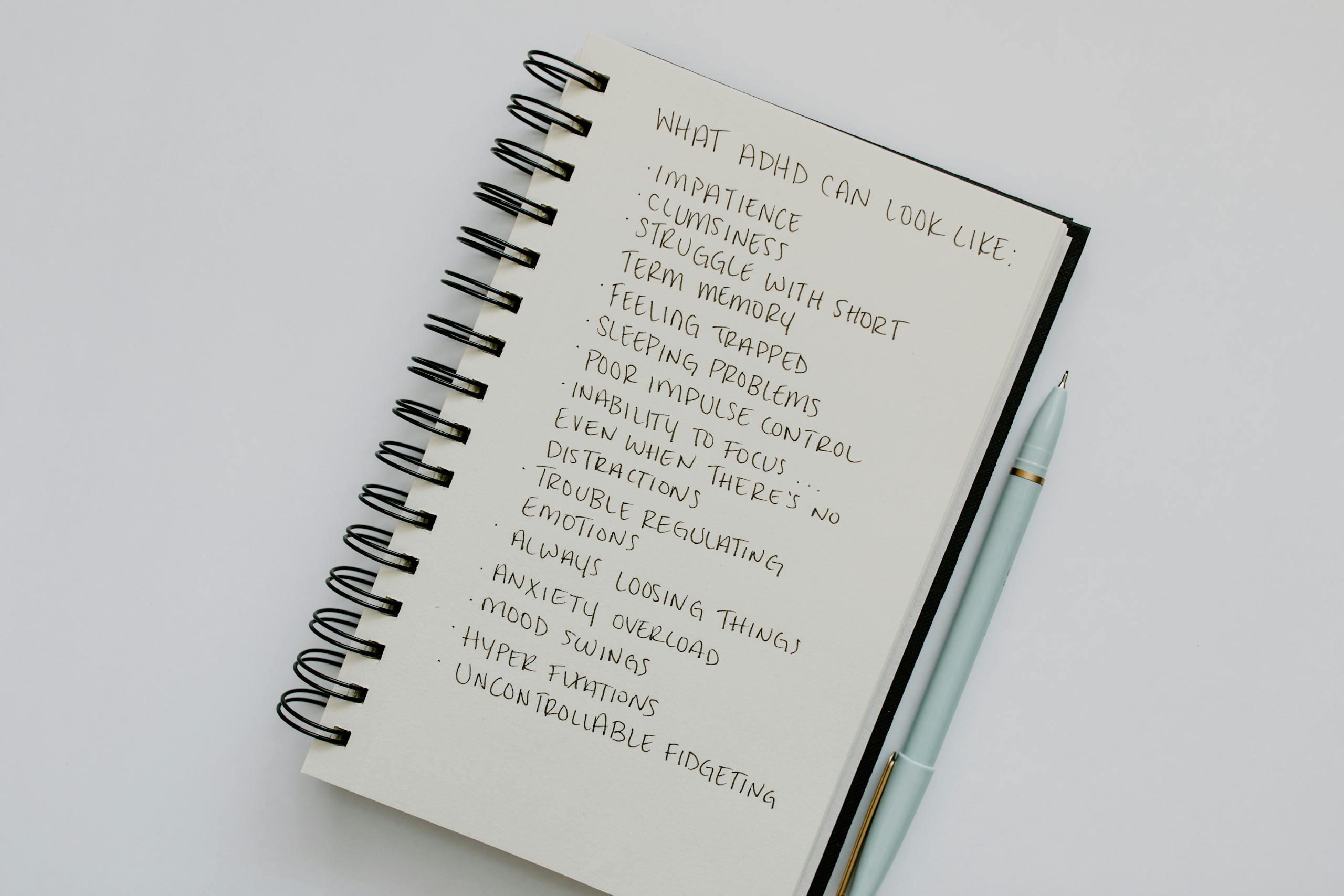

Introverts with ADHD face a specific challenge: a mind built for deep focus that also struggles to sustain it. Managing attention as an introvert with ADHD means working with both traits at once, protecting mental energy while building systems that support concentration. The right approach reduces overwhelm and creates conditions where both introversion and ADHD can coexist productively.
Two things were true about me in every agency meeting I ran. My mind was simultaneously processing every detail in the room, and also quietly drifting somewhere else entirely. At the time, I chalked it up to being introverted, to needing more internal processing time than my extroverted colleagues. It took years before I understood that something else was happening alongside my introversion, something that made attention management feel like a full-time job on top of the actual job.
If that sounds familiar, you’re probably here because you’ve noticed the same tension. You can spend hours absorbed in a problem that genuinely interests you. Yet a routine task, a long meeting, a noisy open office, any of these can scatter your focus completely. That’s not a character flaw. That’s what it looks like when introversion and ADHD share the same nervous system.

What I’ve found, both from my own experience and from conversations with introverts across many different fields, is that the standard advice rarely fits. “Just make a to-do list” doesn’t account for ADHD. “Just take breaks and recharge” doesn’t account for how difficult it is to restart momentum once you’ve stopped. Attention management for introverts with ADHD requires its own framework, one that respects both traits instead of treating them as separate problems to solve.
Our introvert strengths hub explores the full range of what it means to work with your personality rather than against it. Attention management sits at the center of that conversation, especially for those of us managing ADHD alongside our introversion.
What Makes the Introvert-ADHD Combination So Difficult to Manage?
Introversion and ADHD are not the same thing, but they do interact in ways that amplify each other’s challenges. Understanding how they overlap is the first step toward managing them more effectively.
What’s your personality type?
Take our free 40-question assessment and get a detailed personality profile with dimension breakdowns, context analysis, and personalised insights.
Discover Your Type8-12 minutes · 40 questions · Free
Introversion describes how you process the world: internally, deeply, with a preference for quiet and limited stimulation. ADHD describes how your brain regulates attention, impulse, and executive function. A 2021 review published through the National Institutes of Health found that ADHD affects approximately 4.4% of adults worldwide, with attention dysregulation as a core feature rather than simply a deficit of focus. You can read more about the scope of adult ADHD at the National Institute of Mental Health.
What this means in practice: introverts are already sensitive to overstimulation. Add ADHD, and that sensitivity becomes harder to manage because the brain’s filtering system isn’t working the way it should. External noise is more intrusive. Transitions between tasks cost more energy. Boredom triggers a kind of restlessness that feels almost physical.
At my agency, I once sat through a four-hour strategy session for a major retail client. By hour two, I had mentally rewritten the entire campaign brief, sketched out a new positioning framework in the margins of my notebook, and completely missed three decisions the team had made while I was doing all of that. My colleagues thought I was disengaged. I was actually hyperengaged, just not with what was happening in the room. That’s a very specific kind of attention problem, one that doesn’t respond to generic productivity advice.
Does Having ADHD Change How Introverts Experience Mental Energy?
Yes, and in ways that most people don’t talk about openly.
Most introverts describe mental energy as something that depletes through social interaction and replenishes through solitude. That’s accurate as far as it goes. Yet when you add ADHD to that picture, the energy equation gets more complicated. Attention regulation itself burns mental energy. Constantly pulling your focus back to a task, filtering out distractions, managing the internal noise of an ADHD brain, all of that is exhausting in a way that goes beyond ordinary introvert fatigue.

A 2019 study from the American Psychological Association found that cognitive effort, including the effort of sustained attention, draws from the same finite pool of mental resources as emotional regulation. When ADHD makes attention regulation harder, you’re spending more of that pool just to stay on task. By the time social demands enter the picture, there’s often very little left. You can explore the APA’s research on cognitive load and attention at the American Psychological Association’s website.
What this looked like for me: I would come home from a full agency day feeling completely hollowed out, and I couldn’t always explain why. Some days were less socially demanding than others, but I was still exhausted. Once I understood that attention regulation was its own energy cost, separate from social interaction, the pattern started making sense. I wasn’t just introverted. I was spending enormous energy all day just keeping my brain pointed in the right direction.
Recognizing this distinction matters because it changes how you plan your recovery time. Solitude helps, but it’s not always enough on its own. The quality of that solitude, whether it’s genuinely restorative or just a different kind of stimulation, makes a significant difference.
What Attention Management Strategies Actually Work for This Combination?
Generic productivity systems tend to fail introverts with ADHD for a simple reason: they’re usually designed for one trait or the other, not both. Here are the approaches that have made a real difference, both in my own experience and in what I’ve observed working with others who share this combination.
For more on this topic, see introvert-grandparent-family-role-navigation.
Work With Your Interest-Based Attention System
ADHD brains don’t regulate attention the way neurotypical brains do. Instead of responding consistently to importance or urgency, ADHD attention tends to respond to interest, novelty, challenge, and urgency (when the deadline is genuinely imminent). Dr. Edward Hallowell, a psychiatrist who has studied ADHD extensively, describes this as an “interest-based nervous system” rather than an importance-based one.
For introverts, this actually aligns with something we’re already good at: deep interest. When a topic genuinely engages us, we can sustain focus for hours. The challenge is that ADHD makes it harder to access that focus on demand, and harder to engage with tasks that don’t naturally spark interest.
One practical approach: before starting a task you’re dreading, spend two minutes connecting it to something you do care about. A budget report becomes interesting when you frame it as a puzzle about resource allocation. A routine client update becomes engaging when you think of it as a communication design challenge. This isn’t about tricking yourself. It’s about giving your brain the hook it needs to engage.
At my agency, I started applying this deliberately with creative briefs I found tedious. I’d reframe the brief as a strategic problem rather than an administrative task. The work didn’t change, but my engagement with it did, and the quality of my thinking improved noticeably.
Protect Your Peak Focus Window
Most people have a two to four hour window each day when their cognitive performance is at its highest. For introverts with ADHD, protecting that window is not optional. It’s the foundation of everything else.
Identify when your peak window falls, typically in the morning for most people, though some find theirs in the late afternoon or evening. Then structure your schedule so that your most demanding cognitive work happens during that window, and almost nothing else does.
This sounds obvious, but it requires real discipline to implement in most work environments. When I was running my agency, I started blocking the first two hours of every day as non-negotiable deep work time. No meetings, no email, no Slack. My team thought I was being difficult at first. Within a month, they noticed that my strategic output during that window was consistently better than anything I produced in the afternoon. The protection was worth the friction.
Use Environmental Design Instead of Willpower
Willpower is a finite resource, and ADHD depletes it faster than most people realize. Designing your environment so that focus is the path of least resistance is far more effective than relying on self-discipline alone.
For introverts, this often means sound management. Background noise in an open office isn’t just annoying, it’s cognitively expensive. A 2020 report from the Mayo Clinic on ADHD management noted that reducing environmental distractions is one of the most consistently effective non-medication strategies for adults with ADHD. Find the full overview at Mayo Clinic’s website.
Practical environmental adjustments that have worked for me and for others I’ve spoken with include: noise-canceling headphones with a consistent audio environment (brown noise or instrumental music tends to work better than silence for ADHD brains), a dedicated physical space that signals “focus mode” to your brain, and removing your phone from your immediate workspace entirely rather than just silencing it.
The phone removal piece is significant. A 2017 study from the University of Texas found that the mere presence of a smartphone on a desk reduces available cognitive capacity, even when the phone is face-down and silent. For someone already managing ADHD-related attention challenges, that reduction matters.
Build Transition Rituals Between Tasks
Task switching is one of the most costly cognitive operations for people with ADHD. The brain doesn’t simply stop one task and start another. It carries residual activation from the previous task, which competes with the new one. For introverts, who already process transitions more slowly and deliberately, this can create significant friction throughout the day.
Transition rituals help by creating a consistent signal that tells your brain: one thing is ending and another is beginning. Something as simple as a two-minute walk, making a cup of tea, or writing three sentences summarizing what you just completed can serve as that signal. The specific activity matters less than its consistency.
At my agency, I developed a habit of writing a single sentence at the end of every task: what I’d just done and what the next step was. It took thirty seconds, and it made starting the next task dramatically easier. My ADHD brain didn’t have to reconstruct context from scratch. The transition ritual had preserved it.
How Can Introverts With ADHD Handle Meetings and Social Demands?
Meetings are a particular challenge for this combination. They’re social (which costs introvert energy), often poorly structured (which ADHD brains find difficult to track), and frequently longer than they need to be (which depletes both).
A few approaches that have made meetings more manageable:
Request agendas in advance whenever possible. Pre-processing information before a meeting gives your introverted mind time to form thoughts, and gives your ADHD brain a structure to hold onto during the meeting itself. When I started requiring agendas for all agency meetings, I noticed that my own participation improved significantly. I wasn’t scrambling to catch up. I arrived with actual ideas.
Take notes by hand. Writing activates different cognitive processes than passive listening, and for ADHD brains, the physical act of writing helps maintain engagement. Introverts often find that note-taking also gives them a way to process in real time, capturing thoughts that would otherwise get lost in the social flow of the conversation.
Give yourself a structured decompression window after significant meetings. Not scrolling, not email, not another task. A genuine ten to fifteen minute period of low-stimulation activity. Your introvert nervous system needs to discharge the social energy, and your ADHD brain needs to consolidate what just happened before moving on.

What Role Does Sleep and Physical Health Play in Attention Management?
This is the part that tends to get skipped in productivity conversations, and it’s where I’ve seen the most dramatic differences in my own functioning.
Sleep deprivation mimics ADHD symptoms in neurotypical people. In people who already have ADHD, poor sleep makes every symptom worse, attention, impulse control, emotional regulation, working memory. The CDC recommends seven or more hours of sleep per night for adults, and their research on sleep and cognitive function is worth reviewing at the CDC’s website.
For introverts, sleep is also when much of the social processing from the day gets consolidated. You’re not just resting your body. You’re processing the interactions, observations, and emotional data you’ve been quietly absorbing all day. Shortchanging that process has compounding effects on both your introvert energy levels and your ADHD symptoms.
Physical movement is the other piece that consistently shows up in the research on ADHD management. A 2012 study highlighted by the National Institutes of Health found that aerobic exercise improves executive function in adults with ADHD, with effects comparable in some measures to medication. You can explore the NIH’s collection of ADHD research at the National Institutes of Health.
My own experience with this is straightforward: the days I exercise in the morning are measurably different from the days I don’t. My focus holds longer, my transitions are smoother, and I’m less reactive to the kind of low-grade stimulation that would otherwise derail me. It’s not a cure, but it’s a significant variable.
Are There Strengths That Come With Being an Introvert With ADHD?
Yes, and I think this deserves more attention than it usually gets.
The same ADHD trait that makes routine tasks difficult, hyperfocus, can make introverts with ADHD extraordinarily effective when they’re working on something that genuinely engages them. Hyperfocus is the ability to become completely absorbed in a task to the point where time disappears. Combined with the introvert’s natural inclination toward depth and thorough thinking, this can produce work of unusual quality and originality.
Some of the best creative work I produced in my agency years came from periods of hyperfocus. I’d spend six or seven hours on a strategic problem without noticing the time passing, and emerge with something I couldn’t have produced through ordinary, interrupted effort. The challenge was always making that state reliable. The strength was that when it arrived, it was genuinely powerful.
Introverts with ADHD also tend to develop strong pattern recognition. Because our attention moves around more than others’, we often notice connections and inconsistencies that people with more linear attention styles miss. Psychology Today has explored this creative advantage of ADHD thinking in several articles worth reading at Psychology Today’s website.
You might also find introvert-youngest-child-attention-paradox-not-spoiled helpful here.
The introvert’s preference for observation over participation means we’re often gathering more information than we appear to be, even when our attention seems scattered. That information becomes fuel for the kind of deep analysis that introverts do naturally. It’s a combination that, managed well, produces genuinely distinctive thinking.

How Do You Build a Sustainable Daily Structure Around Both Traits?
Structure is where everything else comes together. The goal isn’t a rigid schedule that leaves no room for flexibility. It’s a framework that makes the right conditions for focus easier to access consistently.
A few principles that have proven reliable:
Anchor your day with consistent start and end rituals. ADHD brains struggle with transitions into and out of the workday. A consistent morning ritual, even a simple one, signals to your brain that it’s time to engage. A consistent evening ritual signals that it’s time to disengage. Introverts benefit from this too, because it creates clear psychological boundaries between work mode and recovery mode.
Batch similar tasks together. Context switching costs ADHD brains more than most people realize. Grouping all your email responses into one block, all your creative work into another, and all your meetings into a third reduces the number of transitions your brain has to manage. Harvard Business Review has written thoughtfully about the hidden costs of task switching and how to minimize them. Find their productivity research at Harvard Business Review’s website.
Build in genuine recovery periods, not just shorter breaks. Introverts with ADHD often push through fatigue because stopping feels risky. What if you can’t restart? That fear is understandable, but it leads to diminishing returns. A genuine thirty-minute period of low stimulation in the middle of the day, something quiet and undemanding, tends to restore more capacity than pushing through and crashing later.
Track what actually works. ADHD brains are notoriously poor at remembering past performance objectively. Keep a simple log for two weeks: what time you worked, what you worked on, how focused you felt, and what the output was. Patterns will emerge that your memory alone wouldn’t have preserved. That data becomes the foundation for designing a structure that fits your actual brain, not the idealized version of it.
The process of finding what works is genuinely personal. What I’ve described here are starting points, not prescriptions. Your version of this will look different from mine, and that’s exactly as it should be. The point is to stop applying generic advice to a specific combination of traits, and start building something that actually fits.
Explore more about introvert strengths and how to work with your personality at the Ordinary Introvert Introvert Strengths Hub.
About the Author
Keith Lacy is an introvert who’s learned to embrace his true self later in life. After 20 years in advertising and marketing leadership, including running agencies and managing Fortune 500 accounts, Keith now channels his experience into helping fellow introverts understand their strengths and build fulfilling careers. As an INTJ, he brings analytical depth and authentic perspective to every article, drawing from both professional expertise and personal growth.
Frequently Asked Questions
Can someone be both introverted and have ADHD at the same time?
Yes. Introversion and ADHD are distinct traits that can and do coexist. Introversion describes how a person processes social and sensory information, while ADHD describes how the brain regulates attention and executive function. Having both means managing two separate but interacting sets of challenges, particularly around overstimulation, attention regulation, and mental energy depletion.
Why do introverts with ADHD get so exhausted even on low-social days?
Attention regulation itself consumes significant mental energy. When ADHD makes it harder to sustain focus, the brain works harder throughout the day just to stay on task, even in quiet environments. This cognitive effort depletes the same mental resources that social interaction draws from, leaving introverts with ADHD exhausted regardless of how many people they interacted with.
What is the most effective environment for an introvert with ADHD to work in?
A low-stimulation environment with consistent, controllable background sound tends to work best. Noise-canceling headphones with brown noise or instrumental music can help ADHD brains maintain focus while reducing the overstimulation that introverts find draining. Removing the phone from the workspace entirely, rather than just silencing it, also reduces cognitive load meaningfully.
Does exercise really help with ADHD attention management?
A significant body of research supports aerobic exercise as an effective tool for improving executive function and attention in adults with ADHD. A 2012 study highlighted by the National Institutes of Health found effects comparable in some measures to medication. Even moderate daily exercise, particularly in the morning, can meaningfully improve focus and emotional regulation throughout the day.
What is hyperfocus, and is it actually a strength for introverts with ADHD?
Hyperfocus is the ability to become completely absorbed in a task, losing track of time and external distractions entirely. It’s a common ADHD experience that can be a significant strength when directed toward meaningful work. Combined with the introvert’s natural inclination toward depth and thorough analysis, hyperfocus can produce unusually high-quality creative and strategic output. The challenge lies in making it accessible more reliably, rather than waiting for it to arrive spontaneously.