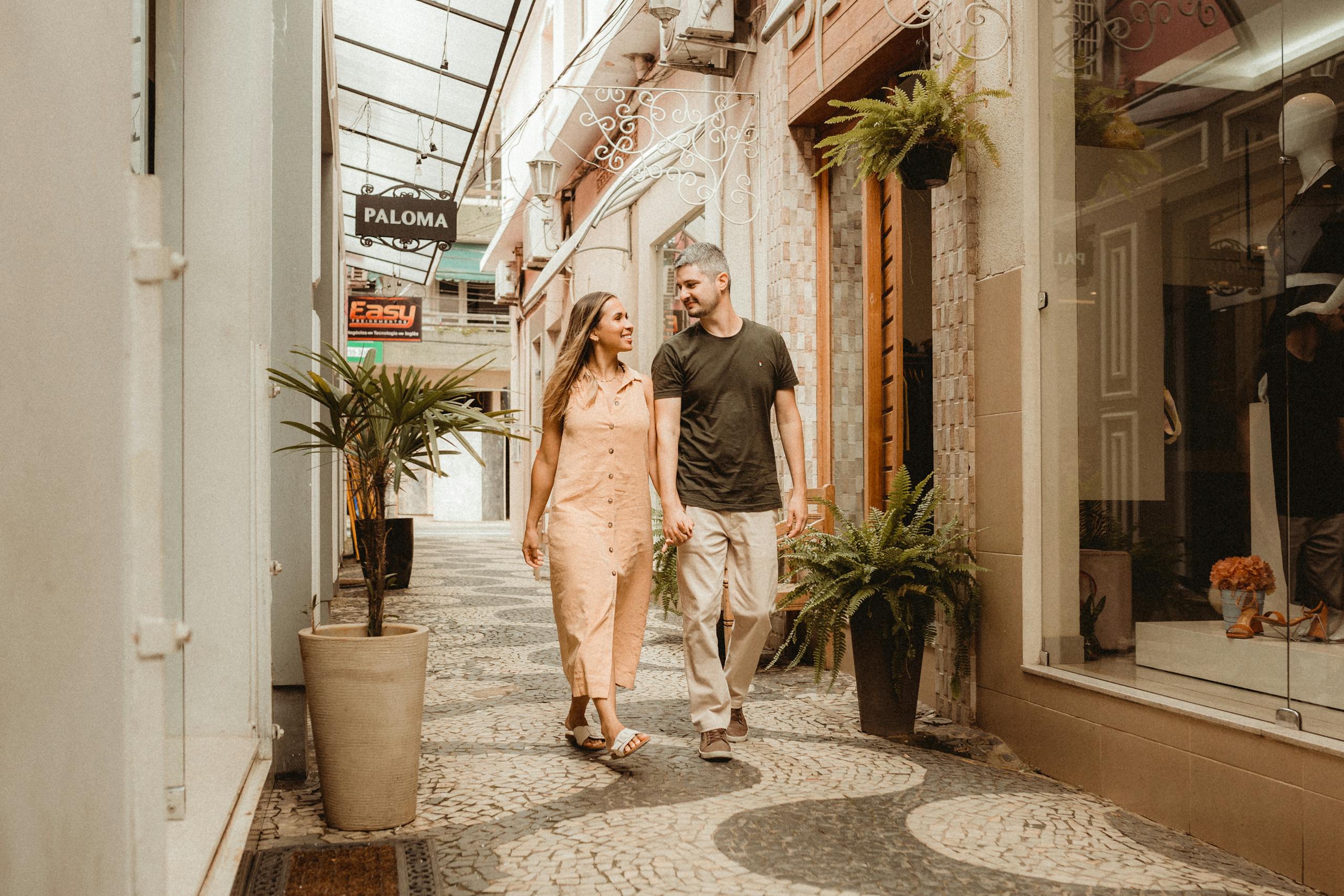

Coworking spaces work surprisingly well for many introverts, but not for the reasons most people assume. The structure, the quiet social contract, and the ability to control your level of engagement create an environment where introverts can access community without the exhausting obligation of constant interaction. Done right, shared workspaces offer presence without pressure.
You might also find introvert-roommates-surviving-shared-spaces helpful here.
That answer surprised me when I first landed on it. My instinct, shaped by decades of agency life, was that coworking spaces were built for extroverts: loud, open, buzzing with the kind of spontaneous energy that drains me by noon. And some of them are exactly that. Yet something shifted when I started paying closer attention to what actually made me productive versus what made me feel like I was performing productivity for an audience.
What I noticed was that the problem was never really about being around people. It was about the expectation to perform. Once I separated those two things, coworking started to look very different.

If you’ve been exploring how your personality type shapes your work preferences, the broader conversation around introvert career paths and work environments has a lot more nuance than most career advice acknowledges. This article fits into that larger picture.
Why Do So Many Introverts Assume Coworking Spaces Aren’t for Them?
Coworking spaces have a branding problem, at least from an introvert’s perspective. The marketing imagery tends to feature people laughing over open laptops, standing at whiteboards, and clustering around coffee stations in animated conversation. It looks like a party that happens to have Wi-Fi.
What’s your personality type?
Take our free 40-question assessment and get a detailed personality profile with dimension breakdowns, context analysis, and personalised insights.
Discover Your Type8-12 minutes · 40 questions · Free
That image is enough to make a lot of quiet, internally-driven people write off the concept entirely. I was one of them for a long time.
During my agency years, I spent enormous energy trying to match the social rhythms of my more extroverted colleagues and clients. Open floor plans, team lunches, impromptu brainstorm sessions that somehow lasted three hours. I convinced myself that thriving meant being visible, vocal, and constantly available. What I didn’t realize was that I was treating extroversion as the standard and measuring my performance against it.
A 2021 study published through the American Psychological Association found that introverts consistently underestimate how much they can enjoy social situations when the social structure is clear and low-stakes. The assumption that any shared environment will be draining isn’t always accurate. Context matters enormously. You can read more about how personality research shapes our understanding of social behavior at the APA website.
Coworking spaces, at their best, offer a kind of structured ambiguity. You’re among people, but you’re not obligated to engage with them. That’s a meaningful distinction for someone wired the way I am.
What Makes a Coworking Space Actually Work for Introverts?
Not every shared workspace is created equal, and the differences matter a great deal depending on how you process stimulation and social input.
After years of working in, visiting, and occasionally fleeing various work environments, I’ve identified a few consistent factors that determine whether a coworking space will feel like relief or like a slow drain on my cognitive reserves.
Acoustic Design and Noise Levels
Sound is the first thing I notice when I walk into any space. In my agency days, I’d often arrive early, before the office filled up, specifically to get two or three hours of focused work done before the ambient noise made deep thinking nearly impossible. That wasn’t a quirk. That was survival.
Good coworking spaces invest in acoustic zoning. Dedicated quiet areas, phone booths for calls, and clear social norms around noise levels in focus zones make an enormous difference. The Mayo Clinic has written about how chronic noise exposure affects concentration and stress response, and those findings align directly with what I’ve experienced across different work environments. You can find their research on environmental health at the Mayo Clinic website.
Spatial Variety and Retreat Options
The best coworking spaces I’ve encountered give you options. A communal area for when you want ambient energy, private offices or phone booths for deep work, and semi-private spots that offer a middle ground. That layered spatial design mirrors how I actually move through a workday: periods of open awareness followed by periods of intense internal focus.
Having a physical retreat option changes the psychological math. Knowing I can step away if I need to makes it far easier to stay present when I don’t.
Community Culture and Interaction Norms
Some coworking spaces cultivate a culture of constant networking and forced community. Monthly mixers, mandatory introductions, communal lunches with assigned seating. These feel like the corporate equivalent of a team-building exercise I never signed up for.
Others operate on a live-and-let-work philosophy. People nod, smile, occasionally chat over coffee, but the baseline expectation is that you’re there to get things done. That culture suits me far better, and I suspect it suits most introverts who are honest with themselves about what they actually need.

Is There Real Evidence That Introverts Benefit from Shared Work Environments?
Yes, and the evidence is more interesting than a simple yes or no.
A 2019 study from Harvard Business Review found that coworking spaces produce higher levels of thriving among workers compared to traditional offices, largely because members feel more in control of their work and experience a stronger sense of meaning. Control and meaning are two things that resonate deeply with how I understand introvert motivation. We don’t resist structure. We resist structure imposed on us without context or purpose. You can explore HBR’s ongoing coverage of workplace psychology at Harvard Business Review.
Separately, research published through the National Institutes of Health has examined how environmental factors, including social density and ambient stimulation, affect cognitive performance across different personality types. The findings suggest that introverts perform better in lower-stimulation environments, but that moderate social presence, as opposed to isolation, can actually support motivation and output. The distinction between stimulation and isolation is one most introvert-focused conversations miss entirely. You can explore that research base at the NIH website.
What that tells me is that the choice isn’t between a crowded office and total solitude. There’s a productive middle ground, and coworking spaces, when chosen carefully, can occupy exactly that space.
How Does Working from Home Compare for Introverts?
Plenty of introverts I know describe remote work as the answer to everything. No commute, no small talk, no open floor plans. And I understand that completely. There were stretches during my agency career when I would have traded almost anything for the ability to close a door and work without interruption.
Yet total isolation carries its own costs, and I’ve felt them firsthand.
After leaving my last agency, I spent several months working entirely from home. The quiet was genuinely wonderful at first. Then it started to feel less like freedom and more like a kind of ambient loneliness. My thinking, which has always been sharpened by the presence of other minds even when I’m not directly engaging with them, started to feel circular. I was productive in short bursts but struggled to sustain momentum across full days.
Psychology Today has written extensively about how social isolation affects cognitive function and emotional regulation over time. The research consistently points toward moderate social contact as a factor in sustained mental performance, even for people who genuinely prefer solitude. You can find their archive of personality and work psychology articles at Psychology Today.
Coworking gave me something I didn’t know I was missing: the ambient presence of other people working. Not talking to me, not requiring anything from me, just working alongside me. That low-level social signal was enough to shift my energy and focus in ways that surprised me.

What Should Introverts Look for When Choosing a Coworking Space?
Choosing a coworking space is a bit like choosing a neighborhood. The vibe matters as much as the amenities, and the vibe is something you can only really assess in person.
consider this I pay attention to when I’m evaluating any shared workspace.
Visit During Peak Hours
Most coworking spaces will offer a free day pass or trial. Use it on a Tuesday or Wednesday morning, not a quiet Friday afternoon. You want to see the space at its most populated, because that’s the version you’ll be working in regularly. Pay attention to how the noise level feels in your body after an hour. That physical response is data.
Ask About Quiet Zones Directly
Don’t assume quiet zones exist or that they’re enforced. Ask specifically: “Do you have designated quiet areas? How are those norms maintained?” The way staff answer that question tells you a lot about the culture. A vague answer usually means quiet zones exist on paper but not in practice.
Look at the Membership Mix
Spaces dominated by sales teams, podcast studios, or collaborative agencies tend to run louder than spaces populated by writers, developers, designers, and independent consultants. You can often get a sense of this by looking at who’s listed as members on the coworking space’s website or by simply observing what people are doing when you visit.
Evaluate the Layout Honestly
Open floor plans with long communal tables are fine for some work, but they’re not ideal for sustained deep focus. Look for spaces that offer a mix: some communal areas, some semi-private workstations with visual barriers, and at least a few fully enclosed options for calls or intensive work sessions.
Check the Networking Expectations
Some coworking memberships come with implicit expectations around community participation. Events, introductions, collaborative projects. None of that is inherently bad, but it’s worth knowing what you’re signing up for. Ask whether events are optional. The answer should be yes without any hesitation.
Can Introverts Actually Build Meaningful Connections in Coworking Spaces?
This is the question I find most interesting, because it cuts against a common assumption: that introverts don’t want connection or aren’t good at it.
We want connection deeply. We just want it differently.
One of the things I’ve come to understand about myself is that I form strong professional relationships through repeated, low-pressure proximity rather than through structured networking events. At my agencies, my closest collaborators weren’t people I’d met at industry conferences. They were people I’d worked near, observed over time, and gradually come to trust through accumulated small interactions.
Coworking spaces can replicate that pattern beautifully. You see the same people week after week. You nod over coffee. You notice that someone is working on something interesting. A natural conversation emerges without the artificial pressure of a networking event where everyone is simultaneously trying to be memorable and make the most of their time.
That slow-build connection style is something I’ve written about in relation to how introverts approach professional relationships more broadly. It’s not a limitation. It’s actually a strength, because the relationships that develop this way tend to be substantive and durable rather than surface-level and transactional.
The World Health Organization has noted that social connection is a significant factor in long-term wellbeing, and that the quality of connection matters more than the quantity. That framing validates what most introverts already know intuitively. You can find their resources on social determinants of health at the WHO website.

How Do You Manage Your Energy in a Shared Workspace?
Energy management is the skill that separates introverts who thrive in coworking environments from those who burn out and retreat. And it’s genuinely a skill, not just a personality trait you either have or don’t.
My approach evolved through years of trial and error in agency environments where I had very little control over the social density around me. What I developed was a kind of internal scheduling system that I now apply deliberately rather than reactively.
Front-Load Deep Work
My cognitive peak is in the morning. That’s when I do anything that requires sustained concentration: writing, strategic analysis, complex problem-solving. I protect that window aggressively. At the coworking spaces I’ve used regularly, I arrive early, settle into a quiet zone, and treat the first two to three hours as non-negotiable focus time. Conversations, check-ins, and casual interactions happen after that window closes naturally.
Use Headphones as a Signal, Not Just a Tool
Headphones serve two functions in a coworking space. They help you manage auditory input, and they signal to others that you’re not available for casual conversation. Most people respect that signal intuitively. I use over-ear headphones specifically because the visual cue is clearer than earbuds. It’s a small thing, but it reduces the number of interruptions significantly without requiring any awkward social negotiation.
Build in Recovery Time
Even in a quiet coworking environment, sustained social presence takes something from me. A short walk outside, lunch alone, or fifteen minutes in a private space mid-afternoon resets my capacity for the second half of the day. I don’t treat this as a weakness or an indulgence. It’s maintenance, the same way checking email or reviewing a brief is maintenance.
Know Your Exit Threshold
There are days when a coworking space won’t work for me, and I’ve learned to recognize those days early rather than white-knuckling through them. If I arrive and the environment feels immediately overwhelming, I give myself permission to leave after an hour and work from home. That flexibility, knowing I can make that call without guilt, actually makes me more likely to show up consistently on the days when it does work.
Are There Types of Work That Suit Coworking Spaces Better Than Others?
Not every task belongs in a coworking environment, and being honest about that saves a lot of frustration.
Work that benefits from ambient energy and mild social accountability tends to thrive in coworking settings. Administrative tasks, routine correspondence, creative work that needs momentum rather than silence, and meetings or calls that you’d have regardless of location all fit well. The presence of other people working creates a kind of productive social pressure that can help with tasks you might otherwise procrastinate on at home.
Work that requires deep cognitive immersion, highly sensitive conversations, or extended periods of unbroken silence is harder to protect in most shared environments. I’ve learned to reserve my most demanding analytical work for either early morning coworking hours or home office sessions, depending on the day.
During a particularly complex pitch for a Fortune 500 consumer brand, I split my work deliberately: strategy development happened at home in silence, while execution and review happened at a coworking space where the ambient energy helped me maintain pace. That division of cognitive labor worked better than either environment alone would have.

What If You’ve Tried Coworking Before and It Didn’t Work?
One bad coworking experience doesn’t mean the concept is wrong for you. It might mean the specific space was wrong for you, which is a very different conclusion.
My first coworking experiment was at a space that had been designed almost entirely around community and networking. The layout was open, the culture was social, and the implicit message was that being there meant being available. I lasted three weeks before I stopped going entirely and wrote off the whole idea for about two years.
What I didn’t understand at the time was that I’d chosen a space that was fundamentally misaligned with how I work. The problem wasn’t coworking. The problem was that particular environment, which had been designed for a different kind of person.
If your previous experience felt draining, it’s worth asking: Was the space too loud? Too socially demanding? Too open? Too small? The answers point toward what to look for differently next time, not toward avoiding shared workspaces altogether.
The CDC has published resources on workplace wellbeing that emphasize the importance of environmental fit for sustained performance and mental health. The core idea, that the environment should support the person rather than the person constantly adapting to the environment, is one I’ve come to believe deeply. Their workplace health resources are available at the CDC website.
Environmental fit is something introverts often overlook because we’re so accustomed to adapting. We’ve spent years making ourselves work in environments that weren’t designed for us. The idea that we get to choose an environment that actually fits can feel almost foreign. Yet that choice is available, and it’s worth making deliberately.
How Does Coworking Fit Into a Broader Introvert Work Strategy?
Coworking isn’t a solution in isolation. It works best as one component of a deliberately designed work life, not a replacement for all the other choices that shape how you spend your energy.
For me, the most effective arrangement has always involved a mix: some days in a coworking space for ambient energy and mild social contact, some days at home for deep focus and full control, and occasional in-person meetings for the relationship-building that genuinely benefits from face-to-face presence.
That hybrid approach isn’t a compromise. It’s a recognition that different kinds of work require different kinds of environments, and that being intentional about matching the environment to the work is a form of strategic self-awareness rather than a sign of inflexibility.
The broader question of how introverts design careers and work lives that align with their actual strengths, rather than the expectations of extrovert-default workplaces, is one I find endlessly worth exploring. Understanding your own patterns around energy, environment, and connection is foundational to making good decisions about where and how you work.
A 2022 study published through NIH-affiliated research examined how personality traits interact with work environment preferences to predict job satisfaction and performance. The findings reinforced what many introverts already sense: alignment between personality and environment is a stronger predictor of sustained performance than raw skill or effort alone. That’s a finding worth taking seriously when you’re making decisions about where to work.
Explore more about how introverts approach work, careers, and professional identity in our complete Ordinary Introvert resource hub.
About the Author
Keith Lacy is an introvert who’s learned to embrace his true self later in life. After 20 years in advertising and marketing leadership, including running agencies and managing Fortune 500 accounts, Keith now channels his experience into helping fellow introverts understand their strengths and build fulfilling careers. As an INTJ, he brings analytical depth and authentic perspective to every article, drawing from both professional expertise and personal growth.
Frequently Asked Questions
Are coworking spaces good for introverts?
Coworking spaces can be genuinely good for introverts when chosen carefully. The combination of structured social presence without interaction obligations suits many introverts well. The important factors are noise levels, availability of quiet zones, and the overall culture of the space. Not every coworking environment will fit, but the right one can offer connection, accountability, and focus that neither a traditional office nor complete home isolation provides.
How do introverts manage energy in shared workspaces?
Effective energy management in shared workspaces involves front-loading deep work during peak cognitive hours, using headphones to signal unavailability, building in deliberate recovery time during the day, and giving yourself permission to leave when the environment isn’t working. Treating energy management as a skill rather than a personality limitation makes a significant difference in how sustainable coworking feels over time.
What should introverts look for in a coworking space?
Introverts should prioritize acoustic design and dedicated quiet zones, spatial variety that includes both open and semi-private options, a community culture that doesn’t pressure constant social engagement, and optional rather than mandatory networking events. Visiting during peak hours before committing to a membership gives you the most accurate sense of what the environment actually feels like under normal conditions.
Is working from home better than coworking for introverts?
Neither option is universally better. Working from home offers maximum control and minimal social stimulation, which suits certain kinds of deep work very well. Yet complete isolation can reduce motivation, create cognitive stagnation, and contribute to a kind of ambient loneliness that affects performance over time. Many introverts find a hybrid approach most effective: coworking for ambient energy and mild social contact on some days, home office for uninterrupted deep work on others.
Can introverts build professional connections through coworking spaces?
Yes, and coworking spaces often suit the way introverts naturally build relationships. Repeated low-pressure proximity, seeing the same people regularly without the obligation of structured networking, allows trust and connection to develop gradually and organically. That slow-build relationship style tends to produce more substantive professional connections than high-pressure networking events, which often favor extroverted interaction styles.