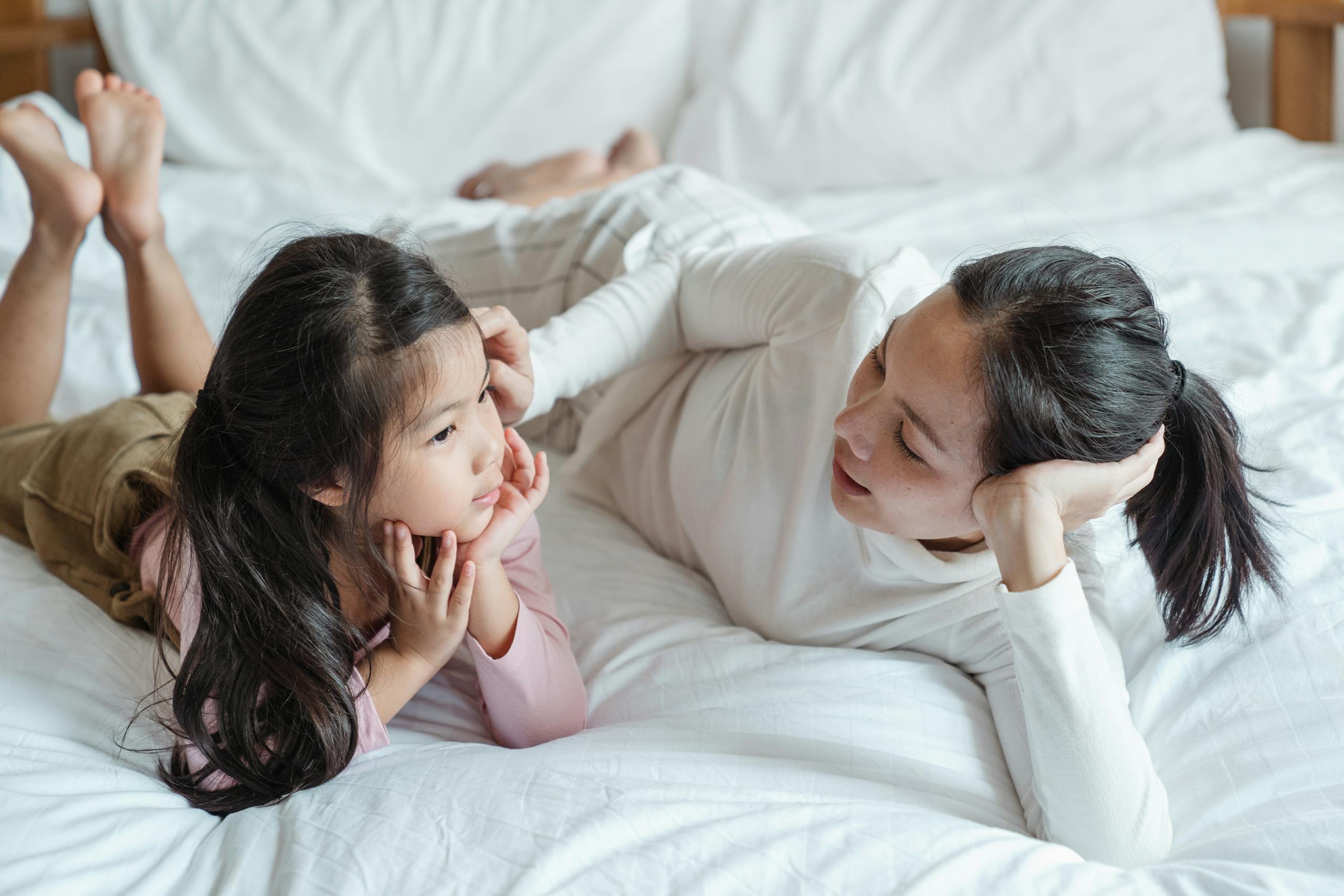

Quiet love runs deepest. Introvert grandparents may not fill a room with noise or organize every holiday activity, but they offer something rarer: complete, unhurried attention. They remember small details, create space for real conversation, and love with a consistency that doesn’t need an audience. Their grandchildren often feel more seen, more heard, and more genuinely known than anywhere else.
My grandmother never once raised her voice at me. She was a woman of few words, but every word she chose landed with weight. She’d sit across from me at her kitchen table, hands wrapped around a coffee mug, and just listen. Not waiting for her turn to speak. Actually listening. At the time, I didn’t have language for what she was doing. Looking back through decades of experience and a lot of self-reflection, I understand it now. She was an introvert. And the way she loved was the purest expression of that temperament I’ve ever witnessed.
Grandparenting is one of those roles that gets romanticized in loud, performative ways. We picture the boisterous grandparent who sweeps into the room, arms wide, voice booming. And that version is wonderful, genuinely. But it’s not the only version. And for the millions of introverted grandparents raising the next generation with quiet intention, it’s worth understanding what they actually bring to the relationship, and why it matters so much.

Personality type shapes how we love, how we communicate, and how we show up in every relationship, including the grandparent role. If you want to understand more about how introversion affects the full spectrum of relationships and family dynamics, the Introvert Relationships hub at Ordinary Introvert covers this territory in depth. What follows here adds a layer that doesn’t get enough attention: what happens when introverts become grandparents, and why that quiet love so often runs the deepest.
What Makes Introvert Grandparents Different From Extroverted Ones?
Introversion isn’t shyness. It isn’t antisocial behavior. It’s a neurological orientation toward the internal world, a preference for depth over breadth, and a tendency to recharge through solitude rather than social engagement. The American Psychological Association describes introversion as one of the core dimensions of personality, influencing how people process experience, manage energy, and connect with others.
What’s your personality type?
Take our free 40-question assessment and get a detailed personality profile with dimension breakdowns, context analysis, and personalised insights.
Discover Your Type8-12 minutes · 40 questions · Free
For grandparents, this orientation shapes everything about how they show up. Where an extroverted grandparent might plan big family gatherings, loud holiday traditions, and group activities, an introverted grandparent tends to gravitate toward one-on-one time, quieter rituals, and conversations that go somewhere real. Neither approach is superior. They’re just different expressions of love filtered through different personalities.
What introverted grandparents do exceptionally well is pay attention. During my years running advertising agencies, attention was currency. The account directors who could walk into a client meeting, read the room, and notice what wasn’t being said were always more valuable than the ones who came in loud with a prepared script. My grandmother had that same quality. She noticed things. She’d remember that I’d mentioned a friend’s name three months earlier and ask about them by name. She tracked the details of my life with a precision that felt like devotion, because it was.
That attentiveness is a hallmark of introverted relationships. A 2022 study published through the National Institutes of Health found that introverted individuals tend to demonstrate higher levels of active listening and are more likely to engage in deep, meaningful conversation rather than surface-level social exchange. For grandchildren, especially those who feel overlooked or misunderstood in noisier family environments, this quality can be genuinely life-changing.
How Does an Introvert’s Love Language Show Up in Grandparenting?
Love languages as a framework have limitations, but the underlying idea holds: people express and receive love in different ways, and when those ways don’t match, love can go unrecognized. Introverted grandparents often express love through acts of quiet service, thoughtful presence, and deep listening rather than through effusive verbal affirmation or high-energy physical play.
My grandfather on my father’s side was a man who showed love by fixing things. If you had a problem, he’d sit with it quietly for a while and then solve it without fanfare. He’d drive three hours to help you move an appliance and never once mention it again. That was his love language. As a kid, I sometimes missed it because I was looking for something louder. As an adult who has spent years learning to understand my own introverted nature, I recognize it as one of the most reliable forms of love I’ve ever received.

Introverted grandparents tend to express love through:
- Remembering specific details about a grandchild’s life and referencing them later
- Creating consistent, predictable rituals that become anchors of safety
- Offering undivided attention during one-on-one time
- Writing letters, notes, or messages that communicate what they find difficult to say aloud
- Teaching skills patiently, without rushing or performing for an audience
- Being physically present without needing to fill silence with chatter
Grandchildren who receive this kind of love often describe their introverted grandparents as the person who “really knew them.” That’s not a small thing. Feeling genuinely known by another person is one of the most powerful experiences in human development, and introverted grandparents tend to create that experience naturally.
Why Do Grandchildren Often Feel Closest to Their Quietest Grandparent?
There’s a pattern I’ve noticed in conversations with other introverts over the years. When people describe the grandparent they felt closest to, they often describe someone quiet. Someone who listened. Someone who made them feel like the most important person in the room without ever saying so explicitly.
Psychologists call this “felt sense of security,” and it’s deeply connected to attachment theory. According to the American Psychological Association, secure attachment in childhood is built through consistent, attuned caregiving. Attunement, the ability to sense and respond to another person’s emotional state, is something introverts often do with remarkable precision. They’re wired for it. They process emotional information deeply before responding, which means their responses tend to land closer to what the other person actually needs.
At my agency, I hired a creative director once who was painfully quiet in large group meetings. My extroverted leadership instincts initially read this as disengagement. I was wrong. In one-on-one conversations, this person was extraordinary. They’d sit with a client’s brief for days, absorbing it, and then come back with an insight that cut straight to the heart of what the client actually needed, not what they’d said they needed. That’s attunement. That’s the introvert superpower in professional form, and it’s the same quality that makes introverted grandparents so profoundly effective at making grandchildren feel understood.
Psychology Today has written extensively about how introverts’ tendency to process experiences deeply before responding creates stronger emotional resonance in their relationships. Grandchildren, especially teenagers handling complicated emotions, often find that their introverted grandparent is the one person who doesn’t rush to fix, advise, or redirect. They just sit with the feeling first. That patience is a gift.
What Are the Real Challenges Introvert Grandparents Face?
Honesty matters here. Being an introverted grandparent isn’t without its friction points. Extended family gatherings, loud holiday celebrations, and the expectation that grandparents should be endlessly available and energetic can be genuinely draining for someone who recharges in solitude.
I felt this acutely during my agency years. Holiday parties were mandatory performance events. I’d spend the entire evening managing my energy, calculating how much longer I needed to stay, smiling at conversations I wasn’t remotely interested in. By the time I got home, I was hollowed out. Introverted grandparents face a version of this during every large family gathering, and without the language to explain it, they can come across as cold, distant, or uninterested when they’re actually just depleted.

The Mayo Clinic’s research on stress and social overstimulation confirms that chronic overstimulation has measurable physiological effects, including elevated cortisol levels and disrupted sleep. For introverted grandparents who push through family events without adequate recovery time, this isn’t just discomfort. It’s a health consideration.
There’s also the comparison problem. Introverted grandparents sometimes measure themselves against more extroverted grandparents and come up short in their own estimation. They wonder if they’re doing enough, being enough, showing up loudly enough. The answer, almost always, is that they’re showing up in a different way, and that different way has its own profound value.
Some specific challenges worth naming:
- Managing energy during multi-day family visits without appearing withdrawn
- Communicating the need for alone time without it being misread as rejection
- Engaging with very young grandchildren whose play style is high-energy and loud
- Feeling pressure to match extroverted grandparenting models seen in media or in other families
- handling family gatherings where they’re expected to be “on” for extended periods
None of these challenges are insurmountable. They do require self-awareness, honest communication with family members, and permission to grandparent in a way that fits your actual temperament rather than an imagined ideal.
How Can Introvert Grandparents Build Stronger Bonds Without Draining Themselves?
The most effective grandparenting happens when it’s sustainable. An introverted grandparent who burns out trying to perform extroversion ends up less available, less present, and less connected than one who grandparents authentically within their energy limits.
Sustainable connection for introverted grandparents often looks like:
Prioritizing One-on-One Time
Group dynamics are exhausting for introverts. One-on-one time with a grandchild is where introverted grandparents genuinely shine. A quiet afternoon together, a shared project, a walk with no particular destination. These are the moments that build the deepest bonds and require the least performance energy. If you have multiple grandchildren, rotating individual time with each one honors both your temperament and each child’s need for individual attention.
Creating Rituals That Play to Your Strengths
Rituals are an introvert’s secret advantage in grandparenting. A weekly phone call. A shared book series you read together and discuss. A cooking tradition. A puzzle you work on together during every visit. These rituals don’t require high energy. They require consistency and intention, both of which introverts tend to bring naturally. And for grandchildren, these rituals become anchors of identity, the things they’ll describe to their own children someday when they talk about their grandparent.
Using Written Communication as a Love Language
Many introverts communicate more fluently in writing than in speech. Letters, cards, emails, even text messages can carry enormous emotional weight when they come from someone who chooses words carefully. A handwritten letter from a grandparent is something grandchildren keep. I still have a card my grandmother sent me during a particularly difficult period in my late twenties. She wrote four sentences. Every one of them was exactly right. That card did more for me than any phone call could have.
Communicating Your Needs Honestly
Explaining introversion to family members, including adult children and grandchildren who are old enough to understand, removes a lot of friction. When people understand that you need quiet time to recharge, that stepping away from a gathering isn’t rejection, and that your love shows up in specific ways, they stop misreading your behavior. This kind of transparency takes courage, but it creates the conditions for much more authentic connection.

How Does Introversion Affect the Grandparent-Grandchild Relationship Long Term?
The long-term effects of having an introverted grandparent are overwhelmingly positive, particularly for grandchildren who share that temperament. For introverted grandchildren, the experience of having a grandparent who operates the same way they do, who doesn’t push them to be louder, more social, or more performative, can be genuinely validating in ways that shape their self-concept for decades.
A 2019 analysis from the National Institutes of Health examining intergenerational relationships found that grandparent-grandchild bonds characterized by emotional depth and consistent attunement correlated with stronger resilience outcomes in grandchildren during adolescence. The quality of the emotional connection mattered far more than the quantity or energy level of shared activities.
Even for extroverted grandchildren, an introverted grandparent offers something valuable: a model of a different way of being in the world. Children who grow up seeing that quiet, reflective people can be deeply loving and profoundly capable tend to develop more nuanced views of personality and more genuine respect for introversion as a trait. In a culture that persistently rewards extroversion, that modeling matters.
During my agency years, I managed teams that included a wide range of personality types. The introverted team members often struggled to get credit for their contributions because they weren’t performing their value loudly. But the work itself was frequently exceptional. What I’ve come to understand is that the world needs people who model quiet excellence, and introverted grandparents do that naturally. Their grandchildren are watching, and what they’re learning is that love doesn’t have to be loud to be real.
What Can Families Do to Support Their Introvert Grandparent?
Support flows in both directions. Families who understand introversion can make significant adjustments that allow their introverted grandparent to show up more fully, more consistently, and with greater joy.
Some of the most effective adjustments include:
- Building in quiet time during family visits rather than scheduling back-to-back activities
- Not interpreting a grandparent’s need to step away as disinterest or rejection
- Valuing one-on-one interactions as highly as group gatherings
- Recognizing written communication, small gestures, and remembered details as expressions of love
- Talking openly with grandchildren about different personality types so they can understand their grandparent’s style
The Psychology Today resource on family dynamics emphasizes that intergenerational relationships thrive when family members make space for different communication styles rather than expecting everyone to conform to a single relational template. Introverted grandparents don’t need to be fixed or coaxed into being more extroverted. They need space to love in the way that comes naturally to them.
There’s also a practical dimension worth mentioning. The CDC’s research on healthy aging consistently identifies meaningful social connection as one of the strongest predictors of cognitive health and longevity in older adults. For introverted grandparents, meaningful connection looks different than it does for extroverts. It’s fewer relationships, deeper. Families who understand this can help create the conditions for those deeper connections rather than pushing for broader social engagement that doesn’t serve the grandparent’s actual wellbeing.
Why Quiet Love Leaves the Longest Impression
There’s a particular kind of memory that stays with people for life. Not the memory of a loud party or a grand gesture, but the memory of a quiet moment when someone made you feel completely seen. A grandparent who sat with you when you were sad and didn’t try to talk you out of it. A grandparent who noticed you’d gotten quieter and asked about it, gently, without pressure. A grandparent who remembered something small you’d mentioned months ago and brought it up again because they’d been thinking about you.
Those are introvert memories. Quiet ones. And they tend to outlast everything else.
My grandmother has been gone for many years now. What I remember about her isn’t any specific holiday or family event. What I remember is the quality of her attention. The way she made her kitchen feel like the safest place in the world. The four sentences in that card. The way she listened like your words actually mattered to her, because they did.
That’s the gift introverted grandparents give. Not the loudest love. The most lasting one.

If you’re an introverted grandparent who has spent years wondering whether your quieter approach is enough, let me be direct: it is. More than enough. The grandchildren who grow up knowing you will carry the specific texture of your love with them for the rest of their lives. Not because you were the loudest presence in the room. Because you were the most genuine one.
And if you’re someone trying to understand the introverted grandparent in your own family, I hope this gives you a different lens. What looks like distance is often depth. What looks like disengagement is often careful observation. What looks like quiet is often love, expressed in the truest way that person knows how.
Explore more perspectives on introversion and relationships in our complete Introvert Relationships hub.
About the Author
Keith Lacy is an introvert who’s learned to embrace his true self later in life. After 20 years in advertising and marketing leadership, including running agencies and managing Fortune 500 accounts, Keith now channels his experience into helping fellow introverts understand their strengths and build fulfilling careers. As an INTJ, he brings analytical depth and authentic perspective to every article, drawing from both professional expertise and personal growth.
Frequently Asked Questions
Are introverted grandparents less affectionate than extroverted grandparents?
Not at all. Introverted grandparents express affection differently, through attentive listening, remembered details, consistent rituals, and written communication rather than through high-energy physical expressiveness. Many grandchildren describe their introverted grandparent as the person who made them feel most genuinely known and loved. The affection is real and often runs deeper precisely because it’s expressed with such care and intention.
How can an introverted grandparent connect with a very energetic grandchild?
Connection doesn’t require matching energy levels. Introverted grandparents can connect with high-energy grandchildren by finding shared activities that have a clear structure, like cooking together, building something, or playing a game, which channels the child’s energy without requiring the grandparent to perform extroversion. One-on-one time tends to work better than group settings, and short, high-quality visits often create stronger bonds than extended stays that deplete the grandparent’s energy reserves.
Why does an introvert grandparent sometimes seem distant at family gatherings?
Introverts recharge through solitude and find extended social engagement genuinely draining, regardless of how much they love the people involved. At large family gatherings, an introverted grandparent may appear withdrawn or quiet because they’re managing their energy, not because they’re disengaged or uninterested. Understanding this distinction helps families create space for the grandparent to step away briefly and return more present, rather than interpreting their need for quiet as rejection.
What are the long-term benefits of having an introverted grandparent?
Grandchildren with introverted grandparents often develop stronger capacities for deep listening, comfort with silence, and appreciation for thoughtful communication. For introverted grandchildren specifically, having a grandparent who shares their temperament provides powerful validation that their quieter way of being in the world is not only acceptable but genuinely valuable. Research on intergenerational relationships also suggests that emotionally attuned grandparent bonds correlate with stronger resilience in grandchildren during adolescence.
How should an introvert grandparent communicate their needs to family members?
Direct, honest conversation works best, ideally outside of a stressful family event rather than in the middle of one. Explaining that introversion means you recharge through quiet time, that stepping away isn’t rejection, and that your love shows up in specific observable ways removes a lot of misunderstanding. Framing it around your wellbeing and your desire to show up more fully for the family, rather than as a complaint about gatherings, tends to land better and creates more genuine understanding.