

Carpooling drains introverts because shared commute time eliminates the mental decompression that quiet solo travel provides. For a personality type that recharges through solitude, being locked in a car with coworkers removes the one buffer between work stress and home recovery. The result is arriving home already depleted, with no transition space left to process the day.
My commute used to be the only thirty minutes of the day that belonged entirely to me. Not to a client, not to a campaign deadline, not to a team that needed direction. Just me, the highway, and whatever was running through my head. Some of my best strategic thinking happened in that car. Some of my most necessary emotional processing happened there too. So when a well-meaning colleague suggested we start carpooling to save on parking costs, I said yes before I understood what I was actually agreeing to give up.
What followed was three months of arriving at the office already socially taxed and coming home in the evening with nothing left. I didn’t have language for it at the time. I just knew something felt off, and I kept blaming it on the workload.
It took years of understanding my own wiring as an INTJ to connect the dots. The commute wasn’t just transportation. It was recovery time. And sharing it had quietly dismantled one of the most important rituals in my day.

If you recognize yourself in that story, you’re in good company. Many introverts struggle to name exactly why carpooling feels so costly, even when it makes perfect practical sense. Understanding the psychology behind it can change how you approach the whole situation. Our work on introvert self-care and energy management covers this territory from multiple angles, and the commute question sits right at the center of how introverts protect their daily rhythms.
Why Does Sharing a Commute Feel So Exhausting for Introverts?
Social fatigue is real, measurable, and well-documented. A 2021 study published through the National Institutes of Health found that introverts show heightened neural sensitivity to social stimulation, meaning the brain processes interpersonal interaction more intensively than it does for extroverts. That extra processing requires energy. And unlike extroverts, who often feel energized by that same stimulation, introverts draw down their reserves with every interaction, even pleasant ones.
What’s your personality type?
Take our free 40-question assessment and get a detailed personality profile with dimension breakdowns, context analysis, and personalised insights.
Discover Your Type8-12 minutes · 40 questions · Free
The commute problem compounds this because of timing. Carpooling forces social engagement at two of the most vulnerable points in an introvert’s day: the morning, before mental defenses are fully up, and the evening, when those defenses are already depleted from hours of workplace interaction. The National Institutes of Health has published extensively on how personality traits influence stress response and recovery, and the pattern for introverts is consistent: unstructured social time at transition points hits harder than structured interaction during the workday.
What makes carpooling particularly draining compared to, say, a meeting, is the absence of clear social roles. In a meeting, there’s an agenda. There are turns to speak and turns to listen. In a car, conversation is ambient and unpredictable. You can’t prepare for it. You can’t exit it gracefully. And silence, which an introvert might find completely comfortable, can feel socially loaded in a small enclosed space with someone who interprets quiet as awkwardness.
Add traffic stress to that equation and you have a genuinely difficult environment for someone who processes deeply and needs calm to function at their best.
What Happens to Your Mental Energy When the Transition Space Disappears?
Psychologists use the term “transition rituals” to describe the mental and behavioral patterns people use to shift between different life domains, work to home, public to private, social to solitary. For introverts, these rituals aren’t optional comfort habits. They’re functional necessities.
The American Psychological Association has written about the cognitive cost of context-switching, noting that the brain needs time to disengage from one mode of functioning before it can fully engage with another. For an introvert, that disengagement requires actual quiet. Not just physical stillness, but the absence of social demands.
A solo commute, even a stressful one in traffic, provides that. You’re in your own mental space. You can let the day’s conversations replay and settle. You can shift your thinking toward home, toward dinner, toward the project you actually want to work on tonight. You’re processing on your own timeline.
Carpooling removes that window entirely. You go from the social demands of the office directly into the social demands of the car, and then directly into the social demands of home. There’s no gap. No reset. And if you have a family waiting for you, the cost of arriving without that reset becomes visible almost immediately.
During my agency years, I managed a team of about twenty people across two offices. My evening commute was forty minutes each way. Those forty minutes were where I mentally filed away the day’s decisions, processed difficult conversations with clients, and prepared myself to be present at home. When that space collapsed, so did my ability to show up for the people who mattered most to me outside work. My patience thinned. My presence thinned. And I kept wondering why I felt so perpetually behind on my own emotional maintenance.
Is It Possible to Carpool Without Sacrificing Your Recovery Time?
Yes, but it requires honest communication and a carpool partner who genuinely respects different social styles. That’s a higher bar than most people realize.
The most functional carpool arrangements I’ve seen introverts maintain successfully share one common feature: explicit permission to be quiet. Not implied permission. Not hoped-for permission. A direct conversation early on that establishes silence as a completely acceptable default, not a signal that something is wrong.
That conversation is uncomfortable for most introverts to initiate because it requires explaining something personal about how you’re wired. You’re essentially saying: I like you, I’m glad to share this ride, and I also need you to understand that my silence isn’t about you. For someone who spends most of their professional life managing how they’re perceived, that kind of vulnerability feels risky.
Still, it’s worth having. A carpool partner who understands your needs is genuinely workable. One who doesn’t, and who fills every quiet moment with chatter because silence makes them uncomfortable, will cost you more energy than the commute saves in gas money.
Some practical frameworks that introverts have found useful:
- The morning quiet rule: Agree that mornings are low-conversation by default. Music or podcasts play instead of small talk. Conversation happens only if someone initiates with something specific.
- The headphone signal: Headphones in means you’re in your own space. No conversation expected or needed. This works particularly well for longer commutes.
- The topic buffer: Establish one or two topics you’re both genuinely interested in, so when conversation does happen, it has depth rather than drifting into obligatory small talk that drains without connecting.
- The alternating days approach: Some carpool arrangements work better when they’re not every day. Three days a week instead of five preserves enough solo commute time to maintain your recovery rhythm.
How Does Small Talk in a Car Affect Introverts Differently Than Other Social Settings?
Small talk is taxing for most introverts regardless of setting, but the car creates a specific kind of social pressure that other environments don’t. In an office, you can excuse yourself. In a meeting, the agenda moves on. In a car, you’re physically contained in a space roughly the size of a closet, with no exit and no natural topic transitions.
Psychology Today has written about the introvert’s relationship with small talk, noting that the discomfort isn’t really about shyness or social anxiety. It’s about the cost-to-reward ratio. Small talk requires significant social energy while delivering very little of what introverts actually value in conversation: depth, meaning, genuine connection. Psychology Today’s coverage of introversion consistently points to this mismatch as the core reason introverts find casual social environments more depleting than structured ones.
In a car, that mismatch is amplified by proximity and duration. You can’t redirect the conversation toward something meaningful without it feeling forced. You can’t let a comfortable silence develop without the other person potentially interpreting it as tension. And you can’t simply disengage the way you might in a larger group setting by letting someone else carry the conversation.
One of my earliest clients at the agency was a VP of marketing at a regional bank. Brilliant strategist, deeply introverted, and absolutely miserable in her new carpooling arrangement with a colleague who treated the commute as prime networking time. She described it as “being interviewed every morning before I’ve had a chance to become a person yet.” That phrase stuck with me because it captures something precise about how the morning commute functions for introverts. It’s not dead time. It’s the space where you assemble yourself for the day.

What Are the Physical Signs That Your Commute Is Draining You?
Social fatigue has physical symptoms that are easy to dismiss as general tiredness or stress. Knowing what to look for helps you connect the dots between your commute arrangement and how you’re actually feeling.
The Mayo Clinic’s research on stress and fatigue identifies several physical markers of chronic overstimulation: persistent low-grade headaches, difficulty concentrating in the hours following social interaction, disrupted sleep, and a generalized sense of irritability that doesn’t have a clear cause. For introverts in draining commute arrangements, these symptoms often cluster around the transition points in the day, most noticeably in the late afternoon and evening.
Beyond the physical, watch for behavioral signals. Are you finding yourself less patient at home than you used to be? Are you retreating to solitude earlier in the evening, or feeling like you never fully arrive at rest even after hours at home? Are you dreading the commute itself in a way that spills into dreading work more broadly?
These aren’t character flaws. They’re data. Your nervous system is telling you that the energy equation isn’t working, and the commute arrangement is likely a significant variable.
A 2022 Harvard Business Review analysis of workplace wellbeing found that commute quality has an outsized effect on overall job satisfaction, more than many factors that get more attention in employee experience conversations. Harvard Business Review’s research on work and wellbeing points to autonomy during the commute as a key driver of that satisfaction. For introverts, autonomy during the commute isn’t a preference. It’s a functional requirement.
Can Introvert-Friendly Carpooling Actually Work Long-Term?
Sustained carpool arrangements that work well for introverts share several characteristics worth examining closely.
First, compatibility matters more than convenience. Sharing a commute with someone whose social style meshes with yours, even if they live slightly out of the way, will serve you better than the perfectly routed arrangement with someone who runs on a completely different social frequency. An extrovert who genuinely enjoys quiet mornings, or who has enough self-awareness to respect yours, is a better carpool partner than an introvert who hasn’t done their own work around social needs and expectations.
Second, the arrangement needs a built-in renegotiation point. Needs change. Life circumstances change. What works in January when you’re starting a new project may not work in March when that project is in its most demanding phase. Building in a check-in every few months, framed as a logistics conversation rather than a complaint, makes it easier to adjust without the whole arrangement collapsing under unspoken tension.
Third, and this is something I had to learn the hard way across multiple professional relationships, protecting your energy is not a social offense. Introverts are culturally conditioned to apologize for their needs, to frame solitude as a personal quirk rather than a legitimate requirement. Carpooling arrangements that work long-term are built on the introvert being honest about what they need, not on the introvert enduring what they don’t.
There was a period in my agency career when I was managing four major client accounts simultaneously and commuting with a junior copywriter who was brilliant but relentlessly social. Every morning felt like a debrief I hadn’t prepared for. Every evening felt like a performance review I hadn’t asked for. I kept telling myself it was fine because he was a good person and the arrangement was convenient. It wasn’t fine. And the cost showed up in my work, in my leadership, and in my personal life before I finally had the honest conversation that should have happened in week two.

What Are the Best Alternatives to Traditional Carpooling for Introverts?
Sometimes the best answer isn’t to fix the carpool arrangement. It’s to find a different arrangement entirely.
Remote work, where available, eliminates the commute problem completely. Even two or three days per week of remote work can meaningfully change your energy equation by preserving solo commute days and reducing the total social load of the week. If remote flexibility is available to you and you haven’t pursued it partly because you haven’t connected the commute to your energy levels, that connection is worth making explicitly with yourself and with your manager.
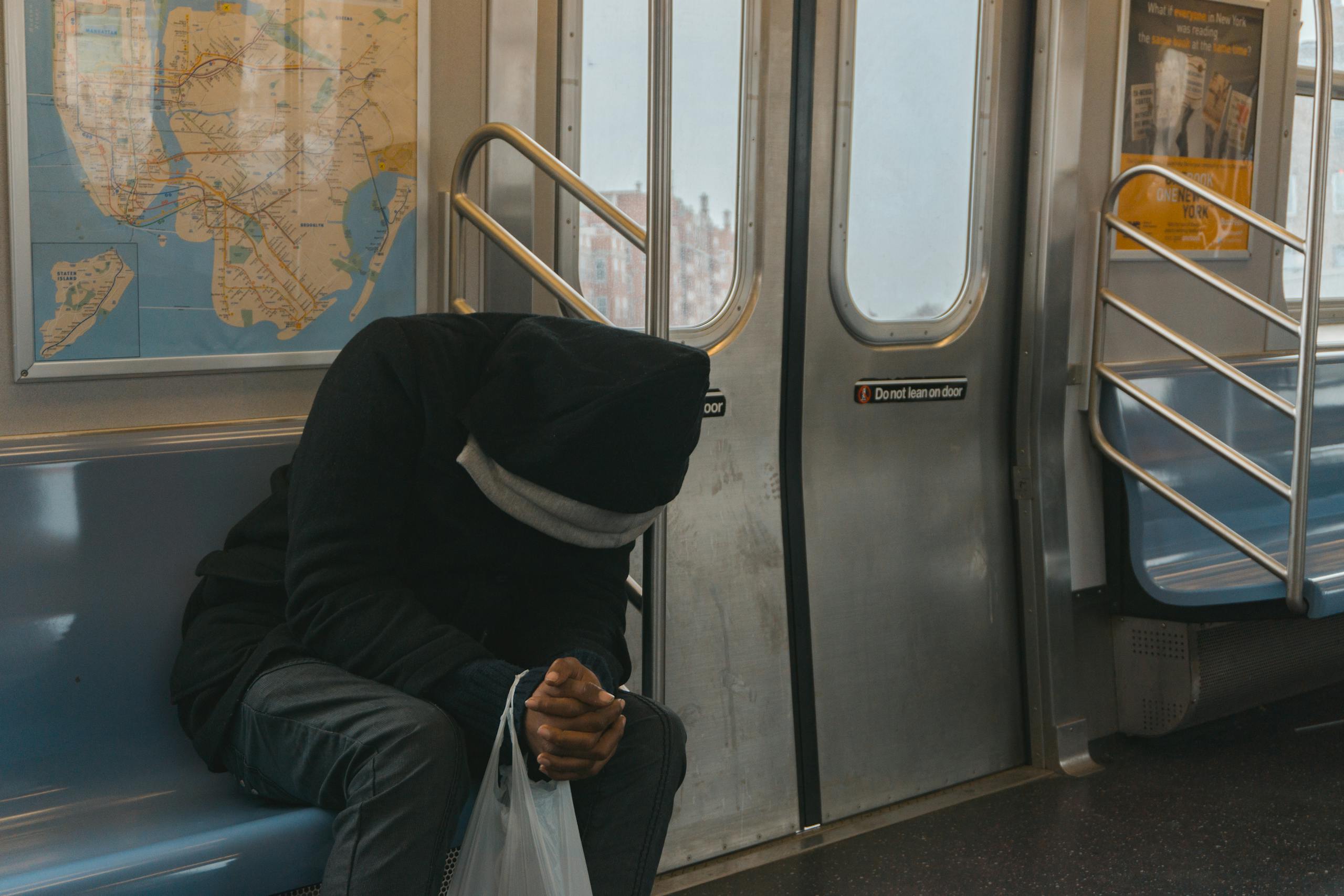
Public transit, counterintuitively, can be more introvert-friendly than carpooling for some people. On a train or bus, social norms support disengagement. Headphones are universally understood as a signal. Eye contact is optional. You’re surrounded by people but not obligated to any of them. The social contract of public transit actually protects introverts in ways that the social contract of a shared car does not.
Adjusting commute timing is another option worth exploring. Off-peak commuting, even by thirty minutes in either direction, often means lighter traffic, shorter total commute time, and a qualitatively different atmosphere on the road. That calmer environment can partially compensate for the social cost if carpooling is unavoidable.
The CDC’s research on commuting and health outcomes has noted that commute stress is one of the more consistent predictors of workplace burnout, particularly for workers who have limited control over their commute conditions. Building whatever control you can into the arrangement, whether that’s timing, route, company, or mode, directly addresses that risk factor.
How Can You Rebuild Your Energy After a Draining Commute?
Even with the best planning, some commutes will still drain you. Knowing how to recover efficiently matters as much as knowing how to protect yourself in advance.
The most effective recovery strategies for introverts after social overstimulation tend to involve sensory reduction, not just physical rest. Lying on a couch while the television runs is not recovery. Sitting in a quiet room with low light, or taking a short walk without earbuds, or spending fifteen minutes with a book in a room by yourself, these activities actively reduce the neural stimulation load rather than just pausing it.
Building a decompression ritual into your arrival home, even a brief one, can substitute partially for the transition space the commute no longer provides. Some introverts use the walk from the car to the front door as a deliberate mental transition, a few minutes of quiet intention before re-entering the social environment of home. Others build a fifteen-minute solo window into the schedule immediately after arriving, framed to family members not as withdrawal but as a brief reset that makes them better company afterward.
The World Health Organization’s guidelines on mental health and recovery emphasize that recovery from social and cognitive stress requires genuinely low-stimulation environments, not just time. That distinction matters for introverts who find themselves “resting” in ways that don’t actually restore them.
My own recovery ritual during my agency years was fifteen minutes of silence in my car after arriving home before going inside. Not on the phone. Not listening to anything. Just sitting. My family eventually came to understand that those fifteen minutes made me a significantly better version of myself for the rest of the evening. What looked like avoidance was actually investment.

What Does This Mean for How Introverts Should Think About Their Daily Energy Budget?
The commute question is really a smaller version of a much larger question: how are you managing your energy across the full arc of the day, and where are the invisible costs you haven’t accounted for?
Most introverts are reasonably good at protecting their energy during obvious high-demand periods, big presentations, difficult conversations, social events. Fewer are equally attentive to the low-grade, ambient social costs that accumulate in the background: the open-plan office, the casual hallway conversations, the lunch that’s technically optional but socially expected, and yes, the carpool that seemed like a practical decision but quietly became a daily energy tax.
Treating your energy as a finite daily resource, not a moral failing when it runs out, changes how you make decisions about all of these things. A carpool arrangement that costs you thirty minutes of recovery time twice a day isn’t a minor inconvenience. It’s a sixty-minute daily deficit that compounds across a week, a month, and a year.
That math is worth doing. And the decisions that follow from it, including some uncomfortable conversations about what you need and why, are worth having. Not because introverts are fragile, but because protecting your energy is what allows you to bring your full capabilities to the work and relationships that actually matter to you.
Explore more about introvert energy management and daily rhythms in our complete Introvert Lifestyle Hub.
About the Author
Keith Lacy is an introvert who’s learned to embrace his true self later in life. After 20 years in advertising and marketing leadership, including running agencies and managing Fortune 500 accounts, Keith now channels his experience into helping fellow introverts understand their strengths and build fulfilling careers. As an INTJ, he brings analytical depth and authentic perspective to every article, drawing from both professional expertise and personal growth.
Frequently Asked Questions
Why does carpooling feel so much more draining than other social activities?
Carpooling combines several factors that are particularly costly for introverts: unstructured social interaction, physical confinement with no exit option, and timing at the most vulnerable transition points of the day. Unlike structured workplace interaction, there’s no agenda to follow and no natural way to disengage. The social pressure to fill silence in a small enclosed space amplifies the energy cost significantly compared to optional or structured social settings.
Is it selfish to want to commute alone as an introvert?
No. Protecting your recovery time is a functional necessity, not a character flaw. Solo commute time serves as a transition ritual that allows introverts to process the workday and prepare for home life. Treating that time as expendable because it appears selfish leads to accumulated energy deficits that affect your performance at work and your presence at home. Communicating your needs honestly is more considerate than silently enduring an arrangement that isn’t working.
Can an introvert and extrovert carpool successfully together?
Yes, with clear communication and mutual respect. The arrangement works when both parties understand that silence is a neutral default rather than a social signal. An extrovert who genuinely respects quiet mornings, or who has other social outlets and doesn’t rely on the commute for connection, can be an excellent carpool partner for an introvert. The key factor is an early, honest conversation about expectations rather than hoping compatibility develops naturally over time.
What are the best strategies for recovering from a draining commute?
Effective recovery from commute-related social fatigue requires genuine sensory reduction, not just physical rest. Practical strategies include a brief solo decompression period immediately after arriving home, a quiet walk without audio input, or fifteen minutes in a low-stimulation environment before re-engaging with family or household demands. The goal is actively reducing neural stimulation load rather than simply pausing activity. Building this into a consistent routine helps manage the cumulative effects of regular social commuting.
How do I tell my carpool partner I need more quiet time without damaging the relationship?
Frame the conversation around your own needs rather than their behavior. Something like: “I’ve realized I function better when I have quiet time in the mornings to prepare mentally for the day. It has nothing to do with you personally, I just need that mental space.” Most people respond well to honest, non-accusatory self-disclosure. Proposing a specific structure, like agreeing that mornings are quiet by default and evenings are more open to conversation, gives the other person something concrete to work with rather than leaving them guessing about what you need.