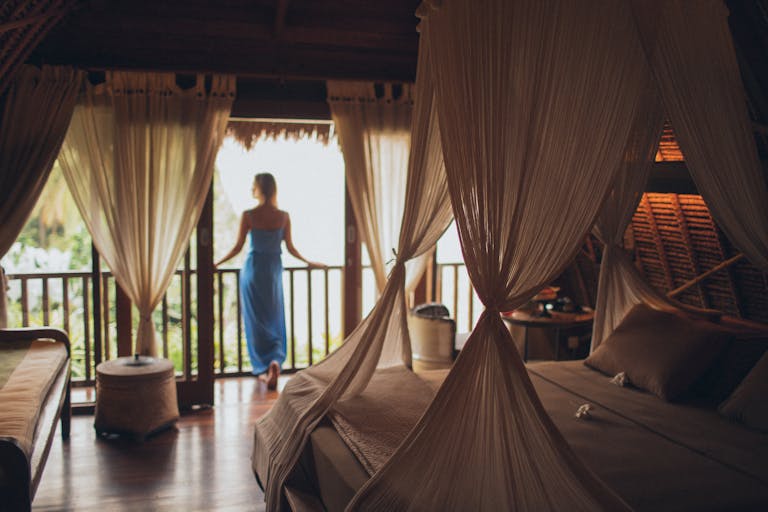

An introvert cruise experience doesn’t have to mean five days of forced socialization and sensory overload. Cruise ships offer more solitude than most people realize, from quiet observation decks at dawn to private balconies where the ocean does all the talking. With intentional planning, introverts can recharge deeply while still enjoying everything a cruise has to offer.
Everyone in my life assumed I loved the idea of a cruise. You’re surrounded by people, there’s constant entertainment, and the social calendar never empties. To an extrovert, that sounds like paradise. To me, standing on the deck of a ship for the first time, watching the Miami skyline shrink into the horizon, my first thought was: where do I go when I need to disappear?
I’d spent more than two decades running advertising agencies, managing client relationships across Fortune 500 accounts, leading teams through high-pressure campaigns. I was good at it. But every Sunday night before a big client week, I’d feel that familiar tightening in my chest, the quiet dread of back-to-back meetings and performative energy. I learned to manage it, to build in recovery time, to protect my mental space like a resource. Cruising, it turned out, required the same skill set.
What surprised me most was how much a cruise ship actually accommodates people who need quiet. The ship doesn’t force you into anything. The entertainment is optional. The dining room has alternatives. The deck at 6 AM belongs almost entirely to you. Once I stopped seeing the cruise as a social obligation and started treating it the way I treated my best workdays, as something to be structured around my energy, everything changed.

Why Do Introverts Find Cruises So Draining at First?
The honest answer is that cruise ships are designed with extroverts in mind. The common areas are loud and bright. The activities are communal. The dining experience, especially on larger ships, puts you shoulder to shoulder with strangers three times a day. Pool decks pulse with music. Atrium lobbies echo with conversation. For someone whose nervous system processes stimulation more intensely, this environment can feel relentless before the ship even leaves port.
What’s your personality type?
Take our free 40-question assessment and get a detailed personality profile with dimension breakdowns, context analysis, and personalised insights.
Discover Your Type8-12 minutes · 40 questions · Free
A 2021 study published through the American Psychological Association found that introverts experience social stimulation differently at a neurological level, not because they dislike people, but because their brains process external input more thoroughly, which requires more cognitive energy. You can read more about introversion and how it shapes everyday experience at the American Psychological Association.
I felt this acutely during my first cruise. By day two, I was retreating to the balcony at every opportunity, not because I was antisocial, but because I needed somewhere to process. My wife, who leans extroverted, was energized by everything I was recovering from. She’d come back from the pool deck buzzing with conversation. I’d come back from the pool deck needing a nap.
That contrast wasn’t a problem. It was information. And once I started treating it as such, I stopped fighting the ship and started working with it.
At Ordinary Introvert, we cover the full range of how introversion shows up in daily life, including travel, work, and relationships. Our content on the introvert lifestyle goes deeper into how people wired for quiet can build environments that genuinely support them, whether at home or somewhere out at sea.
What Makes a Cruise Ship Actually Good for Introverts?
consider this took me a while to see: a cruise ship is one of the few vacation formats where solitude is genuinely available if you know where to find it. A resort puts you in a shared pool surrounded by families. A theme park funnels you through crowds. A city break means handling streets, restaurants, and public transport on someone else’s schedule. A cruise ship, by contrast, is a floating village with corners and edges that most passengers never visit.
The forward observation deck on most ships is empty before 8 AM. The library, if the ship has one, is almost always quiet. Specialty restaurants require reservations, which means smaller rooms and calmer atmospheres. Room service exists. Balcony cabins exist. The ship’s schedule is posted in advance, which means you can plan your day around low-traffic windows rather than reacting to whatever’s happening around you.
That last point matters more than people realize. One of the things I valued most in my agency years was predictability. Not rigidity, but the ability to see what was coming and prepare accordingly. A cruise itinerary gives you that. You know when the ship docks, when it departs, when the main dining room fills up, and when the pool deck clears out. That structure is a gift if you use it intentionally.
Psychology Today has written extensively about how introverts often thrive in structured environments because predictability reduces the cognitive load of social preparation. You can explore their archive on introversion at Psychology Today. The research consistently points toward one finding: introverts don’t need less experience, they need more control over how experience is paced.

How Do You Choose the Right Cruise as an Introvert?
Ship size matters enormously, and most people don’t think about it until they’re already onboard. Mega-ships carrying five or six thousand passengers are engineering marvels, but they’re also sensory environments that can feel like a shopping mall at peak hours. Smaller ships, particularly river cruises or expedition vessels, offer something closer to a quiet hotel experience. Fewer passengers means fewer crowds, shorter lines, and more genuine solitude.
When I started being more intentional about travel, I applied the same logic I used when building agency teams. I stopped choosing based on what looked impressive and started choosing based on what actually fit the way I work. For travel, that meant asking different questions before booking: How many passengers does this ship carry? Does it have a library or a quiet lounge? Are specialty dining options available without a crowd? Is there a balcony cabin at a reasonable price point?
Itinerary matters too. Port-heavy itineraries give you natural breaks from the ship’s social energy. A day in a small coastal town, wandering on your own schedule, can be profoundly restorative. Some of my best travel memories come from mornings I spent alone in a European port, coffee in hand, watching a city wake up before the tour groups arrived. That kind of experience is available on almost any cruise if you book the right ports and skip the organized excursions when you want to.
Cruise line culture also varies more than the marketing suggests. Some lines cater to families with young children and build their entire entertainment philosophy around group participation. Others attract older travelers and lean toward quieter programming, lectures, enrichment activities, and longer sea days with less manufactured excitement. Researching the typical passenger demographic before booking is time well spent.
Which Cabin Types Work Best for Introverts Who Need to Recharge?
A balcony cabin is close to non-negotiable if budget allows. Having a private outdoor space changes the entire experience. On my second cruise, I upgraded to a balcony specifically because I knew I needed somewhere to go that wasn’t the public deck. That decision paid off immediately. Morning coffee outside while the ship moved through calm water. Evening reading while the sun dropped below the horizon. A place to sit with my thoughts without performing for anyone.
The Mayo Clinic has written about the restorative effects of natural environments on mental well-being, including the calming impact of water views and open horizons. You can find their resources on stress and mental health at Mayo Clinic. A balcony cabin essentially gives you access to that restorative environment on demand, without having to share it.
Interior cabins are the most affordable option, but they can feel claustrophobic during long sea days if you’re someone who needs visual space to decompress. If budget is the constraint, a porthole cabin, sometimes called an oceanview cabin, is a meaningful upgrade over interior. Even a fixed window changes the psychological experience of the room significantly.
Cabin location also affects noise exposure. Cabins near the elevator banks, the nightclub, or directly above the main theater experience more ambient sound. Midship cabins on higher decks tend to be quieter. Aft cabins on some ships offer larger balconies and more privacy. These details are worth researching on cruise-specific forums before booking, where passengers post detailed reviews of specific cabin numbers.

How Can You Protect Your Energy During Sea Days?
Sea days are where most introverts either thrive or struggle, and the difference usually comes down to whether you have a plan. Without one, sea days default to whatever the ship is offering, which on most large vessels means pool parties, trivia tournaments, and activity programming designed to keep extroverts engaged. With a plan, sea days become the most restorative part of the trip.
My approach, developed over several cruises and refined the way I used to refine client presentations, is to treat sea days like a personal workday with protected blocks. Morning belongs to me. I’m up before most passengers, on the forward deck or in the café, reading or writing or simply watching the water. That quiet block sets the tone for everything that follows. By the time the ship comes alive around 9 or 10 AM, I’ve already had two or three hours of genuine solitude.
Midday is flexible. I might join my wife for lunch, take a short walk through the ship, or spend an hour in the spa. The spa on most cruise ships is genuinely underused during sea days because most passengers are at the pool. The thermal suite, if the ship has one, is often nearly empty between 11 AM and 2 PM. That’s a useful window to know about.
Afternoons are for deeper recharge. Back to the balcony, back to the book, back to whatever internal processing the morning’s stimulation left unfinished. I’ve noticed that my best creative thinking on cruises happens in the late afternoon, when the ship is quiet and I’ve had enough distance from the morning’s activity to let ideas settle. Some of my clearest thinking about agency strategy happened during similar windows, those protected afternoon hours I’d carved out specifically for reflection rather than reaction.
Evening is social by design. Dinner, a show, a walk on the deck after dark. By that point I’ve banked enough solitude that genuine connection feels good rather than draining. The sequencing matters. Recharge first, engage second.
What Are the Best Quiet Spots on a Cruise Ship?
Every ship has them. The challenge is finding them before everyone else does. After several cruises, I’ve developed a first-day ritual: board the ship as early as possible, skip the buffet chaos, and spend an hour walking every deck and corridor to map the quiet zones. This sounds obsessive, and maybe it is, but it’s the same instinct that made me good at reading a room in client meetings. Know the space before the space knows you.
The forward observation deck is almost always quiet, especially at sea. Most passengers gravitate toward the pool deck at the stern, so the bow is frequently empty. Early mornings there are spectacular, watching the ship push through open water with nothing ahead of you but horizon.
The library is another reliable refuge. Smaller ships often have dedicated reading rooms with real books and comfortable chairs. Larger ships sometimes have a small library tucked near the card room or the puzzle tables. Either way, the unspoken social contract in these spaces is quiet, which makes them valuable.
Specialty coffee venues, particularly on premium lines, tend to attract a calmer crowd than the main buffet. A small surcharge buys you a quieter atmosphere and better coffee. On one cruise, I discovered a small outdoor seating area attached to the specialty café that almost no one used. I went there every morning for five days and saw the same two other people each time. We nodded at each other and read our books. It was perfect.
The adults-only pool area, if the ship has one, is typically quieter than the main pool deck. Spa pools and hydrotherapy areas fall into the same category. These spaces exist specifically for passengers who want a lower-stimulation environment, which means they attract people with similar preferences.

How Do You Handle the Social Pressure That Comes With Group Travel?
Group travel adds a layer of complexity that solo or couple travel doesn’t have. When you’re cruising with family or friends, there’s an implicit expectation of togetherness that can conflict directly with your need for solitude. Managing that tension gracefully is one of the more nuanced skills in the introvert travel toolkit.
In my agency years, I got good at setting expectations without apologizing for them. A client would want me available around the clock during a campaign launch. I learned to say, clearly and warmly, that I’d be reachable during specific hours and would give them my full attention during those windows. Most clients respected it. The ones who didn’t were usually the clients whose projects suffered from too much reactive decision-making anyway.
The same principle applies on a cruise with a group. Communicate your needs before the trip, not during it. Let the people you’re traveling with know that you’ll want some solo time each day, that it’s not about them, and that you’ll show up more fully present for shared activities because of it. Most people, once they understand the logic, are completely accommodating. The conversation is easier before departure than it is on day two when you’ve already disappeared for three hours and no one knew where you were.
The National Institutes of Health has published research on how personality traits, including introversion, affect social energy management and the importance of adequate recovery time. Their resources on mental health and social behavior are available at the National Institutes of Health. The science supports what introverts already know intuitively: solitude isn’t avoidance, it’s maintenance.
Shared meals are a natural anchor for group time. Agreeing to meet for dinner every evening gives the group a reliable connection point without requiring you to be present for every activity during the day. Dinner is contained, it has a beginning and an end, and it provides a genuine opportunity for conversation rather than the scattered, continuous social contact that exhausts introverts most.
Can Shore Excursions Actually Recharge an Introvert?
Yes, absolutely, but the type of excursion matters enormously. A bus tour with forty other passengers, a guide with a microphone, and a schedule that keeps you moving through tourist sites every twenty minutes is the opposite of restorative. A morning kayak through a quiet bay, a solo walk through a market, or a private car hire to explore a coastal town on your own terms can be genuinely energizing.
Port days offer something the ship doesn’t: escape from the ship’s social ecosystem. Even if the port is busy, you’re no longer in an enclosed environment with the same two thousand people. The stimulation is different, more varied, more externally directed, and often easier to step away from. A city street has exits. A cruise ship atrium doesn’t.
Some of my most restorative travel moments have happened in ports where I had no plan at all. Wandering without agenda, stopping for coffee when I felt like it, sitting in a square and watching local life unfold. That kind of unstructured solo time in a new place feeds something that scheduled group activities don’t reach. It’s the introvert version of adventure, quiet, observational, and deeply satisfying.
Small-group excursions, capped at eight to twelve people, are a good middle ground when you want some structure without the crowd. Many cruise lines offer these as premium options, and they’re worth the additional cost for the reduced stimulation alone. Private guides are even better if budget allows. A few hours with a knowledgeable local, exploring at your own pace, is one of the best travel experiences available regardless of personality type.
How Do You Manage Dining Without Constant Social Obligation?
Traditional cruise dining, the assigned table in the main dining room with the same group of strangers every night, is genuinely difficult for many introverts. You’re committed to small talk with people you didn’t choose, at a time when you may have already used up your social energy for the day. The expectation of warmth and engagement can feel performative rather than genuine.
Most modern cruise lines have moved toward flexible dining, which means you can show up when you want and sit where you want. That flexibility is worth prioritizing when comparing cruise lines. Anytime dining, as it’s often called, removes the assigned-table obligation entirely and lets you eat at your own pace, at your preferred time, with the people you choose.
Specialty restaurants are another reliable option. Smaller dining rooms, more focused menus, and a quieter atmosphere make them worth the surcharge on nights when the main dining room feels like too much. Booking a specialty restaurant on the first night is a good way to ease into the cruise without the social intensity of the main dining room during embarkation evening, which tends to be the loudest and most chaotic meal of the trip.
Room service exists and is genuinely useful. Breakfast in the cabin, on the balcony if you have one, is one of the great quiet pleasures of cruise travel. I’ve eaten room service breakfast on nearly every cruise I’ve taken, not because I’m antisocial, but because starting the day in silence, with coffee and a view of the water, is worth more to me than any buffet spread.

What Mental Preparation Helps Introverts Before a Cruise?
The most useful thing I did before my second cruise was reframe what I was going to. Not a social event. Not a five-day party. A structured environment with access to solitude, natural beauty, interesting ports, and good food, where the social elements were optional rather than mandatory. That reframe changed everything.
Mental preparation also means accepting that some moments will be overstimulating and planning for recovery rather than avoidance. There will be a dinner where the table next to you is celebrating loudly. There will be a sea day where the pool deck is at full volume. There will be a port where the tour buses arrive at the same time you do. These moments are temporary, and knowing in advance that they’re coming, and that you have a quiet cabin to return to, makes them manageable rather than defeating.
Harvard Business Review has published thoughtful work on how introverts can manage high-stimulation environments by building deliberate recovery structures into their schedules. You can access their leadership and personality coverage at Harvard Business Review. The principles they describe for workplace environments apply just as cleanly to travel.
Packing intentionally matters more than most people think. Noise-canceling headphones are essential. A good book or e-reader provides an immediate social off-ramp in any situation. A journal, if you’re someone who processes through writing, is worth the bag space. I’ve filled more journal pages on cruises than anywhere else, because the combination of movement, new environments, and protected quiet time creates exactly the conditions where reflection comes naturally.
Sleep matters too. Introverts often need more sleep than average, or at minimum, more uninterrupted quiet time, to process the day’s stimulation. Protecting your sleep schedule on a cruise, resisting the pull of late-night entertainment when you’re already depleted, is one of the most practical things you can do for your overall experience. A well-rested introvert on a cruise is a completely different traveler than an exhausted one.
How Do You Make the Most of a Cruise as an Introvert Without Missing Out?
The fear of missing out is real, and it’s worth addressing directly. Cruise ships offer an enormous amount of programming, and the implicit message from the entertainment team is that you should be doing all of it. Trivia at 10, cooking demonstration at 11, dance class at noon, poolside games at 2. The schedule is relentless, and it’s designed for people who want to be constantly occupied.
Choosing deliberately from that schedule rather than defaulting to all of it is not missing out. It’s curating. In my agency years, I worked with clients who wanted to be everywhere at once, every conference, every industry event, every networking opportunity. The ones who were most effective were the ones who chose fewer things and showed up to them fully. Quality of engagement over quantity of attendance. The same logic applies to cruise programming.
Pick two or three things per day that genuinely interest you. The cooking demonstration if you love food. The guest lecturer if the topic is compelling. The evening show if the performer looks interesting. Skip the rest without guilt. You’re not on the ship to check boxes. You’re there to have an experience that restores and enriches you, and that looks different for every person.
The World Health Organization has noted that meaningful leisure, defined as activities that provide genuine restoration rather than mere distraction, is a significant contributor to long-term mental health. Their resources on mental well-being are available at the World Health Organization. A cruise where you spend three hours in genuine solitude and two hours in genuinely chosen social activity is far more restorative than twelve hours of exhausted participation.
The introverts I know who’ve had the best cruise experiences share one common trait: they stopped trying to have the cruise that everyone else was having and started having the cruise that was actually right for them. That shift, from comparison to intention, is where the real experience begins.
Explore more on how introverts can build travel and lifestyle habits that genuinely support their energy in our complete Introvert Lifestyle hub.
About the Author
Keith Lacy is an introvert who’s learned to embrace his true self later in life. After 20 years in advertising and marketing leadership, including running agencies and managing Fortune 500 accounts, Keith now channels his experience into helping fellow introverts understand their strengths and build fulfilling careers. As an INTJ, he brings analytical depth and authentic perspective to every article, drawing from both professional expertise and personal growth.
Frequently Asked Questions
Are cruises good for introverts?
Cruises can be excellent for introverts when approached with intention. Ships offer more genuine solitude than most people expect, including quiet observation decks, libraries, private balconies, and adults-only areas. The structured itinerary also helps introverts plan their energy around low-traffic windows. The experience becomes draining when introverts try to match the extroverted pace of cruise programming rather than curating their own schedule.
What type of cruise is best for introverts?
Smaller ships, river cruises, and expedition vessels tend to work better for introverts than mega-ships because they carry fewer passengers and create a quieter overall environment. Premium and luxury cruise lines also attract a calmer demographic and offer more enrichment-focused programming. Port-heavy itineraries provide natural breaks from the ship’s social ecosystem, giving introverts daily access to solo exploration time.
How can an introvert recharge on a cruise ship?
Protecting morning hours for solitude is one of the most effective strategies. The forward observation deck, the library, specialty coffee venues, and a private balcony cabin all provide reliable quiet spaces. Building a daily rhythm that prioritizes recharge time before social activity, rather than after, makes a significant difference. Room service breakfast, afternoon reading, and early morning walks on empty decks are all practical tools for maintaining energy throughout the trip.
Should introverts book a balcony cabin on a cruise?
A balcony cabin is one of the most impactful upgrades an introvert can make when booking a cruise. Having private outdoor space means access to fresh air, natural light, and open water views without having to share the experience with other passengers. Morning coffee on a private balcony, evening reading with the ocean in view, and a quiet place to decompress after social activity all make the additional cost worthwhile for people who need genuine solitude to recharge.
How do you handle social pressure from travel companions on a cruise?
Communicating your needs before the trip is far more effective than trying to manage expectations once you’re onboard. Let travel companions know that you’ll want solo time each day, that it’s about your energy needs rather than your enjoyment of their company, and that you’ll be more genuinely present during shared activities because of it. Agreeing to anchor points, like dinner together each evening, gives the group reliable connection time without requiring continuous togetherness throughout the day.