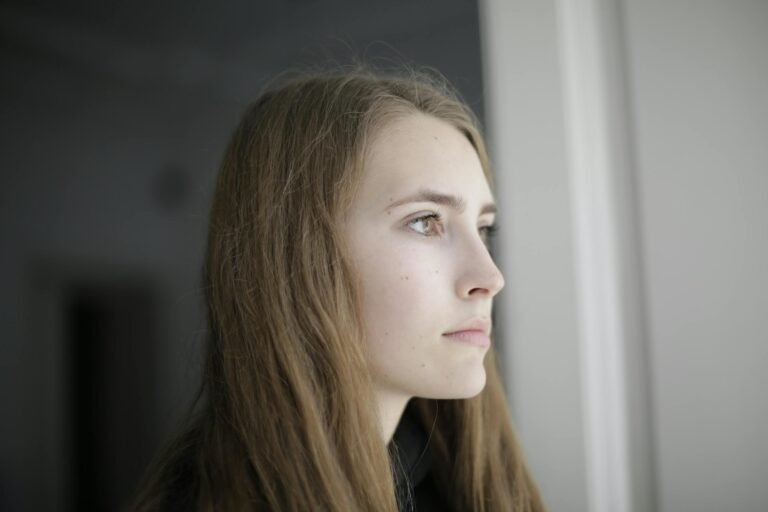
Middle school is one of the most socially intense experiences a young introvert will ever face. Between the constant group work, the cafeteria politics, and the pressure to seem outgoing, introverted tweens often feel like something is wrong with them. Nothing is wrong. They’re simply wired differently, and that difference becomes a genuine strength with the right understanding and support.
Knowing that doesn’t make seventh grade easier in the moment, though. So let’s talk about what’s actually happening, and what actually helps.

Our content here at Ordinary Introvert covers the full spectrum of introvert life, from childhood through career. If you want broader context on what it means to grow up introverted, our introvert personality hub brings those threads together in one place.
What Does It Actually Feel Like to Be an Introverted Middle Schooler?
Somewhere around age eleven or twelve, the social rulebook gets rewritten overnight. Suddenly everyone seems to know how to joke loudly in the hallway, how to float effortlessly between friend groups, how to perform confidence on demand. For an introverted kid, watching all of that unfold from the outside can feel genuinely disorienting.
What’s your personality type?
Take our free 40-question assessment and get a detailed personality profile with dimension breakdowns, context analysis, and personalised insights.
Discover Your Type8-12 minutes · 40 questions · Free
I wasn’t a middle schooler that long ago in memory, even if the calendar says otherwise. What I remember most clearly is the exhaustion of trying to match the energy in the room. I didn’t have language for introversion back then. I just knew that crowded lunch tables drained me in a way they didn’t seem to drain everyone else, and I assumed that gap was a personal failure.
That assumption followed me for decades. I carried it into college, into my first agency job, and eventually into running my own agencies serving Fortune 500 clients. It took me most of my adult life to understand that the exhaustion I felt in loud, high-stimulation environments wasn’t weakness. It was my nervous system doing exactly what an introverted nervous system does.
A 2021 report from the American Psychological Association found that adolescence is a critical window for identity formation, and that social comparison intensifies significantly during the middle school years. For introverted kids who already feel out of step with peer norms, that comparison pressure can become a source of real distress. You can explore more from the American Psychological Association on adolescent development and social belonging.
What introverted tweens are feeling isn’t imaginary, and it isn’t a phase to push through. It’s a real mismatch between how they’re wired and how most middle school environments are designed.
Why Does Middle School Feel So Much Harder for Introverts?
Middle school is structurally exhausting for introverted kids in a way that elementary school often isn’t. The shift to multiple teachers, rotating classrooms, and constant peer evaluation creates a social gauntlet that introverts have to run every single day.
Consider what a typical day actually involves: homeroom, group projects in first period, a loud cafeteria at lunch, gym class with its social hierarchies, and then three more hours of classroom participation before the bus ride home. Every single one of those environments rewards visible, vocal engagement. Quiet observation, the thing introverted kids do naturally and well, reads as disengagement to teachers and peers who don’t understand it.
The National Institutes of Health has published research on adolescent brain development showing that the prefrontal cortex, the part responsible for regulating social behavior and emotional response, is still actively developing throughout the middle school years. That means all kids are working with incomplete emotional regulation tools during this period. For introverted kids who process emotion more internally and more slowly than their extroverted peers, that developmental gap can feel especially isolating. The National Institutes of Health offers extensive resources on adolescent neurological development for parents and educators who want to understand the science behind these experiences.
There’s also the participation grade problem. Most middle school classrooms reward students who speak up frequently. An introverted student who has thought deeply about a topic but prefers to write their ideas rather than announce them can end up with lower grades than a peer who speaks impulsively but often. That grading structure sends a message: the way you think is worth less than the way someone else communicates. That message sticks.
I saw this dynamic play out in my own professional life. When I was leading agency teams, I had a junior copywriter who rarely spoke in brainstorms but consistently turned in the most original concepts. Her written work was exceptional. Her participation grade, if we’d been grading her, would have been a C. I nearly passed her over for a promotion because I’d absorbed the cultural bias that quietness equals disengagement. Fortunately, I caught myself. She eventually became one of the best creative directors I ever worked with. But the bias is real, and it starts in middle school.
How Can Parents Recognize When an Introverted Tween Is Struggling?
There’s a meaningful difference between an introverted kid who is tired and needs quiet time, and an introverted kid who is genuinely struggling. Both look similar from the outside: withdrawn, quiet, preferring to stay home. Knowing which is which matters enormously.
Signs that suggest normal introvert recharging include coming home and going straight to their room, preferring one-on-one time with a single friend over group hangouts, needing a transition period after school before they’re ready to talk, and showing genuine enthusiasm for solitary hobbies or creative projects.
Signs that suggest something more serious is happening include consistent refusal to attend school, loss of interest in activities they previously loved, changes in sleep or appetite, expressing persistent feelings of worthlessness or shame about their personality, and withdrawing from even the one or two close friendships they previously valued.
The Mayo Clinic distinguishes between introversion as a normal personality trait and social anxiety as a clinical condition that may require professional support. Many introverted kids are misidentified as anxious when they’re simply introverted, but some introverted kids do develop anxiety, particularly when they’ve spent years receiving the message that their natural way of being is wrong. Parents can find helpful guidance on the distinction at Mayo Clinic.
The most useful thing a parent can do is resist the urge to fix the introversion. success doesn’t mean help your kid become more extroverted. The goal is to help them feel safe being exactly who they are, while also giving them tools to handle the environments they can’t opt out of.
What Are the Real Social Pressures Introverted Tweens Face?
The social pressures in middle school are specific and relentless. Understanding them clearly, rather than in vague terms, helps both kids and parents respond to them more effectively.
The performance of enthusiasm. Middle school culture rewards visible excitement. Kids who don’t perform enthusiasm convincingly, who don’t squeal or high-five or express everything loudly, get read as unfriendly or stuck-up. Introverted kids often feel genuine enthusiasm internally but express it quietly. That gap between internal feeling and external expression creates constant misunderstanding.
The group identity pressure. Middle school is when peer groups solidify into something that feels permanent and defining. The pressure to belong to a visible group, and to perform loyalty to that group, is intense. Introverted kids who prefer floating between a few close friendships rather than belonging to a defined clique can feel like outsiders even when they’re not being excluded.
The social media amplification. Whatever social dynamics exist in school get replicated and intensified online. For introverted kids who already find in-person social performance draining, the additional layer of digital performance, posting, responding, maintaining a visible online presence, adds a second shift of social labor every evening.
The CDC has highlighted the relationship between social media use and adolescent mental health, noting that the comparison and visibility pressures of digital platforms are particularly acute during middle school years. Their resources on adolescent mental health offer useful framing for parents trying to understand how these pressures compound.
The “why are you so quiet” question. Introverted kids hear this constantly, from teachers, from relatives, from peers, and sometimes from well-meaning parents. What sounds like a casual observation lands as a judgment. It implies that being quiet is a problem requiring explanation. Over time, that question teaches introverted kids to be ashamed of their natural state.

What Strategies Actually Help Introverted Middle Schoolers Thrive?
Practical strategies matter more than reassurance at this age. Telling an introverted twelve-year-old that things get better is true but not immediately useful. Giving them specific tools they can use on a Tuesday afternoon is useful.
Build Recovery Time Into the Daily Structure
Introverted kids need genuine solitude to recover from the social demands of school. Not screen time, not background TV, but actual quiet. Even thirty minutes of uninterrupted solo time between school and evening activities can make a significant difference in how an introverted tween handles the rest of the day.
This is something I wish I’d understood as a kid, and honestly, something I had to relearn as an adult. When I was running my first agency, I scheduled back-to-back client calls from 8 AM to 6 PM and wondered why I was making poor decisions by late afternoon. It took me years to realize I wasn’t managing my energy at all. I was treating myself like a machine that didn’t need downtime. Once I started protecting even one hour of quiet in my workday, my thinking sharpened noticeably. The same principle applies to a seventh grader coming home from six hours of social performance.
Help Them Find One Real Connection, Not Many Shallow Ones
Introverted kids don’t need a large friend group. They need one or two genuinely close friendships where they feel understood and don’t have to perform. Parents can support this by creating low-pressure environments for one-on-one connection: a friend over for a quiet afternoon, a shared interest pursued together, a club or activity where depth of engagement matters more than social performance.
The quality of adolescent friendships matters more than the quantity. A 2019 study published through the National Institutes of Health found that the depth of adolescent friendship quality was a stronger predictor of wellbeing than the size of peer networks. One real friend is worth more than ten acquaintances who don’t really see you.
Give Them Language for What They Experience
One of the most powerful things a parent or teacher can do is give an introverted kid the vocabulary to understand themselves. Explaining introversion clearly, that it’s about energy, not shyness, that it’s a legitimate personality orientation, not a flaw to overcome, changes the internal narrative from “something is wrong with me” to “this is how I’m wired.”
That shift is not small. I didn’t get that vocabulary until I was well into my thirties, and the absence of it cost me. I spent years in leadership roles trying to be louder, more spontaneous, more visibly enthusiastic than I naturally was. I was performing extroversion for audiences who didn’t need it, exhausting myself in the process. If someone had handed me the concept of introversion at twelve and said, “this is a real thing, and it’s not a problem,” I think a lot of unnecessary suffering could have been avoided.
Reframe Quiet Strengths as Actual Strengths
Introverted tweens are often exceptional observers, careful thinkers, loyal friends, and creative problem-solvers. These traits are genuinely valuable, and they deserve to be named as such. Parents and teachers who actively point out when a quiet kid’s observation changed the direction of a conversation, or when their written work showed unusual depth, are building something important: a kid who knows their natural way of engaging has real value.
Psychology Today has covered the cognitive advantages associated with introversion extensively, including the tendency toward deeper processing of information and stronger performance on tasks requiring sustained concentration. Their coverage on introvert strengths offers accessible reading for parents and tweens alike.
Teach Them to Prepare for High-Pressure Social Situations
Introverted kids often do better in social situations when they’ve had time to prepare mentally. Before a party, a school event, or any situation where they’ll be expected to perform socially, a brief conversation about what to expect, who will be there, and what they can talk about can reduce anxiety significantly.
This isn’t about scripting their interactions. It’s about reducing the cognitive load of the unknown. Introverts process information thoroughly before acting. Giving them information in advance respects that processing style rather than working against it.
I still do this before large client presentations. I spend time the evening before thinking through the room, the likely questions, the moments where I’ll need to be at my most socially present. That preparation isn’t anxiety management. It’s how my brain works best. Middle schoolers can learn this about themselves early, and it will serve them for the rest of their lives.

How Should Teachers and Schools Approach Introverted Students?
Most middle school teachers are not trained in personality psychology, and most school cultures are built around extroverted norms. That’s not a criticism, it’s a structural reality. But educators who understand introversion can make a profound difference in the experience of quiet students.
A few shifts that cost nothing and change everything: allowing students to submit written reflections as an alternative to verbal participation, giving introverted students advance notice of discussion questions rather than cold-calling, creating space for small-group conversation before whole-class discussion so introverts can process ideas with a smaller audience first, and recognizing that a student who rarely speaks but consistently produces thoughtful written work is engaged, not disengaged.
Harvard Business Review has written about how organizations that create space for introverted contribution styles outperform those that default to extroverted norms. The same principle applies in classrooms. When quiet students feel their contribution style is valued, they contribute more. The Harvard Business Review archives on introversion and leadership offer useful reading for educators who want to understand this dynamic more deeply.
The most important thing a teacher can do is stop treating quietness as a problem. Asking a student “why are you so quiet” in front of their peers is not encouragement. It’s public shaming of a personality trait the student did not choose. Educators who understand this can become genuinely powerful allies for introverted kids who desperately need someone in the school environment who sees them clearly.
What Does the Research Actually Say About Introversion in Adolescence?
The science of introversion has developed significantly over the past two decades, and the picture it paints is more nuanced than the popular understanding suggests.
Introversion is not shyness, though the two can co-occur. Shyness involves fear of negative social evaluation. Introversion involves a preference for less stimulation and a tendency to restore energy through solitude. An introverted person can be completely comfortable socially while still needing significant alone time to function well. A shy person may be extroverted but anxious about social judgment.
The distinction matters practically because the interventions are different. A shy kid needs support building confidence in social situations. An introverted kid needs validation that their preference for quiet is legitimate, along with practical tools for managing environments that don’t naturally accommodate that preference.
The World Health Organization has emphasized the importance of supporting adolescent mental health by addressing the environmental and social factors that create distress, not just treating symptoms in isolation. Their framing on adolescent mental health is useful for parents who want to understand how school environments contribute to wellbeing or undermine it.
Introversion also exists on a spectrum. Very few people are purely introverted or purely extroverted. Most fall somewhere in the middle, with a lean in one direction. Adolescence is a time when that lean becomes clearer, partly because the social demands intensify enough that the difference in how introverts and extroverts respond to stimulation becomes obvious.
What the research consistently shows is that introversion is a stable trait, not a developmental phase. Introverted kids become introverted adults. The goal of parenting and education should never be to change that trait. It should be to help young introverts build a life that works with their wiring, not against it.
How Can Introverted Tweens Build Confidence Without Pretending to Be Someone They’re Not?
Confidence for introverts doesn’t come from becoming louder. It comes from accumulating evidence that who you are, quietly, thoughtfully, with depth and care, is genuinely worth something.
That evidence gets built through small, repeated experiences of competence. An introverted kid who discovers they’re exceptionally good at writing, or coding, or drawing, or any skill that rewards the kind of deep focus introverts naturally bring, starts to build a self-concept that isn’t contingent on social performance.
Extracurricular activities that reward individual depth over group performance are particularly valuable: writing clubs, art programs, individual sports, music lessons, robotics teams, coding projects. These environments give introverted kids a place where their natural way of engaging is an asset rather than an obstacle.
Confidence also comes from being seen accurately by at least one person. A parent who says “I notice how carefully you think before you speak, and I think that’s actually a real strength” is doing something more valuable than any pep talk about being more outgoing. They’re reflecting back an accurate image of who the kid actually is, and that image becomes part of how the kid sees themselves.
I had one teacher in high school, not even middle school, who told me my written analysis was the most original she’d seen in years of teaching. That comment lived in me for a long time. It didn’t make me suddenly comfortable at parties. It gave me a place to stand when everything else felt uncertain. Every introverted kid deserves at least one person who sees them that clearly.
What Should Introverted Tweens Know About Their Future?
Middle school is not a preview of the rest of life. It’s a specific, unusually intense social environment that happens to be structured in ways that disadvantage introverts more than almost any other context they’ll encounter.
Adult life, for most people, offers far more control over social environment than middle school does. You can choose work that suits your processing style. You can choose friendships based on depth rather than proximity. You can structure your days around your energy rather than around a bell schedule designed for thirty kids with different needs.
Some of the most effective leaders I worked with over twenty years in advertising were deeply introverted. They weren’t the loudest people in the room. They were the most prepared. They asked the best questions. They listened in a way that made clients feel genuinely understood. Those are not compensations for introversion. Those are the actual strengths of introversion, expressed in a professional context where depth of thinking is rewarded.
An introverted twelve-year-old who feels out of place in the cafeteria might become the person in the room that everyone actually wants to talk to at thirty-five, because they’ve spent their whole life developing the capacity for real conversation rather than performance. That’s not a consolation prize. That’s a genuinely valuable outcome.
The path through middle school as an introvert is not about becoming someone different. It’s about surviving an environment that wasn’t designed for you while staying connected to who you actually are. That’s harder than it sounds. But it’s possible, and the kids who manage it tend to come out the other side with a clarity about themselves that their more socially comfortable peers often spend decades searching for.
Explore more on what it means to grow up and live as an introvert in our complete introvert personality hub at Ordinary Introvert.
About the Author
Keith Lacy is an introvert who’s learned to embrace his true self later in life. After 20 years in advertising and marketing leadership, including running agencies and managing Fortune 500 accounts, Keith now channels his experience into helping fellow introverts understand their strengths and build fulfilling careers. As an INTJ, he brings analytical depth and authentic perspective to every article, drawing from both professional expertise and personal growth.
Frequently Asked Questions
Is my introverted middle schooler going to be okay socially?
Yes. Introverted kids tend to form fewer but deeper friendships, which research consistently links to stronger long-term wellbeing than large, shallow peer networks. The social style of middle school, loud, group-focused, and performance-oriented, is unusually mismatched with introvert strengths. That mismatch eases significantly as kids gain more control over their social environments in high school and beyond. Supporting your child means validating their natural style rather than pushing them to perform extroversion.
How is introversion different from social anxiety in a tween?
Introversion is a personality trait involving a preference for lower stimulation and solitude as a means of restoring energy. Social anxiety is a clinical condition involving fear of negative social evaluation that causes significant distress or avoidance. An introverted tween may prefer quiet and small groups without experiencing fear. A tween with social anxiety experiences distress around social situations regardless of their personality type. The two can co-occur, but they’re distinct. If your child is showing significant distress, avoidance of activities they previously enjoyed, or physical symptoms around social situations, a conversation with a mental health professional is worth pursuing.
Should I encourage my introverted child to be more social?
Encouraging your child to develop social skills is different from encouraging them to become more extroverted. Introverted kids benefit from learning how to handle social situations they can’t avoid, such as group projects, class discussions, and school events. What they don’t benefit from is the message that their natural preference for quiet and depth is something to overcome. Focus on building skills and confidence rather than changing personality. The goal is a kid who can function effectively in varied social contexts while still honoring their need for solitude and depth.
What can teachers do to better support introverted students?
Several practical adjustments make a significant difference without requiring major curriculum changes. Offering written alternatives to verbal participation, giving advance notice of discussion questions rather than cold-calling, allowing small-group processing before whole-class discussion, and recognizing depth of written work as evidence of engagement all help introverted students contribute in ways that align with their natural strengths. The most important shift is stopping the habit of treating quietness as a problem. A student who is quiet but consistently produces thoughtful work is engaged. Treating their quietness as disengagement is both inaccurate and discouraging.
Will my introverted child always struggle in social situations?
No. Middle school represents an unusually difficult social environment for introverts because it concentrates the conditions that are most draining for this personality type: high stimulation, constant group interaction, visible performance, and limited control over social context. As introverted kids move through high school and into adulthood, they gain increasing ability to choose environments, friendships, and work situations that suit their wiring. Many introverts find that adult social life feels far more manageable because they can structure it around their actual preferences. The skills they develop handling difficult middle school social dynamics also build genuine resilience that serves them well later.